ceramic wall inspired by termite mounds cools interiors without air conditioning
inspired by termite mounds, the porous wall system uses a maze of interconnected channels to naturally circulate air.
prefer designboom on google[FEATURED]
termites inspire TerraMound Air conditioning strucutre
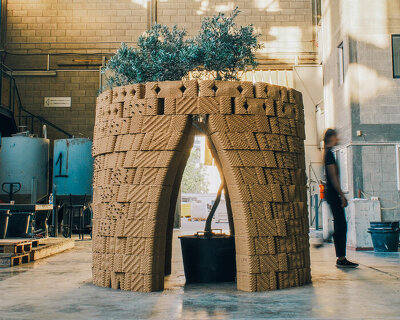
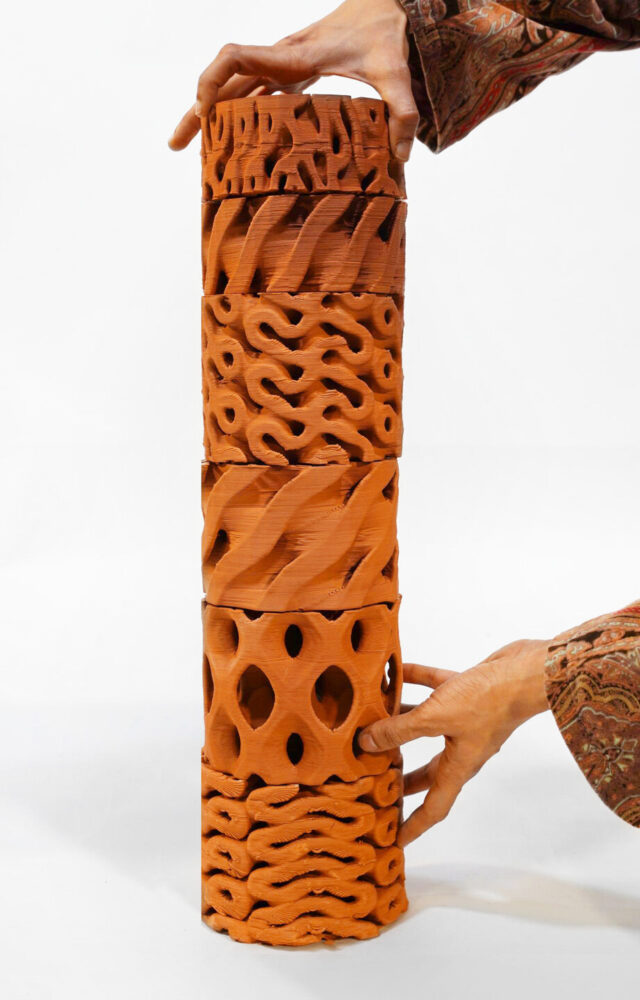
Researchers and designers continue to look to nature for alternatives to energy-intensive cooling systems, and a new 3D-printed ceramic structure takes its cues from one of the world’s most accomplished builders: termites. Inspired by the intricate ventilation networks found inside termite mounds, TerraMound is a porous wall system that uses a maze of interconnected channels to naturally circulate air, reducing indoor temperatures without relying on conventional air conditioning.
Designed by Rameshwari Jonnalagedda for her Master’s thesis in Design for Manufacture at Bartlett School of Architecture – UCL, the project creates an efficient cooling system inspired by natural formations through ceramic 3D printing and the integration of minimal surface geometries.

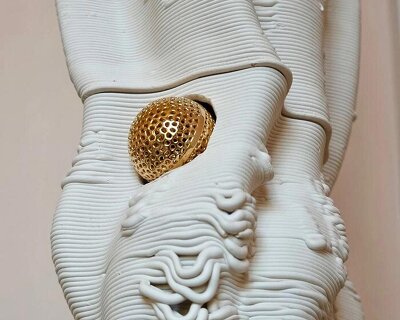
3D-printed ceramic channels air with termite-inspired geometry
Rather than forcing air through mechanical ducts, the ceramic modules encourage passive airflow as outside temperatures and wind conditions change throughout the day. Their branching internal geometry mirrors the complex tunnels termites use to regulate heat, humidity, and gas exchange inside their nests. Advances in 3D printing make it possible to fabricate these intricate cavities in ceramic, allowing the walls themselves to become part of a building’s environmental control system.
The material itself also contributes to the cooling process. Ceramic naturally absorbs and releases heat more slowly than many conventional building materials, helping stabilize indoor temperatures while the porous network promotes continuous airflow through the structure.

cooling system rethinks air conditioning through biomimicry
The project builds on a growing body of biomimetic research exploring how termite-inspired architecture could reduce the energy demands of buildings. Researchers have found that branching internal geometries similar to those found in termite mounds can generate natural airflow capable of regulating heat and moisture with minimal mechanical assistance, offering a lower-carbon alternative to traditional HVAC systems.
As global demand for cooling continues to rise, passive systems inspired by biological structures are attracting renewed interest from architects and engineers. By combining ceramic 3D printing with ventilation strategies refined by termites over millions of years, the prototype imagines building envelopes that cool interiors through material design rather than energy-intensive machinery.


project info:
name: TerraMound
designer: Rameshwari Jonnalagedda | @ce.rami.x
tutor: Arthur Prior
shop
your own online design shop — no sales commission collected