chialing chang uses flattened tree bark and barkcloth to create shelves, fans and brooms
a bridge between material-related studies, and objects with functional features.
prefer designboom on google[FEATURED]
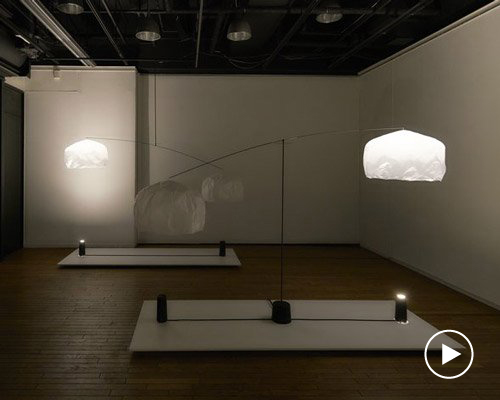
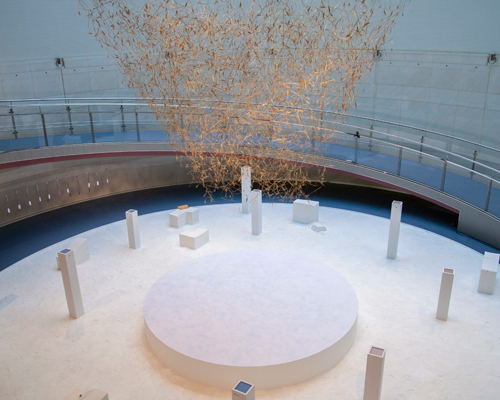
during DESIGNART tokyo 2019, taiwanese creative chialing chang has presented a solo exhibition of work that reflects her interest in nature, and recent experimentation with organic materials. the exhibit, titled ‘nature as metaphor’, gathers the artist’s investigations into the dichotomy between hardness and softness, dullness and tension, and precision and chance. with a formal education in industrial design, chang’s objective is to act as a bridge between material-related studies and objects with functional and aesthetic features. adopting precise design approaches and diverse material types, her works seek to draw upon the essence of nature itself and the potential landscapes which can result from them.
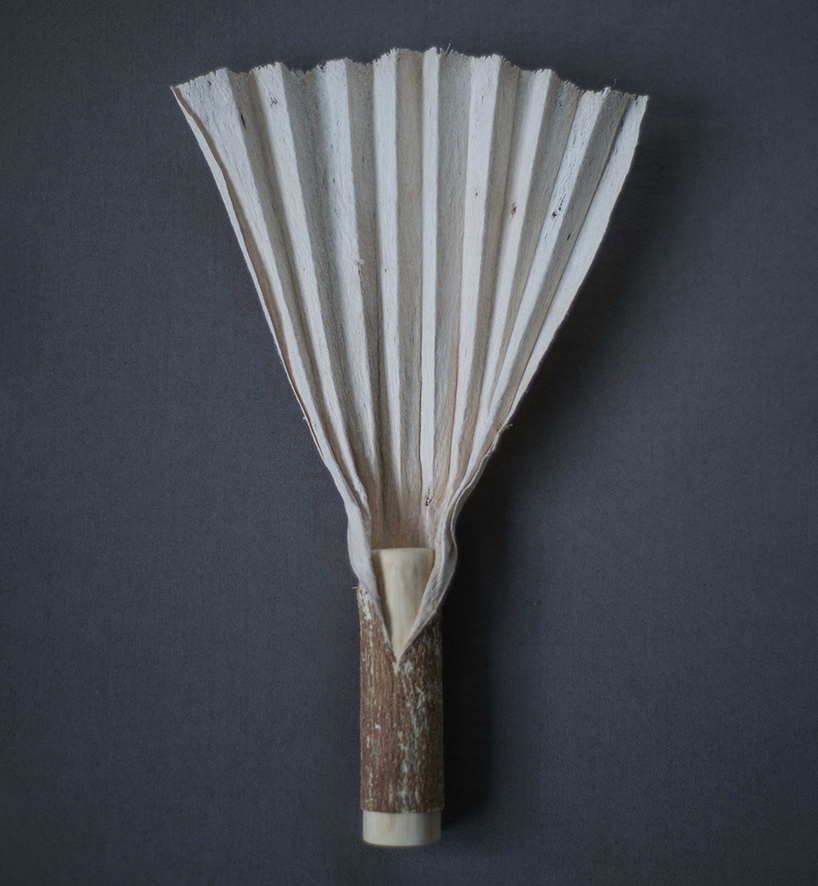
scalloping series, photo by james teng
designboom visited the exhibition in tokyo to take a closer look at the projects presented, including ‘scalloping series’ — a study of the ancient handicraft of barkcloth — and ‘floating pattern’ — a series of furniture, which explores softened and flattened tree bark.
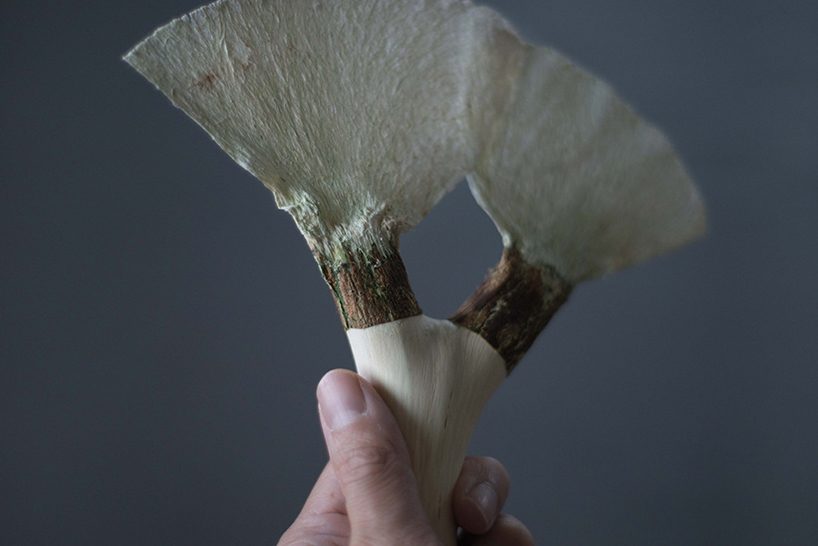
photo by james teng
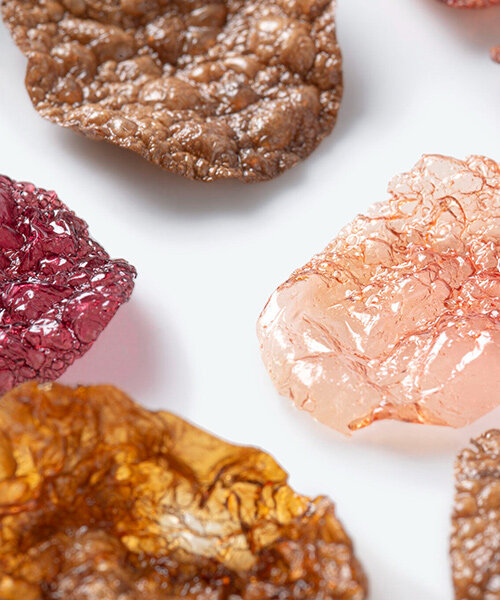
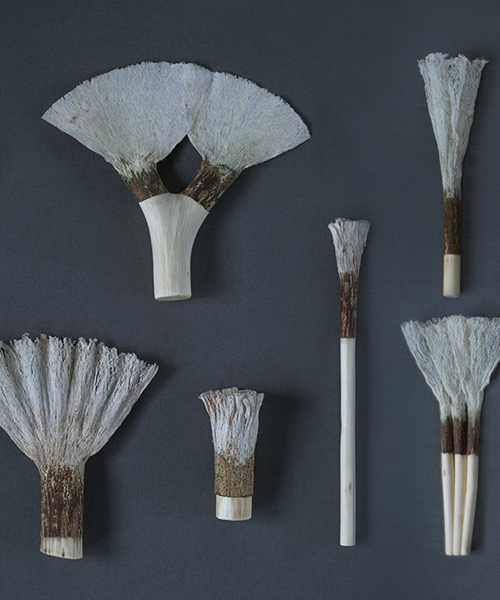
for her ‘scalloping series’ presented during DESIGNART tokyo 2019, chialing chang studied the ancient craft of the barkcloth making. the technique involves beating sodden strips of the fibrous inner bark of mulberry trees into sheets, which can then be finished into a variety of cloths and materials. through the process, the bark is enlarged to produce thin sheets of cloth primarily used for everyday needs and ceremonial uses across oceania. chang sought to explore further modalities of this gradually-ceased craftsmanship.
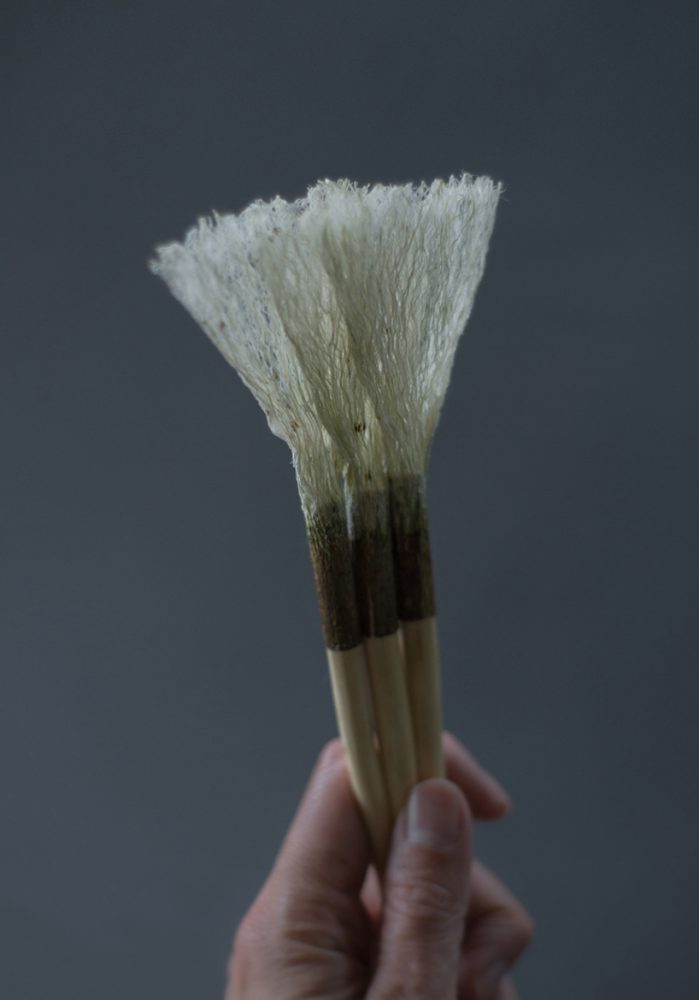
photo by james teng
based on the corresponding characteristics of each piece of barkcloth made, different techniques were adopted for their use. each resulting item retains the original structure of a branch, and parts of its raw surface connect to a wooden handle. the series comprises twelve fans and brooms elaborated with varied shapes and textures. the collection of obejcts draws from forms derived from floral motifs, which intend to reveal the natural states of the raw fiber.
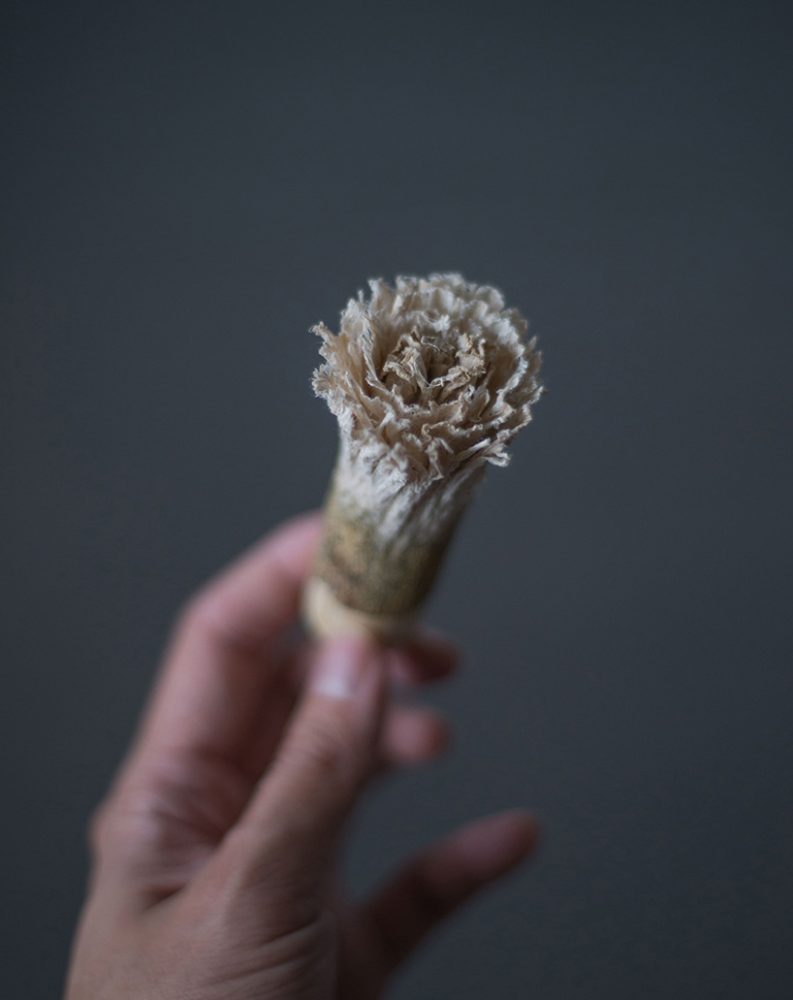
photo by james teng
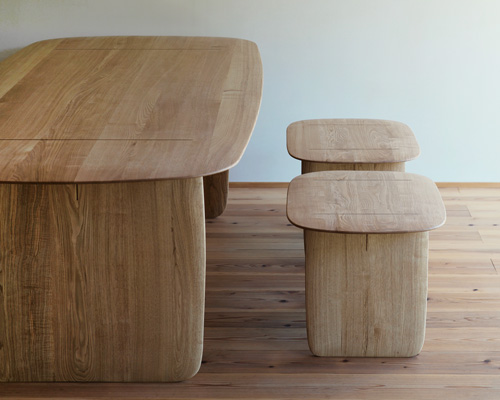
chang’s most recent collection, ‘floating pattern’, further explores expressions and applications of softened and flattened tree bark. being treated with a series of drying, refining, leveling and compressing processes, pieces of japanese cedar bark have been bound together with thin strand boards to form a composite material. seemingly pure at first glance for its raw texture that is directly inherited from nature, this manufactured board contains no actual solid wood, but rather layers of carefully engineered wood.
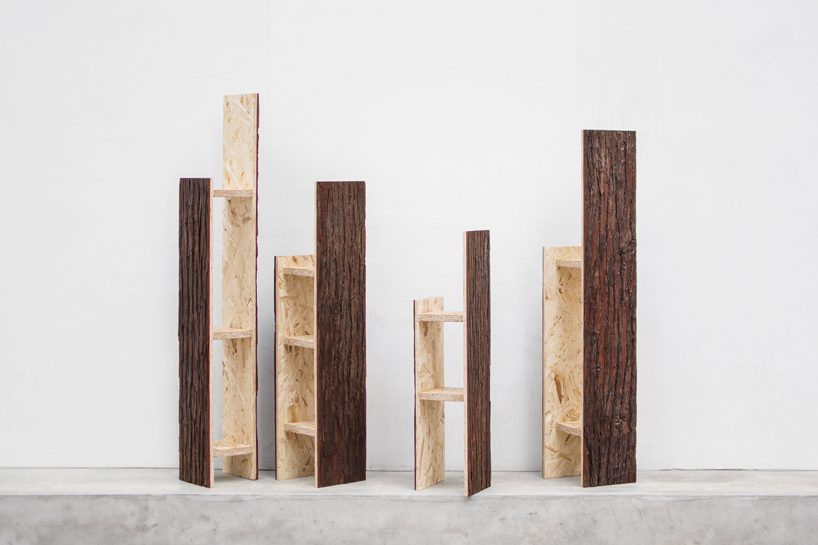
floating pattern, photo by yuchi guo
the irregular profile of the bark is taken from a circular arc to a rigid, rectangular shape. ‘floating pattern’ adopts a bottom-up assembly approach, and is composed of geometrical parts. the modular design allows textured bark planks to stagger in a random rhythm. when stacked, the wooden panels form separate compartments, which serve as shelves. the interplay between the voids and the closed spaces result in a freedom from definite, or preconceived patterns. these natural textures eventually merge into a slender tower that spans 2 meters, representing the image of a tree.
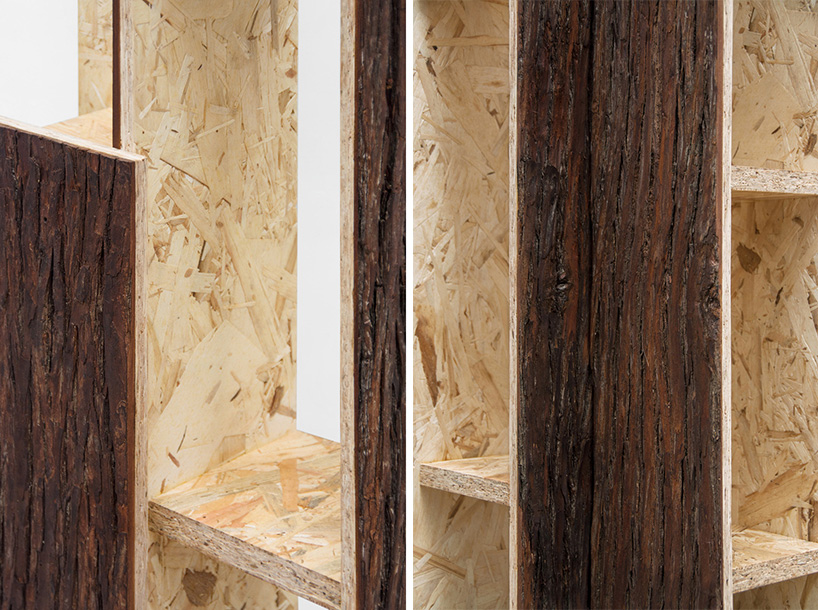
photos by yuchi guo
the bark used in this project have been sourced from industrial waste of the wood sawmill. before the sawing, logs are peeled through the use of high-pressure water jets, removing the rough surface and facilitating subsequent processing. without commercial value, the fallen bark is normally regarded as waste material and is incinerated. working with a material that is commonly undervalued, ‘floating pattern’ aims to bring the bark back to its original context as wood.
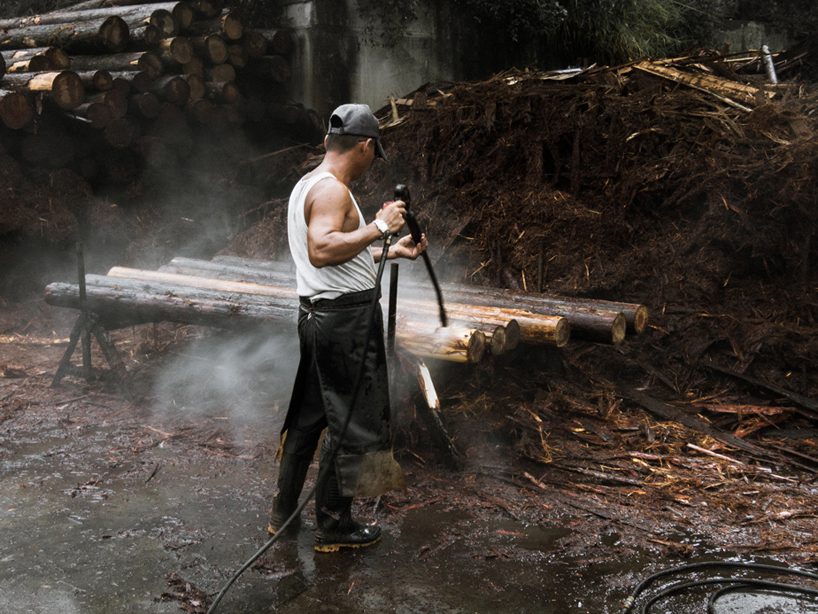
before the sawing, logs are peeled through high-pressure water jets to remove the rough surface
photo by yuchi guo
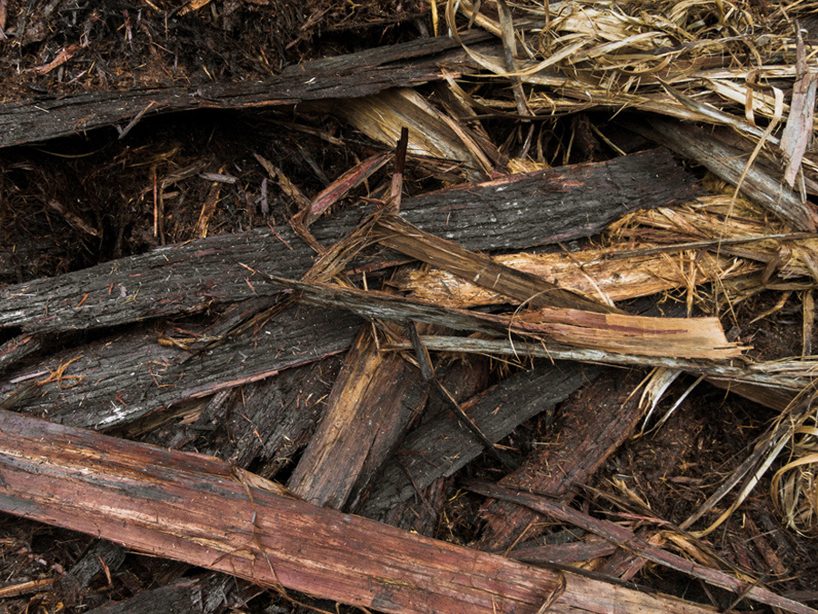
the peeled-off materials
photo by yuchi guo
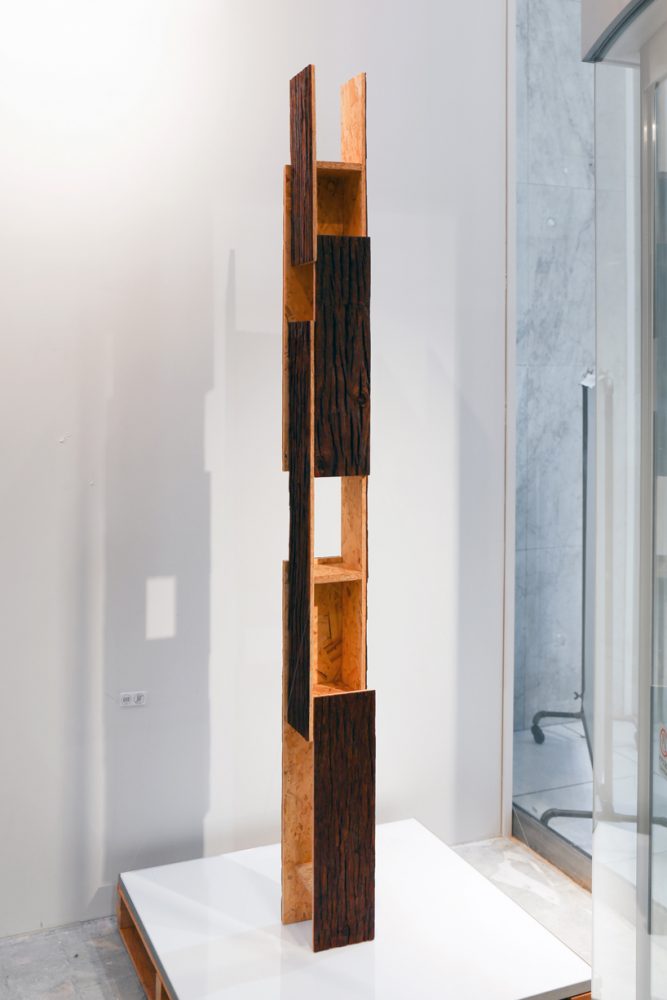
exhibition view of ‘nature as metaphor’, image © designboom
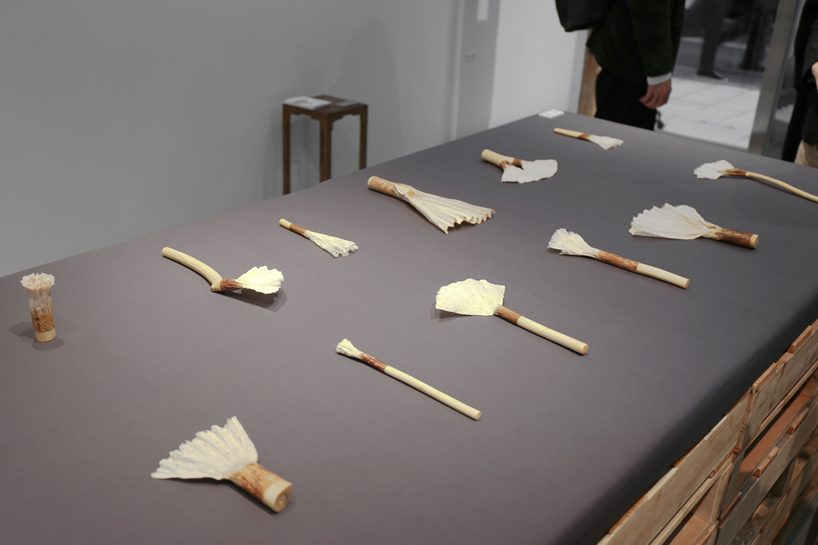
exhibition view of ‘nature as metaphor’, image © designboom
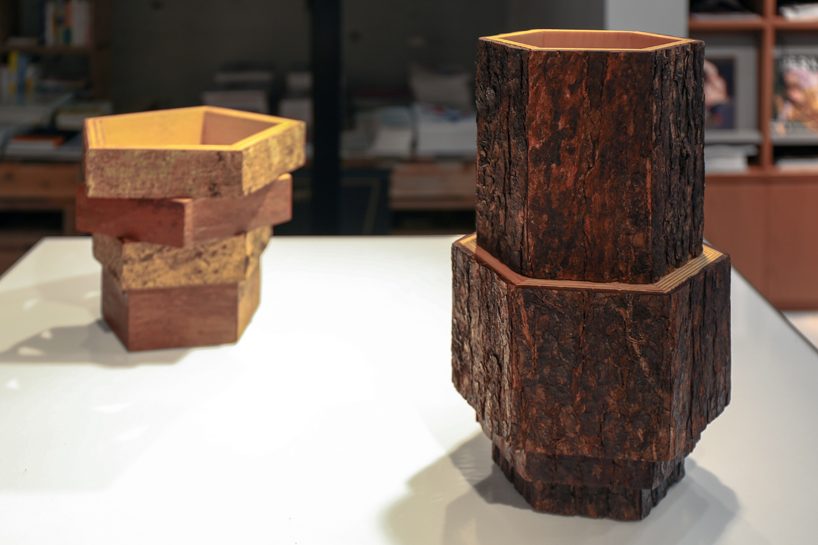
exhibition view of ‘nature as metaphor’, image © designboom
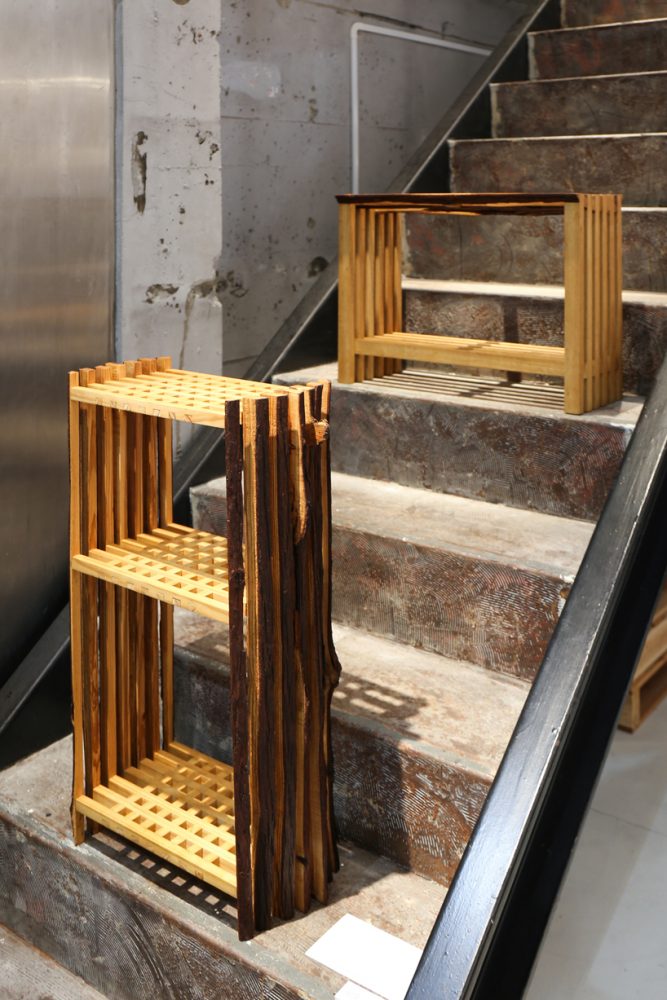
exhibition view of ‘nature as metaphor’, image © designboom


1/12
project info:
designer: chialing chang
exhibition: ‘nature as a metaphor’
during: DESIGNART tokyo 2019
venue: 文喫 六本木 BUNKITSU roppongi
6-1-20, roppongi, minato-ku, tokyo, japan

shop
your own online design shop — no sales commission collected