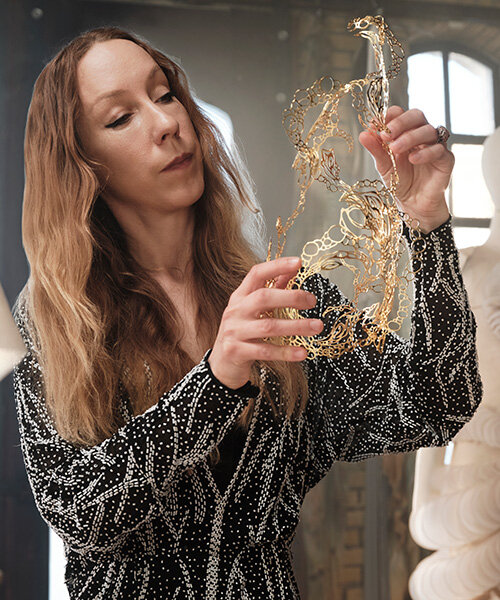
‘the community is the client’: how fernando laposse turns craft toward rural regeneration
the mexican designer reflects on a decade-long practice that gives plant waste new value while keeping craft tied to the people who grow it.
prefer designboom on google[FEATURED]
fernando laposse is shaping the future of craft
Across Fernando Laposse’s work, the future of design begins in a field, where a plant is grown for more than its commodity value and a material carries the memory of the place and people that made it.
Speaking with designboom, the Mexican designer traces his practice through corn husks, agave fibers, eroded hillsides, and the village of Tonahuixtla, where making becomes a way to build an economy around what the land can sustain.
His objects move through galleries and public installations, but their logic starts elsewhere, with seeds, farming seasons, soil, and relationships that have been maintained over years.
‘Craft is different, and it is applied very differently in practice for very different reasons around the world,’ Laposse tells designboom. ‘In the West, or in Europe and the developed world, this return to craft is almost anthropological. It can even feel like a wellness thing.’ In his region, he says, the word carries another weight.
‘In Latin America, which is what I know best, craft is still attached to a concept of poverty.’ This is the tension that runs through his work. He is drawn to hand-making, but he refuses to romanticize the conditions around it.

fernando laposse looks beyond craft as style
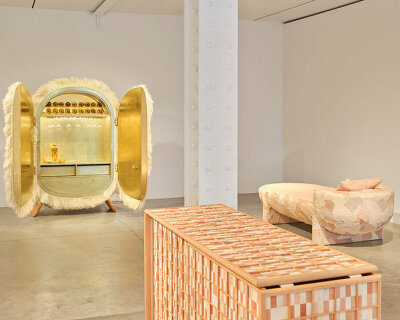
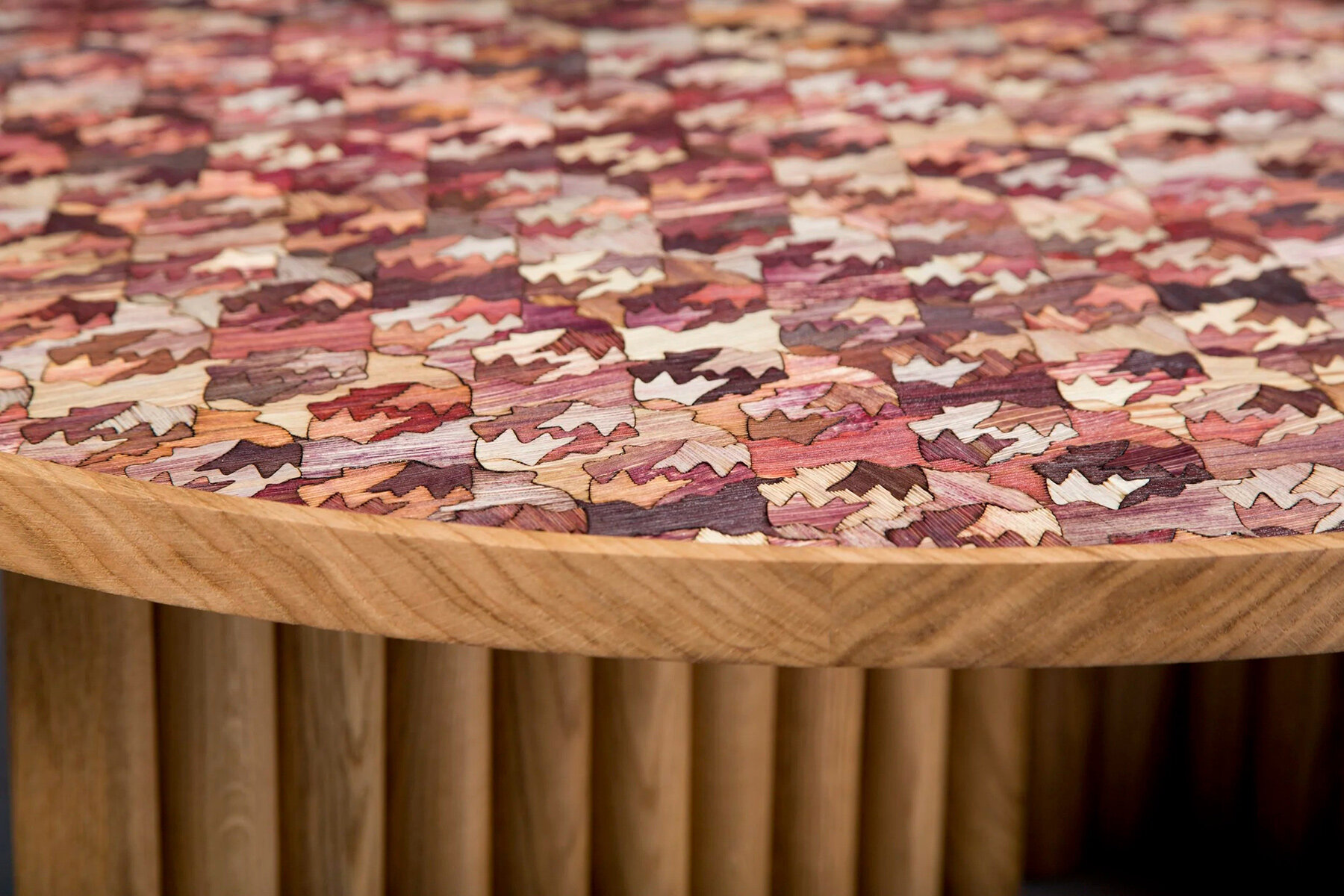
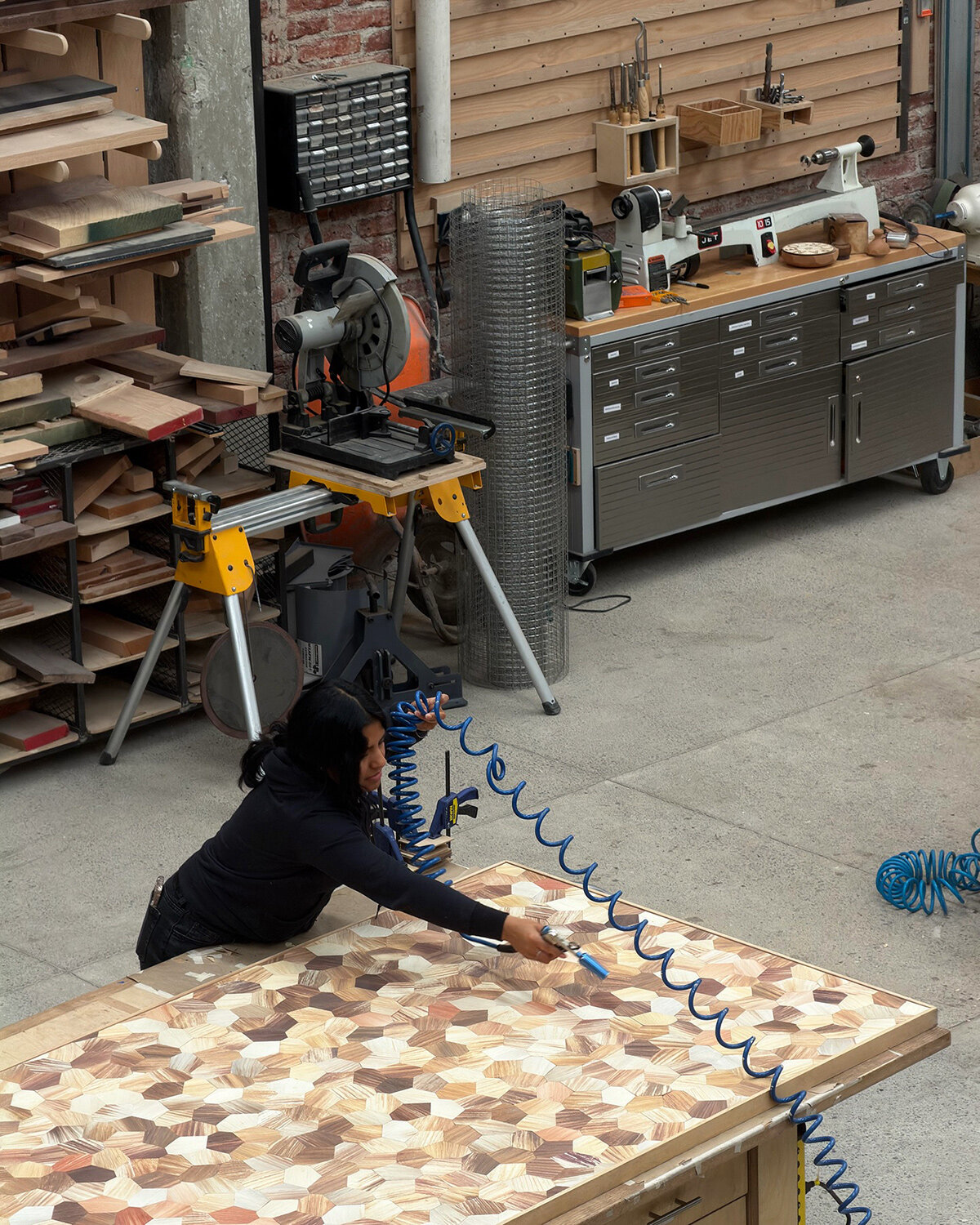
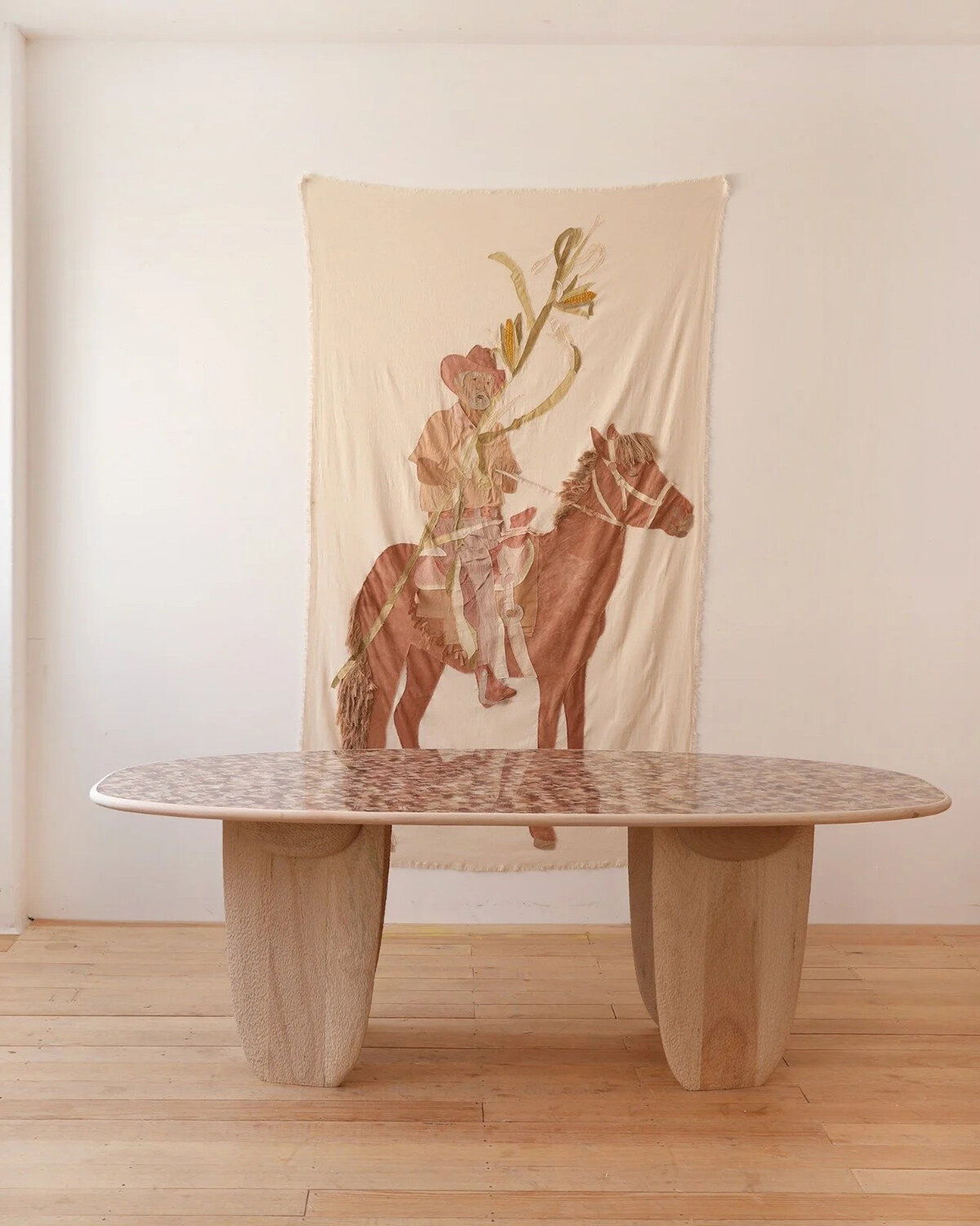
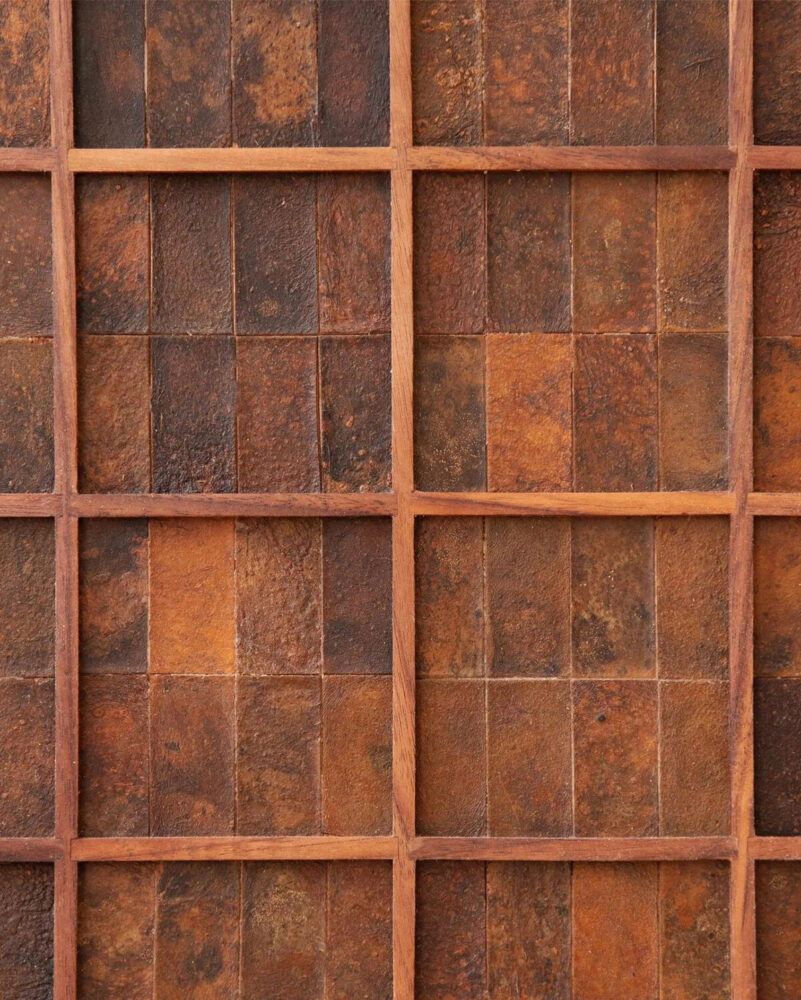
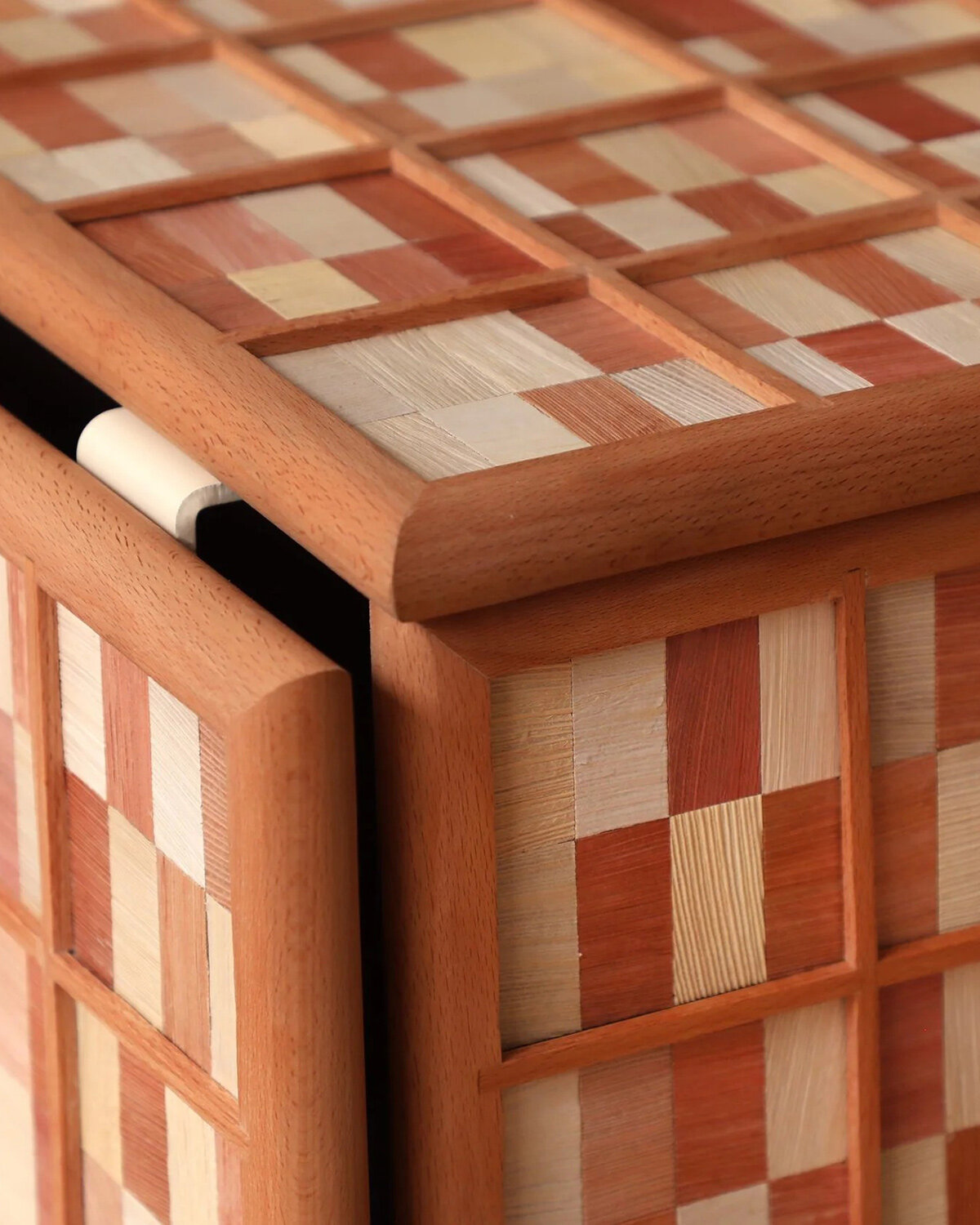
The works of designer Fernando Laposse often begin with humble plant matter. Totomoxtle uses the husks of heirloom corn, which are peeled from the cob, flattened, and laminated onto paper or textile backing to create a veneer-like surface.
The natural tones range from deep purples to creams, browns, and pale golds, with each sheet carrying the color of the native corn variety that produced it. The material is cut and assembled like marquetry, forming furniture and wall surfaces that keep the grain and irregularity of the husk visible.
Yet the material is only one part of the story. Laposse explains that a major part of his practice has been changing the perception of craft in Mexico, both for makers and for clients.
‘Part of what I try to do with my work is redefine what craft means in Mexico, elevate the results of what we can do here, and change the preconception that craft has to be something you do for survival, or that, on the client’s side, it has to be something very cheap.’
The aim is cultural as much as material. Craft becomes a way to shift value back toward rural labor and agricultural knowledge.

agriculture as the site of innovation
While many designers turn toward existing techniques, Fernando Laposse says he set himself a different challenge. ‘I set myself a personal challenge as a designer not to use existing crafts,’ the artist says.
For him, the issue is tied to class, inequality, and access to the market. A designer can enter a community, adapt a traditional object, and make it desirable to a new audience, but that structure can leave the same imbalance in place. ‘The majority of those approaches still rely on the privilege of the designer, or the access to market that the designer has and the artisans do not.’
His answer has been to develop new craft systems around agriculture. ‘I would rather focus on design and craft empowering something else. In my case, that something else is agriculture,’ he continues.
With Totomoxtle, that means preserving heritage corn varieties that were pushed out by industrial farming and low grain prices. ‘What I do with corn, as far as I am aware, no one else does in the world. It is a craft that is very particular to my practice and now to the community I work with.’

Totomoxtle builds a micro-economy from corn
In Tonahuixtla, Totomoxtle turns the corn husk into an alternative source of income, while giving farmers a reason to reintroduce native seeds. The project moves away from the grain as the only economic value of corn. Instead, the husk becomes a design material, and the field becomes part of a wider production system.
Over time, that system has grown around training, seed selection, land preparation, and financial support before the harvest arrives.
‘Over the last ten years, because it has officially been ten years this year, we have been building a whole ecosystem where design and craft are at the center,’ Laposse says. ‘They are the motor of everything, but they move all these other cogs and wheels. They focus on ecology, biodiversity, and soil regeneration.’
His language is mechanical, but the process is slow and agricultural. A piece of furniture may be the part seen in a gallery, while the work begins months earlier with planting and support for the families who grow the crop.

the gallery carries a human scale
Laposse is aware that once the work leaves the village, much of that complexity can disappear into a polished surface. To resist that flattening, he has documented Totomoxtle from the beginning, often arriving with a camera and bringing video into exhibitions and talks.
‘With this project in particular, I have tried to create a lot of transparency, so the final viewer can see the whole process,’ he says. ‘They can see not only the result, but also the challenges that existed before we started looking for solutions.’
For him, the story needs a human scale. ‘I think we have become quite insensitive to very large, depressing statistics,’ he continues. ‘If you read the number of trees deforested, or the square miles lost to erosion, or the millions of people who have migrated, it becomes an abstraction.’
The work gains force when those forces are brought back to one family or one group of families. ‘Once you start putting faces and personal stories to these issues, I think the viewer tends to feel more empathy.’

agave fibers keep the plant alive
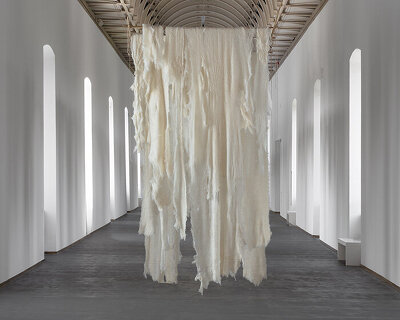
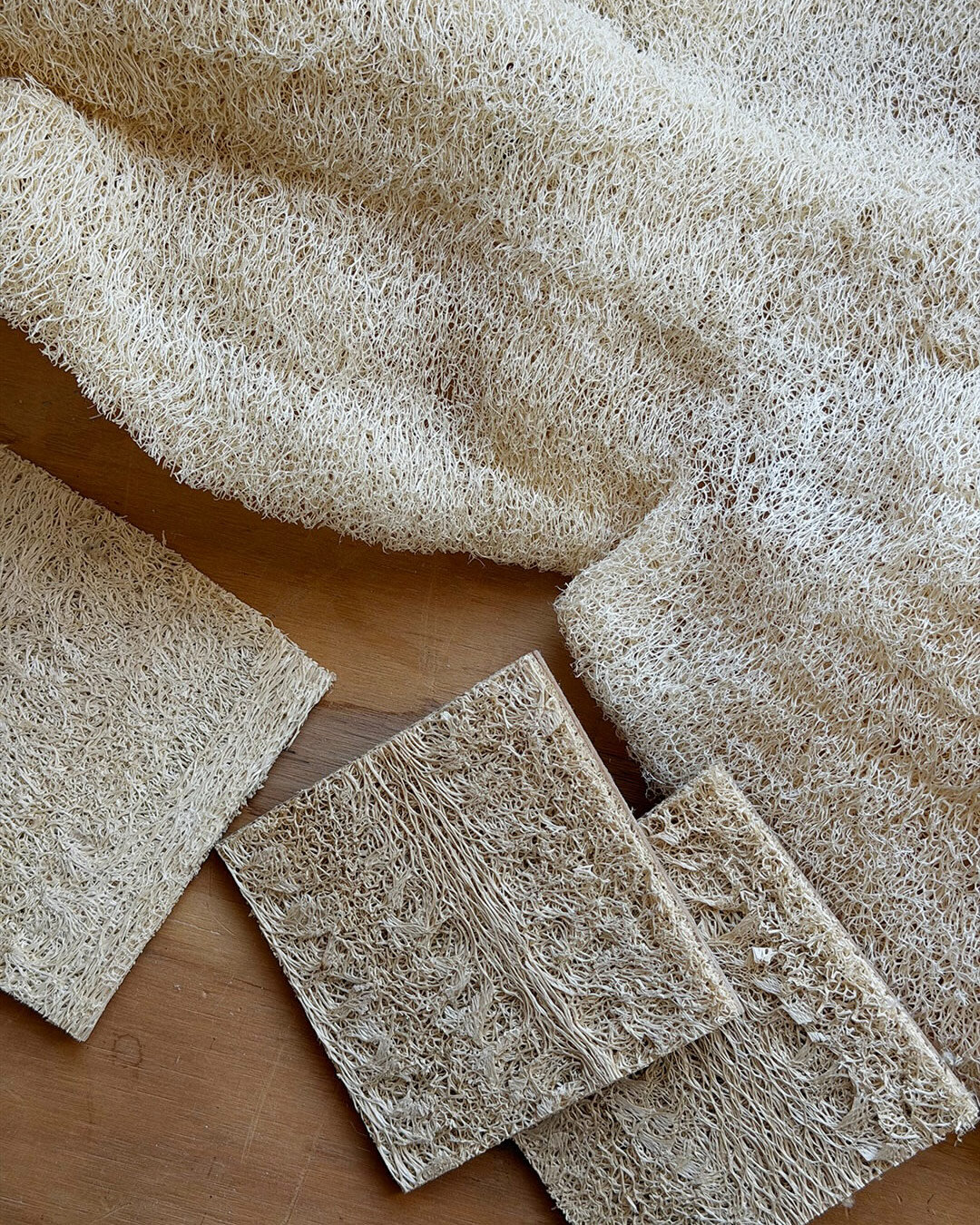
The agave work expands this thinking through another plant and another landscape process. In the same community, Laposse has worked with agave as part of a wider reforestation strategy, planting it across eroded slopes where its roots help retain water and soil. Instead of harvesting the whole plant for tequila, mezcal, or syrup, the fiber is taken by pruning the leaves.
‘The fibers are a very good solution because you prune the plant, but you do not kill it,’ he goes on. ‘That actually helps it grow healthier and faster, and produce more leaves.’
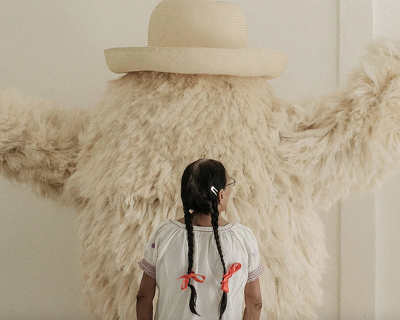
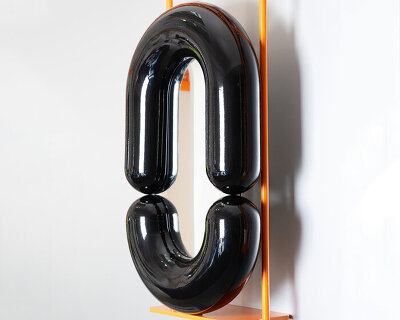
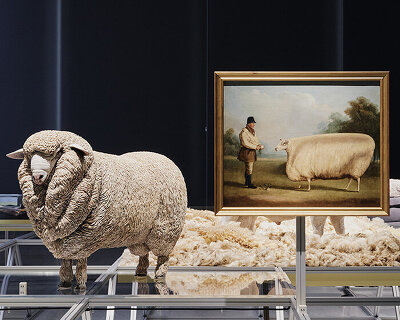
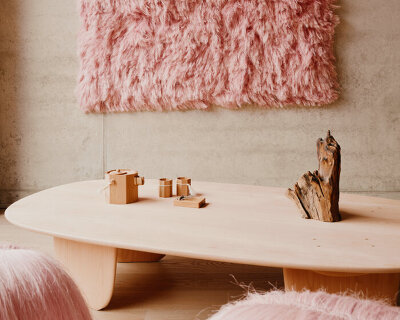
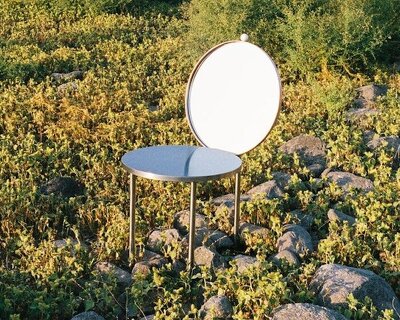
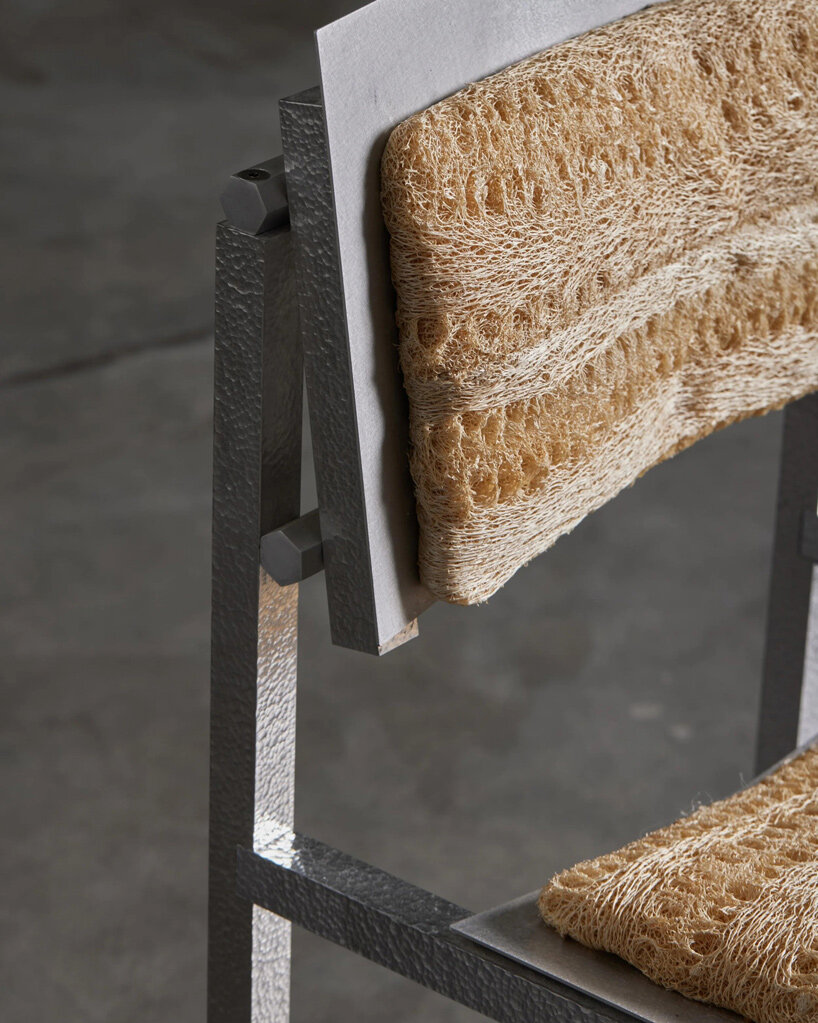
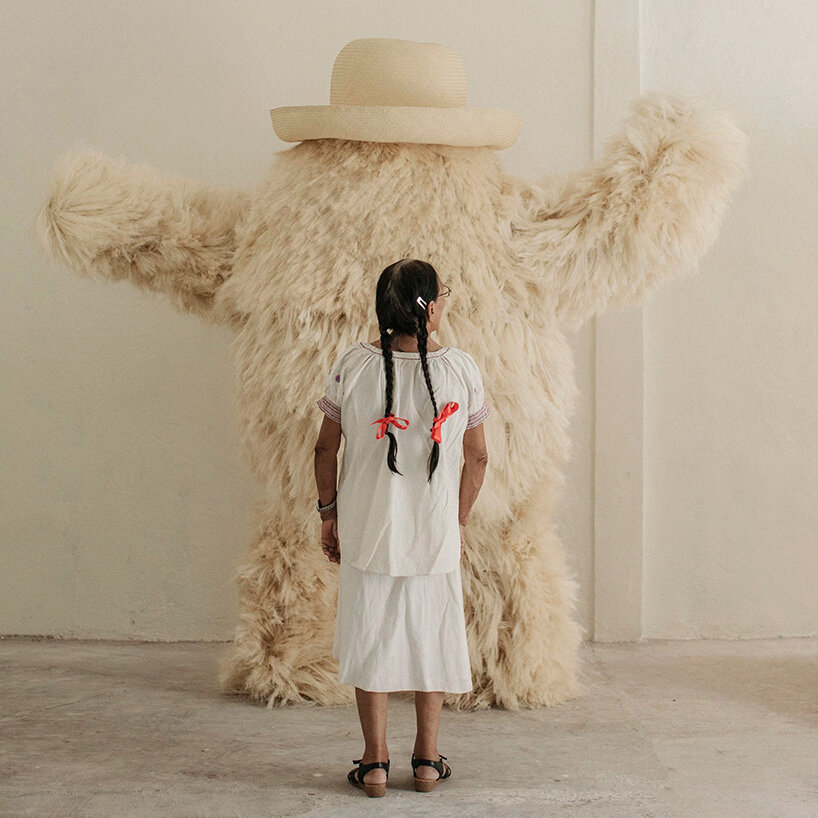
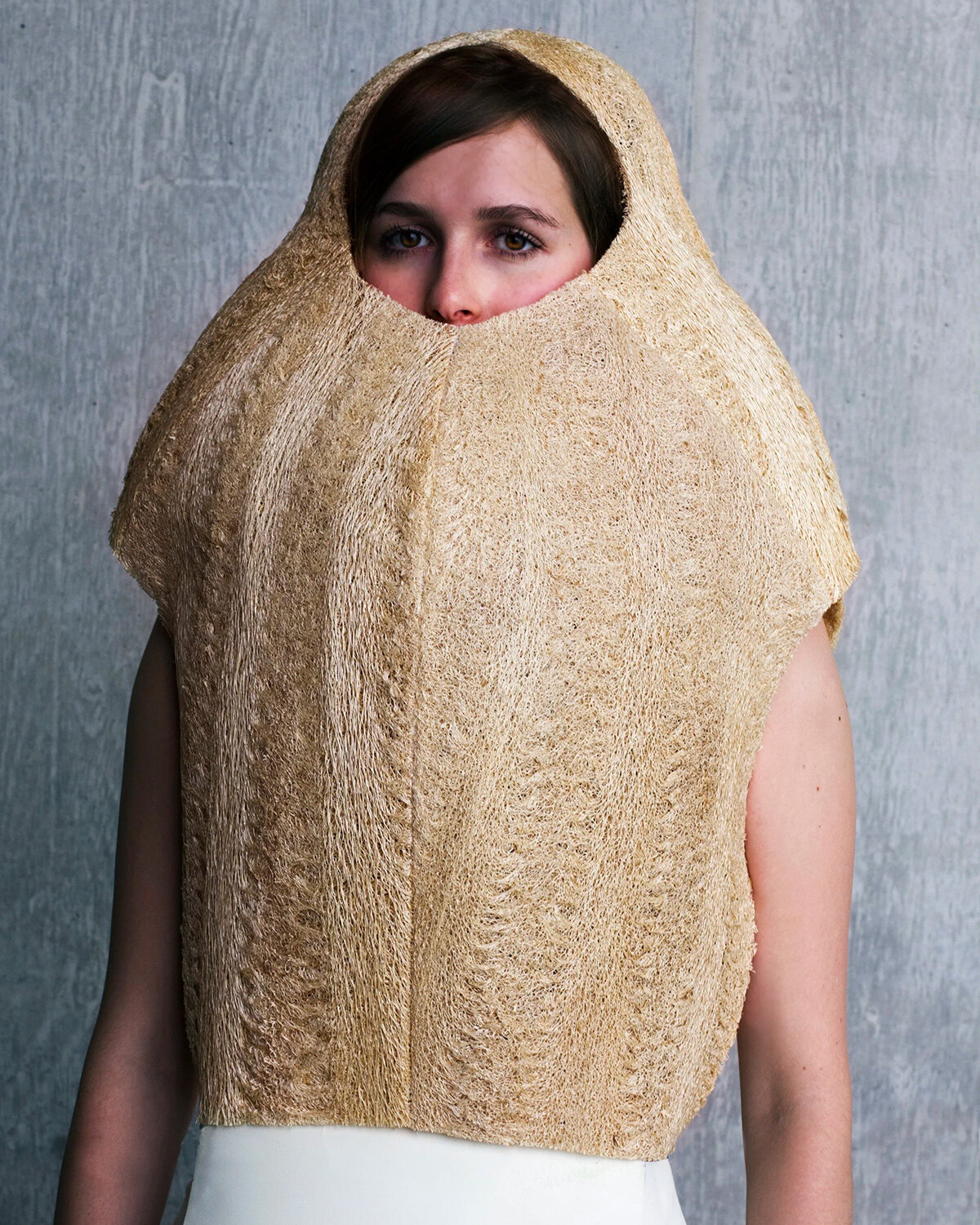
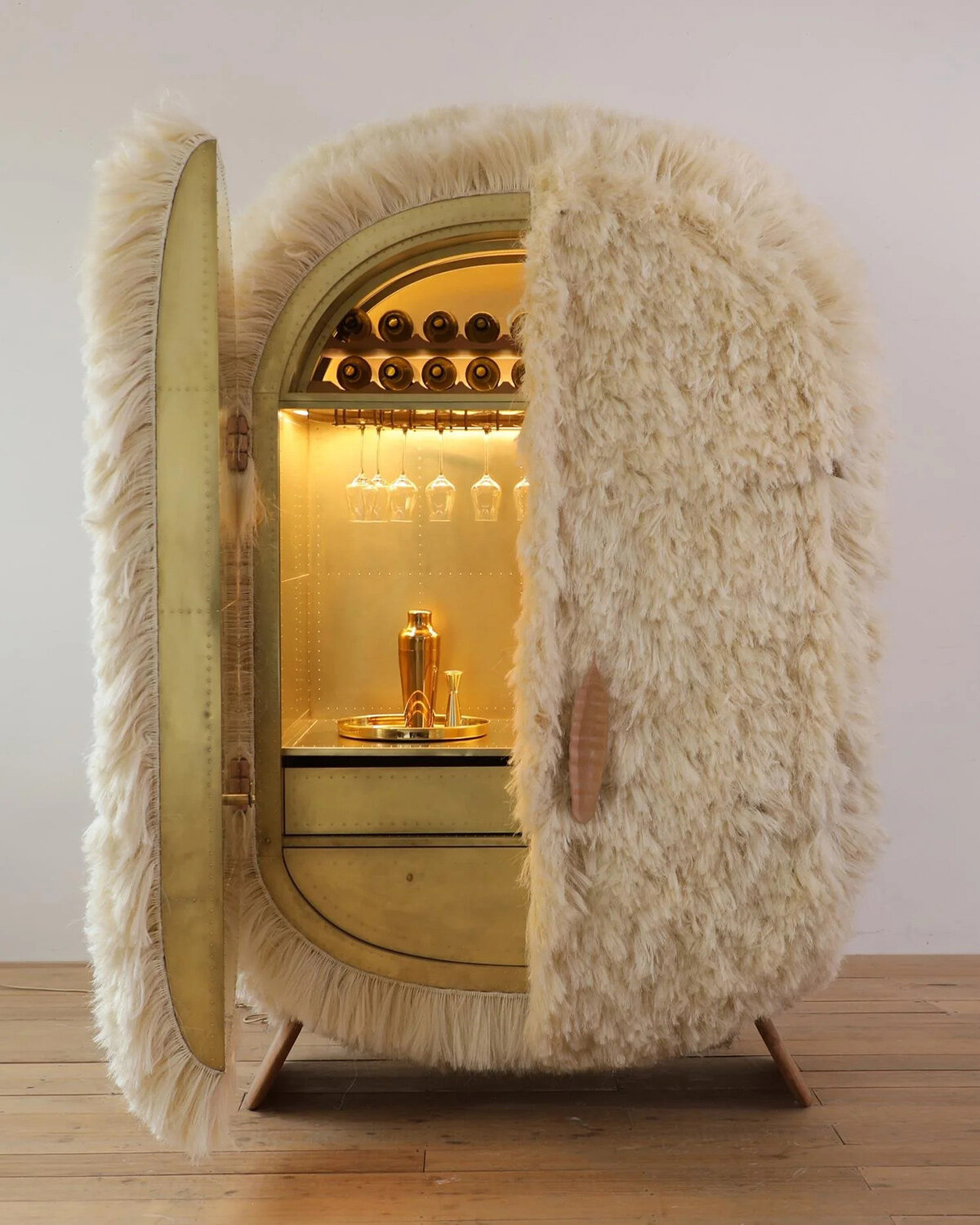
Those fibers become shaggy benches, tactile wall pieces, sculptural dogs, and fur-like armchairs, with strands that are combed and knotted by hand. In works such as Hair of the Dog, Furry Mirror, and Pink Furry Armchair, the material keeps its raw, unruly character, somewhere between plant fiber and animal coat, while still pointing back to the fields where it was grown.
Laposse also developed The Good Shepherd with Kvadrat, a rocking bench covered in knotted sisal from agave plants cultivated as part of his ongoing land and community regeneration work in rural Mexico. The piece uses mechanical fastenings and avoids glue so its parts can be reused or recycled, extending the same thinking from the hillside to the object’s construction.

one town and no more
Scale has become one of the most important questions in Laposse’s work. Early in the life of Totomoxtle, he imagined the material becoming widely accessible, perhaps appearing across sustainable buildings around the world. The business plan then began to show its own trap. To grow that way, labor costs would have to shrink. The project would start to repeat the same industrial logic it was built to challenge.
‘In a way, it has been a reckoning with the maximum scale this project should have. In my opinion, it has to stay with this one town and no more.’
Staying at that scale allows him to maintain personal relationships, protect wages, and continue developing the production process with the people involved. ‘We are growing together in terms of skill sets, me as a designer, and them as farmers and craftspeople,’ he says.
the community becomes the client
This shift changes who the work is for. Laposse speaks about designing for people in the rural reality of Mexico, where communities are often pulled between inherited agricultural systems and the promise of hyper-development.
‘When I am designing, I am not thinking of the final collector as the client. I am really thinking of the community as the client.’
That means the design work continues inside the production process. He asks how tools can be improved, how more people can join without long training periods, and how quality can remain high while the work stays accessible to the village.
‘What can we do to make the work more efficient, so they can focus on something else? How can I design new tools so that more people can join the team without too much training?’ In this sense, the object becomes one outcome of a wider design brief.

collaboration starts before the harvest
When asked what collaboration looks like when the community is the client, Laposse speaks first about money and timing. ‘In the case of Totomoxtle, we have investments throughout the year, which is not common if you are just purchasing materials from the standpoint of a more traditional design studio,’ he explains.
A studio might buy cork, coconut fiber, or mycelium when the material is ready. Laposse’s process begins earlier, before the crop exists.
‘I started to finance all the costs associated with preparing the land, plowing, and seed selection,’ he continues. ‘We give seeds for free to new families that do not yet have their own seed stock, and we provide financial support throughout the months.’
Farmers, he notes, carry risk long before any sale is made. They face weather, market shifts, and the cost of planting. ‘For me, collaboration means financially taking care of all the expenses associated with farming before the harvest.’
corn, agave, and the green mountain
The corn and agave projects operate together. Laposse traces their urgency back to the collapse of corn prices after the new trade alliance between Mexico, the United States, and Canada, when traditional agricultural systems were abandoned and soil erosion accelerated.
‘Far from helping farmers, that created all these issues,’ he says. ‘They lost their ability to feed themselves, and they lost their soil.’ Over the last decade, his team has worked to reintroduce corn seeds with support from a seed bank while planting agaves to hold water and soil.
The change is now visible in the landscape. ‘At the end, that is also something very important to me. The community is not seeing this only as an economic gain,’ he says. ‘These are people who really understand ecological gains too.’
Families began joining in greater numbers once the mountain started becoming green again. The work could be measured in income, but also in plants returning, soil holding, and new crops surviving.

a future built by many ‘small knots’
Asked what a future of design might look like if it were crafted instead of mass-produced, Laposse imagines a field of smaller initiatives with traceability back to the source.
‘A nice scenario for the future would be a disruptive one, where more and more people decide to take matters into their own hands,’ the artist notes. These initiatives, he explains, would have total transparency and traceability to the source, and personal connections to the communities involved.
He describes this future as a net made of small knots. ‘I am one of those knots, and I hope to see more designers becoming other knots that attach to it.’ The goal is a slower kind of consumption, with fewer objects made through deeper responsibility.
‘I am responsible for the afterlife of every product I put out there,’ he says. ‘My output is quite limited, but I know exactly who has my pieces. If there is any problem with durability, repairs, or anything else, I am in charge of it.’
patience, proof, and the work ahead
Laposse’s advice to younger designers is grounded in the time this work takes. He explains: ‘It can be done. That is the thing. It takes patience and a lot of commitment.’
He remembers the years before the practice became financially viable and warns against the lure of immediate success. A second job, a side practice, and a long period of building can all be part of the path.
‘Maybe you do not see immediate success in design, but you can measure success in other ways: a plant growing, a new variety of corn surviving, or a recipe that was not lost because of what you did.’

1/7
project info:
designer: Fernando Laposse | @fernandolaposse
This article is part of designboom’s Crafting the Future chapter, exploring what it means to be a maker in today’s world and the future of craftsmanship. Discover more related stories here.
shop
your own online design shop — no sales commission collected