CUN design transforms 70s textile warehouse into clothing brand headquarters in beijing
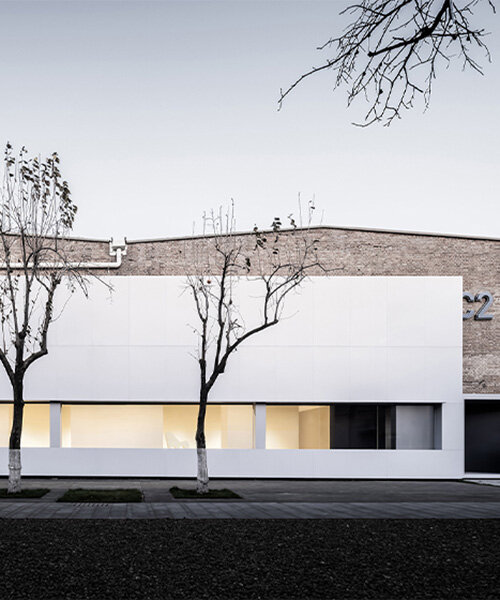
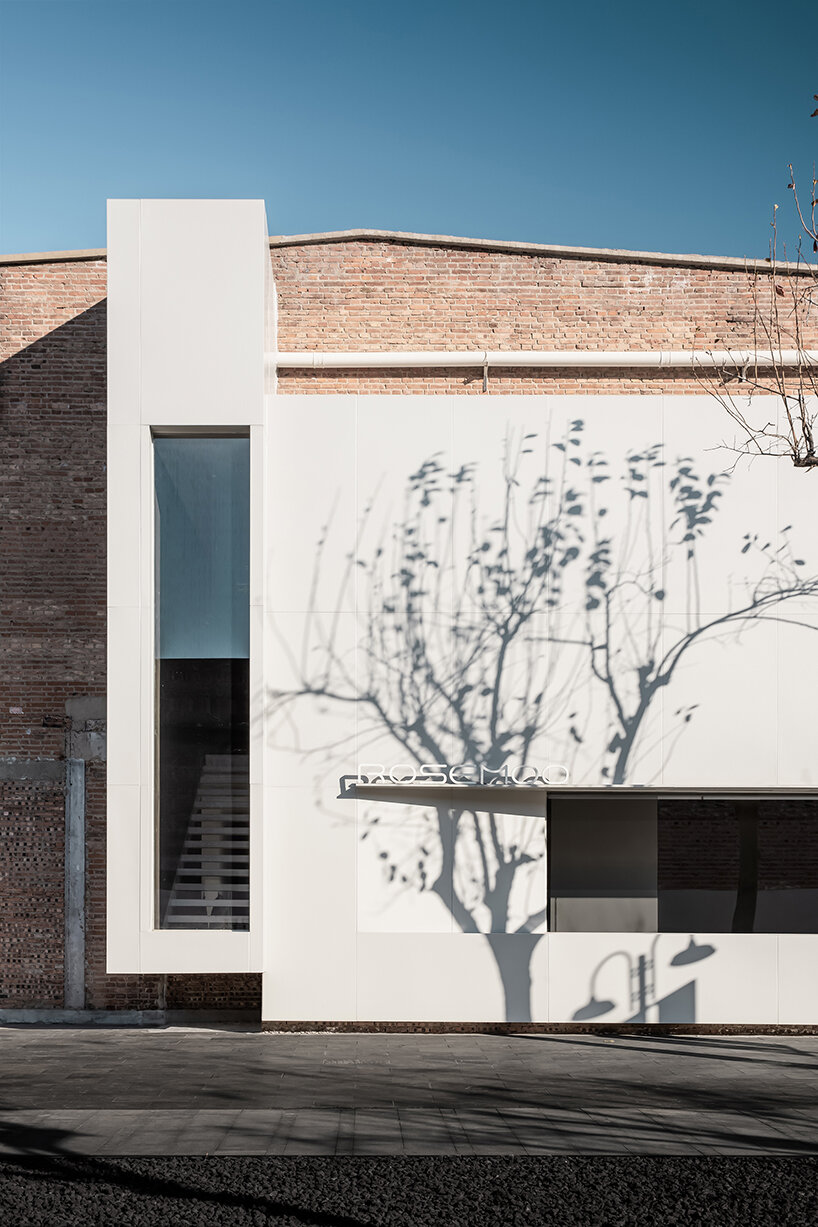
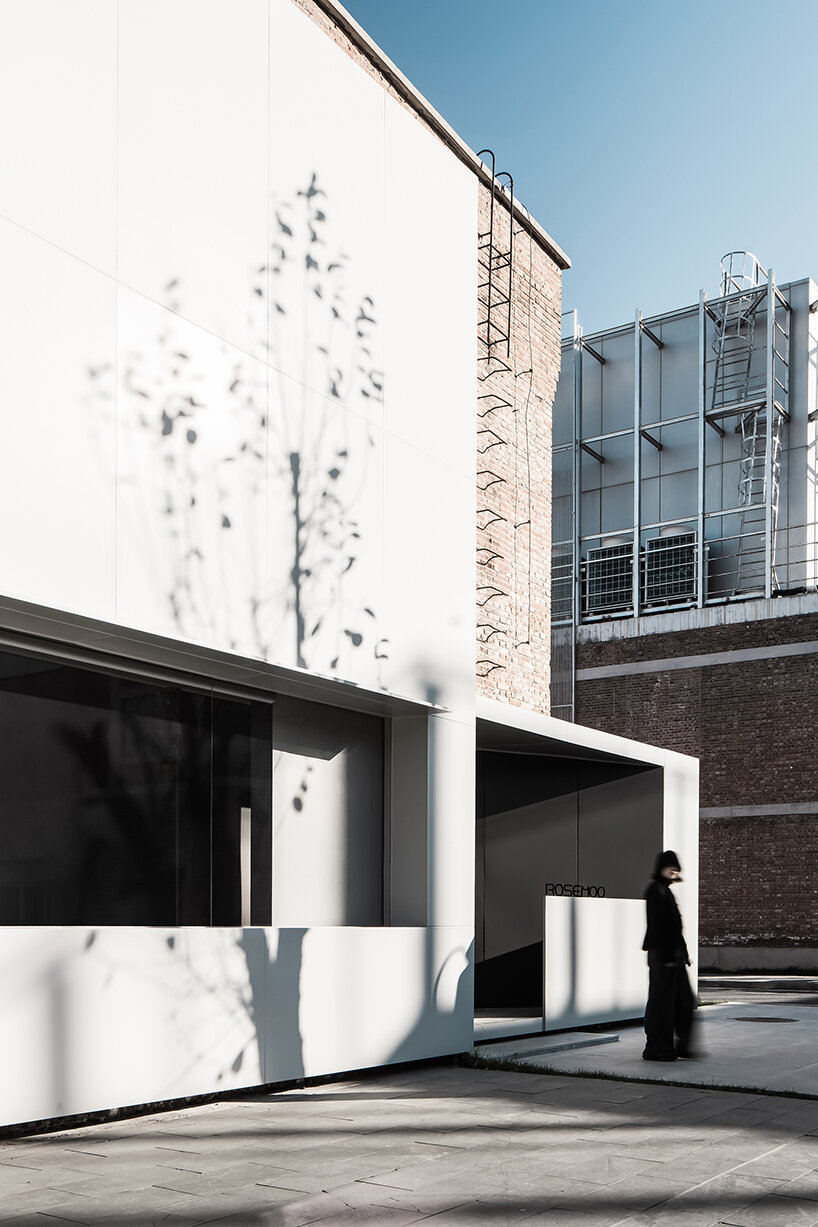
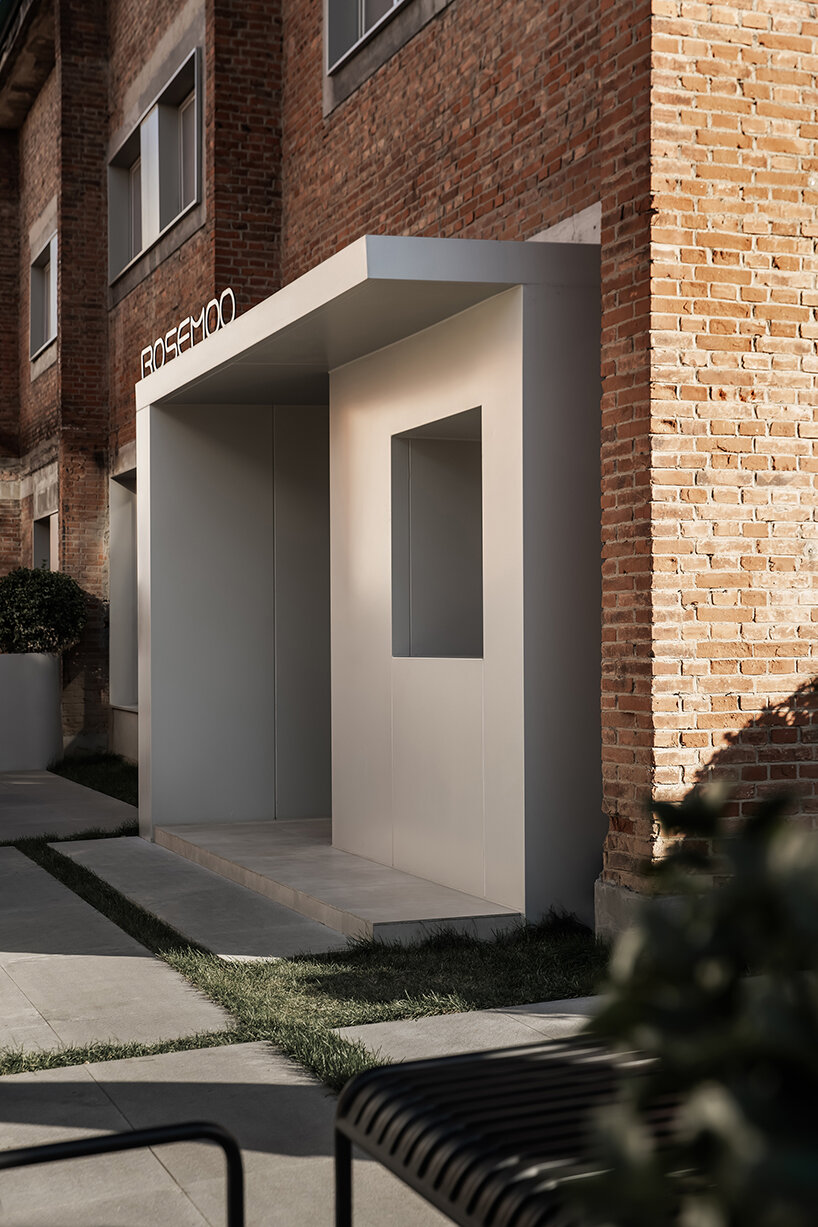
CUN design incorporates two white architectural volumes to the rosemoo headquarters design, preserving the original brick architecture of the warehouse.
prefer designboom on google1970s warehouse becomes rosemoo’s headquarters in beijing
Cui Shu from CUN Design team collaborates with clothing company ROSEMOO to transform one of the 1970s red brick warehouses in the Shouchuang Langyuan Station Park in Beijing, China into the new brand headquarters. Located in one of the 30 warehouses of the Beijing Textile Warehouse previously occupying the park, the building provides a composite and diverse creative environment that combines office, reception, and showroom spaces. The original open layout of the warehouse and its red brick facade, provide spatial possibilities to house creativity. The architect created two volumes, one inside and one outside the building, preserving the industrial heritage of the original structure. Through sculptural handling, the visual result incorporates the brand’s identity while serving the functional needs of the headquarters.
CUN Design combines Chinese philosophy with modern techniques
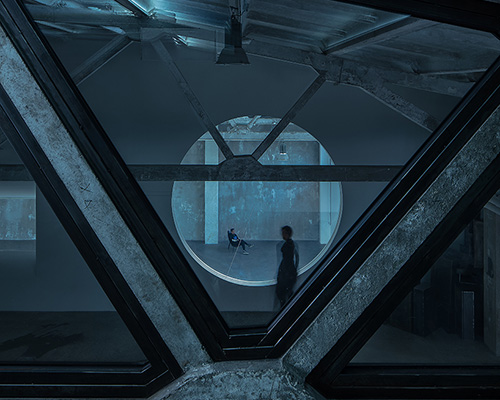
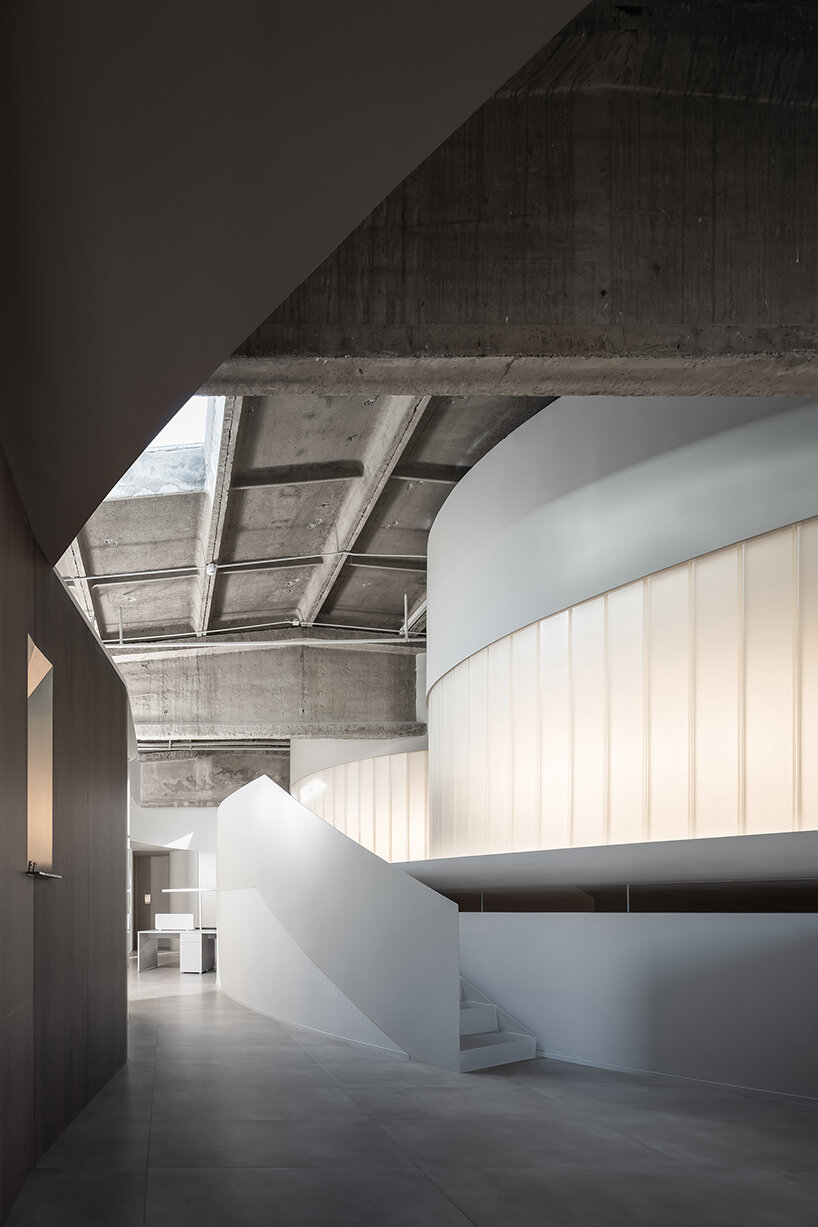
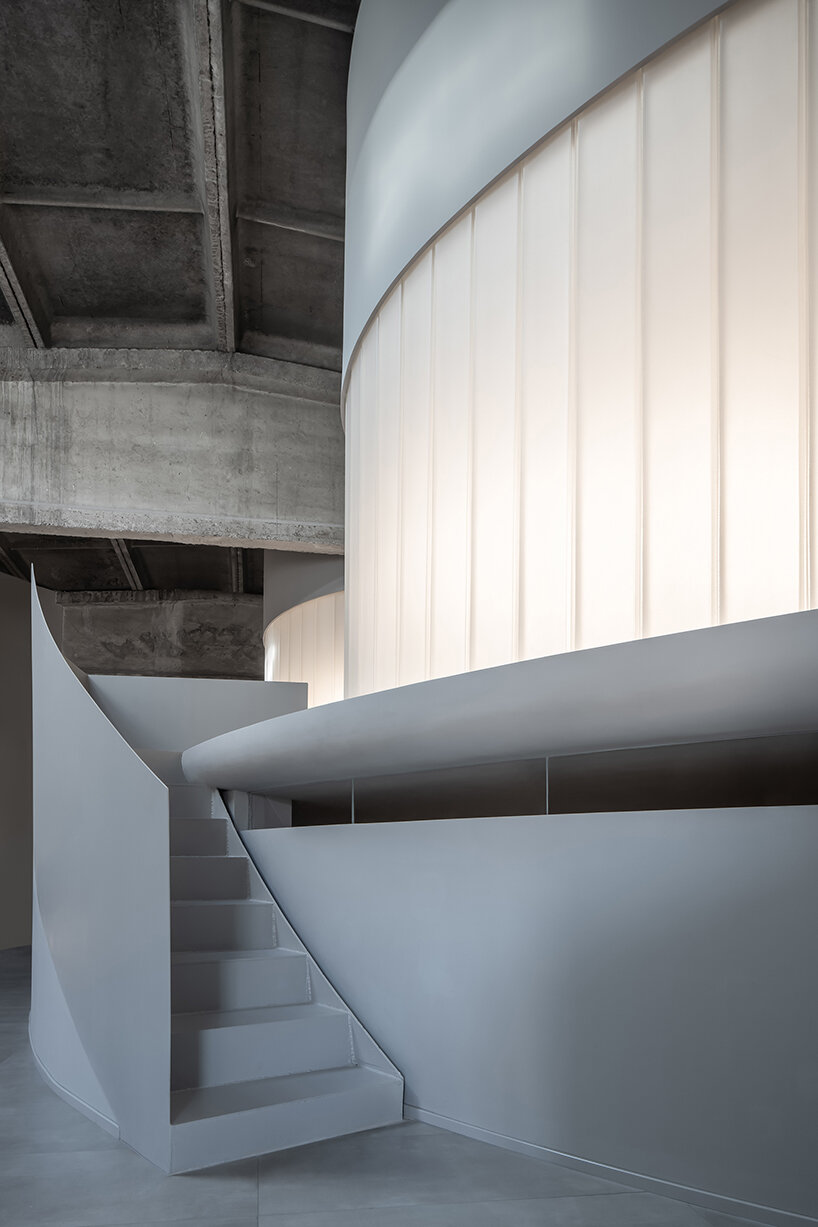
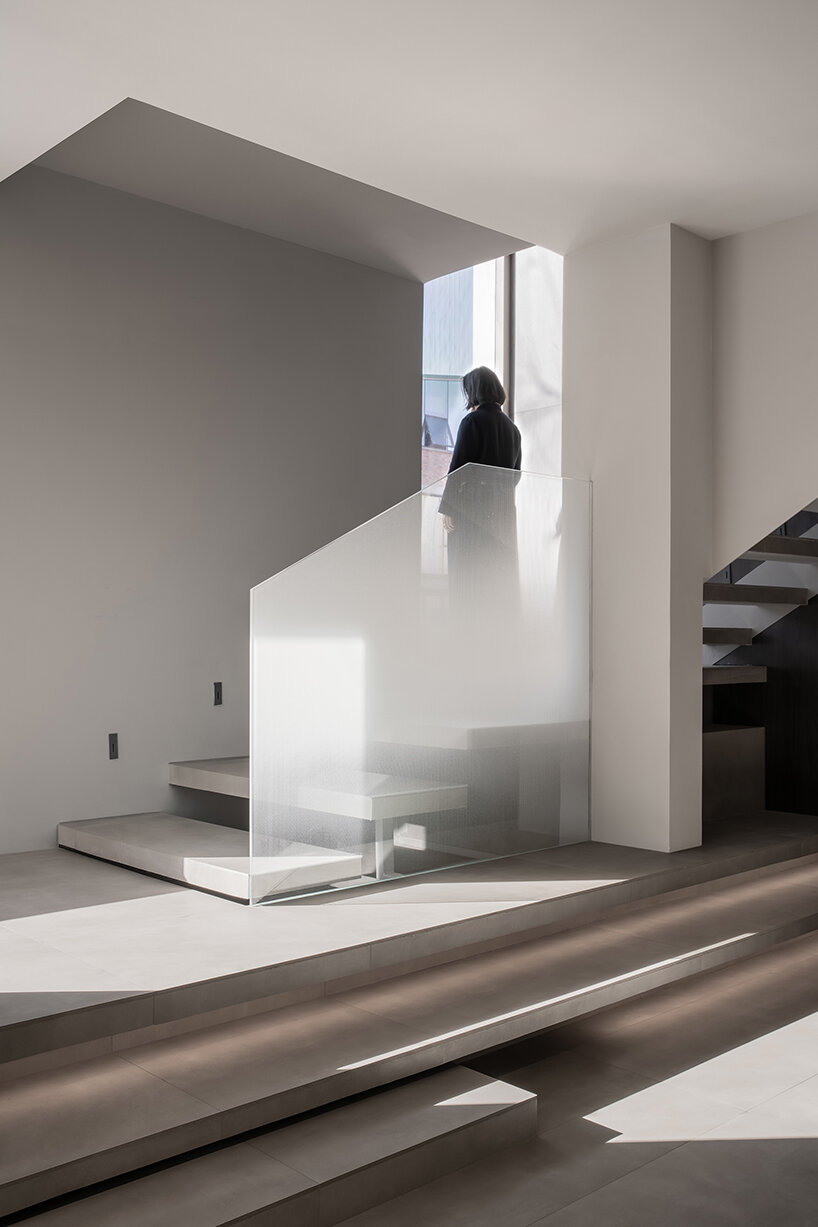
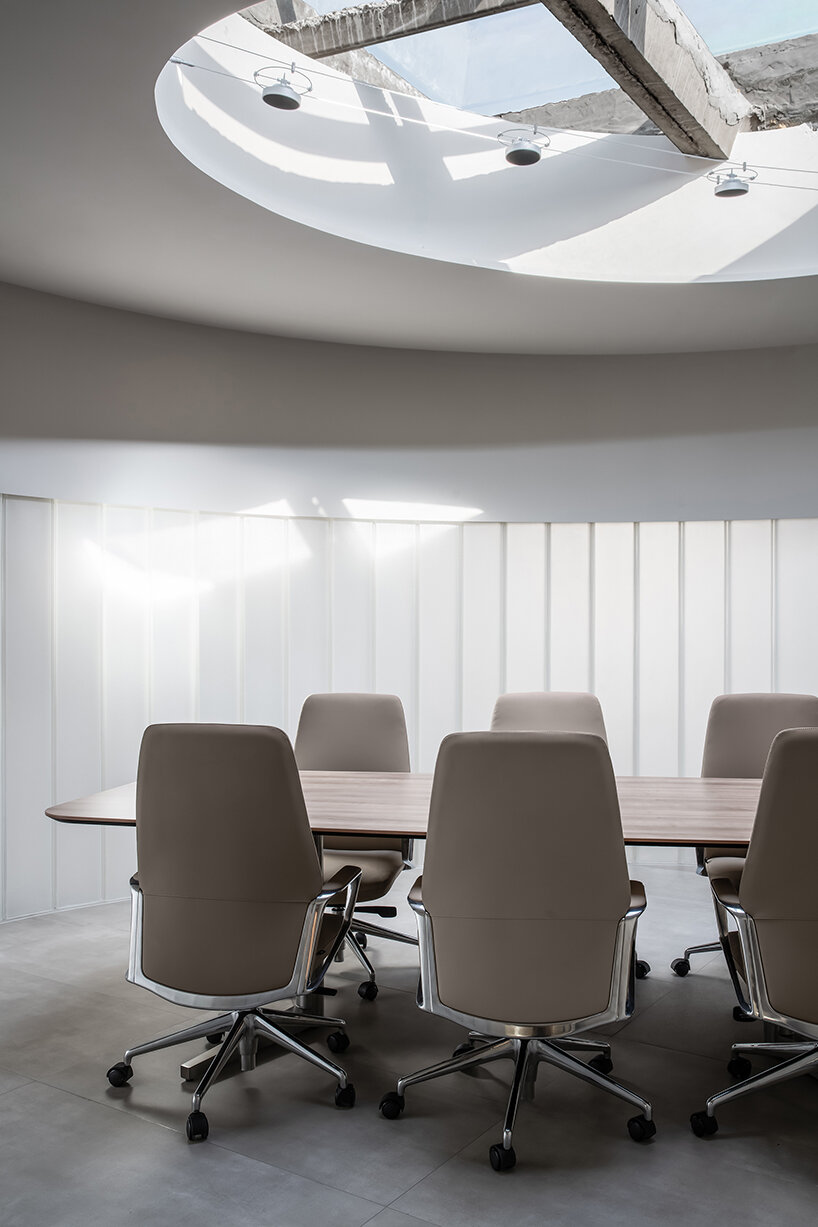
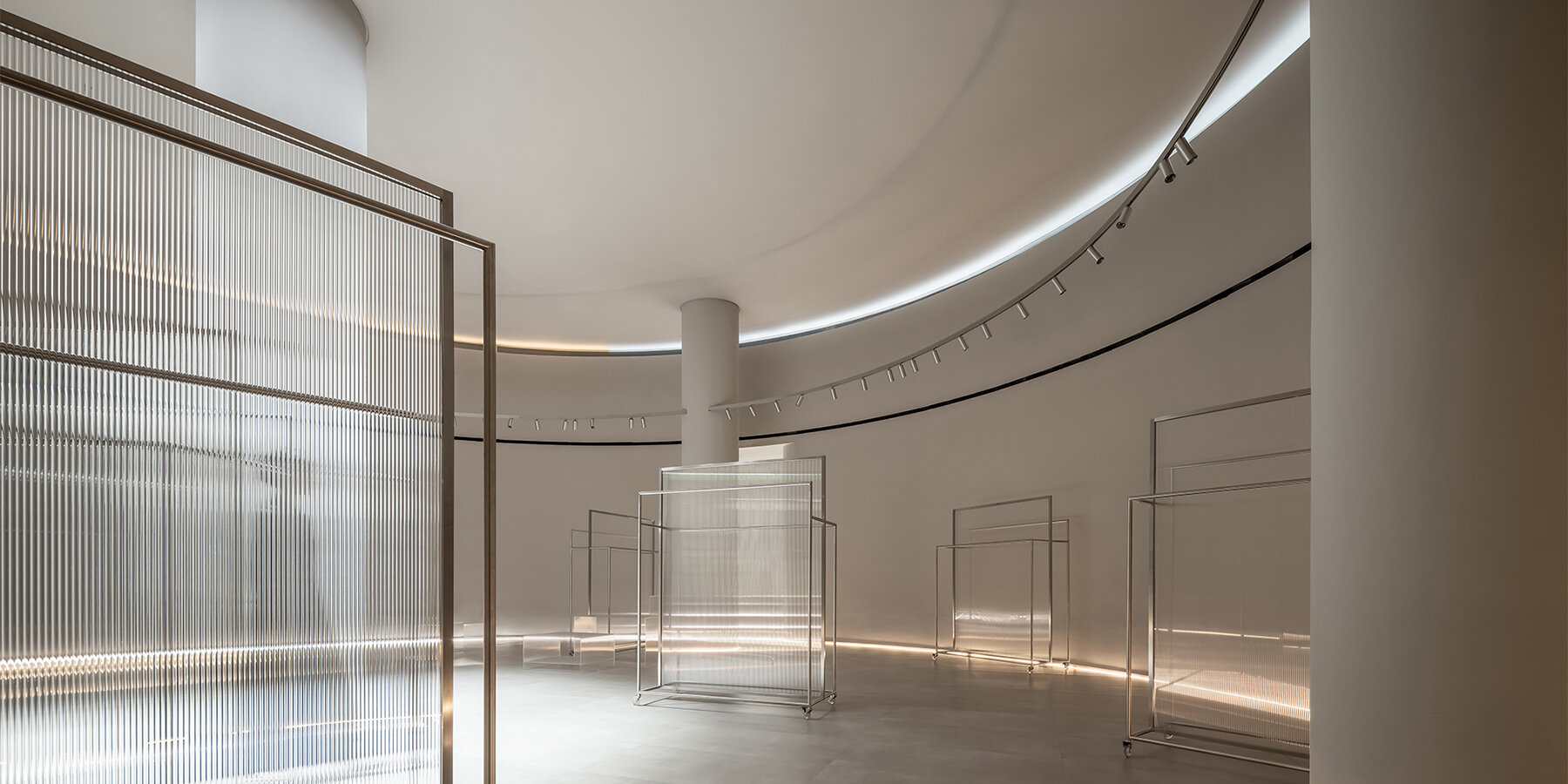
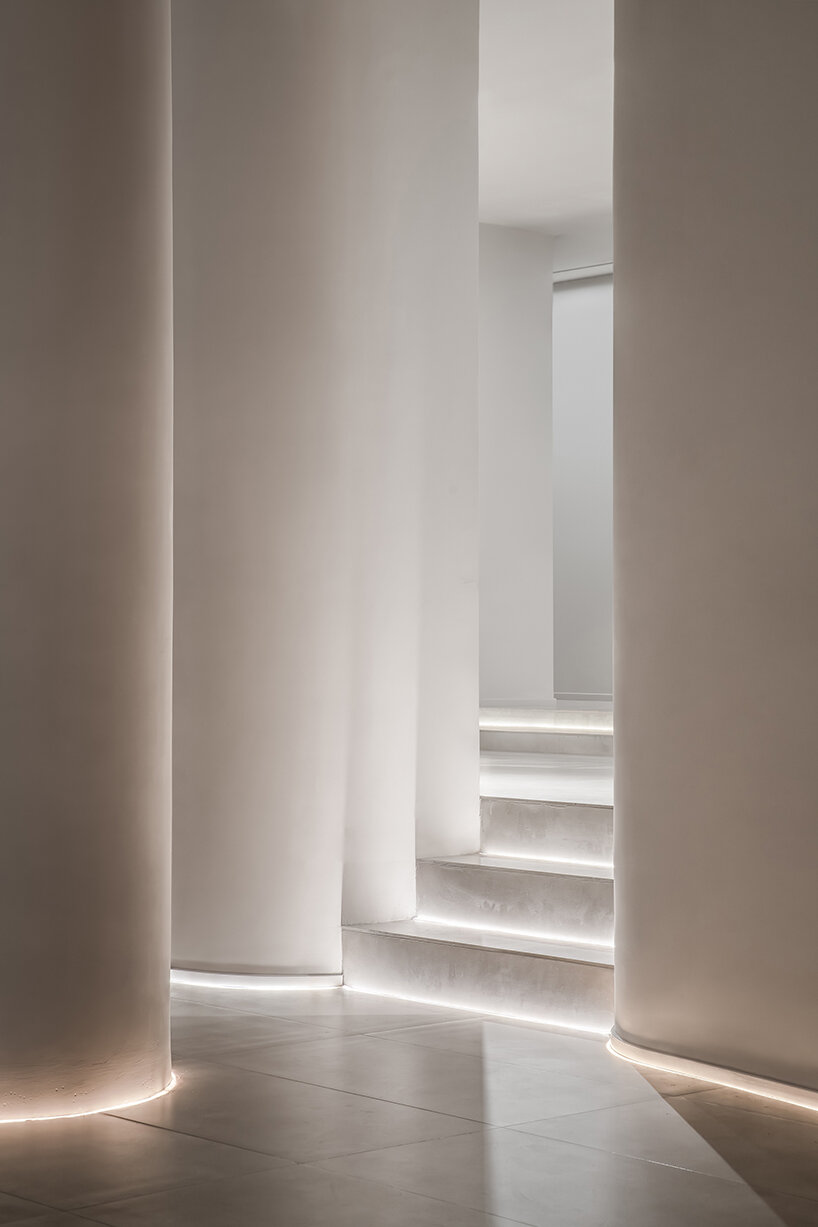
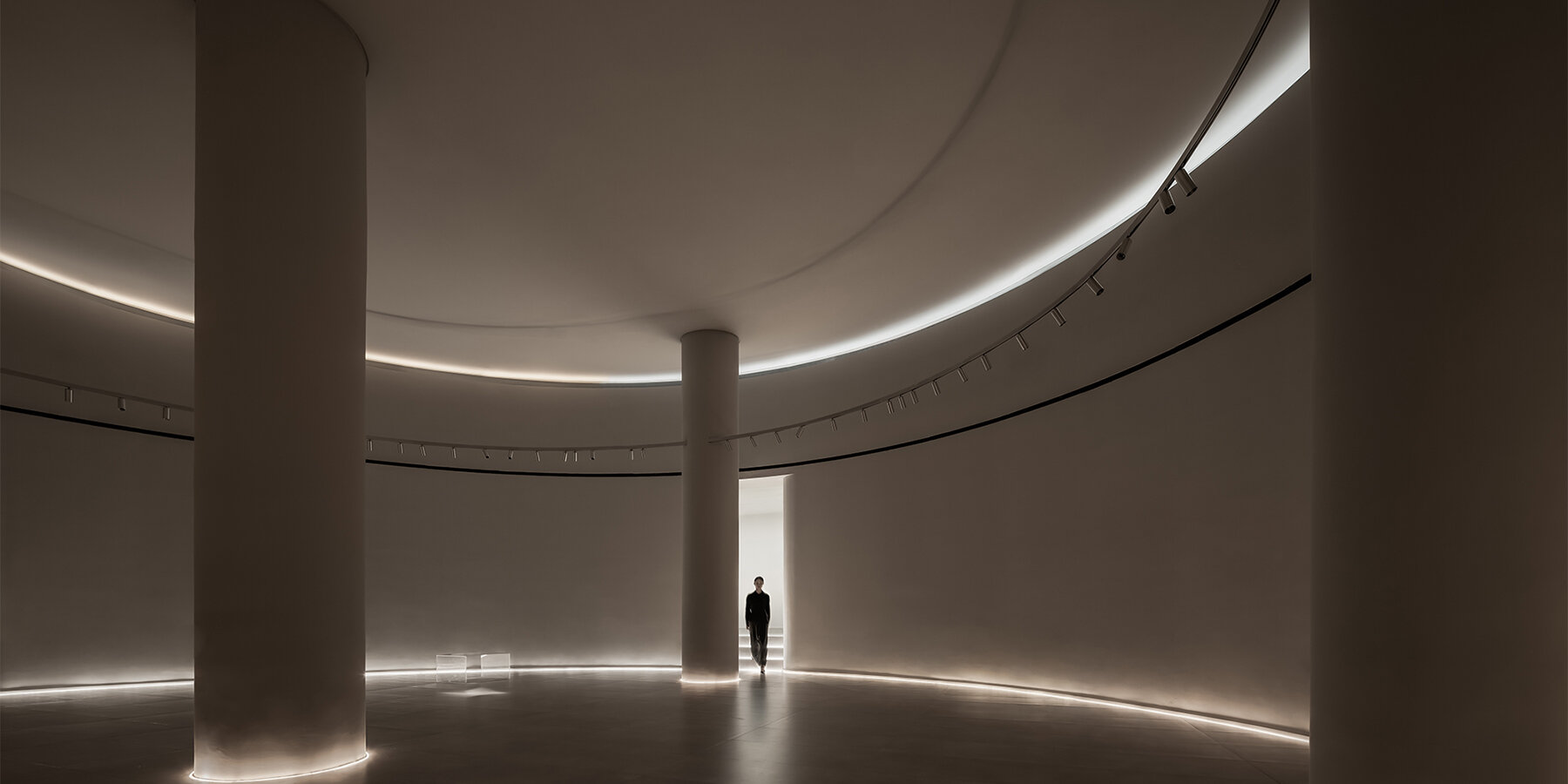
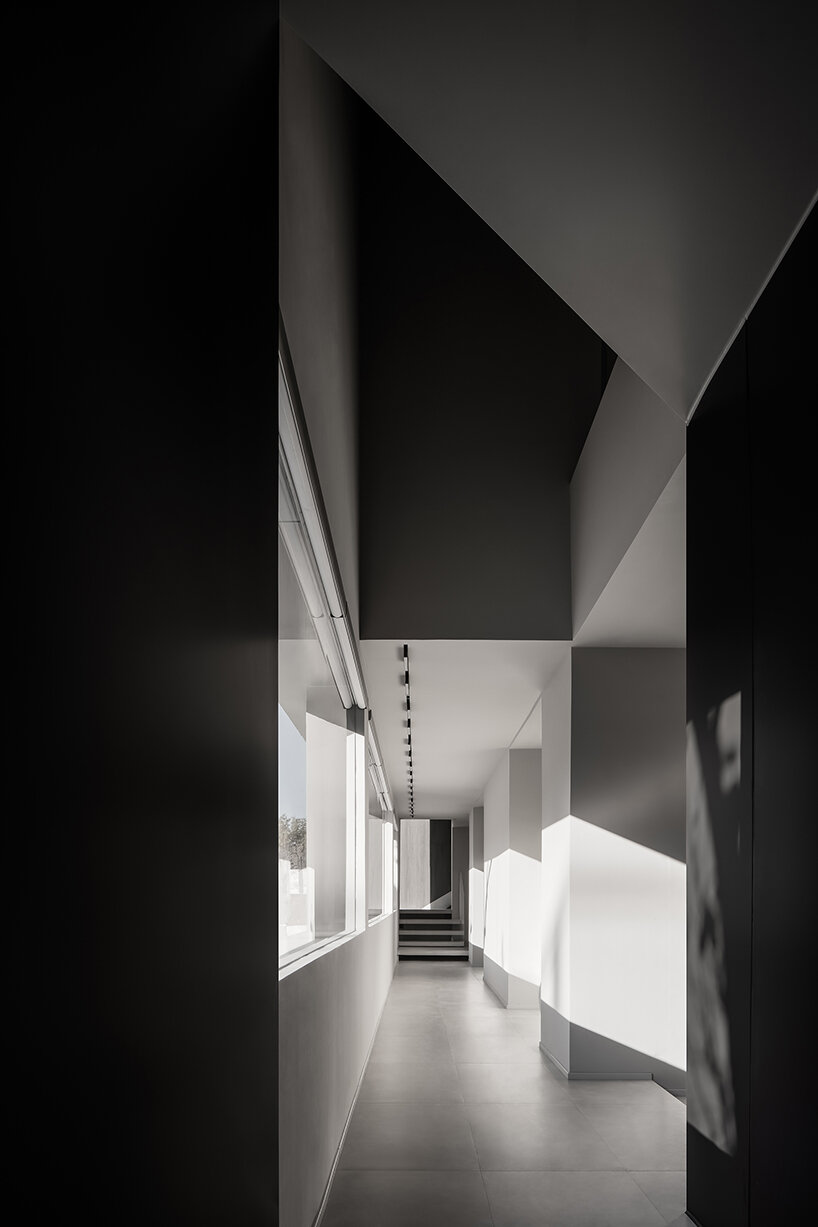
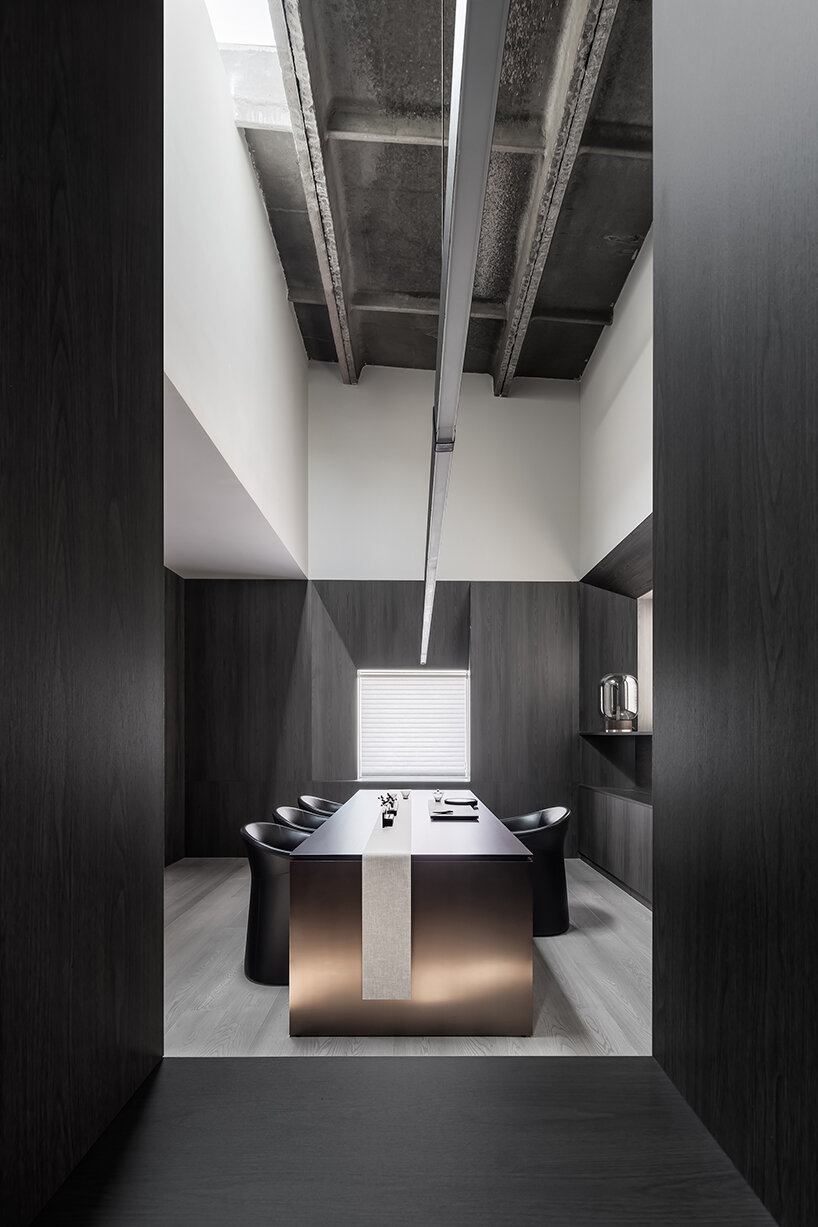
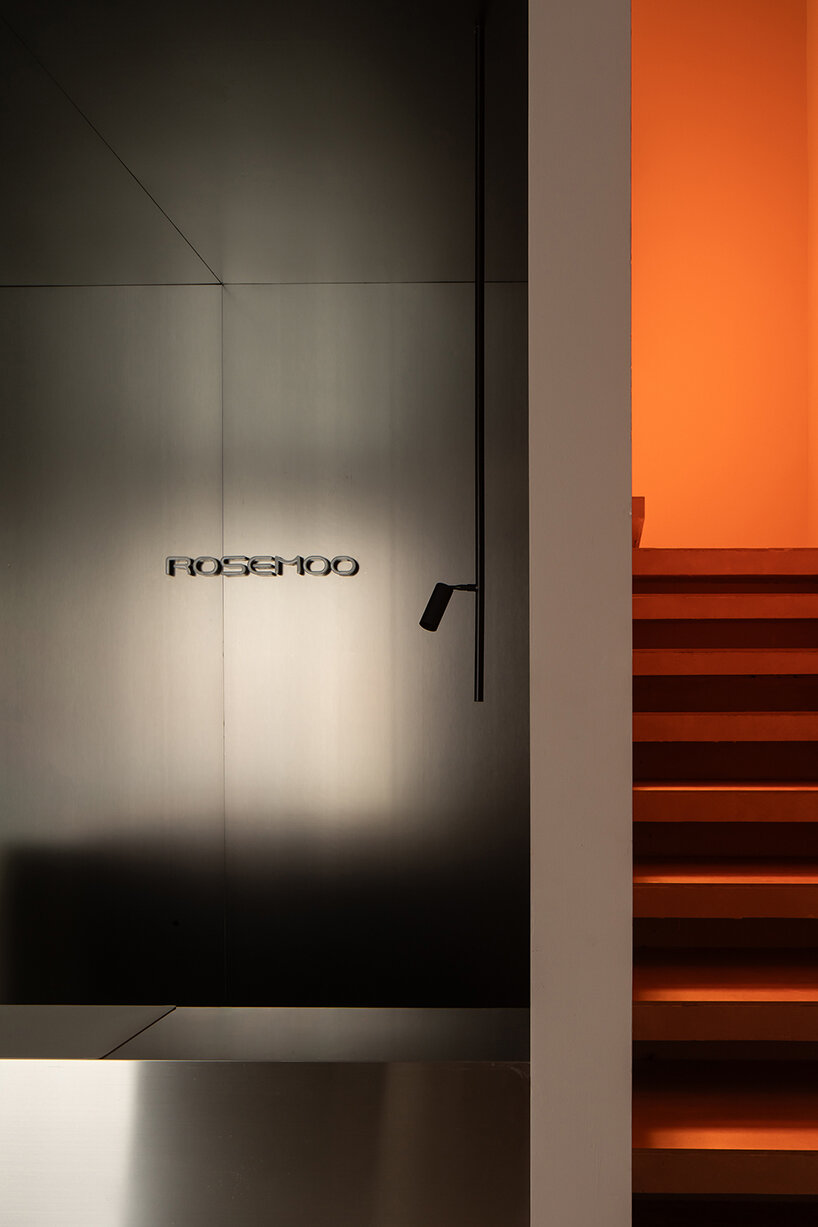
The design process by CUN Design includes deconstructing and stacking two architectural volumes to give the headquarters a distinct identity and ensure a connection between the functional spaces. The horizontally suspended rectangular form houses the circulation spaces, while cylindrical structures vertically inserted into the box, shape the interior walls. Open office areas surround the multifunctional exhibition halls and meeting rooms found on the upper and lower floors of the building, showcasing a contemporary working environment. The architects implement Chinese spatial philosophy and modern techniques to connect various functions in a flowing setting. A narrow corridor leads from the entrance to the headquarters’ interior, where a few steps allow the visitors to enter its open and high-ceilinged space. The first floor of the building’s circular space is lowered, creating a spatial relationship reminiscent of a classical music hall, which, combined with the reception tea room on the second floor, adds a ceremonial dimension to the entrance.
light and shadow interplay reflects the brand’s spirit
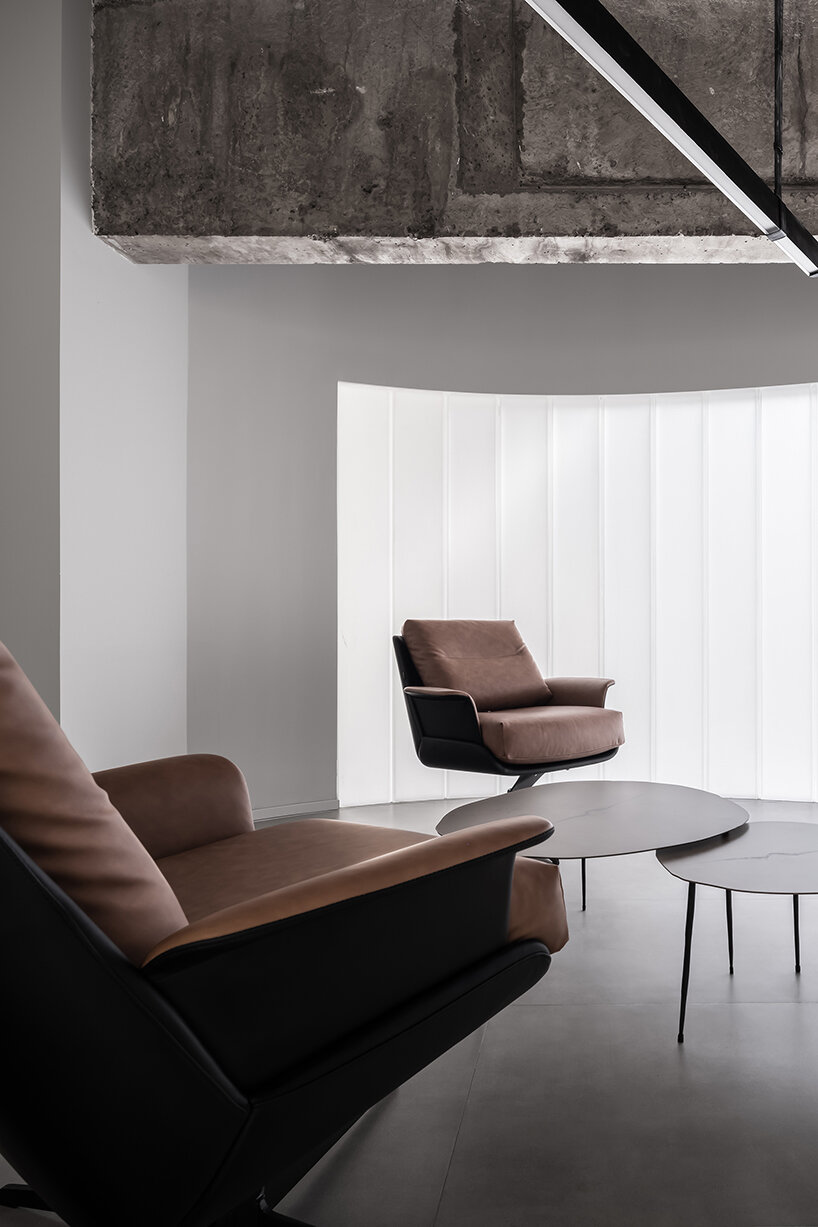
ROSEMOO advocates nature and the materials used are mainly natural cotton, linen, silk, and wool. The brand’s values are also reflected in the interior, with the overall texture of the headquarters office echoing a pure, clean, and natural feeling. The original structure remains mostly exposed, using vertical and horizontal bar-shaped windows and skylights to let natural light in, balancing the contrast between the darkest spaces in the layout. The shadowplay created by the combination of natural and artificial lighting creates a poetic ambiance in the building. Tree shadows adorn the pristine white walls, complementing the weathered mottled red bricks. The whole composition allows the visitor to immerse in the harmonious coexistence that transcends time and space. The design of ROSEMOO’s headquarters reflects the brand spirit and combines it with Eastern philosophy. The multifunctional creative space has become an inspirational workplace paying tribute to nature and tradition through the spatial layout and the manipulation of light.
1/4
project info:
name: ROSEMOO Headquarters Office
archietct: CUN Design | @cundesign
lead designer: Cui Shu
design team: Li Hui, Wang Jiaqi, Liu Jinchang
location: Beijing, China
area: 1540 sqm (16576 sqft)
photographer: Wang Ting
designboom has received this project from our DIY submissions feature, where we welcome our readers to submit their own work for publication. see more project submissions from our readers here.
shop
your own online design shop — no sales commission collected