dennis vanderbroeck creates settings for the moments that bring us together
moving between fashion, theater, and music, the dutch spatial designer treats architecture as a framework for encounter, where the relationship between performers and audiences matters as much as the space itself.
prefer designboom on googledennis vanderbroeck on designing experiences
A fashion show or a live performance may last only a few minutes, but what happens in the room is harder to capture. For Dennis Vanderbroeck, this temporary collectiveness is at the heart of his work, which moves between fashion, theater, music, and performance. The Dutch spatial designer approaches his work as a way to bring people together and shape how they encounter one another.
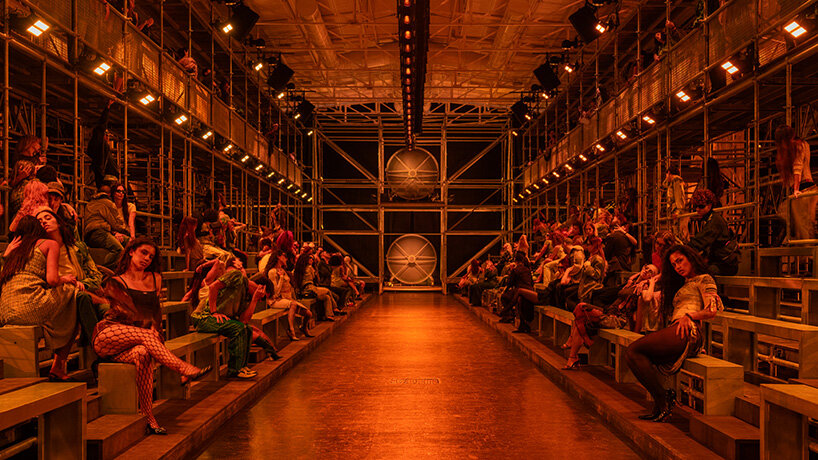
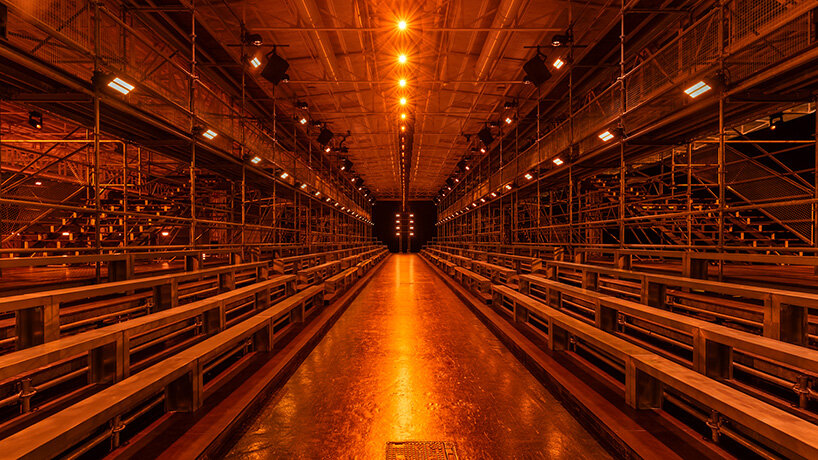
With a background in theater, Vanderbroeck focuses on the experience a setting creates. His designs set the scene for encounters between performers and audiences, leaving room for the unexpected. ‘I always say that our designs are just a tool to facilitate the experience,’ he tells designboom. ‘It’s more about the experience of the moment than the space itself.’ At the latest Milan and Paris fashion weeks, the designer developed two distinct approaches to staging fashion, from a scaffolded runway that emphasized collective energy for Diesel to a modular arrangement that suggested movement and change for Miu Miu.
the space between the collective and the individual
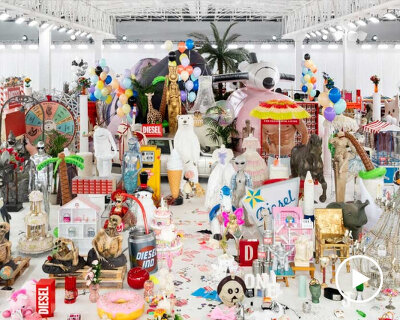
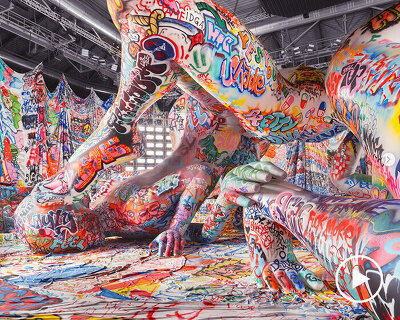
Vanderbroeck’s recent collaborations with Diesel and Miu Miu reveal two different ways of exploring this relationship. His work with Glenn Martens at Diesel developed over several shows, with a shared interest in making fashion more inclusive and approachable. Their final collaboration for the brand brought these ideas together through a rigid scaffolding structure and a performative setting shaped by community, presence, and disruption. The contrast between the group and the individual became central to the experience. While people occupied the large scaffolding structure, performers interrupted the scene, and models moved through the space.
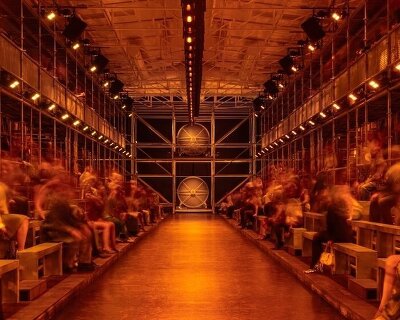
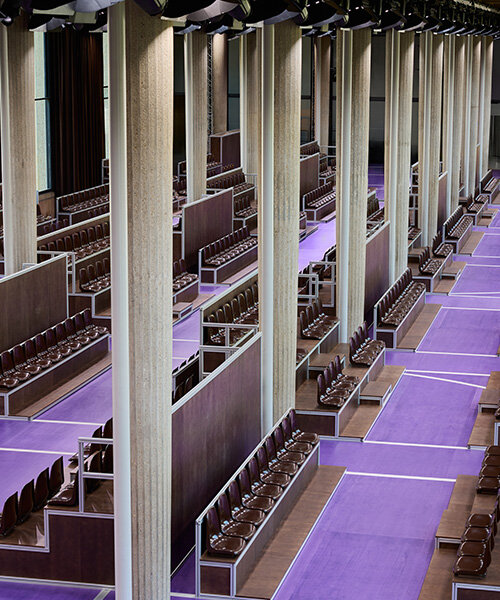
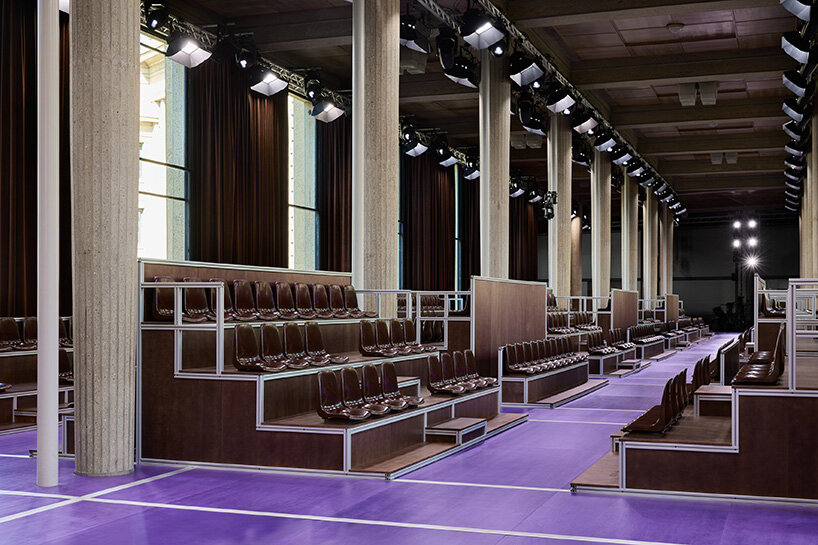
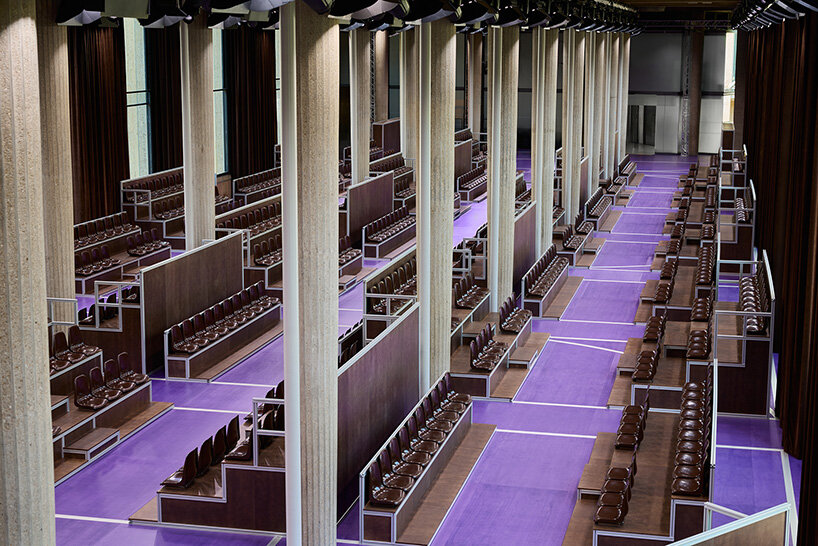
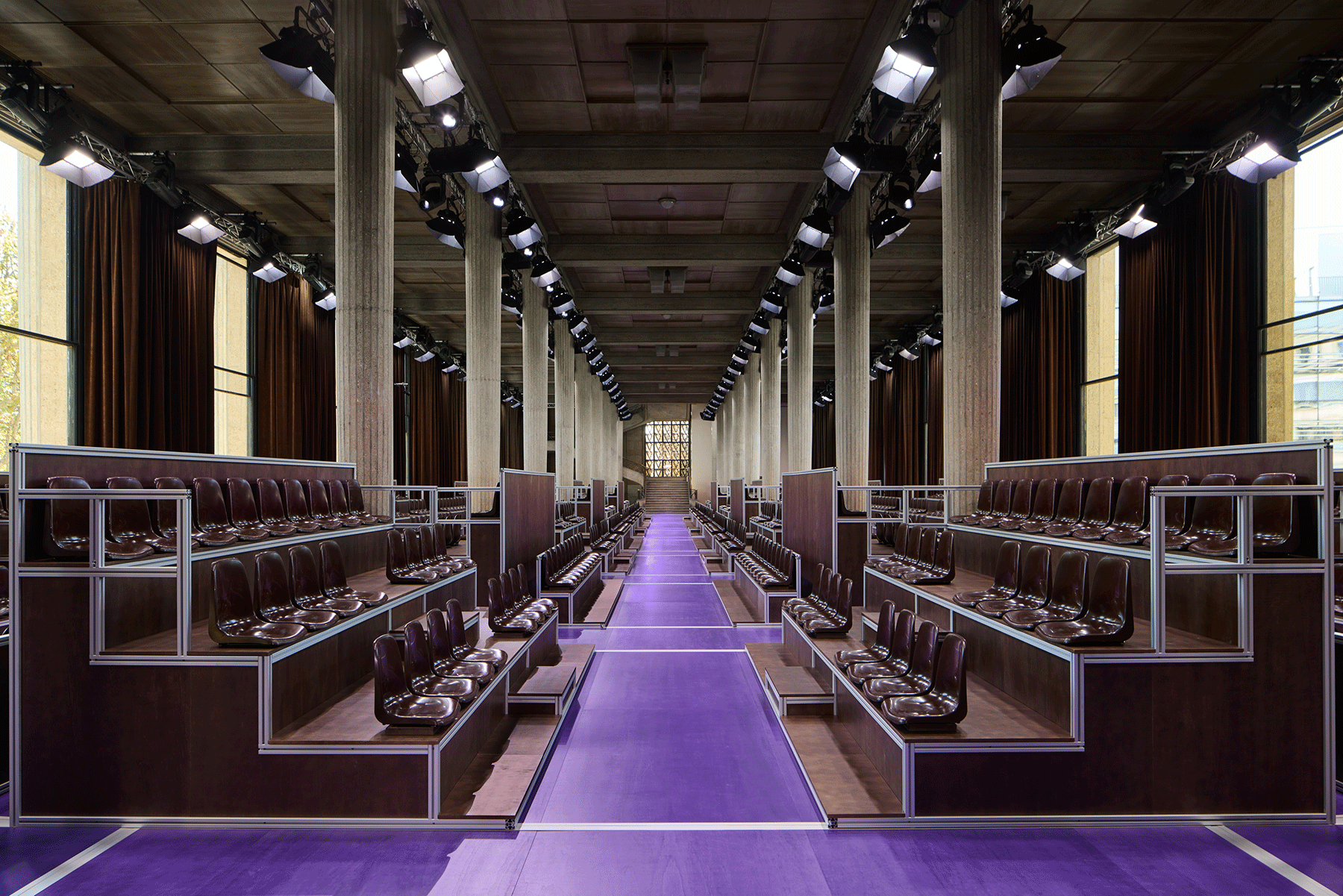
For the Miu Miu Spring/Summer 2027 show at the Palais d’Iéna in Paris, Vanderbroeck approached the runway through a different kind of proximity. Working with the brand for the first time, the designer and his team developed a space with tightly arranged bleachers and a narrow catwalk, recalling the intimacy of 1990s runway shows. The audience sat close together, while the models passed directly in front of them.
Although the two projects grew out of different conversations, both explored the relationship between the individual and the group. ‘In our fashion work, we always try to do something with this idea of the collective versus the singular, the individual,’ he highlights. ‘That friction is forever interesting to me.’ At a fashion show, all eyes are on the looks coming down the runway, but the experience is also shaped by the crowd around them. Vanderbroeck plays with this dynamic through the layout of the space, bringing the audience into the experience without prescribing how they should react.
designing movement within a static space
The idea of a space that anticipates its next use also shaped Vanderbroeck’s first collaboration with Miu Miu. The show was developed in relation to Geste de Consolation (Gesture of Consolation), the upcoming exhibition by French filmmaker Alice Diop presented as part of the Art Basel Paris Public Program from October 21st to 25th, 2026. ‘We wanted to create a space that suggests movement and that suggests transition. So for the exhibition, the same venue will be repurposed almost, reframed, and recontextualized,’ the spatial designer explains.
Tracks laid across the floor supported modular bleachers, giving the runway a sense of movement even though the structure itself remained still. The arrangement anticipated the exhibition that would follow, with elements of the fashion show intended to be reconfigured and given a different meaning in a new context. Vanderbroeck describes this approach as a dynamic stage. Drawing on his background in theater, he treats a set not as a finished backdrop but as something that can accommodate different situations over time. The design becomes part of a longer sequence, shaped as much by what comes next as by the event taking place in the room.
from the theater to the live stage
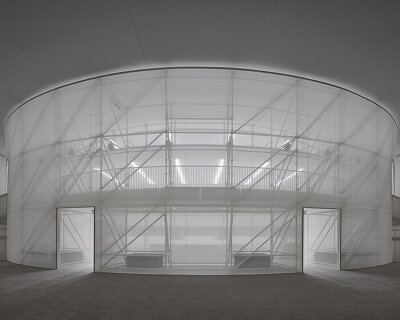
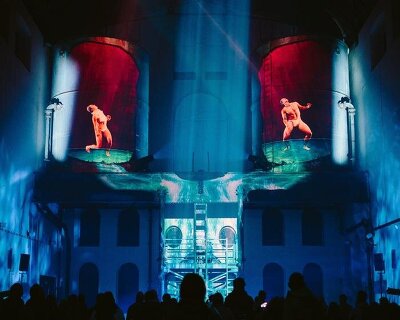
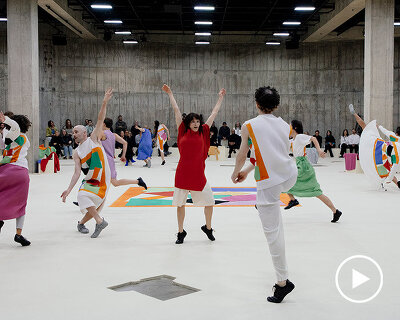
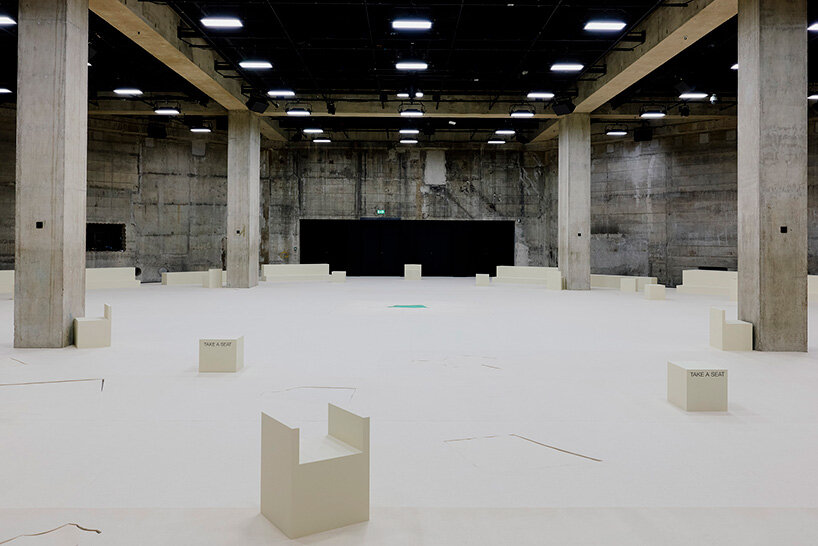
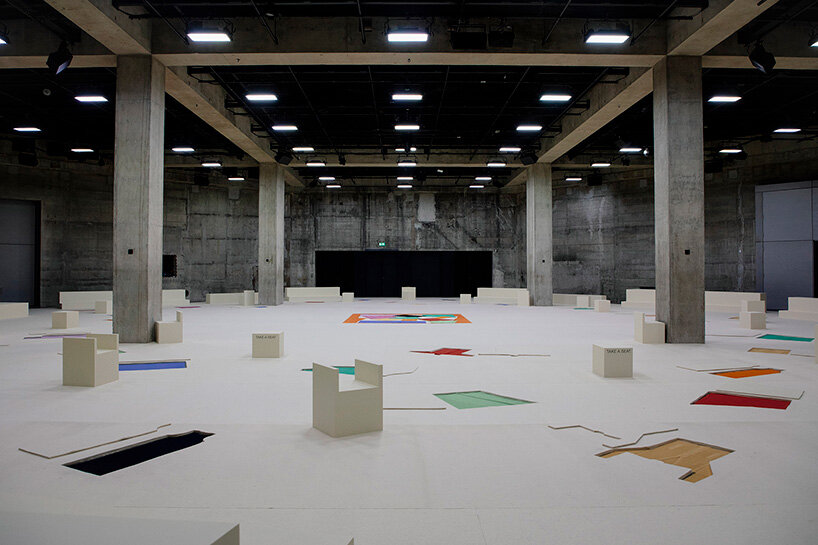
Theater remains an important reference point in Vanderbroeck’s practice, even when he is designing for other forms of performance. For Issey Miyake’s OPEN STUDIO at Tate Modern, he drew on the circular form of the museum’s concrete tanks to explore intimacy and the idea of an embrace. He used the geometry of the architecture to shape different degrees of proximity between performers and audience members. The experience moved from a collective sense of embrace toward a more intimate, one-to-one interaction between a performer and someone watching.
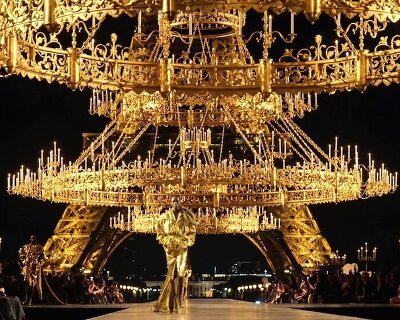
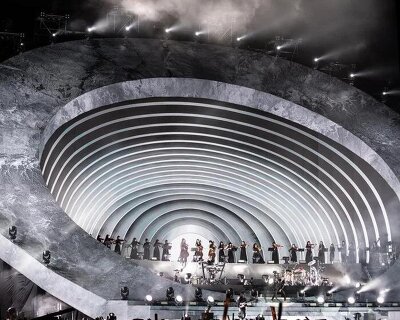
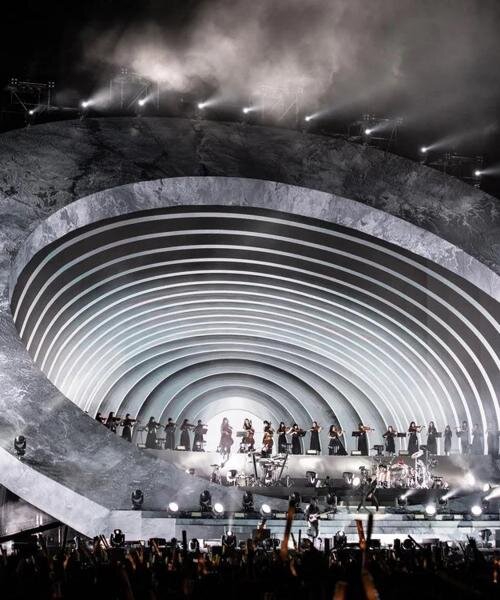
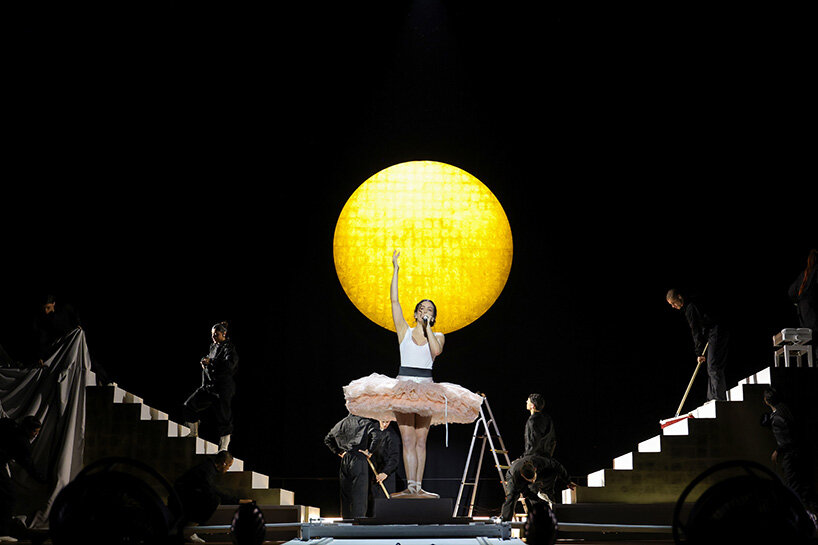
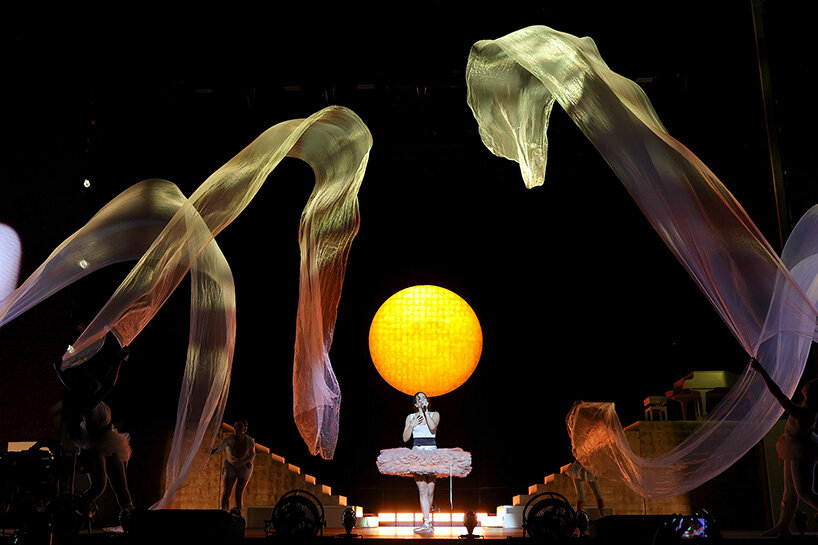
Vanderbroeck also considered the audience’s journey through the museum, from Henri Matisse’s The Snail to the Turbine Hall and into the South Tank. The work formed part of a wider sequence of spaces and encounters, with the architecture and artwork informing the concept. This interest in how a setting shapes a live experience extends to music. For the Lux Tour, Vanderbroeck collaborated closely with Rosalía and her team, bringing together references from fashion, popular culture, theater, and fine art. He describes the project as an accumulation of his practice, with ideas from different disciplines informing one another. ‘With Rosalía, honestly, it was an accumulation of my whole practice in one project, where fashion, music, but also popular culture and theater and the references through fine art all came together,’ Dennis Vanderbroeck comments.
beyond the image
In an era when live events are increasingly documented and circulated online, Dennis Vanderbroeck remains focused on what it means to experience them in person. He recognizes that images matter, particularly in fashion, but does not begin a project by imagining how it will appear on a phone screen. ‘I’m always trying to intentionally design from the physical experience,’ he shares with us. ‘If it then resonates well online or resonates well on your phone or something, then perfect. But it’s never the main intention.’ This thinking carried into the set design for Rosalía’s Lux Tour, where the camera direction followed the energy of the live performance. For Vanderbroeck, filming an event is part of how it is remembered, but it cannot replace the experience of being there.
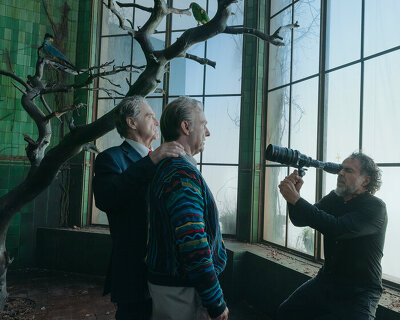
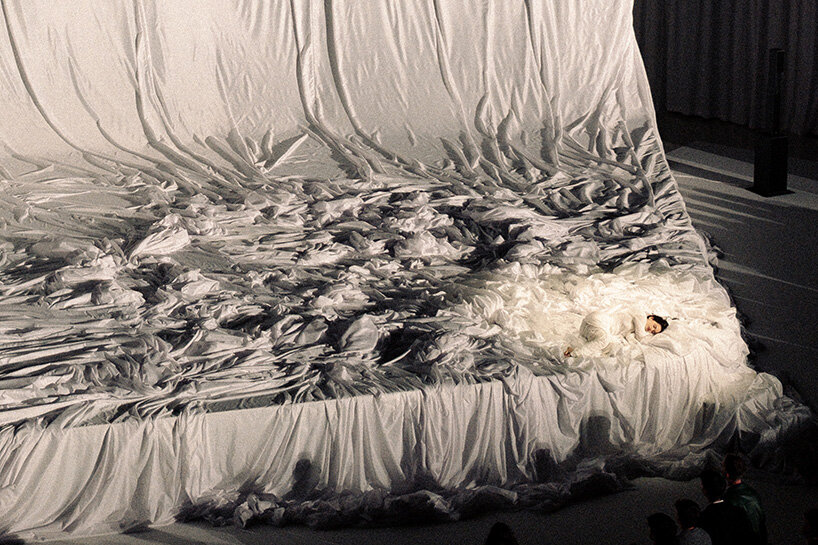
The Dutch spatial designer also recognizes the impulse to photograph an experience as a way of securing a memory. Taking out a phone can become a means of confirming one’s presence, of holding on to something that would otherwise disappear. Yet the photograph remains separate from the event, which depends on a particular arrangement of people, bodies, movement, and time. That uncertainty is part of what draws Vanderbroeck to theater. Having recently designed the set for Anton Chekhov’s The Seagull, he recalls the first preview in front of an audience as a moment when, despite all the preparation, the response remained impossible to predict. ‘You never can predict how an audience is going to respond,’ he says. For the designer, that first encounter between a work and its audience is a reminder that design can only go so far. He can shape the setting and the conditions for an experience, but what happens once people enter the room is beyond his control.
designer: Dennis Vanderbroeck | @studiodennisvanderbroeck
This interview is part of designboom’s SPECTATOR AND SPECTACLE chapter, asking how wonder gets built, and how it might return some mystery to a world that has measured most of it away. Presented in partnership with SolidNature, the stories in this chapter turn onlookers into participants, alter perception and disrupt the everyday – learn more here!
Each designboom chapter explores one theme in depth through projects, interviews, features and news across architecture, design, art and technology. Discover more chapters here, and get in touch if you’d like to submit a story through our submissions portal or contact form.
shop
your own online design shop — no sales commission collected