DESIGNART TOKYO 2025 TURNS THE CITY INTO AN OPEN-AIR MUSEUM
DESIGNART TOKYO, one of Japan‘s largest design and art festivals, returned for 10 days, transforming Tokyo into an expansive exhibition space. Operating across 91 venues throughout Omotesando, Shibuya, Roppongi, Ginza, and other key areas, the festival showcased a diverse collection of international works. Under the theme ‘Brave: Pursuing Instinctive Beauty,’ the 2025 edition celebrated creators who demonstrated the courage to trust their intuition and instincts, challenging the conventional markets. This vibrant display gathered approximately 300 creators and brands and captivated an estimated 250,000 visitors eager to experience the diverse collection of international design, architecture, and art.
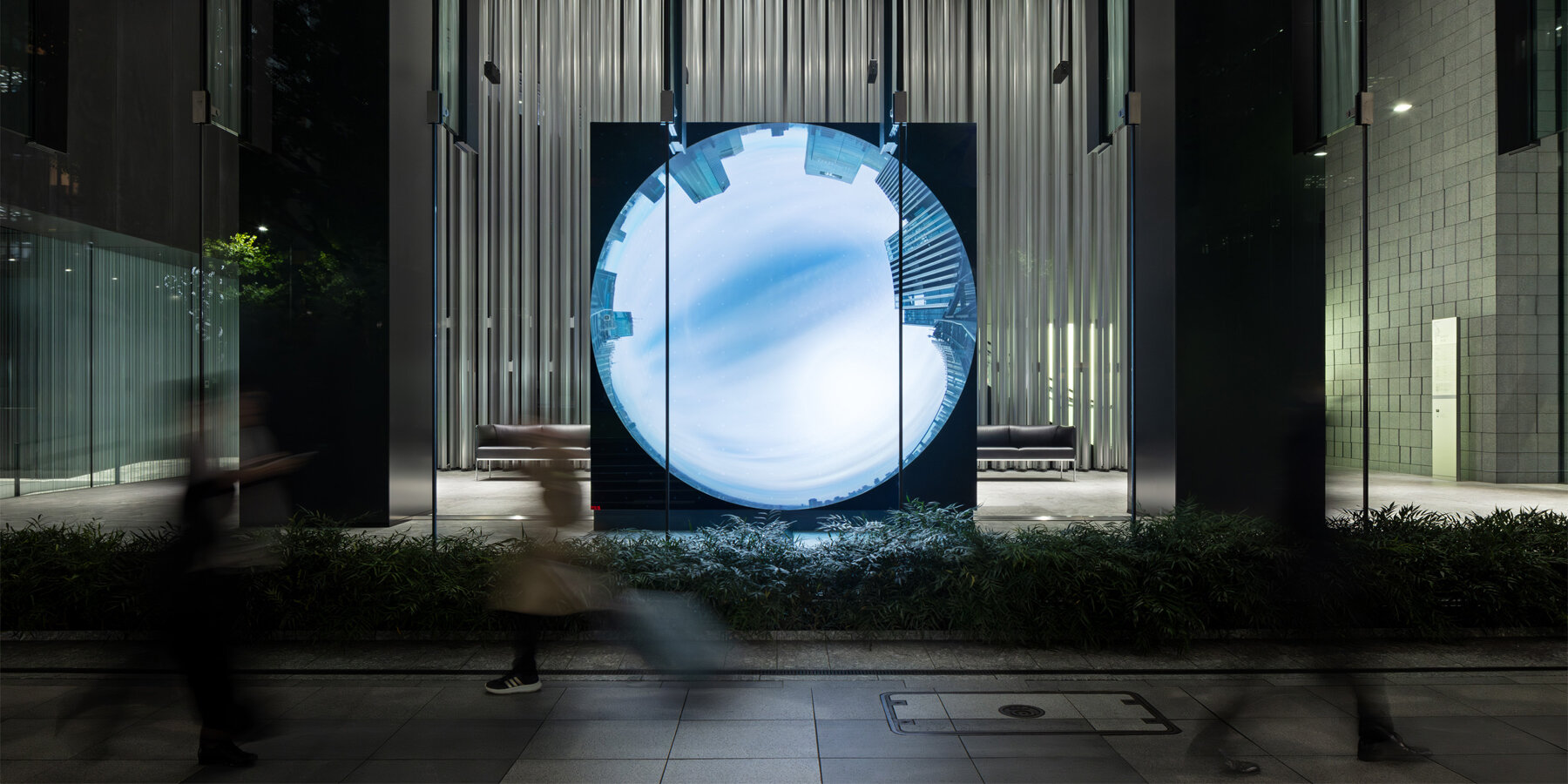
banner: DUMB TYPE | WINDOWS © Nacasa & Partners
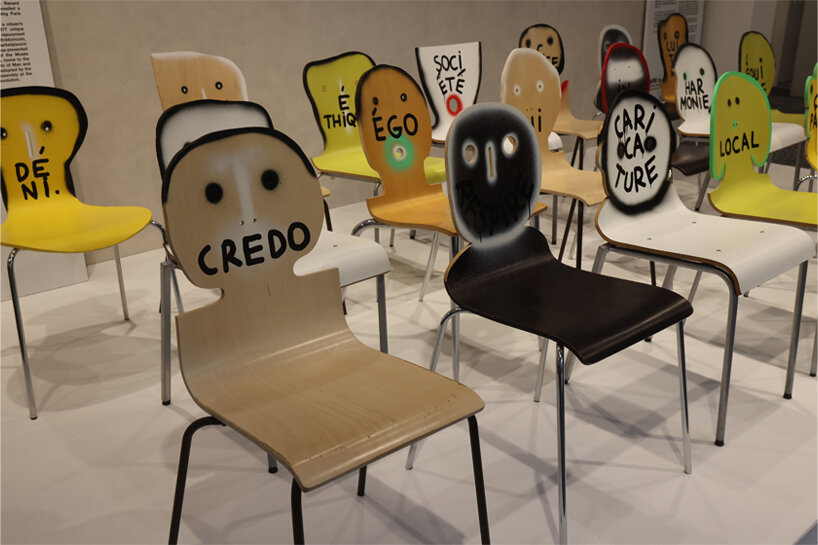
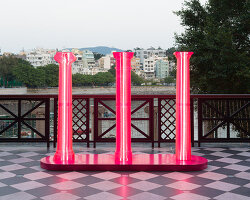
above: Claire Renard and Jean-Sébastien Blanc | 577 chaises: the citizens’ hemicycle | all images courtesy of Designart Tokyo, unless stated otherwise, image © designboom
10 DAYS SHOWCASING A DIVERSE COLLECTION OF INTERNATIONAL WORKS
The cultural nucleus of the festival was the DESIGNART GALLERY, a large-scale group exhibition housed at the Media Department Tokyo in the heart of Shibuya. Serving as both an information center and talk lounge, this exhibition hosted 33 domestic and international presentations, showcasing creations from countries including France, the Netherlands, and Sweden. The space itself was a design statement, with the spatial design overseen for the first time in Japan by Hong Kong-based architectural firm COLLECTIVE. They paid homage to Japanese architecture by creating a modernized Shoji (traditional partition) in the first-floor escalator hall. This installation used reusable aluminum structures covered in non-woven fabric, where modulated lighting synchronized with photographs by artist ZEN to ambiguously connect the interior and exterior.

Swedish furniture brand Blå Station, together with ACTUS, displayed newly released products. ©Takuya Yamauchi
HIGHLIGHTS REDEFINING FUTURE SPACES AND MATERIALITY
The concept of ‘Brave’ was embodied in presentations that pushed the boundaries of architecture, product design, and material usage, moving past conventions to propose entirely new futures. Residential and architectural concepts took center stage with projects fundamentally rethinking living spaces. Daikyo Inc., which rebranded its condominium brand to ‘THE LIONS,’ developed a new project, unveiling ‘THE LIONS | Relation Wall,’ with architect Yuko Nagayama. This project stems from the concept of enhancing life value by fostering new human relationships. The development, aiming for implementation in 2030, featured a live demonstration of a moving wall.
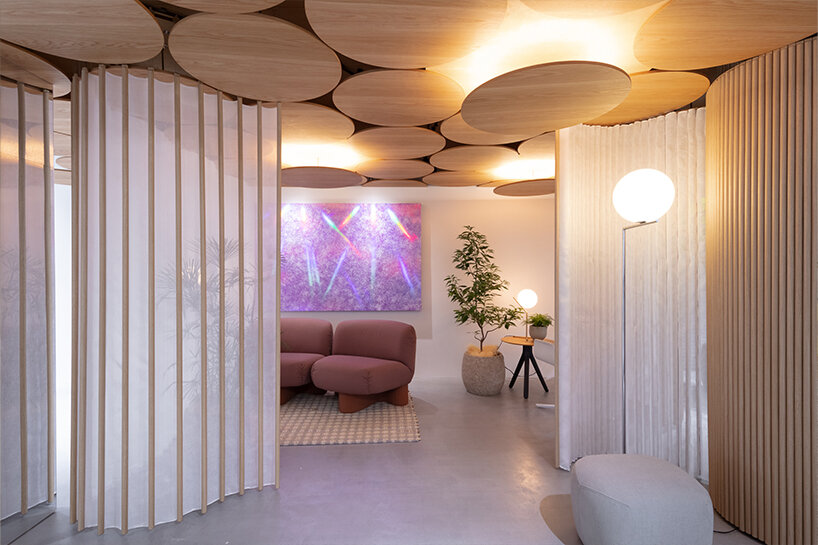
THE LIONS | Relation Wall – THE LIONS 2030 PROJECT ©Takumi Ota
Similarly, LIXIL’s installation, ‘MUINIMULA – Reconstruction of Spatial Components,’ explored new possibilities in the traditionally underdeveloped spatial domains of floors, walls, and ceilings. By introducing the concepts of Mui (natural state, stripped of all artifices) and Mura (diversity), the exhibition aimed to dismantle and reconstruct existing spatial notions, challenging visitors to reconsider fixed ideas.
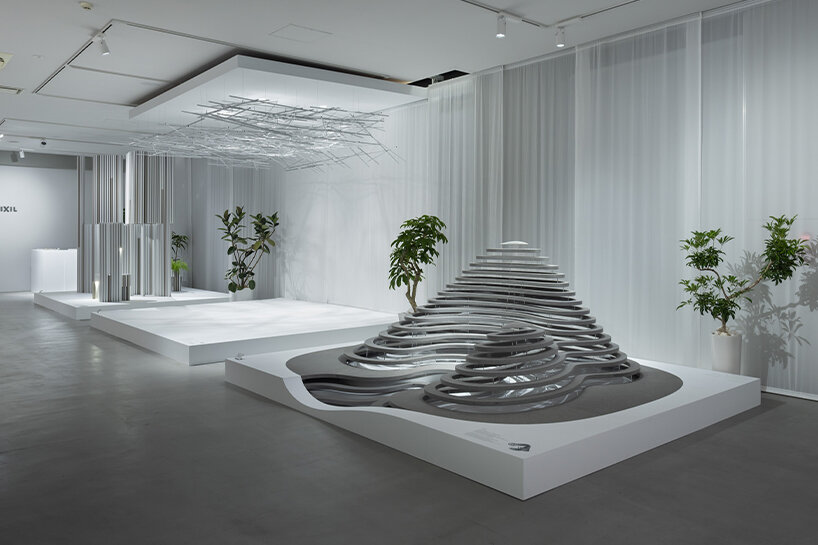
MUINIMULA – Reconstruction of Spatial Components by LIXIL ©Nacasa & Partners
In furniture and office design, ITOKI Co., Ltd.’s new brand NII made a significant debut with ‘THE STAGE by NII.’ Elevating the office into a vibrant stage, the exhibition featured first collections by four international design leaders: architectural studio AMDL CIRCLE, Todd Bracher, Rodolfo Agrella, and Jun Aizaki/Crème. The space was graphically designed by the creative unit SPREAD. Meanwhile, Danish Royal furniture company Carl Hansen & Søn presented ‘FRAMING COMPOSITIONS,’ showcasing items revealed in Japan for the first time, including swivel chairs and sofas by design masters Hans J. Wegner and Nanna & Jørgen Ditzel.

THE STAGE by NII © OOKI JINGU
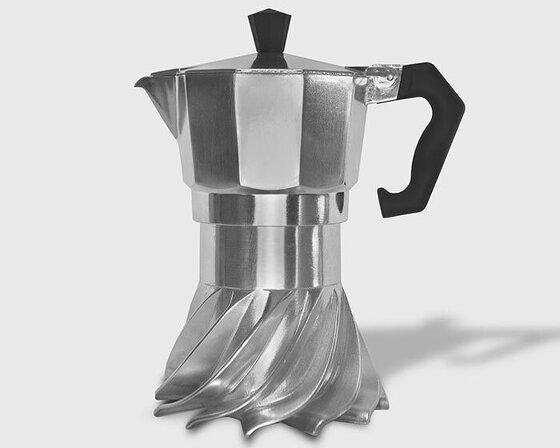
Mitsubishi Electric Integrated Design Center debuted ‘The World Spun by Metal 3D Printers,’ an initiative utilizing their advanced metal 3D printing technology. They explored designs achievable only with this method and material properties, resulting in a collection of organic forms that felt surprisingly warm, contrary to the nature of metal.
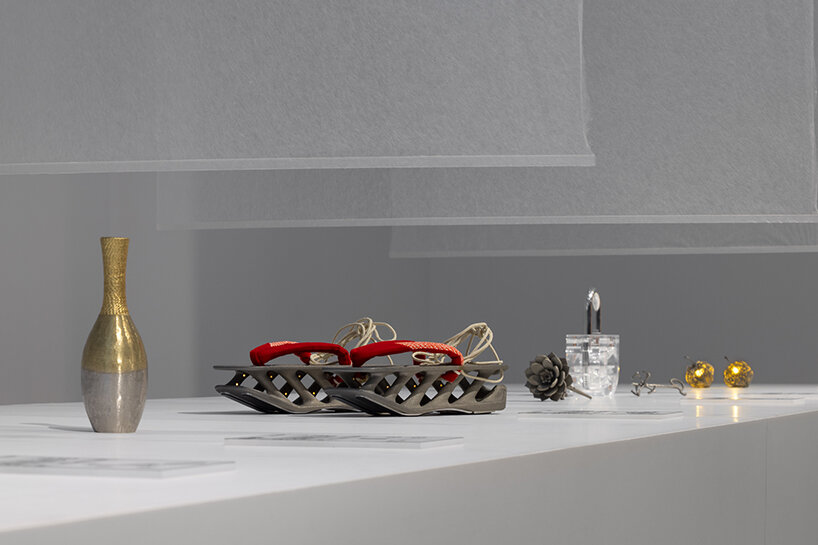
Mitsubishi Electric Integrated Design Center ©Nacasa & Partners
Finally, the dialogue between design and luxury was explored in a year-long creative collaboration between Range Rover and Klein Dytham Architecture (KDa). Their ‘Range Rover SV Bespoke Installation’ at Tokyo Midtown explored artistry, craftsmanship, and the expression of individuality using the Range Rover SV Bespoke Service, blending tradition, innovation, and architectural imagination. Demonstrating new material potential, Azuma Plywood collaborated with Hakuten to showcase Color MDF, a lesser-known material made from pre-dyed wood fibers, in a continuous space from floor to ceiling to propose an expansion of material choices.

Range Rover SV Bespoke Installation by Range Rover and Klein Dytham Architecture (KDa) ©Yosuke Owashi

Chromatic Symphony of Landscapes by CYUON and Moriyuki Ochiai
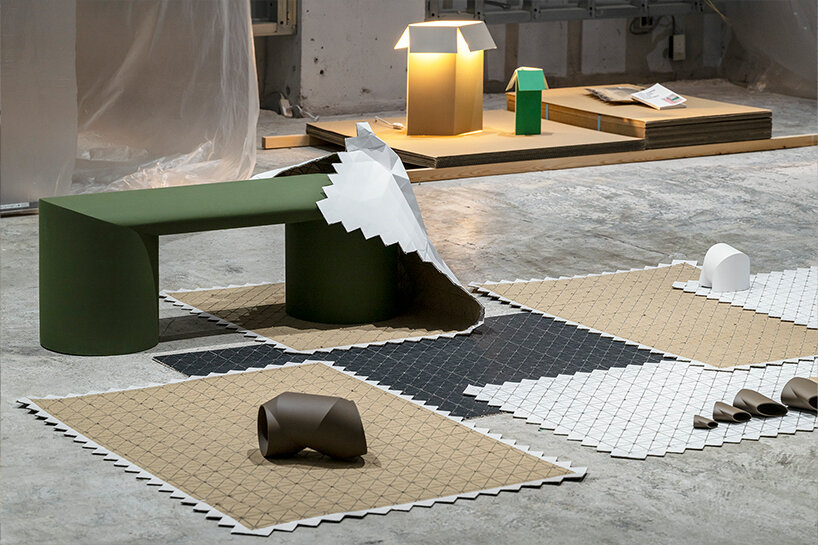
Nomadic proposes a package method, “PACKING FOR THE METHOD, “where cardboard created with a lattice-like cut allows for reconstruction into various shapes, ©Takuya Yamauchi

From Error to Mirror by Natsumi Komoto x sync inc. shows works that emerged from acciidental failures

FONTE by Atelier matic Sho Sotoyama explores the contrast between nature and Manmade items. ©KOHEI YAMAMOTO

Azuma Plywood collaborated with HAKUTEN. seeking new ways of engaging with Color MDF ©Takuya Yamauchi
architecture in japan (1701)
 Feb 19, 2026
 Feb 12, 2026
 Feb 10, 2026
 Feb 08, 2026
 Feb 07, 2026
architecture in tokyo (367)
Feb 19, 2026 Feb 10, 2026 Jan 02, 2026
 Dec 30, 2025
 Dec 18, 2025
art fairs (21)
 Jul 31, 2025
 Jun 16, 2025
 May 22, 2025
 May 15, 2025
 Mar 28, 2025
 Feb 18, 2026
 Jan 28, 2026
 Jan 02, 2026
 Dec 28, 2025