emma sicher grows biomaterials from wild berries and microorganisms
with bacteria and locally sourced plants, biodesigner emma sicher grows microbial cellulose into edible prototypes and packaging.
prefer designboom on google[FEATURED]
emma sicher grows materials with microbes
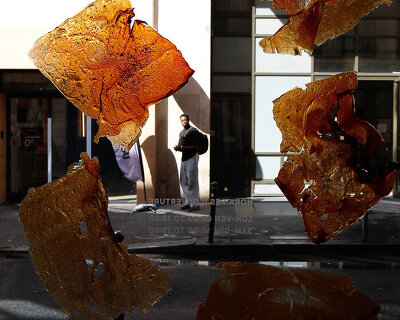
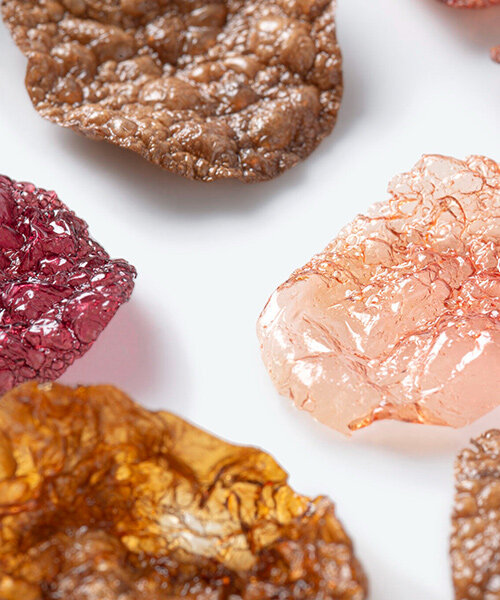
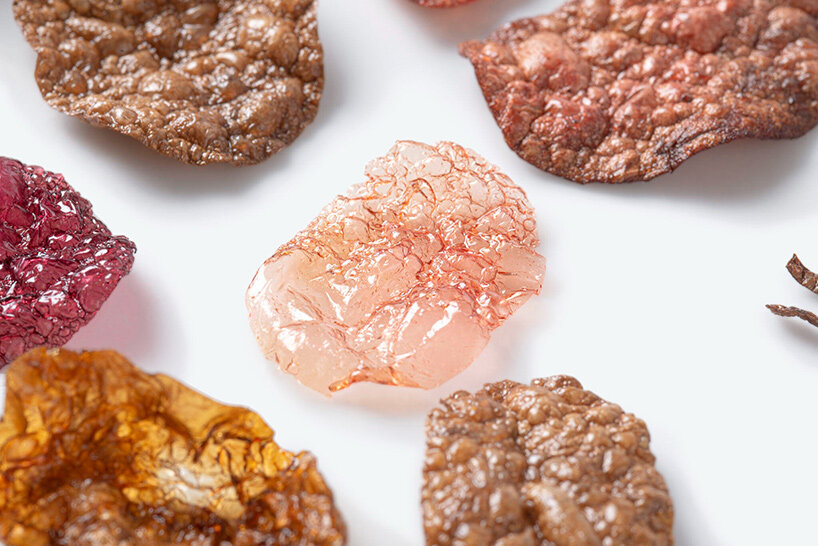
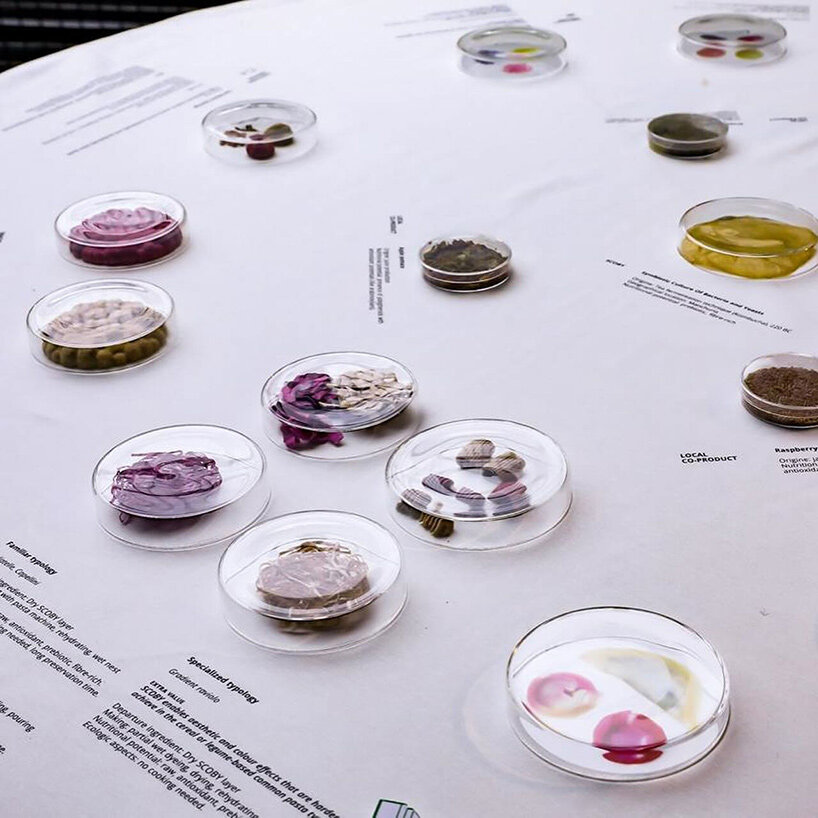
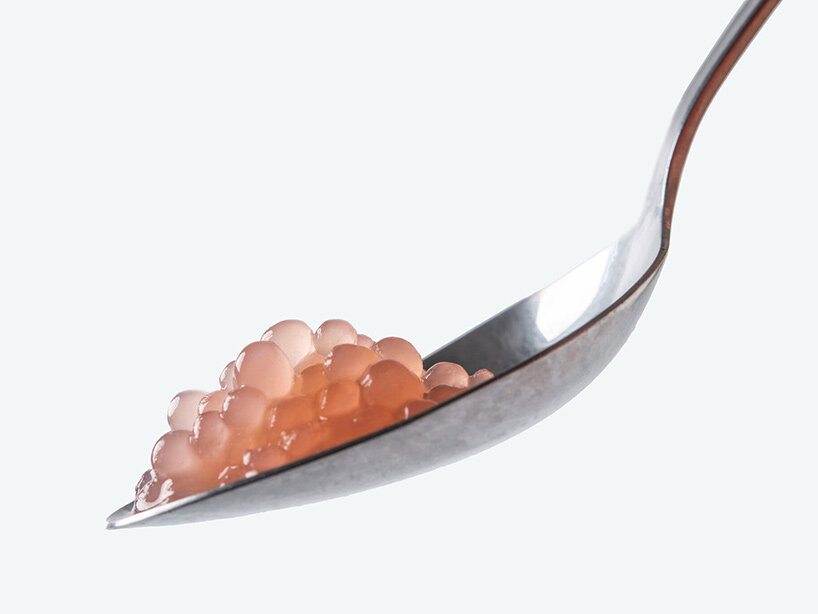
Berlin-based biodesigner Emma Sicher is experimenting with materials grown by bacteria and yeast, turning microbial cellulose into everything from translucent packaging to edible food prototypes. Some of her samples resemble crinkled pieces of pink glass, while others form glossy, gelatinous spheres. Their unusual colors and textures emerge through fermentation, a process in which microorganisms help produce the material itself.
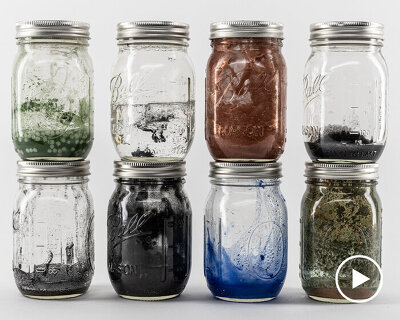
At the center of her practice is SCOBY, a symbiotic culture of bacteria and yeast commonly associated with kombucha. As the microorganisms grow in a nutrient-rich liquid, cellulose-producing bacteria form a gelatinous membrane at the surface. This can be harvested and processed into flexible sheets, or developed into different forms for food and material applications.
when microbial cellulose becomes food
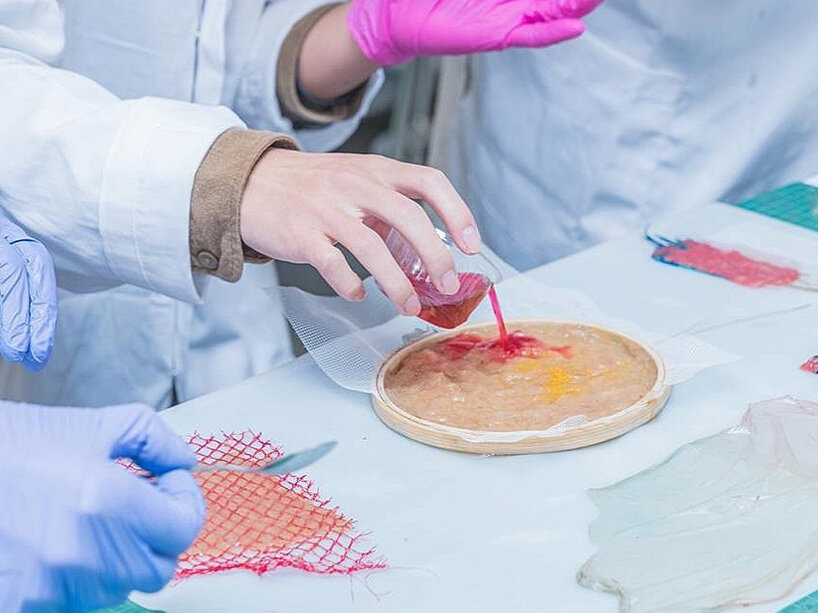
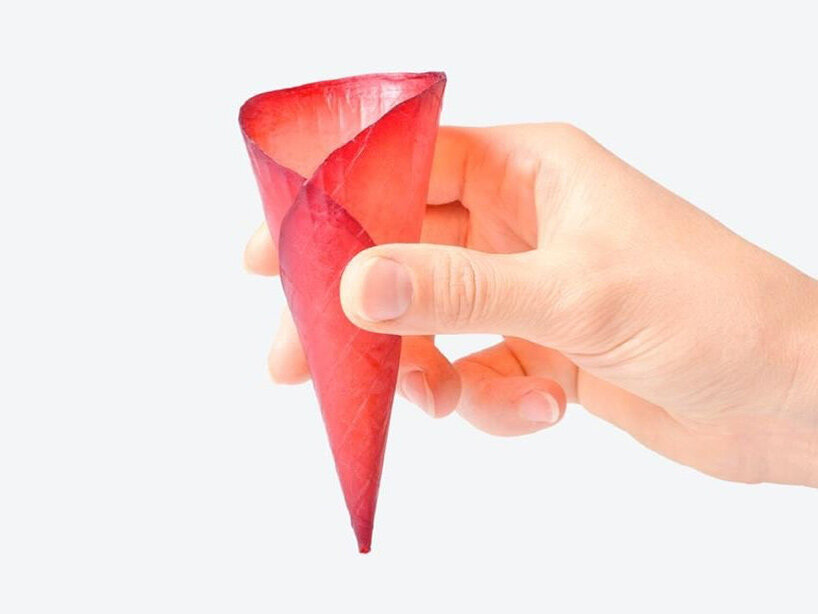
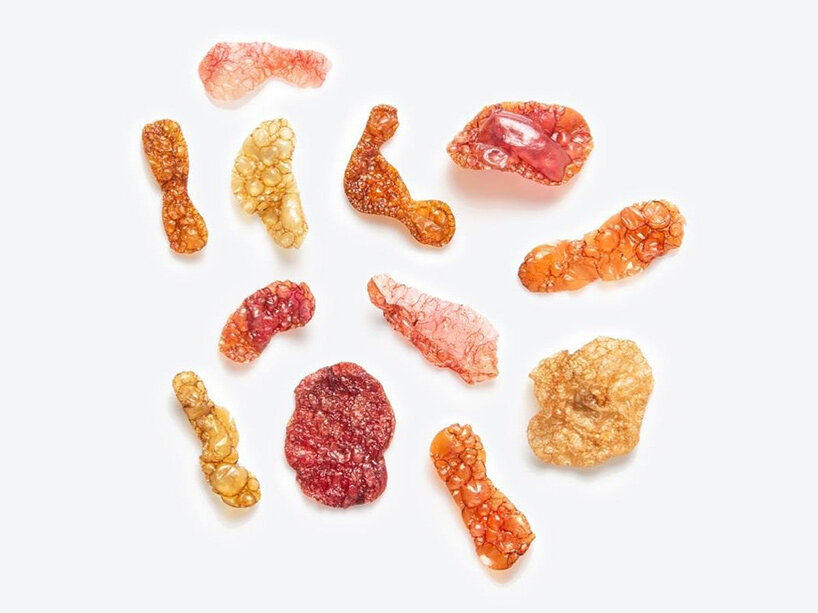
Emma Sicher’s EATING SCOBY project explores the culinary possibilities of this cellulose-rich membrane. Developed during her MA in Eco-Social Design, the research involved food microbiologists and consultation with chefs. Among the prototypes are SCOBY chips that begin crunchy before becoming chewy and slightly gelatinous in the mouth. An experimental ice cream cone offers another application, with the possibility of an inner coating of melted chocolate.
A double-flavor popsicle takes the material in a different direction, with a consistency the designer compares to blended aloe vera. These familiar food formats make the unusual ingredient easier to imagine on a plate, while introducing new possibilities for its texture and presentation. The prototypes remain experimental, exploring how microbial cellulose might become part of future food systems.
packaging grown from food waste
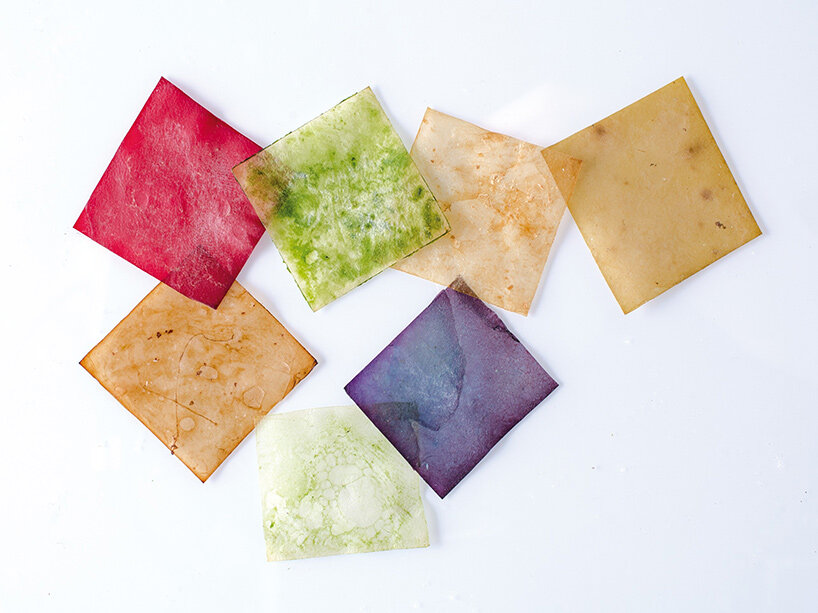
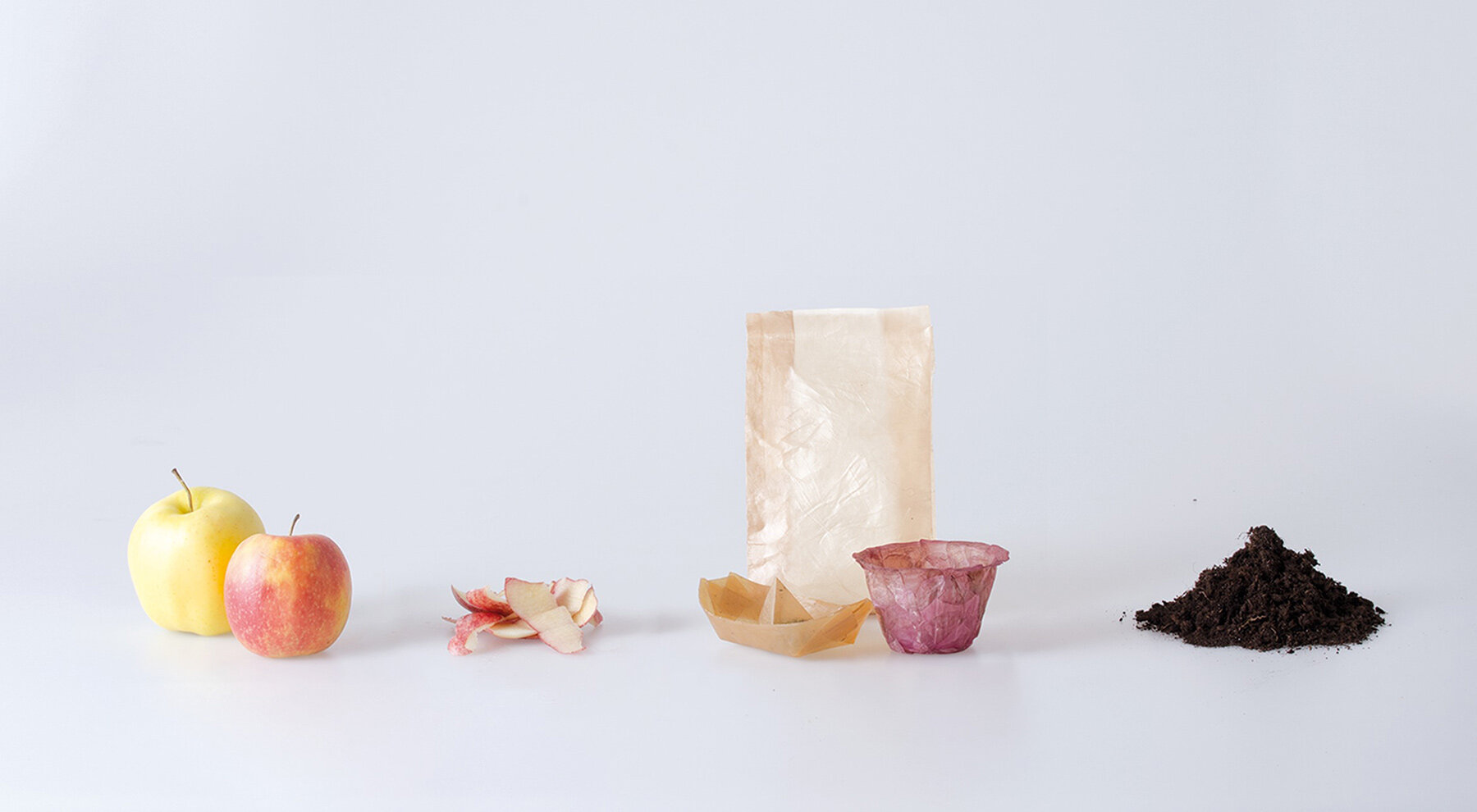
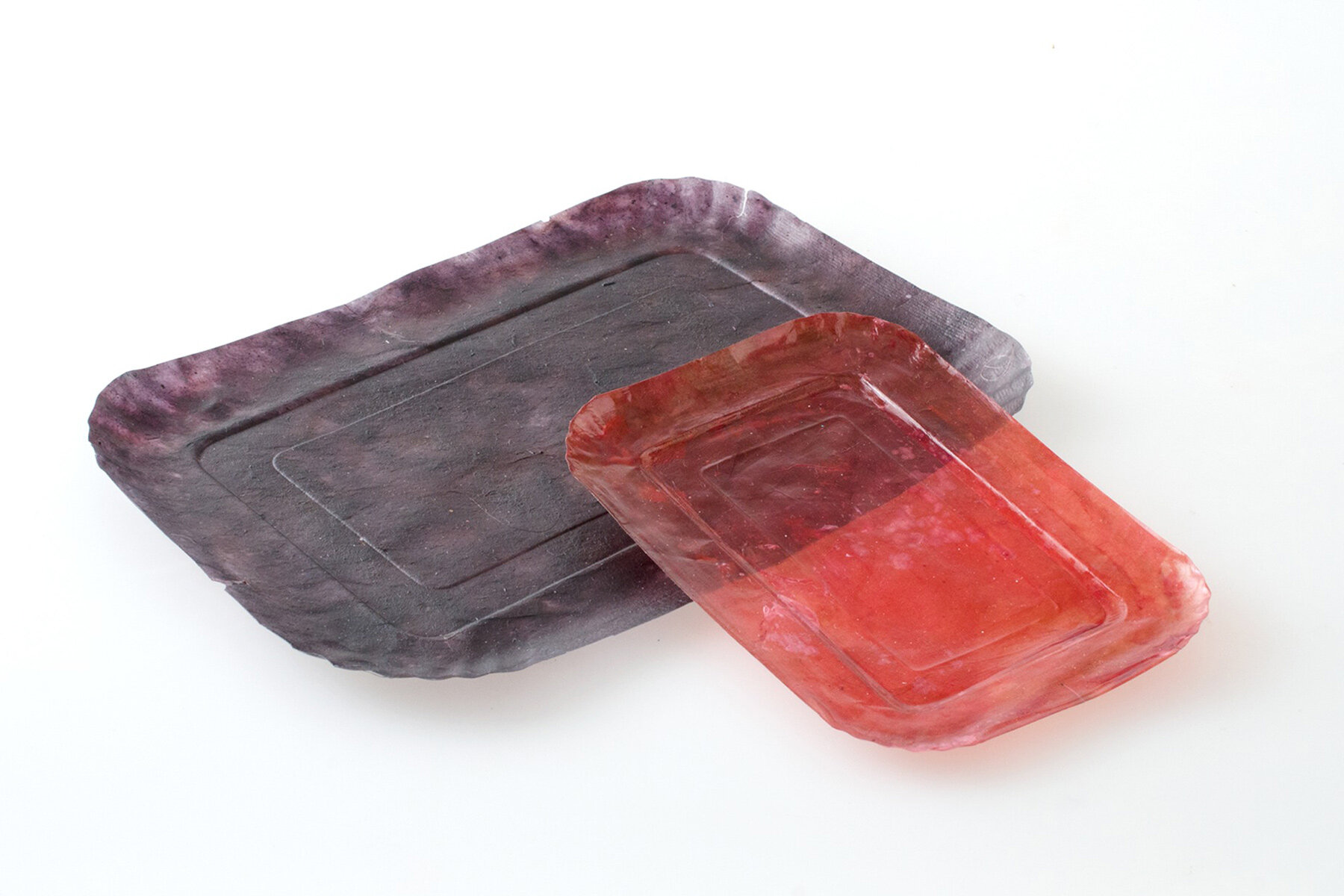
Sicher first explored bacterial cellulose in her 2017 project From Peel to Peel, which proposed biodegradable food packaging grown from discarded fruit and vegetables. Apple peels and beetroot scraps became nutrients for microbial cultures, producing thin sheets that could be dried into wrappers and small containers. The packaging took on different colors depending on the ingredients, ranging from pale yellow to deep pink.
The dried material can resemble paper or leather, with its finish influenced by the surface on which it dries. Its tendency to absorb moisture presents limitations for conventional packaging, particularly for wet foods. Still, the project established an approach that continues throughout Sicher’s work: allowing biological processes to influence the properties of a material from the beginning.
growing materials from local ecosystems
More recently, Sicher has begun investigating how materials can be grown using microorganisms already present in the surrounding environment. In research published in 2026, she describes experiments with rowan berries foraged around Berlin and mirabelle plums collected in Brandenburg. Both successfully produced cellulose membranes through fermentation using naturally occurring microbial communities, without conventional kombucha starter cultures.
Other experiments combined elderberries with a fermentation starter made from wild mirabelle plums, producing an intensely colored membrane. Sicher’s research also draws on fermentation practices she studied with local practitioners in Thailand. Together, these investigations explore how the plants and microbial populations of a particular region might influence the materials cultivated there, introducing biological variations that would be difficult to achieve through standardized production.
designing alongside living organisms
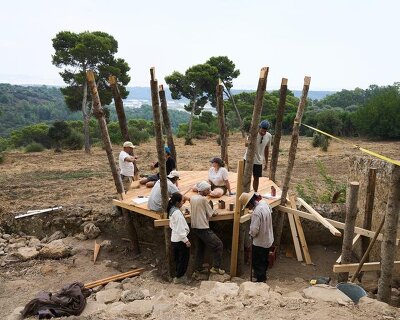
Sicher also brings microbial experimentation into educational workshops, where participants learn to prepare plant infusions and cultivate their own SCOBY membranes. During a workshop at Elisava School of Design and Engineering in Barcelona, students worked with wet and dried cellulose, exploring how its texture and behavior change through processing. Her research with alternative plant infusions has similarly examined how botanical ingredients can influence the density and physical properties of the grown material.
Across these experiments, Sicher works with processes that depend on the behavior of other living organisms. She can select the plants and prepare the growing environment, but the microorganisms play their own part in forming the material. What emerges is shaped by those biological interactions, suggesting a way of making in which the surrounding ecology participates in the design process.

1/2
project info:
designer: Emma Sicher | @seeker_biodesign
This article is part of designboom’s POSTHUMAN UTOPIAS chapter, exploring what happens when humans are no longer the measure of all things. These stories rethink our relationship with the planet through interspecies architecture, living materials, regenerative landscapes and emerging technologies – learn more here! The chapter is presented in partnership with INDX|GLOBAL – a global cultural platform placing architecture, design, and creative intelligence in conversation with the world.
Each designboom editorial series explores one theme in depth through projects, interviews, features and news across architecture, design, art and technology. Discover more chapters here, and get in touch if you’d like to submit a story through our submissions portal or contact form.

shop
your own online design shop — no sales commission collected