
how enzo mari’s 16 animali became an icon of learning through play
sixteen interlocking oak creatures turn a spatial puzzle into an open-ended tool for curiosity and storytelling.
sixteen animals inside one block of oak
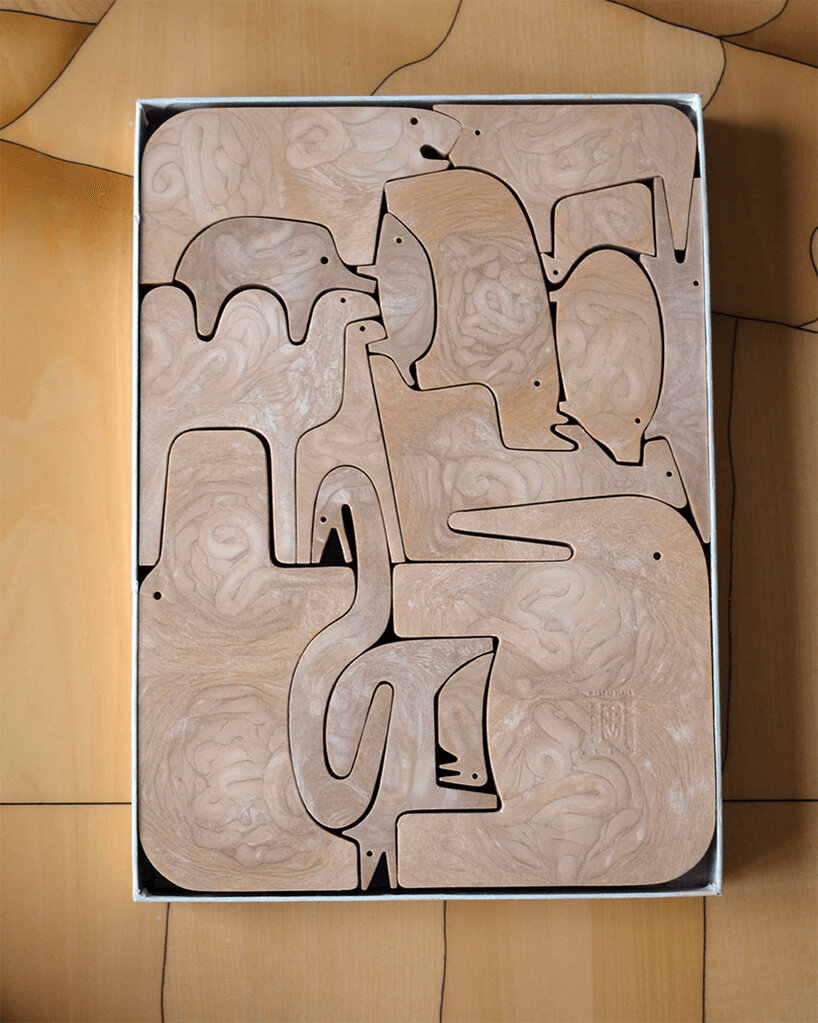
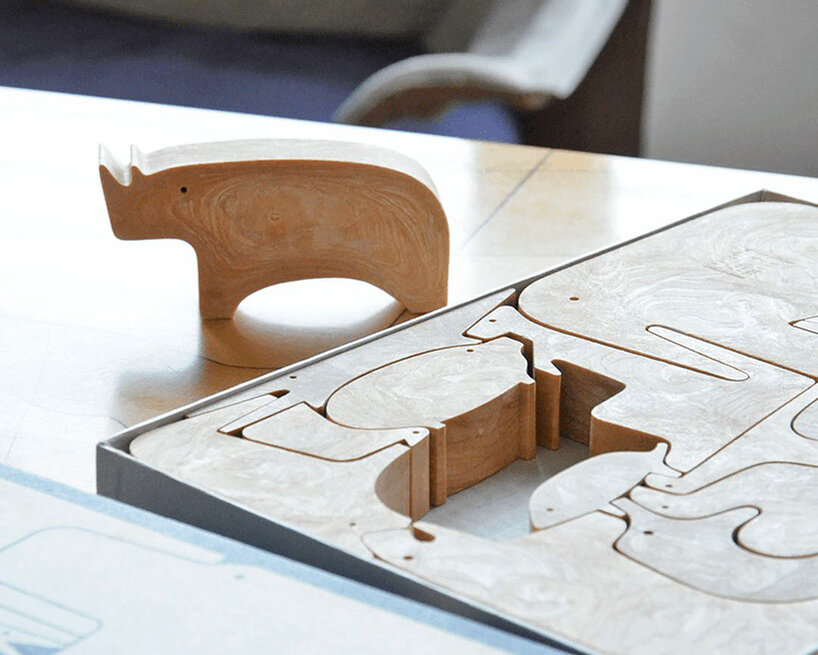
Across the surface of Enzo Mari’s 16 Animali, the elephant usually gives the game away first, with its trunk curling into the body of another creature while a snake winds along the edge of the frame. The rest take a little longer to find. A giraffe rises through a narrow neck, and a hippo fills a broad patch of wood between the surrounding figures.
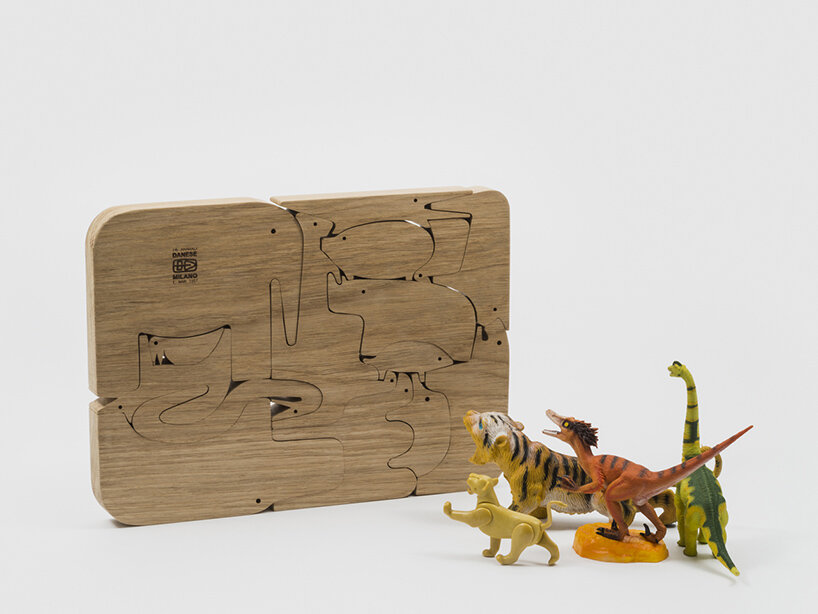
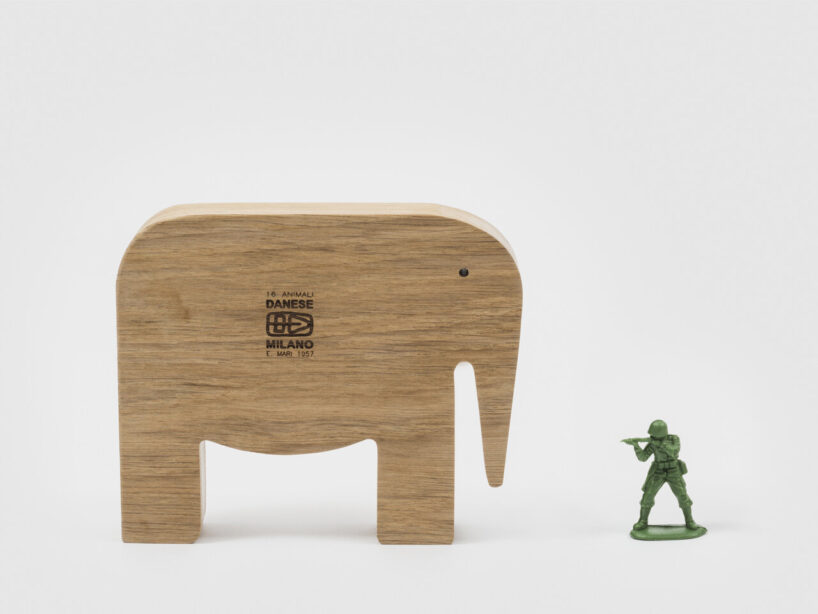
Once one piece is lifted, the rectangle begins to come apart quickly. Each toy animal is thick enough to stand on its own, so the puzzle spreads across the floor as a loose wooden cast, ready to be stacked or drawn into a story. Returning them to the frame is harder. Every curve depends on the next one, and a piece that seems close can leave the whole arrangement slightly wrong.

a puzzle that keeps changing
Designer Enzo Mari created 16 Animali in 1957 for Danese Milano, which began producing the puzzle in 1959. He had been looking closely at the way children learn through handling objects, testing possibilities and repeating an action until it makes sense. The puzzle grew from that interest, though it never behaves like a lesson arranged by an adult.
The frame gives the game a fixed problem, while the animals allow the child to leave that problem behind. They can become a herd or a scene invented on the spot. Mari understood that play could change direction without losing its seriousness, and 16 Animali leaves enough space for the child to decide when the puzzle is finished.

enzo mari draws with the saw
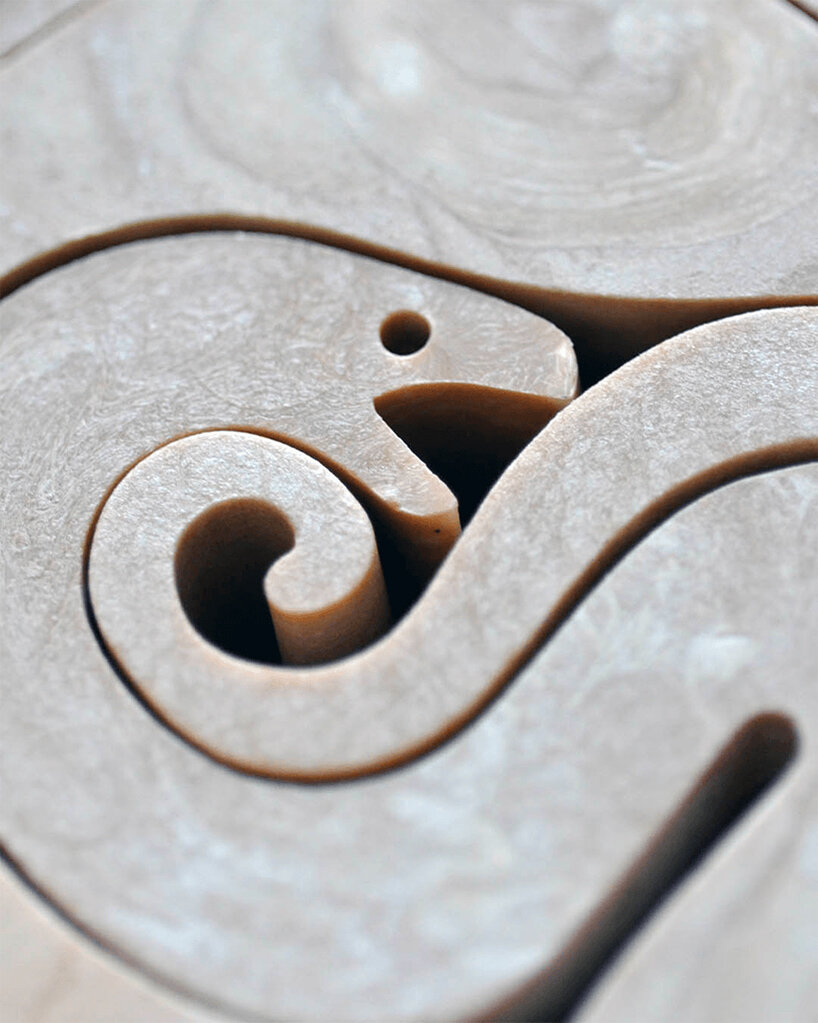
Each animal has been reduced to the few lines that make it readable. The elephant needs its trunk and weight, and the giraffe is held together by its long neck. Surface detail disappears, but the figures stay distinct. They feel familiar without becoming overly cute or cartoonish.
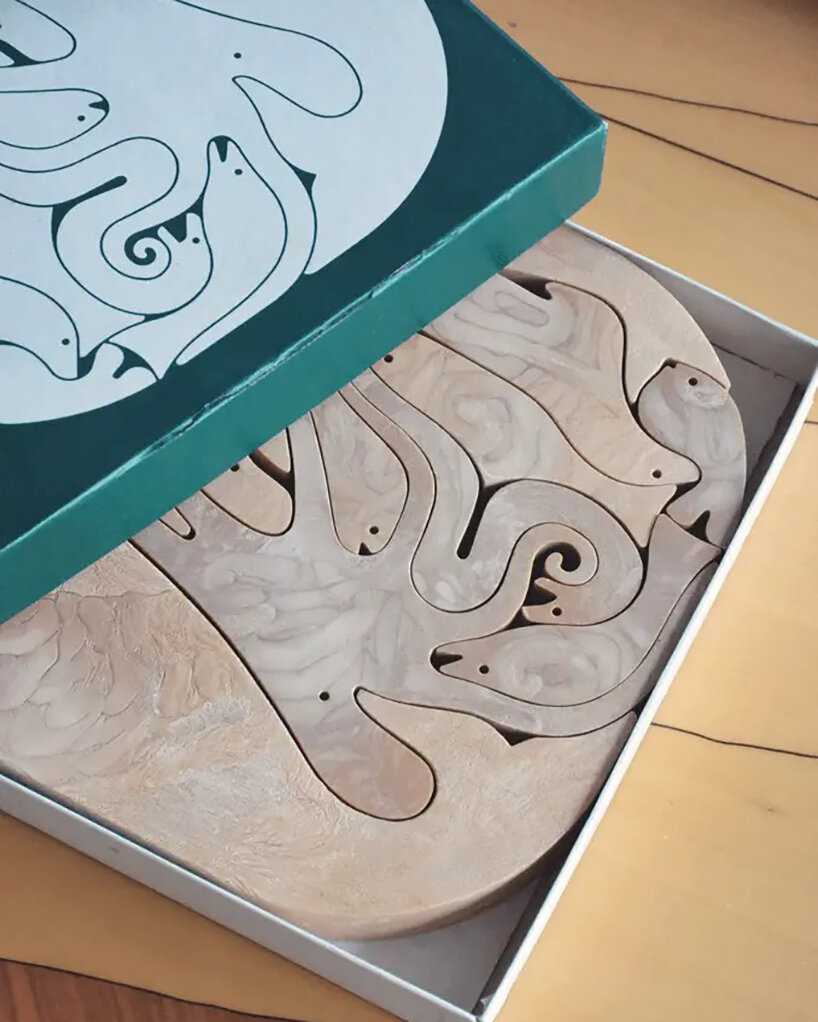
The sixteen pieces are cut from a single block of wood through one continuous line, so every edge belongs to two creatures at once. The back of one animal becomes the belly of another while a tail closes the space around a leg. Enzo Mari turns the act of fitting pieces together into a way of seeing how solid form depends on the gaps around it.

made to leave the frame
Over time, 16 Animali has moved from children’s rooms into museum collections and design shops, where the complete rectangle can look almost too composed to disturb. Danese Milano still produces the puzzle in solid oak, with 200 pieces released each year and presented in a silkscreened wooden case.
The object makes its strongest impression once that complete surface has been broken apart. Its smooth rectangle is satisfying, though Mari gave the animals a second life beyond it. The player can search for the one arrangement that works, then scatter the pieces again and begin somewhere else.


1/6
project info:
project: 16 Animali
designer: Enzo Mari
design year: 1957
first production: 1959
producer: Danese Milano
This article is part of designboom’s PLAY chapter, exploring what would happen if form didn’t follow function, but pleasure. Discover more stories that celebrate joy, imagination and playfulness here.