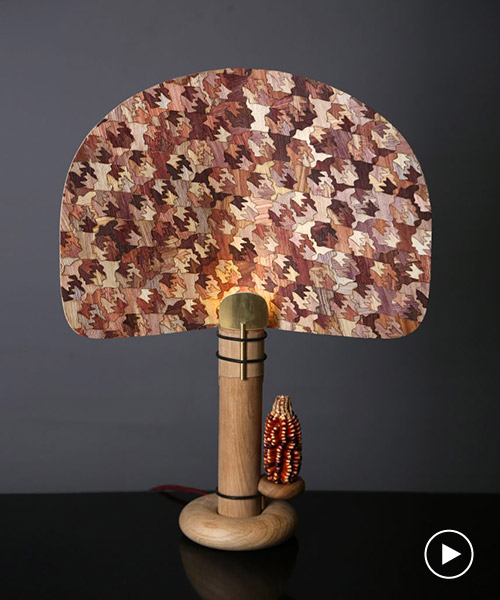
fernando laposse creates colorful totomoxtle veneer from mexican corn husks
the husks, which are naturally colorful, are flattened and glued onto fibreboard before being cut into tiles and marquetry.
prefer designboom on google[FEATURED]
mexican designer fernando laposse has found an innovative way to create a surfacing veneer he calls totomoxtle, that uses native corn husks. the husks, which are naturally colorful, are flattened and glued by hand onto fiberboard and card to reinforce them, and can be used in various applications for interiors and furniture.
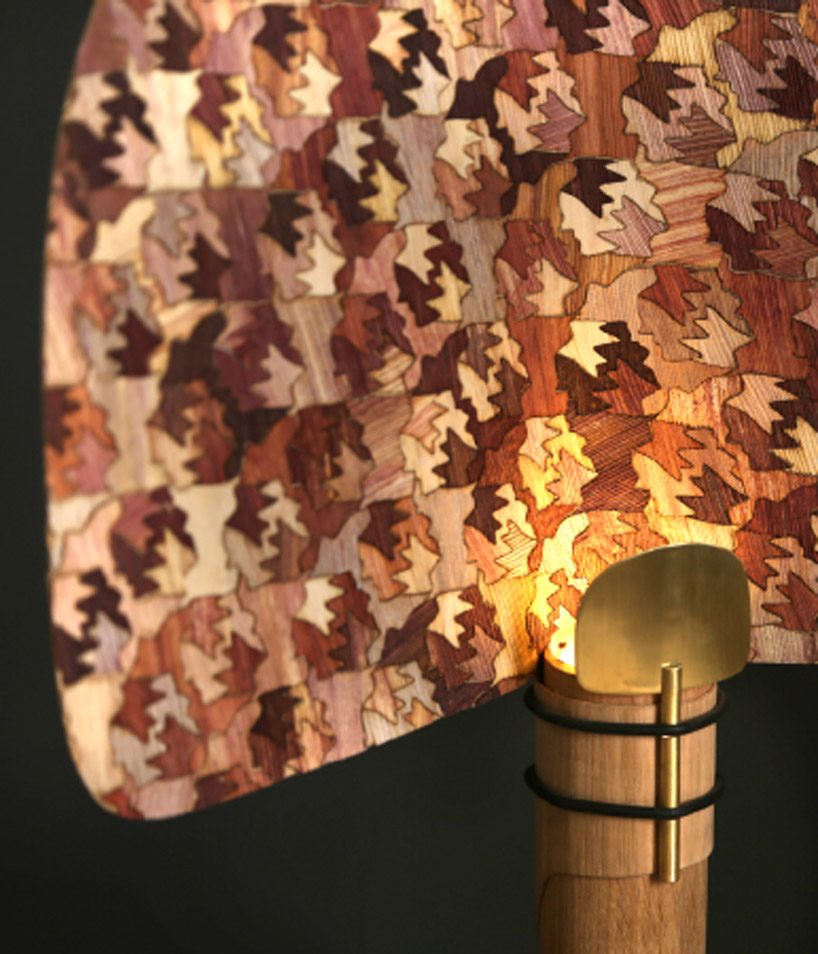
images courtesy of fernando laposse unless stated otherwise
to create the totomoxtle veneer, laposse heats the husks before glueing them onto their reinforcing material. because of the dimensions of the average corn leaf there are size limitations, overcome by laser cutting and sawing small veneer sheets to make tiles and marquetry. besides creating a new sustainable material, the project also raises awareness about the rapid loss of the original species of corn in today’s globalised world.
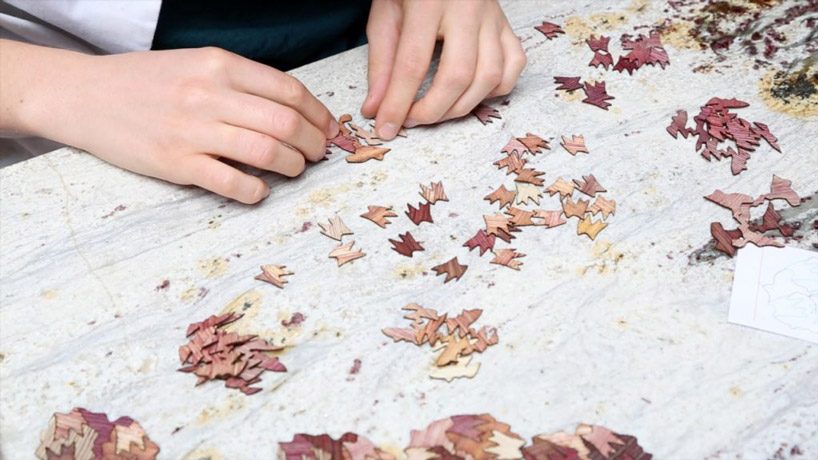
the small veneer sheets can be pieced together to create a tiled surface and marquetry
corn was first planted in mexico 9000 years ago and that the country now has over 60 different species, each with its own wonderful flavour color and texture. therefore, the process of using the corn husks in this way offers an expansive palette of naturally colored materials.
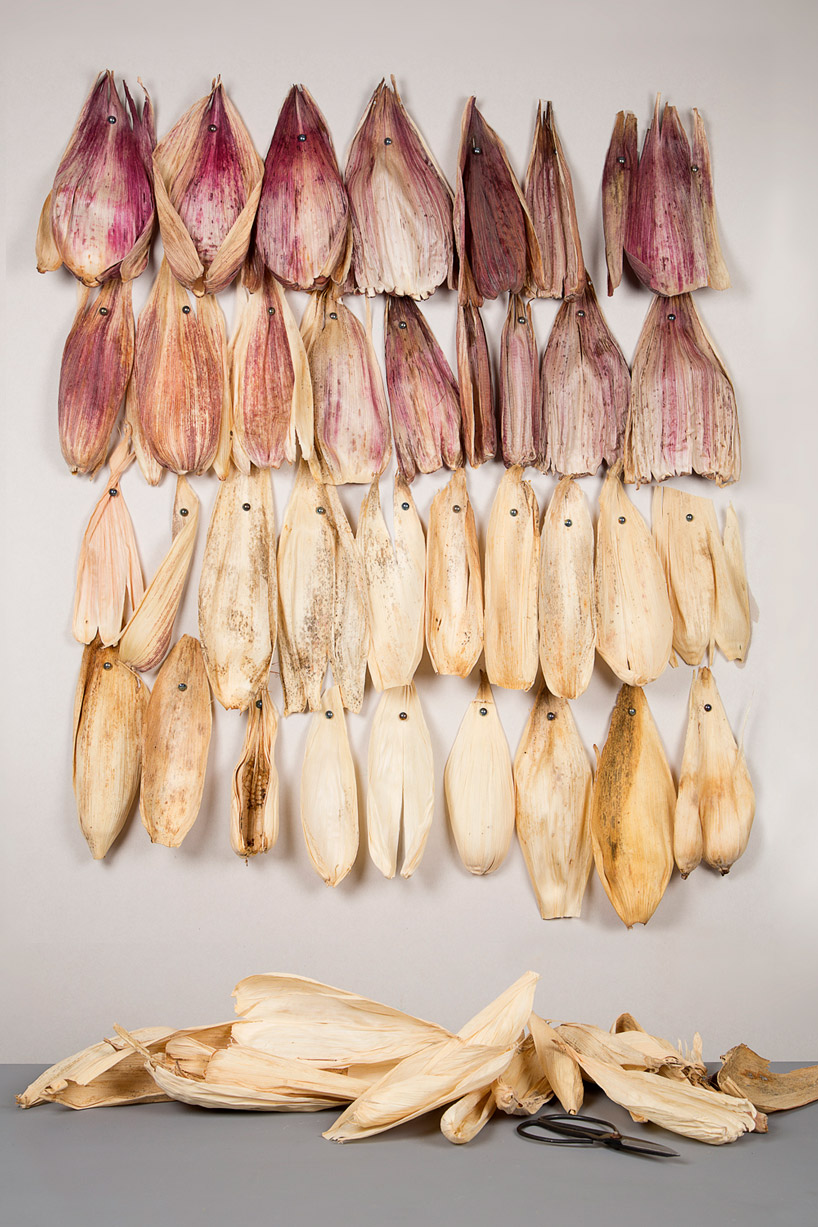
various native mexican corn husks illustrate the variant in colors avaialble
laposse has developed totomoxtle in partnership with indigenous farmers who have seen their way of life threatened by the introduction of genetically modified corn and the standardisation of vegetables for supermarket consumption. not only does the project develop crop diversity but it creates local employment based on this new craft to ensure farmers can keep planting their heirloom varieties.
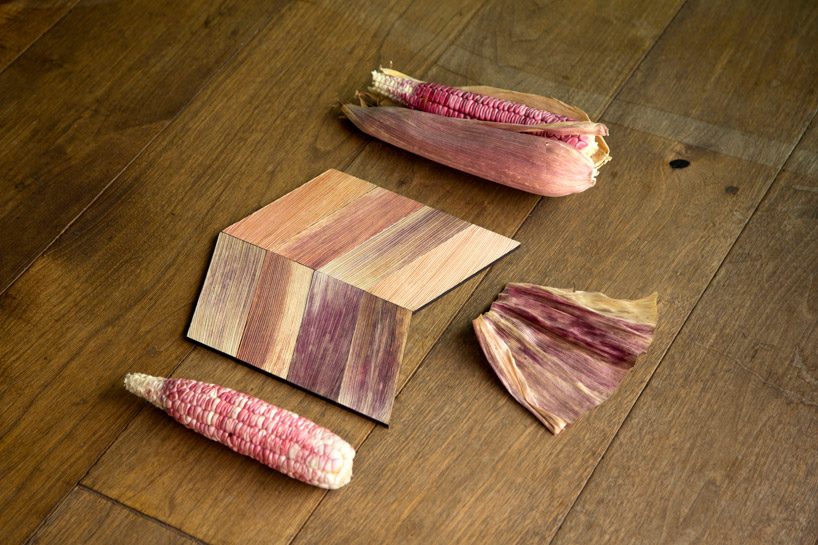
tiling application using different shades of the husks
‘totomoxtle is inspired by the relationship of my country with its maize,’ the london-based mexican designer explains. ‘it focuses on the people who are struggling to harvest it with traditional methods in a globalized world…this project is intended to make more income for famers by making an inexpensive secondary product – the veneer – from husks that would otherwise go to waste. this will help them have the financial independence to keep planting native seeds and decide how they want to feed themselves.’
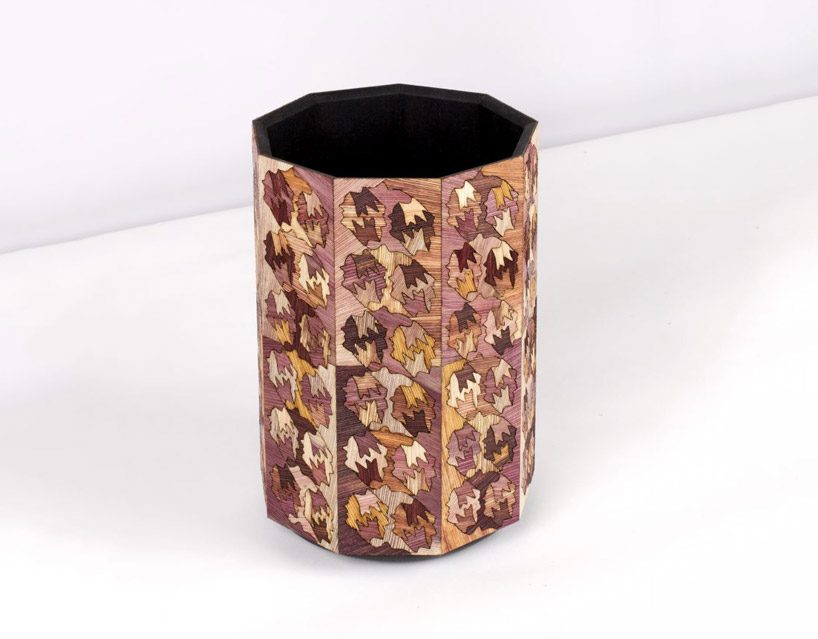
a marquetry application used here on a vase
laposse recently showcased the material and its real life applications as part of an exhibition exploring past and future heritage. ‘legacy‘ was the third edition of schloss hollenegg for design, this time questioning cultural inheritance and intellectual heritage and, if what we are leaving behind, is a valuable and positive legacy for the generations to come.
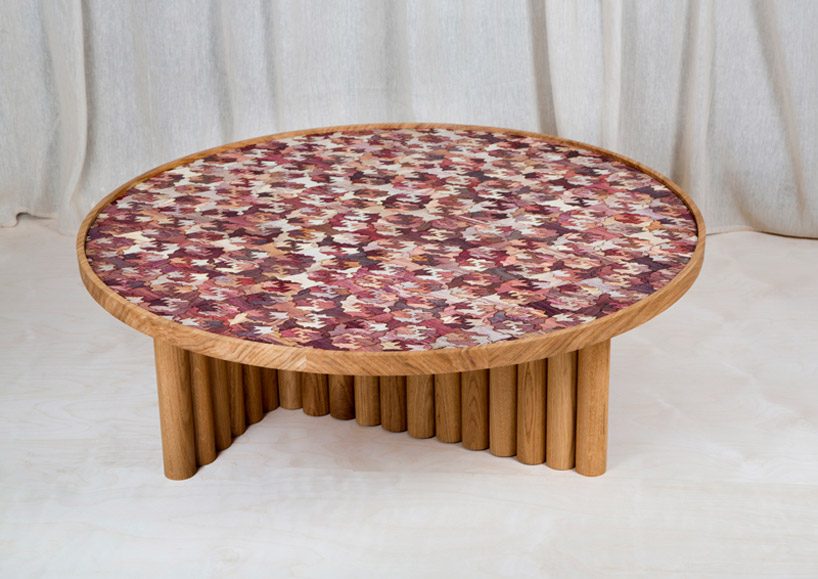
or similarly applied to a tabletop
laposse is known for creating materials from natural materials. his other projects include glassware made from 100% roto-moulded melted sugar. in the designer’s project ‘lufa’ he interrogated the material traditionally used for scrubbing, in a series of furniture including a coffee table and adjustable light.
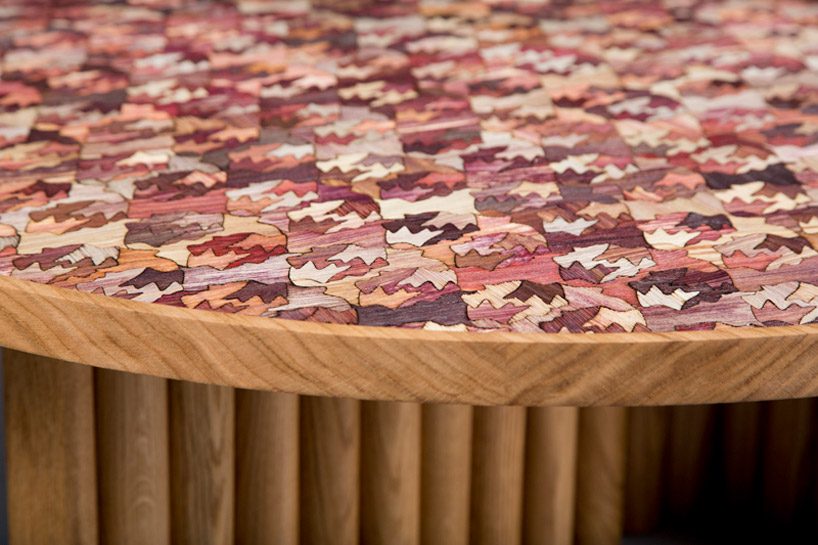
close up of the marquetry application
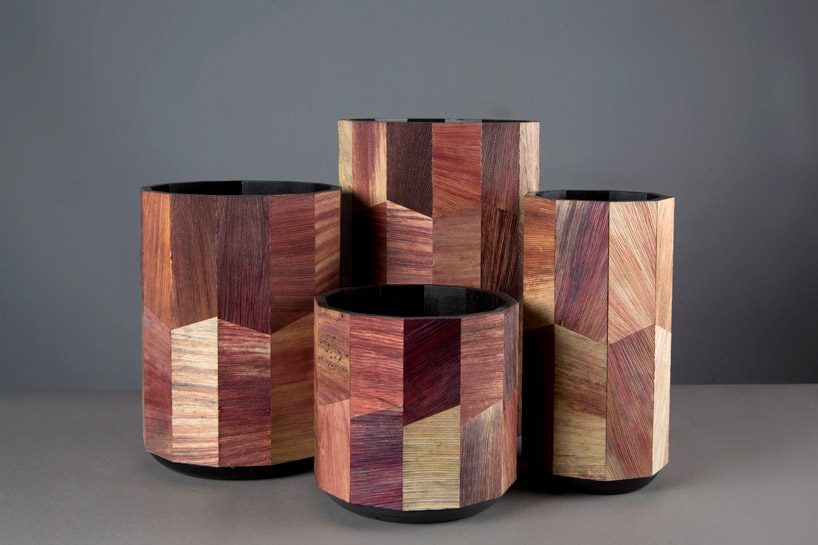
a series of vases illustrating the use of a tiling application

artistic symbol of process of development: a native american corn captured within infrared bulbs
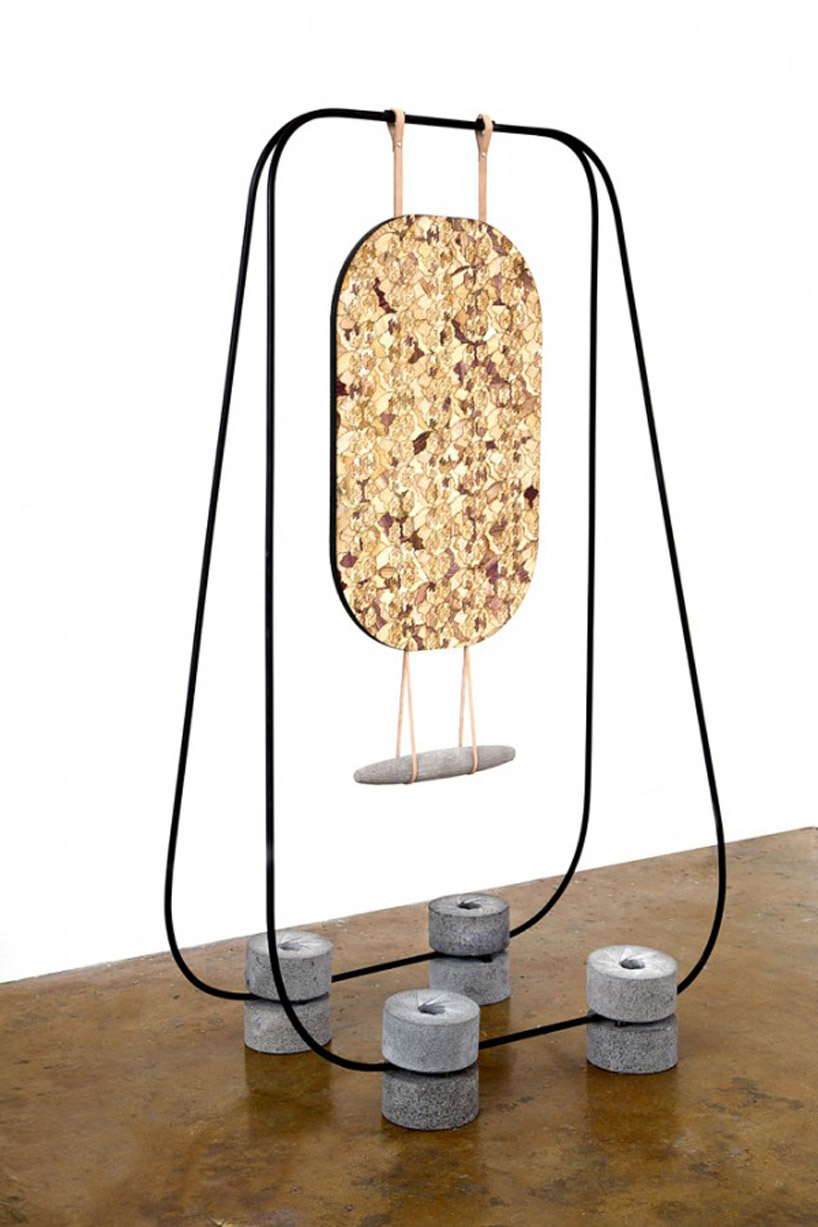
a board of the marquetry material used in an artistic installation
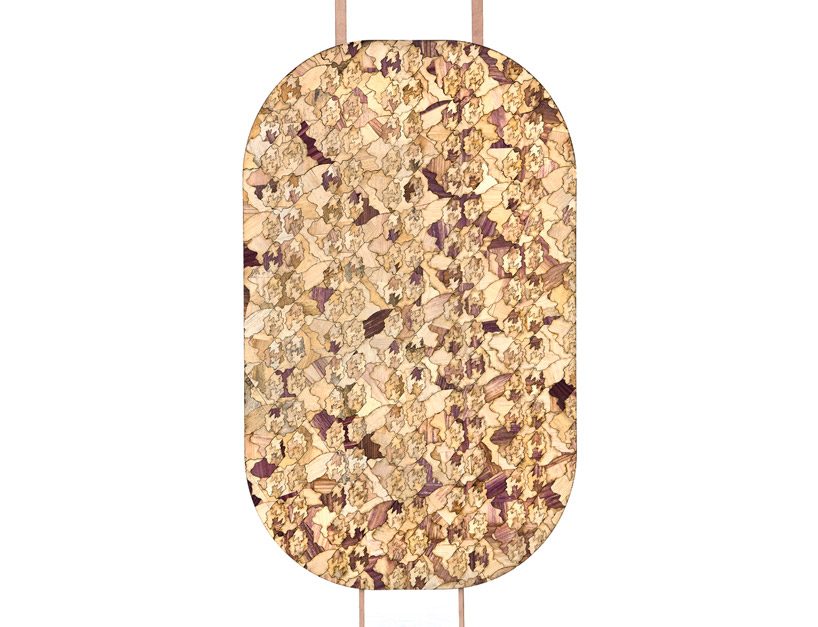
close-up of the marquetry material used in an artistic installation
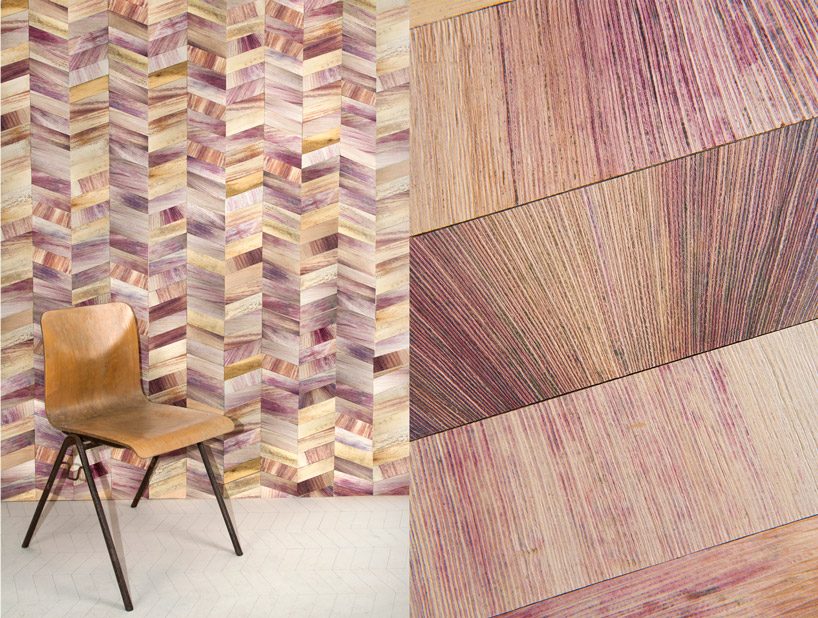
the material can be used in interiors as a wall tiling
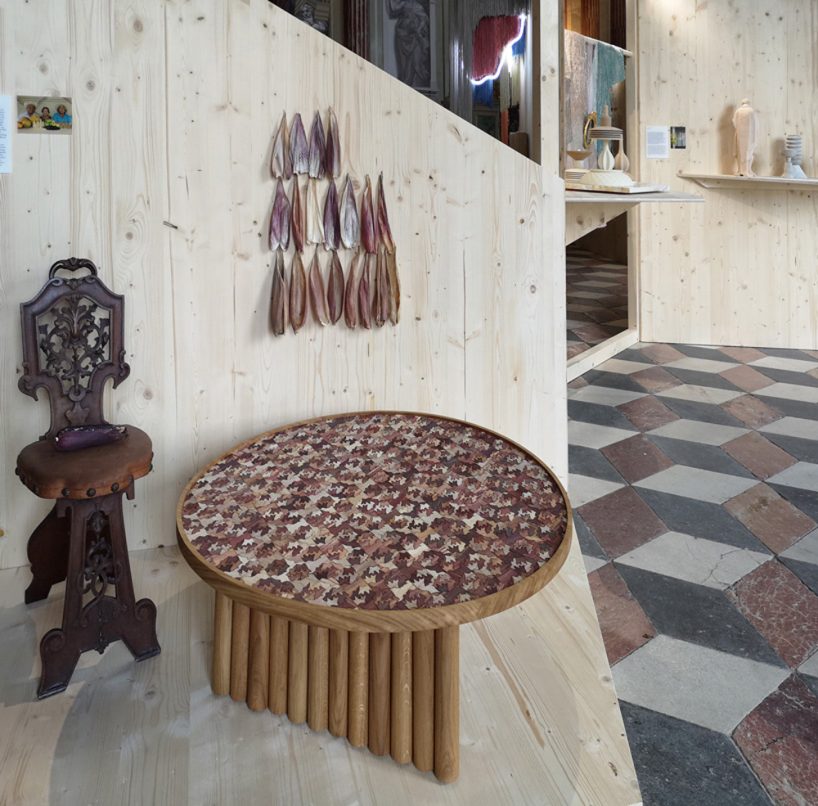
the material and functional applications were displayed as part of the ‘legacy’ exhibition in schloss hollenegg
image © designboom
shop
your own online design shop — no sales commission collected