this fictional beverage comes with a real warning about fake news
dysturb’s fake drink campaign arrives in paris and NYC to encourage media literacy and critical thinking in an age of misinformation.
prefer designboom on google[FEATURED]
dysturb launches a beverage with 0% fake news
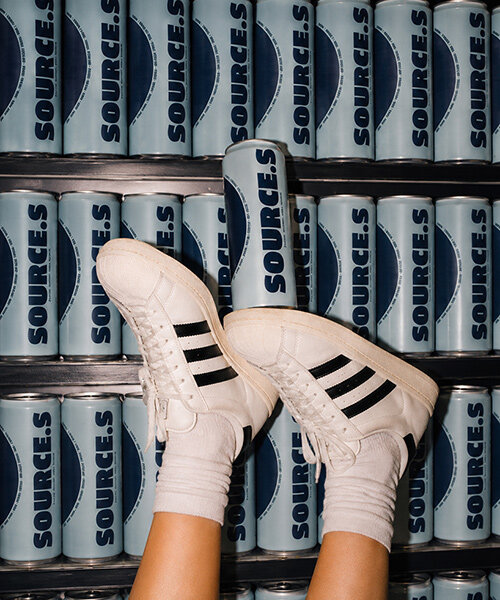
Paris-based nonprofit Dysturb has launched Source.s, a fictional beverage advertised across the streets of Paris and New York in October 2026. The campaign gives its imaginary drink a convincing product launch, with large-scale murals, posters, and promotional cans handed out to passersby.
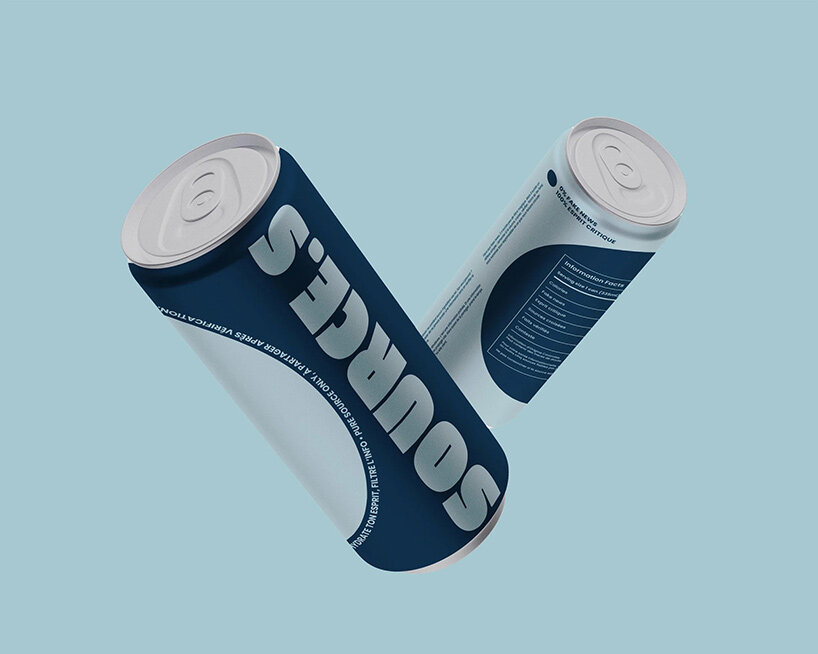
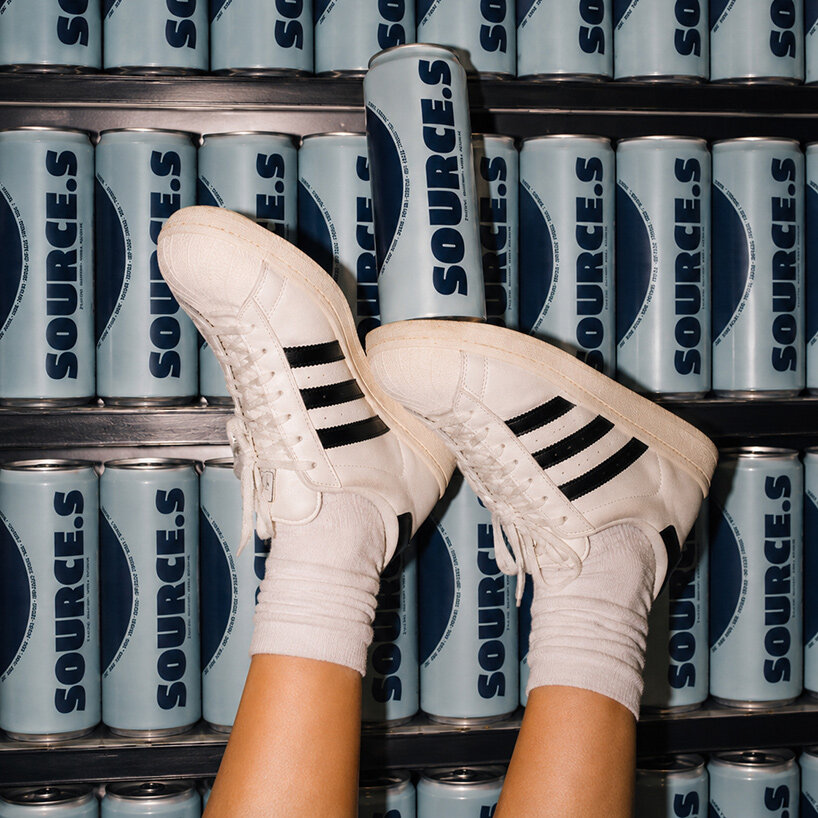
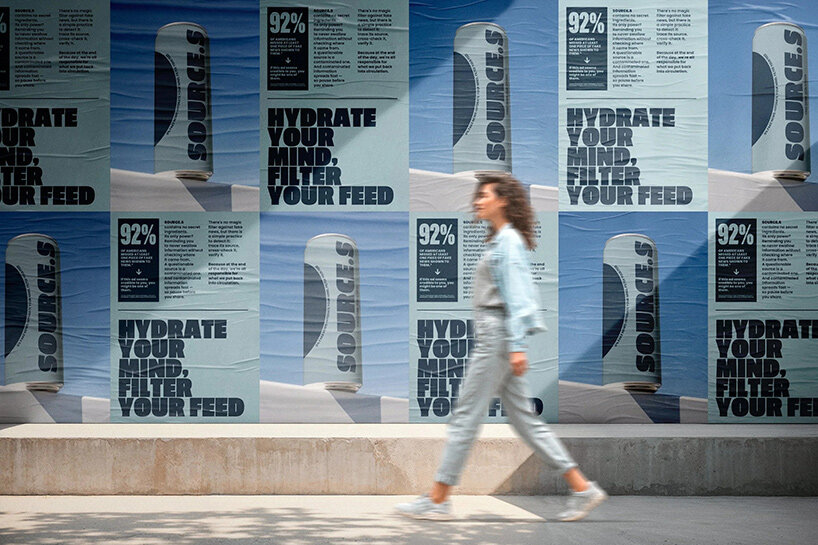
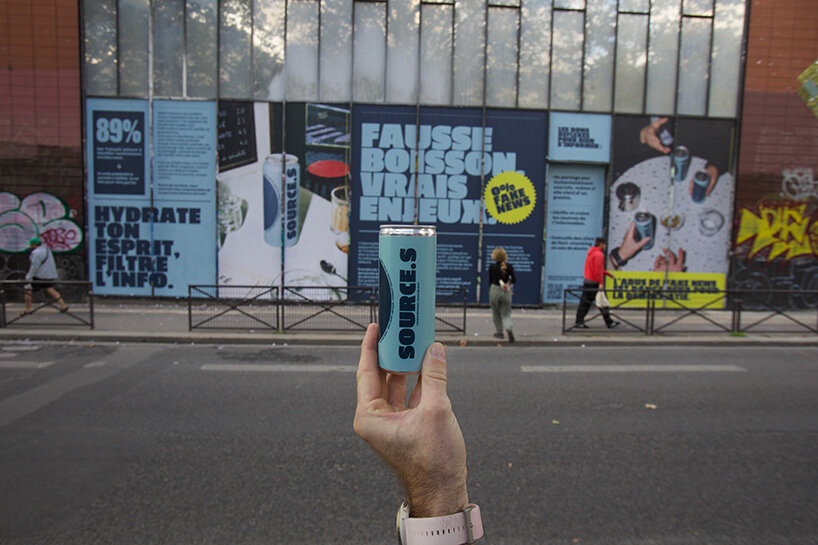
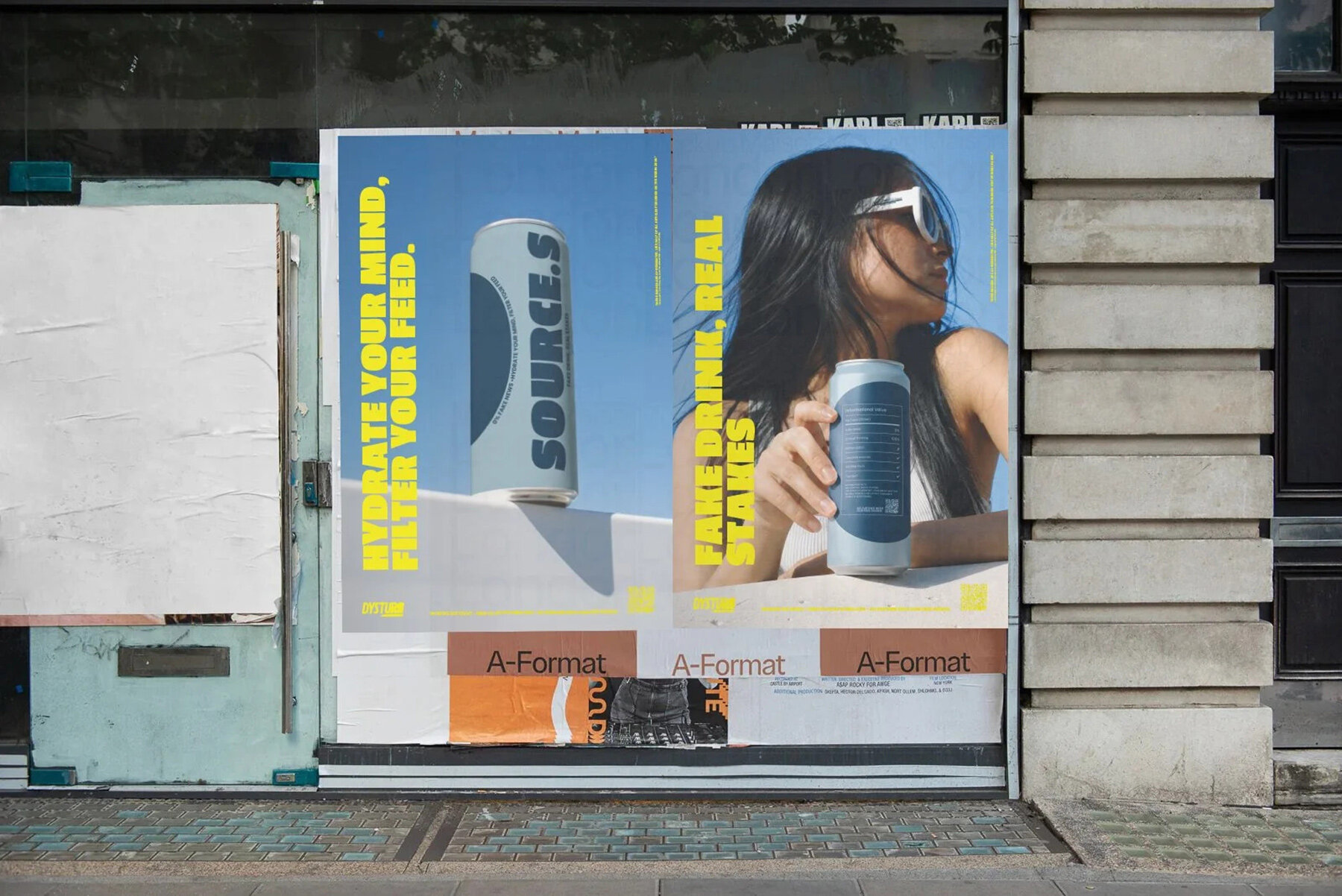
At first glance, Source.s could easily pass for another new drink brand. Its aluminum can comes in pale blue with oversized navy lettering, while its advertising borrows the familiar promises of refreshment and well-being. While the brand is invented, the promotional cans themselves are real.
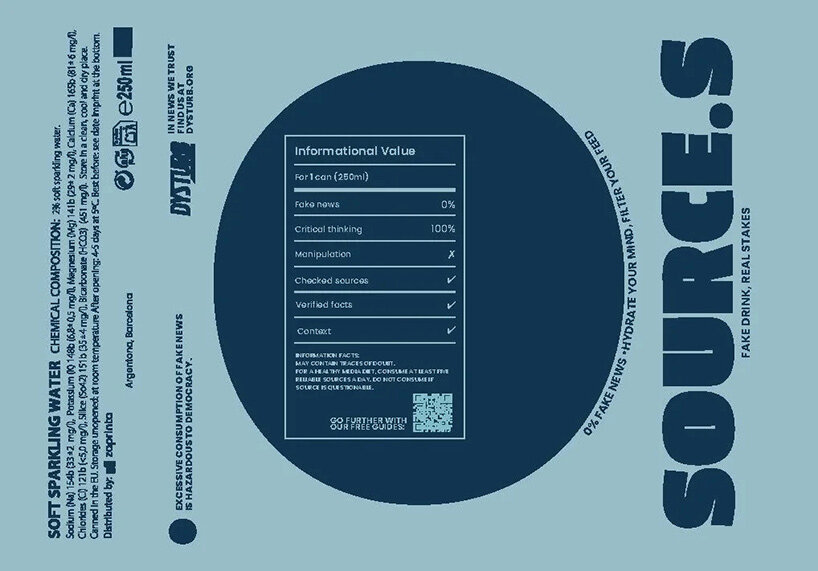
The packaging begins to give the idea away upon closer look. An ‘informational value’ label replaces conventional nutrition facts, listing 0% fake news and 100% critical thinking. Even the language of hydration gets a rewrite. The American campaign reads ‘hydrate your mind, filter your feed,‘ to turn a familiar wellness slogan into a reminder to question the information we consume. It’s a playful piece of packaging design, with an underlying concern about how readily we trust something that looks convincing.
between paris and new york
The campaign for Dysturb’s fake beverage Source.s takes two different forms depending on where it appears. In Paris, it borrows the visual language of a classic bistro drink. Its posters use oversized yellow typography against photographic backgrounds, while the cans themselves have the polished appearance of a commercial beverage. A monumental mural on the Quai de Valmy extends the campaign into the city, accompanied by smaller posters across several neighborhoods. The team also distributed cans along the canal and around nearby métro entrances.
In New York, the American version takes its cues from contemporary wellness branding. The same pale-blue can appears against bright skies and sunlit architecture, with a model holding it in the kind of lifestyle imagery associated with functional drinks. Large murals were erected near the Navy Yard in Brooklyn and in Manhattan.
Dysturb credits AI-generated imagery in the campaign, an interesting detail for a project concerned with the credibility of visual information. Both versions use recognizable advertising conventions to lend an invented product the appearance of legitimacy.
a health warning disguised as a drink campaign
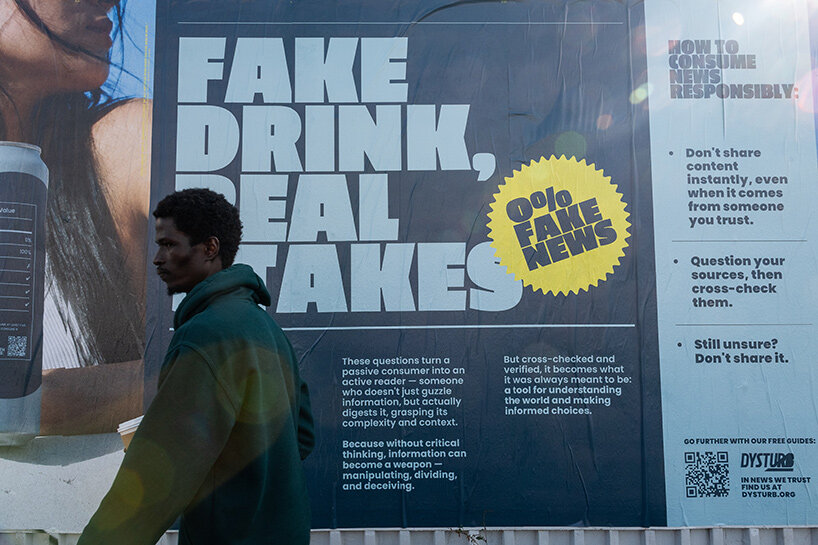
The message becomes more direct in the posters’ smaller print, where Source.s borrows the language of consumer health warnings. One reads, ‘Excessive consumption of fake news is hazardous to democracy.’ Another compares questionable information to a contaminated source, extending the drink metaphor into the way misleading stories circulate online. QR codes appear alongside the advertising, giving passersby a way to follow the campaign beyond the posters.
For Dysturb, the fictional beverage offers a way to introduce a familiar problem through an unexpected format. The organization has spent more than a decade bringing photojournalism and public information into urban spaces, often through large photographic installations. With Source.s, it has adopted the techniques of commercial advertising itself. The campaign asks people to consider why professional graphics and familiar branding can make a message seem credible, even before its source has been examined.
free guides bring the campaign beyond the street
Source.s is part of Dysturb’s Anti Fake News Club, an educational initiative that also offers five free media-literacy guides in English, French, and Spanish. The downloadable materials address the mechanics of misinformation and the habits that shape how people encounter the news. Their practical exercises encourage readers to look beyond a headline, compare independent sources, and examine the origins of photographs.
One guide explains how cropping or a misleading caption can change the meaning of an image, while another examines the influence of algorithms on the information appearing in social feeds. The resources have been used in educational programs across schools and other institutions.
The organization is also developing JustCheck, a verification platform intended to help users evaluate questionable content. According to Dysturb, the proposed tool will accept everything from screenshots to videos and return a credibility assessment supported by evidence and sources.
For now, Source.s puts the same questions into a more immediate, physical setting. A fake drink appears on a café table or a neighborhood wall, complete with all the visual cues of a genuine product. Its real purpose becomes clear once someone stops to read the label.

shop
your own online design shop — no sales commission collected