fuelfor: rethinking the waiting room
in response to increasingly stretched healthcare resources, the systems-level concept of architectural, industrial, graphic, and application design aims to make waiting room experiences effective and comfortable.
prefer designboom on google[FEATURED]
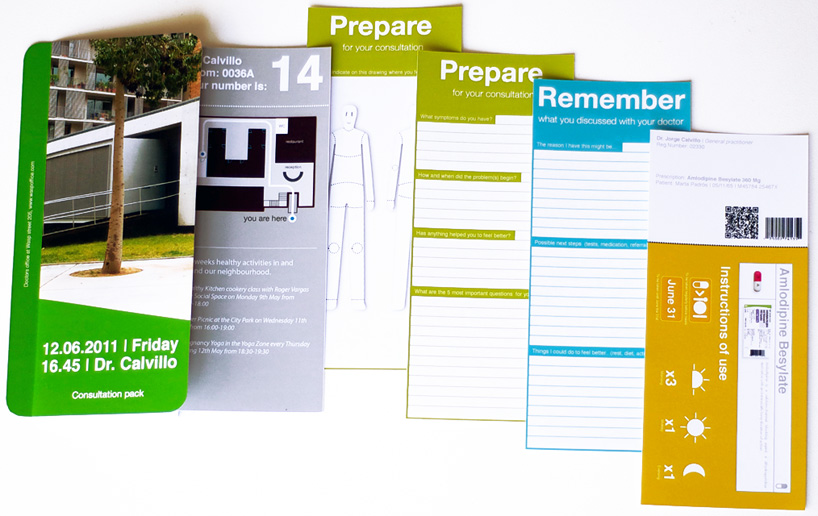
‘folio’ consultation records, part of the waiting room redesign case study undertaken by fuelfor
‘rethinking the waiting room‘ is a case study undertaken by barcelona-based design studio fuelfor, offering a system of design concepts to make the experience of waiting in health clinics a more positive, efficient, and comfortable process. the design incorporates architectural elements, industrial design, and graphic and application optimization, characterized in further detail below:
 detail of ‘folio’ prescription record
 3/4 aerial view of ‘modu’ modular furniture system
structurally the fuelfor concept begins with ‘modu’, a modular furniture system easily adaptable to fit a range of needs and spaces. the seats feature different density cushion pads, and the armrests are moveable. designated wheelchair and stroller space is integrated regularly in the rooms, so that these individuals can sit amongst their ambulatory loved ones. air purifying plants and integrated ventilation achieve improved air quality.
 ‘modu’ modular furniture system for waiting rooms
the ‘tableau’ table likewise creates a customizable space for work and waiting. documents from the ‘folio’ medical consultation record system can be integrated into the table, as can lighting and queue management displays.
 ‘tableau’ communal waiting room table, with ‘folio’ sheets being completed
the colour-coded ‘folio’ system includes information cards filled out by patients for their doctors, note-taking spaces for patients to remind themselves of the doctor’s advice, and a graphically-based prescription system. patients also receive a paper with their doctor’s name, room number, information, and building map. fuel for notes that healthcare providers can also customize ‘folio’ to reflect their own company or user needs.
 ‘inline’ iPhone application
‘inline’ is designed as a dynamic, smartphone equivalent to the information presented by ‘folio’. one’s current number in the queue is updated in realtime, users can take notes and access medication records, and health tips can be studied through applications with an intuitive interface.
 additional screenshot views of ‘inline’ application
 another page from the ‘folio’ record system
 ‘counter act’ vending unit and information board
‘counter act’ is a freestanding counter unit, designed as both public service announcement board with tips for healthy living and a vending machine for water and snacks. fuel for notes that the inclusion of the unit in health centers ‘triggers people to interact and practice healthy habits in a context where they are likely to [already] be thinking about their health.‘
 ‘healthpoint’ stations within healthcare centers provide a community space to encourage healthy living
finally, the ‘healthpoint’ architecture concept promotes healthy living through personal consultations and workshop space, usable by community organizations for meeting space, classes, and activities.