
giulia pesce and ruggero bastita’s create an inclusive furniture series for cohabitation spaces
'patchwork' is a project that analyzes the european immigration and refugee crisis that has hit europe in the past couple of years, encouraging cohabitation.
prefer designboom on google[FEATURED]
industrial design students giulia pesce and ruggero bastita have created an inclusive furniture system for their master project at designskolen kolding in denmark. ‘patchwork’ is a project that analyzes the european immigration and refugee crisis that has hit europe in the past couple of years, encouraging cohabitation. these spaces are generally shared by up to 50 people, eliminating any sense of privacy. ‘as designers, we are interested in how design can deal with the problems of cohabitation in such extreme conditions,’ explain the students.
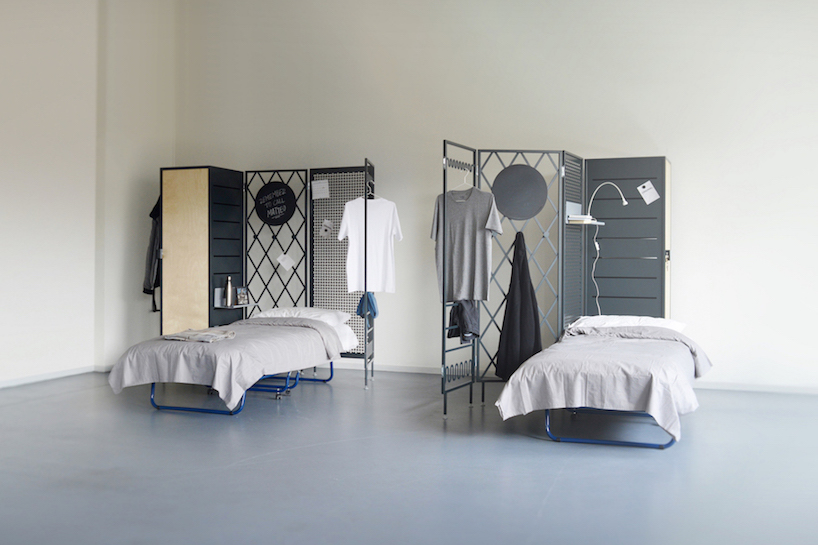
‘as designers, we are interested in how design can deal with the problems of cohabitation in such extreme conditions,’ explain the students.
starting from the analysis of the context of reception centers, giulia and ruggero conduced an ethnographic research and various field studies in public dormitories in milano and torino. the two designers aimed to locate needs that can be identified in a wider range of situations and define solutions that can suit a wider range of people with fundamental diversities, but with similar necessities. ‘our challenge is to improve, in an inclusive way, the quality of life of different people in different contexts of cohabitation,’ says ruggero. ‘patchwork’ is a flexible personal space that provides an efficient solution in the context of privacy, while providing personalization and organization of ones personal belongings.
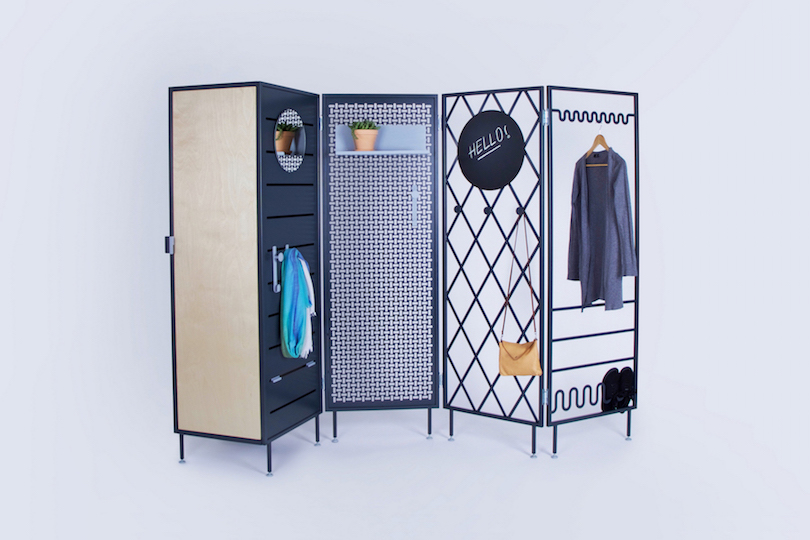
the different panels are interchangeable and can be accessorized to create varying personal units in the shared cohabitation space
in ‘patchwork’, the different panels have various functions, are interchangeable and can be accessorized with hooks, mirrors and shelves. this allows users to interact with the product and create many different combinations, depending on their needs and preferences, so as to define real personal units in the common space. ‘in reception centers in italy, the spaces of the people hosted are anonymous and all alike, creating a sense of depersonalization,’ the designers elaborate, ‘but we observed how some homeless people tried to personalize their own space in the dormitory with their belongings.‘
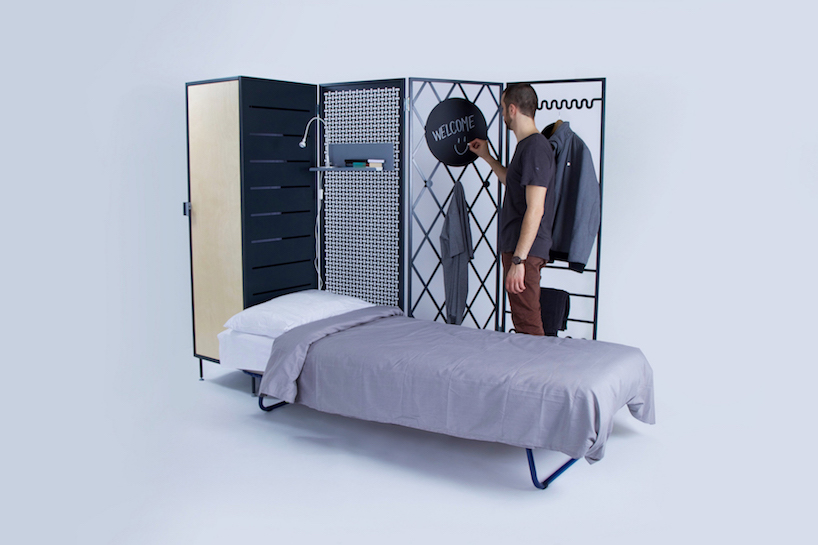
‘patchwork’ is a flexible personal space that provides an efficient solution in the context of privacy
the different metal panels of the product as well as the various fabric patterns can be joint together to embrace ones personal space. in addition to the aesthetic component, each pattern has a different density that provides a different grades of privacy. the design can also be accessorized with a desk, becoming a personal working unit for shared co-working spaces or study areas. giulia explains that ‘the main message that ‘patchwork’ wants to bring is that all people have similar needs related to the space they live in and all deserve to feel at home in their own rooms.’ the project has been developed in collaboration with the danish design studio ‘hans thyge & co’ and the department of architecture and design of politecnico di torino.
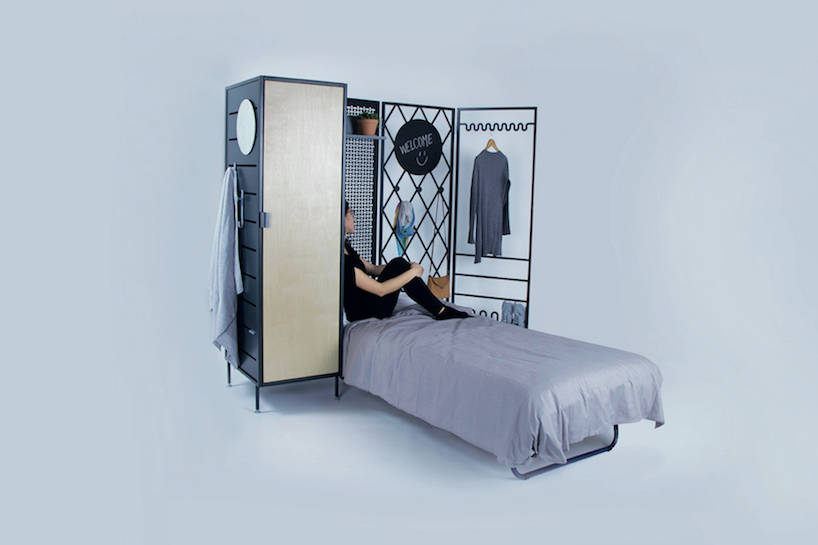
the different metal panels of the product as well as the various fabric patterns can be joint together to embrace ones personal space
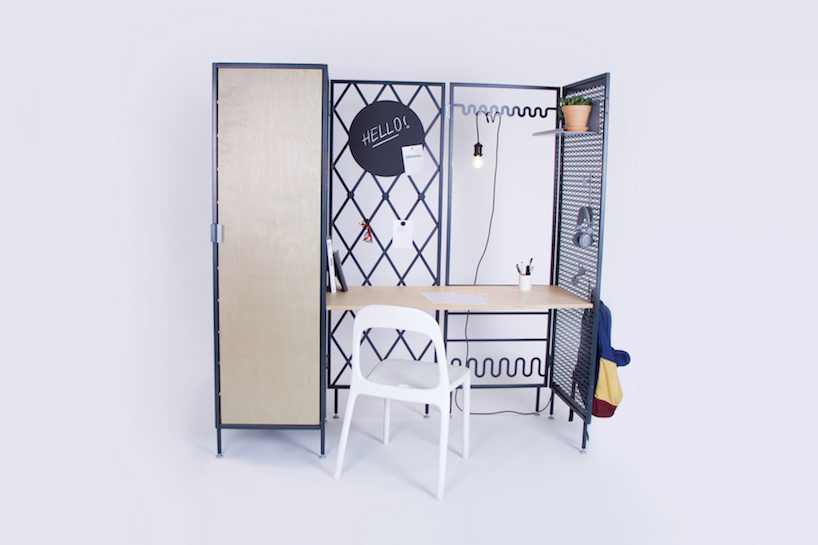
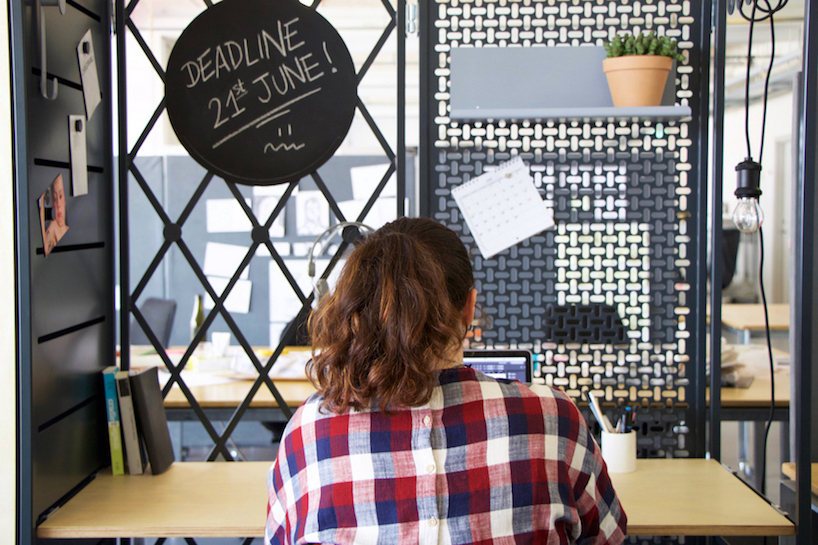
patchwork can also be accessorized with a desk, becoming a personal working unit for shared spaces
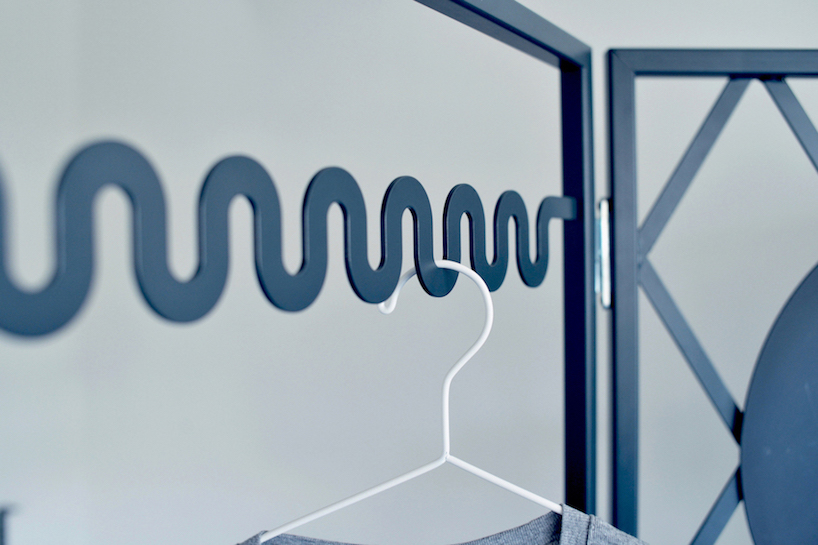
details of the metal panels
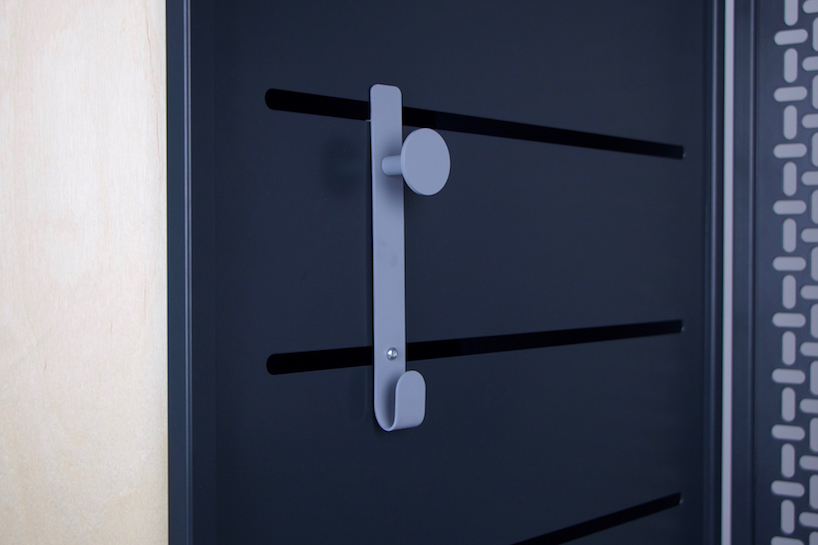
hooks can be attached to the design
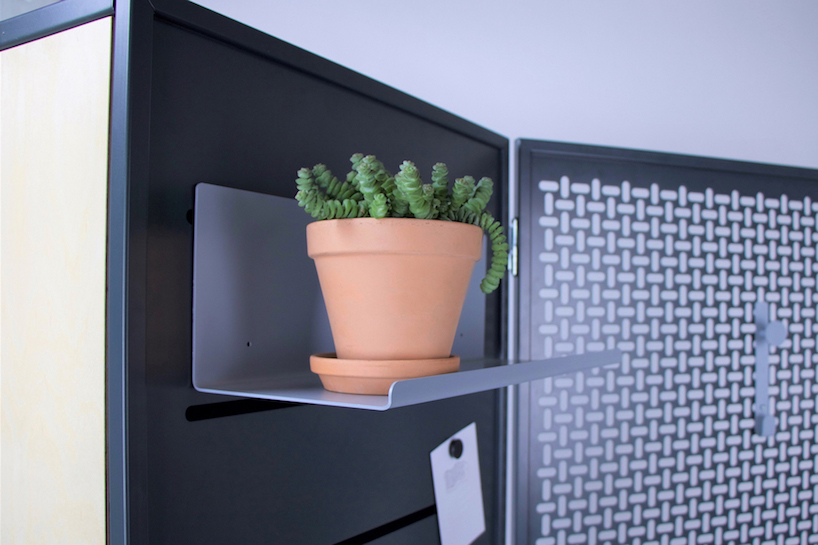
details of the shelves
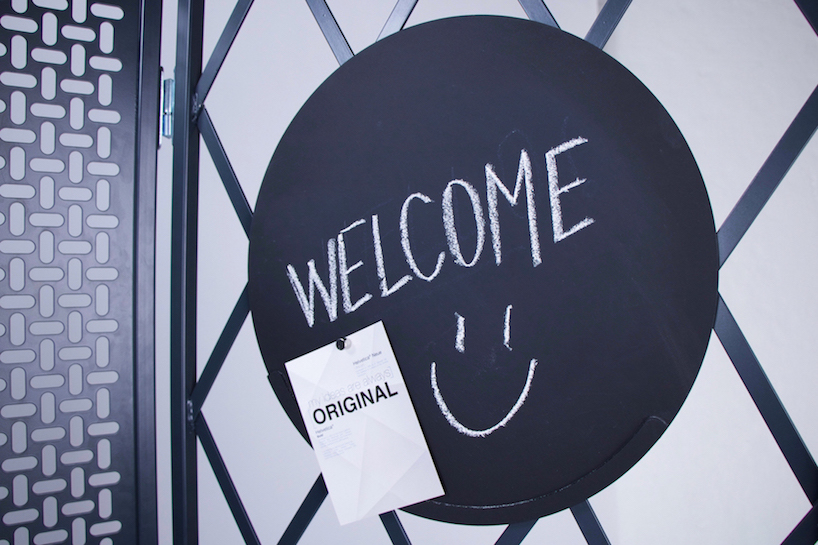
a chalkboard can be added as a personalization tool
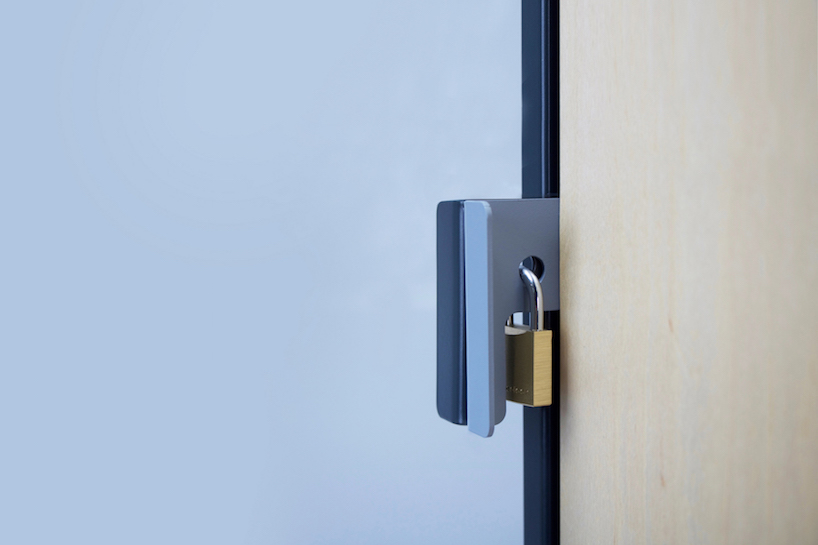
the designers created a handle that allows users to protect their personal belongings using a padlock
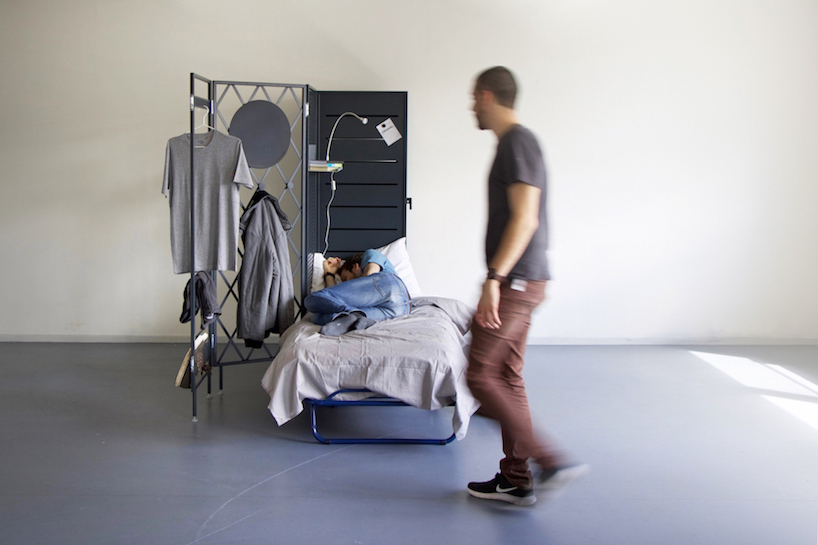
each pattern has a different density that provides a different grades of privacy
the main message that ‘patchwork’ wants to bring is that all people have similar needs related to the space they live in
designboom has received this project from our ‘DIY submissions‘ feature, where we welcome our readers to submit their own work for publication. see more project submissions from our readers here.
shop
your own online design shop — no sales commission collected