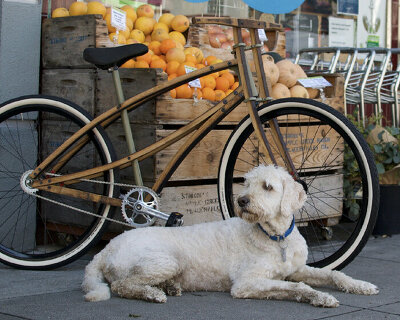
habre eco bike is made from local bamboo and is designed to ease pollution in kathmandu
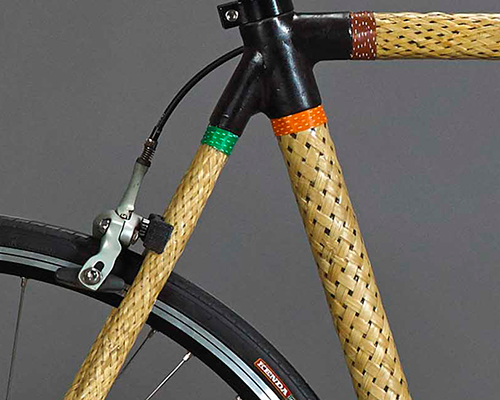
made by local artisans using regional bamboo, the bike aims to provide a green alternative to gas-guzzling vehicles.
conceived by nripal adhikari and lance rake, the habre eco bike was designed in response to issues of urban congestion and pollution in the city of kathmandu, nepal. made by local artisans using regional bamboo, the bike aims to provide a green alternative to gas-guzzling vehicles, reducing air pollutants and therefore improving the health of citizens.
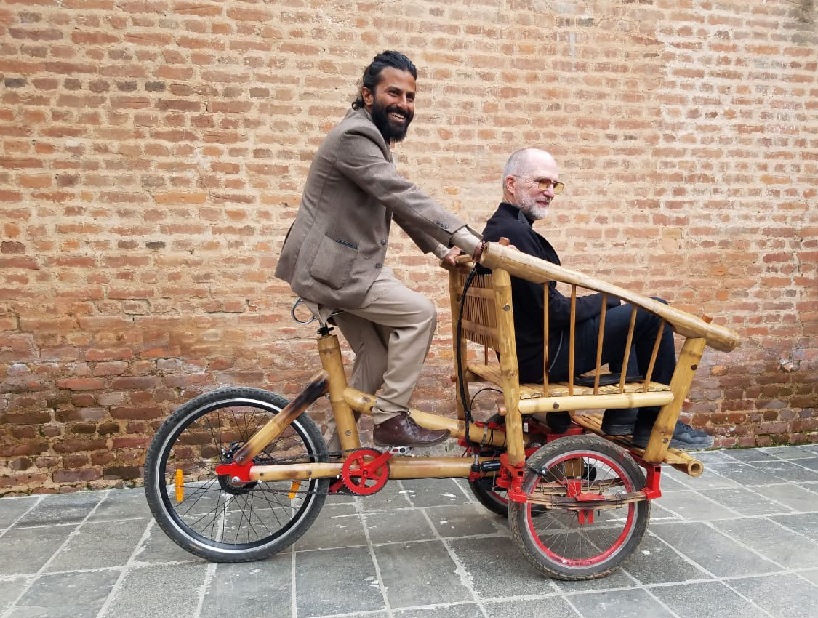
designers nripal adhikari and lance rake presenting the habre eco bike in january, 2020
all images courtesy of lance rake
in 2019, lance rake, professor of industrial design at the university of kansas, was awarded a global fulbright to develop an electric cargo bike that would be a viable alternative for food and package deliveries as well as carrying passengers around important world heritage sites in kathmandu. the main concept behind the bike was to reduce or totally eliminate fossil fuel burning vehicles, particularly in fragile historic sites.
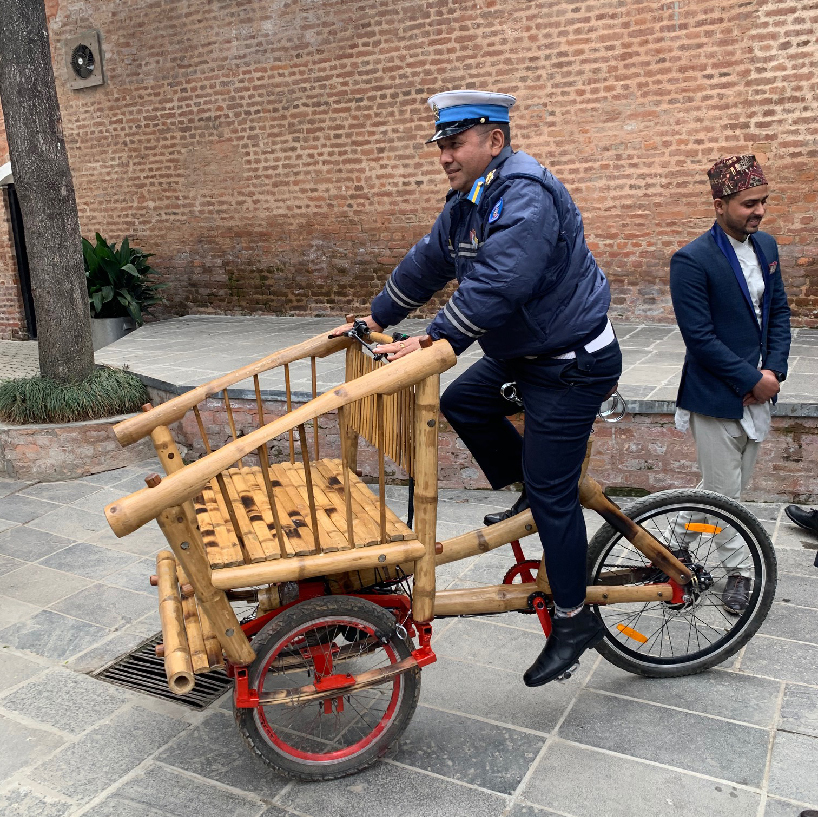
the kathmandu traffic police became a local stakeholder
professor rake worked with the students and faculty at RMIT in melbourne, australia, to develop concepts and design and fabricate parts and fixtures. when he arrived in nepal, he worked with nripal adhikari, architect and founder of abari – an internationally recognized firm that has built many significant buildings in nepal, primarily using rammed earth and bamboo. he also worked with students and faculty at kathmandu university to design, prototype, and test a cargo bike for these demanding conditions.
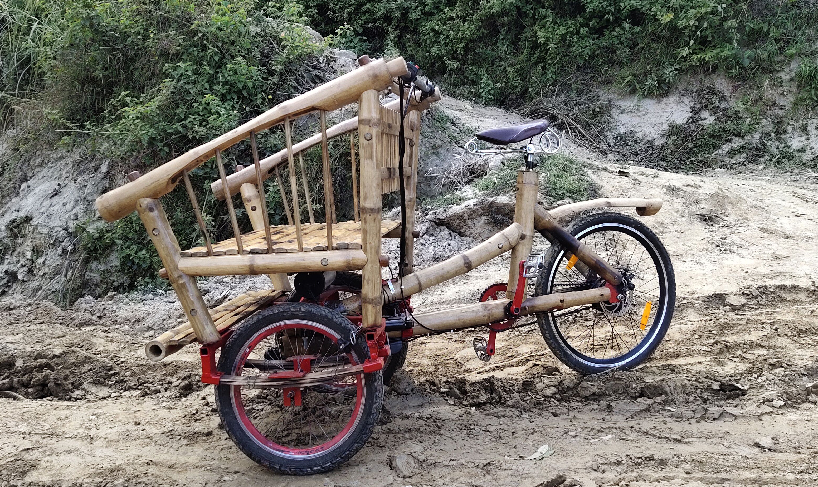
habre proved to be as useful on rural roads as city streets
through many iterations of design and build, habre (nepali for red panda- mammal native to the eastern himalayas) developed from a steel platform to a refined electric three-wheeled bamboo cargo bike. the final pre-production prototype was unveiled in kathmandu to an appreciative audience of local business people, students, and city officials, and you can find out more about the bike at the abari foundation.
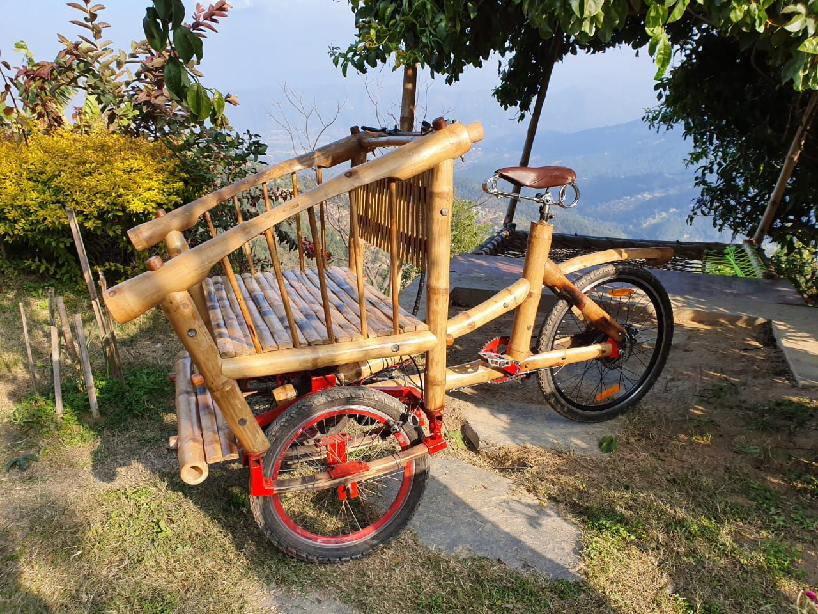
the final habre eco bike
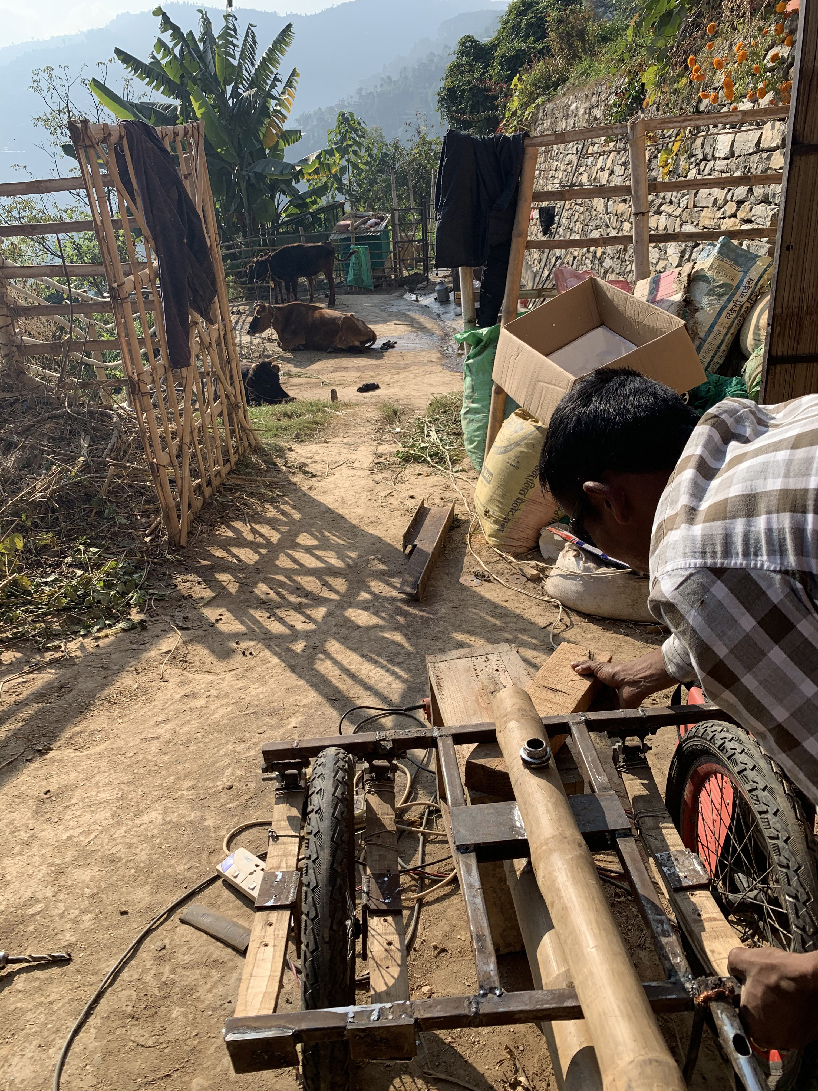
there are challenges building a bike in rural nepal – the team rarely had ‘proper’ tools or a flat work surface, relying instead on the resourcefulness of local artisans
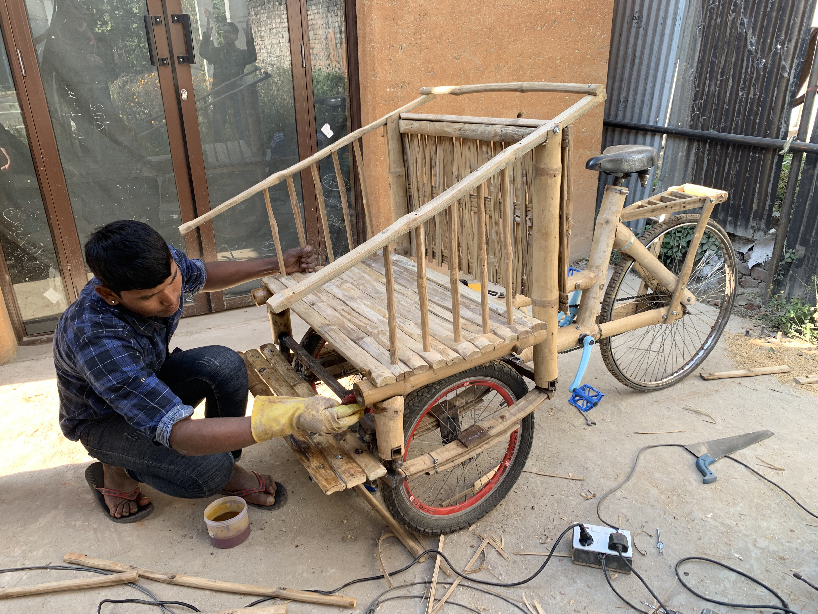
later design versions were experiments in steel reduction – the goal was to use as little steel as possible to maximize the use of local resources
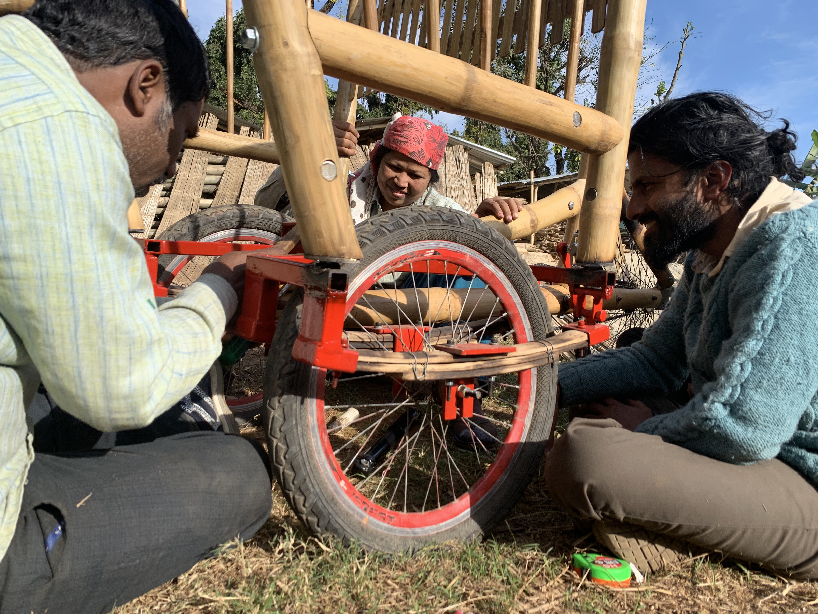
the pre-production prototype undergoing final assembly – by changing thickness and the number of leaves, the suspension could be adjusted for local requirements
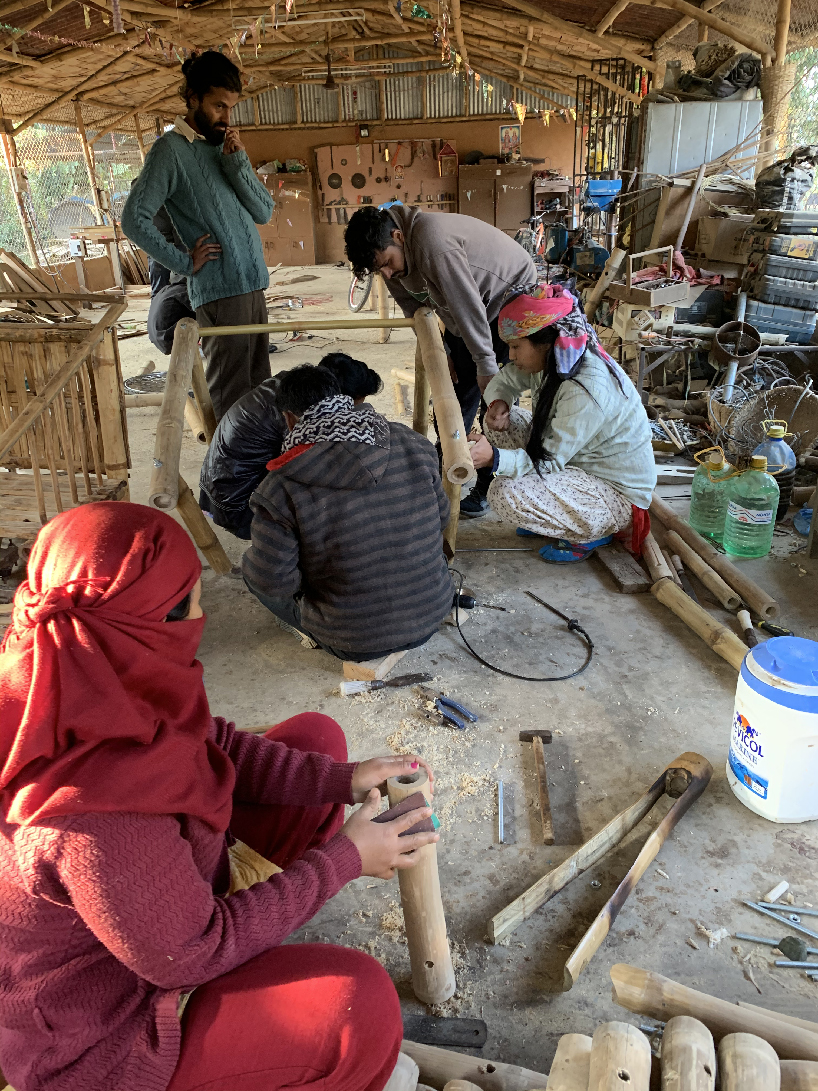
the final pre-production prototype was fabricated in the abari studios in chitwan, nepal, by highly skilled local craftspeople
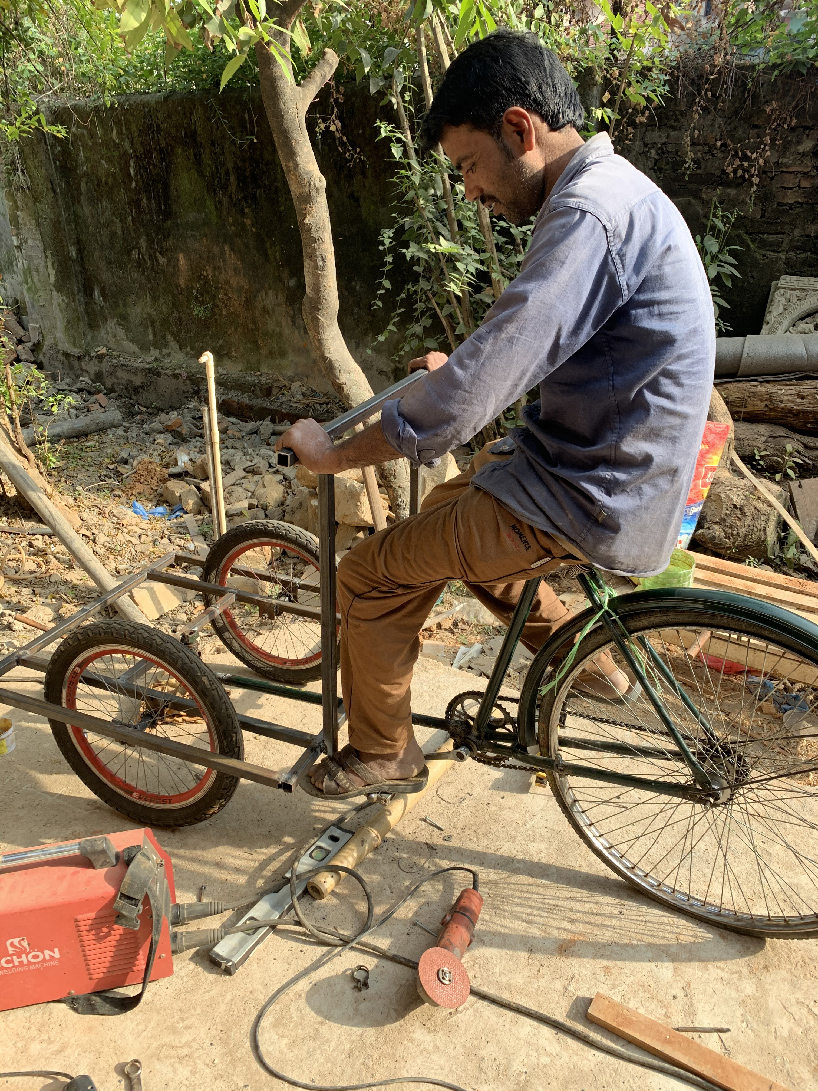
the initial 3-wheel design platform used a delivery bike and steel frame
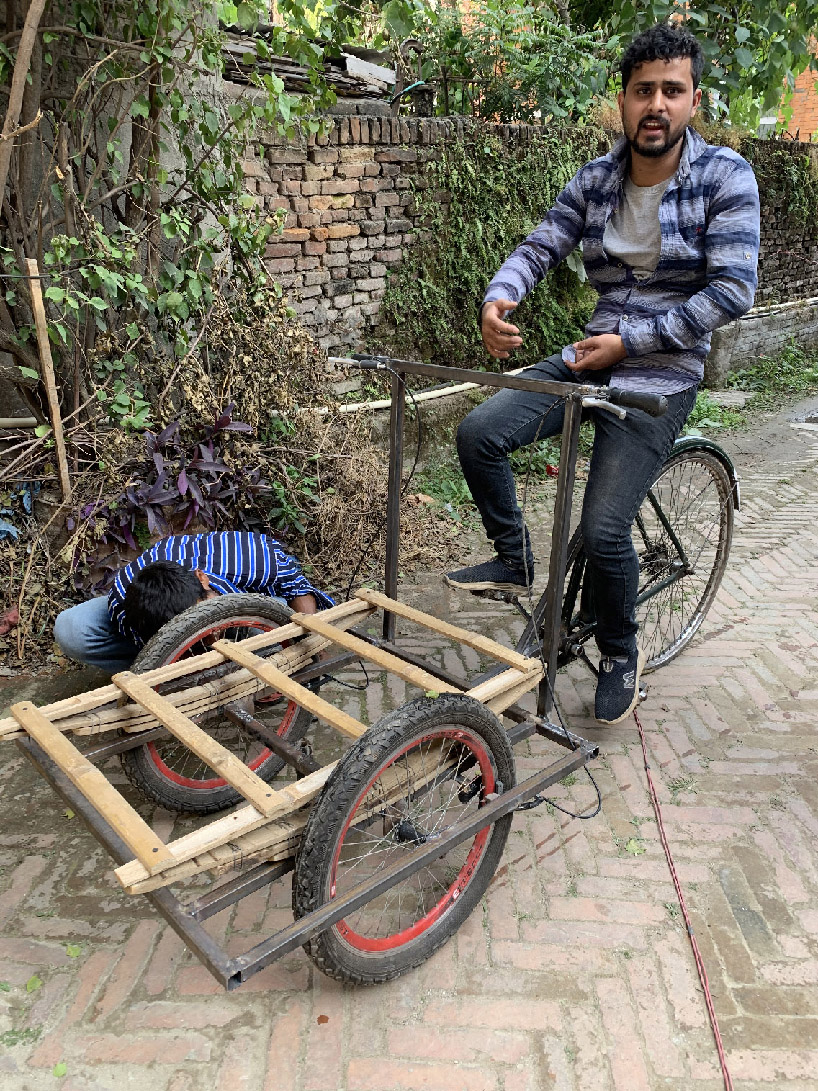
early steel iterations were fitted with bamboo leaf springs to test for handling, comfort, and durability
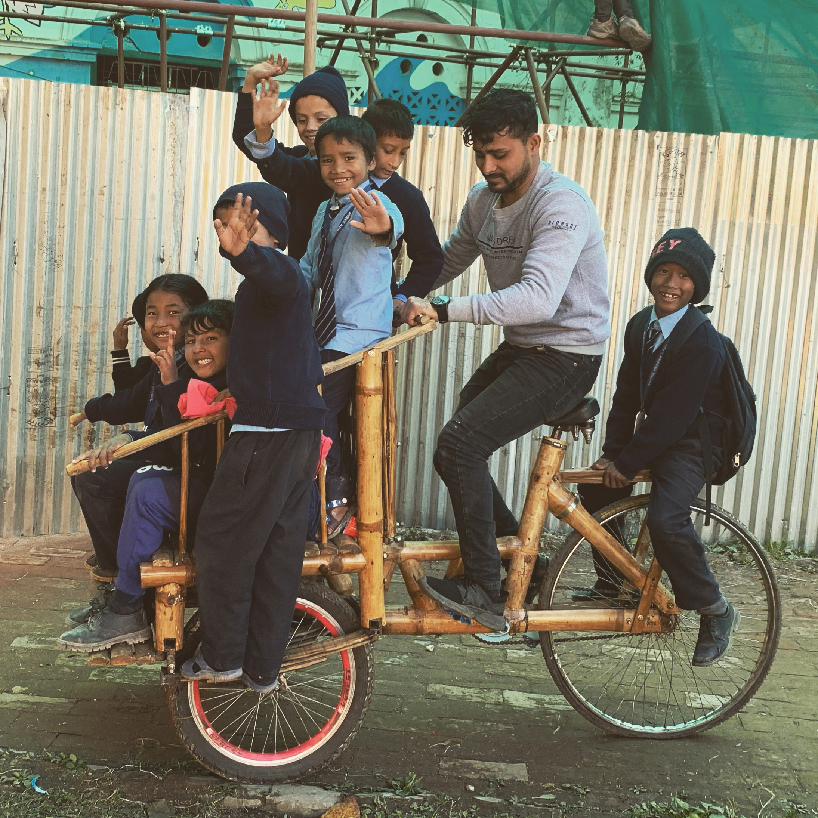
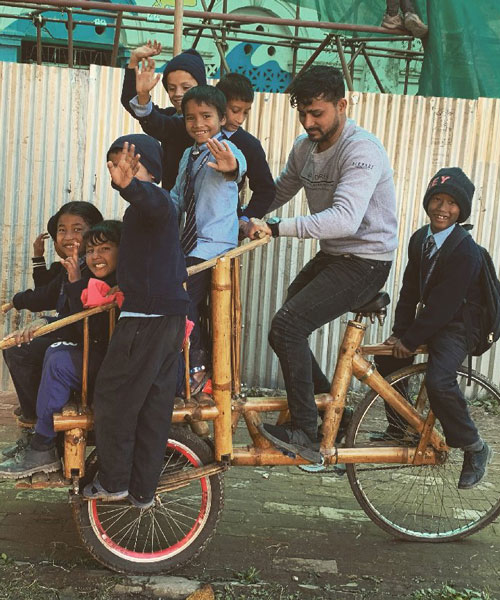
the bike provides a lot of fun, and having children play on it proved to be a valuable test for strength, weight distribution, and handling
project info:
project name: habre eco bike
designers: nripal adhikari and lance rake
designboom has received this project from our ‘DIY submissions‘ feature, where we welcome our readers to submit their own work for publication. see more project submissions from our readers here.
shop
your own online design shop — no sales commission collected