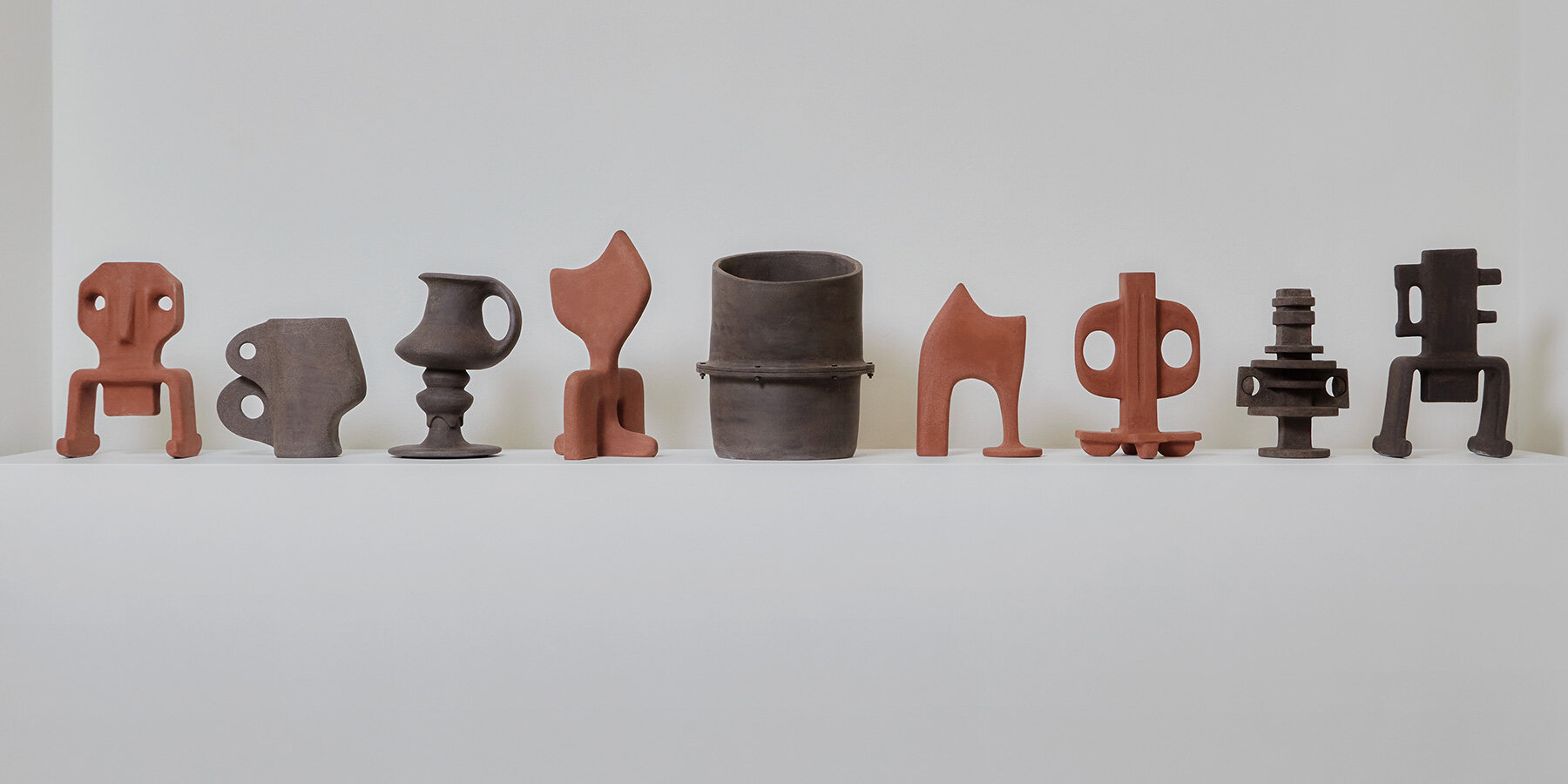
learning through clay, weight, and material negotiation
Athens-born artist and self-taught designer Harry Rigalo works at the edge between design and sculpture, where objects hover between furniture, relic, and offering. His practice approaches materials as active systems rather than tools. ‘I stopped seeing materials as isolated objects and started understanding them as parts of a system that activates space and the body,’ he tells designboom.
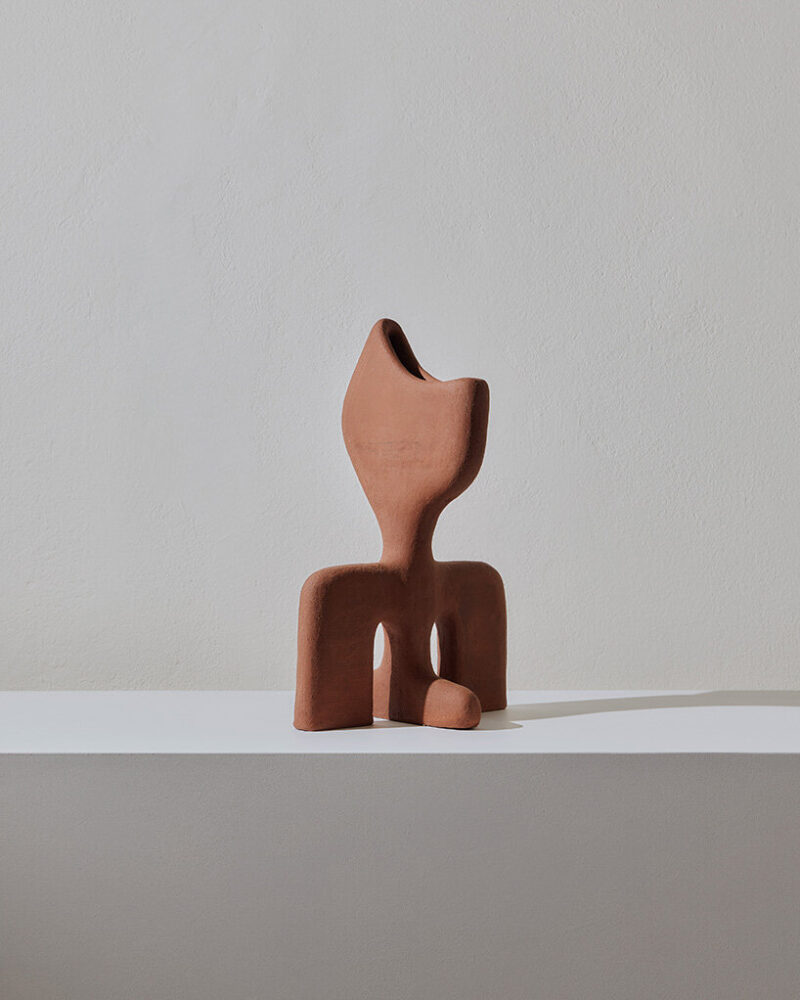
This approach is currently reflected in Forms Without Briefs, Rigalo’s exhibition at The Great Design Disaster in Milan, on view until December 30th. In recent months, clay has become central to his practice. Raw, unstable, and time-bound, it collapses drawing and building into a single gesture, forcing the maker into constant dialogue with the material. ‘Clay never gives itself completely. You don’t decide. You negotiate,’ he says. The openness of the material, until the final, irreversible moment of firing, reinforces a way of working grounded in uncertainty, correction, and presence. designboom discusses with the designer his early years on Olympic-scale construction sites, his recent immersion in clay, and his commitment to process over outcome.
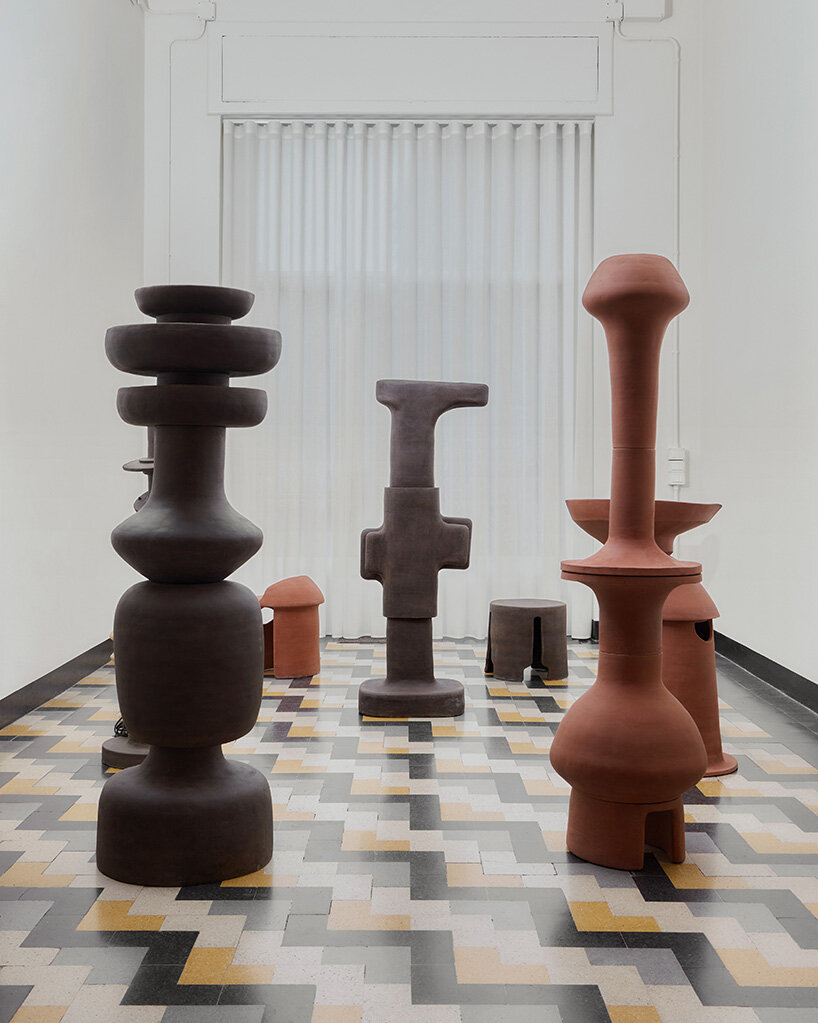
all images by Luigi Fiano, unless stated otherwise
from construction sites to process-led practice
Harry Rigalo’s relationship with making was formed early and physically. At fourteen, he began working on Olympic-scale construction sites in Athens, handling concrete and steel and learning through fatigue, repetition, and failure. That ‘unglamorous’ education instilled an instinctive understanding of weight, tension, and structure that continues to guide his work today. The knowledge never became a set of rules; instead, it remained something felt. ‘The result isn’t meant only to be explained, but to be felt,’ the artist notes.
His early practice was marked by structure and composition, drawing from collage and music, where materials operated like notes within a score. Over time, however, that score loosened and process began to outweigh outcome. ‘Process is a space where participation matters more than control,’ Rigalo explains during our conversation.
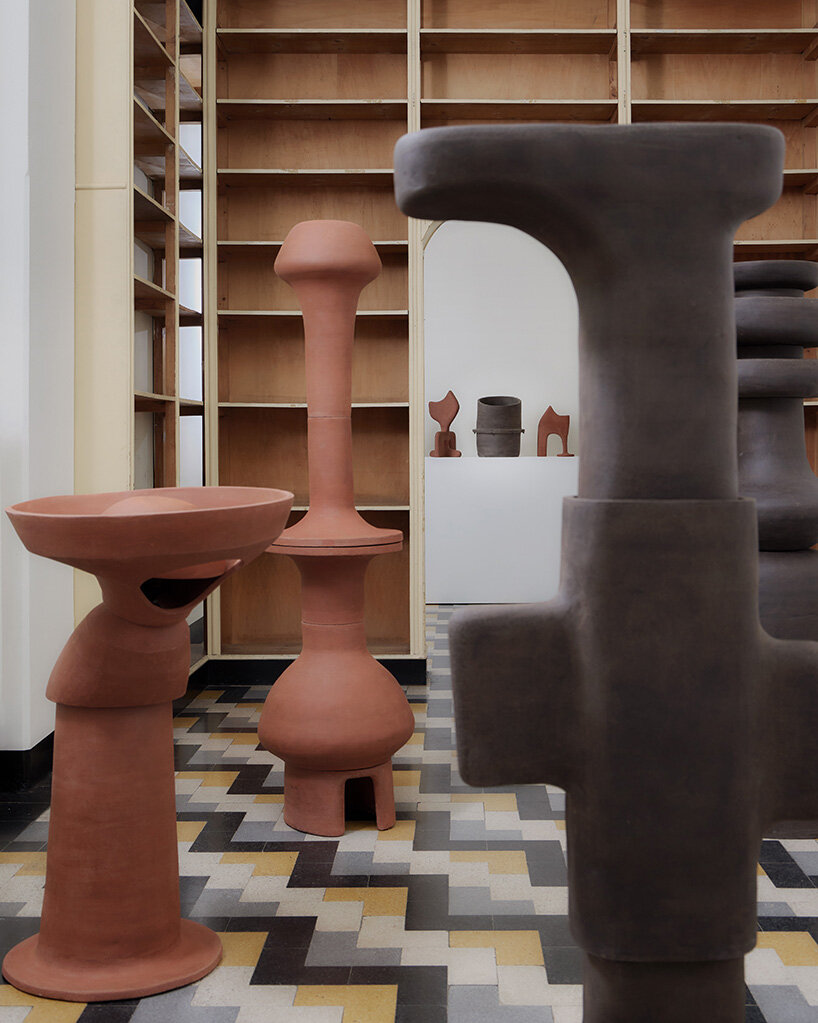
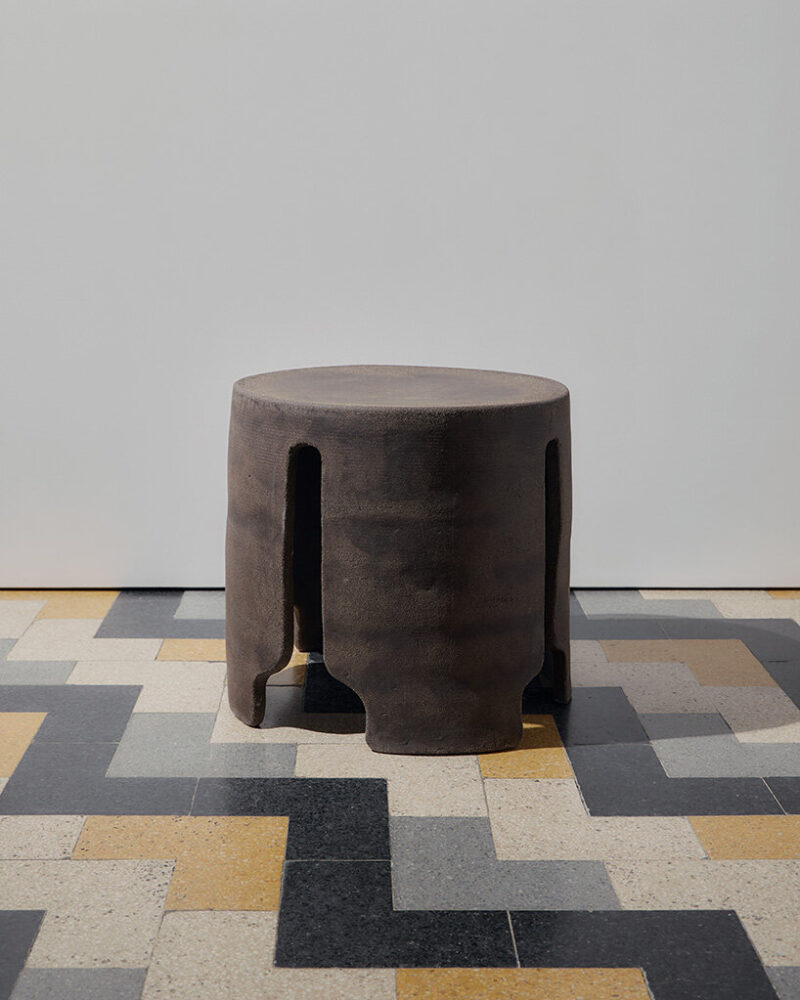
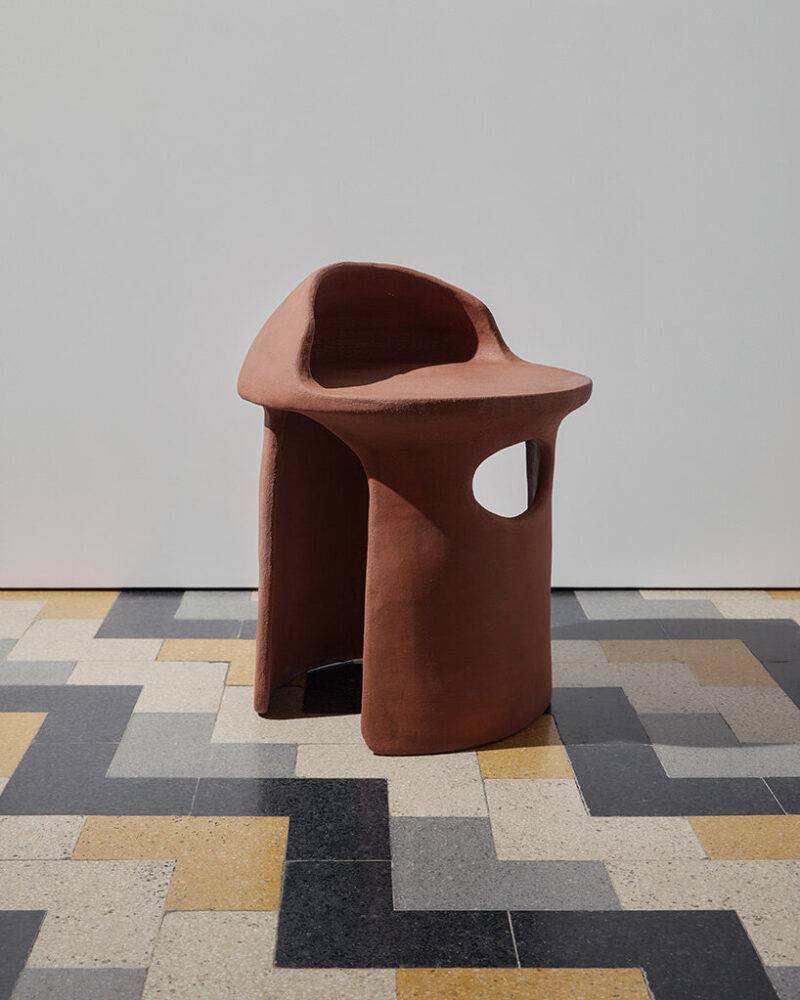
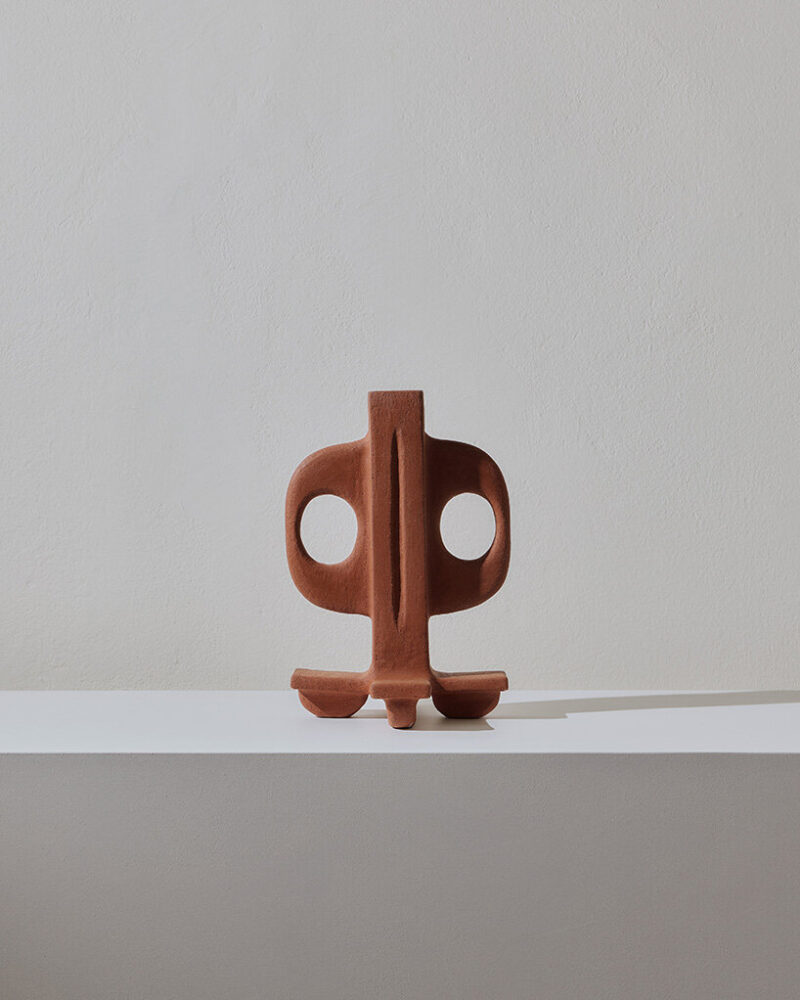
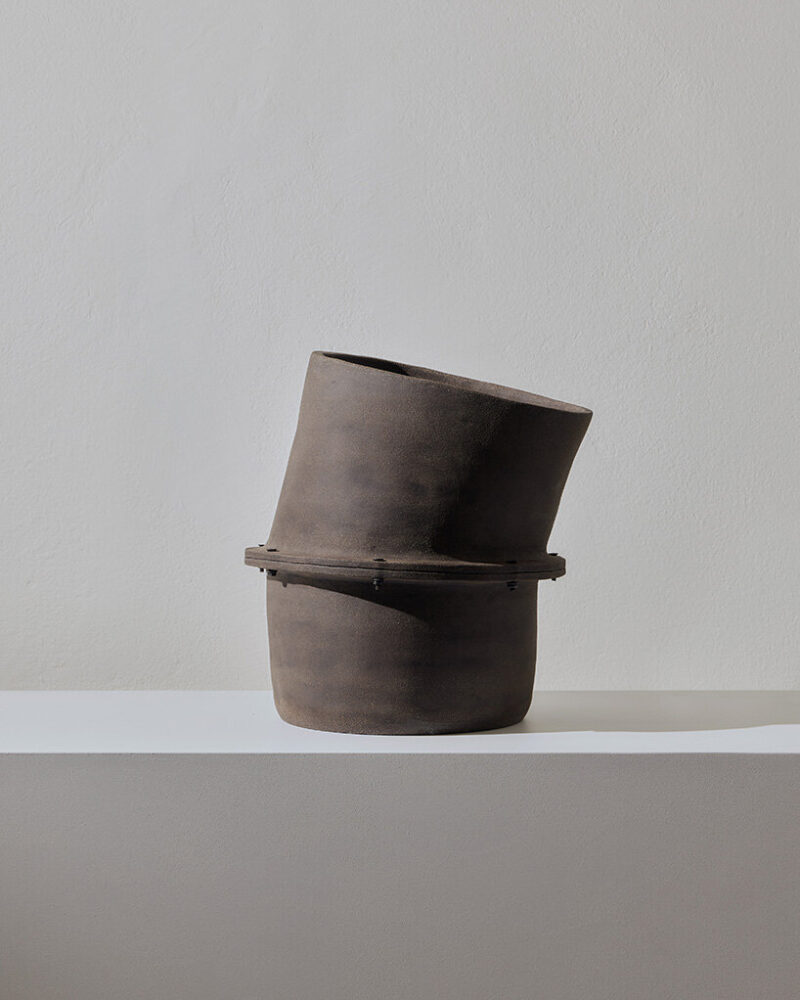
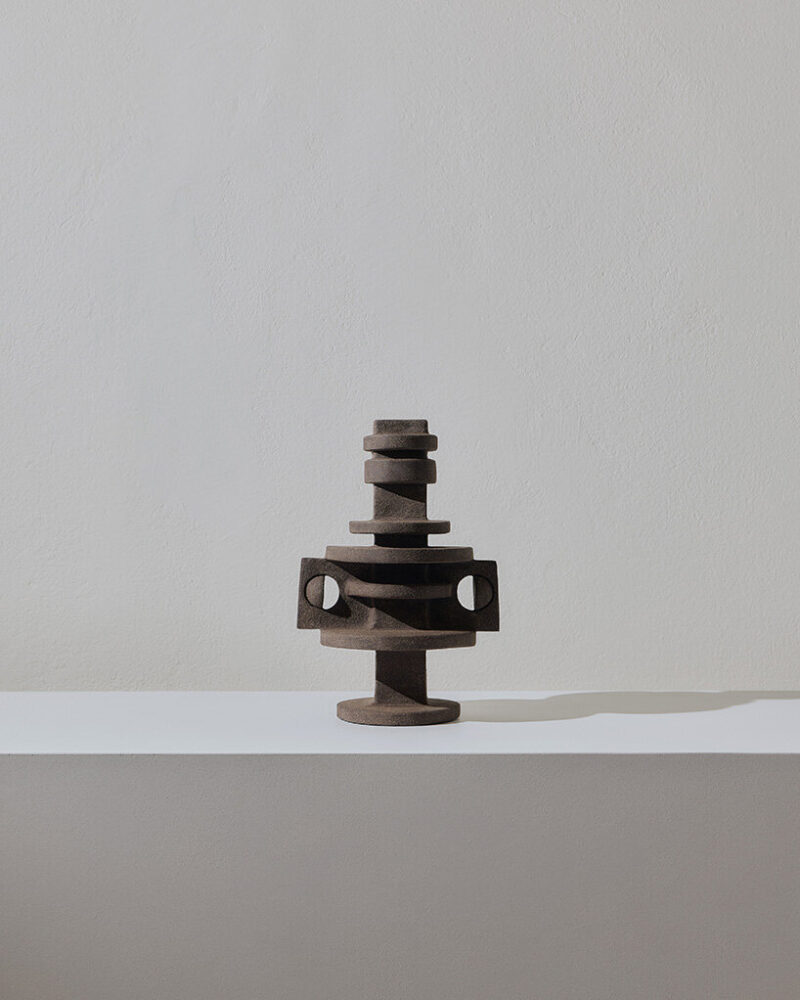
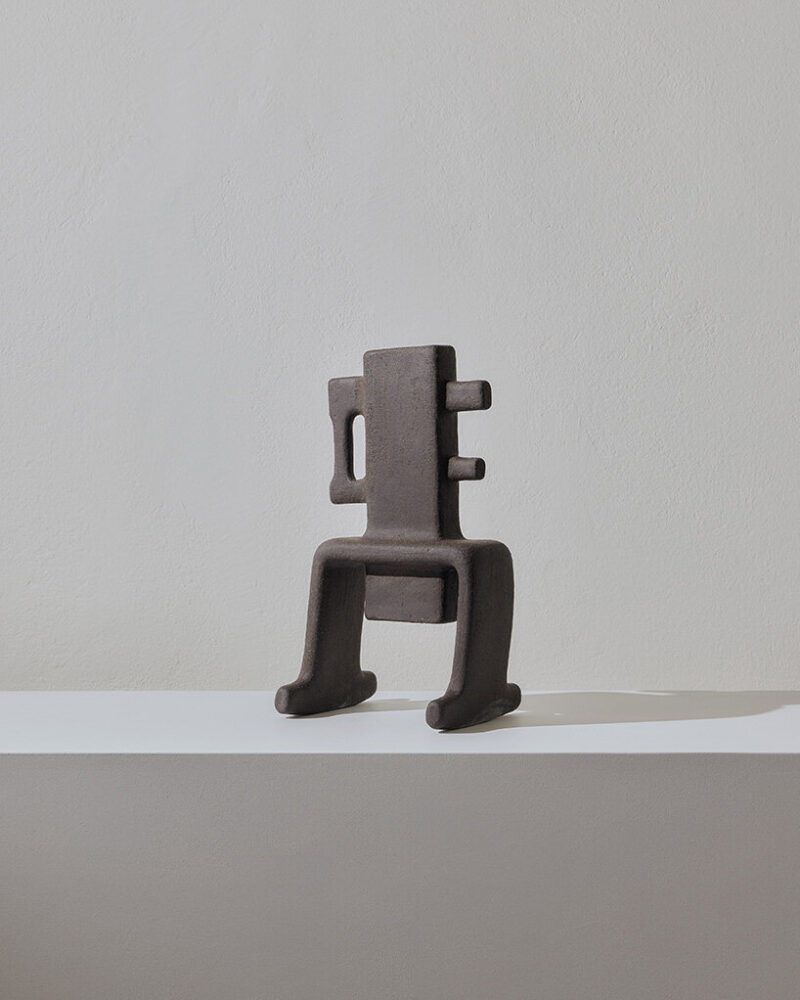
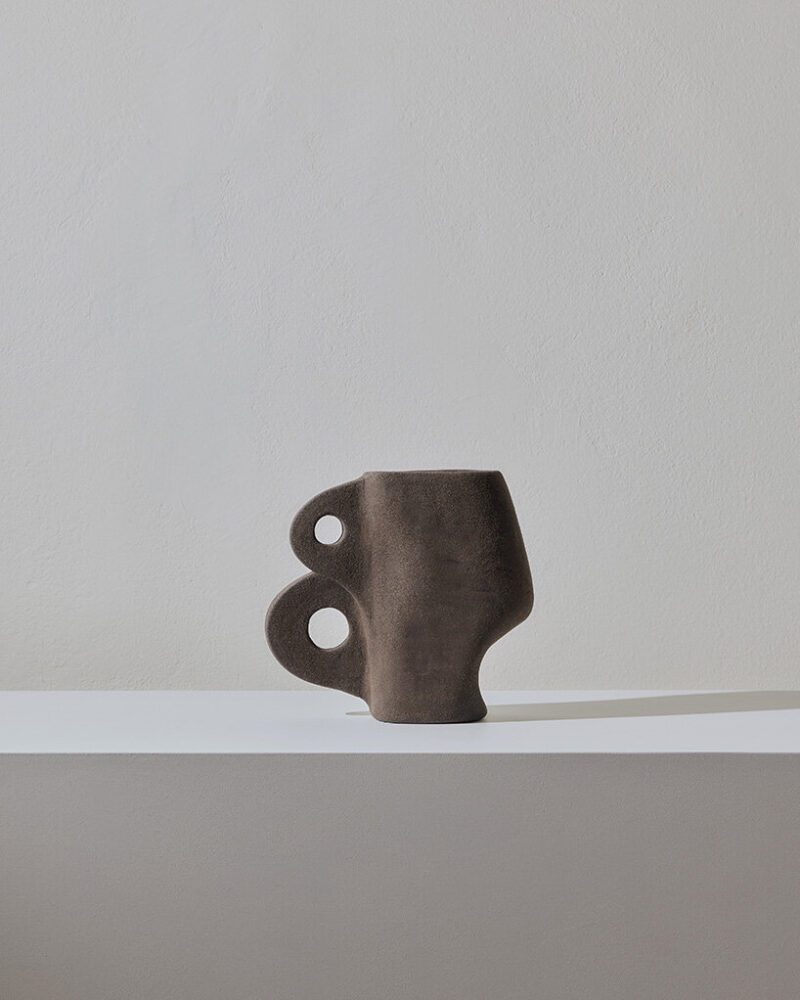
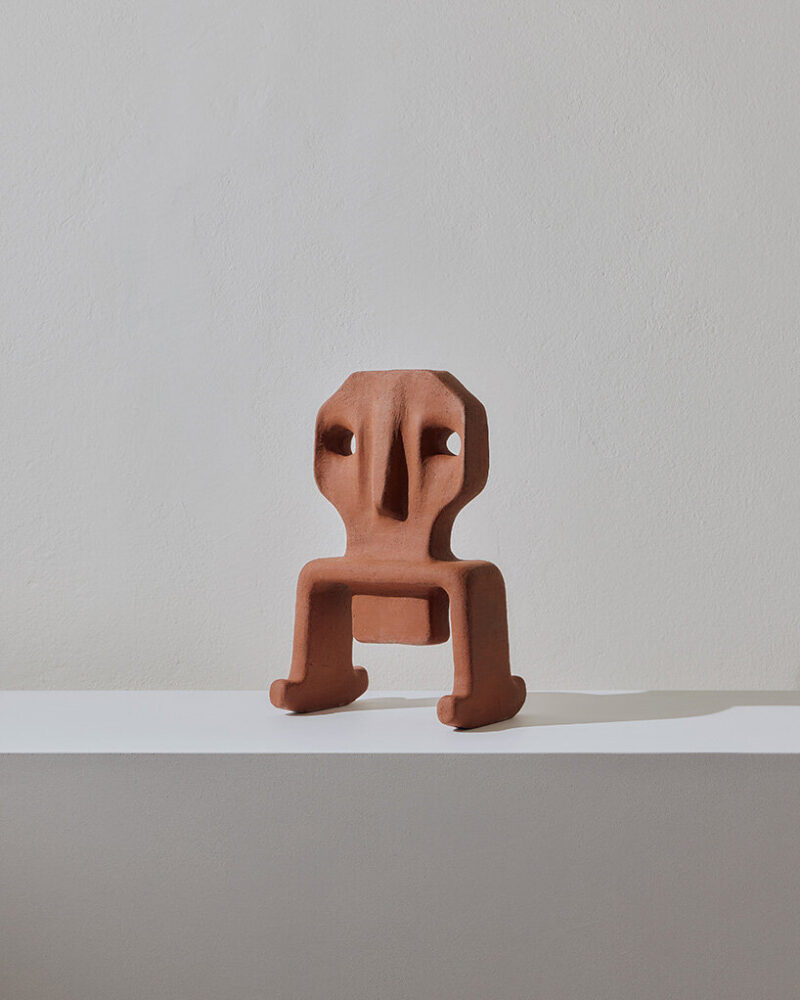
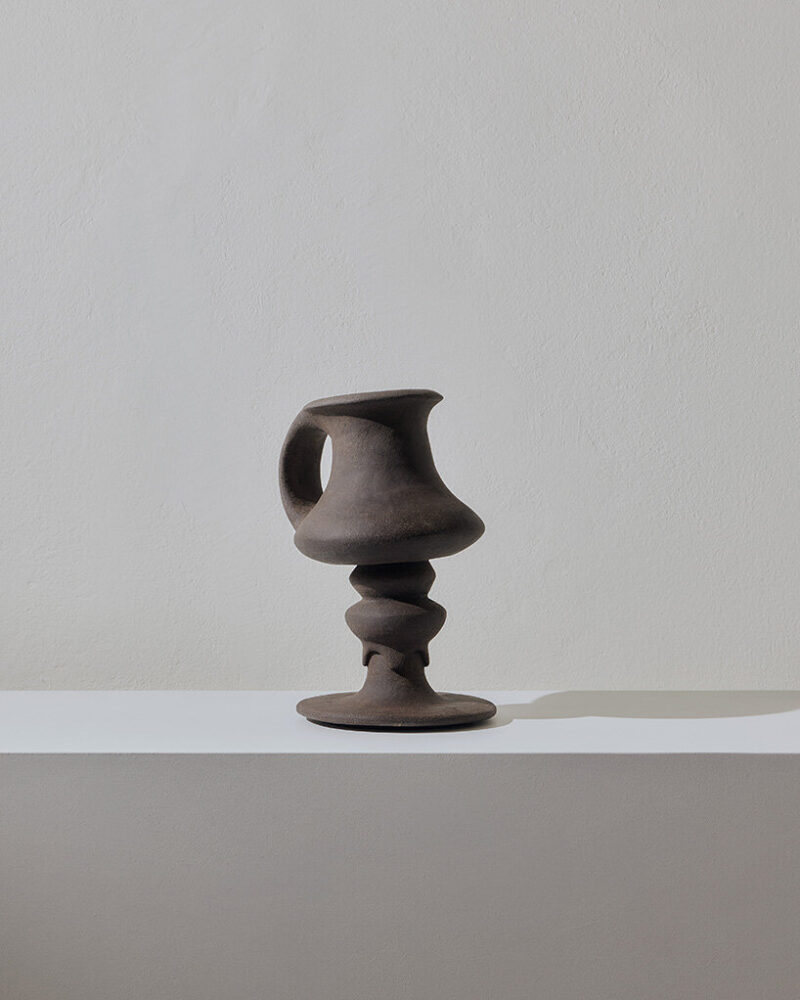
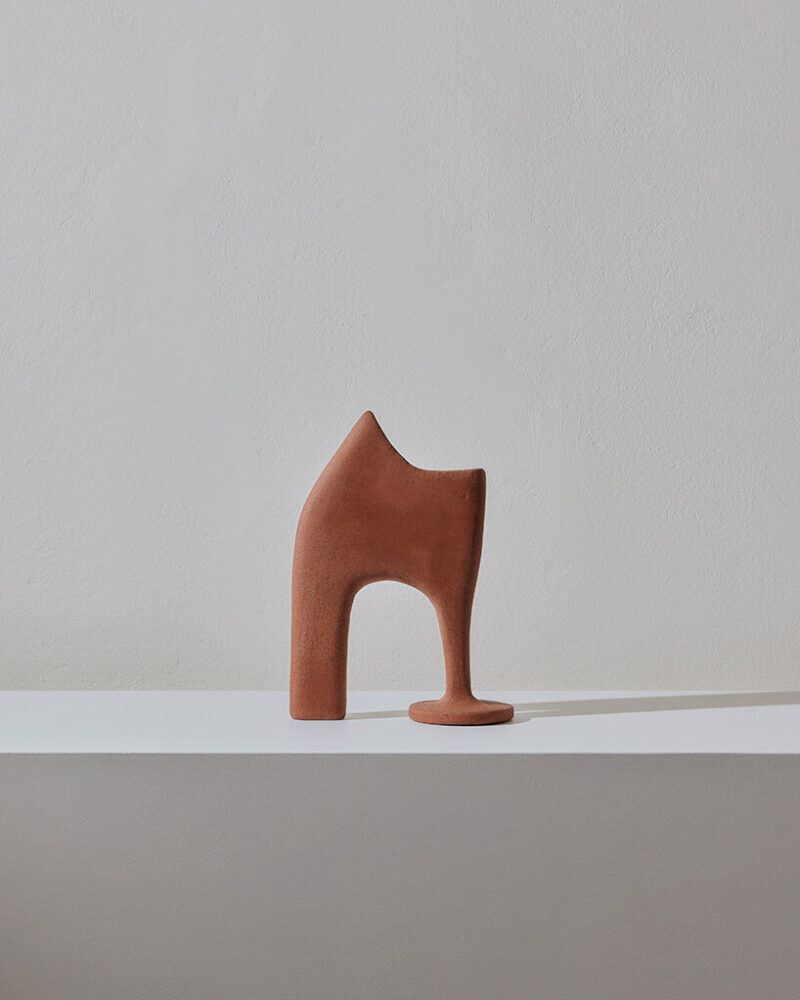
Across his work, function remains present but unsettled. Some objects behave as chairs, vessels, or holders, while others resist typology altogether. Function, for Rigalo, can clarify but also constrain. ‘Function can make an object easier to read. Removing that obligation opens a different kind of relationship,’ he reflects. Read on for our full discussion with the Greek designer.
Harry Rigalo works at the edge between design and sculpture
interview with harry rigalo
Designboom (DB): You found your first training ground at olympic-scale construction sites at the age of fourteen. How do those physical lessons, weight, tension, fatigue, failure, still shape the way you design and build today?
Harry Rigalo (HR): I didn’t start from a desire to design objects. I started from a desire to step outside the world I already knew. At fourteen, through a family connection, I found myself on construction sites preparing for the 2004 Olympic Games, a strictly structured environment based on studies, drawings, and constructional precision. It was a large-scale undertaking where theory and practice coexisted, but without room for personal narrative or expression. I worked with concrete, steel, wood, plastic, and brick.
At the time, I didn’t know what this experience would become. It was physically demanding and eventually not something I wanted to pursue professionally, but it gave me a deeply embodied understanding of materials. I learned how weight is transferred and how it translates differently depending on function, how structures behave, how materials react, how they are worked, and how different elements are combined so that something individual becomes functional within a much larger system and scale.
Years later, when I began placing materials myself, that knowledge resurfaced almost instinctively, not as technical rules, but as a physical sense. I stopped seeing materials as isolated objects and started understanding them as parts of a system that activates space and the body. Even today, whether I’m making something functional or something that resists use, I still work through these questions. How weight moves, how a form stands, how material operates in relation to scale. The result isn’t meant only to be explained, but to be felt.
objects hover between furniture, relic, and offering
DB: You found your first training ground at olympic-scale construction sites at the age of fourteen. How do those physical lessons, weight, tension, fatigue, failure, still shape the way you design and build today?
HR: I don’t think we choose materials in a neutral way. There’s always a form of attraction involved, a desire to meet a material and allow it to respond. Clay entered my practice at a moment when I was looking for immediacy, for a way to move from thought to making without filters. In my earlier work, the process was more structured. I was composing different materials through a kind of material collage, and even then the objects were never meant to be entirely comfortable. They still answered to structure. I could say, this is a chair. But the chair itself carried a question. It asked whether a chair always needs to behave like a chair, or whether discomfort could be part of its meaning.
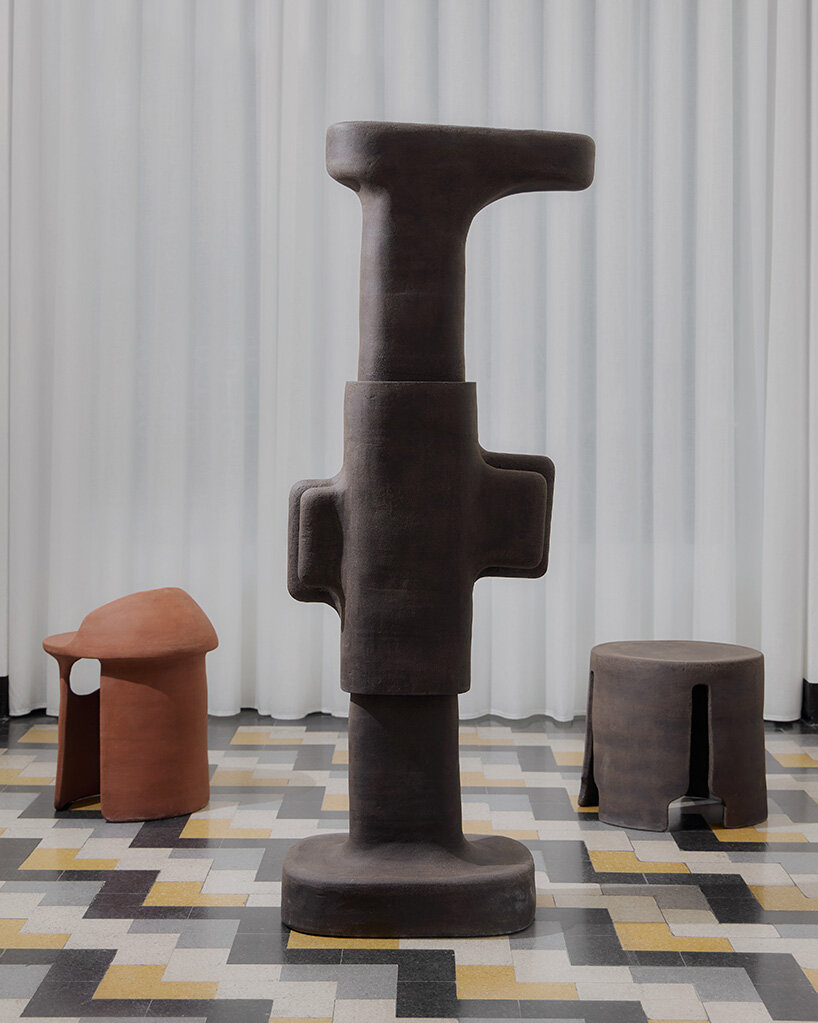
With clay, drawing and building collapse into the same action. What you imagine begins to exist almost immediately in your hands. That directness allows instinct and improvisation to lead rather than follow. Working at larger scales intensified this relationship. As the clay body grows, difficulty and risk increase, and the dialogue between body and material becomes sharper. Clay offers freedom, but it also has limits, and those limits are learned physically. The shift wasn’t a rejection of structure, but a desire to reduce mediation. I wanted to move from inspiration to realization more directly and to build an atmosphere rather than just an object.
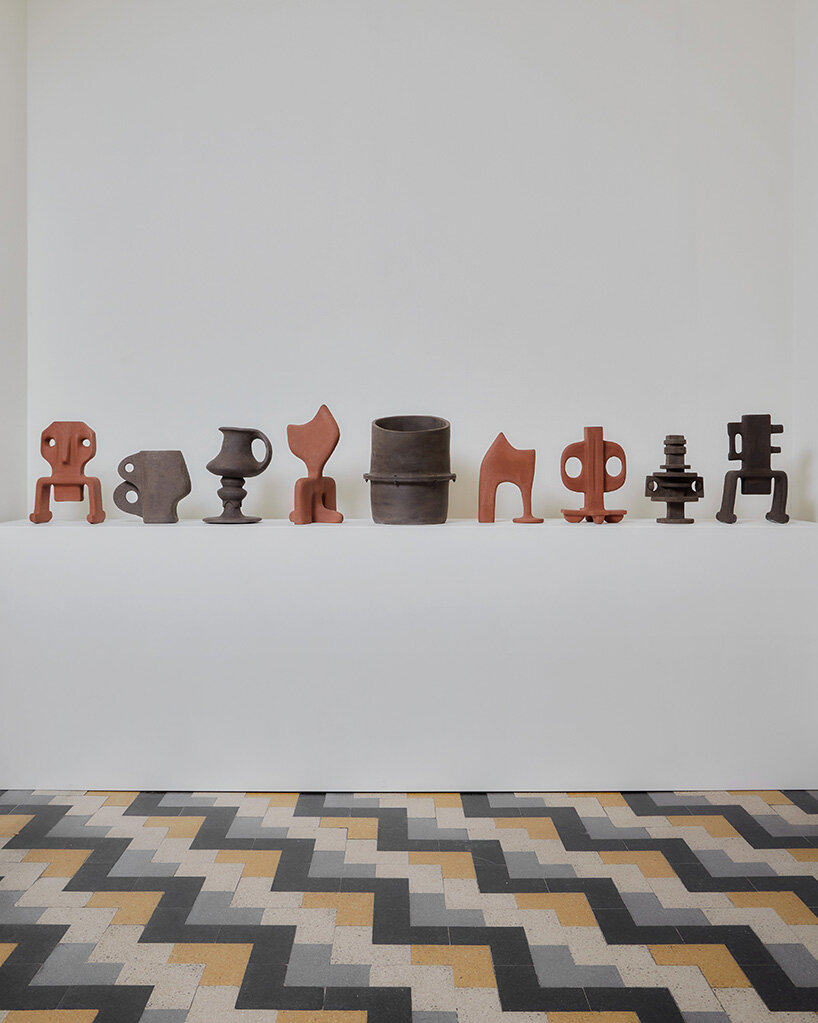
Forms Without Briefs, Rigalo’s exhibition at The Great Design Disaster gallery
DB: You’ve been immersed in clay these past months. What did this material teach you that other materials never managed to?
HR: In many ways, clay became synonymous with the philosophy of this body of work. At first, I approached it as a tool. Very quickly, however, it revealed something else, the quiet nature of movement and becoming. Clay never gives itself completely. It’s always in transition. It carries a dual character, addition and subtraction, building and erasing, and through that, balance emerges through form, tension, and symbolism. You don’t decide. You negotiate.
What fascinated me most was its relationship to time. Until the very last moment before firing, everything remains open. A form can always return to something softer, more uncertain. Once it enters the kiln, that openness disappears. Clay becomes ceramic, a different material altogether, and a specific moment is fixed. In that sense, firing feels almost like a photograph. A single state is captured, removed from its previous flow, and carried forward. Not as an ending, but as a moment that continues to participate in movement from another position.
That relationship was intensely physical and compressed in time. My first encounter with clay, from early tests to the final exhibition, unfolded within seven to eight months of daily contact. Long hours, mistakes, repetitions. During that period, I worked through nearly 800 kilos of clay. Not as a way of mastering the material, but as a way of meeting it, while understanding how much I was still at the beginning. Those months were marked by silence and an almost ascetic rhythm. Days of repetition and concentration created a calm intensity that left a quiet afterimage. It was refreshing, and it set a tone. One I hope to return to in future work, finding that same quality of focus again.
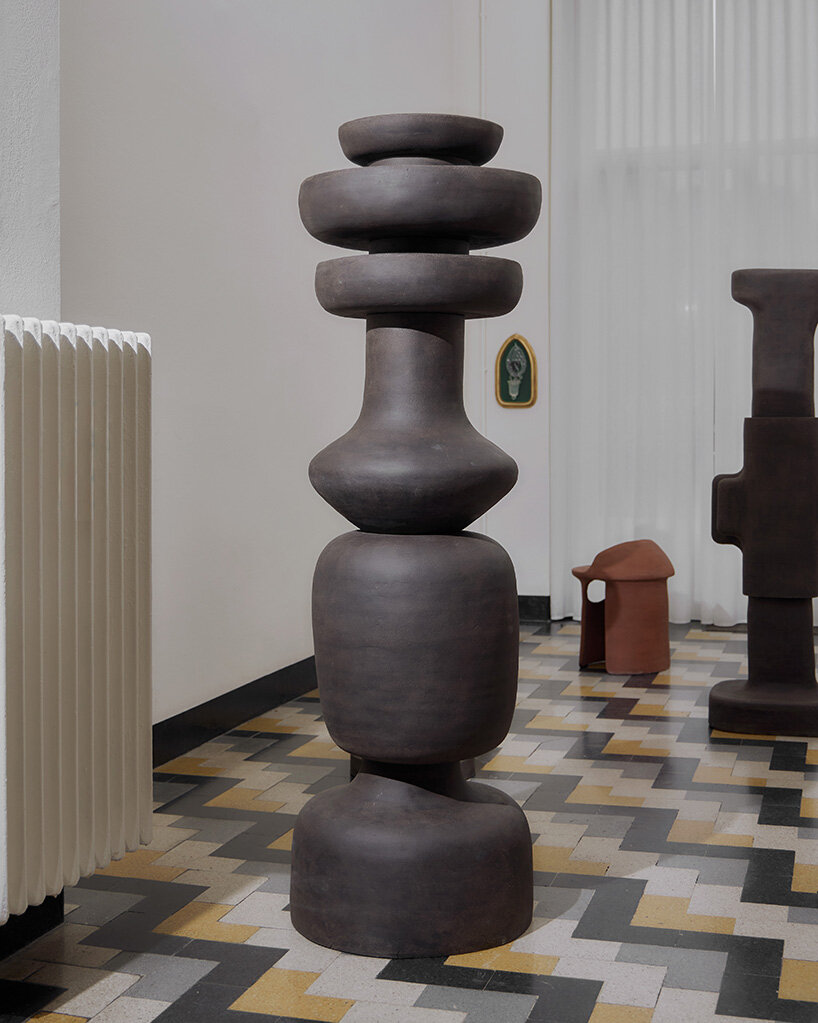
Thili
DB: You’ve said the process matters more than the final result. What does process mean to you now?
HR: For me, a work always emerges from a process, and the process begins with desire. At its core, desire starts with attraction, the pull toward a body. Sometimes that participation becomes the act of making a body, an object, a form, a work. Process is how that impulse takes shape. It’s a space where participation matters more than control, and where intention is formed through engagement rather than imposed. What matters to me is not simply to be seen critically, but to be seen through the process itself.
Process reflects movement, flow, truth, and offering. I’m sensitive to the movement of the world around me, and my work is simply a way of taking part in that movement. Not stopping it, but standing within it. For me, flow is very close to truth. Nothing in flow is fixed, just as nothing in truth is fixed. Perhaps the greatest challenge is accepting a non fixed understanding of ourselves and allowing who we are to remain open and in motion.
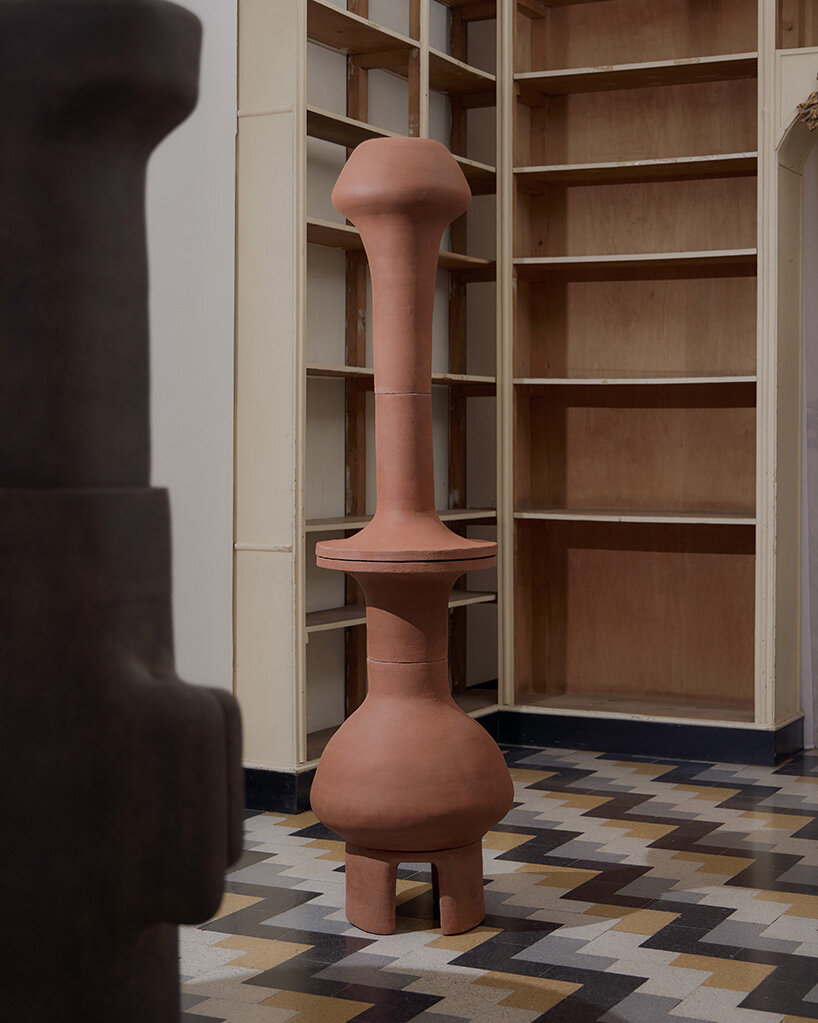
Elksi
DB: While some of your works remain functional, others resist typology altogether. How do you decide when a piece should behave like furniture and when it should resist that expectation?
HR: When I work on a collection, I think of it as a scenographic condition, a spatial composition. Some pieces function as abstract forms within that landscape, while others act more like offerings. Furniture, and functionality in general, is already a form of offering, allowing a body to sit, rest, or engage. That sense of offering remains important to me. I still belong to the functional side of design, and it continues to inspire me. At the same time, I don’t feel the need to bind every object to use. For me, whatever is produced deserves space, whether it functions or simply exists.
This collection is also the first time I allowed myself to create purely non-functional works, pieces that exist solely through their sculptural presence. That came from another need, the desire not to always be understood. Function can make an object easier to read. Removing that obligation opens a different kind of relationship, one that asks less to be explained and more to be experienced.
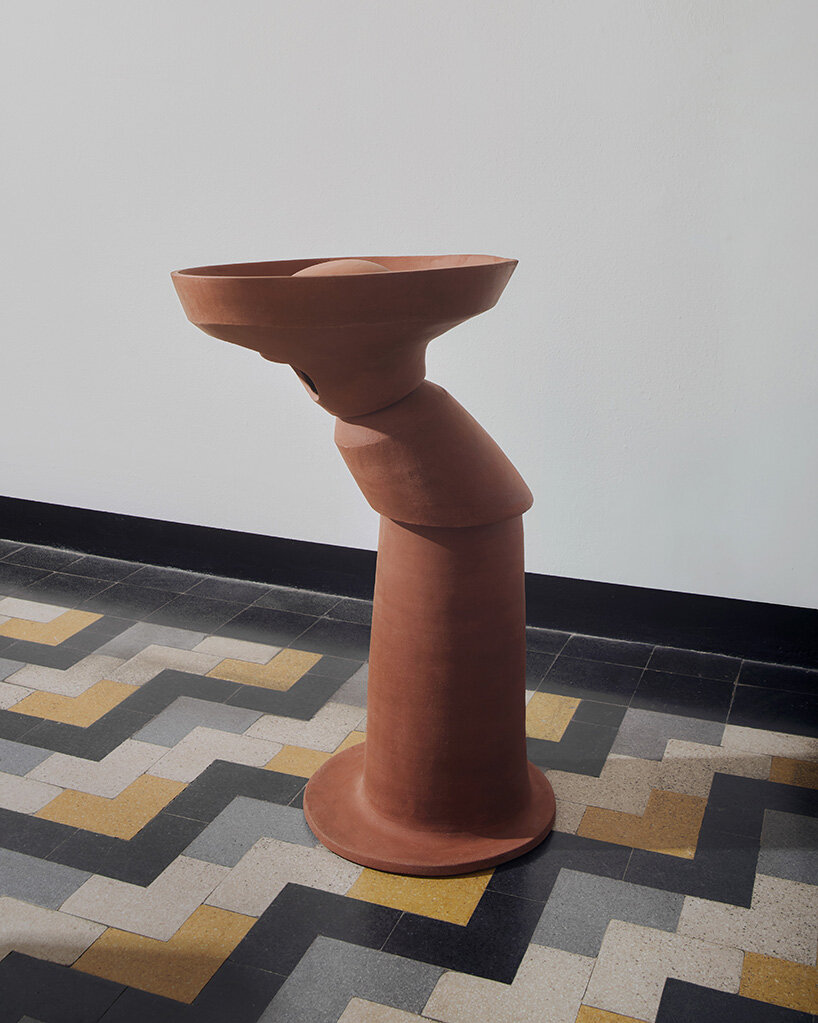
Monk
DB: There’s a recurring description of a feminine energy in the forms, not gendered, but intuitive and insistent. Is that something you consciously guide, or something that simply happens when you work instinctively?
HR: It’s not something I consciously guide. It’s something I notice afterward. In my relationship with process, there’s always a quiet pull, a form of attraction that creates a relationship with the material and remains mostly silent.
What is often described as feminine energy, I experience more as a quality of presence. A softness that doesn’t weaken the form, but allows it to exist without imposing itself. A receptivity that holds space rather than demands attention.
I’m interested in creating forms and atmospheres that can be encountered rather than explained. Something you can stand in front of, or within, without being instructed how to feel. If there is femininity in that, it’s not symbolic. It’s experiential.
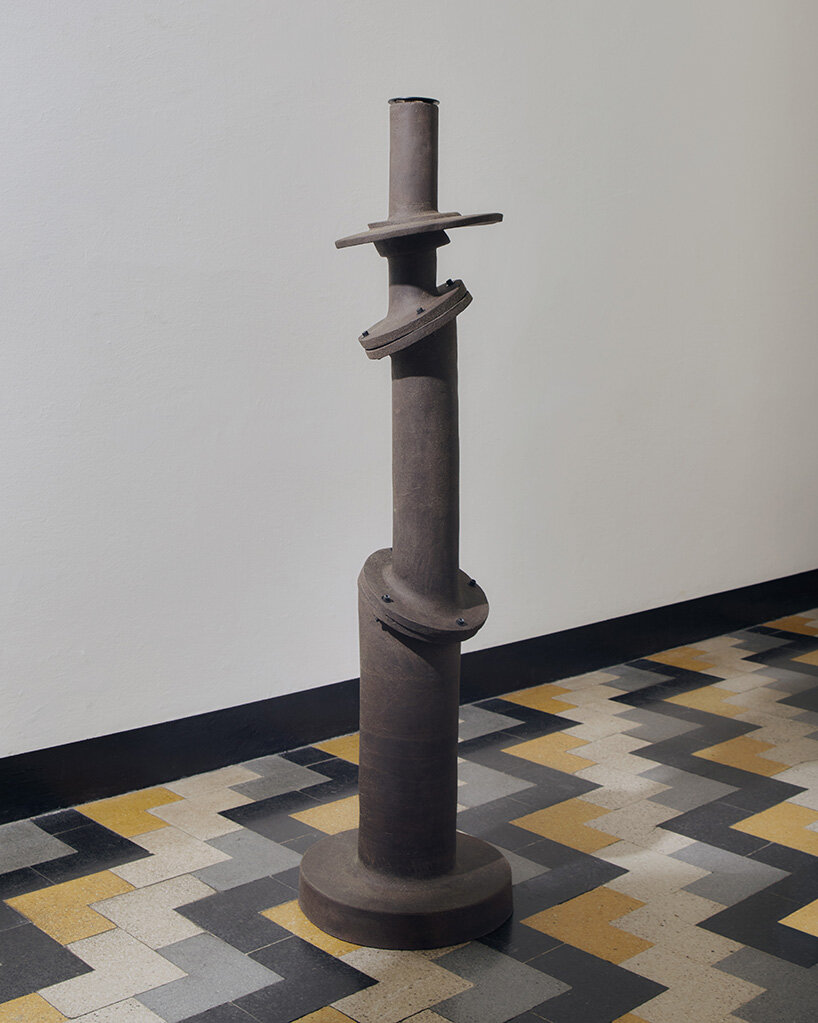
Aiwaitress
DB: Your work sits between object, relic, vessel, and offering. Do you feel closer to designers, sculptors, or neither, and why?
HR: I don’t feel a strong need to position myself strictly as one or the other. What matters to me more is existing within the act of making rather than within a definition. I’m deeply interested in the multiple sides of human expression, the structured and the abstract, the logical and the instinctive. Both continue to inspire me, and I feel active in both territories. Logic, for me, doesn’t cancel emotion. Sometimes it carries a purer one. And instinct, when observed carefully, has its own intelligence.
At the end of the day, everything is form. What feels essential is remaining open, playful, and free. I’m not interested in chasing trends. Movement exists around trends, not inside them. What I aim for instead is a language that carries motion while remaining grounded in classical foundations.
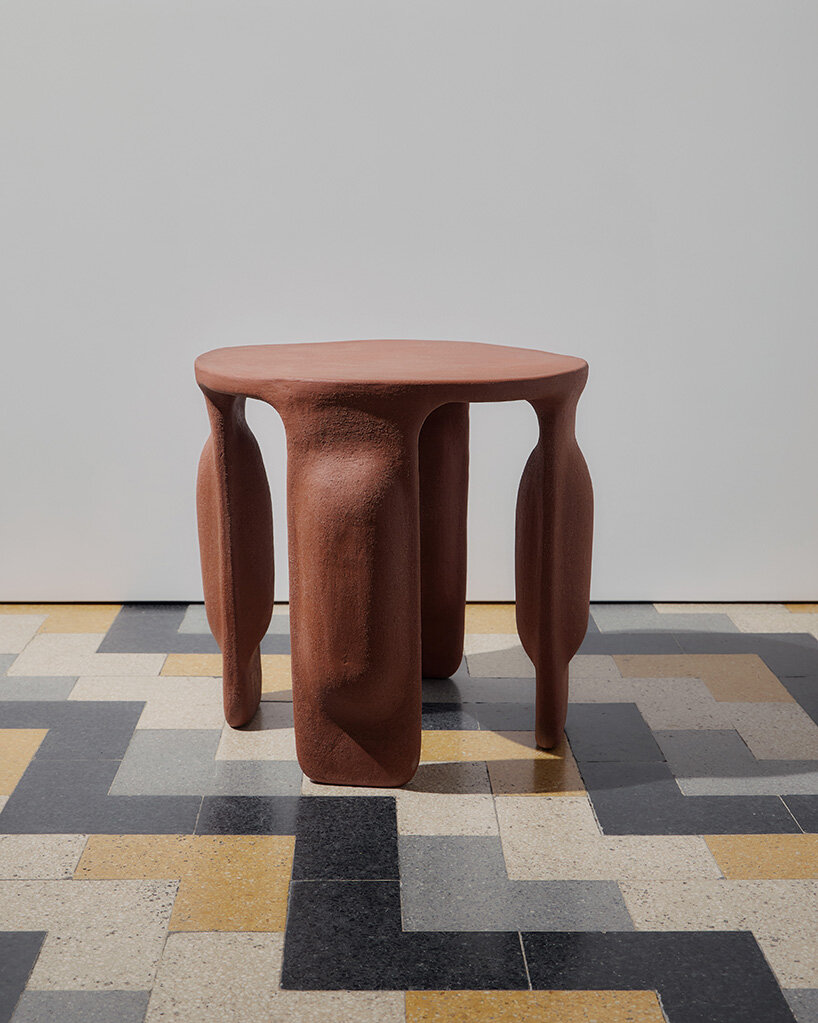
Isofagus
DB: What’s the next material, rhythm, or question calling you?
HR: My relationship with clay is definitely not finished. What’s emerging now is a new phase, one that respects the material’s qualities while opening it to new encounters. I’m interested in bringing other materials into dialogue with clay, not to overpower it, but to explore new relationships and a different kind of scenography. Working with clay has also pushed me strongly toward thinking about scale. Larger, more architectural forms feel increasingly important to me, and this interest in large scale work is something I know will continue to grow. Alongside this, I continue to design digitally, developing ideas and models that can evolve through collaborations within functional design, which remains an essential part of my practice.
I also know I will return to materials from earlier phases of my work. Marble, in particular, feels unfinished, ideas that were paused rather than completed. At the same time, I’m beginning to explore glazes and color in clay, opening it toward a more playful direction. This naturally connects to my interest in recycling, industrial elements, and even smaller scale objects, including jewelry.
Looking ahead, what matters most is continuity. Forms Without Briefs marked the beginning of a longer trajectory that will continue through my collaboration with The Great Design Disaster gallery. The trust and support of Joy Herro and Gregory Gatserelia encouraged me to move more freely toward non-functional and large-scale work, while keeping space open for functional design to evolve alongside it. The next step isn’t a single material or answer, but an expanded field where scale, materials, and collaborations continue to move together.
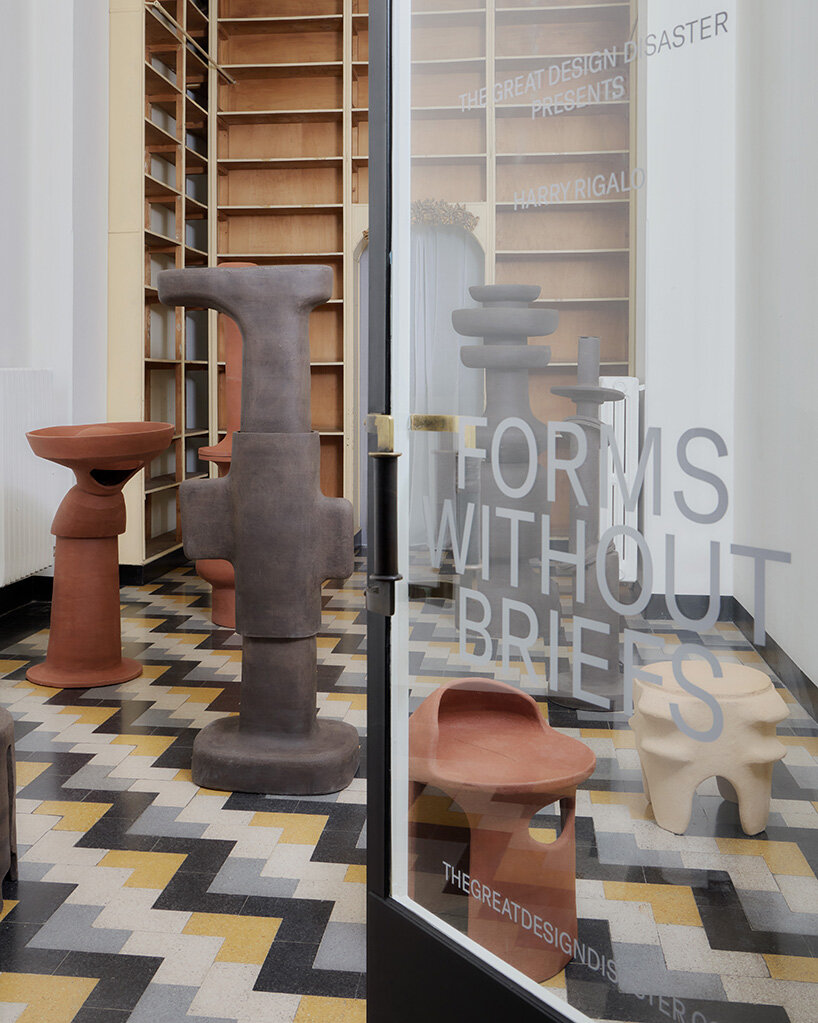
clay has become central to the artist’s practice
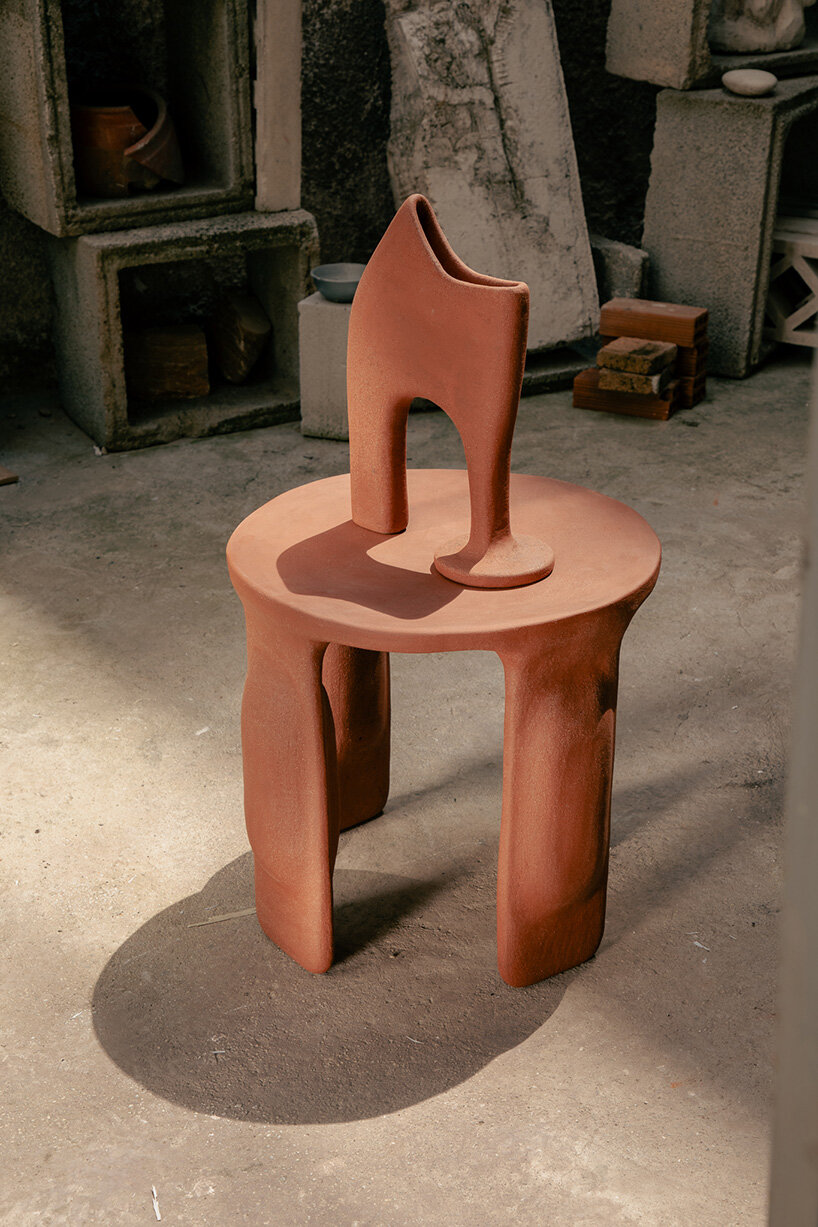
function remains present but unsettled | image by Antonis Agrido
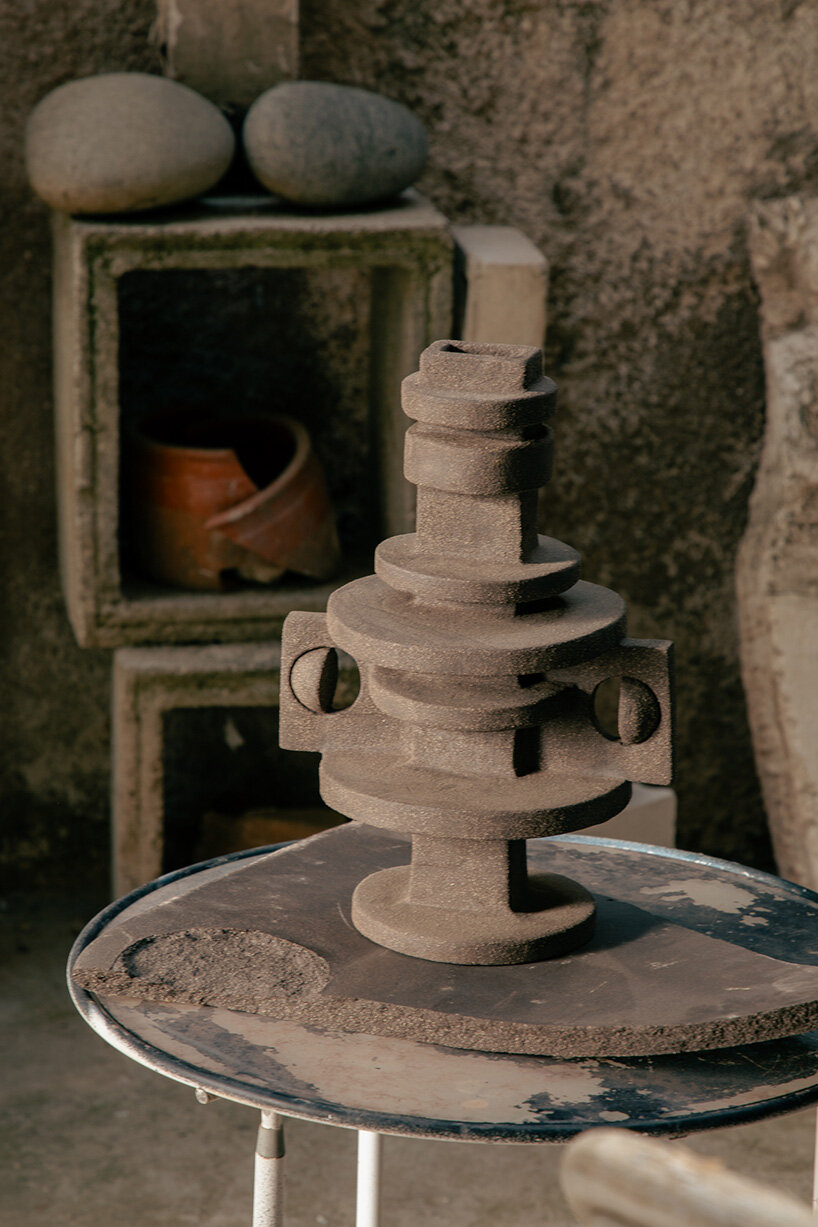
clay collapses drawing and building into a single gesture | image by Antonis Agrido
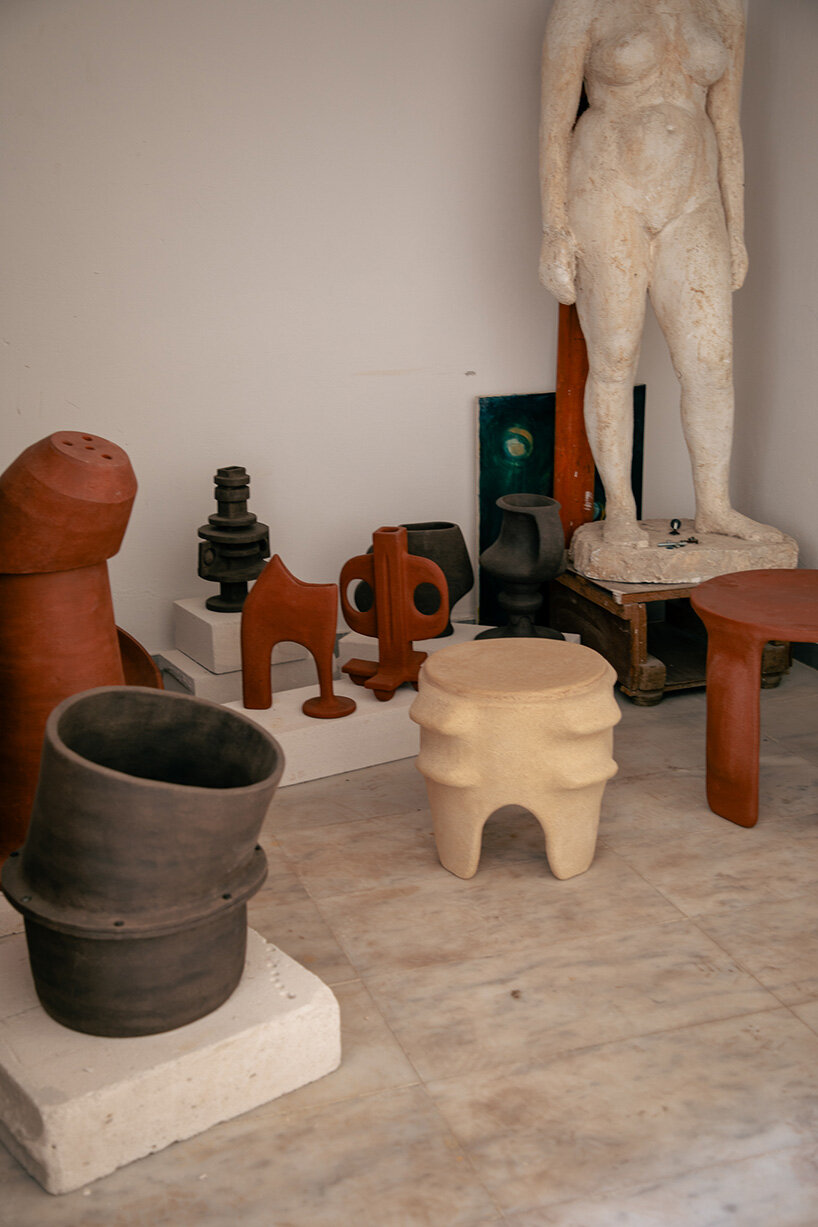
some objects behave as chairs, vessels, or holders, while others resist typology altogether | image by Antonis Agrido
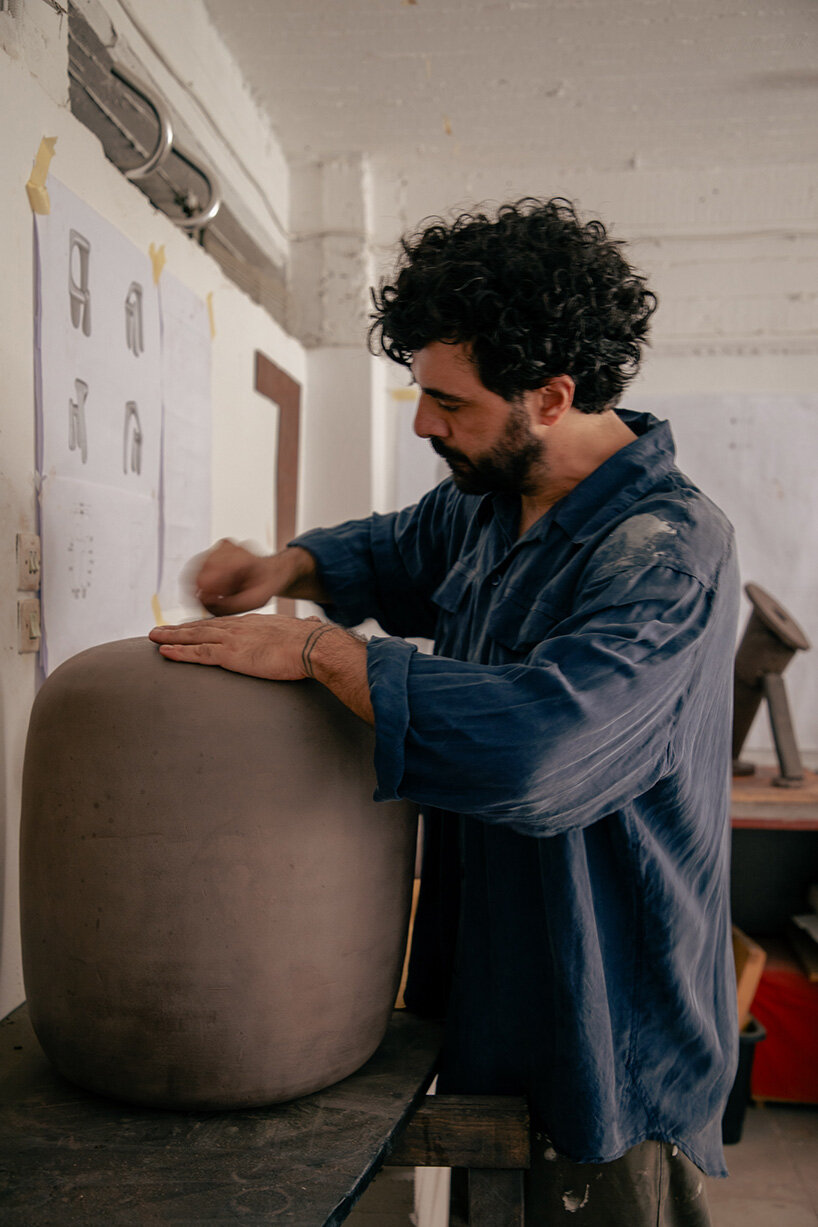
Harry Rigalo in his studio | image by Antonis Agrido
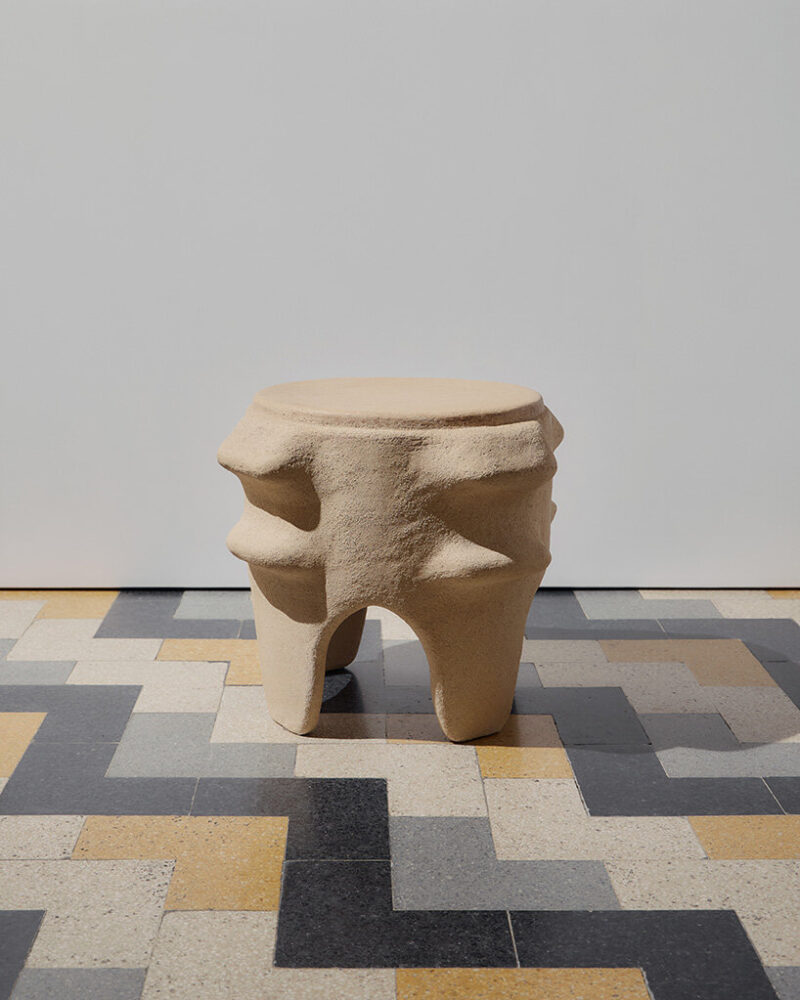
project info:
designer: Harry Rigalo | @harryrigalo
gallery: The Great Design Disaster | @thegreatdesigndisaster
location: Via della Moscova 15, Milan, Italy
dates: November 3rd – December 30th, 2025
ceramic art and design (245)
 Feb 14, 2026
 Feb 12, 2026
 Feb 05, 2026
 Feb 04, 2026
 Jan 27, 2026
design interviews (118)
 Dec 19, 2025
 Dec 18, 2025
 Dec 11, 2025
 Nov 14, 2025
sculpture (515)
 Feb 20, 2026
 Feb 18, 2026
 Feb 15, 2026
 Feb 13, 2026
 Feb 18, 2026
 Jan 28, 2026
 Jan 02, 2026
 Dec 28, 2025