james chinlund fills louis vuitton’s louvre runway with hovering concept vehicles
34 futuristic car sculptures transform the cour carrée du louvre into a surreal cityscape for nicolas ghesquière's spring-summer 2027 show.
JAMES CHINLUND IMAGINES A FUTURISTIC CITY FOR LOUIS VUITTON
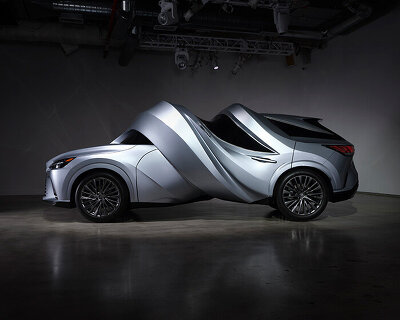
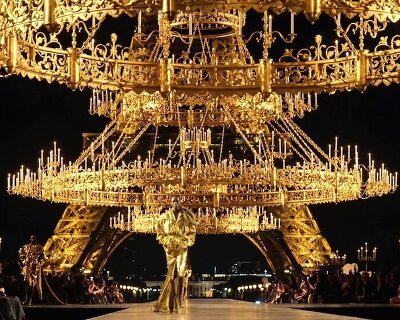
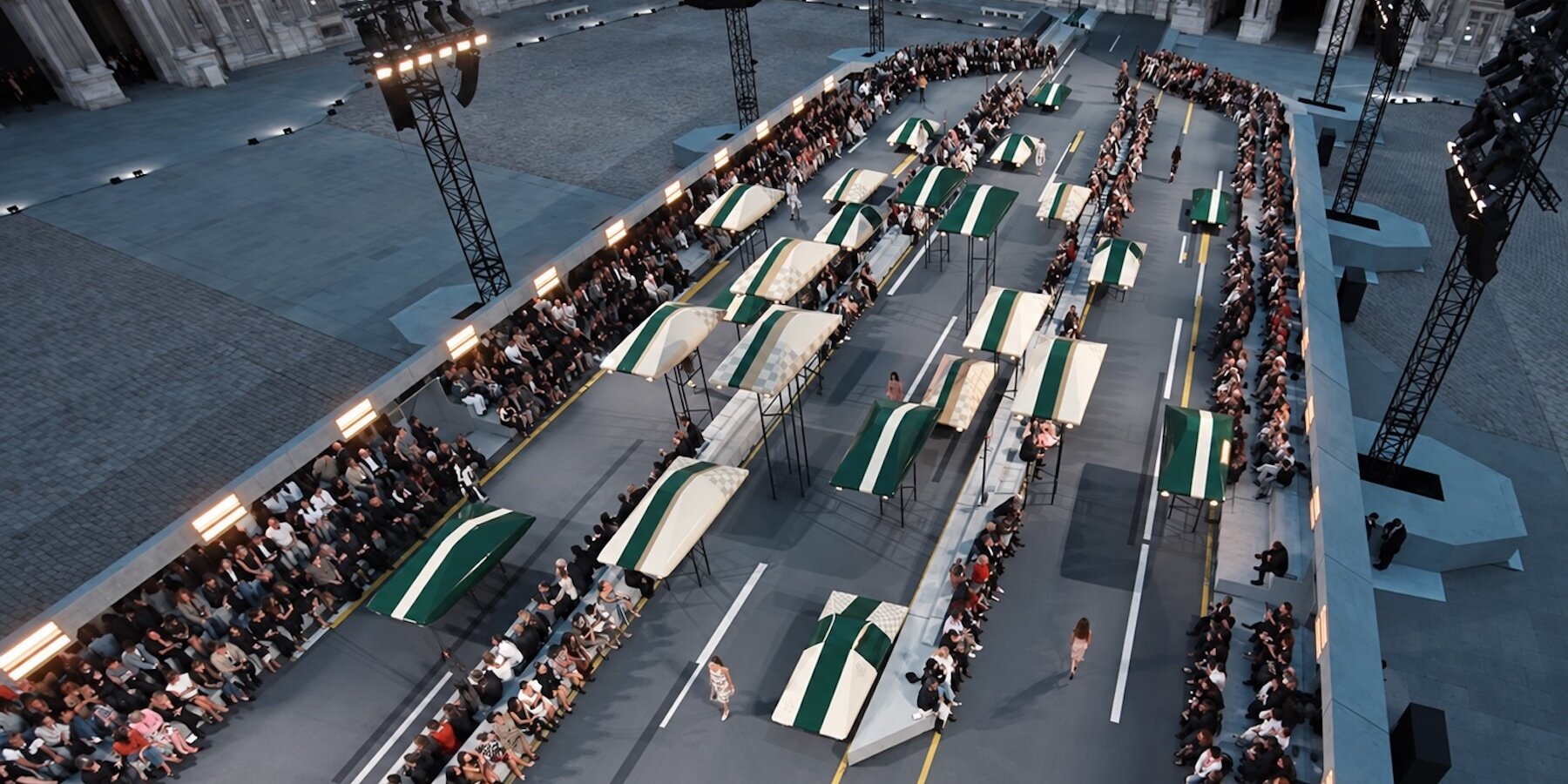
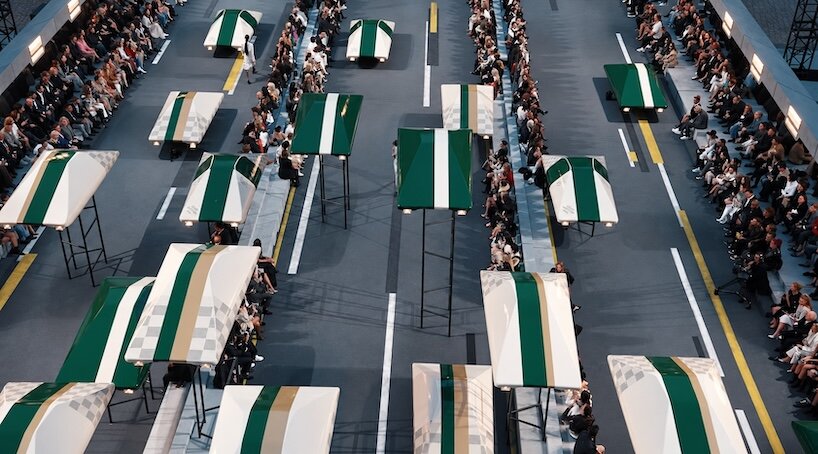
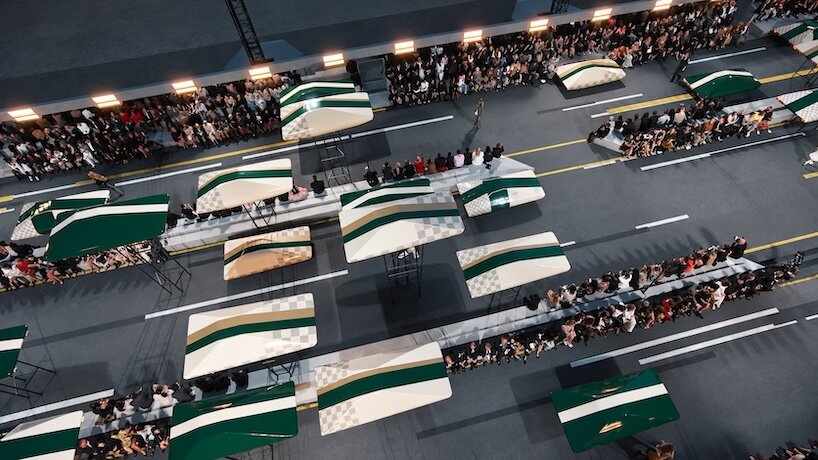
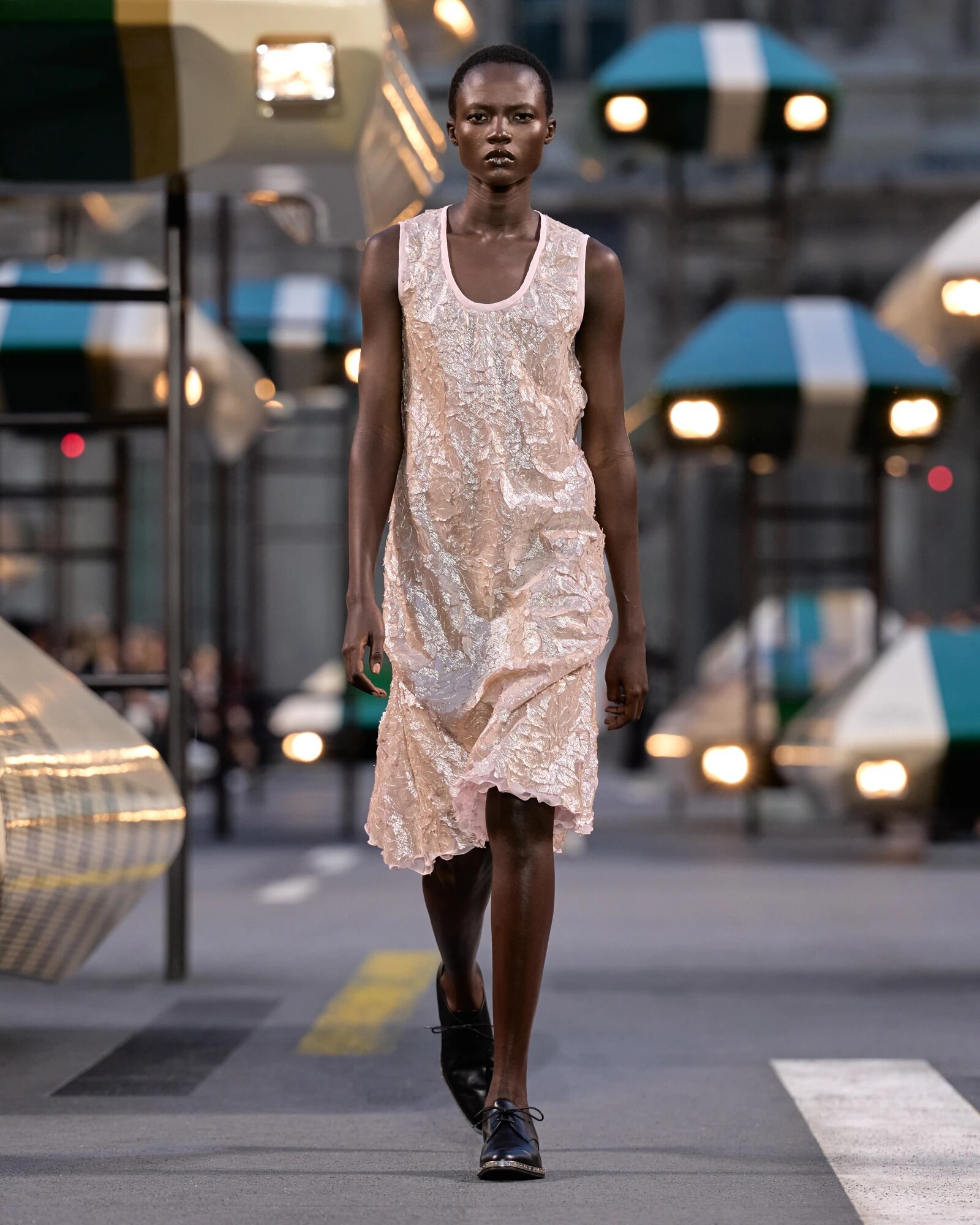
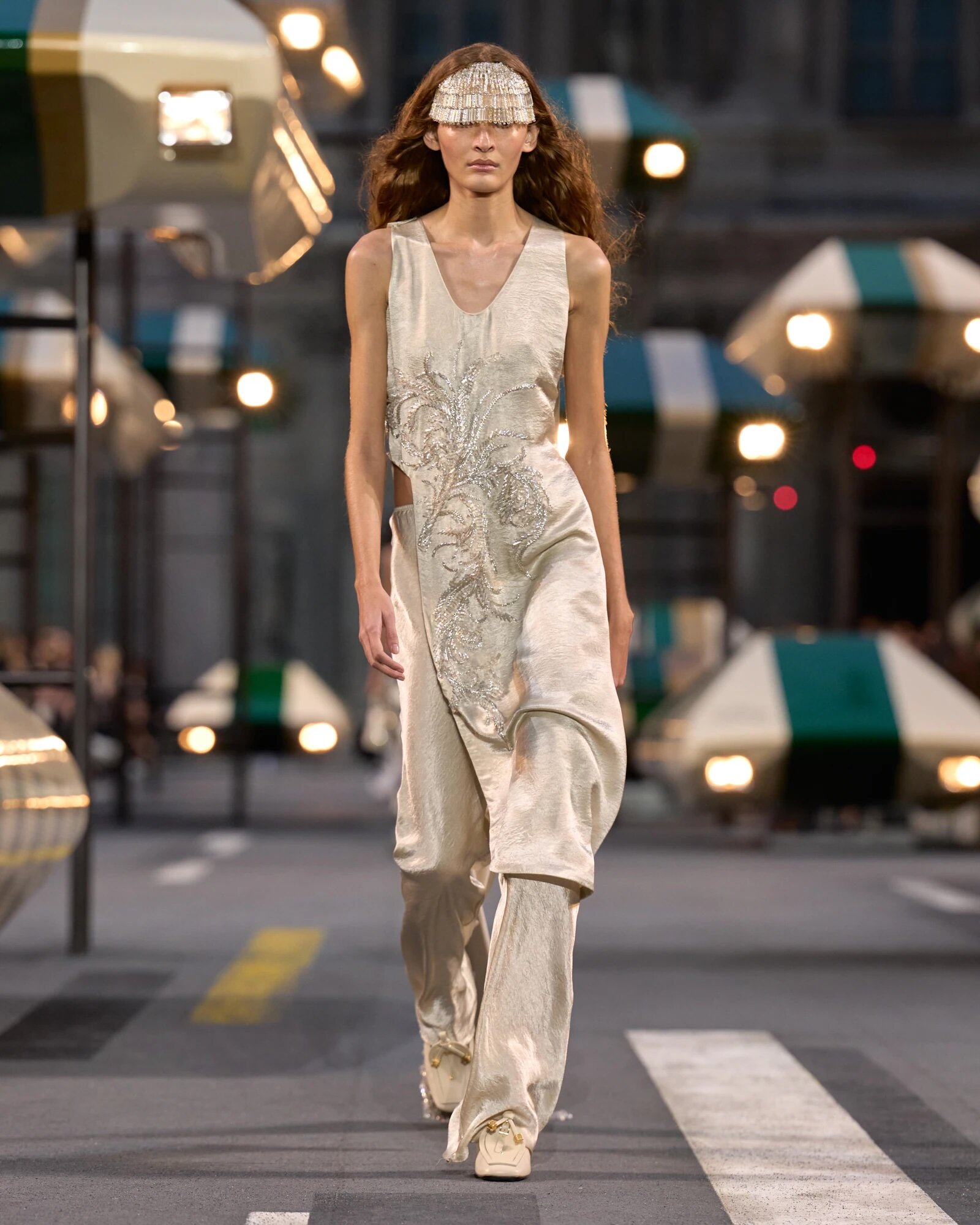
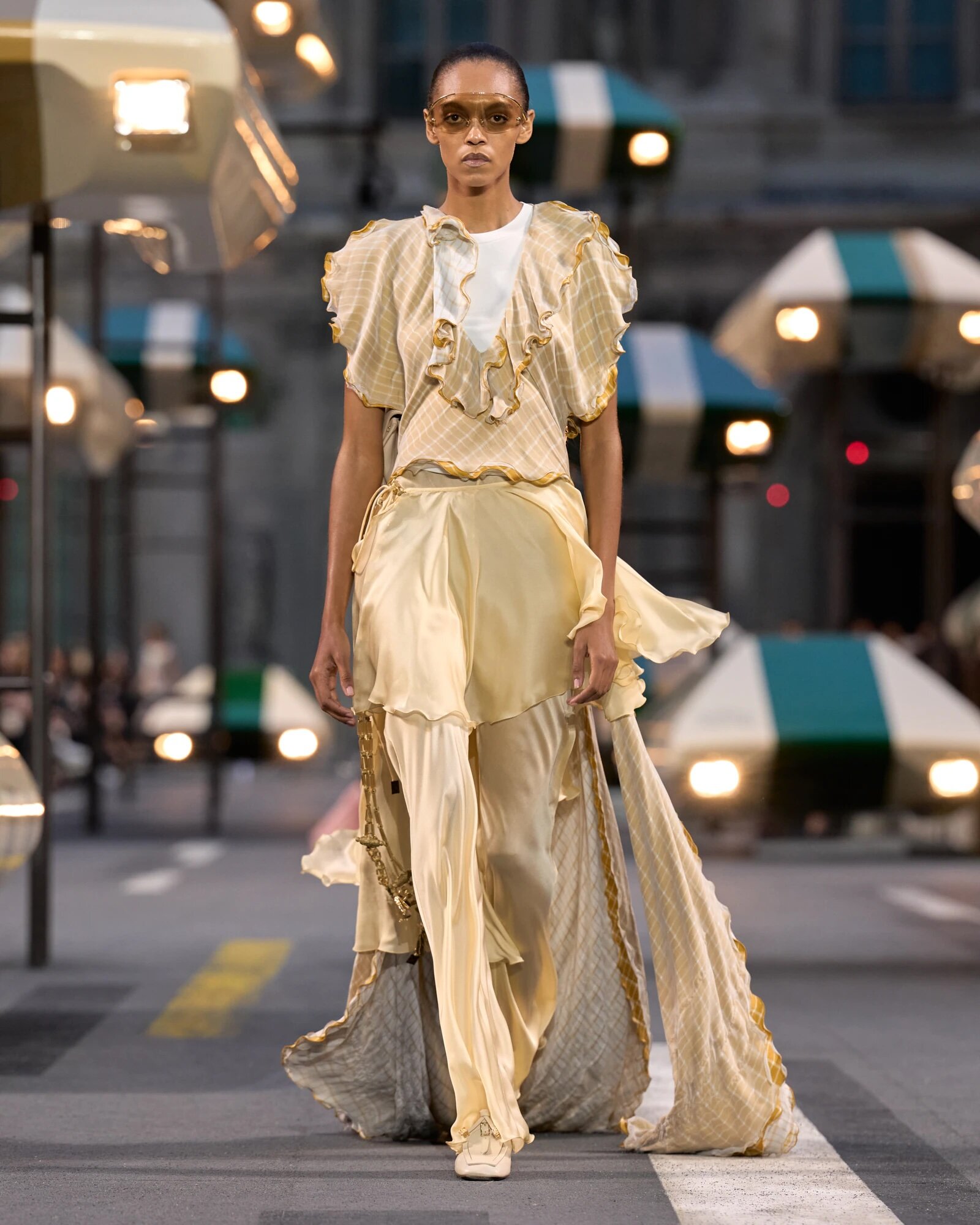
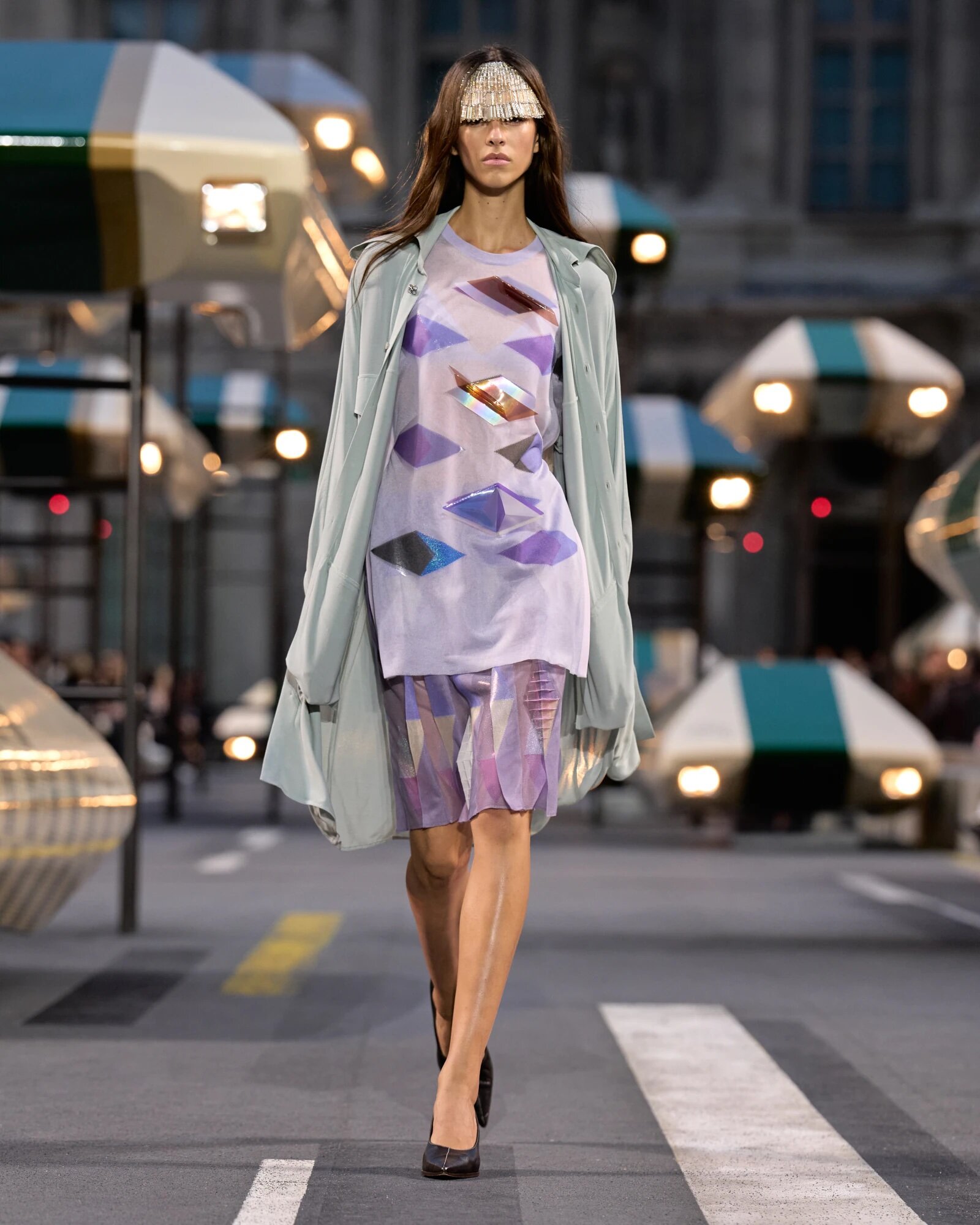
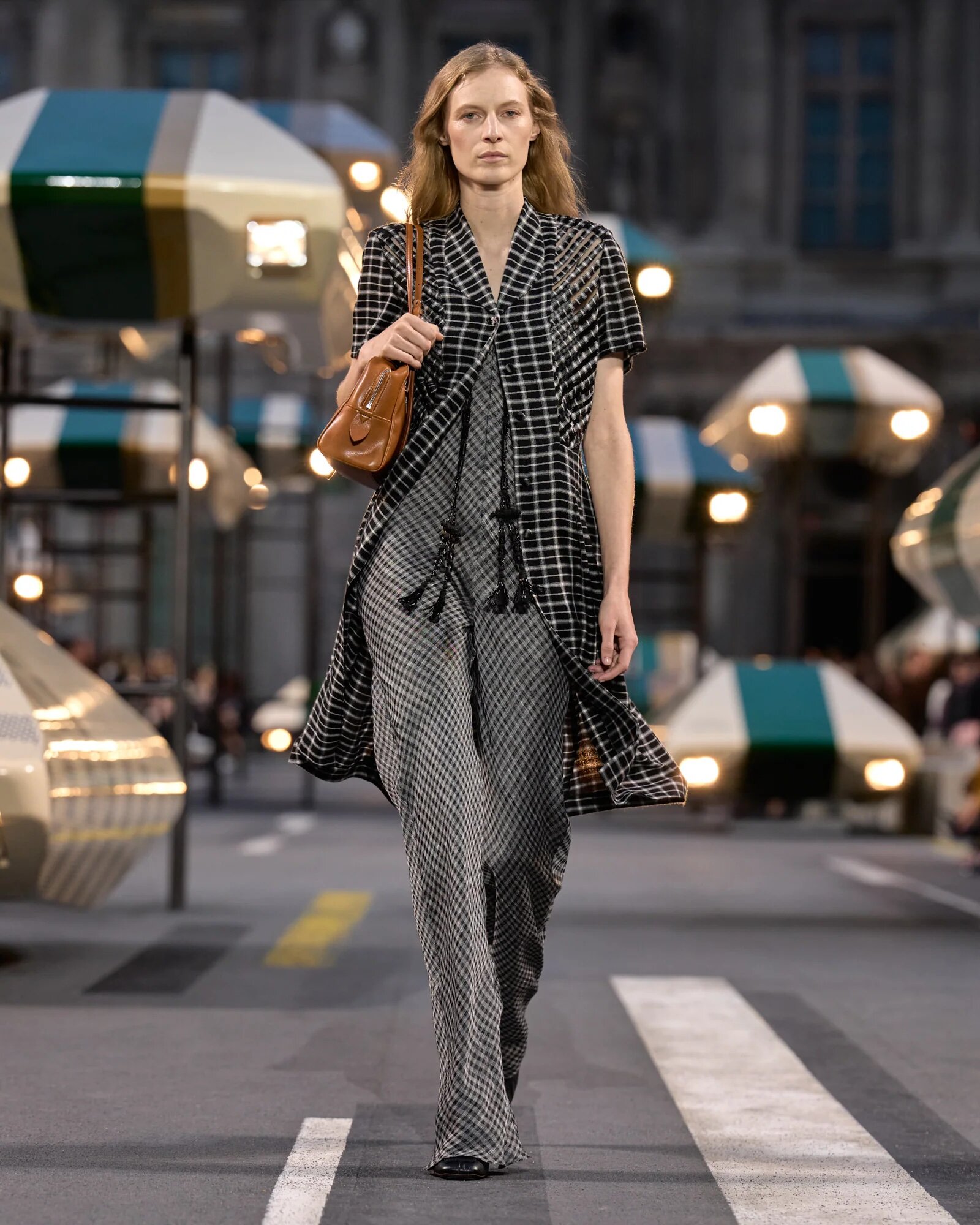
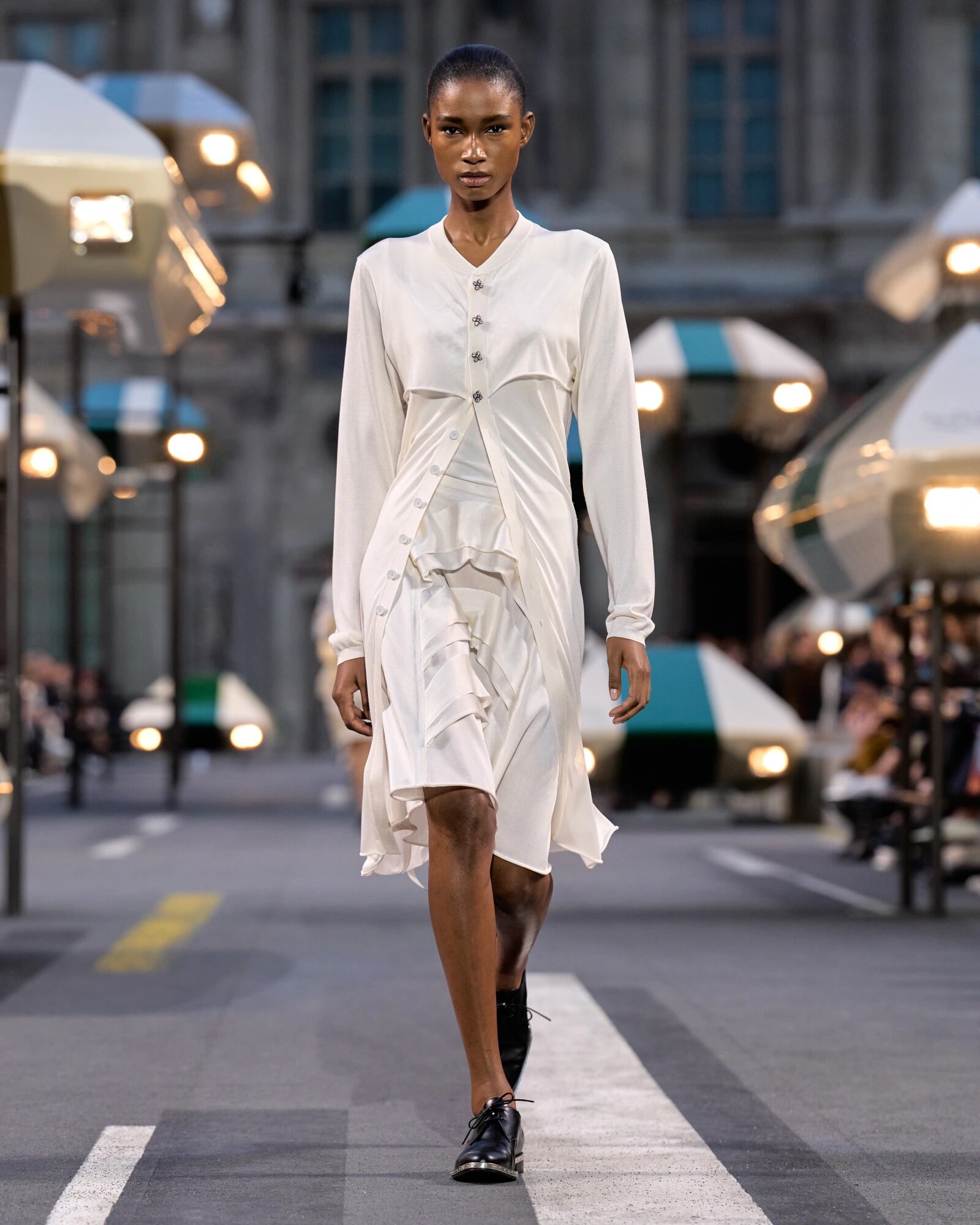
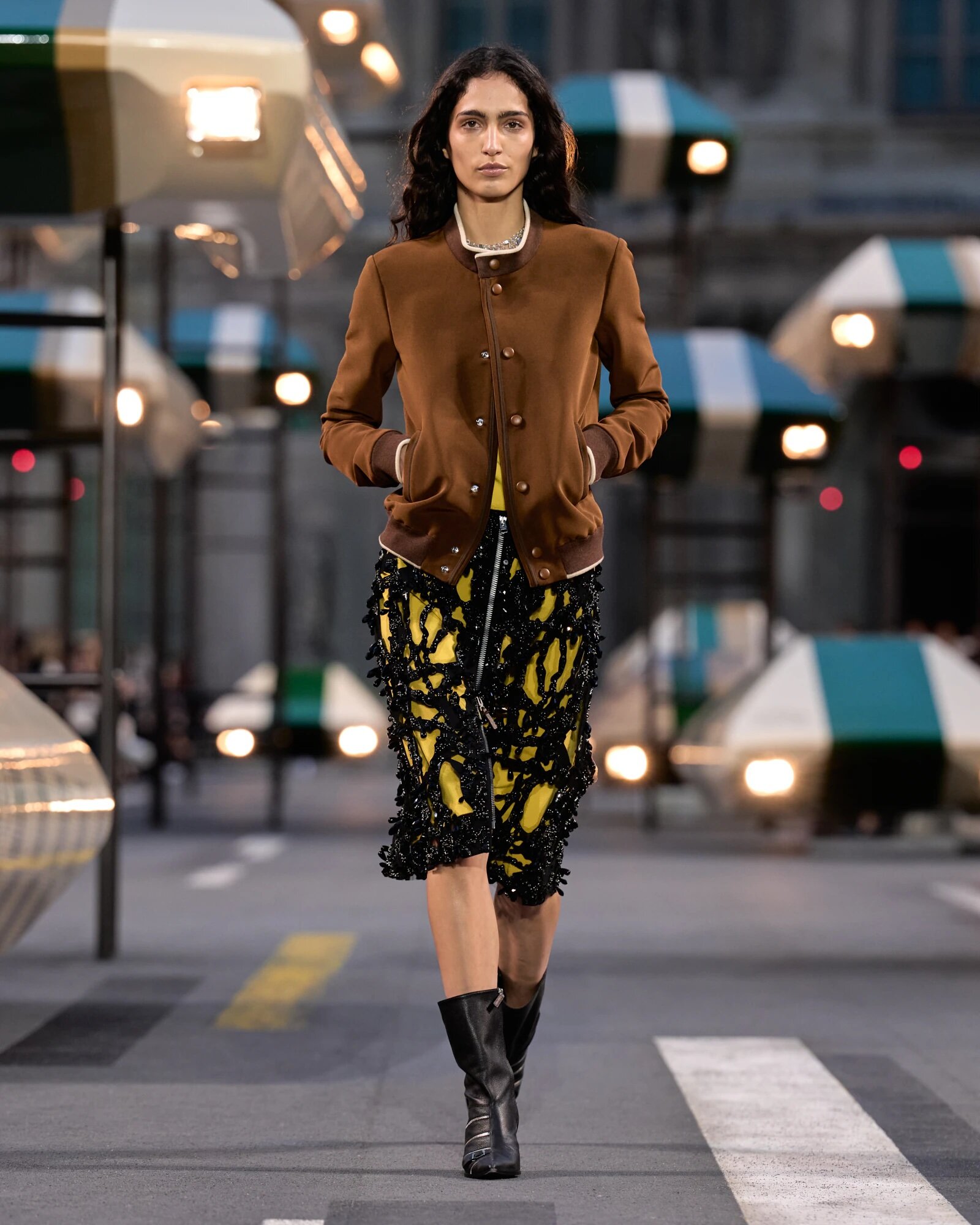
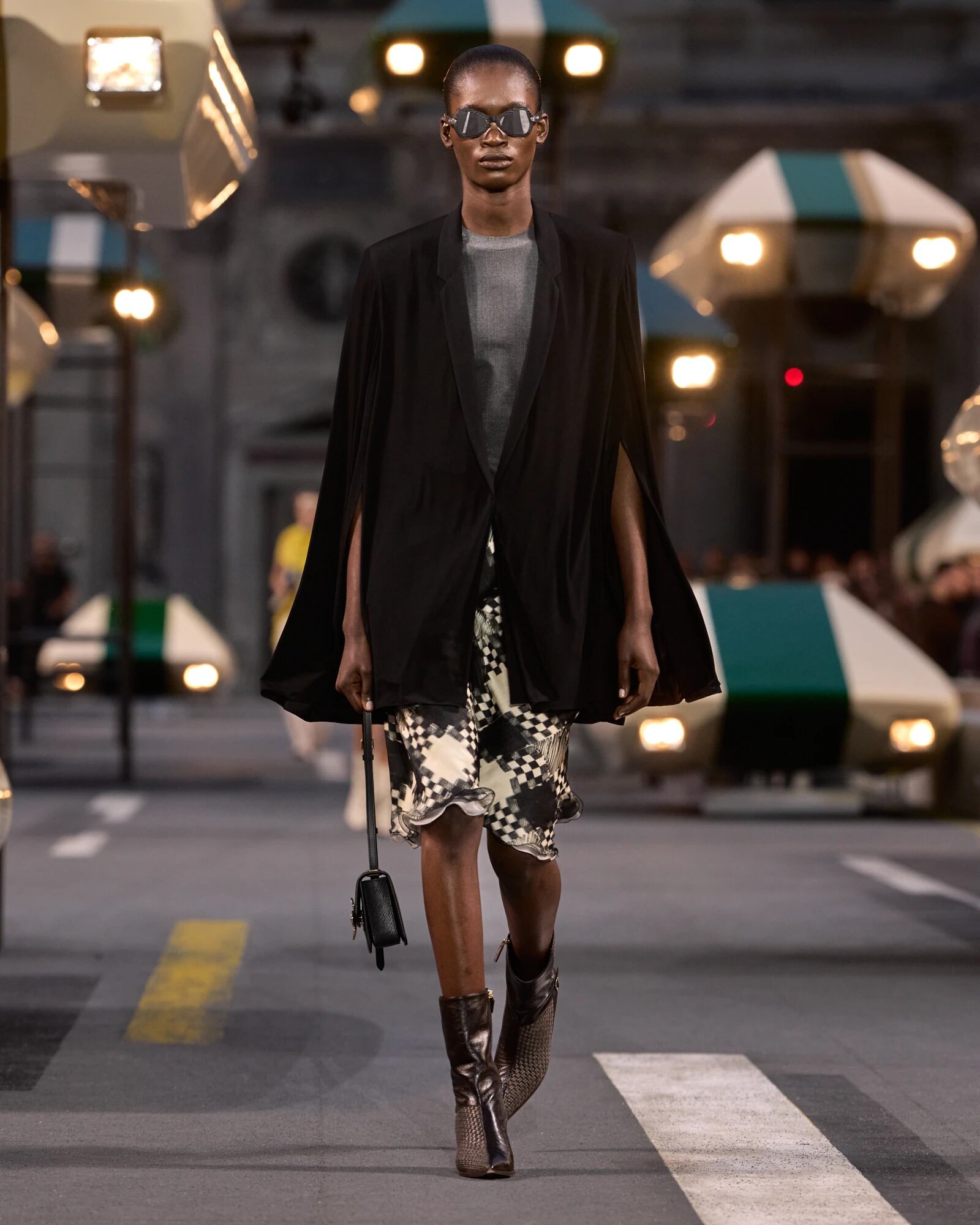
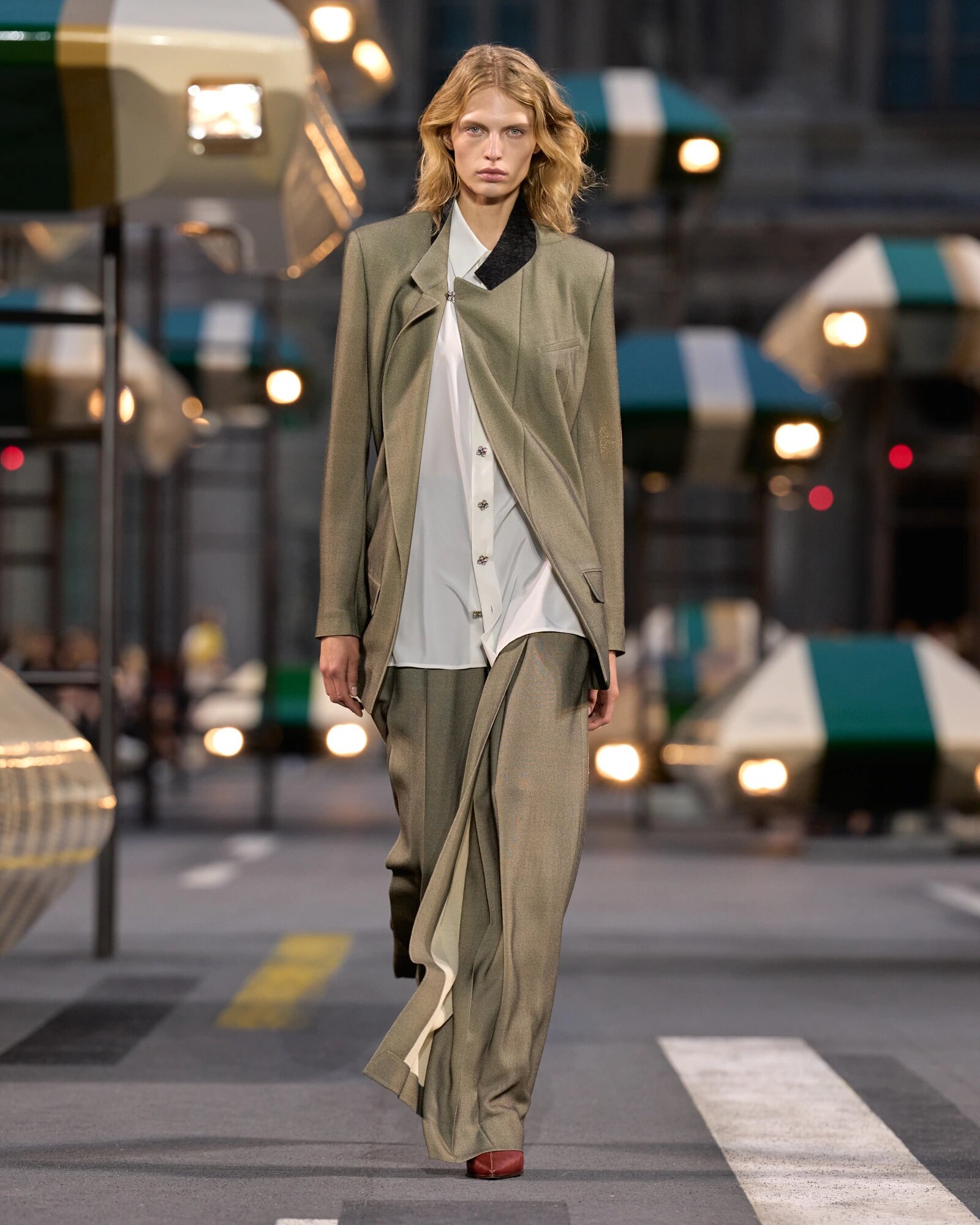
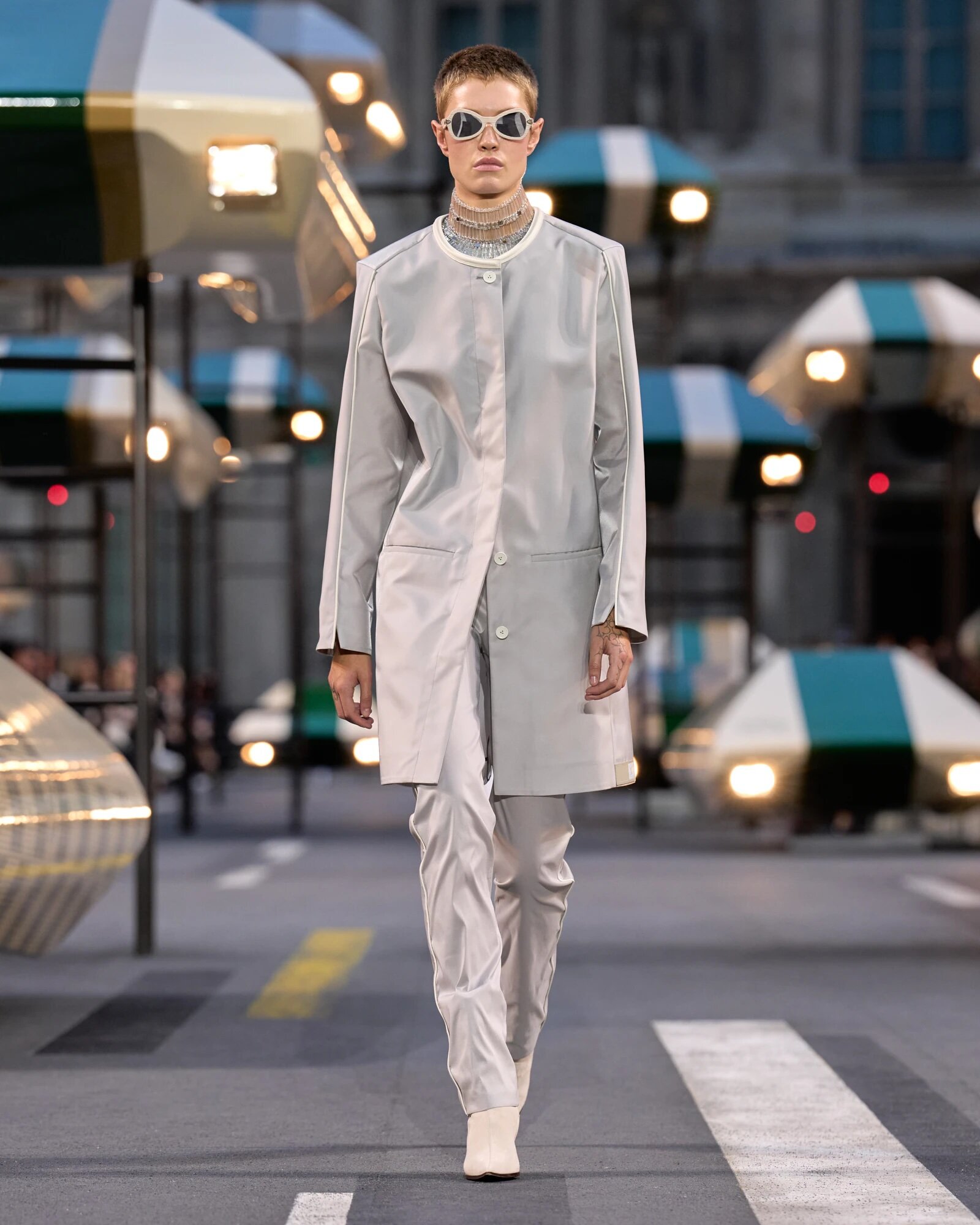
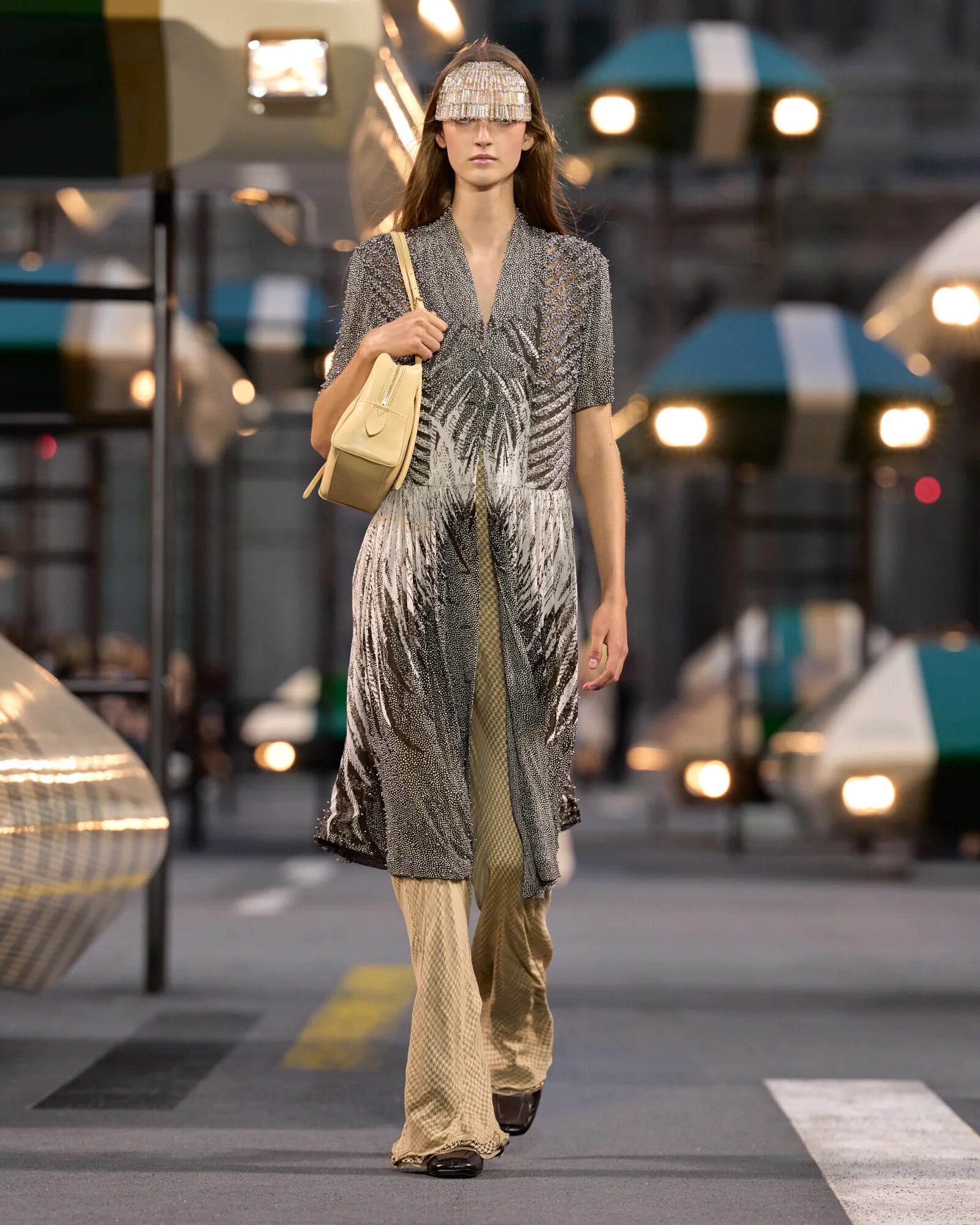
For Louis Vuitton’s spring-summer 2027 show, American production designer James Chinlund transformed the historic Cour Carrée du Louvre in Paris into a futuristic urban landscape populated by hovering concept vehicles. Presented on October 6th during Paris Fashion Week, the installation brought 34 sculptural cars into the museum’s courtyard, creating the illusion of a city suspended somewhere between the present and an imagined future. Conceived for Nicolas Ghesquière’s latest collection, the scenography placed automotive design at the center of the runway experience.
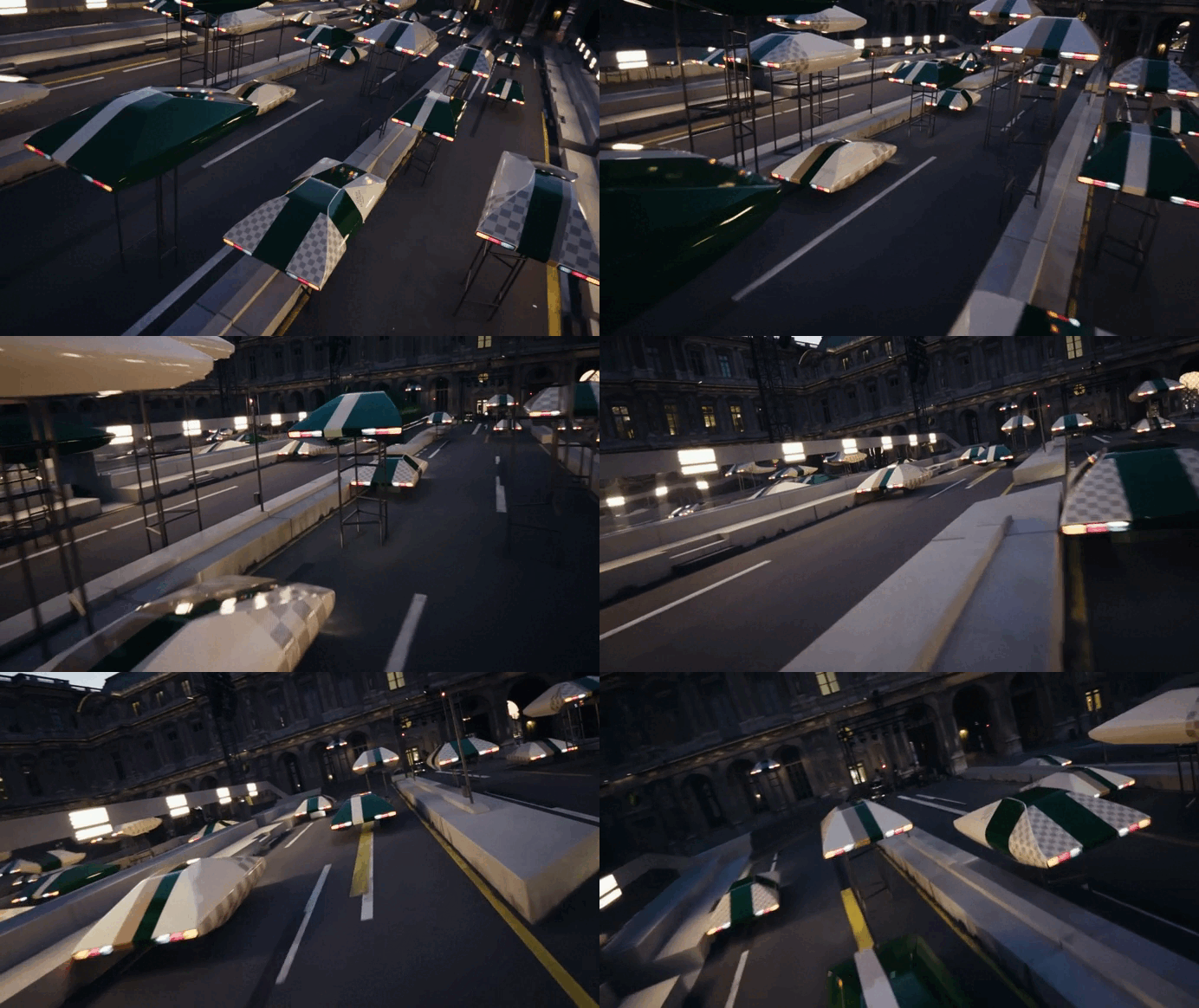
The vehicles, suspended at different heights above a road-like runway, appeared to float among the Louvre’s classical façades. Developed in four variations, their geometric silhouettes combined cream and forest-green finishes with graphic stripes and Louis Vuitton’s signature Damier pattern. Glowing headlights and red taillights reinforced their automotive identity, while their abstract proportions suggested machines from an alternative vision of urban mobility. Together, the structures formed an aerial traffic scene, turning the courtyard into a temporary science-fiction environment.
HISTORIC ARCHITECTURE MEETS CINEMATIC WORLDBUILDING
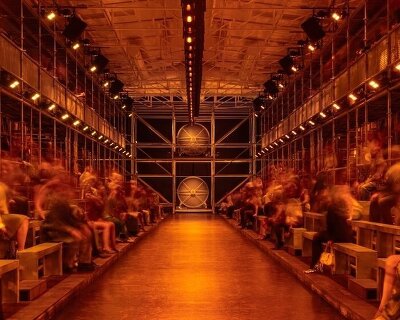
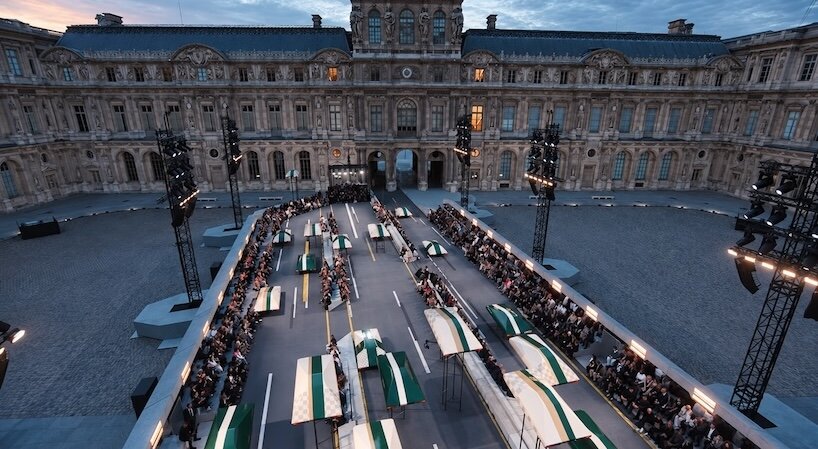
The contrast between the historic setting and the futuristic installation was central to the composition. Beneath the hovering forms, an asphalt-like surface extended across the courtyard, establishing a ground-level route for the models. The arrangement created a dialogue between movement and stillness, with the suspended vehicles seemingly frozen in midair against the Louvre’s centuries-old stone architecture. Rather than concealing the building, Chinlund incorporated its façades into the visual narrative, using the monumental surroundings to frame the imagined city.
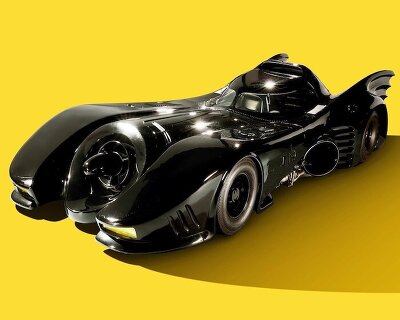
Chinlund’s approach draws on a career spanning cinema, sculpture, and fashion. Best known for his production design on films including The Batman (2022), the American designer has repeatedly explored the construction of fictional environments through architecture and large-scale installations. His relationship with Louis Vuitton and Nicolas Ghesquière extends back to the house’s Cruise 2025 presentation at Antoni Gaudí’s Park Güell in Barcelona, where architecture similarly played an important role in the runway experience.
REIMAGINING MOVEMENT AND THE ART OF TRAVEL
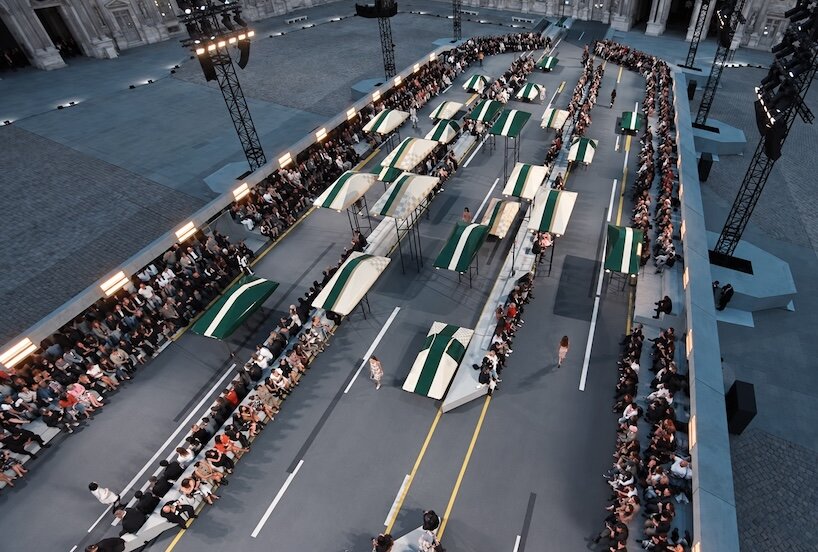
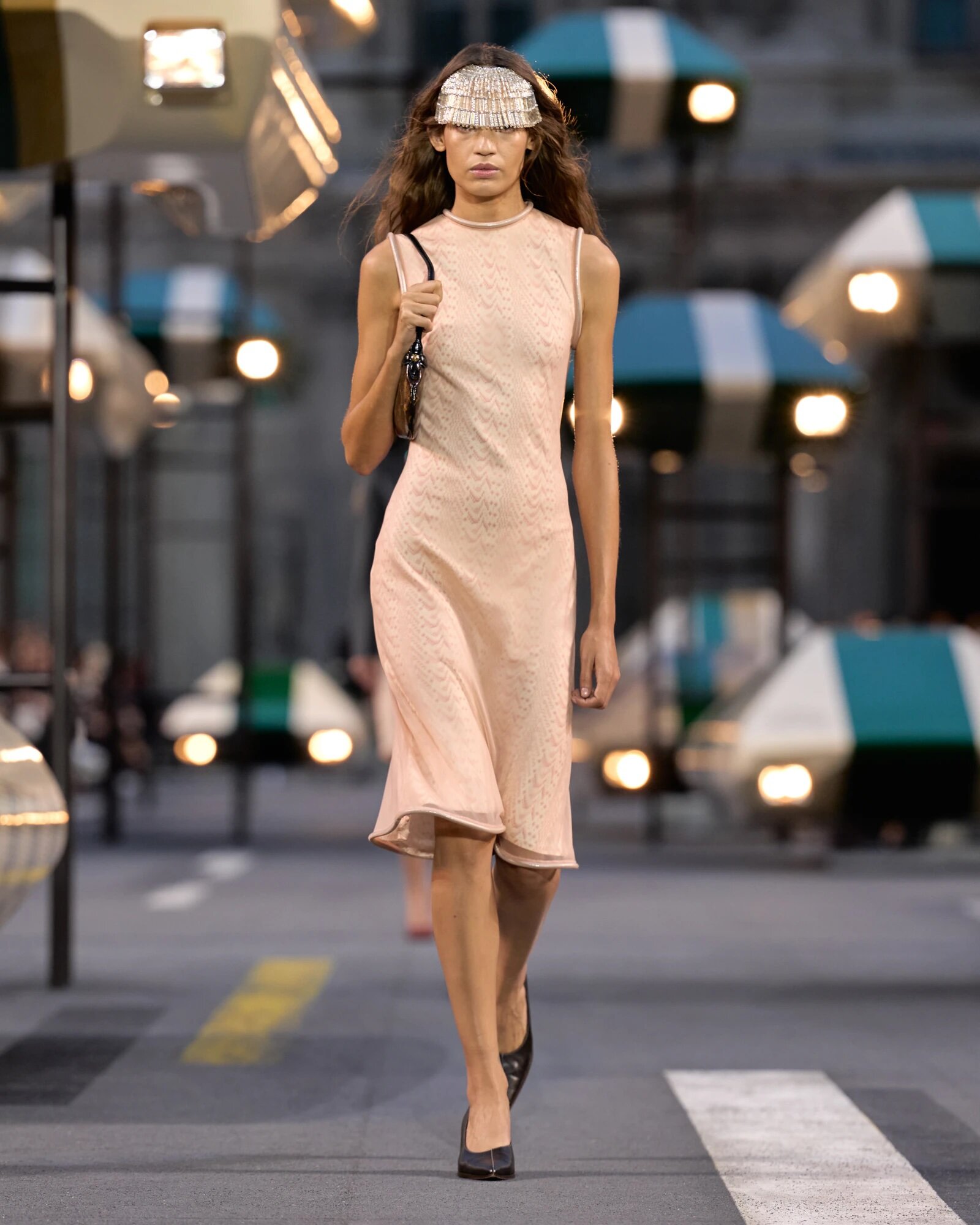
For spring-summer 2027, the scenography also reflected Ghesquière’s interest in the complexities of contemporary urban life. While the suspended vehicles suggested speed, congestion, and a city in constant motion, the collection itself explored an opposing sense of lightness. Entitled Ergonomie, it focused on the relationship between clothing and the moving body, introducing ultralight fabrics, fluid constructions, and relaxed silhouettes. The contrast between the sculptural environment and the garments presented a dialogue between the rigidity of machines and the freedom of human movement.
The installation also revisited one of Louis Vuitton’s defining themes: the Art of Travel. Here, transportation was reimagined through objects that seemed to have escaped the limitations of conventional roads, transforming familiar vehicles into speculative design sculptures. Within the Louvre’s historic courtyard, Chinlund’s floating cars offered an alternative vision of mobility, using temporary architecture and cinematic illusion to turn a fashion presentation into an imagined urban environment.
1/12
project info:
name: Louis Vuitton Women’s Spring-Summer 2027 Show
creative director: Nicolas Ghesquière
set design: James Chinlund | @jchinlund
brand: Louis Vuitton | @louisvuitton
location: Paris, France
shop
your own online design shop — no sales commission collected