laterna magika brought projected images into live perfomance
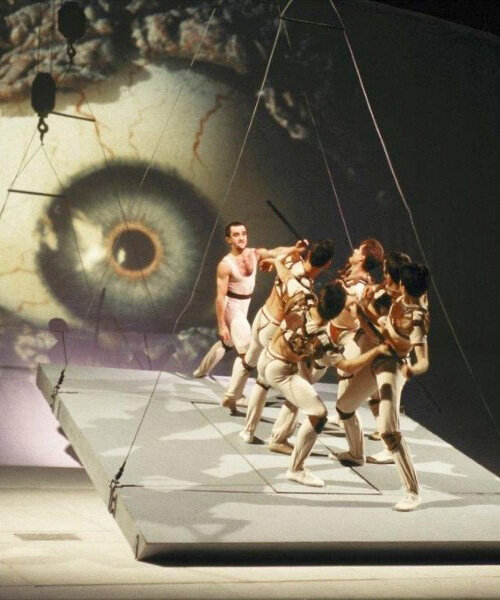
josef svoboda and alfréd radok brought live performance and film together, creating a stage where bodies, images and space could occupy the same visual field.
Laterna Magika made the screen part of the stage
Developed by stage director Alfréd Radok and scenographer Josef Svoboda for Czechoslovakia’s pavilion at Expo 58 in Brussels, Laterna Magika brought live performance, film projection, music, dance and stage technology into a single theatrical language, turning the relationship between the physical stage and the projected image into the central subject of the performance. The project continued beyond the exhibition, becoming an independent company of Prague’s National Theatre in 1959, developing a theatrical language that still offers a useful way of thinking about spectatorship, scenography and the way projected images can alter our experience of physical space.
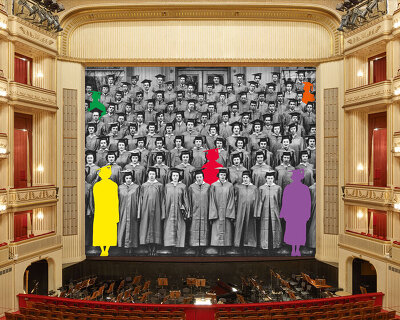
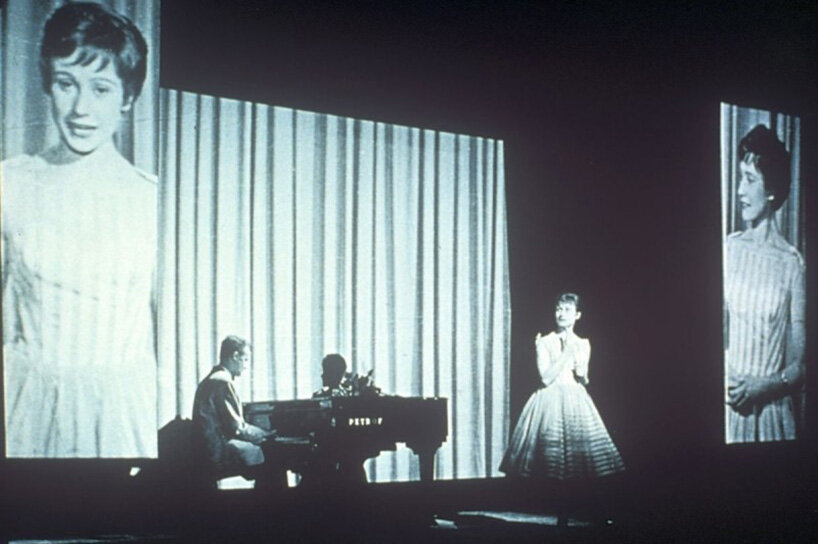
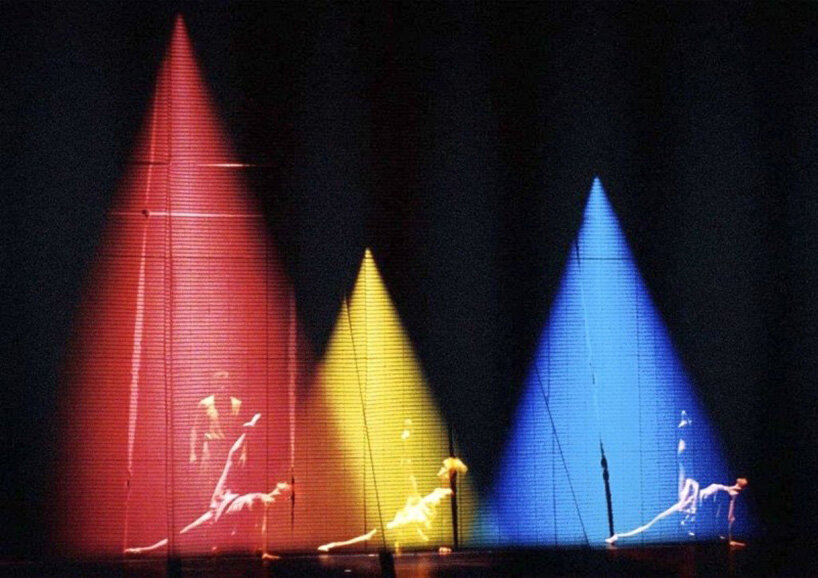
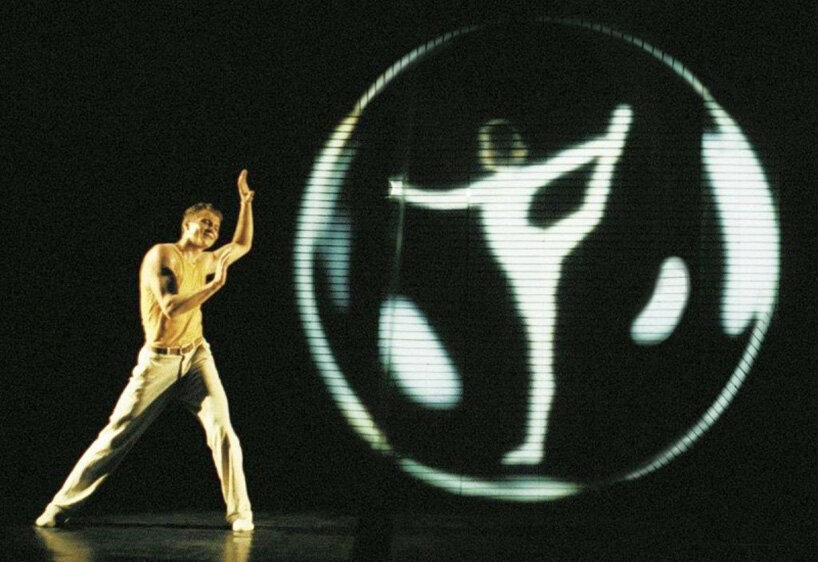
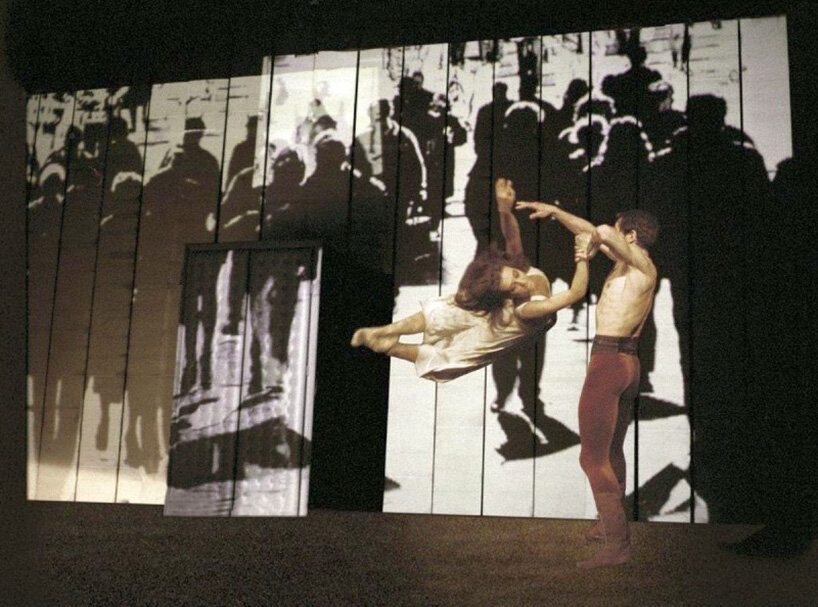
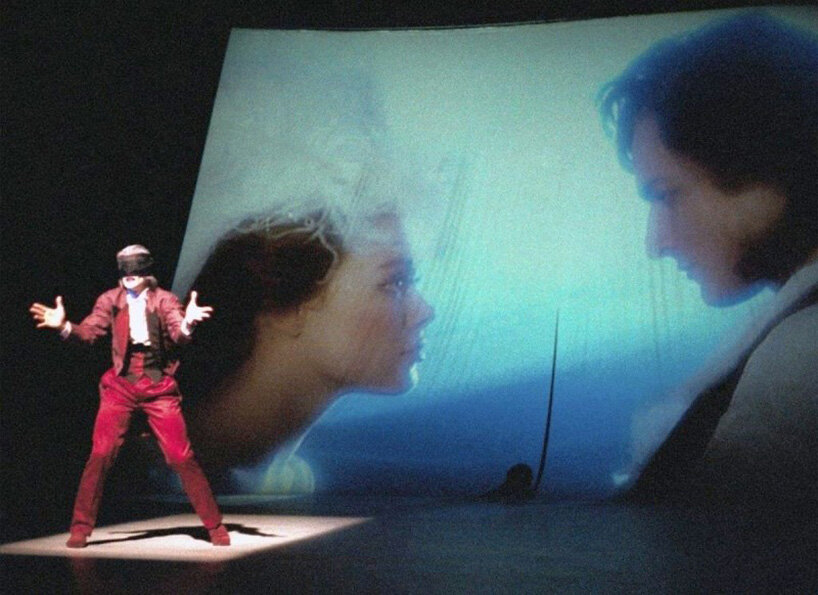
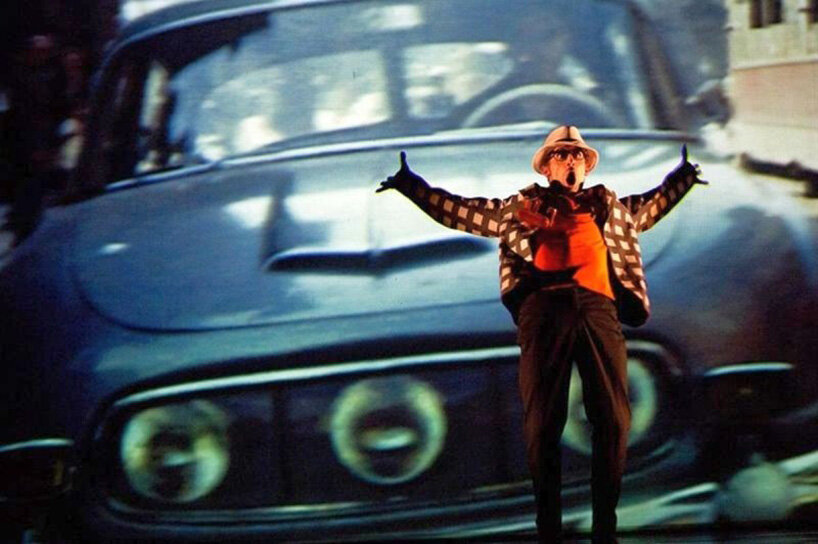
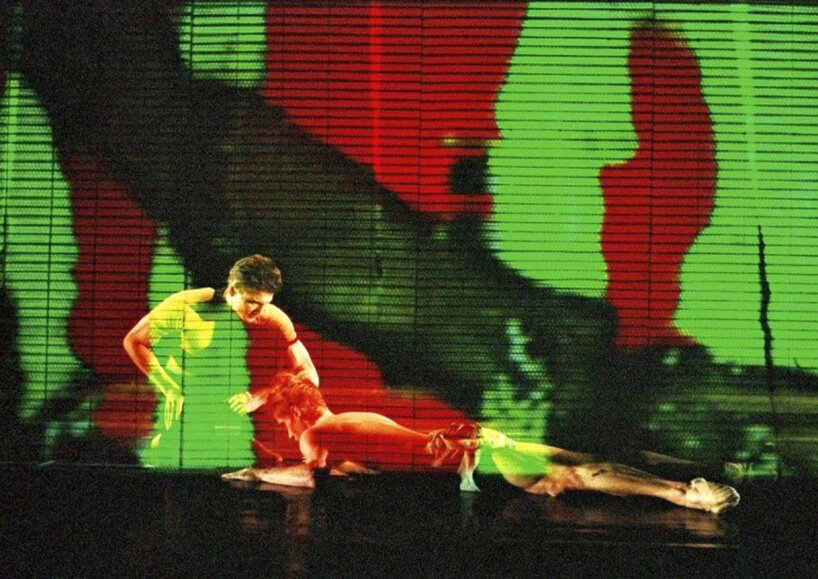
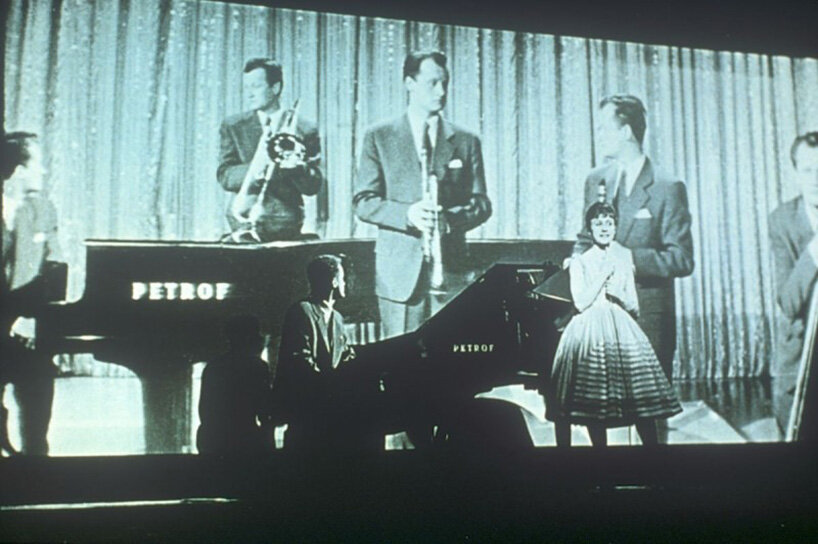
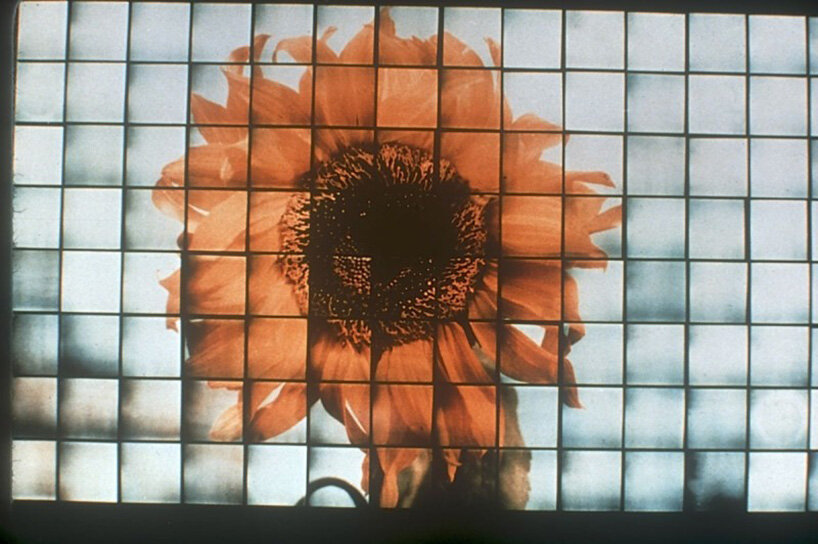
The idea that a filmed image could interact with a performer on stage as if they occupied the same world shaped Laterna Magika. In the original Expo program, filmed figures appeared to speak to the actress performing live, while projected sequences were carefully timed with acting, music and dance. The screen became part of the action, giving the audience something else to follow alongside the performers in front of them. An image could respond to a performer, extend a movement or introduce another version of the same space, while the physical stage remained visible at the same time.
For the audience, watching the performance meant moving between different layers, paying attention to what was happening in front of them and to what was happening on screen. Looking at Laterna Magika today, this way of working feels particularly relevant because screens have become part of so many physical environments, from theaters and museums to public spaces and buildings. Svoboda and Radok were already exploring what happens when an image is given a physical role within a space, and when the audience has to consider the performer and their projected image as two parts of the same scene.
josef svoboda and the architecture of the image
Josef Svoboda worked at Prague’s National Theatre from the late 1940s and became head of its artistic-technical operations, where he pushed the theater workshops toward a more technologically ambitious model capable of responding to increasingly complex stage designs. His approach treated light, projection, movement and technical infrastructure as active components of the stage environment.
His work with Alfréd Radok at Expo 58 grew out of this broader interest in expanding what scenography could do. The two developed an interplay between live action and filmed sequences in which the projected image could heighten or contradict what was happening on stage, producing a visual language that depended on precise timing and coordination between different media. The National Theatre later described Laterna Magika as having evolved from these principles, with each production exploring a different way of connecting stage and image.
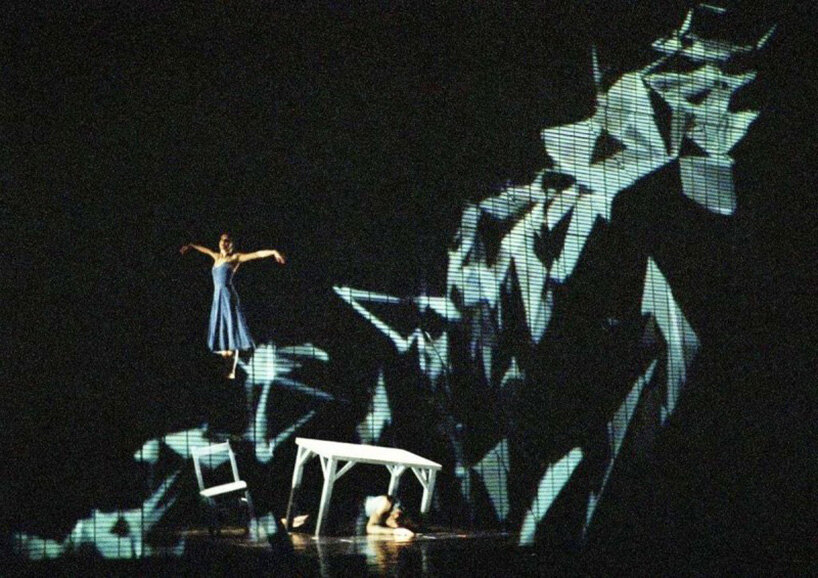
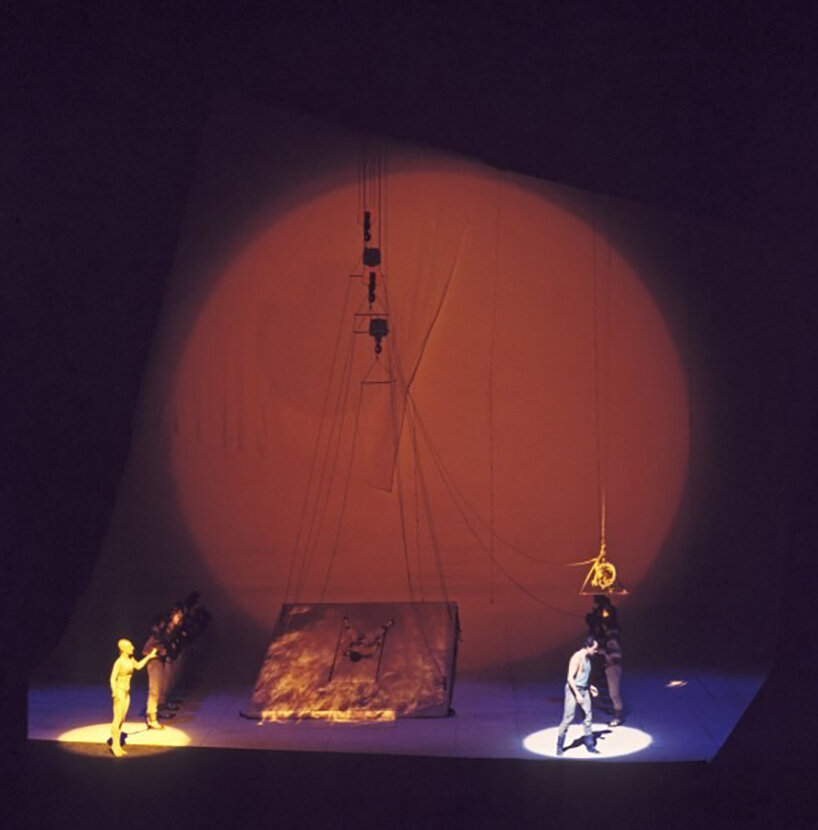
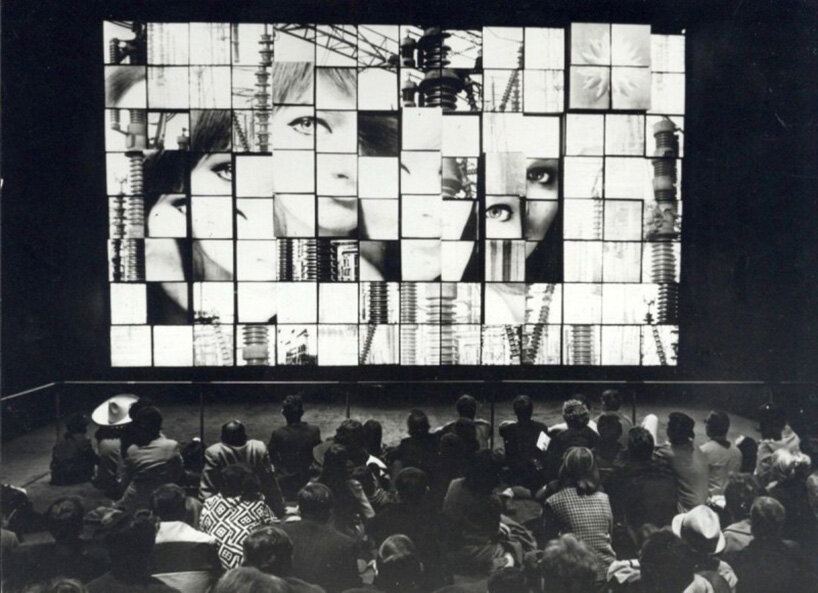
Svoboda’s thinking also extended into the technical systems that made these relationships possible. His work on Polyekran, which involved combining multiple projection surfaces into a larger image composition, was developed around the same period, although the National Theatre makes an important distinction between Polyekran as a technical system and Laterna Magika as a theatrical form. Both belonged to Svoboda’s broader investigation into how projected images could alter the perception of space.
a theater built around spectatorship
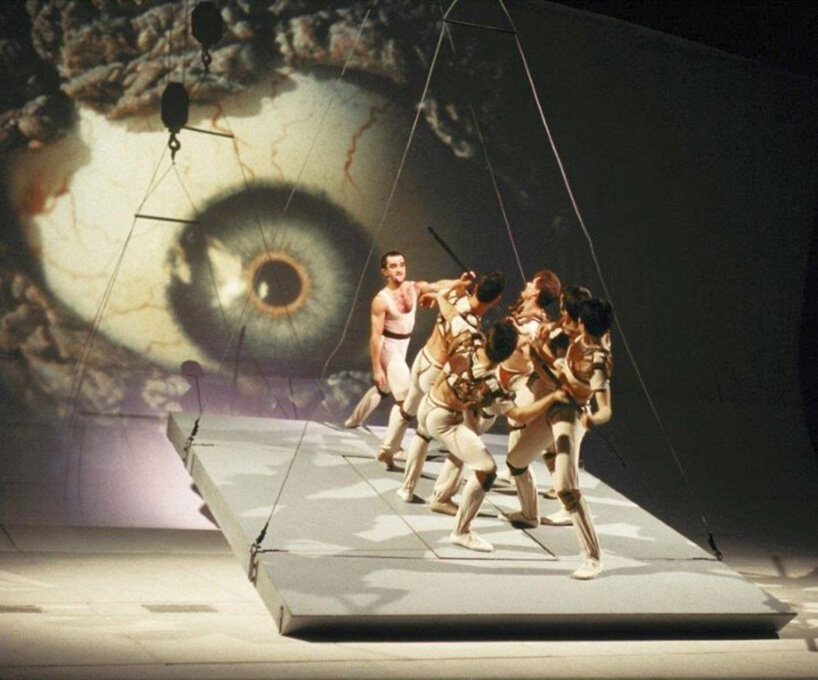
Seen through contemporary scenography, Laterna Magika belongs to a longer history of treating the stage as a space that can direct and shape attention. The audience moves between what is physically present and what appears on screen, following performers, images, light and movement as they occupy and alter the same space. In this sense, Laterna Magika changes the role of the spectator, who has to follow both the performer and the projected image and understand how the two relate to each other. The stage becomes something that has to be read as much as watched, with projection, movement, light and physical space working together to determine what the audience sees.
from expo spectacle to an evolving theater
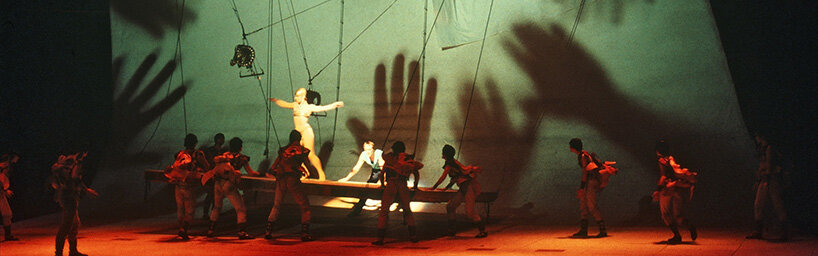
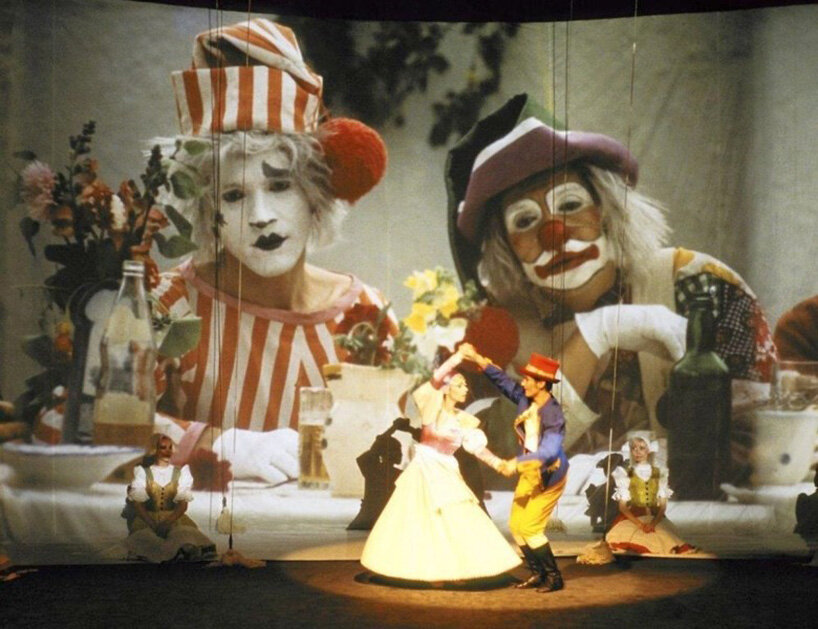
The original program was designed for an international exhibition and carried the representational ambitions that came with that context, yet its theatrical language continued after Expo 58. Laterna Magika became an independent company of the National Theatre in Prague in May 1959, initially continuing with revue-like programs before gradually developing longer productions and a broader theatrical repertoire. One of its most enduring productions, Wonderful Circus, premiered in 1977 and remains in the repertoire. Its arrival marked a shift toward multi-theme productions, while the company continued to develop the relationship between live performers and projected imagery as a defining part of its stage language.
Svoboda became Laterna Magika’s artistic director in 1973, at a moment when the company was searching for a new direction, and remained closely connected to its development for the rest of his career. His influence also extended beyond individual productions into the question of where this kind of theater should exist: during the development of Prague’s New Stage in the early 1980s, he pushed for the building to accommodate Laterna Magika, helping reshape the project around the needs of the company. The New Stage opened in 1983 and became closely associated with Laterna Magika, giving the company a permanent architectural setting for a theatrical form that had originally been conceived for a temporary exhibition. This particular form of scenography helped generate the architectural conditions in which it could continue to develop.
the stage after the stage
Looking at Laterna Magika today makes sense because so much of contemporary performance is once again concerned with the relationship between the physical and the projected image. Projection, LED screens, virtual production and responsive lighting are now part of the visual language of theaters, exhibitions and architecture, making Svoboda and Radok’s experiments feel less like an isolated moment in theater history and more like an earlier chapter in a conversation that is still taking place.
What is striking is how much of that conversation was already present in Laterna Magika. The technology has changed, but the basic setup remains recognizable: a performer shares the stage with an image, the image changes our perception of the space, and the audience has to decide how to look at both at the same time. Looking back at the work now allows us to see where some of these ideas came from, before projection became such a familiar part of the environments we move through today.
This is also what makes Svoboda’s approach to scenography worth revisiting. He treated the stage as something that could change through light, movement, projection and technology, giving the image a physical presence within the performance. At a moment when screens are increasingly built into the spaces around us, Laterna Magika offers a useful point of reference for understanding how that relationship between image, space and the spectator developed in the first place.
This article is part of designboom’s SPECTATOR AND SPECTACLE chapter, asking how wonder gets built, and how it might return some mystery to a world that has measured most of it away. Presented in partnership with SolidNature, the stories in this chapter turn onlookers into participants, alter perception and disrupt the everyday – learn more here!
Each designboom chapter explores one theme in depth through projects, interviews, features and news across architecture, design, art and technology. Discover more chapters here, and get in touch if you’d like to submit a story through our submissions portal or contact form.
shop
your own online design shop — no sales commission collected