LAYER celebrates the tradition of murano glasswork with intricate ‘granule’ collection
each piece is crafted using a variety of different glassworking techniques – including mouth-blowing, casting, sfumato, incalmo, and vetro fuso.
[FEATURED]
LAYER celebrates murano glassworking
benjamin hubert of london-based design agency LAYER introduces ‘granule’, a collection of exclusive one-off glassworks for the punta conterie ingalleria gallery in venice. the series comprises large vessels that celebrate the rich tradition of murano glassworking, which can trace its roots back to the 8th century, as well as the talent and knowledge of the gallery’s artisans. each piece is crafted using a variety of different glassworking techniques, including mouth-blowing, casting, sfumato, incalmo, and vetro fuso, to showcase the diverse characteristics inherent in glass as a material. granule was launched during the ’empathic – discovering a glass legacy’ exhibition which will be available for view until april 10, 2022.

all images courtesy of LAYER
combining a mix of techniques
seeking to celebrate the murano glassworking tradition, ‘granule’ combines a variety of different techniques that can only be achieved by hand in limited quantity. ‘murano’s historic glass industry faces many challenges as production has increasingly moved out of italy (…) this project is about working with the local makers and helping to protect their irreplaceable expertise, as well as a desire to create an expression of the process that showcases the inherent qualities of glass as a material,’ shares benjamin hubert, founder of LAYER (find more here).
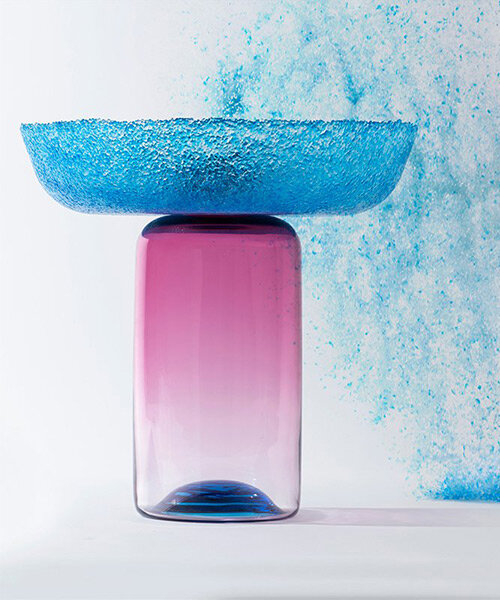
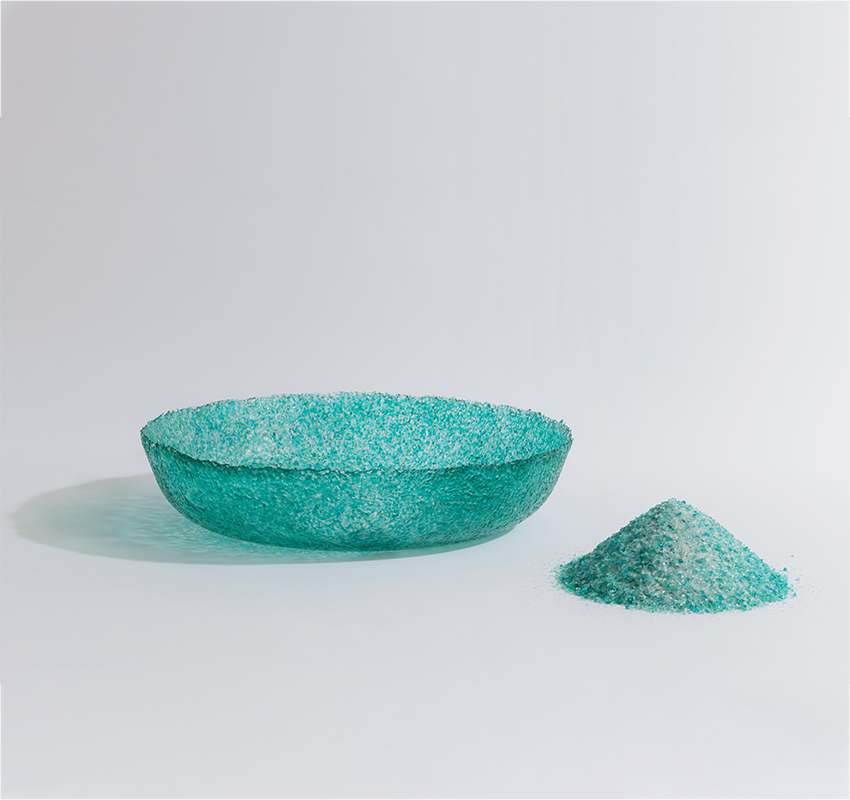
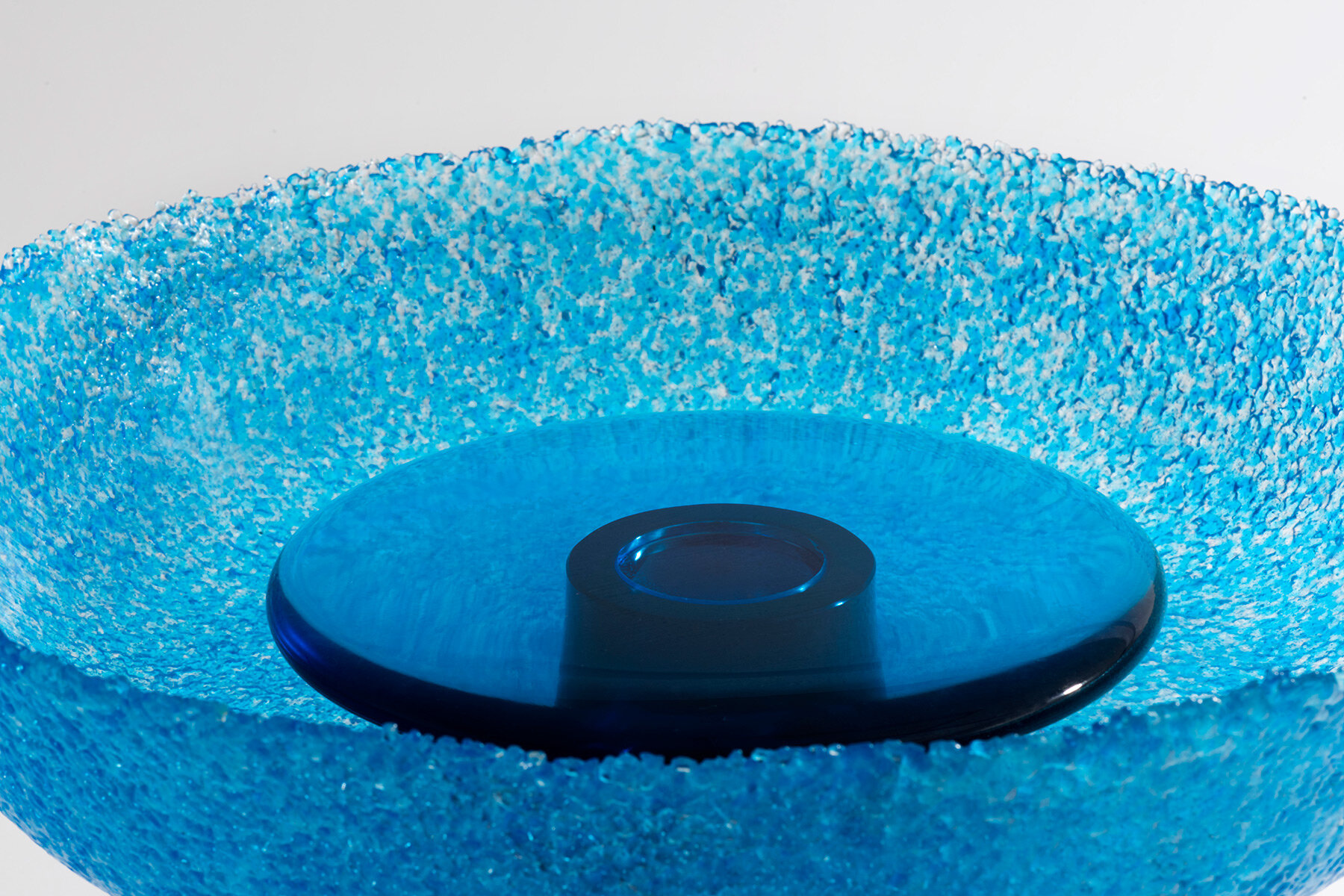
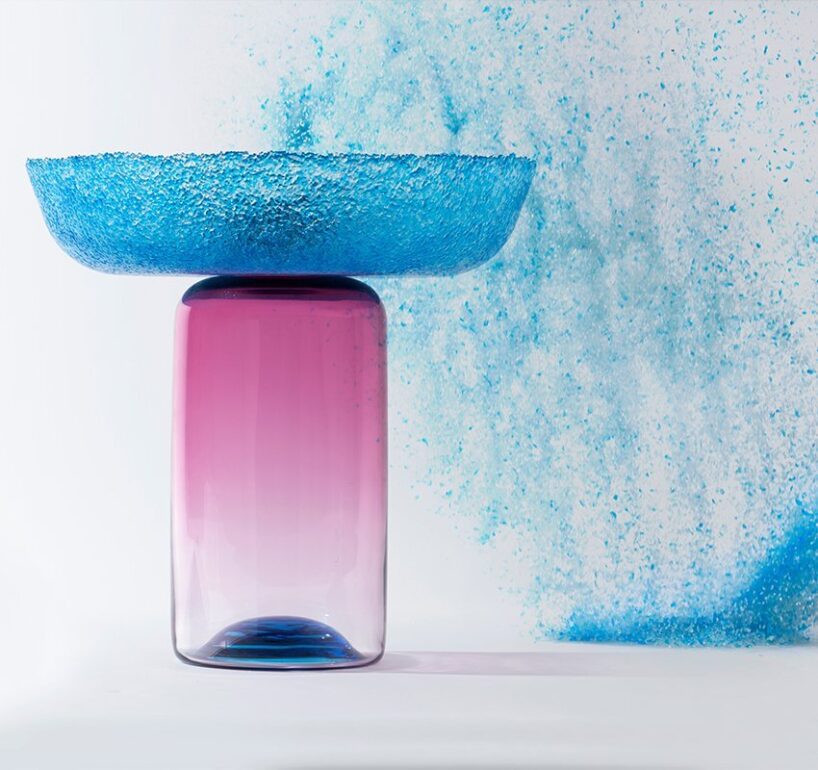
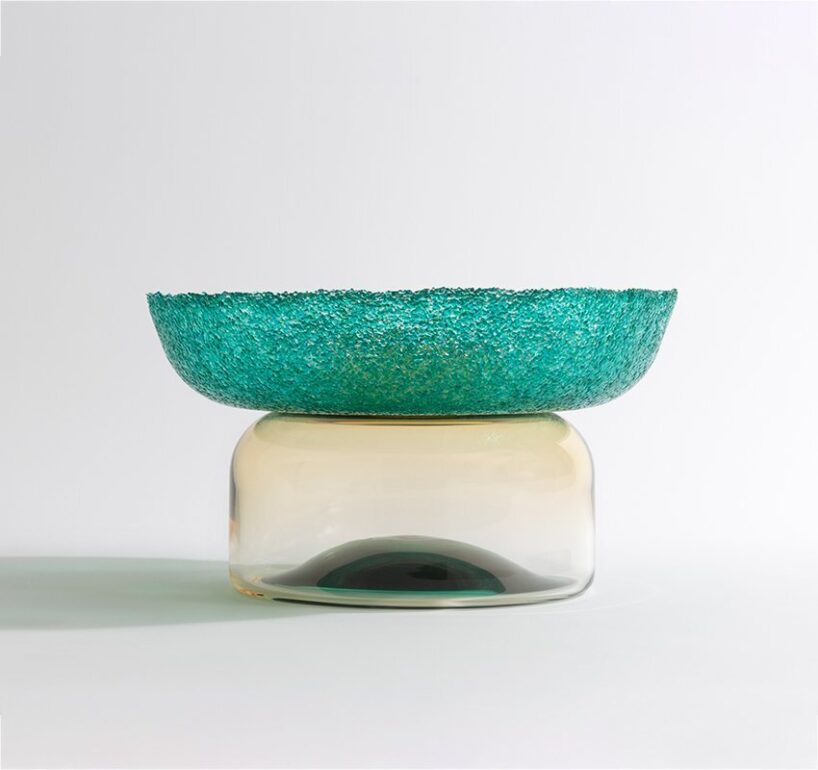
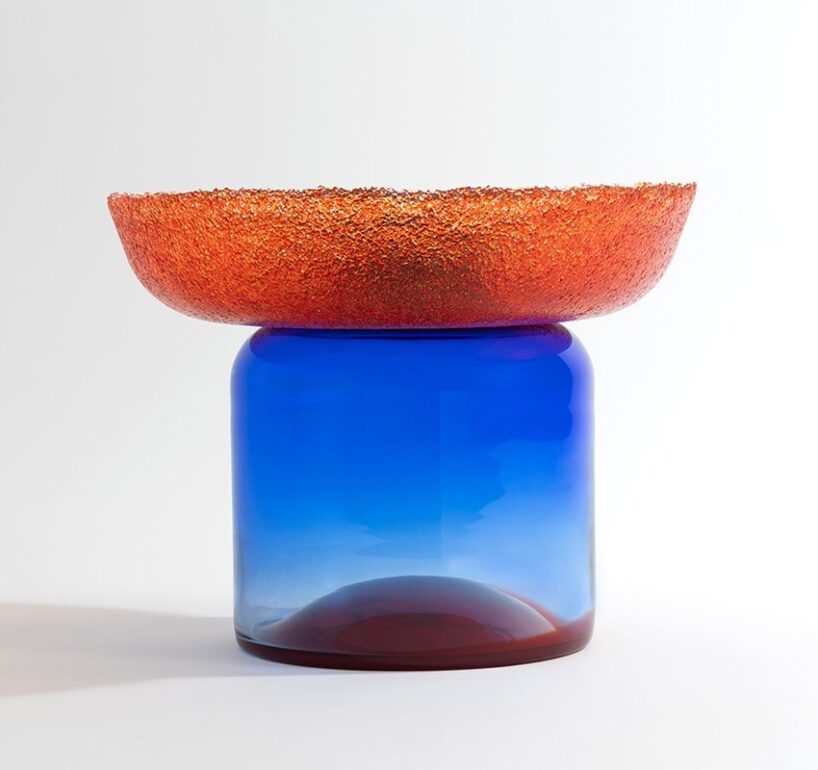
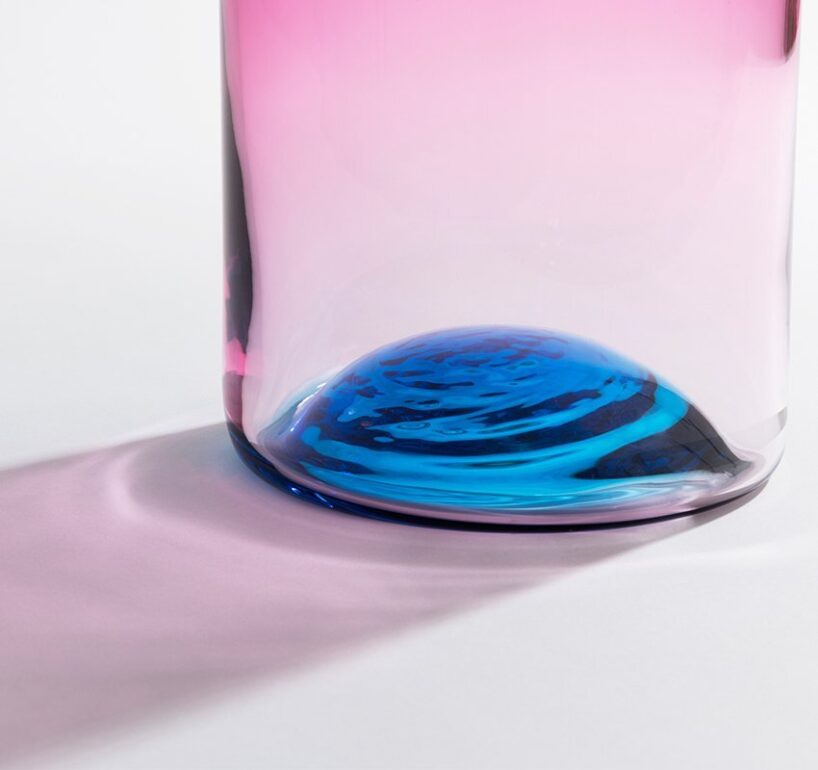
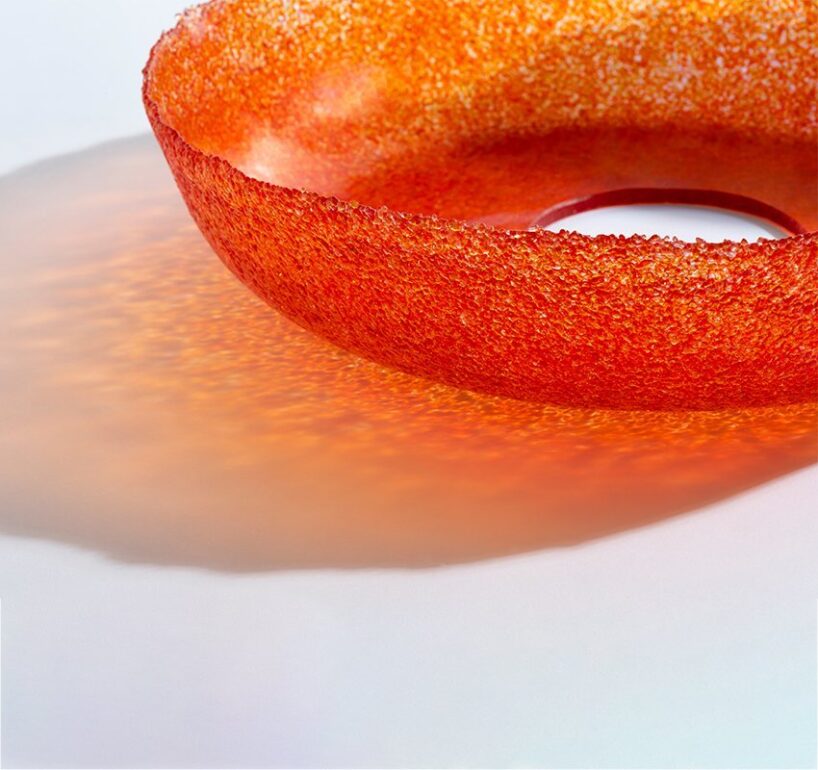
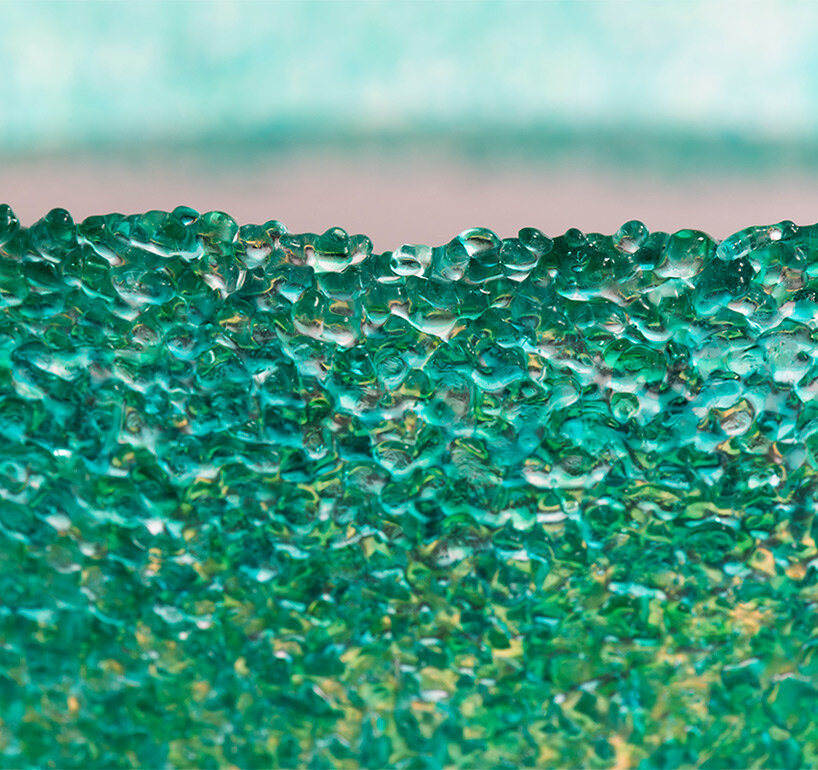
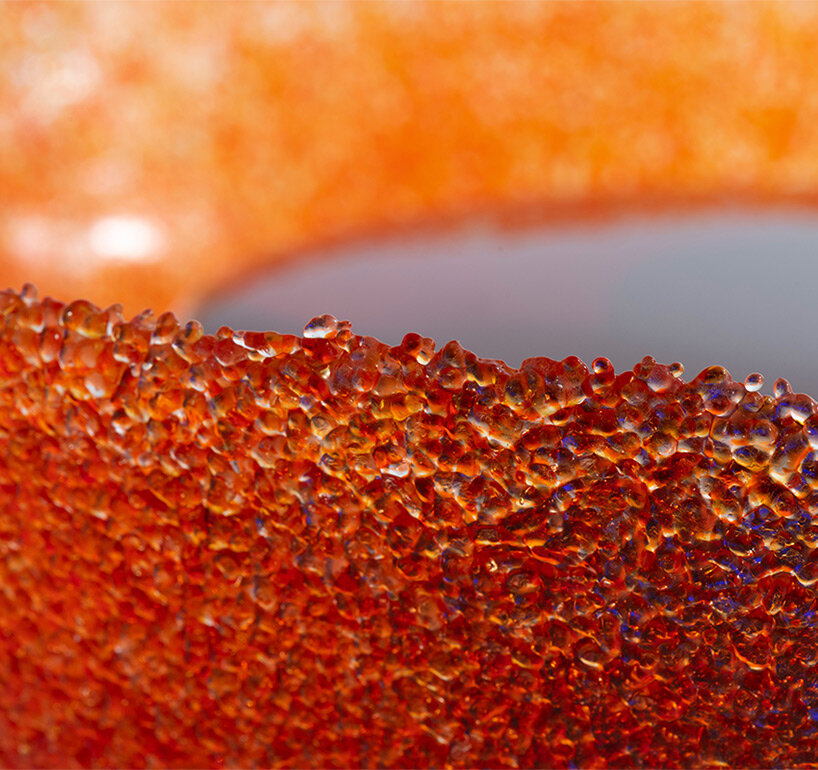
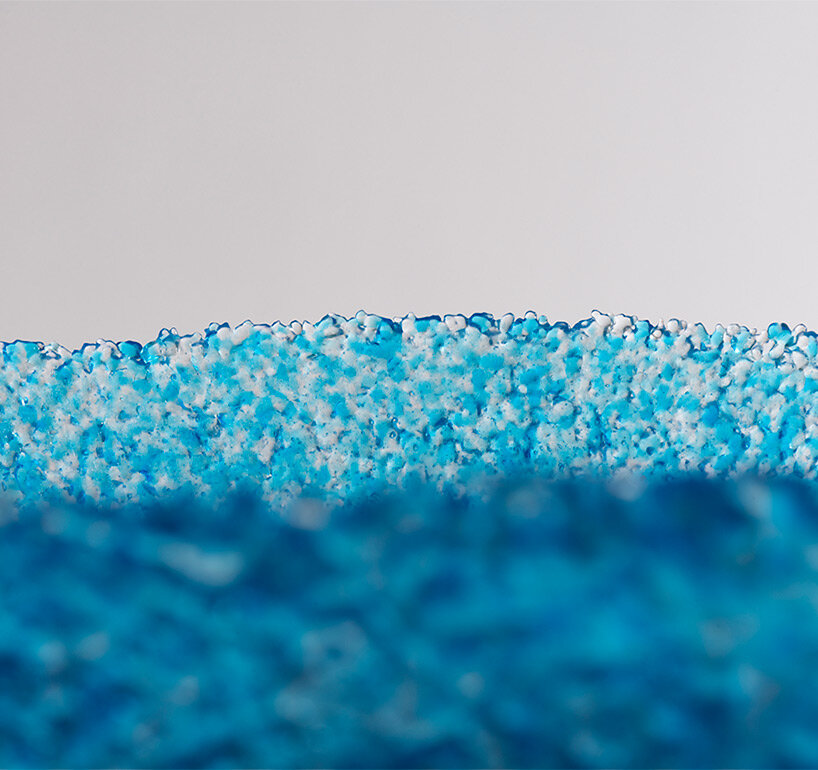
the base of each piece is shaped as smooth blown glass with a seamless gradient of color, thanks to the techniques of sfumato and incalmo. the top bowl presents a tactile, irregular texture created by fusing granules of glass, using the vetro fuso technique. this labor-intensive process involves heating the glass granules on a plate to create a fused disc, which is then draped into a mould and cooled to finalize the form.

three balancing elements form abstract compositions
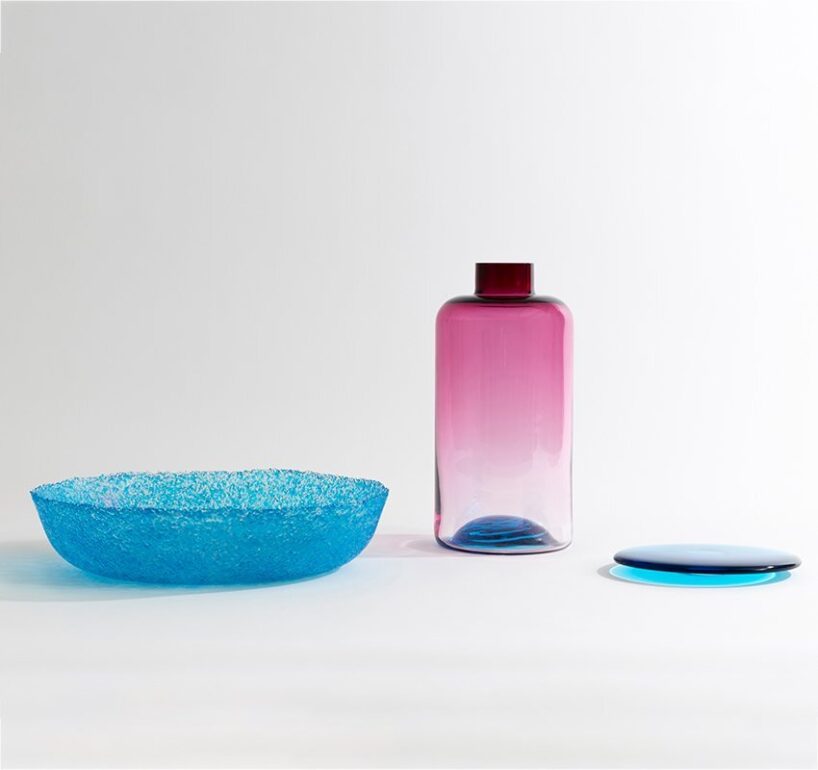
the granule collection presents five centrepiece sculptures emerging as a visual expression of intricate glass artistry. all pieces are composed of three elements – a base, a bowl and a connecting ‘stopper’ – with each one highlighting a specific glassworking technique. in the resulting works, the three elements are seemingly balanced together creating an abstract composition.
according to LAYER, forming the large top bowls was one of the most challenging aspects of the process, as it was essential that the glass granules were adequately fused to form a ‘sheet’ before being placed into the slumping mould. another challenge was the precision needed to create a seamless connection between the three elements, given that each of the three processes used results in a different level of material shrinkage and variation.

a world of color
murano glass is characterized by its bright jewel-like hues, and the granule collection references this through the expressive use of strong color. the gradient in the base of each piece is achieved using the sfumato technique, a term that originated in painting and means ‘in the manner of smoke’. this colored piece is then joined to a clear glass element, using the ancient glass-making technique of incalmo which results in a highly accurate joint. the glass is then blown into the mould to shape it and create a smooth transition between the different tones.
meanwhile, the color of the bowl comes from the careful arrangement of the glass granules in the initial stages of the fused glass granule process. the palette of complementary and contrasting colors was chosen for the way it reacts to light passing through the translucent glass. as a result, there is a dynamic play of colored light and shadow around the sculptural pieces as light changes.

1/10
project info:
name: LAYER x punta conterie granule collection
designer: benjamin hubert of LAYER
designboom has received this project from our ‘DIY submissions‘ feature, where we welcome our readers to submit their own work for publication. see more project submissions from our readers here.