precious while melting: jewelry that turns scarcity into spectacle
ariel andré of GOLEM and laila el mehelmy turn seven melting ice cubes and solid silver into wearable jewelry that measures time on the body.
GOLEM and LAILA EL MEHELMY TURN ICE INTO WEARABLE JEWELRY
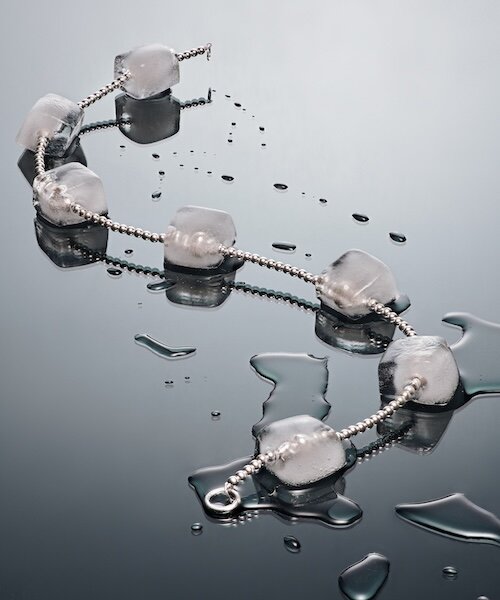
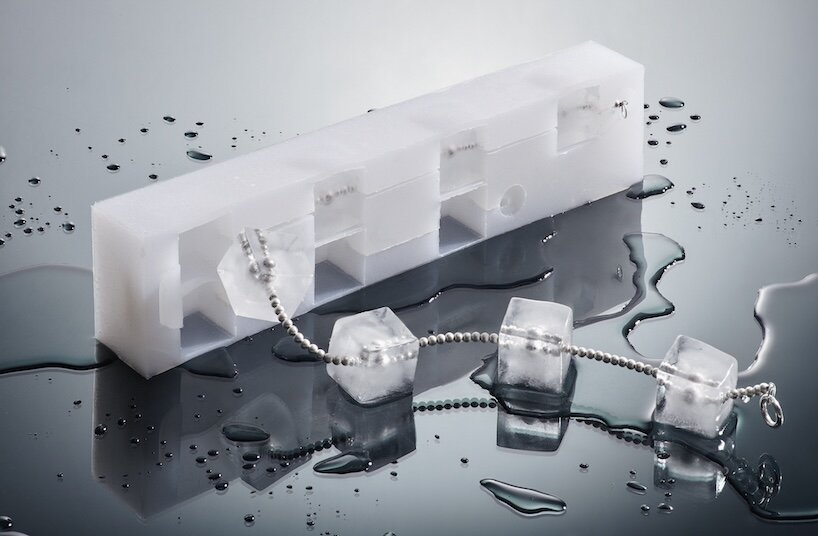
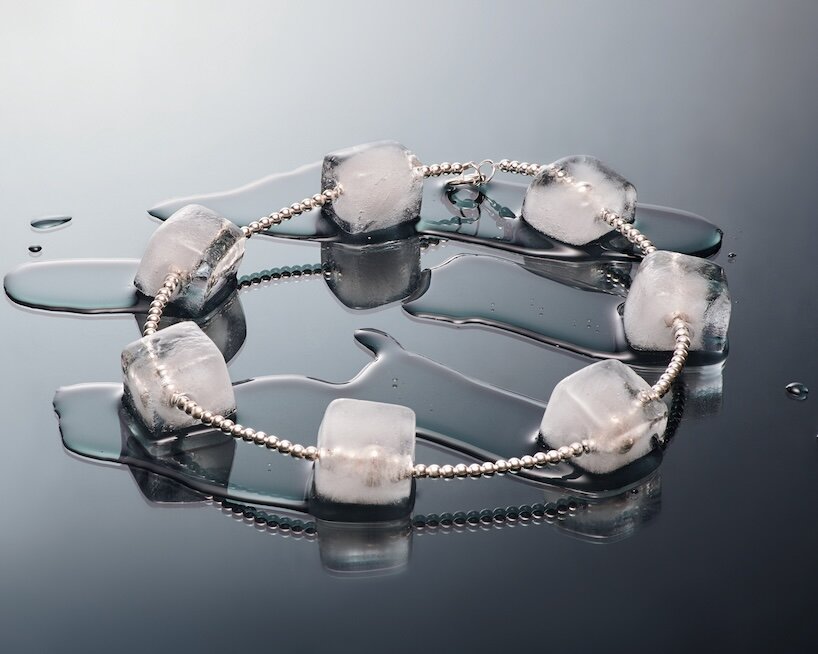
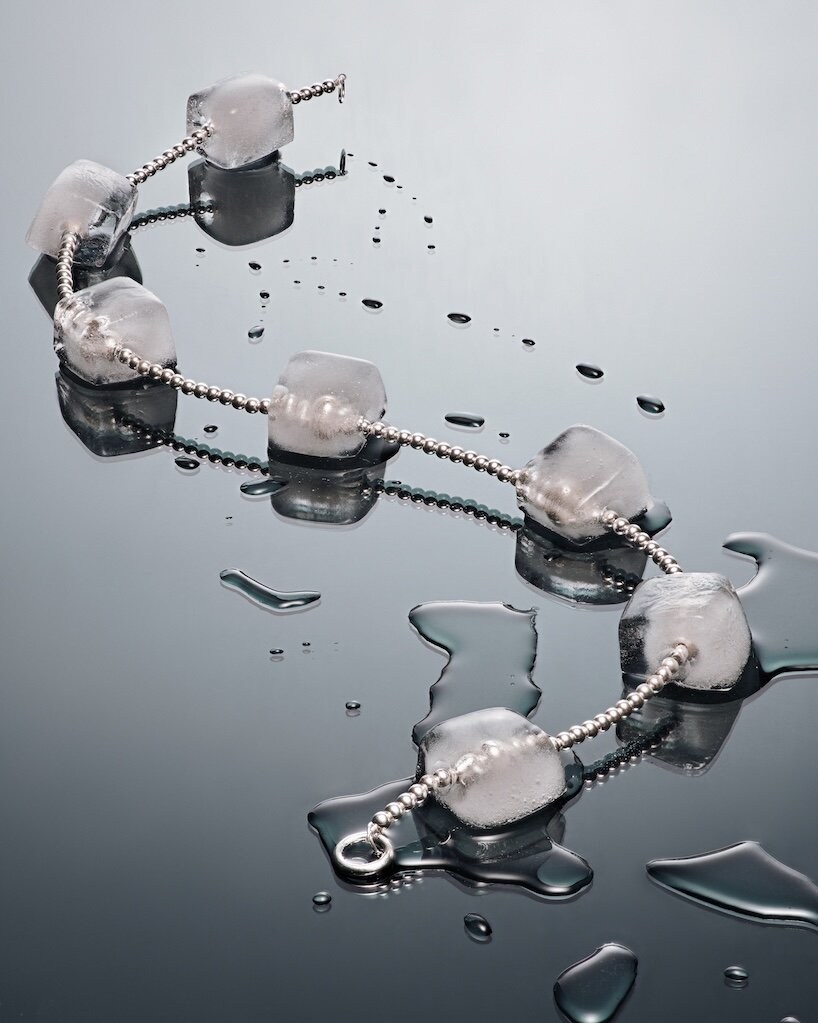
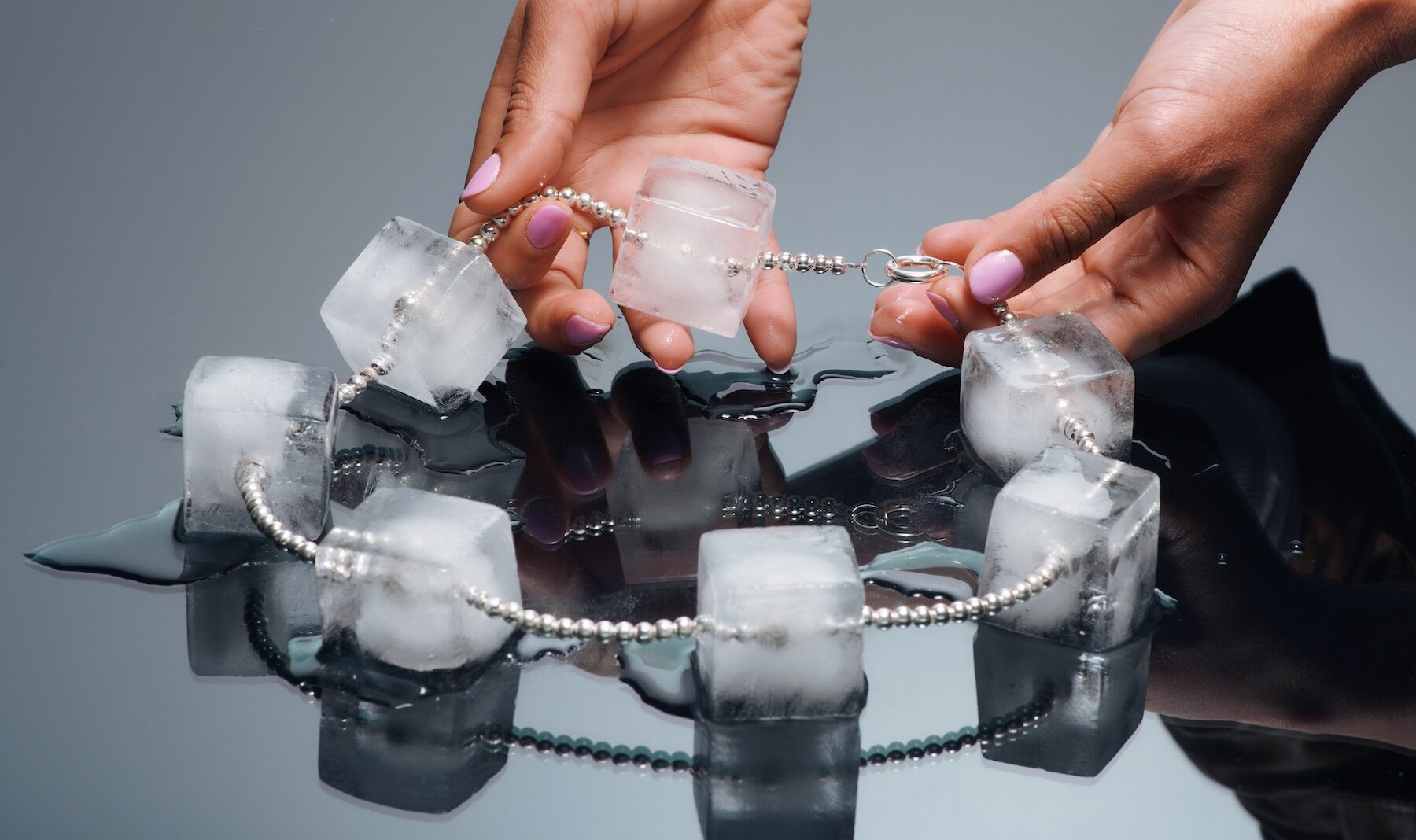
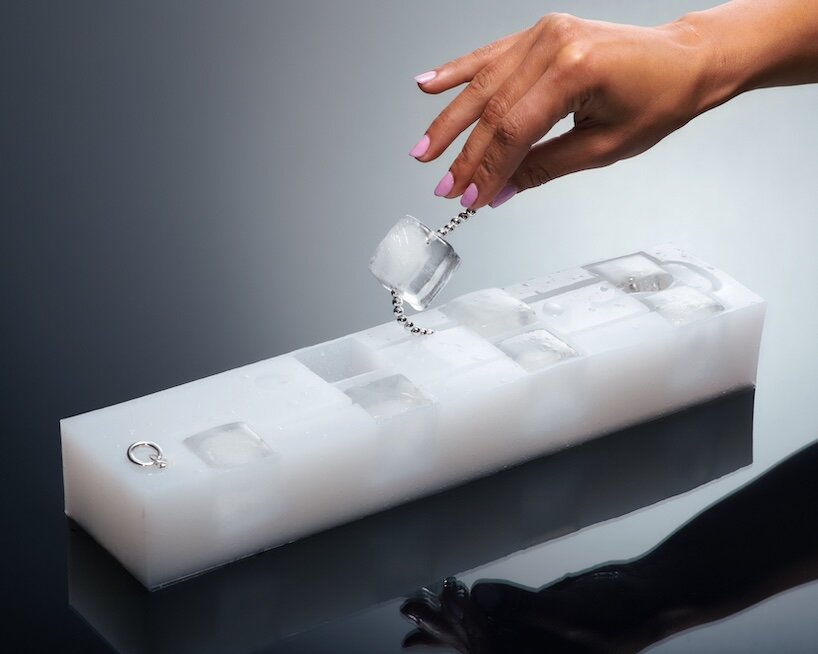
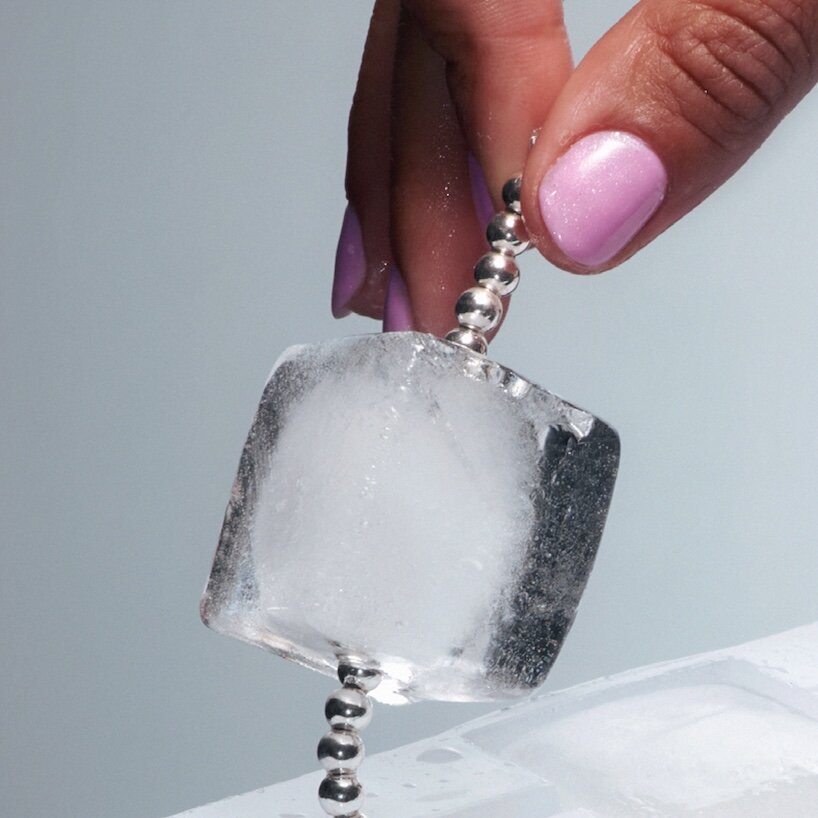
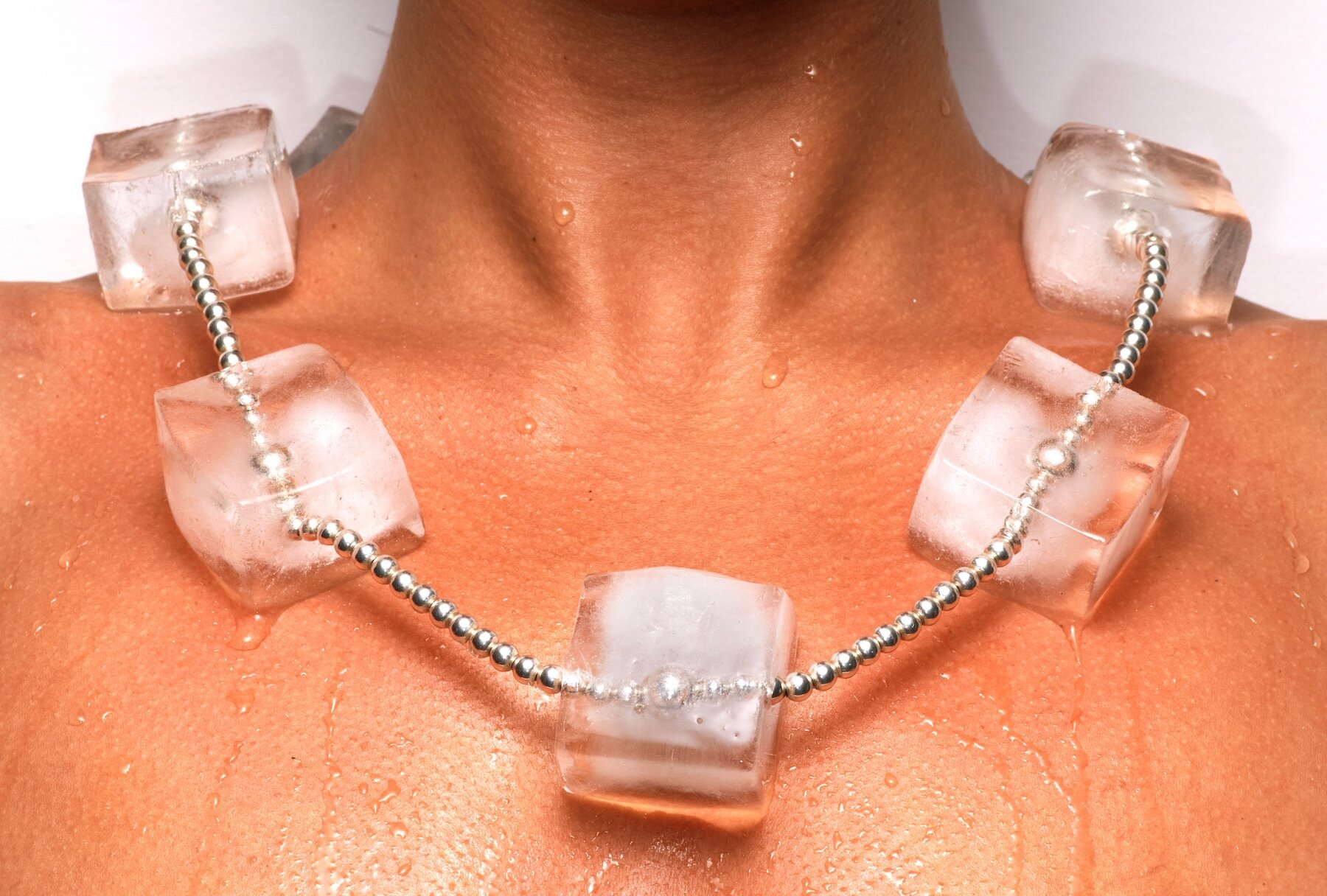
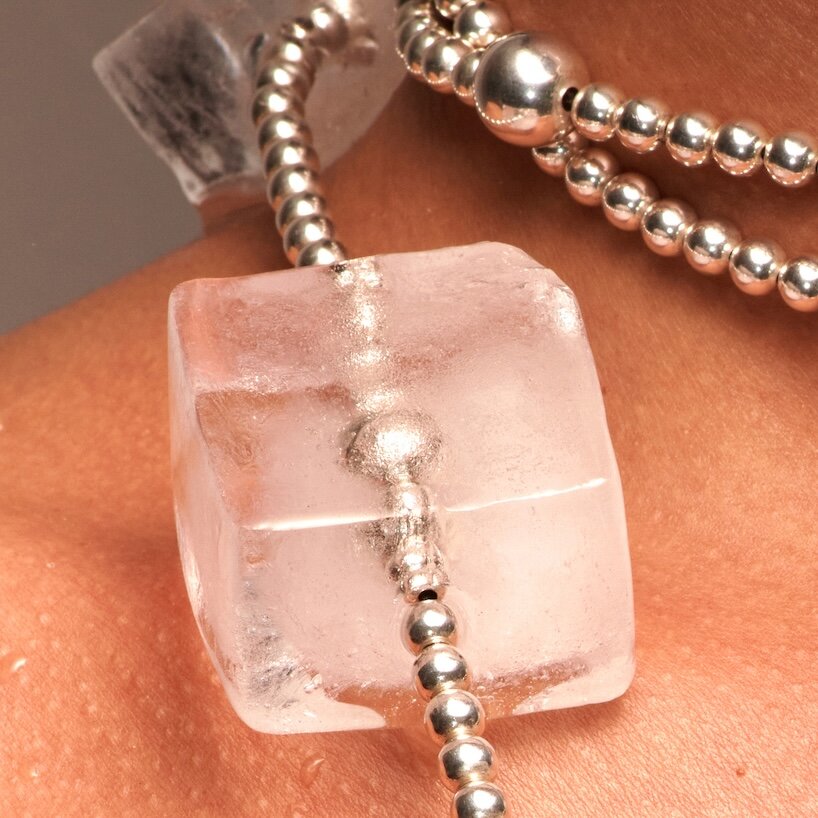
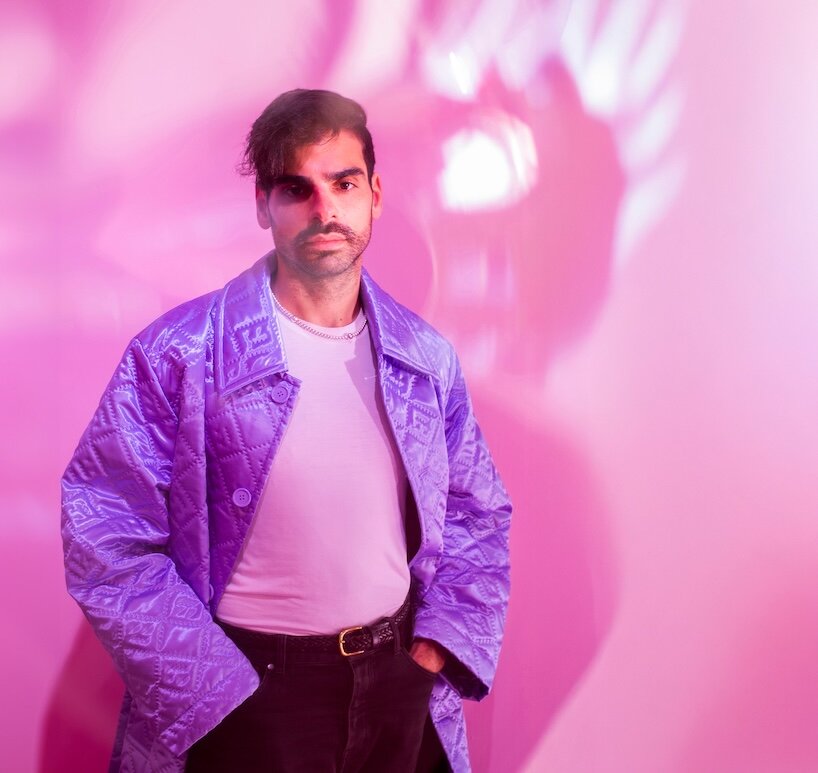
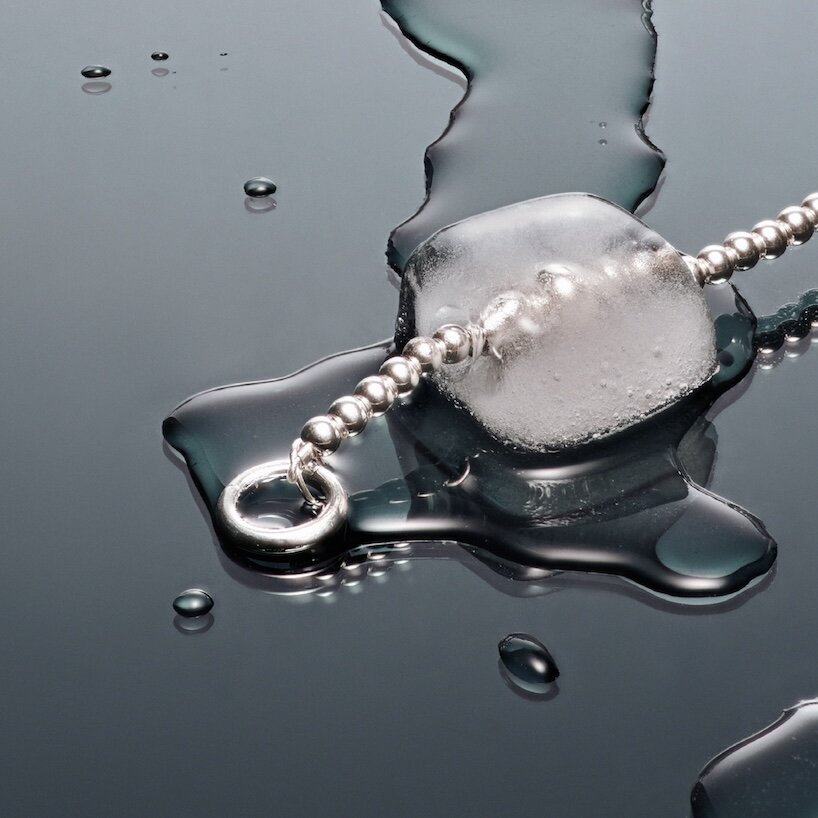
There is jewelry designed to last generations, and then there is ooOoooOoooOh la l’ice, a necklace whose most conspicuous components are destined to disappear within the hour. Developed by artist and jeweler Laila El Mehelmy together with architect Ariel André, founder of Paris-based studio GOLEM, the piece threads seven ice cubes onto a chain of solid-silver beads. A custom silicone tray allows the wearer to freeze the necklace on demand; removed from its mold, it becomes a slightly impractical but highly effective piece of wearable theater. Without the ice, the silver strand can still be worn as a conventional necklace or doubled into a choker.
Its origins are appropriately less conventional. The idea emerged during a 24-hour party at Club der Visionaere in Berlin, amid one of Germany’s intensely hot summers. As temperatures climbed, partygoers began taking ice from the freezers and rubbing cubes over one another to cool down. For El Mehelmy and André, the scene hovered somewhere between pleasure and apocalypse: bodies dancing, sweating and consuming frozen water simply to remain comfortable. The next day, that sweaty survival tactic became the starting point for a discussion about scarcity and value. As the designers put it, ‘water is turning from an overlooked commodity into one of the most sought after luxury goods.’
THE BODY TURNS THE ICE-CUBE NECKLACE INTO A CLOCK
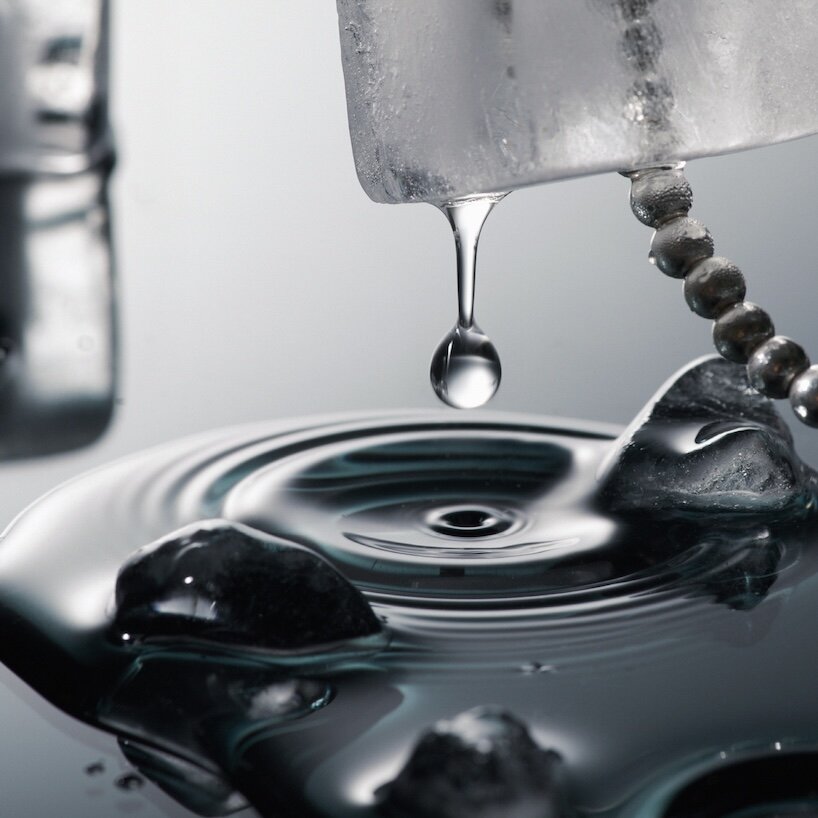
That interaction with the wearer is particularly relevant to El Mehelmy’s practice. Originally trained as an industrial designer, the Saudi artist shifted her attention towards jewelry precisely because of its tactile relationship with the body, exploring how physical contact can transform the work itself. Here, that transformation could hardly be more literal. Skin warms the seven frozen blocks, water begins running across the chest, and the necklace slowly edits itself in public. The Golem ice takes around 30 minutes to disappear against bare skin, or roughly an hour when worn over clothing.
The designers call ooOoooOoooOh la l’ice a ‘time-piece’, although there is no dial and punctuality would probably be asking too much of it. Instead, time becomes visible through loss. Every drop records the warmth of the body, while the wearer inadvertently performs the object’s disappearance for everyone around them. ‘The choreography of a dancing body wearing it while the precious solid water stones melt away makes it an event,’ the designers explain. Once the ice is gone, larger beads along the silver chain indicate the empty positions where the frozen ‘stones’ previously sat — traces of something absent until the necklace is returned to its mold and frozen again.
WATER SCARCITY REWRITES THE LANGUAGE OF LUXURY
The necklace also borrows the visual codes of conventional luxury only to make them behave badly. Its ice cubes become what El Mehelmy and André call ‘solid water gems’, replacing permanent stones with one of the world’s most ordinary — and increasingly contested — resources. The project deliberately sets water against the culturally constructed desirability of diamonds, asking what preciousness might mean when abundance can no longer be taken for granted. In their reading, permanence is almost the problem: rather than promising forever, these gems sweat, shrink and vanish. The value of the object lies not in resisting change but in forcing its wearer to watch it happen.
That makes the necklace less a static accessory than a small spectacle with an audience, even when that audience consists only of whoever happens to be standing nearby at the party. The wearer activates it, heat completes it, and disappearance becomes part of its design language. The process also folds the human body into the natural water cycle: solid becomes liquid, runs over skin and eventually evaporates, ready — at least conceptually — to begin again. El Mehelmy and André describe the piece as a materialization of the evanescence of water, adding that ‘its beauty results from its temporality.’ Perhaps that is its neatest inversion of luxury: the necklace becomes most itself at precisely the moment it starts ceasing to exist.
1/2
project info:
name: ooOoooOoooOh la l’ice
designers: Ariel André from Golem | @golem.digital, Laila El Mehelmy
location: Paris, France
images: Guillaume Blondiau | @billy_blond
This article is part of designboom’s SPECTATOR AND SPECTACLE chapter, asking how wonder gets built, and how it might return some mystery to a world that has measured most of it away. Presented in partnership with SolidNature, the stories in this chapter turn onlookers into participants, alter perception and disrupt the everyday – learn more here!
Each designboom chapter explores one theme in depth through projects, interviews, features and news across architecture, design, art and technology. Discover more chapters here, and get in touch if you’d like to submit a story through our submissions portal or contact form.
shop
your own online design shop — no sales commission collected