this mushroom lamp explores mycelium and luffa as composite biomaterial for lighting design
combining fungal growth with plant-based fibers, the project examines how these two organic materials can interlock to form a structural and light-filtering material for product design.
prefer designboom on google[FEATURED]
Justin Wan designs with fungal and plant-based materials
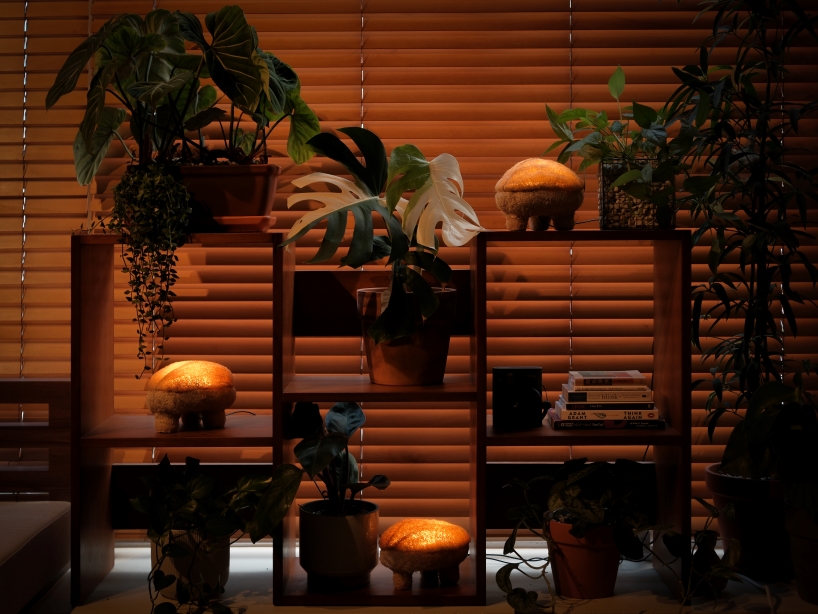
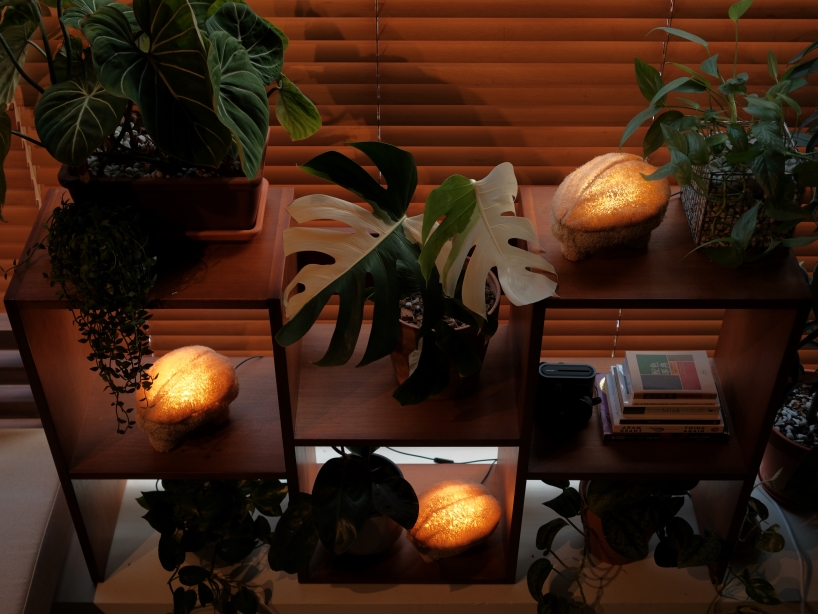
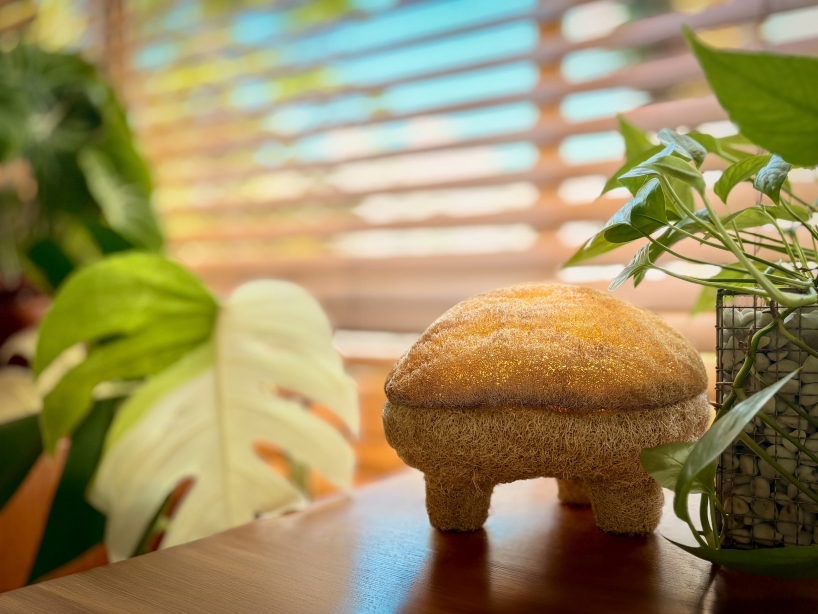
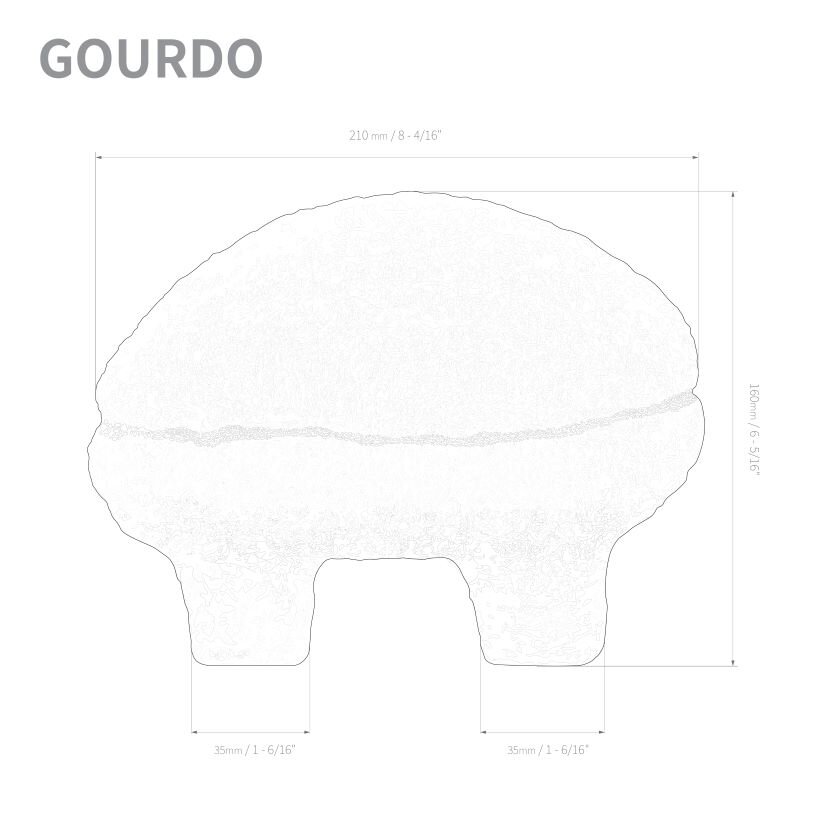
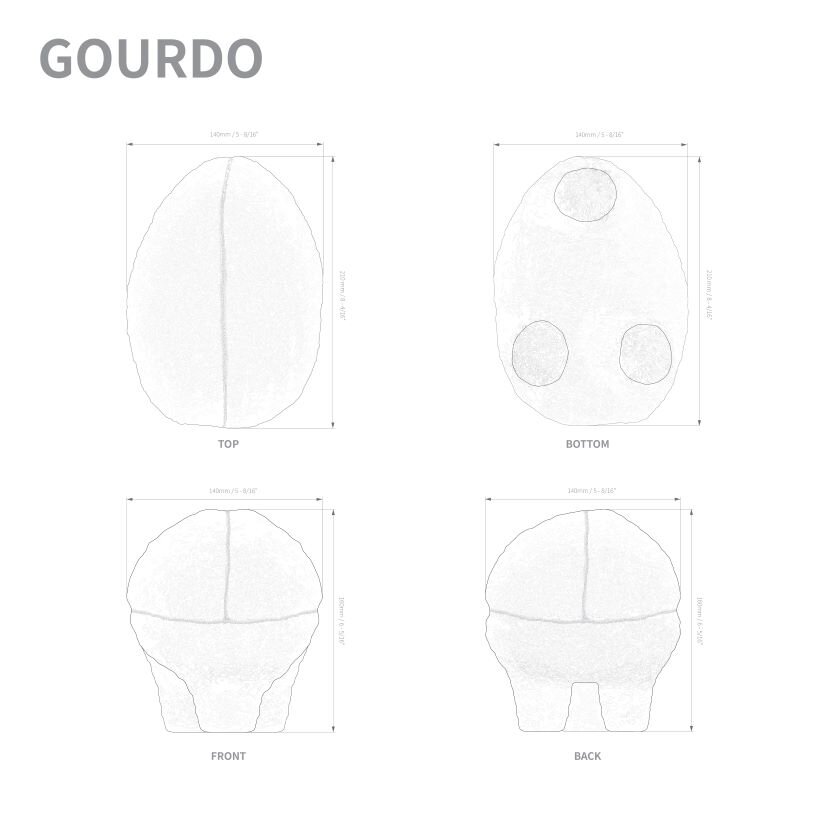
GOURDO is a lighting project by designer Justin Wan that investigates the use of mycelium and luffa as a composite biomaterial. Combining fungal growth with plant-based fibers, the project examines how these two organic materials can interlock to form a structural and light-filtering material for product design.
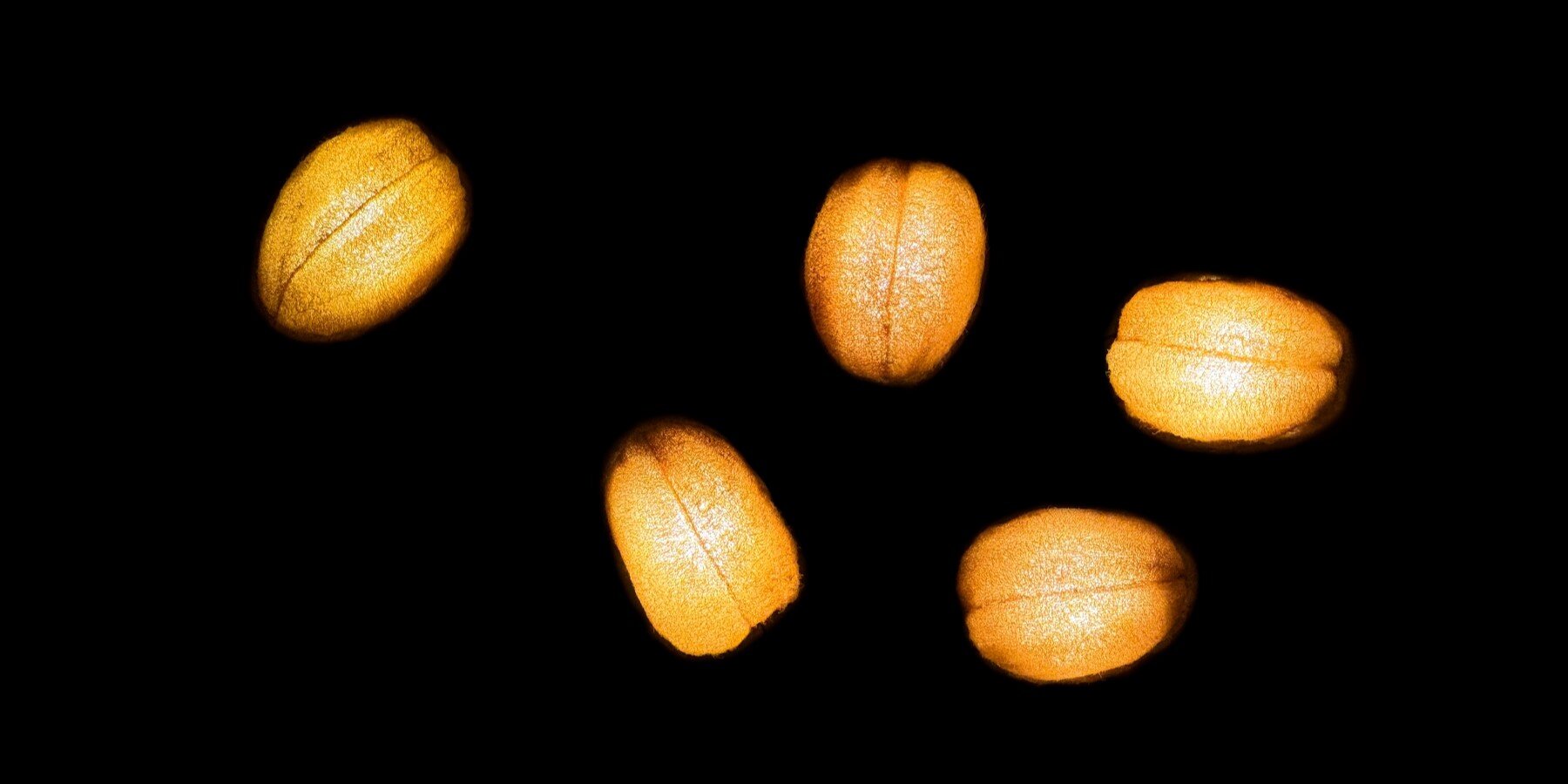
Developed as an extension of Wan’s earlier Luffa Stoolita project, GOURDO continues an ongoing exploration of plant-based by-products and food waste as alternative resources for furniture and construction. The project focuses on the material properties of the luffa fruit, using its porous outer layer as a light diffuser while employing its denser internal core as a structural framework. This approach allows different parts of the fruit to perform distinct functions within the object.

exploring material development through biological growth
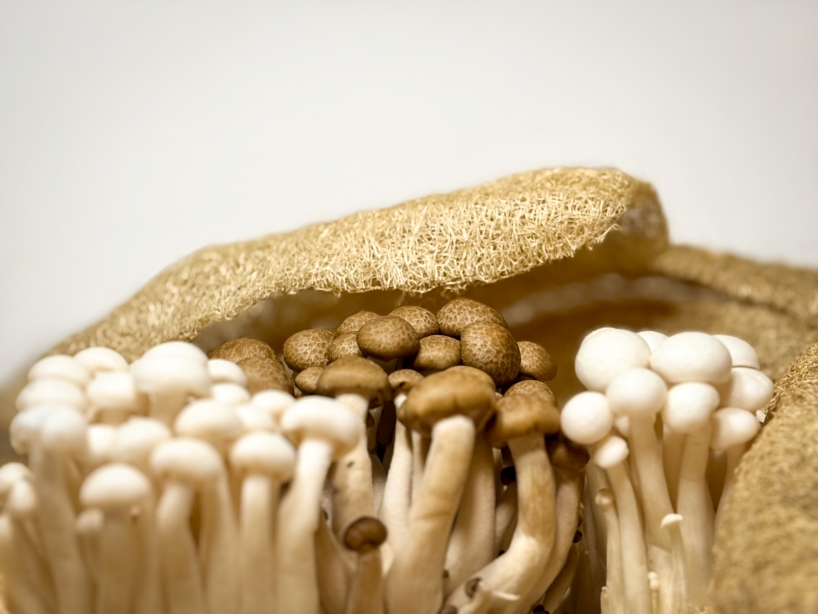
The lamp also expands Wan’s research into mycelium-based materials. Cultivated from oyster mushroom spores, mycelium develops within an organic substrate, binding agricultural by-products into a consolidated material. In GOURDO, the designer combines mycelium with the fibrous network of luffa, creating a composite that benefits from the compressive strength of fungal growth and the tensile reinforcement provided by the natural fiber structure.
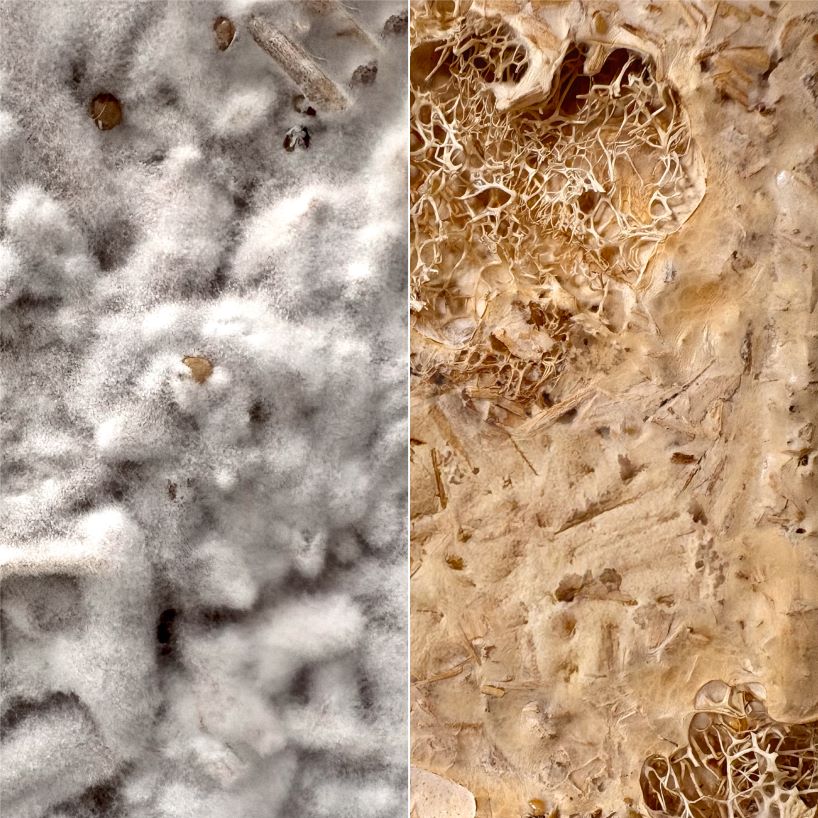
The project investigates how biological growth can become part of the manufacturing process. Initial material studies tested combinations of shredded luffa fibers, coconut husk, corn kernels, and wood chips to identify substrates that support mycelium development. After inoculation with oyster mushroom spores, the material is incubated for approximately two weeks until fully colonized.
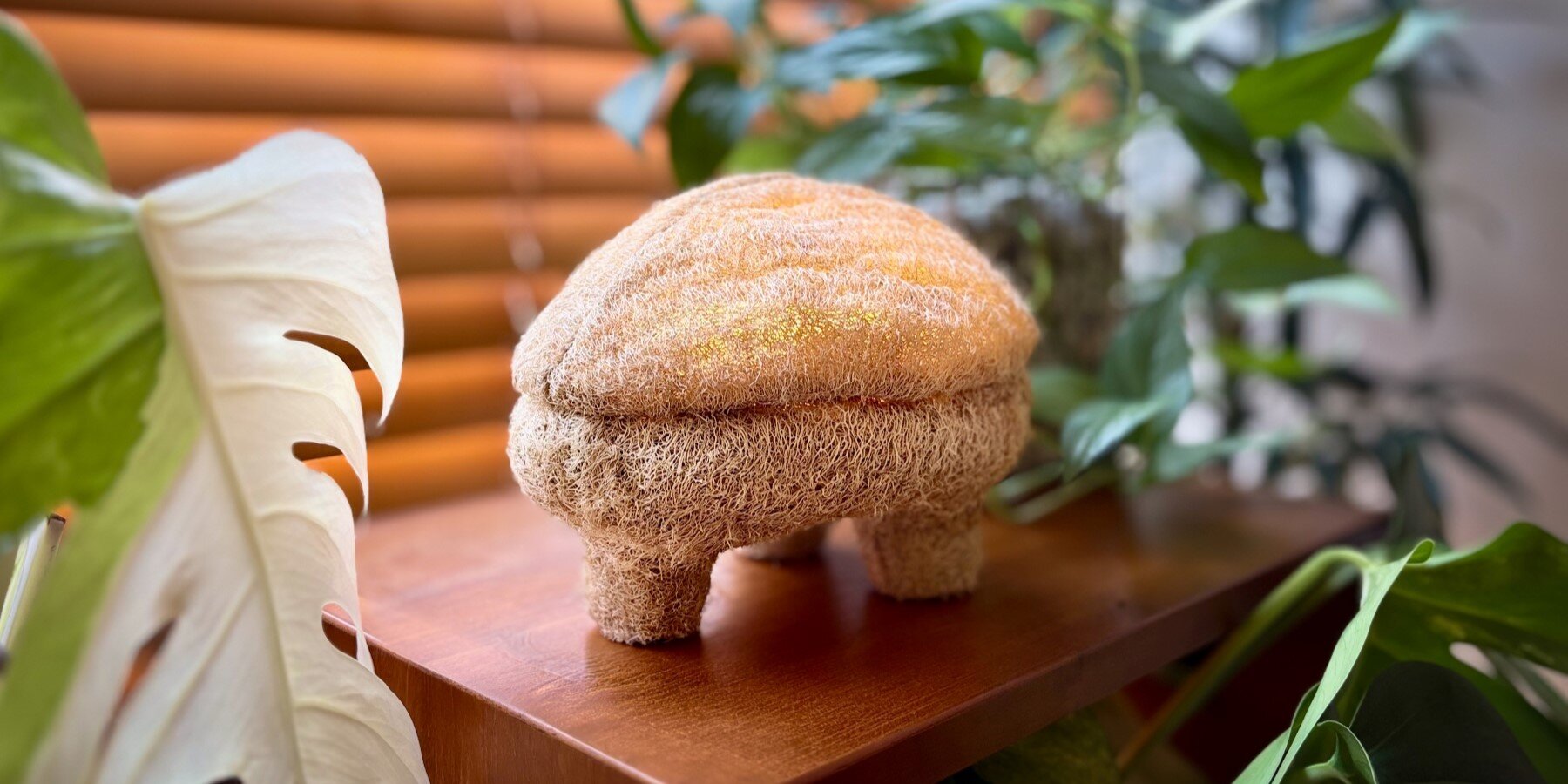
The colonized mycelium is then broken into smaller fragments, mixed with fresh substrate and luffa cores, and placed into molds to form the lamp’s base. The luffa’s internal network functions as a natural scaffold, guiding fungal growth as it binds the composite into a unified structure. Once the desired form has developed under controlled temperature and humidity, the piece is removed from the mold and oven-dried to stabilize the material.

light filters through living matter in GOURDO mushroom lamp
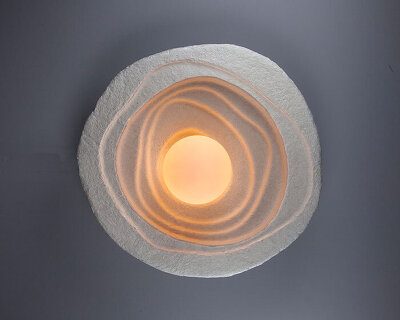
To complete the lamp, the softer outer layer of the luffa is wrapped around the mycelium base to create a permeable lampshade that filters light through its natural cellular structure. The resulting object combines structure, enclosure, and illumination through the complementary properties of fungus and fiber.
Rather than treating biological materials as substitutes for conventional manufacturing resources, GOURDO positions growth itself as a design process. Material performance, appearance, and structural characteristics emerge through cultivation, demonstrating how regenerative materials can inform new approaches to lighting and product design.

1/2
project info:
name: GOURDO
designer: Justin Wan
designboom has received this project from our DIY submissions feature, where we welcome our readers to submit their own work for publication. see more project submissions from our readers here.
shop
your own online design shop — no sales commission collected