nendo molds bi-color washi lamp using 3D papermaking technique
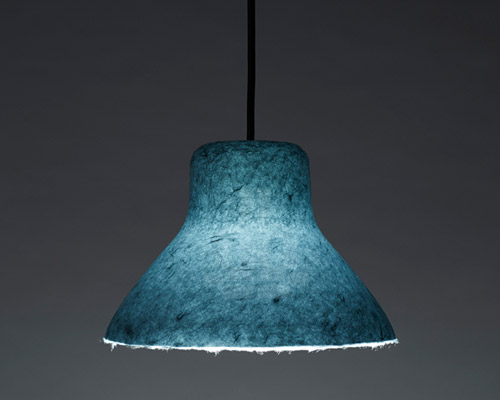
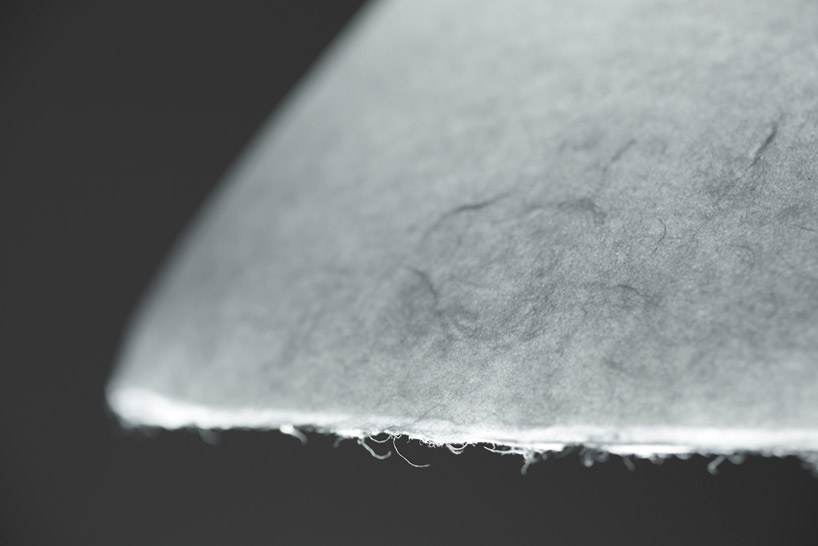
the lighting pieces are made by passing fine screens through a bath of mulberry pulp and water which are then dried, the resulting form peeled away.
prefer designboom on google[FEATURED]
nendo moulds bi-color washi lamp using 3D papermaking technique
all photos by akihiro yoshido
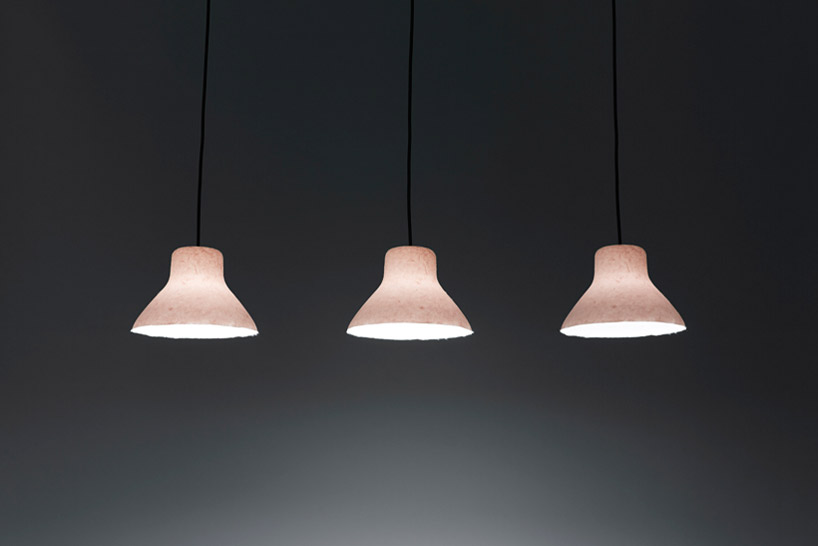
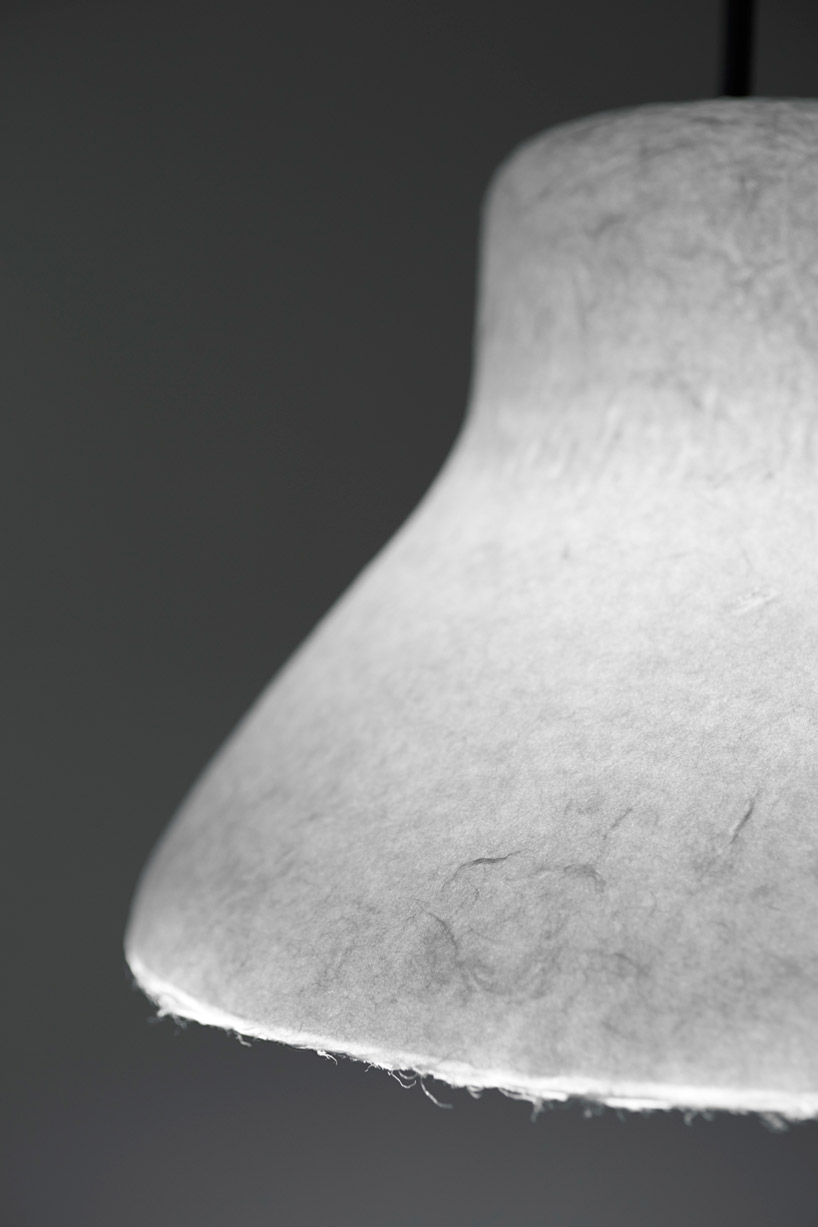
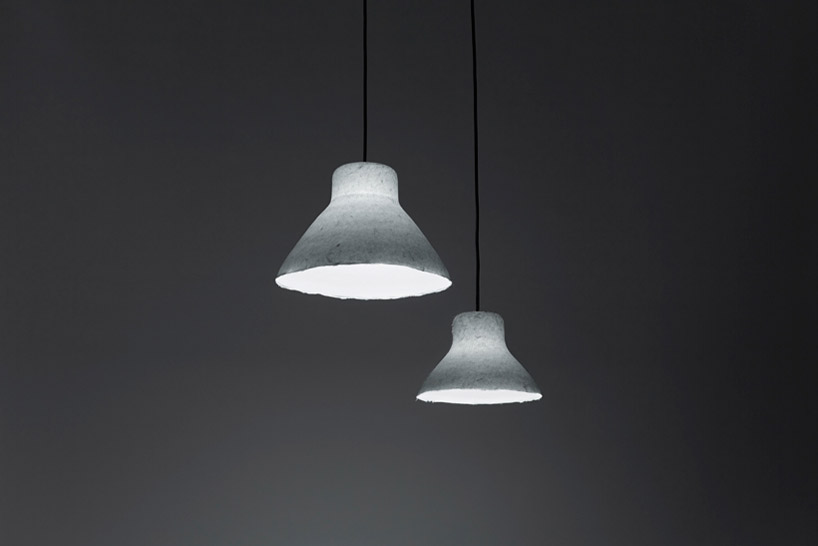
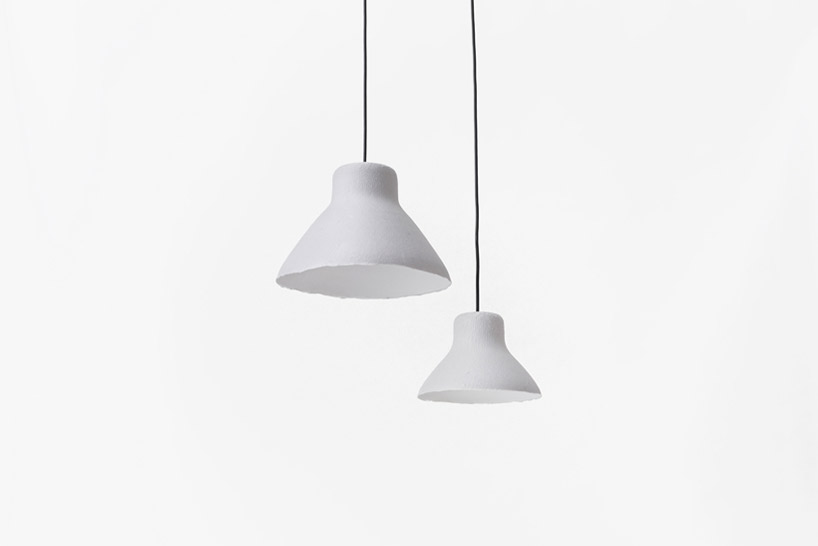
nendo has designed a follow-up to his ‘semi-wrinkle washi lamp‘ for japanese paper company taniguchi aoya washi, with ‘bi-color washi’. a 3D paper molding technique signature to the tottori prefecture manufacturer’s production (it is the only domestic producer of three-dimensional washi), has been employed by nendo to create the lighting collection. the process follows the same methods used to produce flat sheets and involves passing fine screens through baths of mulberry paper and water to collect the pulp. once drained, the residue is left to dry and then peeled away as a seamless, three-dimensional form — contrary to the belief that one might think that the sheets of washi are actually pasted together to render the shapes.
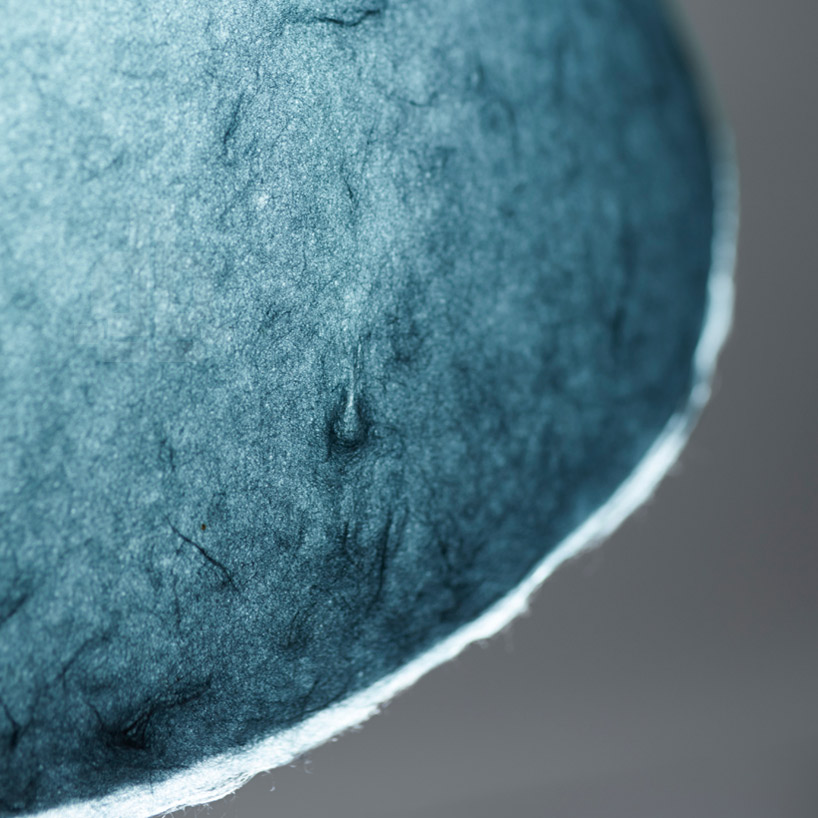
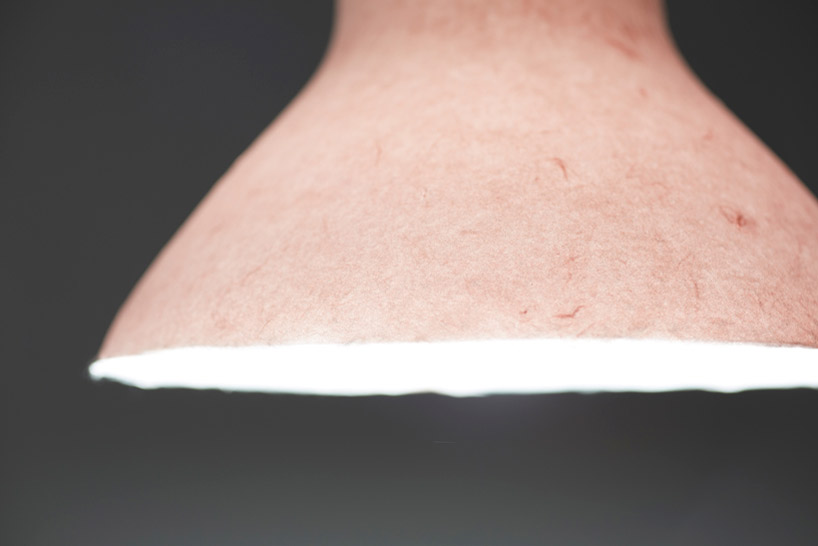
detail of the ‘bi-color washi lamp’
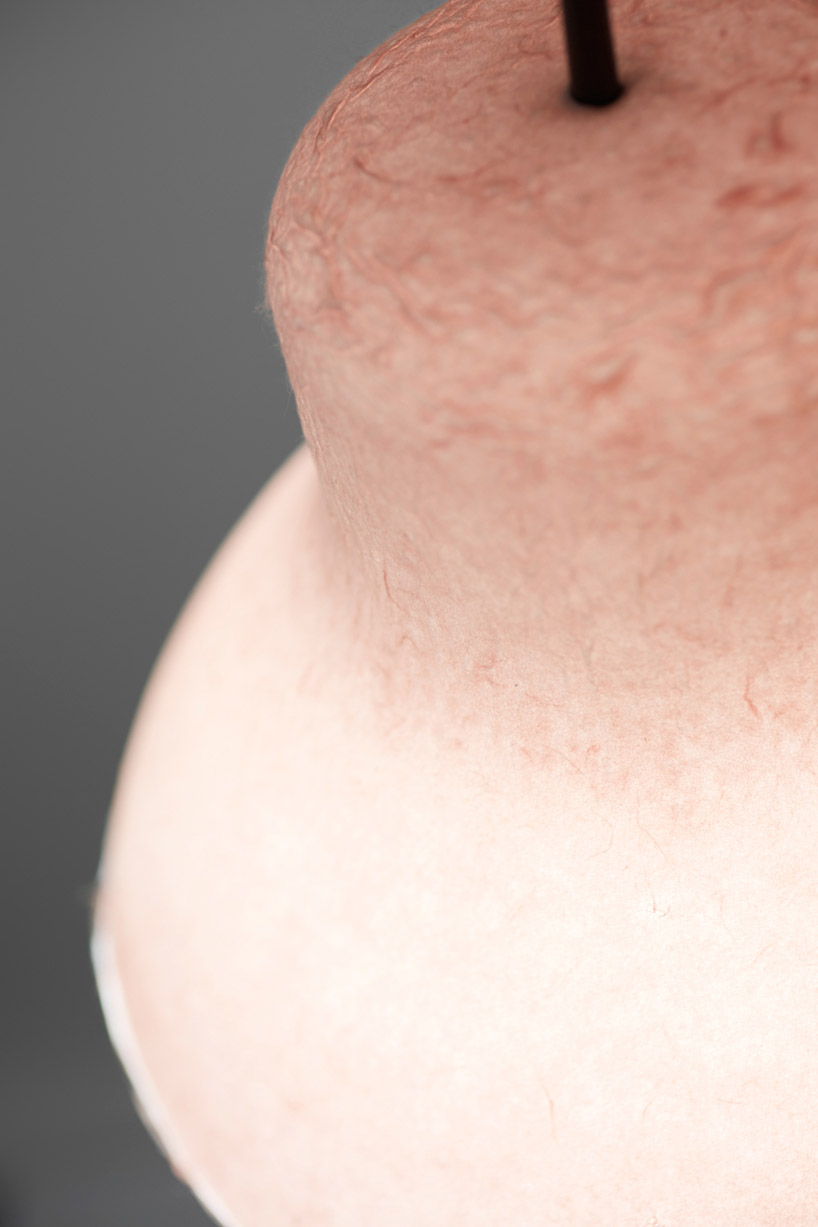
for this particular project, nendo also experimented with dyeing the lamps in two steps to create shades whose exterior and inner surfaces are of different tones. the studio used taniguchi aoya washi’s process to render the correct kind of tonal values on both inner and outer surfaces to reflect the necessary colors for light reflection. at the request of the client, the ‘bi-color washi lamp’ has been designed as a stackable unit to keep distribution and storage costs minimal.
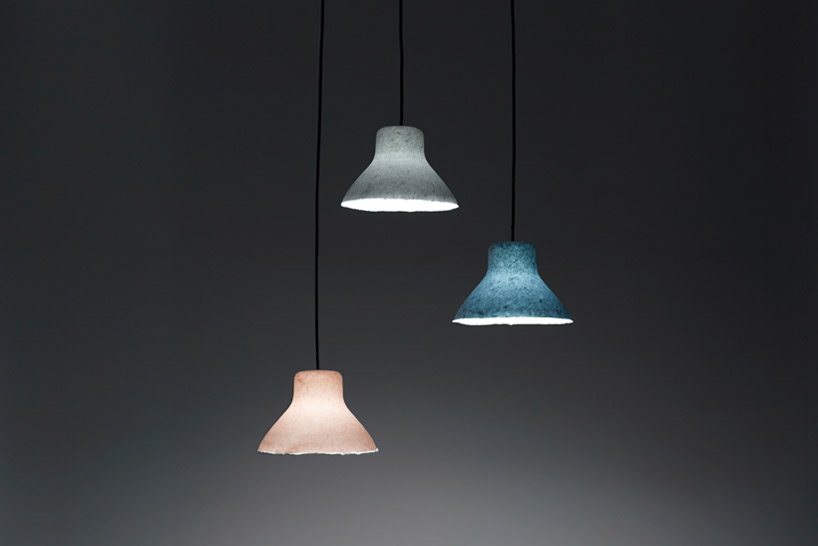
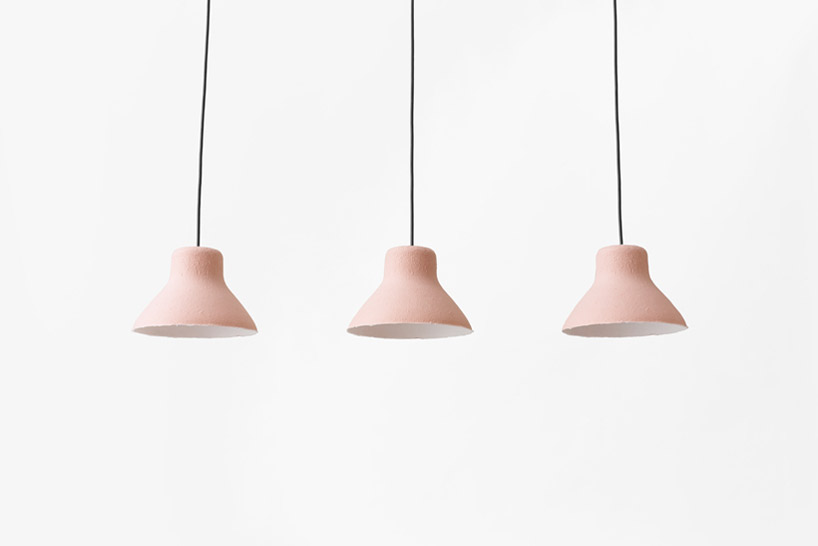
the three color variations available
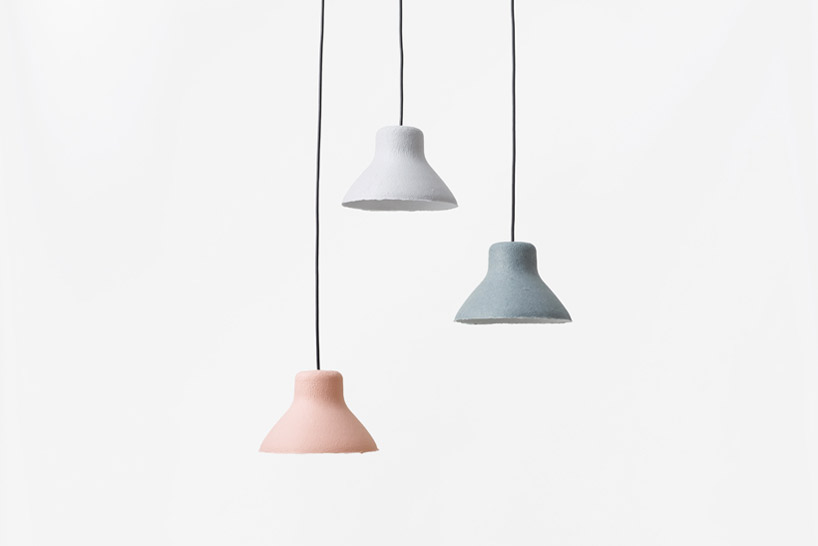
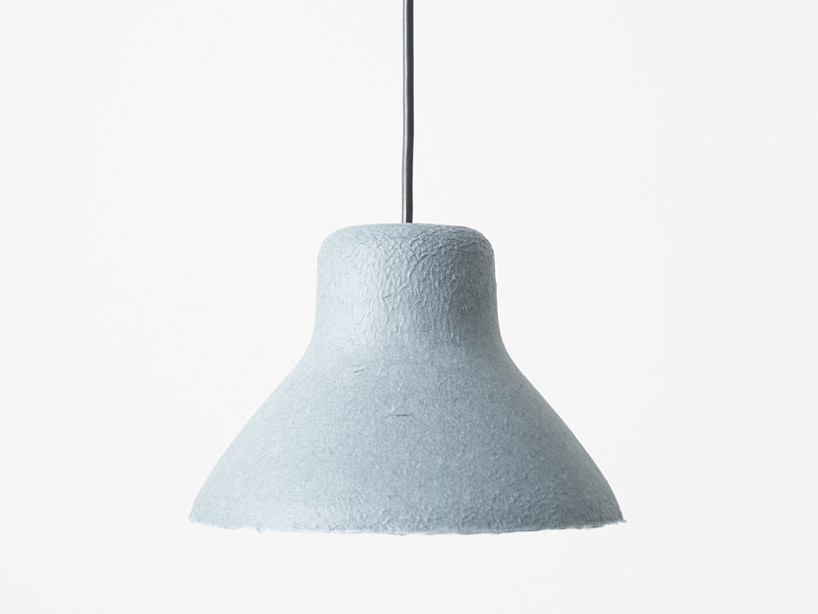
each from is rendered using a specialized 3D paper moulding technique
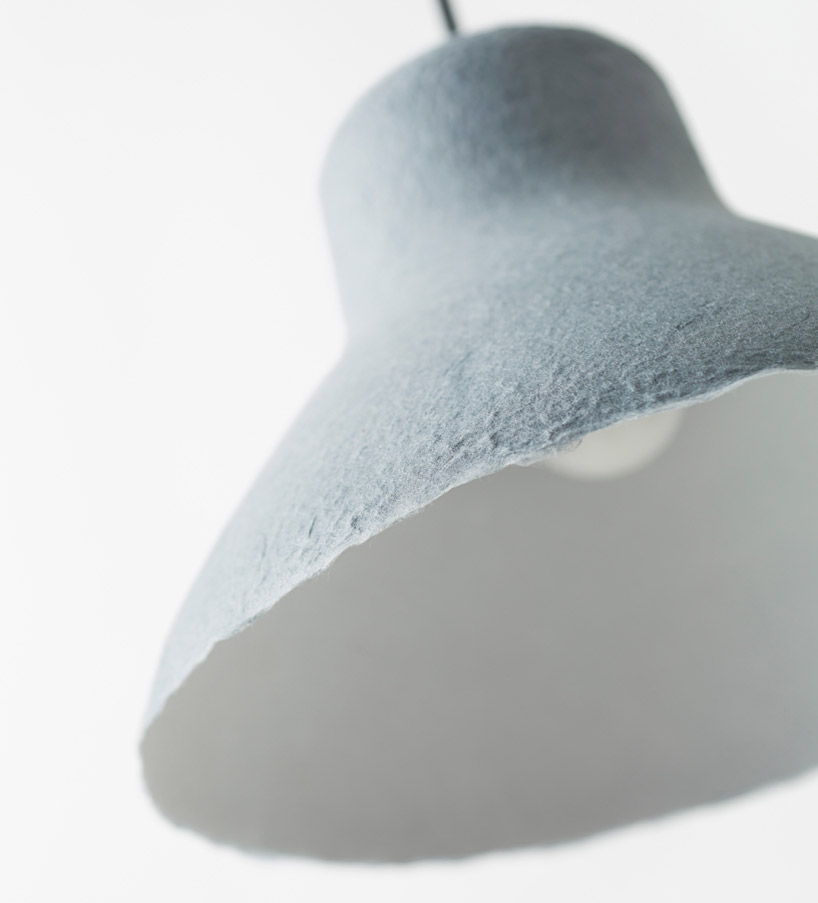
the shades have been dyed in a two step process so that the interior and exterior surfaces render different colors
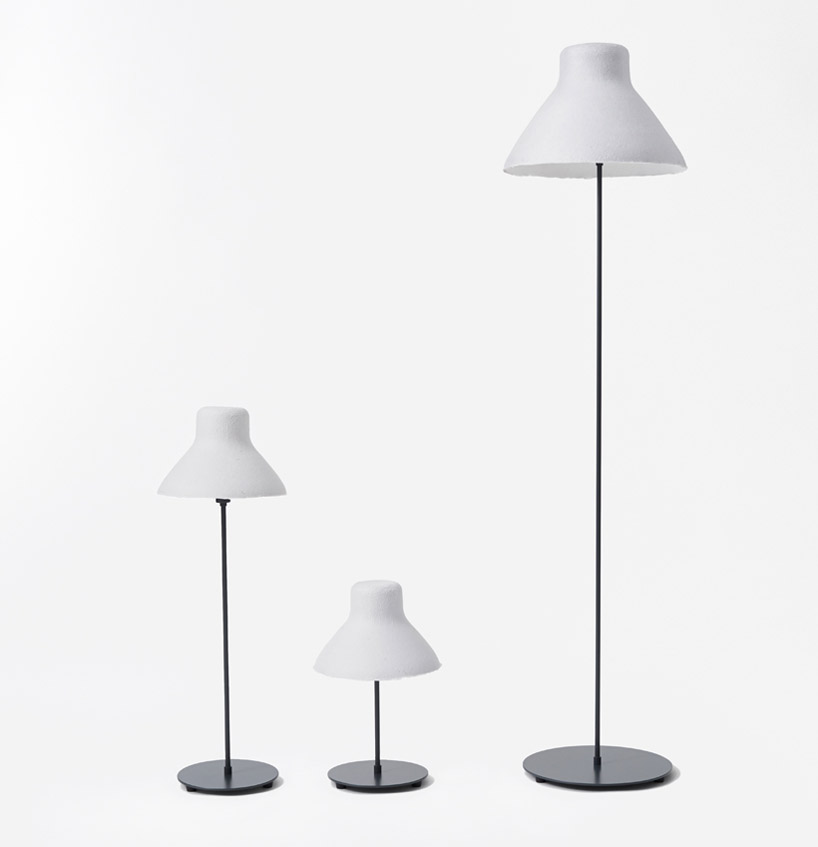
floor standing versions
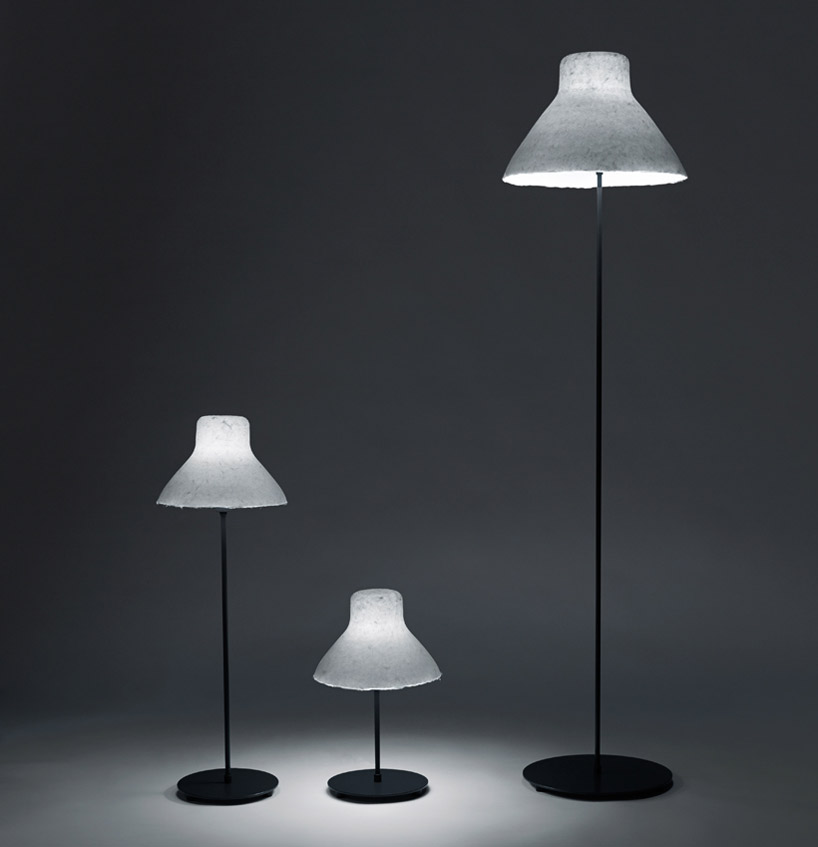
floor standing versions illuminated

1/9