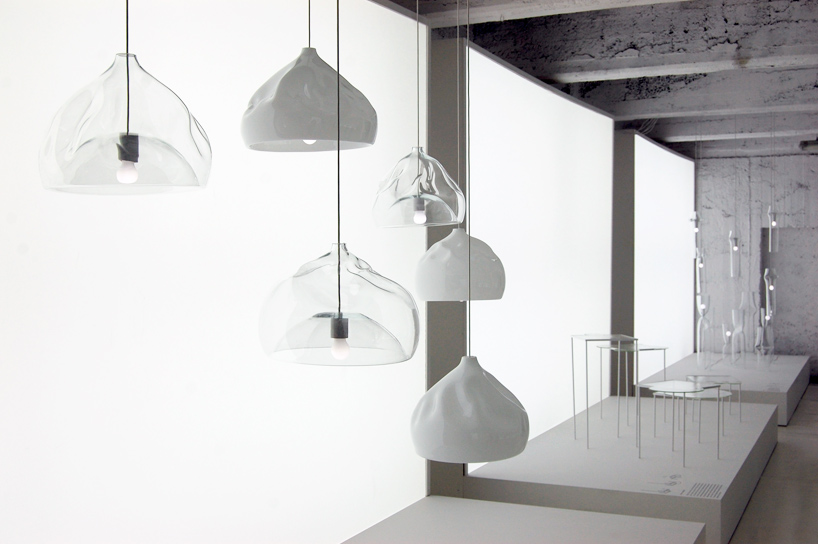
installation view of ‘still and sparkling’ by nendo for lasvit image © designboom
after its debut at last year’s milan design week, czech-based bohemian crystal and glass company lasvit returned for 2012 with two special installations — ‘liquidkristal’ by ross lovegrove (previously covered by designboom here); and ‘still and sparkling’ by nendo — each presentation showcasing the properties and techniques of working with the amorphous material. japanese design studio nendo’s ‘still and sparkling’ exhibition was composed of five concepts: press lamps, inhale lamp, innerblow and overflow tables, x-ray vase and growing vases, recognized for the duality evident in the research and experimental design approach, whereby principal designer oki sato mixed lightness and minimalism to form each work. the resulting collection of delicate pieces rejects traditional glassblowing techniques, embracing instead the irregularities typically considered defects within the craft, an expression of nendo’s personal investigation into the material and its production representing new and unusual methods in hand-blown glass.
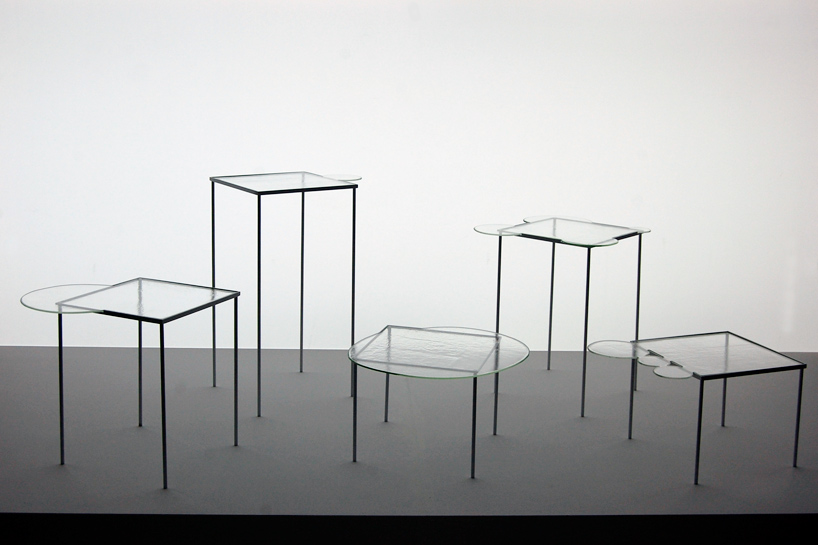 ‘overflow table’ image © designboom
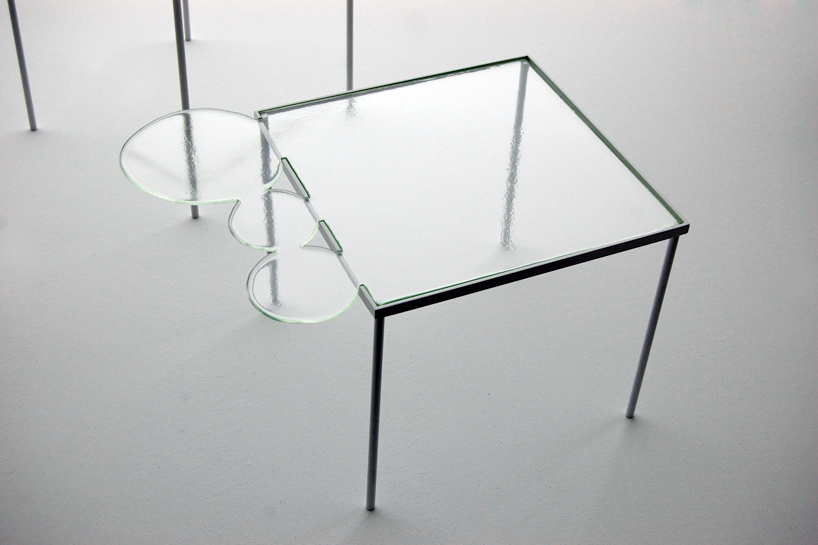 up close look at one of the ‘overflow tables’ image © designboom
‘I frequently work with transparent material, however I first began working with glass last year with lasvit. glass is the key transparent material of all. since then, I’ve traveled from japan to lasvit’s glass workshop in novy bor, czech republic six times. during this time m partnership with lasvit has helped me refine my skills in working with glass to achieve the quality and forms that are being shown in the current collection. the source of my inspiration is the glass hot chop. every time I am in the glass workshop, watching the glassblowers in action, I discover little surprises. in this medium, the process defines the product: some of the results can be bizarre, even weird. the most exciting thing for me is not to control the process of blowing, but to see what new surprises it can produce. each glass piece is unique. it depends on the individual glass blower and his strength. it is also about the physical laws that govern the material and the process, such as gravity, it is all about communication between the glass blower and the material. in this game, I provide design input, while recognizing that the glass blowers and tomas kamenec, the head of this project, are the real players.’ – nendo
 ‘innerblow bench’ image © designboom
 ‘innerblow tables’ image © designboom
 ‘press lamps’ image © designboom
 oki sato of nendo image © designboom
designboom interviews nendo about the ‘still & sparkling’ collection for lasvit video © designboom
the making of the ‘inhale’ lamp:
 working on the ‘inhale lamp’ at lasvit’s glass workshop in novy bor, czech republic
 creating the glass form

 blowing out the form of the lamp
 the transformation of the glass form upon inhaling
the making of ‘still & sparkling’ image courtesy of lasvit
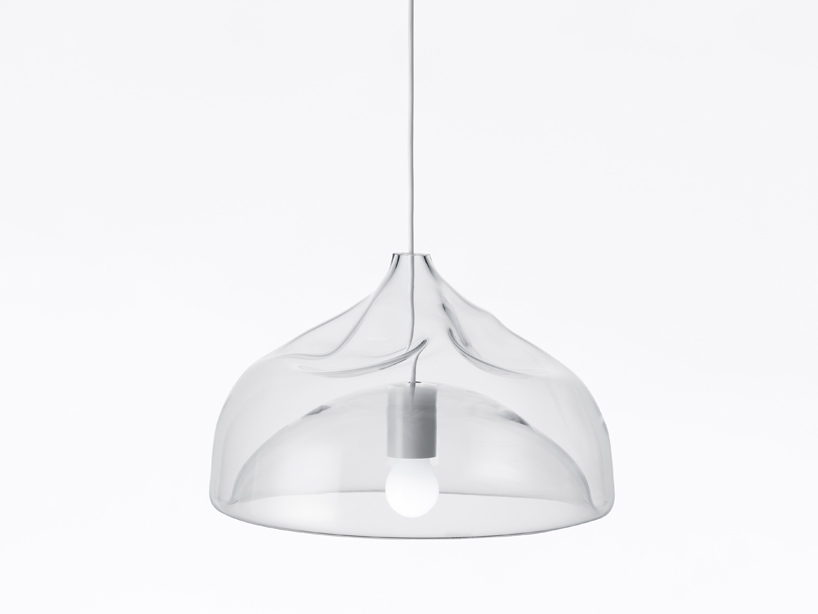 ‘inhale lamp’ artistic hand-blown glass D410 x H315mm weight: 3 kg
blowing glass into the form of a bubble and sucking away the air within was the method in which the ‘inhale lamp’ was produced. traditionally, air is exhaled into the molten material to create the desired shapes.instead, nendo has reversed the process by utilizing negative air pressure in the development of this series of lights. 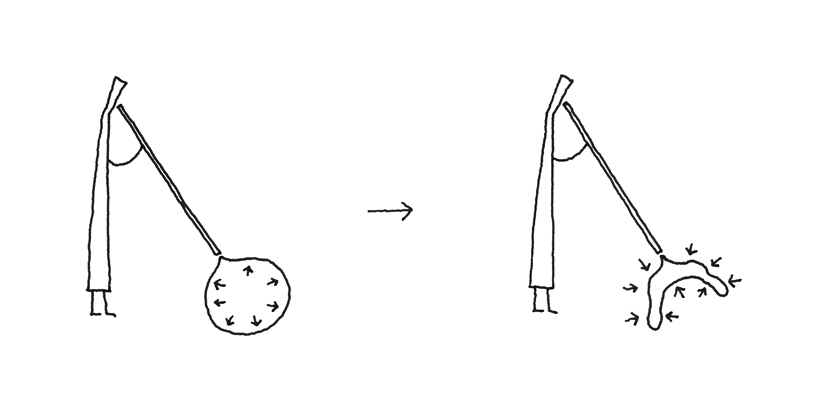
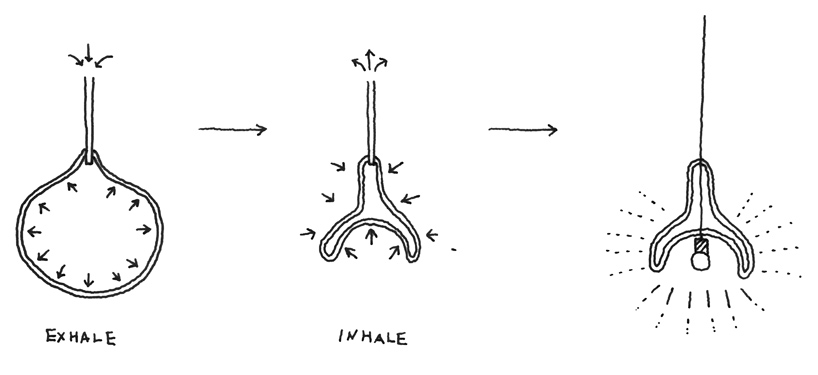 ‘inhale lamp’ sketch
 ‘press lamp’ artistic hand-blown glass 90 x 450mm (pendant) / 140 x 460mm (floor lamp 01) /140 x 630mm (floor lamp 02) / 140 x 800mm (floor lamp 03) weight: 2kg (pendant) / 3 kg (floor lamp 01) / 5 kg (floor lamp 02) / 6 kg (floor lamp 03)
the ‘press lamp’ is available in a pendant and floor version. with this design, the glass tubes are pressed as though they have been pinched, with the light source being fitted into the narrowed space that is a result of this procedure. the compression of the glass produces a soft, organic form and imbues each lamp with a singular appearance.
 ‘press lamp’ details showing the ‘pinched’ glass feature of the lighting design

 ‘press lamp’ sketch
 ‘innerblow bench’ artistic hand-blown glass, stainless steel 500 x 500 x 300mm (table) / 1400 x 400 x 300mm (bench) weight: 45 kg (table) / 190 kg (bench)
the ‘innerblow’ and ‘overflow’ designs were commissioned by the carpenters workshop gallery in paris.
‘innerblow’ is influenced by the way glassblowers draw a lamp of molten glass into the tip of a metal pipe and create a form by expanding the glass with their breath, as it is blown downwards. the craftsmen expand the glass in a square mould, leaving it in place rather than removing it, at which point it is then flipped — this framework becomes the table’s legs, while the glass becomes its flat top surface, each design individual from the next.
 ‘innerblow table’
 top view of ‘innerblow table’ variations
 ‘innerblow table’ sketch
 ‘overflow tables’ artistic hand-blown glass, stainless steel variable dimensions weight: 2 kg
‘overflow’ takes on its shape when free-flowing glass liquid hardens in place. the masters place plate glass into a frame with one section missing, progressively heating the amorphous material until it becomes molten, and the allowing it to drain from the void in the form. when they permit the glass to harden again, the edge responds to surface tension, resulting in a table whose top resembles a pool of water.
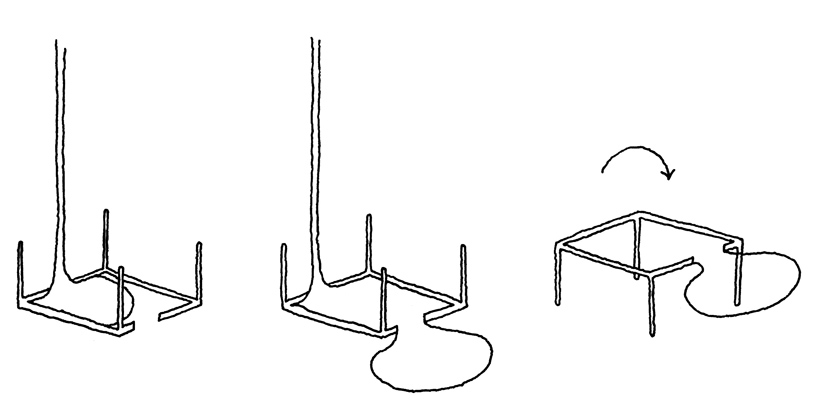
 ‘overflow table’ sketch
 ‘x-ray’ vase artistic hand-blown glass with LED light bulbs D470 x H450mm weight: approximately 10 kg
the ‘x-ray’ vase is created through fine-tuning two special characteristics of glass: transparency and reflection. within a larger dome finished with a thin vapor-deposited mirrored coating is a small cluster of similar forms. placing flowers inside creates an optional effect in which the blooms and domes are both hidden and visible.
 detail
 ‘x-ray vase’ sketch
LASVIT (32)
 Apr 01, 2025
 Apr 30, 2024
 May 03, 2023
 Apr 30, 2023
 May 29, 2020
milan design week 2012 (202)
 Mar 08, 2013
 Jul 18, 2012
 Jul 17, 2012
 Jun 30, 2012
 Jun 28, 2012
nendo (275)
 Dec 12, 2025
 Apr 14, 2025
 Mar 14, 2025
 Jan 21, 2025
 Jun 06, 2024
 Mar 10, 2026
 Mar 08, 2026
 Mar 04, 2026
 Feb 24, 2026