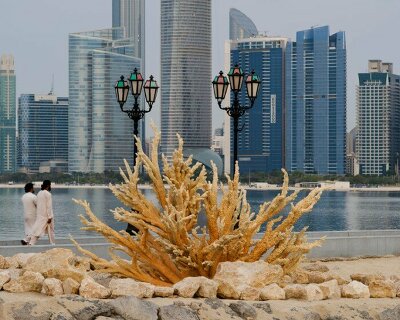
coral reef cooling project employs heat-absorbant underwater structures made of hydrogel
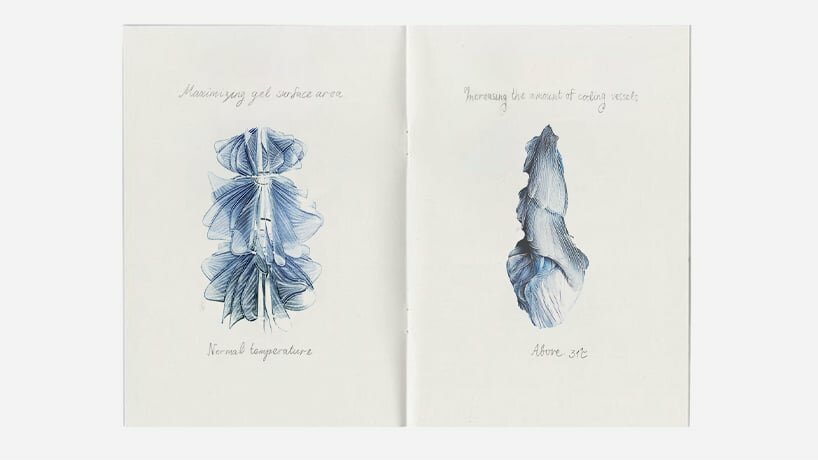
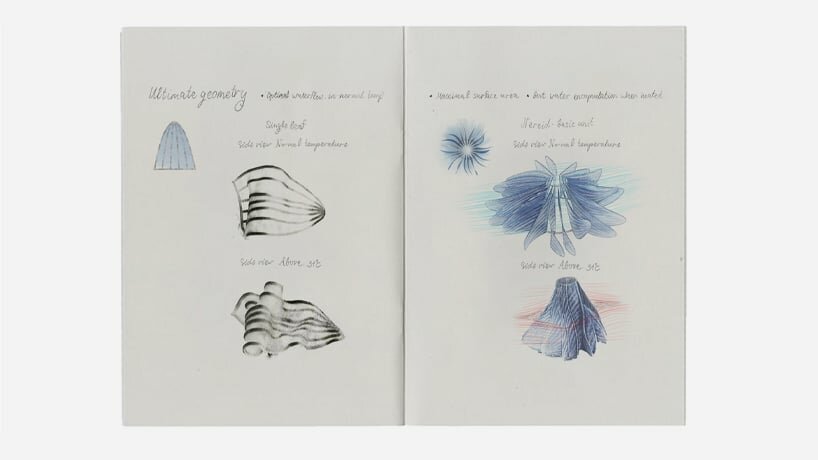
the structures can fold and encapsulate water within the gel sheets, augmenting cooling potential via responsive geometry.
prefer designboom on google[FEATURED]
Sunny Lustov’s ‘Nereids’ addresses ocean temperature rise
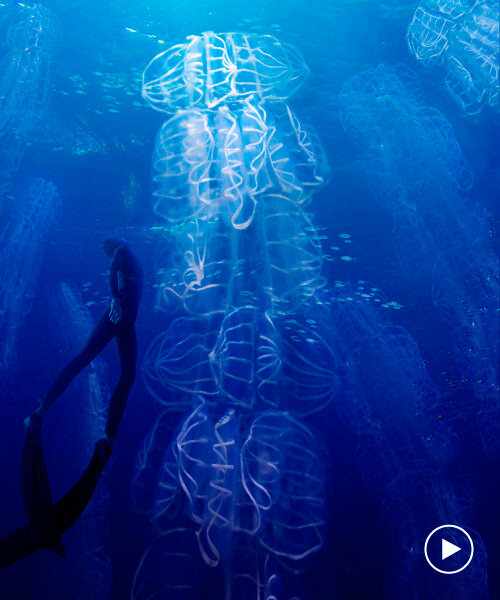
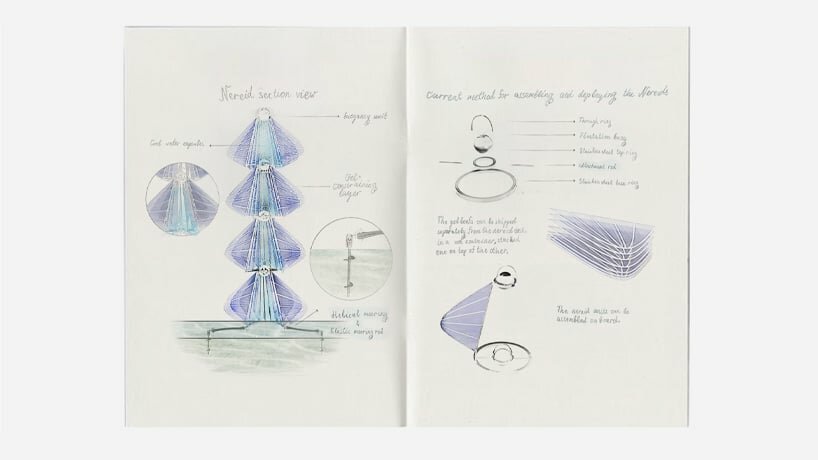
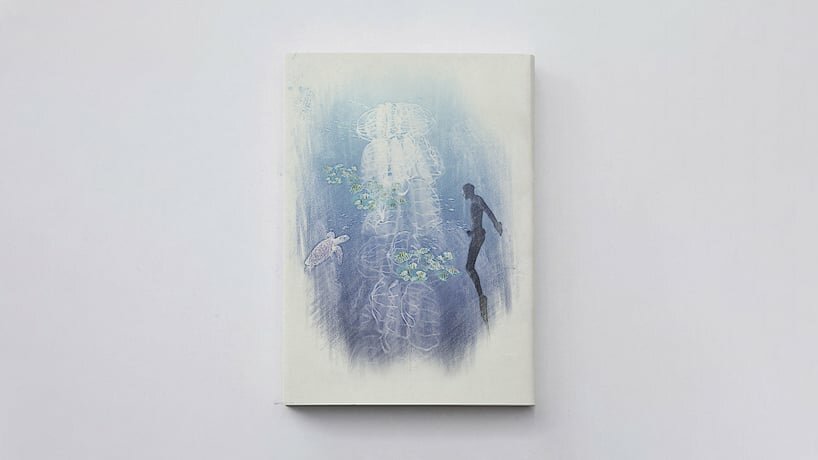
Sunny Lustov presents Nereids: Underwater Structures for Coral Reef Cooling, a project that intersects science and design to combat the pressing issue of ocean temperature escalation. Following careful programming of material responses, the designer fabricates autonomous, plant-like structures programmed to counter warming threats on coral reefs. Crafted from a thermoresponsive biocompatible hydrogel called ‘NIPA’, the underwater structures autonomously cool at-risk coral areas. Serving as protective sanctuaries, Nereids can fuse with their environment, safeguarding coral ecosystems effectively and enduringly.
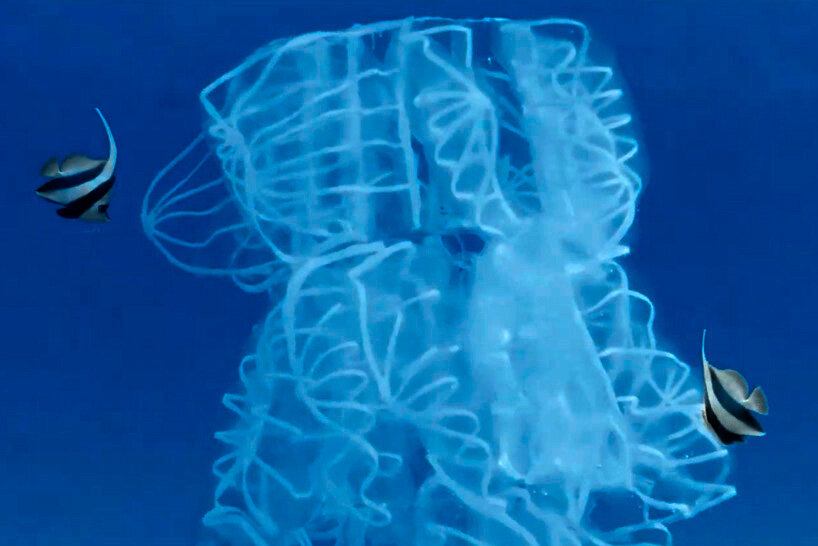
shape-morphing underwater structures form cooling vessels
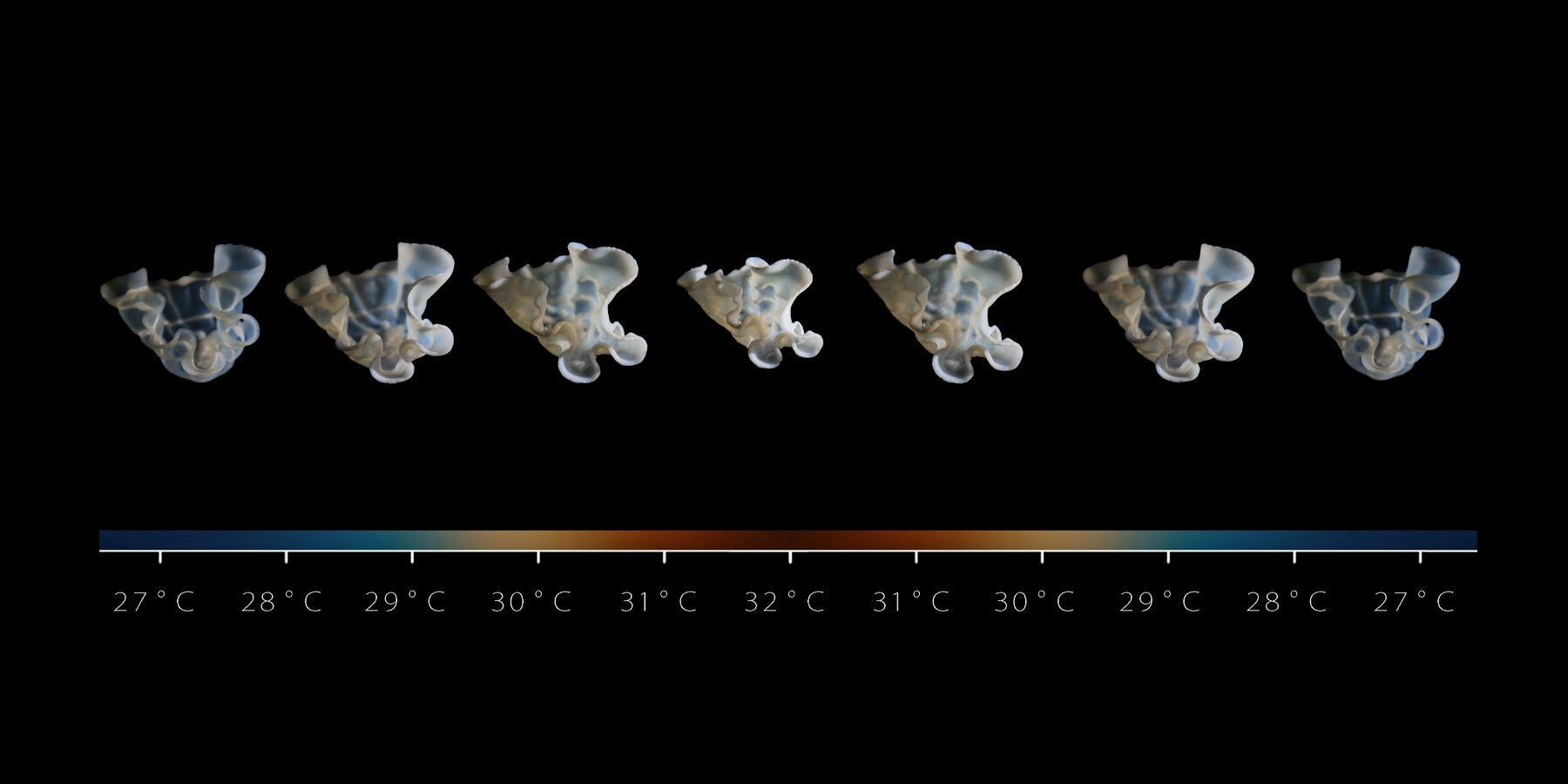
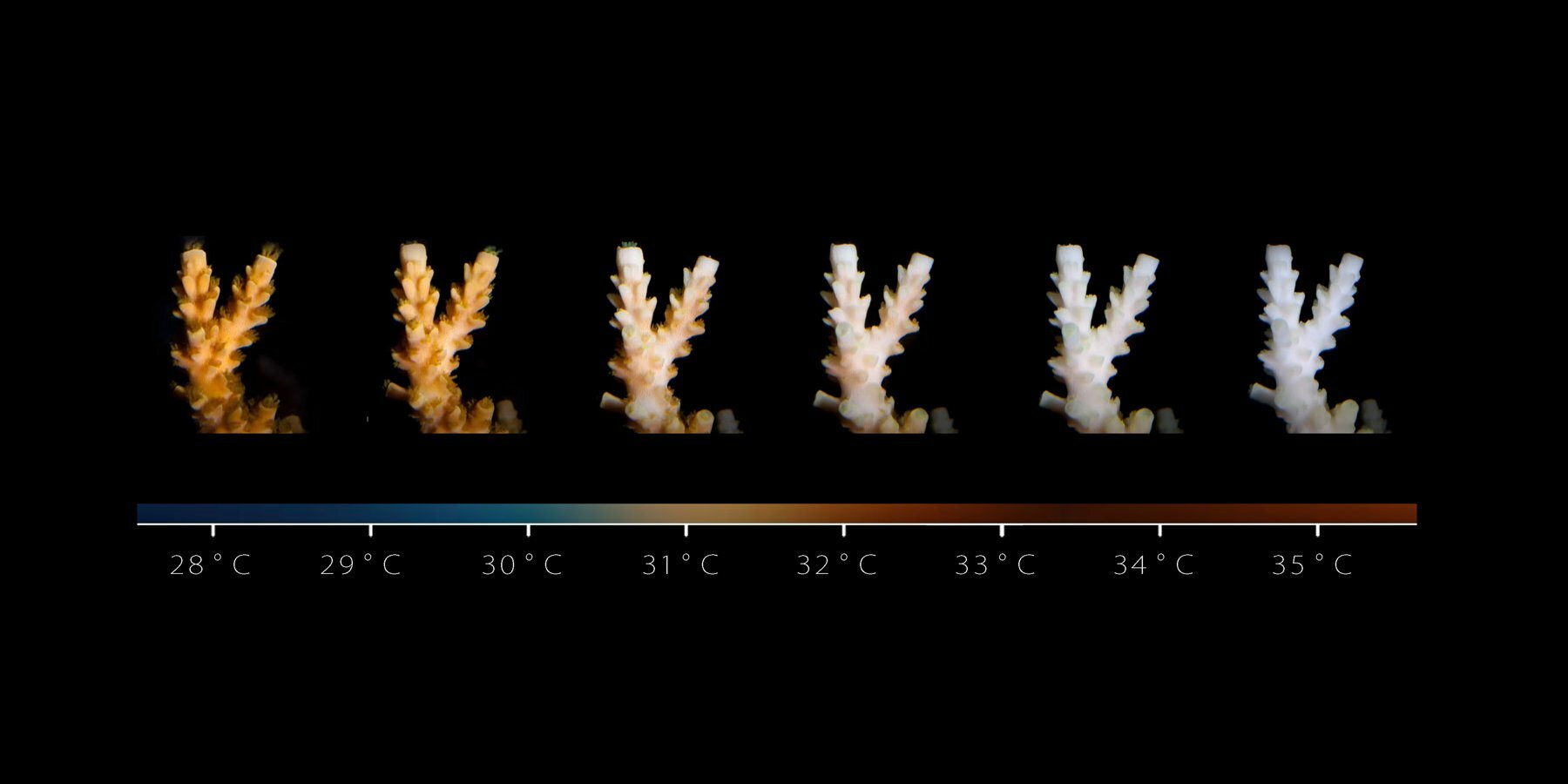
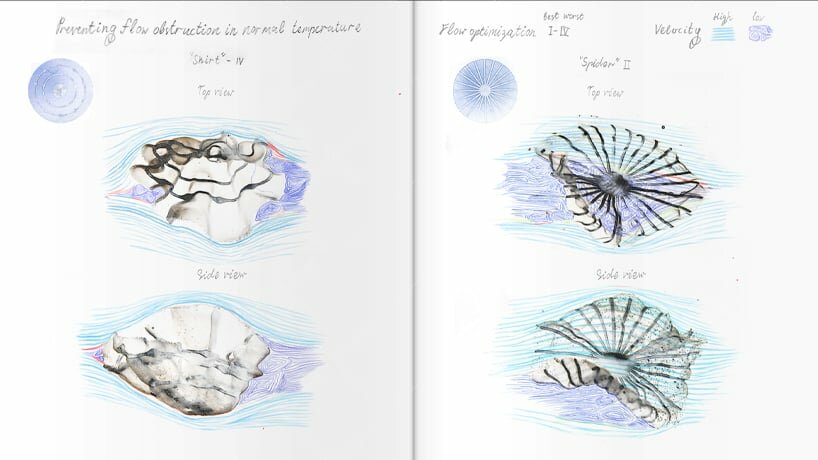
The underwater formations leverage the intrinsic qualities of their materials. Composed of NIPA gel, these structures engage a phase change process akin to ice, absorbing heat, and undergoing whitening and shrinkage. Unlike ice, NIPA gel maintains its form as a coherent sheet post-transition. This feature enables repeated activation for heat absorption with minor temperature shifts. This phase change enables the Nereids to synergistically employ two cooling mechanisms. Firstly, the gel itself cools, each gram of NIPA can cool 10 grams of water by up to 1 degree Celsius. Secondly, leveraging the gel’s transformative nature, the designer fabricates structures that can fold and encapsulate water within the gel sheets during each phase change, augmenting cooling potential via responsive geometry. While open in normal temperatures, the formations contract and fold during heat, forming a cooling vessel that stabilizes temperatures over extended periods.



1/5
project info:
name: Nereids: Underwater structures for coral reef cooling
designer: Sunny Lustov
designboom has received this project from our DIY submissions feature, where we welcome our readers to submit their own work for publication. see more project submissions from our readers here.