meet otter, the portable newborn warmer designed for hospitals with unreliable power
design that matters and MTTS rethink newborn warming with an integrated, heat-conducting bassinet designed for the realities of low-resource healthcare settings.
prefer designboom on google[FEATURED]
otter rethinks medical design for real-world conditions
Otter, a portable newborn warmer developed by Design that Matters and MTTS, is designed to prevent and treat neonatal hypothermia in hospitals with unreliable electricity and limited resources. Awarded the 2026 Seoul Design Award Grand Prize (find top 10 finalists here), the device rethinks newborn warming through an integrated, heat-conducting polycarbonate bassinet, a built-in battery, and an intuitive touchscreen interface. Otter addresses the practical challenges of neonatal care in low-resource settings, where power outages, limited maintenance capacity, and the risk of user error can compromise the reliability of conventional devices.
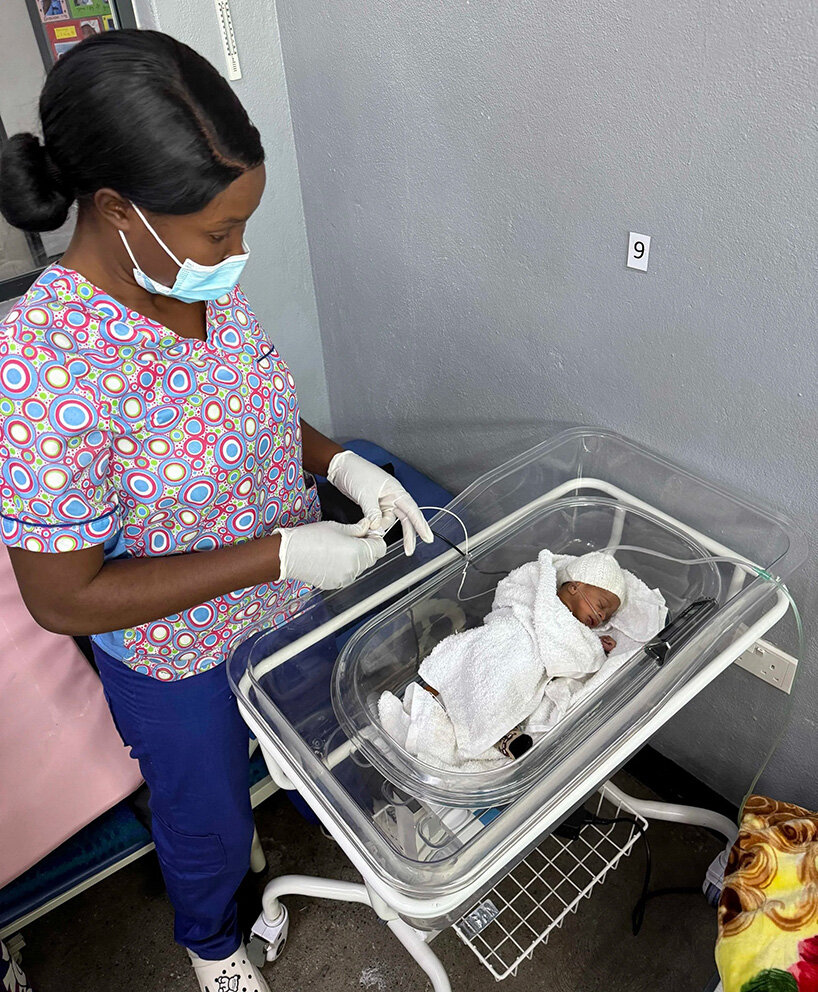
Newborn incubators and radiant warmers often depend on stable electricity, regular maintenance, and specialized equipment, requirements that can become obstacles in rural hospitals, where power outages and limited technical support complicate the delivery of neonatal care. Otter addresses these constraints through a design developed over eight years of field research, expert interviews, and product reviews across Africa and Southeast Asia. The need is particularly acute for premature and low-birthweight newborns, who are more vulnerable to losing body heat. Kangaroo Mother Care (KMC), which relies on skin-to-skin contact between a newborn and their caregiver, is an established approach to maintaining warmth, but interruptions are sometimes unavoidable. A baby may need to be examined, transferred between departments, or temporarily separated from their mother. Otter provides supplemental warming during these moments, including transfers within hospitals.
seamless bassinet replaces the conventional warming mattress
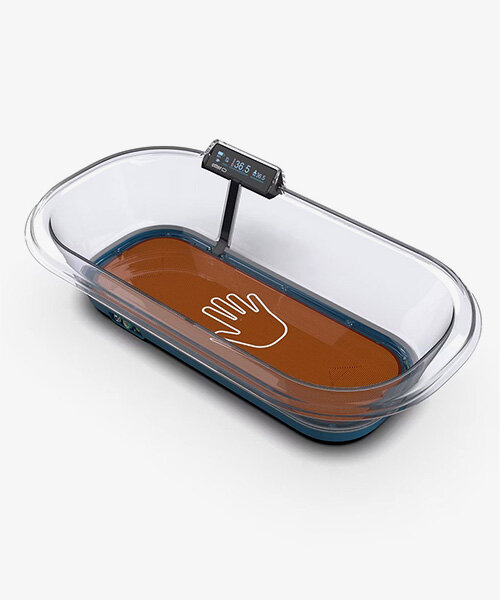
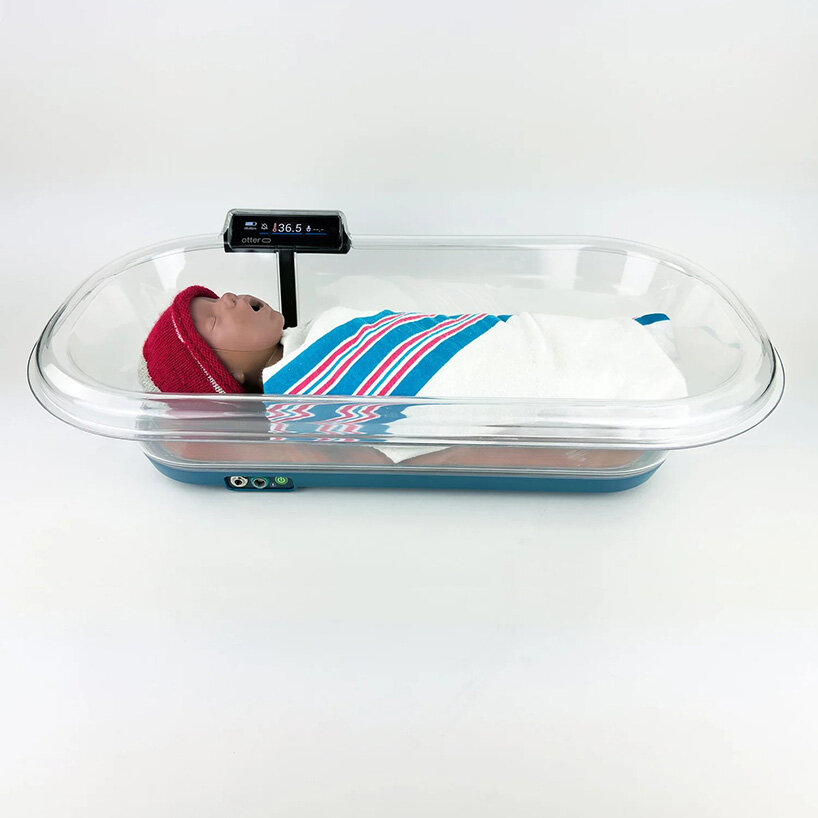
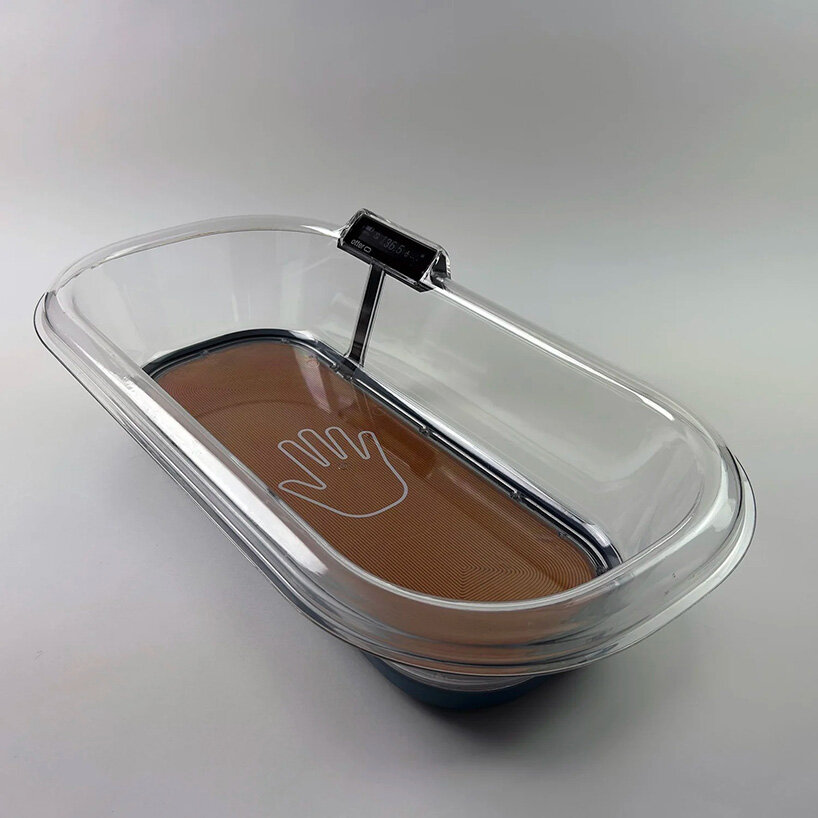
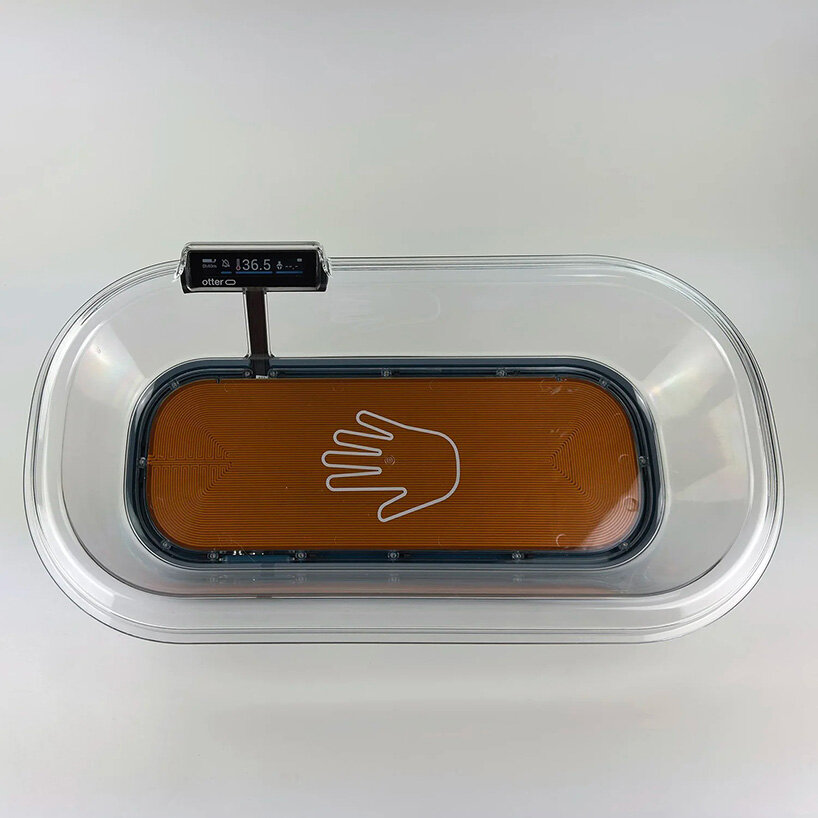
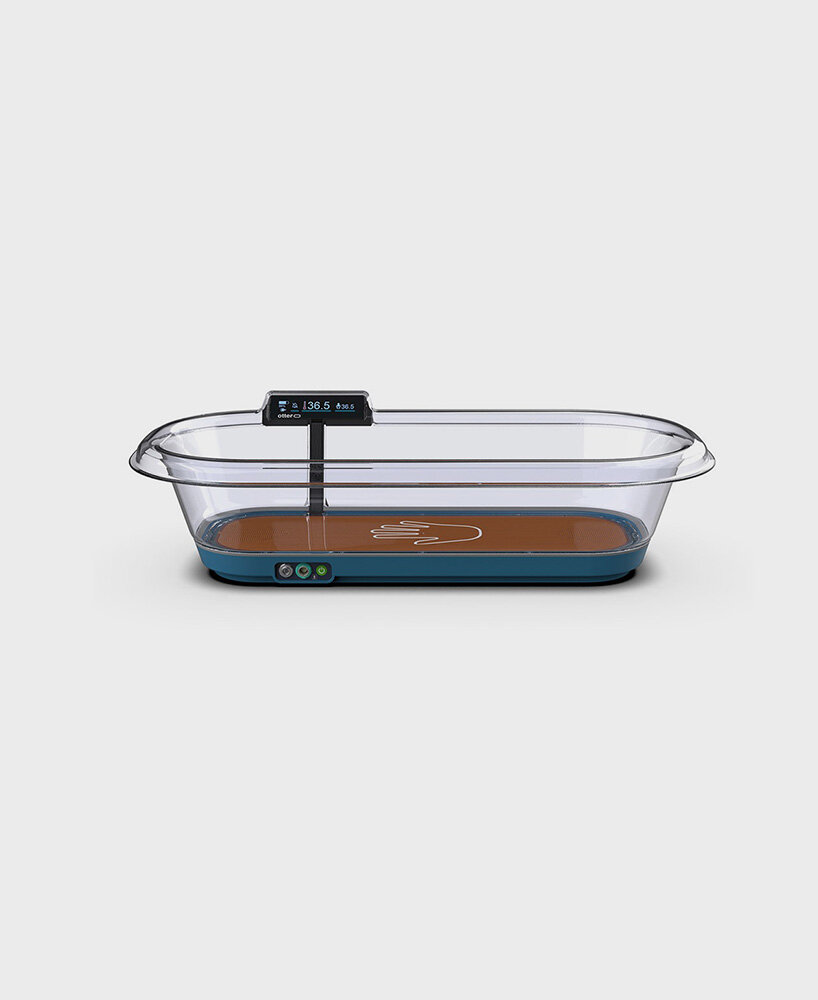
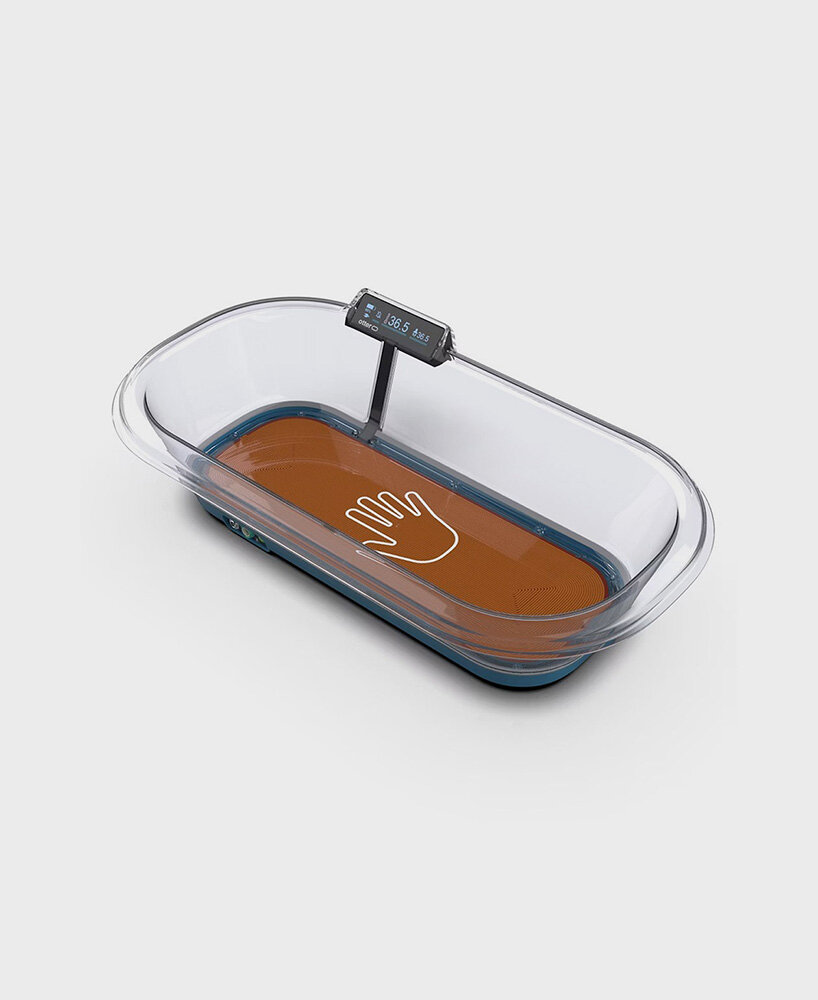
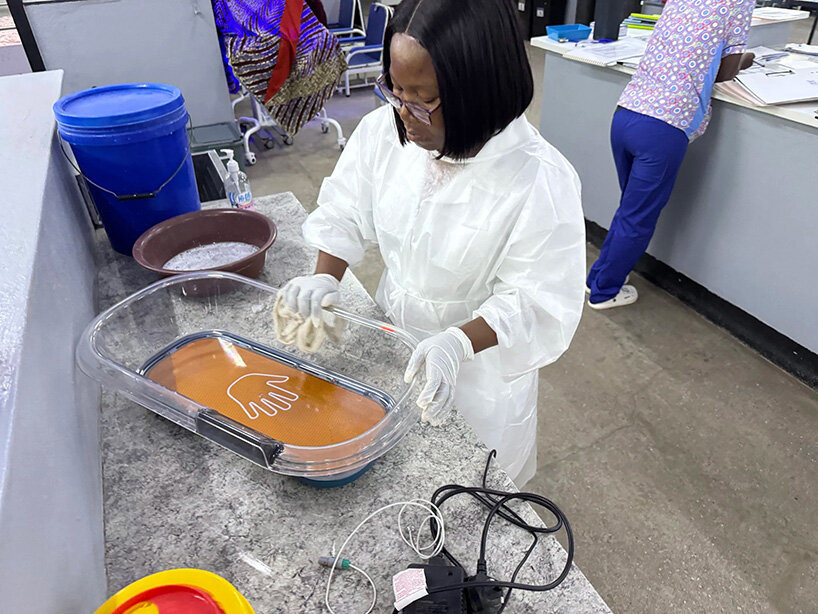
The central design decision by US-based nonprofit Design that Matters and Vietnamese medical device manufacturer MTTS is to replace the removable water or gel mattress found in many conductive warmers with an integrated, heat-conducting polycarbonate bassinet. The smooth, continuous surface has no fabric, seams, or gaps, making it easier to clean and disinfect between patients. It also prevents direct contact between the newborn and the heating element, reducing the risk of burns associated with conventional systems when a mattress is removed or incorrectly positioned. The heating element and temperature sensors sit within a water-resistant housing beneath the bassinet, protected from rough handling. This integrated construction reduces reliance on consumables and replacement parts. Warming mattresses can be vulnerable to punctures, seam failures, and deterioration, while water-filled systems may require additives that are difficult to source in some settings. Otter simplifies the structure of the product, aiming to reduce the maintenance burden throughout its working life.
Otter weighs 3.6 kg and can be carried between clinical departments without interrupting warming. Its integrated battery automatically takes over when mains electricity is disconnected, supporting continued operation during power failures and patient transfers. The battery provides more than two hours of backup at an ambient temperature of 15°C. The touchscreen displays temperature, heating status, and estimated remaining battery life, while alarms alert staff to problems with the sensor, heating element, or power supply. The interface is designed to make the status of the device easy to assess without requiring extensive technical training. Its physical form follows the same principle. Resembling a familiar newborn bassinet, the open structure allows clinical staff to access the baby while making the device less intimidating for parents. This familiar appearance also supports interaction between mothers and newborns during periods when supplemental warming is needed.
testing the device in clinical settings
Five Otter devices have been operating at Kapiri District Hospital in Zambia since May 2025, where an ongoing implementation study evaluates performance, staff acceptance, and integration with existing care protocols. The devices have been used with low-birthweight newborns, including infants weighing as little as 840 grams, and to maintain warmth during transfers between hospital buildings. The study also takes place in conditions that expose the practical challenges the design is intended to address, including documented power interruptions lasting seven to eleven hours and limited access to biomedical support. The project summary reports successful use during transfers, but the implementation study remains ongoing, and its findings should be understood in that context.
project info:
name: Otter Newborn Warmer
designers: Design that Matters (USA) | @dtm_org and MTTS Co., Ltd.
award: 2026 Seoul Design Award Grand Prize

shop
your own online design shop — no sales commission collected