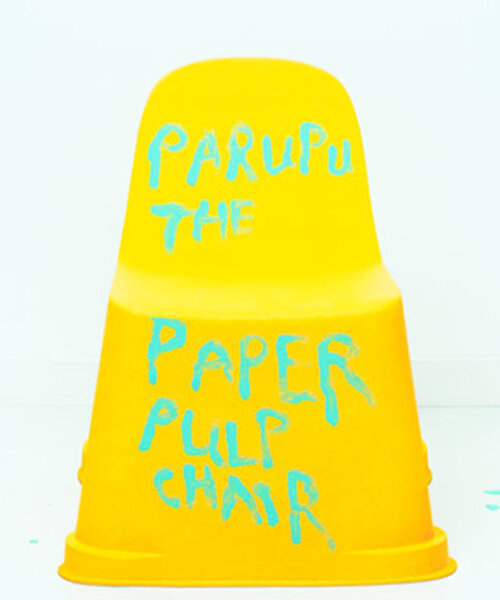
‘parupu’ paper pulp chairs by claesson koivisto rune for sodra cell at milan design week 09
'parupu' is a chair for children, made of the material 'durapulp', a biodegradable plastic based on maize starch.
parupu by claesson koivisto rune
‘parupu’ is a chair for children, made of the material ‘durapulp’,
a biodegradable plastic based on maize starch.
it is durable and waterproof, as well as fully compostable.
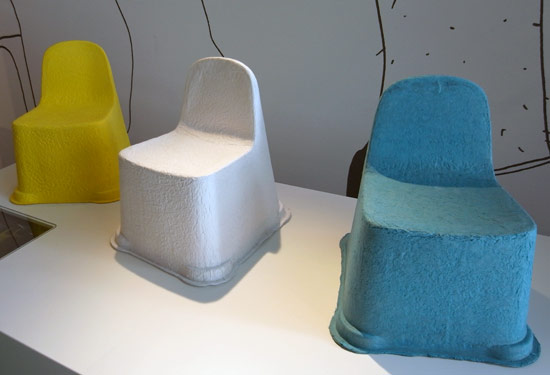
‘parupu’ chairs by claesson koivisto rune for södra
image © designboom
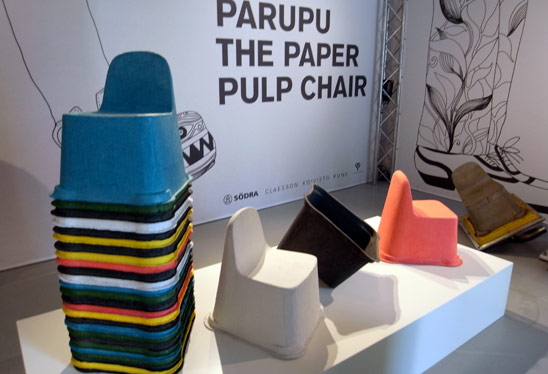
‘parupu’ is stackable
image © designboom
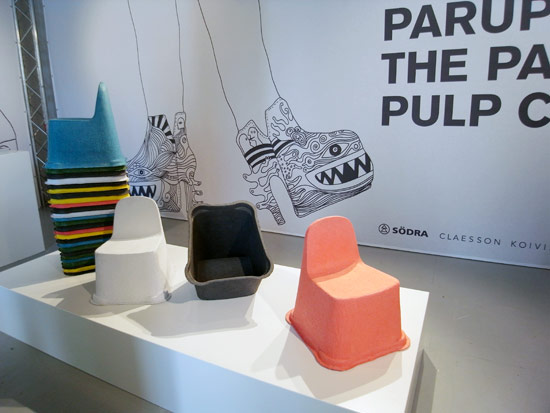
‘parupu’ is a fun chair for children, it consists entirely of renewable cellulose
image © designboom
production steps
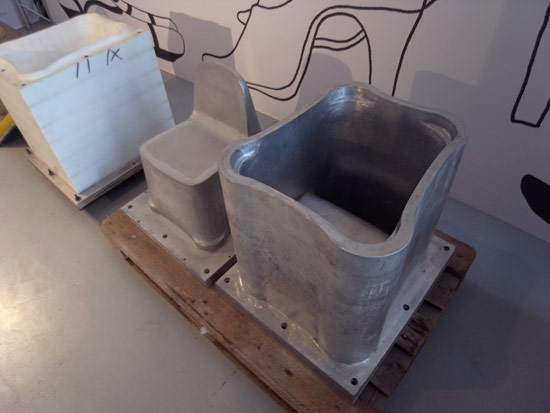
the material can be moulded and formed. the chair is hot pressed.
image © designboom

a result of several years of research and development, the material is suitable for industrial production
image © designboom
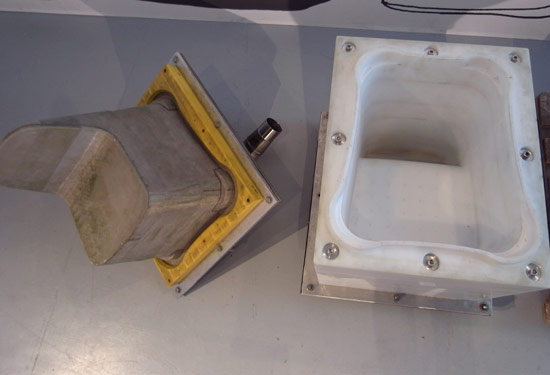
tools for production : the chair mould
image © designboom
joakim nygren’s master of science thesis
the author contacted designers claesson koivisto rune arkitektkontor in august 2007 regarding his
master thesis at KTH. the company had discussed the possibility of creating a chair made from molded pulp.
the author was taken on as a manager for the project. the objective was to produce design documentation
for a paper pulp chair which was to be launched at the in 2008 milan furniture fair. the purpose of the thesis
was to develop a product with scientific methods as well as to investigate how to make collaboration
between designers and engineers easier through communication.
the project went through four basic stages: information, analysis, synthesis and evaluation.
information on paper pulp, molded pulp, chair design, sitting postures and the existing market of molded
pulp furniture. a requirements specification was established from that information.
the development of the chair was based on different models that would determine different design aspects.
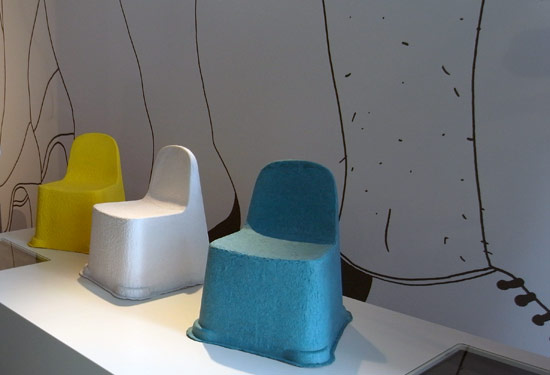
pulp paper chair presentation during milan design week 09
image © designboom
the paper pulp chair has two part structure that utilizes closed geometries, double shells and an inner
stool for stability. the two parts are individually nesting, and are joined with corresponding flanges.
the paper pulp is mixed with a non petroleum based thermoplastic, PLA, which enhances the material
properties. the chair was not ready for the milan 2008 presentation. the project received a grant from
the swedish governmental agency for innovation systems.

image © designboom
the research process
in 2003, the swedish research company STFI-packforsk
was involved in a project to find recyclable materials
that could be fitted for car interiors. with pulp as a starting point, researchers looked for other organic
materials that could create a durable composite material. that’s when they came across polylactic acid,
or PLA, a biodegradable plastic made from maize starch or cane sugar. while the plastic wasn’t ideal for
car interiors, everyone involved in the project favoured continued research on pulp and PLA composites.
a new project was initiated, a collaboration between STFI-packforsk, södra and a number of other companies
and organisations. soon, researchers discovered that when PLA is mixed with pulp and heated to 167 degrees
celsius, the PLA encapsulates the paper fibres. the result was a material with the appearance and structure
of paper, but possessing entirely different properties.

detail
image © designboom
analysis showed that the creep in the material, which determines how it is affected by temperature
fluctuations and air humidity, was basically non-existent. compared to cardboard moving boxes that
collapse after a few years in the attic, a box made of this new material shouldn‘t be affected by humidity
and temperature at all. the new material had a durability normally associated with steel, wood and hard plastic.
the designers
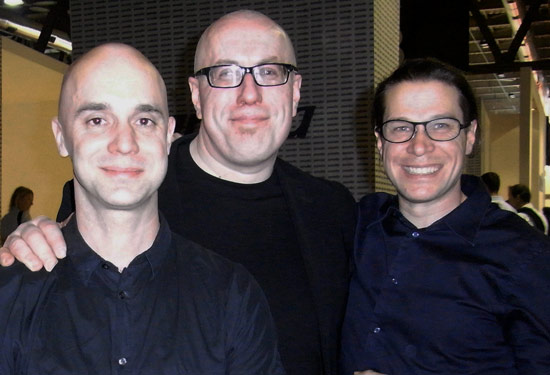
mårten claesson, eero koivisto and ola rune of claesson koivisto rune office
portrait © designboom
claesson koivisto rune architecture and design studio
was founded in stockholm in 1995.
shop
your own online design shop — no sales commission collected