utopia through small-scale practices
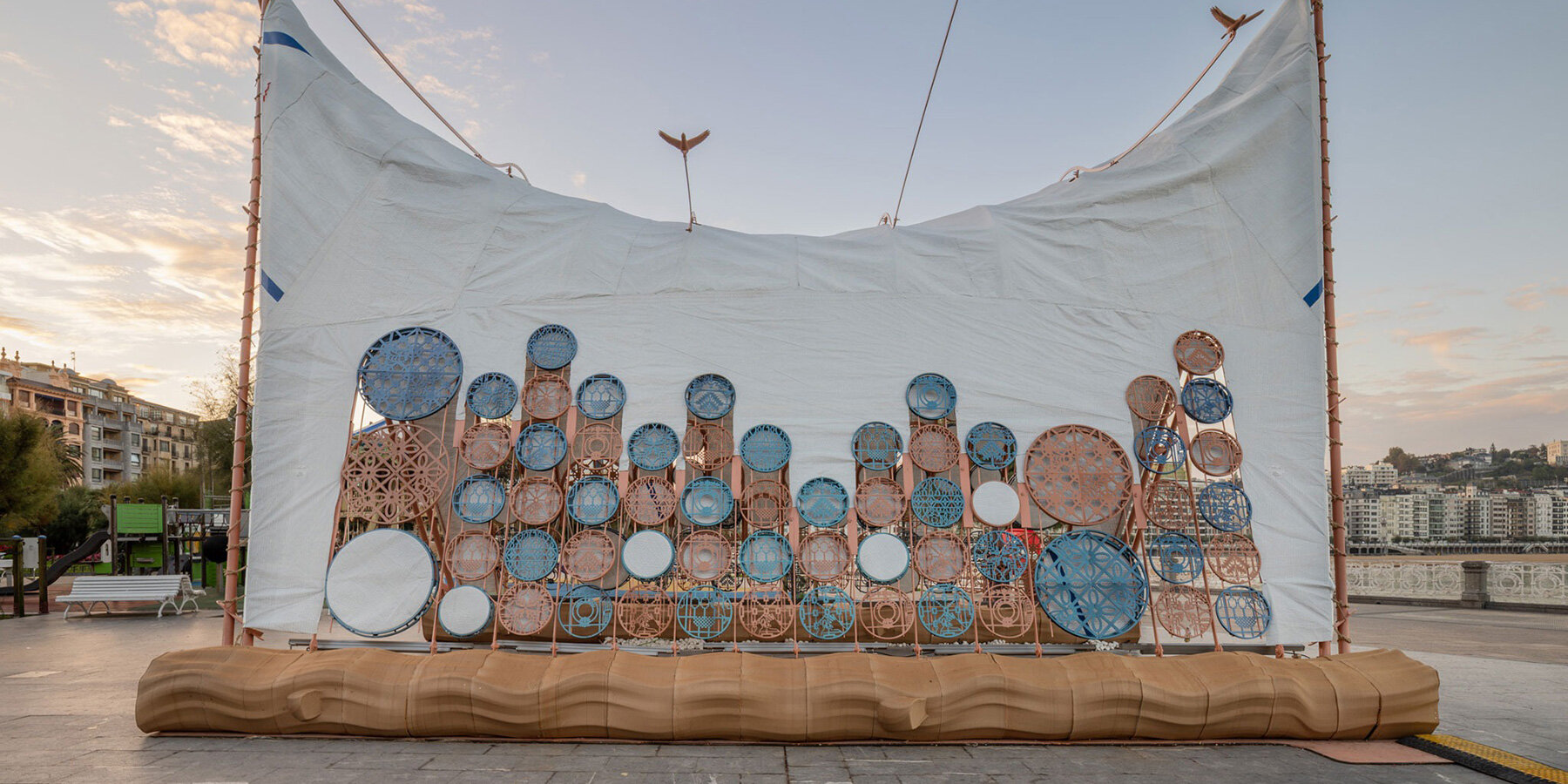
Designers often approach the concept of ‘utopia’ through ambitious masterplans and conceptual theses for distant futures. Madrid-based Izaskun Chinchilla Architects approaches the idea through something far smaller, at the scale of fabric and embroidery. The temporary pavilion ‘Levedad y denuncia. El bordado como utopía en femenino,’ stands along the waterfront in San Sebastián, and treats utopian thinking as a design method driven by participation and craft.
The project envisions what the studio describes as ‘a democratic, sensitive, and pluralistic utopia,’ which is shaped through collective gestures. In this sense, the interactive installation shifts the conversation away from abstract doctrine or speculative plans for future cities and toward the social practices that give those cities meaning. Each stitched motif becomes a contribution to a better life that — while modest — is actually tangible.
images © Mikel Blasco, courtesy Mugak/2025
Izaskun Chinchilla imagines a future through embroidery
The structure formed part of the 5th International Mugak Architecture Biennial, which this year scattered temporary architectural installations across public squares in Bilbao, San Sebastián, and Vitoria-Gasteiz (see designboom’s coverage here). Curators prompted architects to examine how architecture and design can activate public space and engage with the enduring question of utopia.
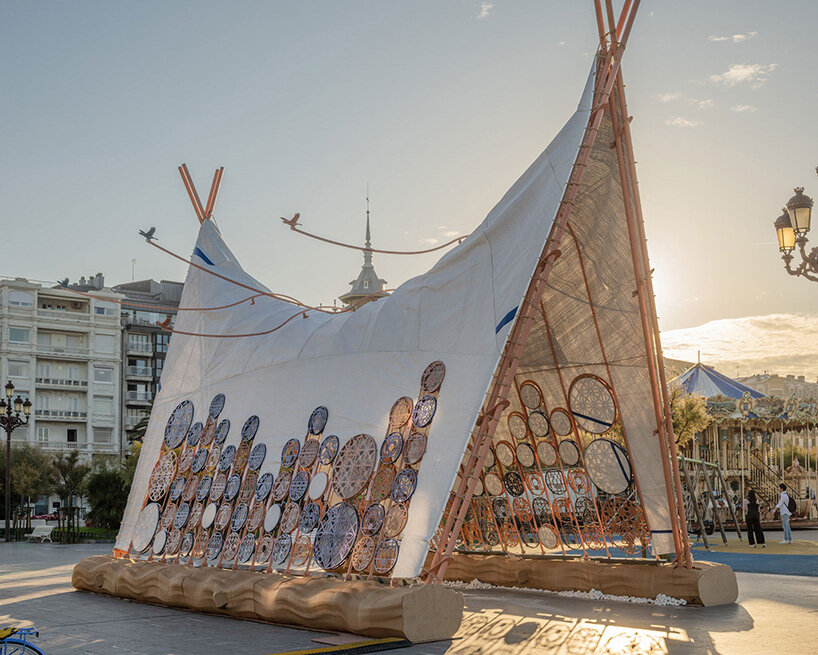
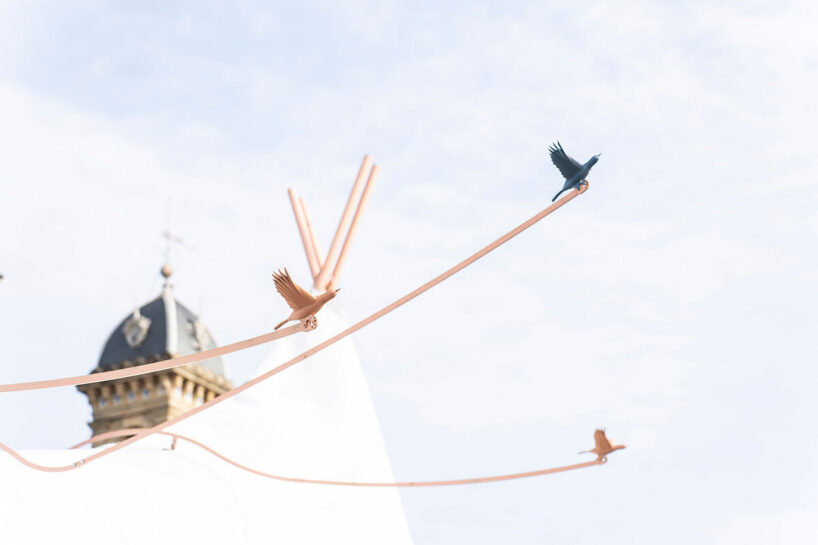
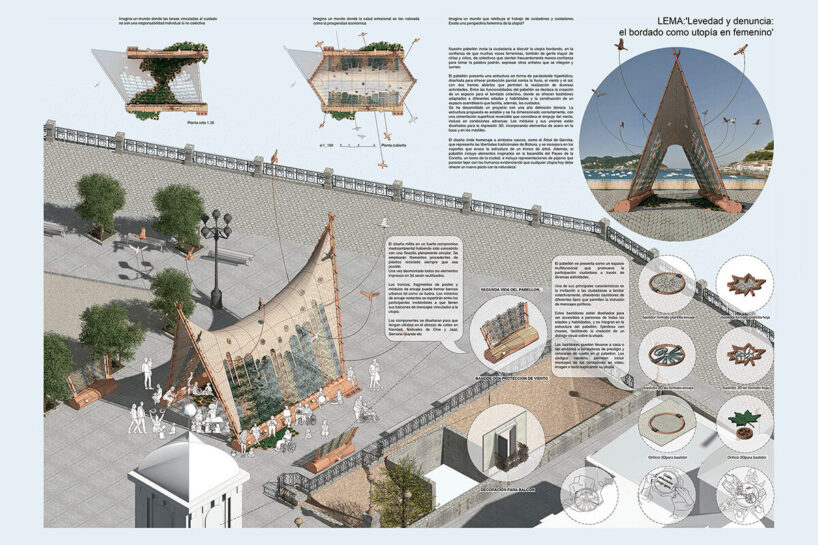
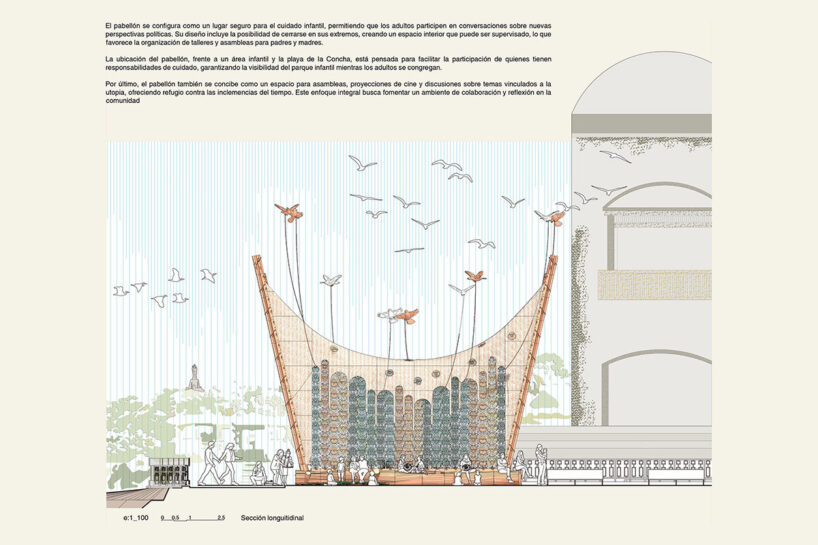
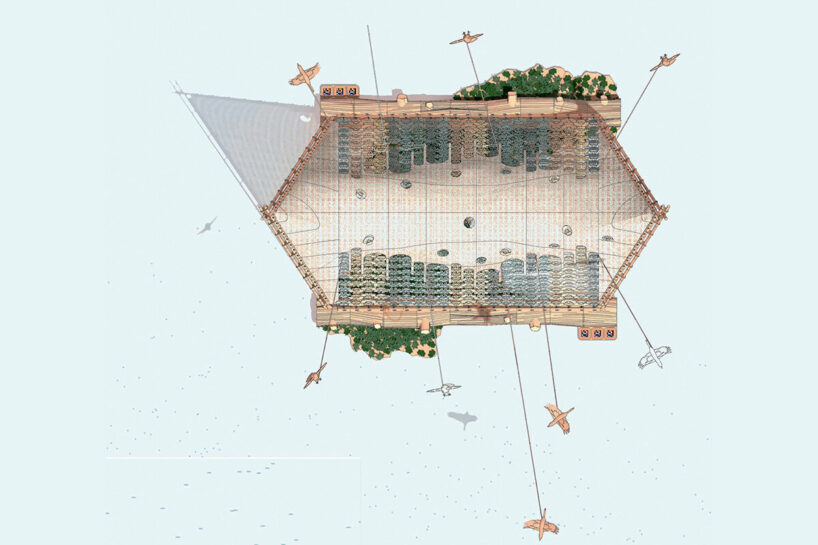
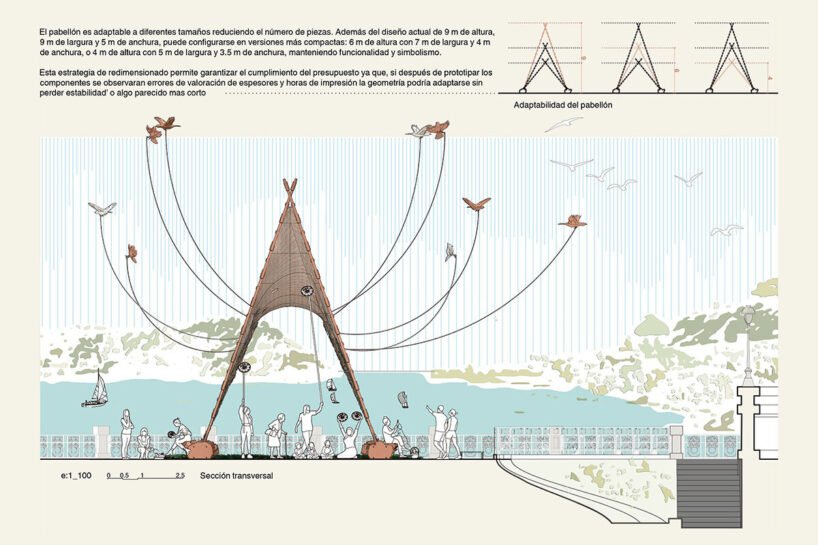
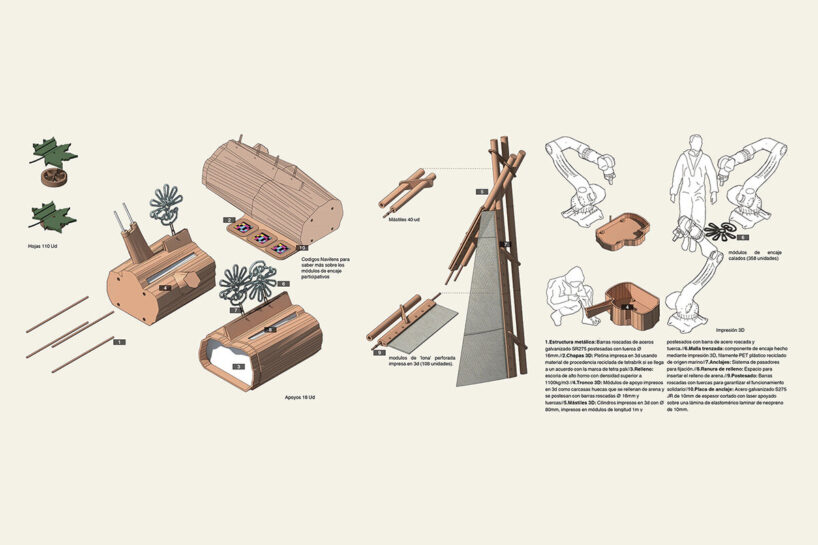
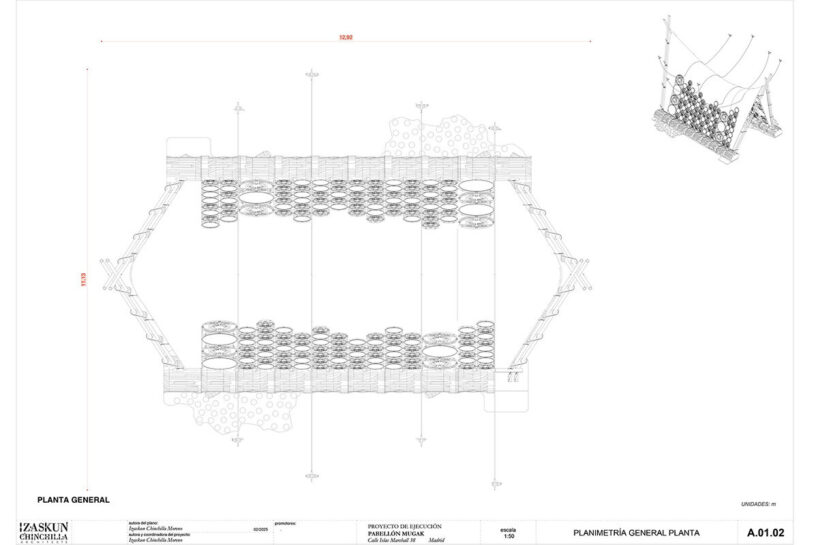
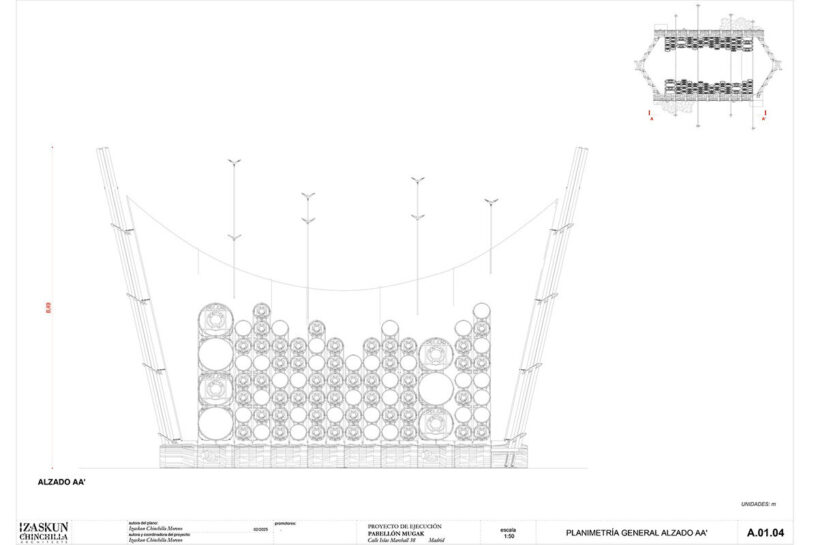
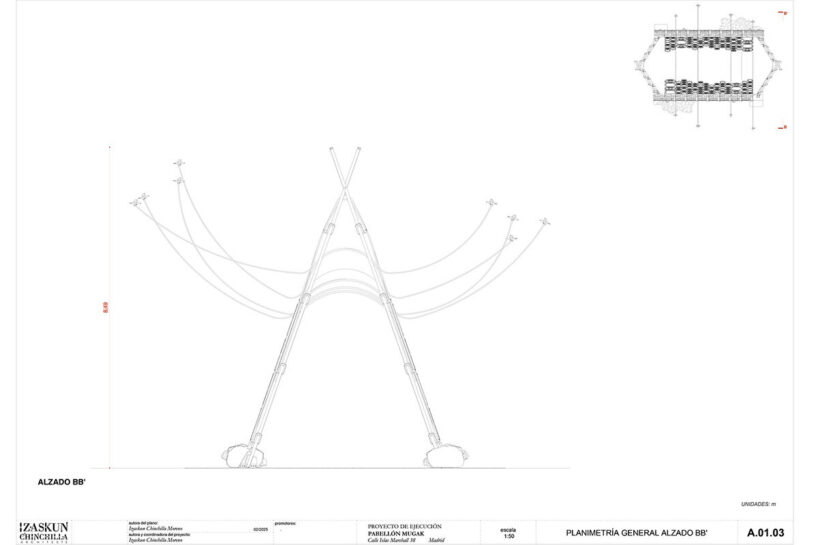
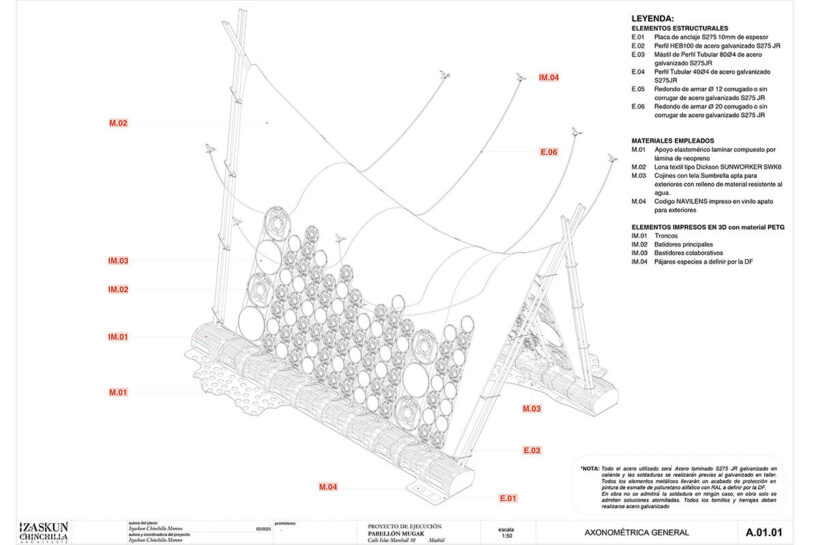
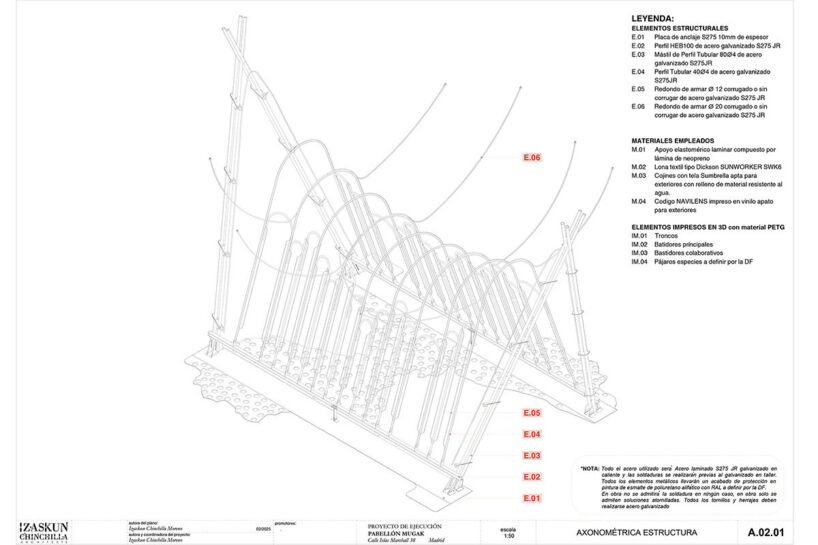
The team at Izaskun Chinchilla Architects responded to this context with a pavilion in San Sebastián built from recycled boat sails and plastics recovered from the sea. Curved poles stretch a taut textile canopy that rises lightly above the plaza. Beneath it, a field of circular frames holds embroidered surfaces and open hoops awaiting new contributions. The pavilion accommodates gatherings, workshops, and conversation, yet its most defining feature lies in the slow process of making that takes place within it.
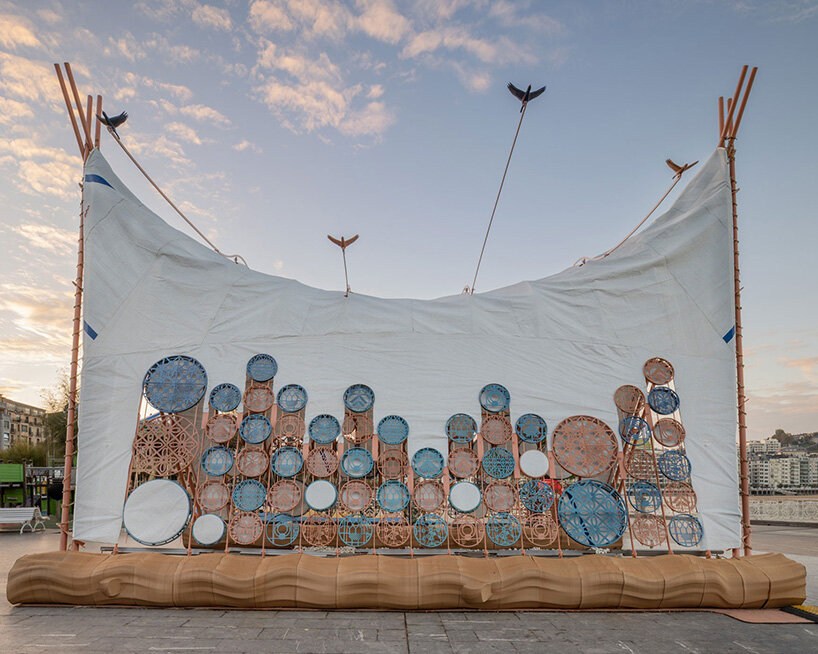
Izaskun Chinchilla Architects presents a pavilion exploring utopia through collective embroidery
‘feminine’ craft as a medium for change
The practice of stitching feminist narratives into fabric has deep precedents. Suffragist banners carried through British streets in the early twentieth century and narrative patchworks created by Chilean women during the Pinochet dictatorship both used needlework as a form of protest. The project draws from this lineage and celebrates a method that has long been dismissed due to its feminine association.
The pavilion’s designers describe embroidery as a medium that ‘marks, narrates, transforms, and denounces.’ Its apparent delicacy conceals a capacity to carry collective memory. Within the installation, thread functions as a tool for recording civic concerns. Each motif becomes a small declaration about the city and the conditions shaping it.
As the architects explain, the installation ‘revives embroidery, a tradition historically associated with care and female artisanal production, and elevates it to the status of an architectural and political tool.‘
View this post on Instagram
the Dreambroidery Workshop invites visitors to stitch visions of a future city
Dreambroidery workshop for Collective Imagination
Participation enters the project through the Dreambroidery Workshop, a public activity that invited visitors to embroider their visions of a utopian city. The exercise opened the conversation to groups who rarely take part in formal urban debates. Children, elders, neighbors, and visitors stitched their ideas about care, housing, ecology, and shared space.
The hoops designed for the workshop attach magnetically to the pavilion’s structure, which allows the installation to grow gradually as new contributions arrive. Over time, the architecture becomes a layered archive of stitched statements. In this process, Izaskun Chinchilla transforms embroidery into an evolving urban dialogue.
These mounted hoops were 3D printed to reference traditional Basque embroidery patterns. Symbols within this patterning address contemporary issues such as housing affordability or biodiversity loss. So, embroidery becomes both material and language, and translate social issues into stitched patterns that accumulate across the structure.
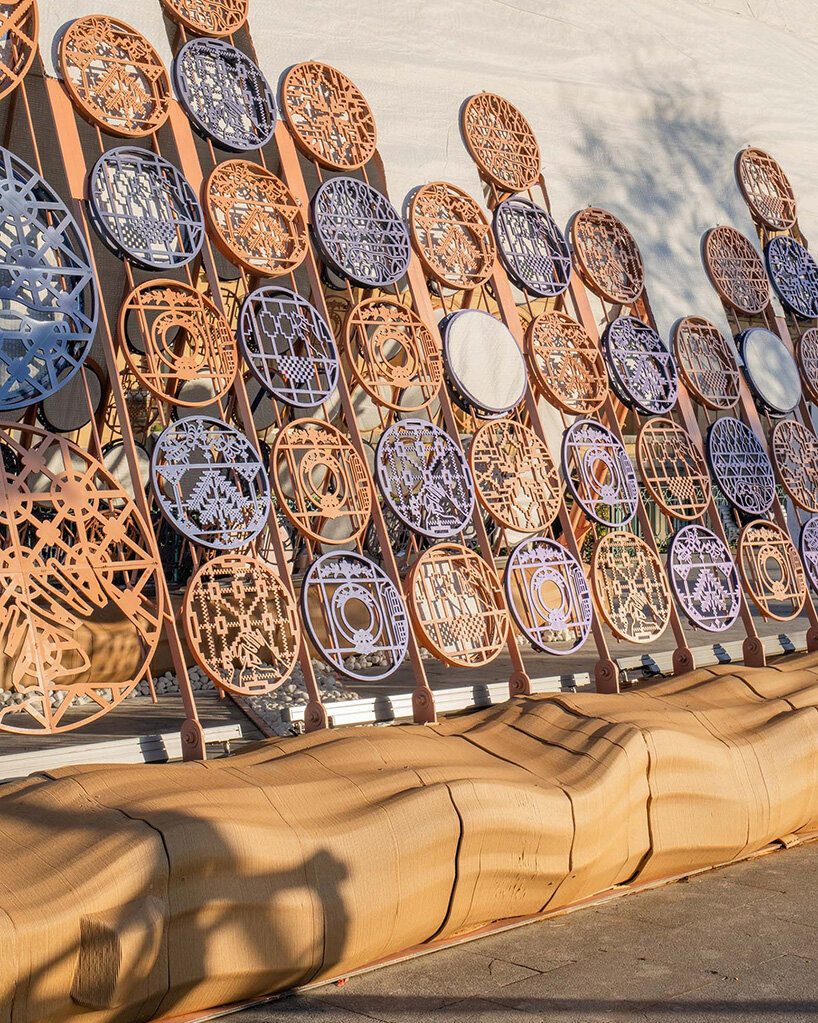
reconfigurable embroidery hoops are 3D-printed using plastic from the ocean
lightness and the ephemeral city
The pavilion remains intentionally lightweight, as recycled sails are stretched to create a translucent enclosure that responds to wind and changing daylight. The structure carries echoes of maritime equipment, temporary shelters, or even festival tents that appear briefly in public squares before disappearing again.
This sense of impermanence reinforces the project’s argument: utopian thinking emerges through temporary interventions that allow experimentation within existing urban spaces. Instead of proposing a permanent monument, the installation shapes a flexible stage where collective expression can occur through craft.
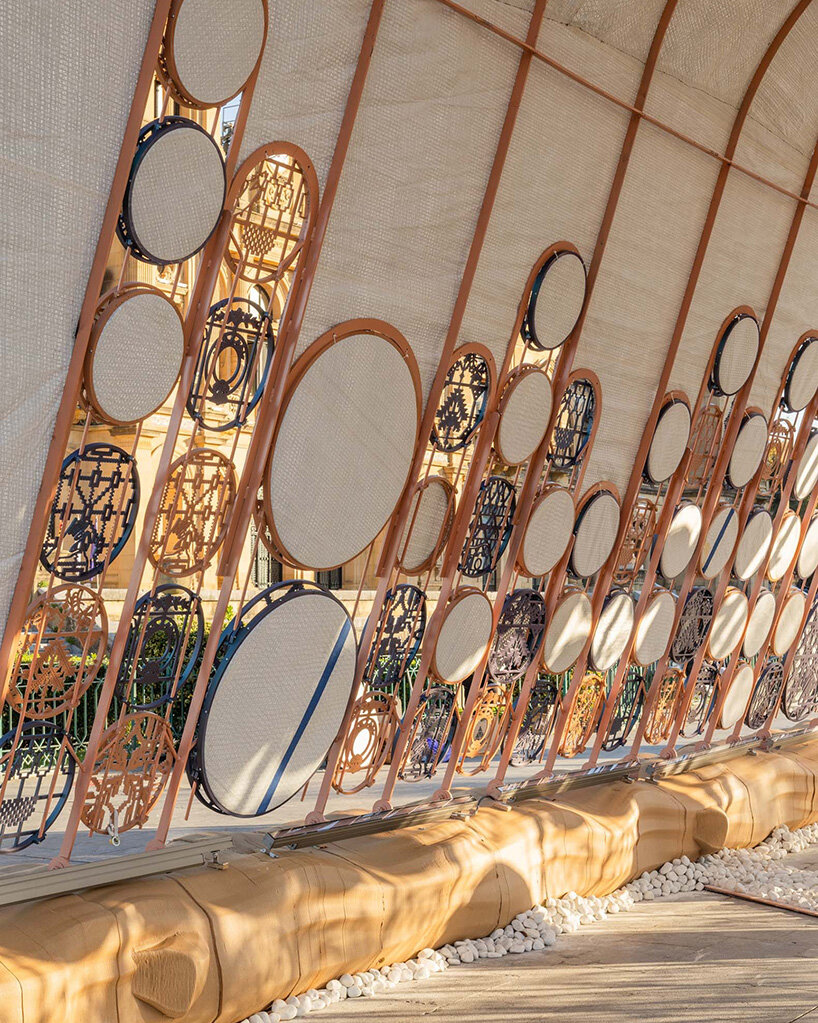
recycled boat sails form a lightweight textile structure open to the public square
a continuing design approach
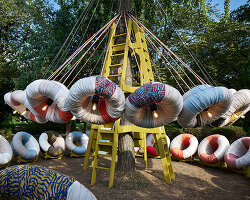
The pavilion also reflects a broader trajectory within the work of Izaskun Chinchilla Architects. In previous projects, the studio has explored how textile systems and lightweight structures reshape public space. The Solar Trees installations created from plywood and fabric brought adaptable shade structures across urban plazas in Colombia. Earlier, a Bojagi Lounge pavilion of inflatable donut structures presented was built in South Korea and invited visitors to inhabit soft, donut-shaped volumes that responded to movement and interaction.
Across these projects, the studio’s practice examines how playful materials and participatory construction methods reshape the relationship between architecture and the public — textile-based techniques become tools for engagement in the city.
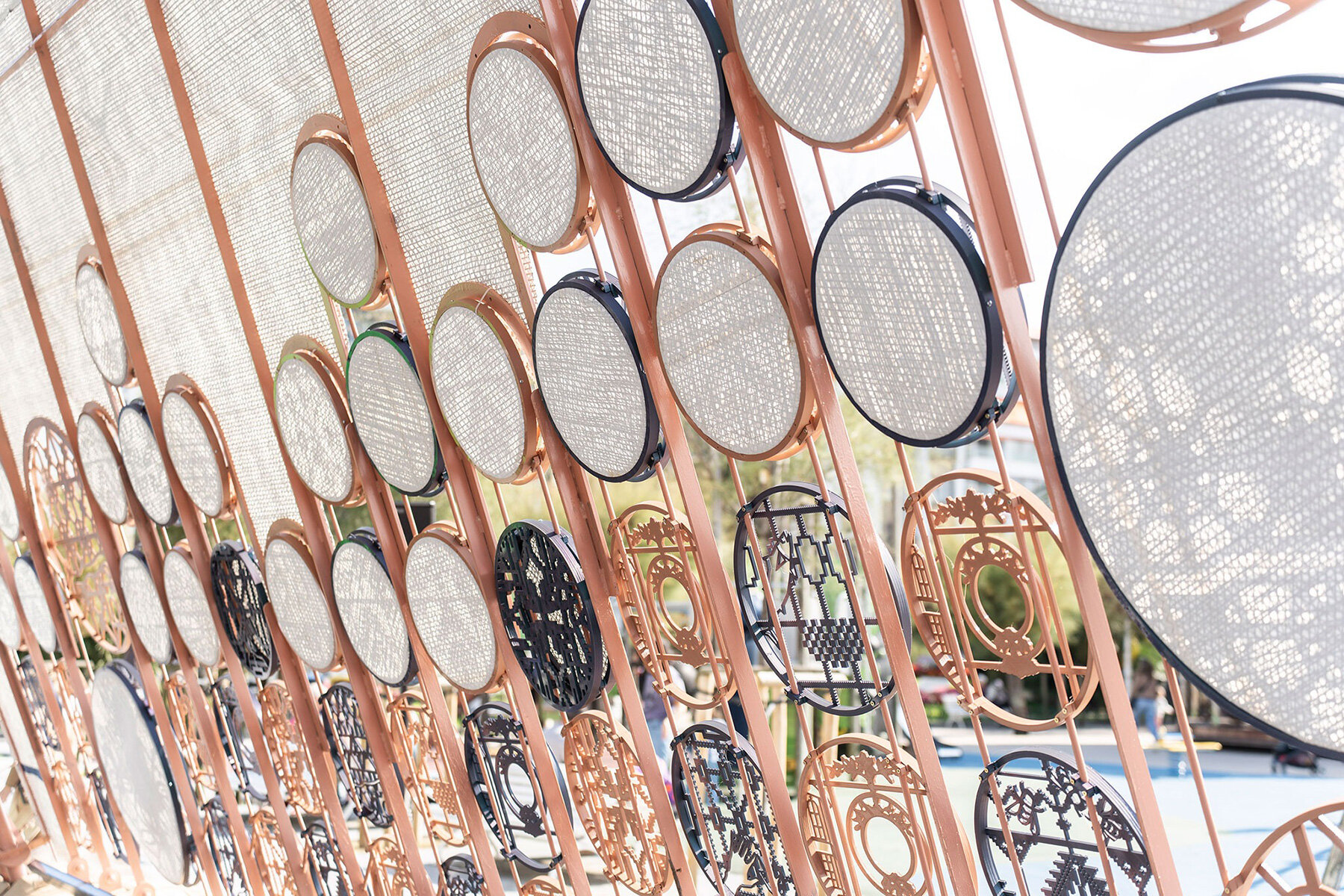
patterning within the hoops integrates symbols which address contemporary urban issues
collective gestures over abstract plans
The project eventually returns to a question: what might ‘utopia’ look like through forms of knowledge historically associated with women?
At its core, ‘Levedad y denuncia. El bordado como utopía en femenino’ proposes a modest shift in how handcrafted design envisions change. Here, utopia emerges through collective gestures rather than distant plans, and architecture becomes a framework that gathers voices and translates them into something tangible. As the studio explains, the pavilion invites visitors to imagine other ways of inhabiting the city while building those ideas ‘stitch by stitch, from the common ground.’
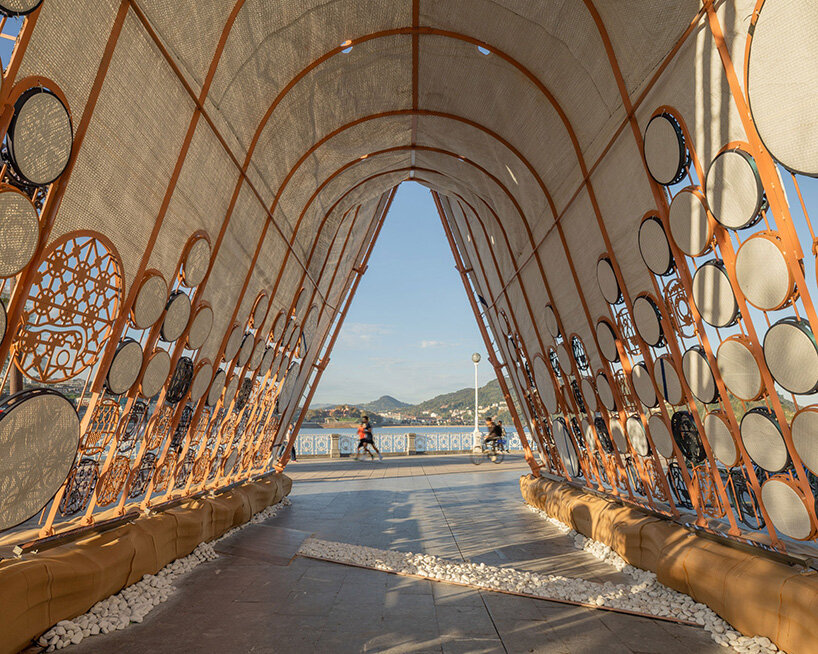
embroidery becomes a design tool for participation and protest
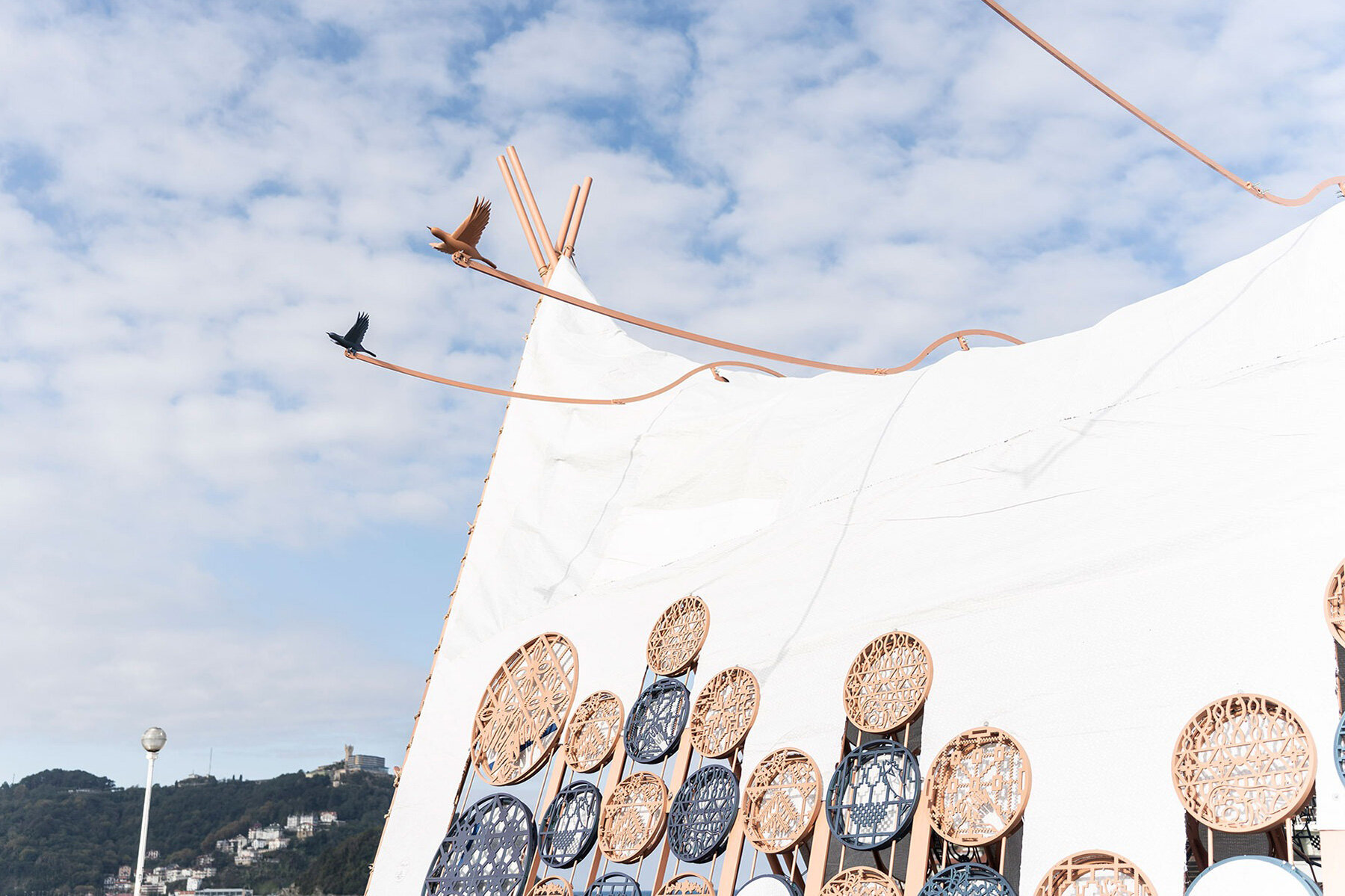
the pavilion imagines utopia as something built slowly through shared making
project info:
name: Levedad y denuncia. El bordado como utopía en femenino
architect: Izaskun Chinchilla Architects | @izaskunchinchillaarchitects
location: Explanada de Alderdi-Eder, San Sebastián, Spain
event: Mugak/ Biennial 2025 | @mugakbienal
dates: October — November 2025
embroidered art (58)
 Mar 13, 2026
 Jul 08, 2025
 Apr 02, 2025
 Mar 02, 2025
 Oct 24, 2024
interactive installation (544)
 Mar 13, 2026
 Mar 04, 2026
 Mar 03, 2026
 Mar 03, 2026
izaskun chinchilla architects (7)
 Nov 13, 2025
 Sep 08, 2023
 Jun 03, 2017
 Jan 10, 2017
 Jun 23, 2015
recycled plastic architecture (34)
 Jan 19, 2026
 Dec 06, 2025
 Nov 18, 2025
 Oct 30, 2025
 Oct 29, 2025
recycling (485)
 Mar 16, 2026
 Mar 15, 2026
 Mar 09, 2026
 Mar 08, 2026
 Mar 06, 2026
temporary pavilions (581)
 Mar 12, 2026
 Mar 05, 2026
 Feb 26, 2026
 Feb 16, 2026
utopia then and now (3)
 Mar 10, 2026
 Mar 08, 2026
 Mar 04, 2026
 Feb 24, 2026