pneumatic robotic glove aids training for stroke and hand disability rehabilitation
the neoprene glove combines EMG feedback and flexible robotics to promote both gross and fine motor skill improvement.
prefer designboom on googleidc realizes robotic glove for xft medical
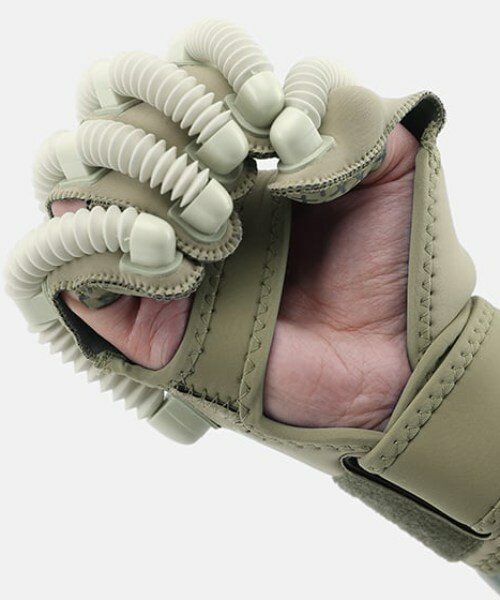
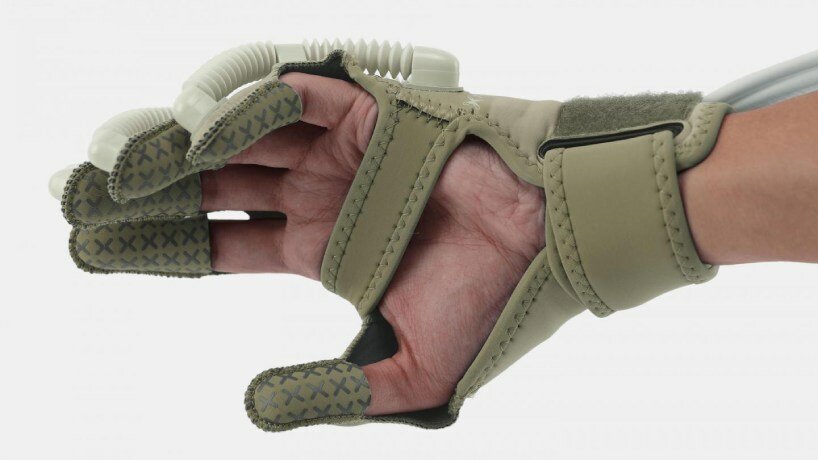
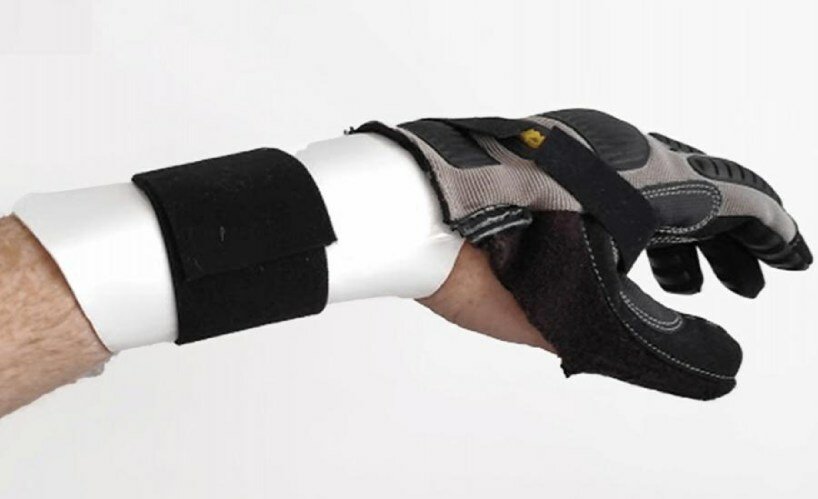
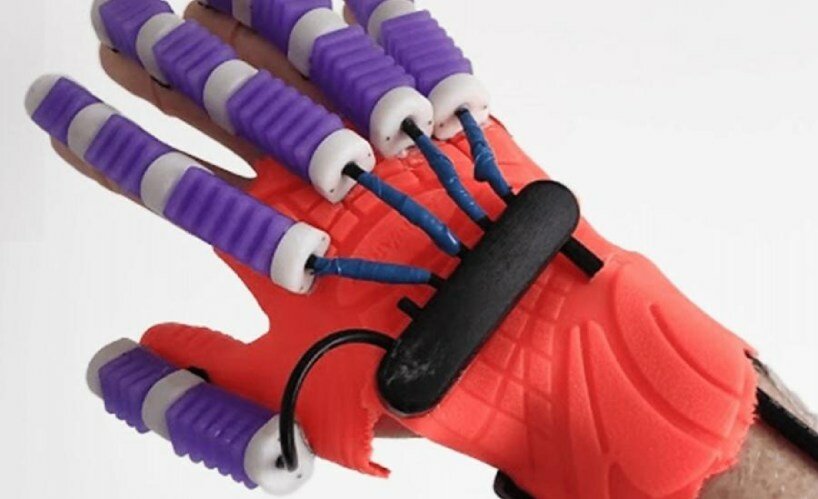
XFT Medical and IDC present the Hand Rehabilitation Glove — a training device designed to aid patients recovering from strokes or hand disabilities. The neoprene glove combines EMG feedback and flexible robotics for patients to support in training and repairing dexterity. Using flexible air-activated muscles to aid movement, the robotic glove targets limb motor function and prevents muscle disuse atrophy, enabling patients to carry out passive rehabilitation training through pre-set training programs.
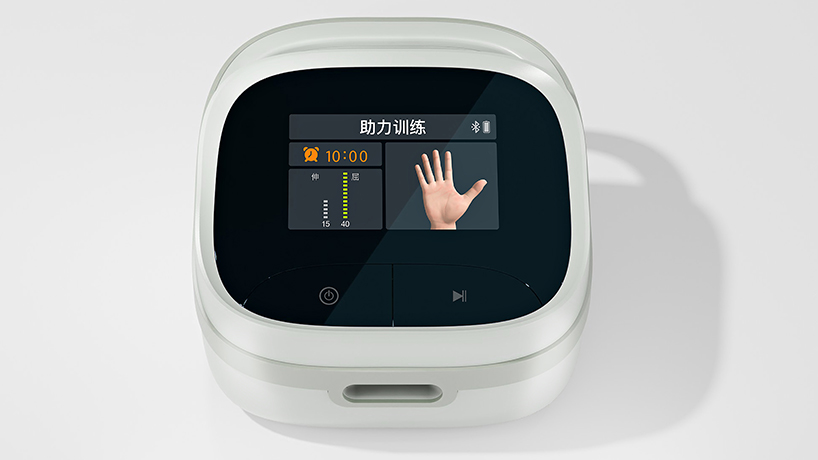
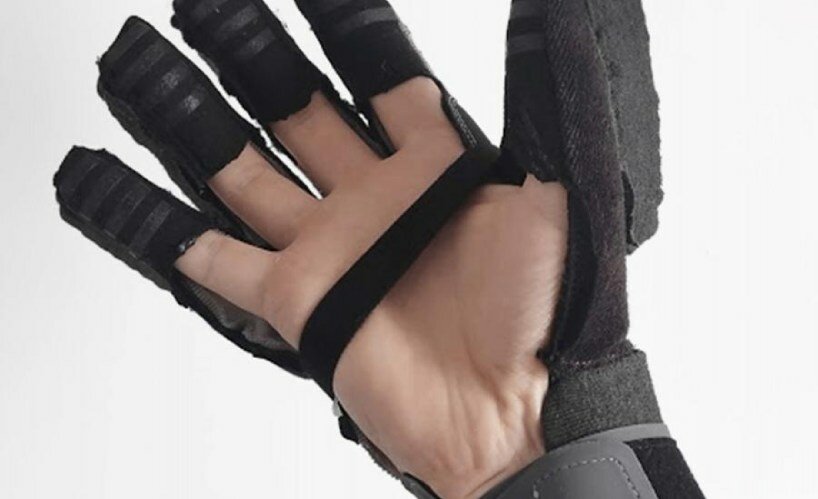
Featuring six distinct training modes, including power-assisted movement and resistance training, the glove offers a versatile approach to muscle strengthening. Users can complete specific training programs tailored for full hand movement, fingertip touch training, and single finger exercises, promoting both gross and fine motor skill improvement. With size options available in small, medium, and large, the glove ensures a comfortable fit for all, while its adjustable air pressure mechanism enables personalized strength settings, catering to individual rehabilitation needs.
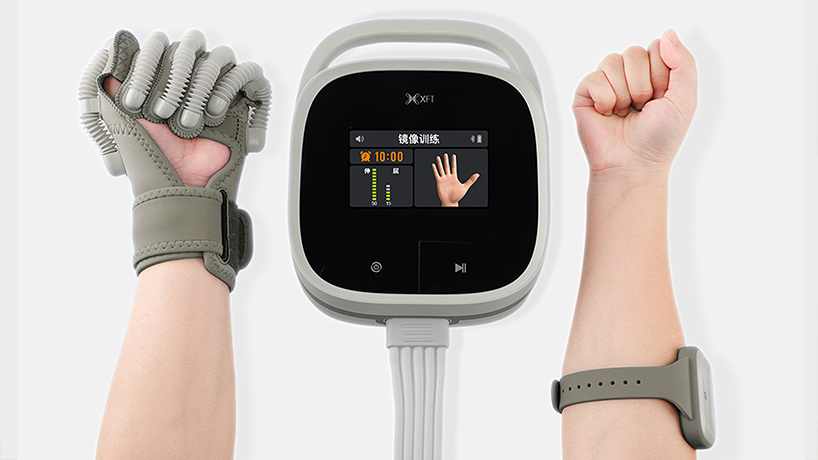
the training device accelerates repairing hand dexterity
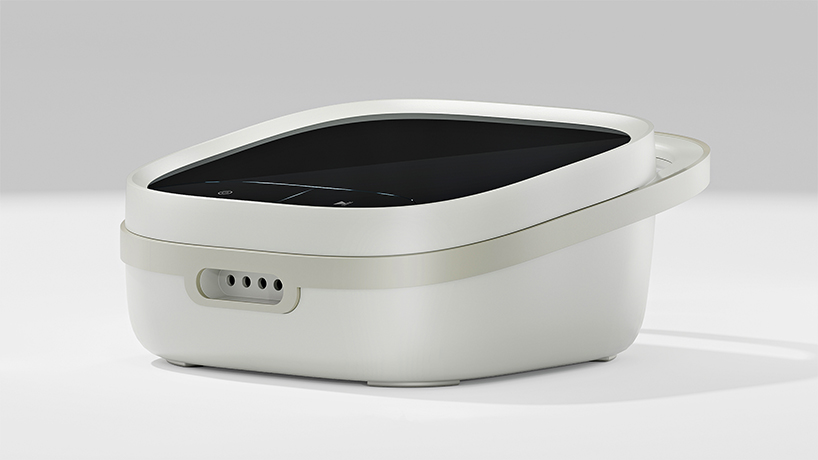
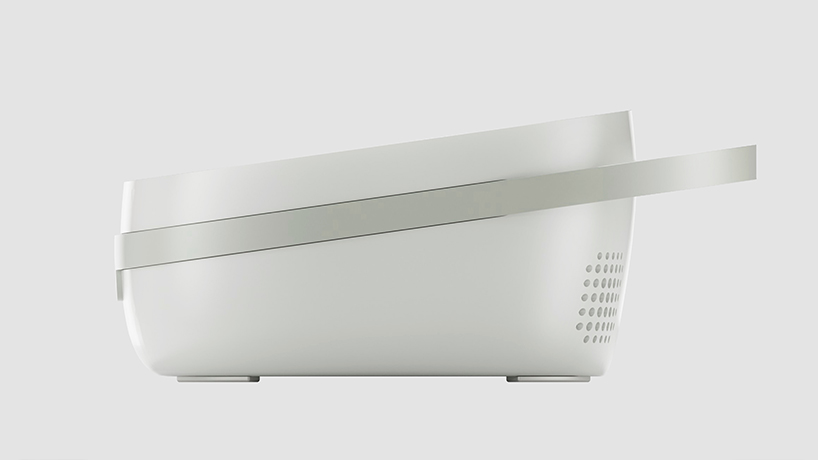
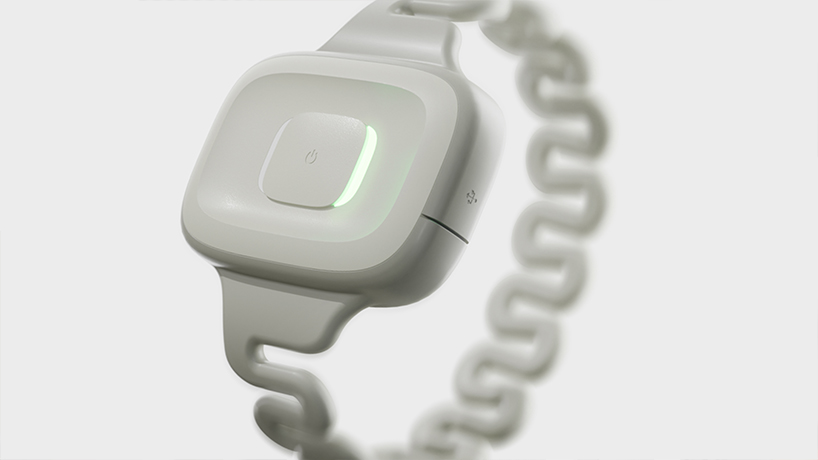
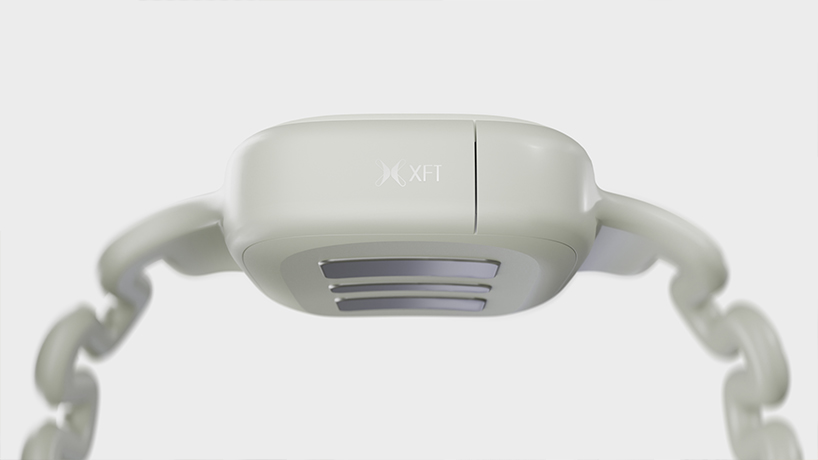
XFT Medical has had a long-standing partnership with IDC to develop a range of medical and rehabilitation devices. Their Hand Rehabilitation Glove, alongside an EMG armband and control unit aligned with XFT’s existing home medical line up, work together united by a cohesive brand identity. Integrating innovative mirror technology, the armband enables synchronous movement between unaffected between affected and unaffected hands, aiding autonomous brain recovery and accelerating the rehabilitation process.
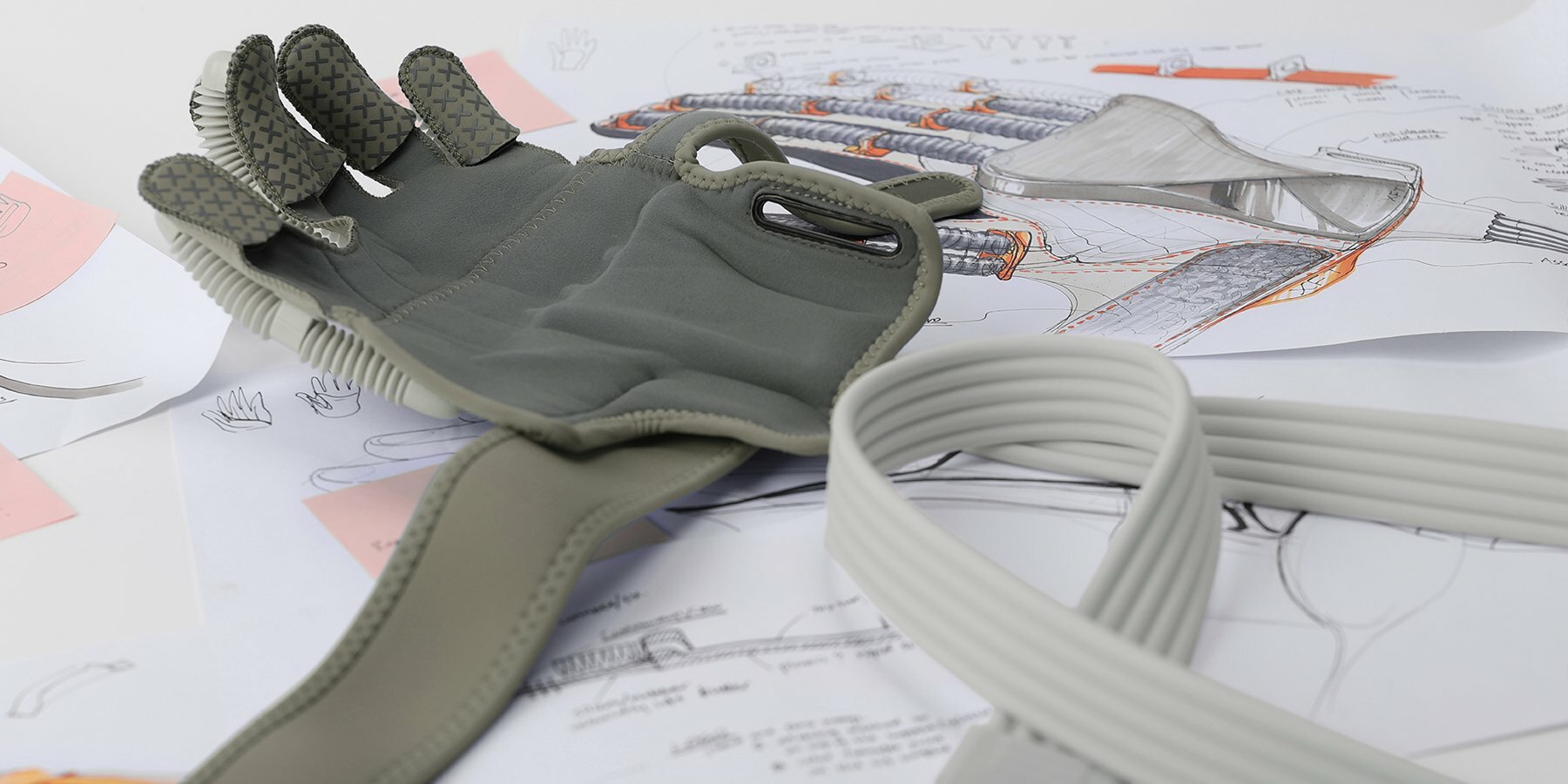
For the robotic glove, IDC followed an empathetic design process to understand and address the specific requirements of users, many of whom are affected by reduce dexterity and lack caregiver assistance to help use the product. The team recognized that the device must be simple to use, easy to put on using only one hand, leading to the design’s cut-out palm area, fingertip hoods, and supportive wrist strap. Testing was conducted to optimize the balance between functionality, treatment effectiveness, and user experience, and neoprene was eventually selected for its washability, strength, and comfort. From user testing, IDC found that often the patients had weak wrists making it hard to complete the training, prompting the integration of a wrist strap to enhance usability and treatment effectiveness.
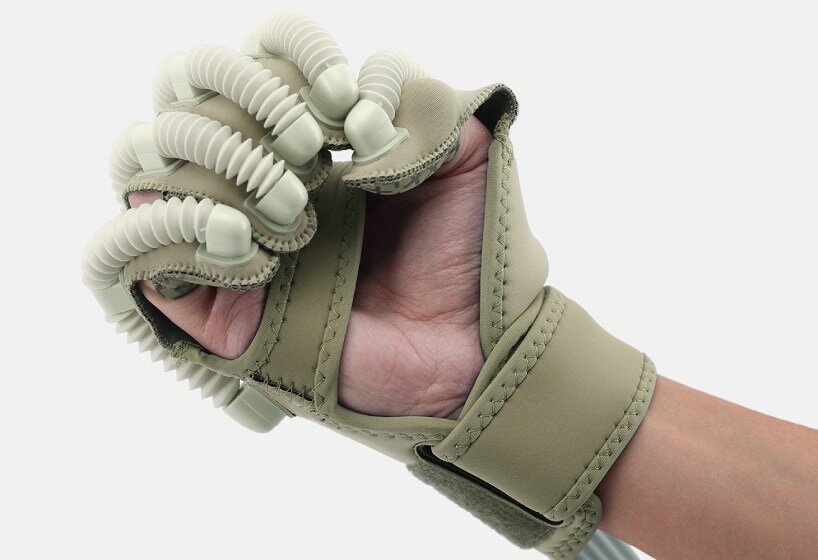
the glove’s neoprene form integrates advanced engineering
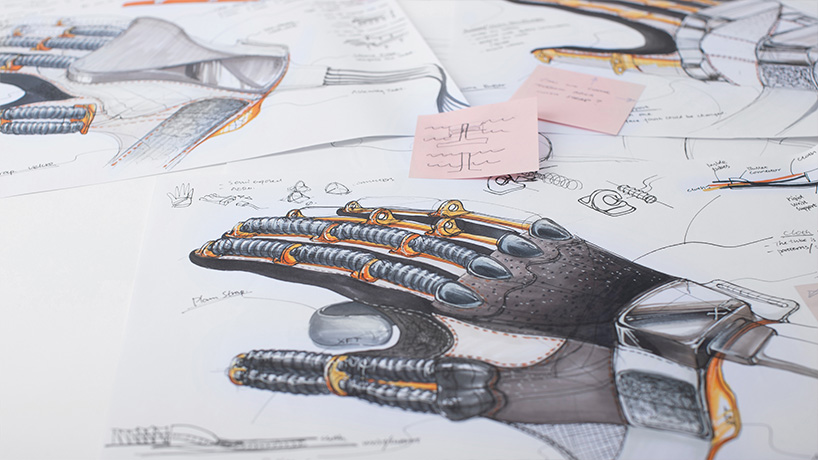
Competitor research revealed key issues with existing offerings, with bulky solutions which didn’t grant enough flexibility and mobility. Using IDC’s in-house prototyping capabilities, different solutions for the glove were tested and optimized, finding that rounded bellows expand more effectively. While initial concepts aimed for a custom integrated bellow to give the product a sleek, unified look, manufacturability constraints and cost analysis led to the adoption of proven bellows with refined junctions for a cleaner design. There was also a focus on clean and unobtrusive airway management to power the bellows from the control unit.
project info:
name: Rehabilitation Glove
designer: IDC
designboom has received this project from our DIY submissions feature, where we welcome our readers to submit their own work for publication. see more project submissions from our readers here.
shop
your own online design shop — no sales commission collected