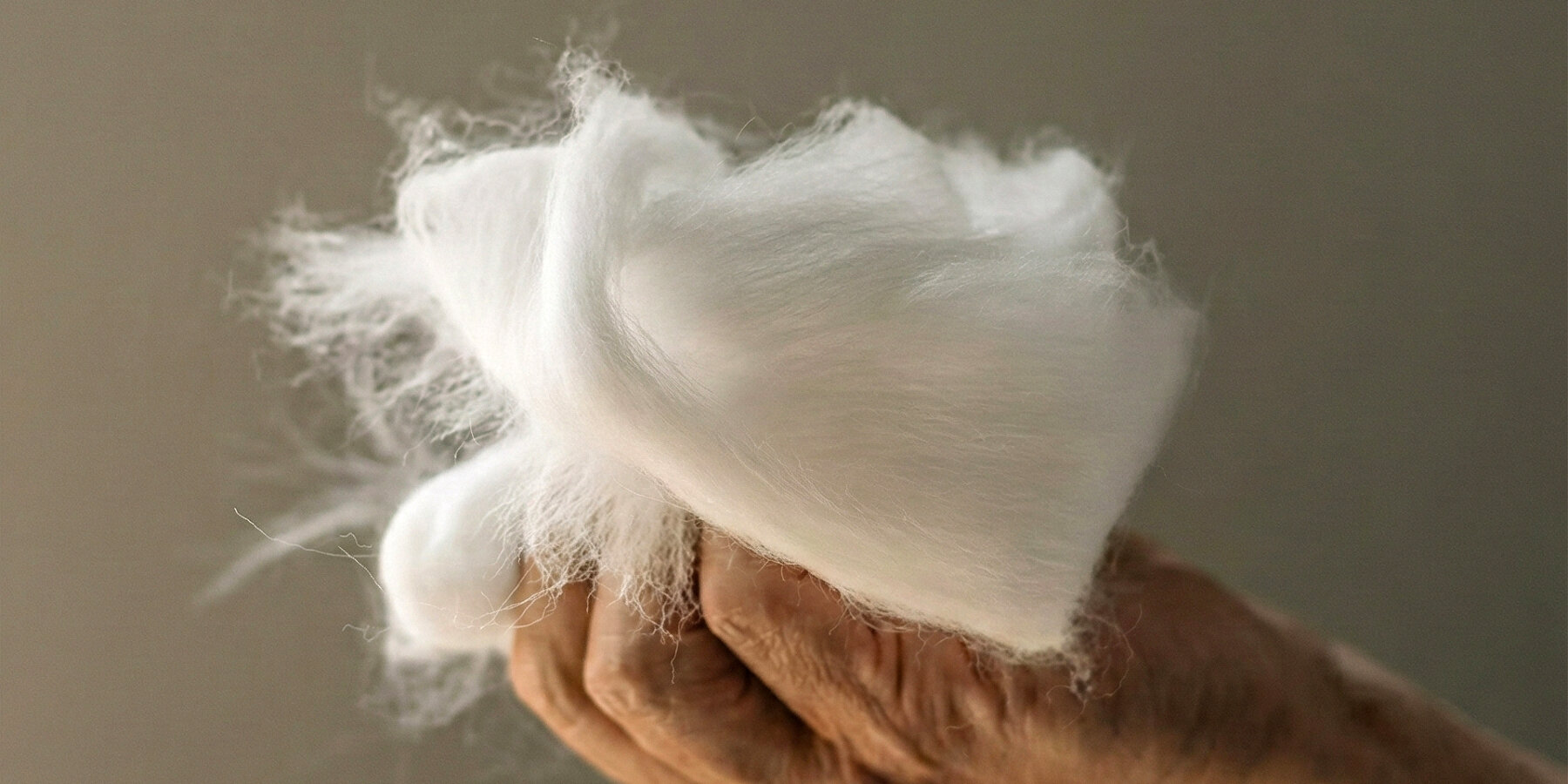
Everbloom develops AI model to recycle organic waste
Everbloom turns organic waste such as discarded down, wool, and cashmere into usable garment fibers braided by AI. The startup describes the textile as softer than merino, more indulgent than cashmere, and stronger than silk. The production process starts with throwaways that already exist and collects these protein-based materials from textile waste and agriculture. Instead of binning them, the team treats them as raw input, sorted by type and cleaned by the in-house developed AI system named Braid. It is designed to separate protein waste based on its source, condition, and composition, and it collects data from these inputs to study how they react during processing.
The model analyzes how proteins behave under changes in temperature, moisture, and molecular weight, and from this data, it predicts the properties of the final fiber before production starts, including how it will respond to tension, dye, and wear. Based on these predictions, Braid AI suggests adjustments, and they’re translated into settings for the melt-spinning machines. The model also allows different waste streams to be combined into one system, so instead of treating each input as a problem, it treats them as variables to scale production. This link between software and hardware reduces trial-and-error testing. What once took months in a lab can now be done in weeks, and this AI model shortens development time and lowers the cost of producing usable garment fibers.
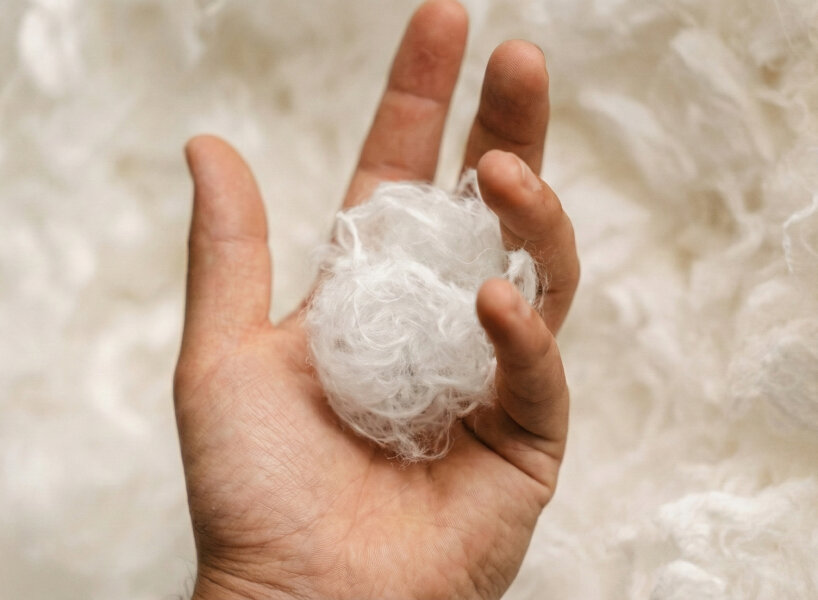
all images courtesy of Everbloom
Making the usable garment fibers for the fashion industry
Now back to the material: after cleaning the discarded organic waste, the proteins are extracted, but they’re not ready to be transformed yet into AI-churned usable garment fibers. They must be changed at a molecular level. Using protein engineering and molecular biology, Everbloom adjusts the structure of the proteins to control how the material behaves later in production. The processed protein is then turned into pellets, which are easy to store, move, and measure. They also allow the material to fit into existing manufacturing systems as well as help stabilize quality and make the process repeatable. The pellets are designed to work with standard melt-spinning machines, the ones already used across the textile industry to produce synthetic fibers.
In this case, the startup’s pellets can replace polyester in this system. When heated and stretched, the pellets form long filaments, and this allows manufacturers to adopt the AI-churned usable garment fibers without rebuilding their factories. Once the filaments are created, the next step is yarn production, taking place in Italy. The yarn is produced according to clear targets, including stretch, resistance, and hand feel, and each parameter is defined before production begins. The yarn can then be knitted or woven into fabric, and at this stage, the material is ready for use in garments. Most fibers used today are made from fossil fuels and don’t break down after use. At the same time, large amounts of protein waste are discarded each year. Everbloom positions its system as a way to connect these two issues by replacing synthetic input and reviving discarded waste into regenerated biological material at scale.

Everbloom turns organic waste into usable garment fibers braided by AI
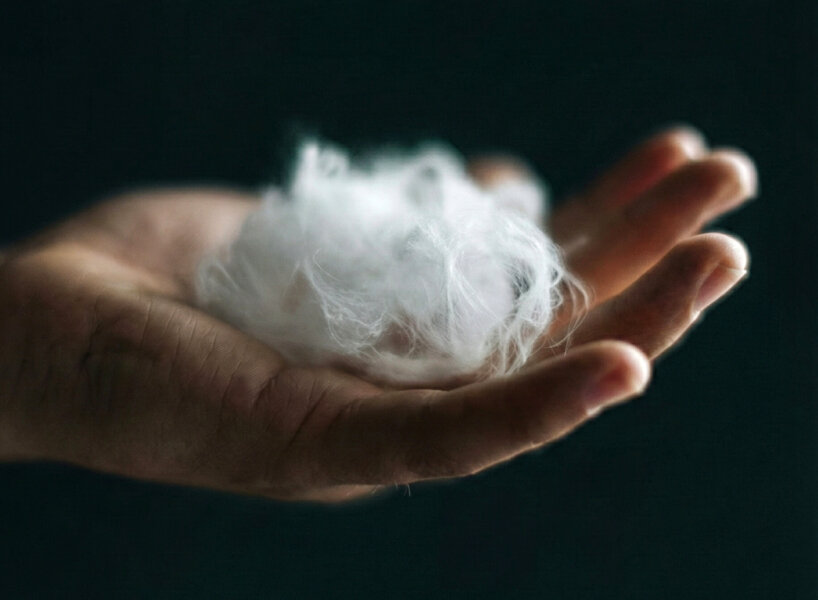
the startup describes the textile as softer than merino, more indulgent than cashmere, and stronger than silk

the yarn is produced according to clear targets, including stretch, resistance, and hand feel
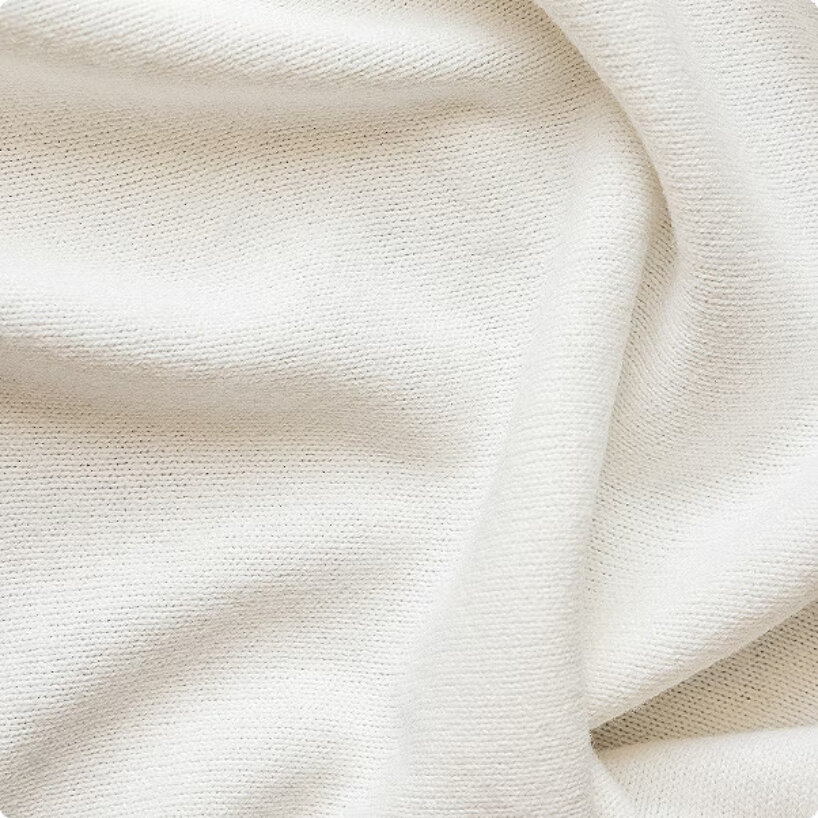
the yarn can then be knitted or woven into fabric
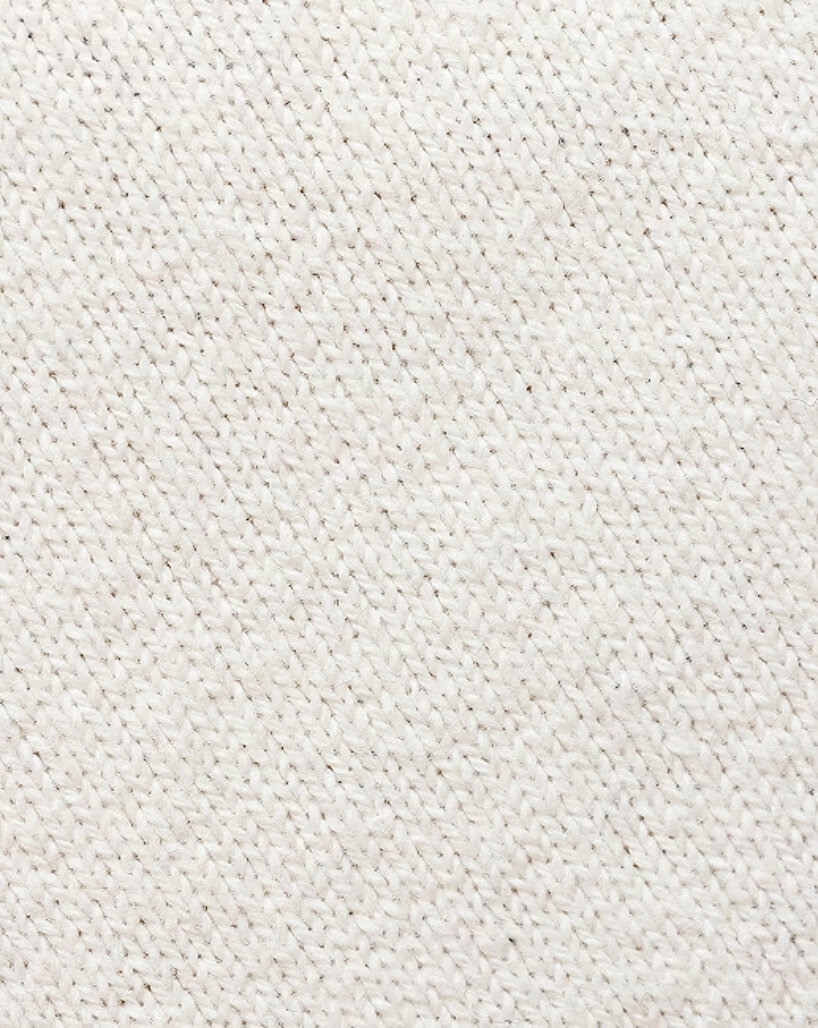
detailed view of the woven fabric
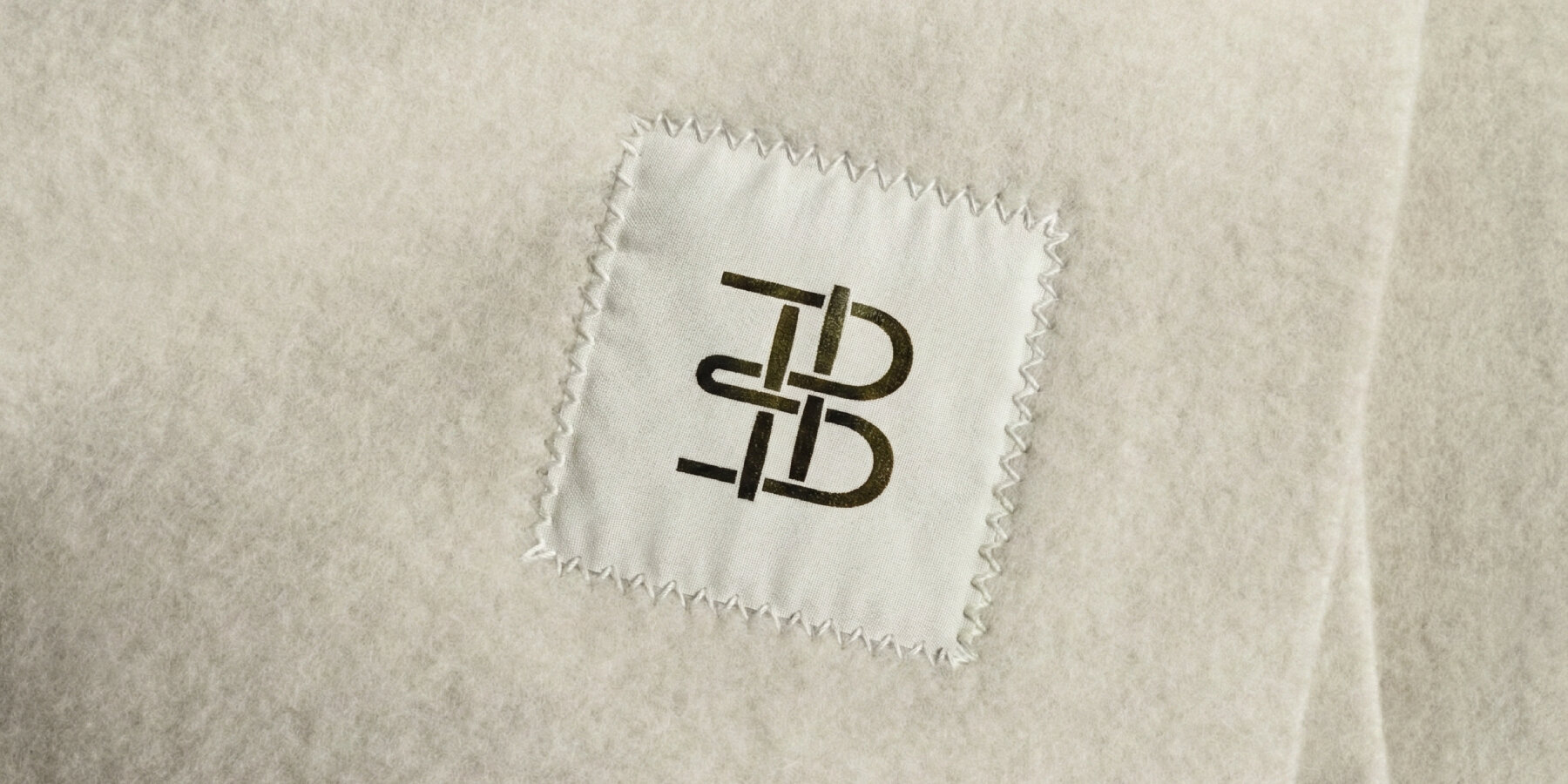
view of the resulting material
artificial intelligence (506)



fashion design phenomena (308)
 Feb 21, 2026
 Feb 19, 2026
 Feb 18, 2026
 Feb 18, 2026
fashion technology (85)
 Jan 27, 2026
 Dec 23, 2025
 Nov 28, 2025
 Nov 13, 2025
materials (193)
 Feb 20, 2026 Feb 18, 2026
 Feb 17, 2026
 Feb 14, 2026
recycling (477)
Feb 21, 2026 Feb 20, 2026
 Feb 19, 2026 Feb 19, 2026 Feb 17, 2026
textile and fabric art (83)
 Feb 13, 2026 Jan 27, 2026
 Jan 08, 2026
 Jan 08, 2026
 Dec 25, 2025
Weaving (34)
 Nov 14, 2025
 Sep 21, 2025
 Aug 27, 2025
 Aug 05, 2025
 Feb 18, 2026
 Jan 28, 2026
 Jan 02, 2026
 Dec 28, 2025