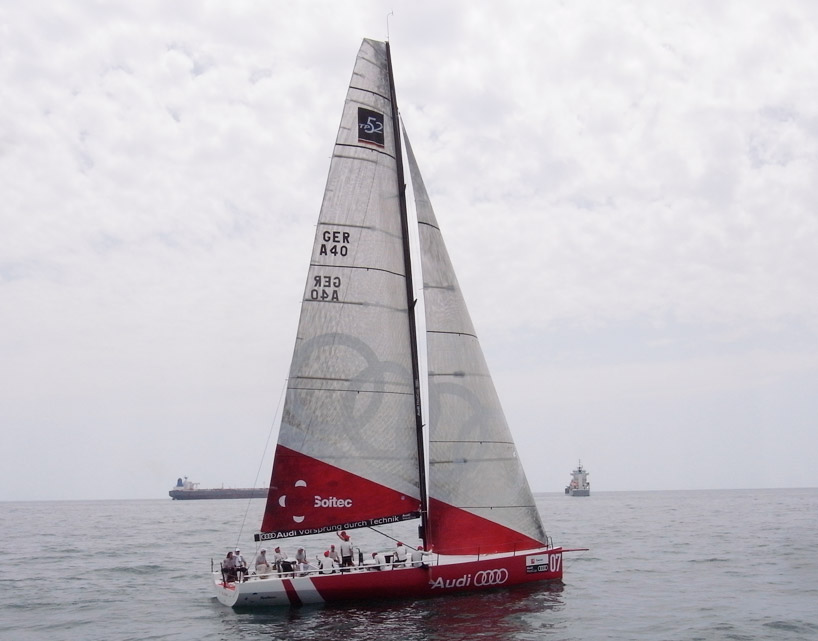
‘all4one’ designed by judel / vrolijk & co. and built by mcconaghy boats image © designboom
designboom was invited by AUDI to attend the 2011 edition of the AUDI med cup boat regatta in cascaix, portugal. the german automotive manufacturer sponsored the overall race, also supporting two of the eight competing vessels – italy’s team powered by AUDI’s ‘azzura’ and the french-german team powered by AUDI’s ‘all4one’ – both designed by rolf vrolijk.
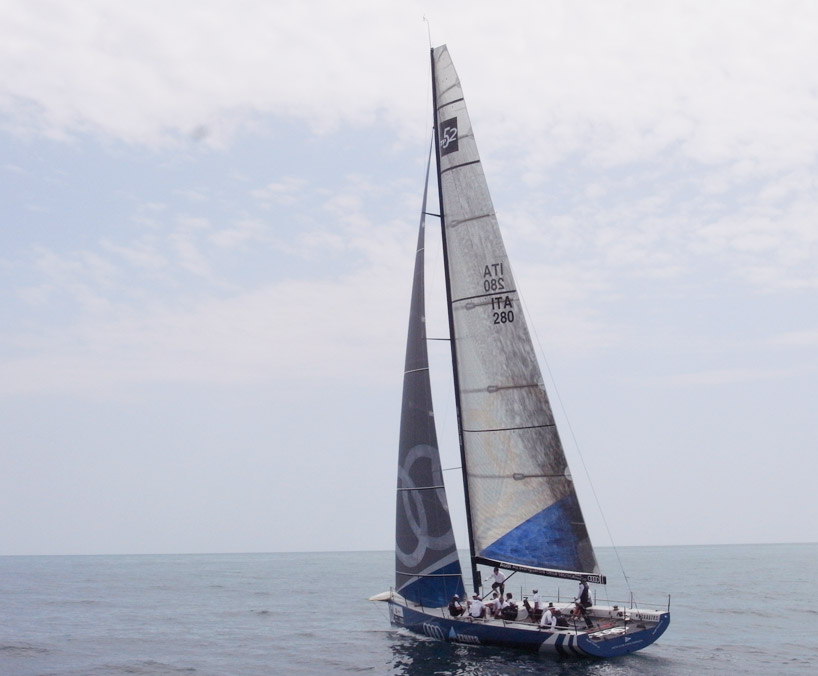 ‘azzura’ out on the water image © designboom
the basic concept behind both of the AUDI sailing boats feature the same hull design. generally, when designing yachts or boats, there is much reference made to the previous year’s design, trying to improve and optimize the form in order to produce a better forming boat. however, this year, there was a change in the 52 class (boats measuring 52 feet long – 15.85 metres) rules, which allowed vrolijk to look at alternative design options. he developed two different specifications: one which is based on the existing boats of last year, and another in which he tried to find optimal performance because the old concept they felt had basically hit a wall and needed to be reworked. hull shapes are similar across ‘azzura’ and ‘all4one’, but each are built in different yards: ‘all4one’ built by mcconaghy boats / designed by judel / vrolijk & co.; and ‘azzurra’ built at king marine / designed by rolf vrolijk. despite this, they are based on the same structural designs. decks are 80 percent identical, with appendage configurations varying slightly.
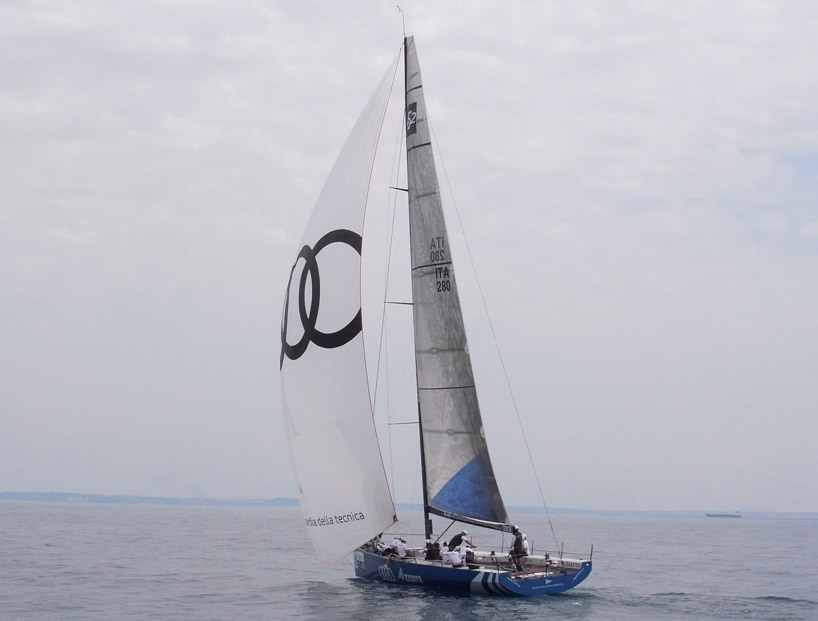 image © designboom
the TP52 is a racing yacht that sails significantly faster than many larger race vessels. this is due to the boat’s high stability, light weight hull, deep keel with a large bulb on the end of it, a big powerful sail plan and the high performance dinghy-like hydrodynamics of the hull.
mark shipard from AUDI interviews boat designer rolf vrolijk on the overall design approach of the two AUDI sailboats
 image courtesy of AUDI
when designing a boat, emphasis falls more on performance, and less on aesthetic as in car design. normally an important factor is reducing the weight of the boat, however the intended ‘box rules’ give you a weight limit, sail area limit and vessel length limit. in some conditions, one may want to build the boat lighter, but you are unable to – there is a minimum weight. designboom spoke with rolf vrolijk about these restrictions and the amount of flexibility he has in working within these parameters.
rolf vrolijk discussing the weight restrictions of the vessels
in past one was able to have an overall total weight and distribute it over the structure as they desired, but now, a boat is measured on stability and its center of gravity, and boats are not allowed to have a centre of gravity that is lower than a certain point – measured and calculated. this is a very complex way of measuring boats. the bulb of the boat has a maximum length weight and the fin has a maximum weight, so now, you basically only weigh the total of the fin and the bulb which has a maximum weight of 4800 kg.
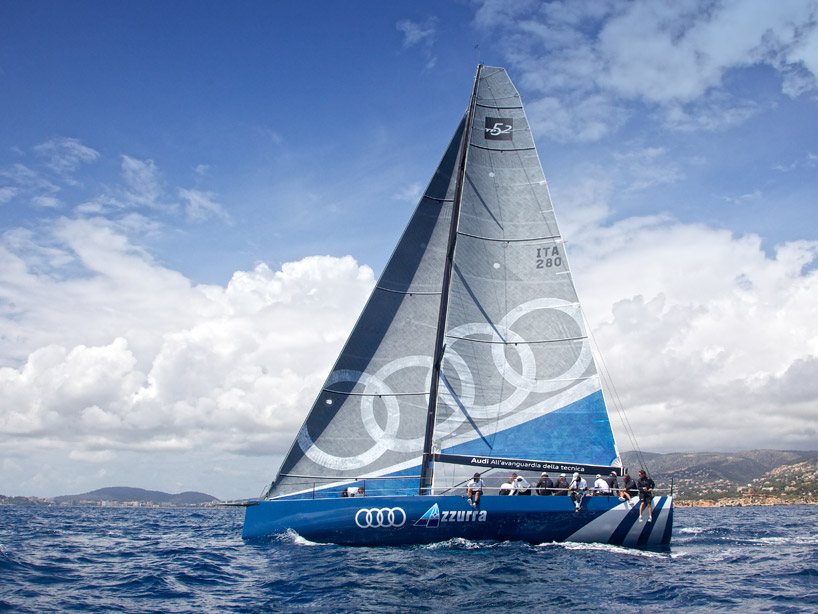 image courtesy of AUDI
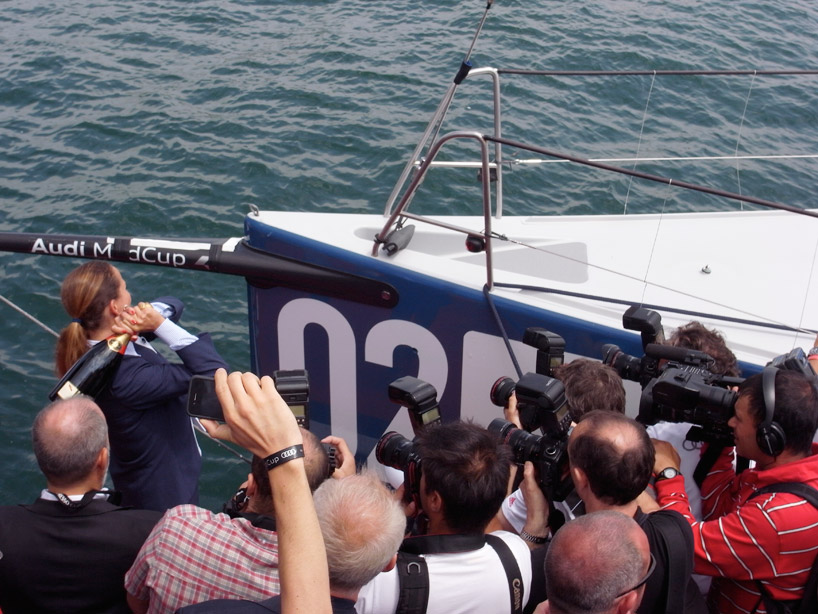 princess zahra aga khan, president of the board of directors of the yacht club costa smeralda christening the ‘azzurra’ image © designboom
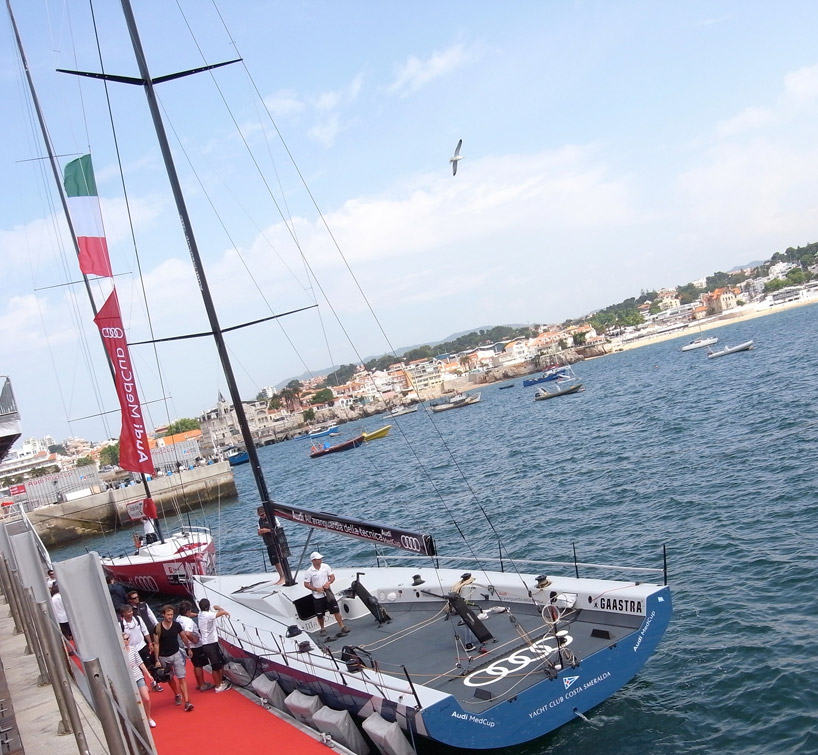 image © designboom
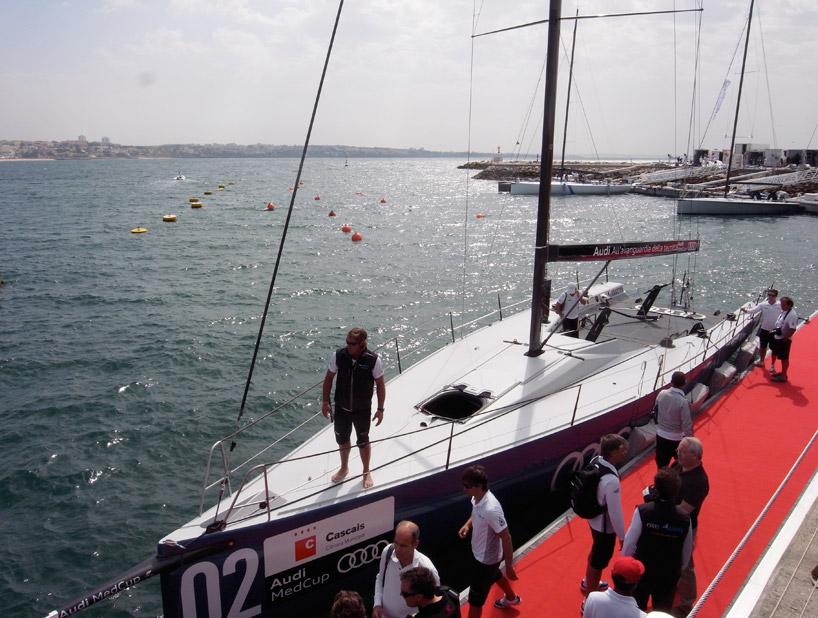 view of ‘azzurra’s deck’ image © designboom
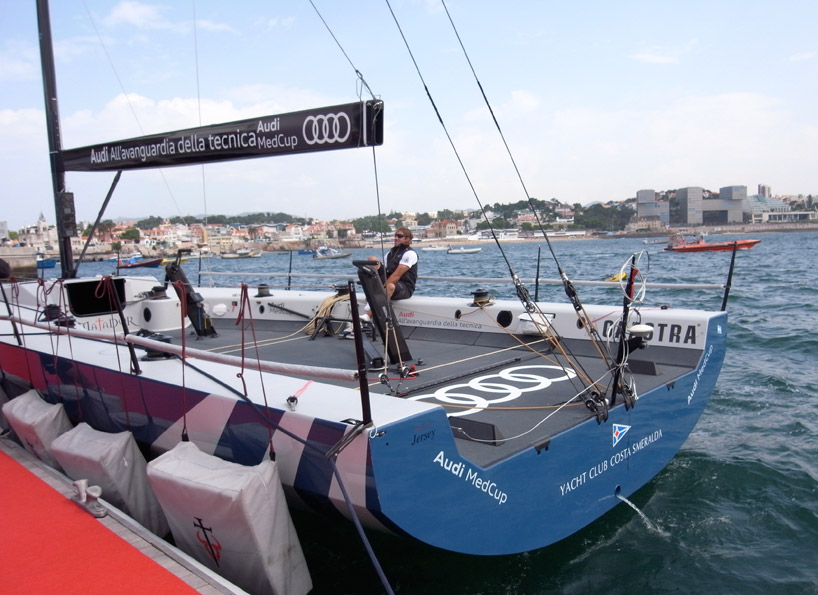 image © designboom
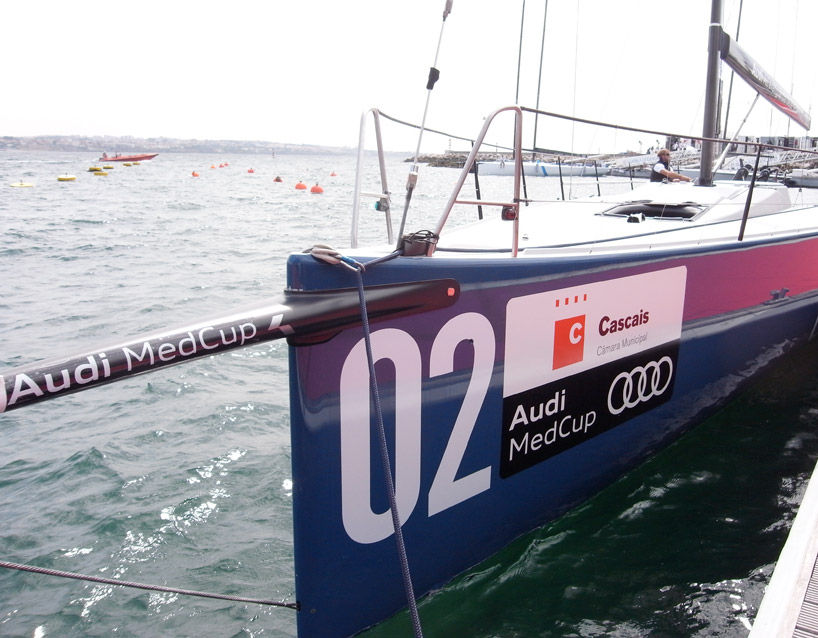 the bow of the ‘azzurra’ image © designboom
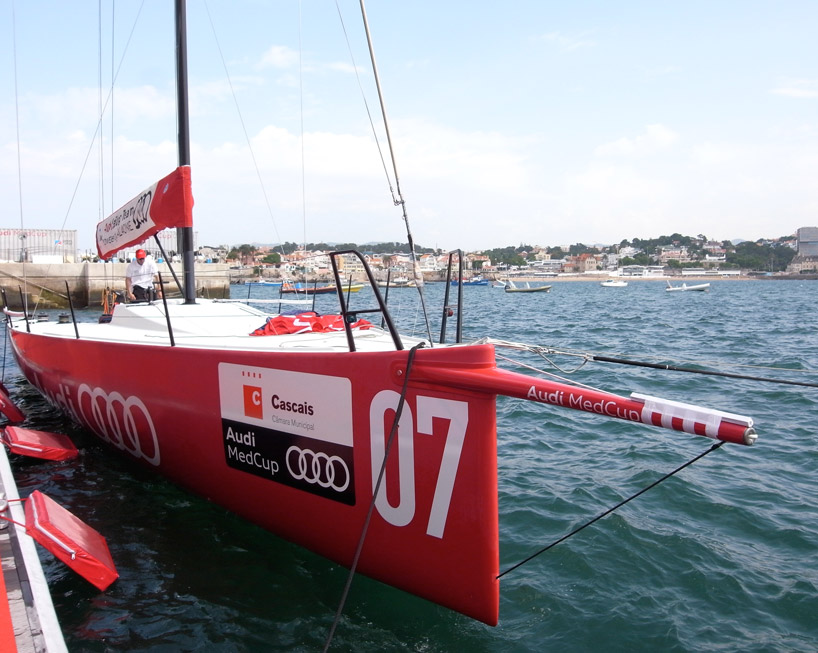 ‘all4one’ image © designboom
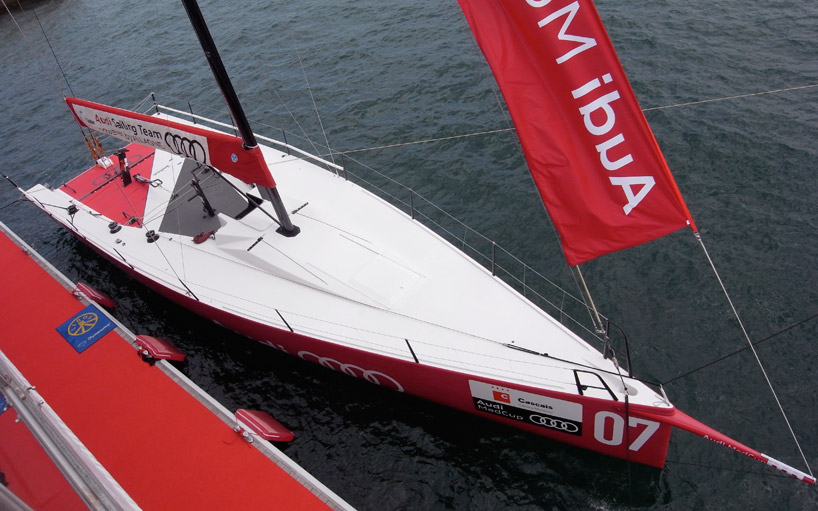 top view of the ‘all4one’ deck image © designboom
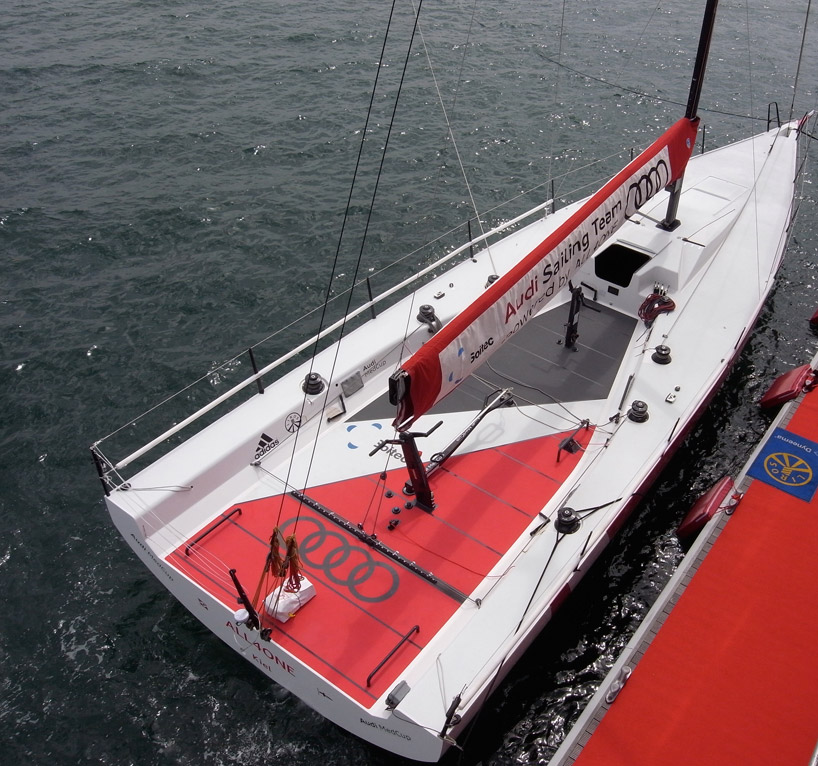 full view image © designboom
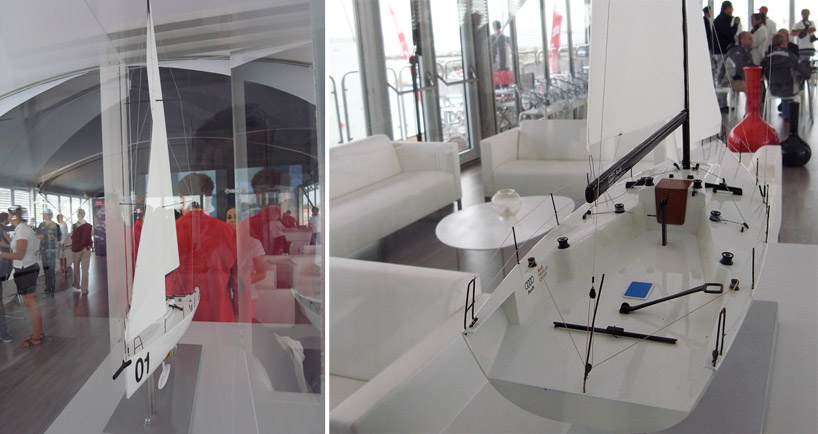 models of the racing boats image © designboom
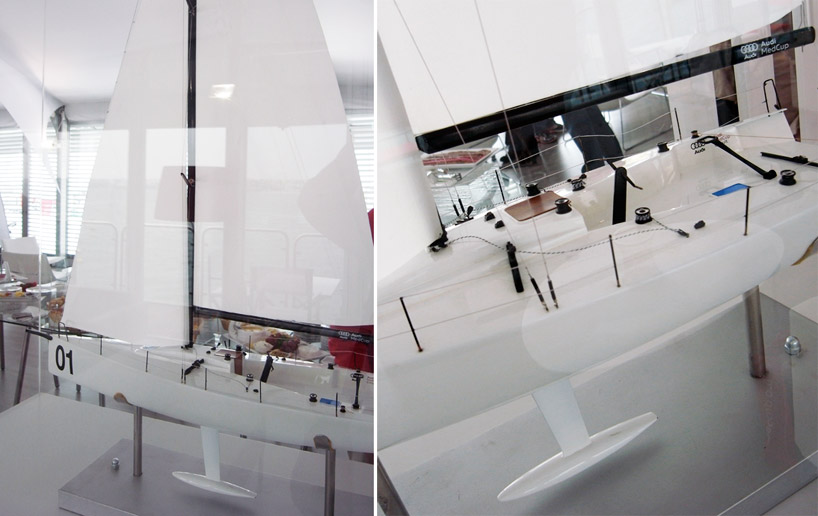 models of the racing boats image © designboom
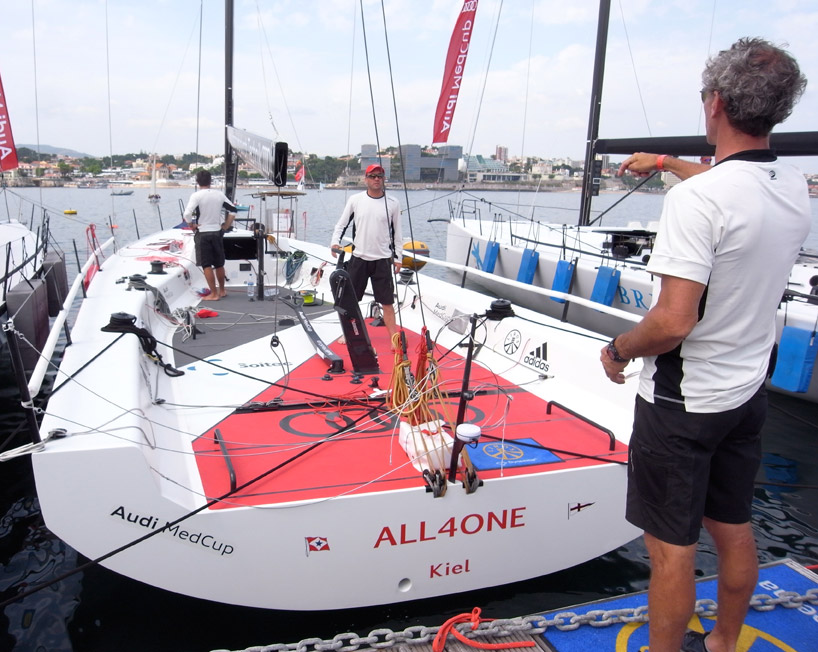 the ‘all4one’ team in action image © designboom
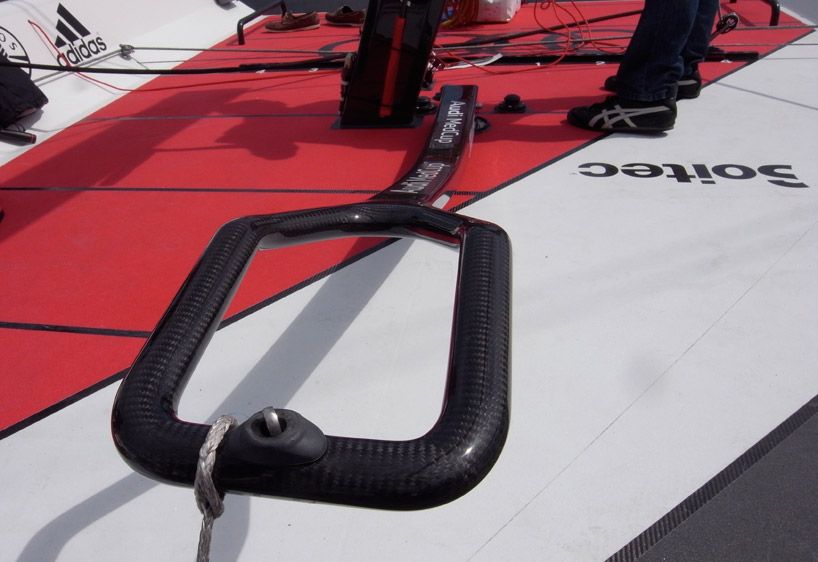 carbon fibre details image © designboom
when designing the boats, there are no newly developed materials applied as it needs to be available everywhere. the whole superstructure is made entirely of a carbon fibre shell that wraps around a honeycomb core. the rig, mass, bulb is also made from carbon fibre. however, there are elements in which metal is a better material because of the unidirectional orientations of it. sometimes a metal fitting is a better choice than a carbon fibre fitting. keel fins are made from steel as the material accommodates a certain amount of bend. you want a fin to have torsion so you are able to adjust its angle, pointing more upwards, giving you control of the weight of it with the centre of gravity as low as possible, as now rules state that the fin needs to be of a certain weight, which makes designing a bit more difficult.
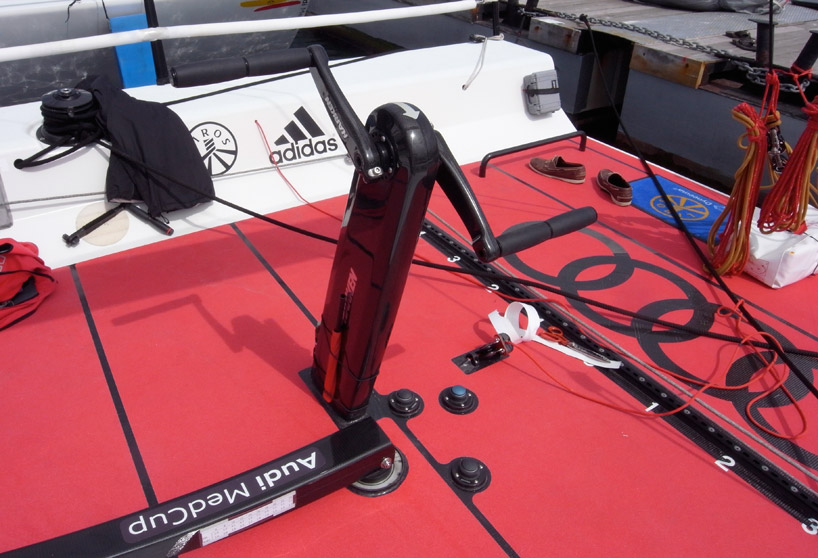 image © designboom
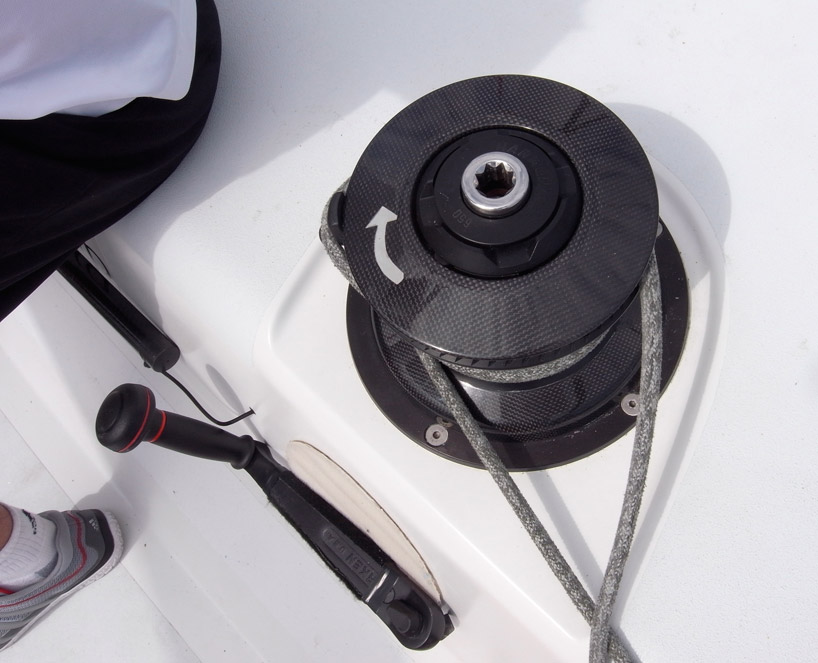 all aspects of the boats are made of carbon fibre except for areas where metal is a better material for the purpose image © designboom
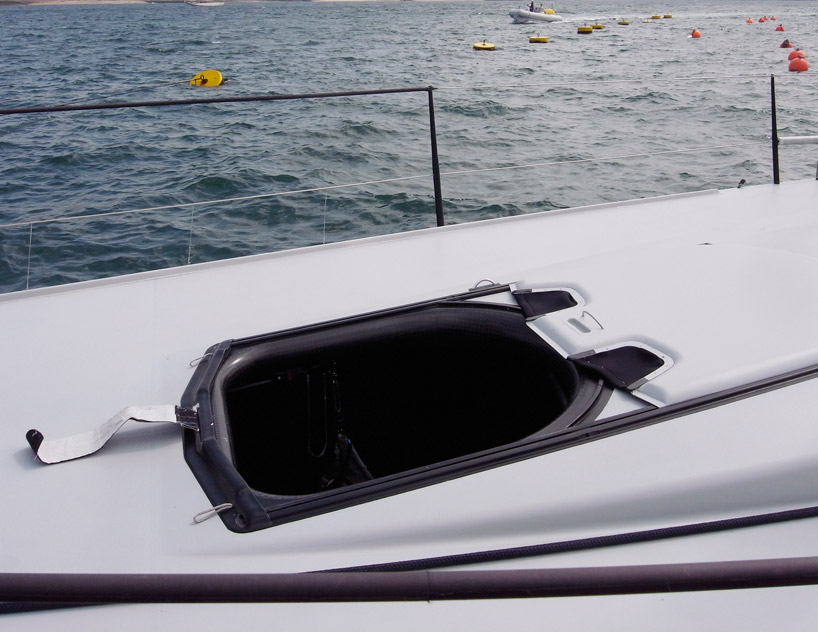 image © designboom
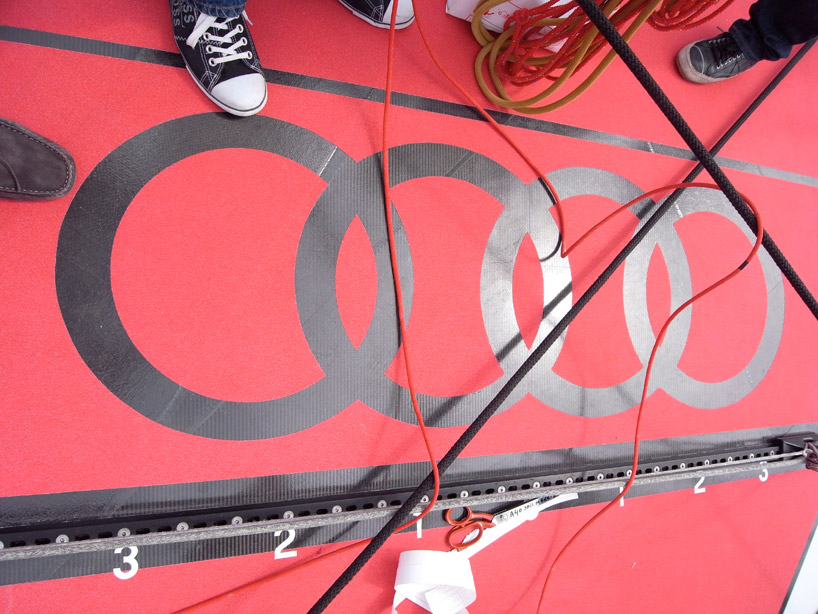 AUDI logo in carbon fibre image © designboom
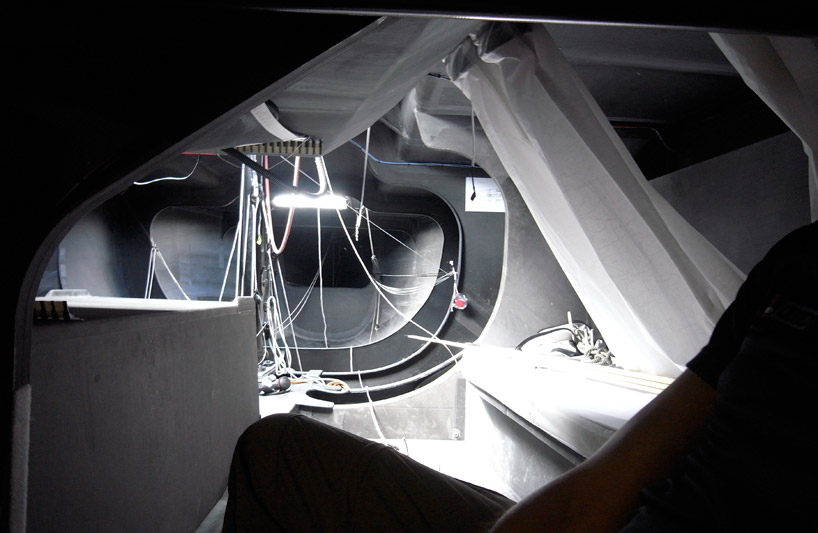 inside the hull image © designboom
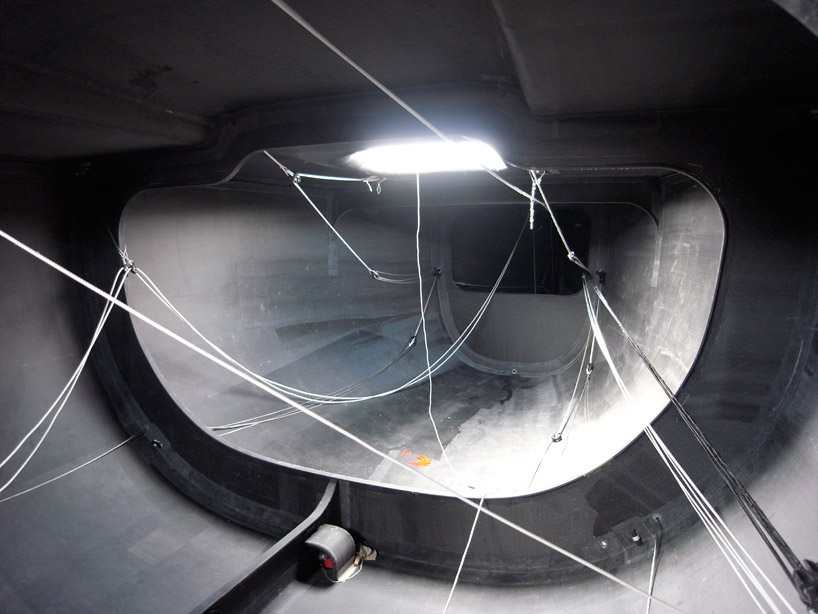 image © designboom
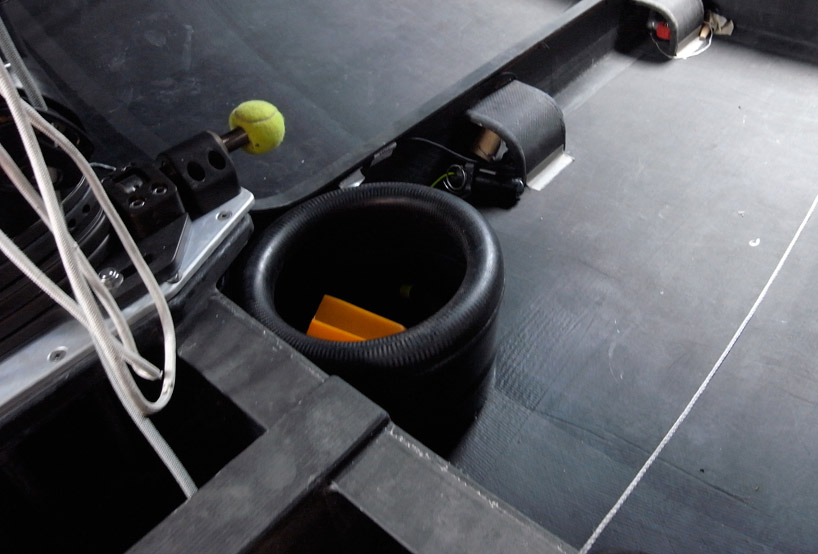 the ‘bathroom’ image © designboom
images of the AUDI boats under construction:
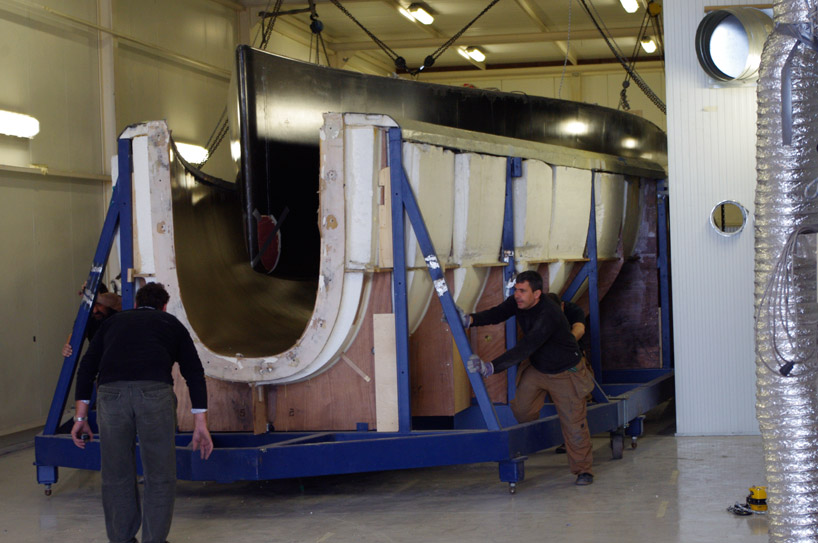 image courtesy of AUDI
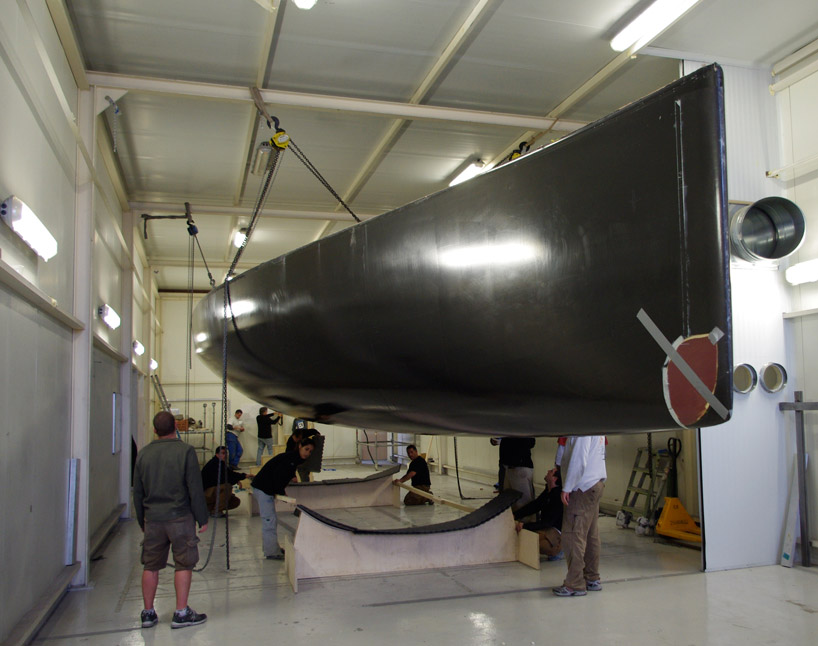 image courtesy of AUDI
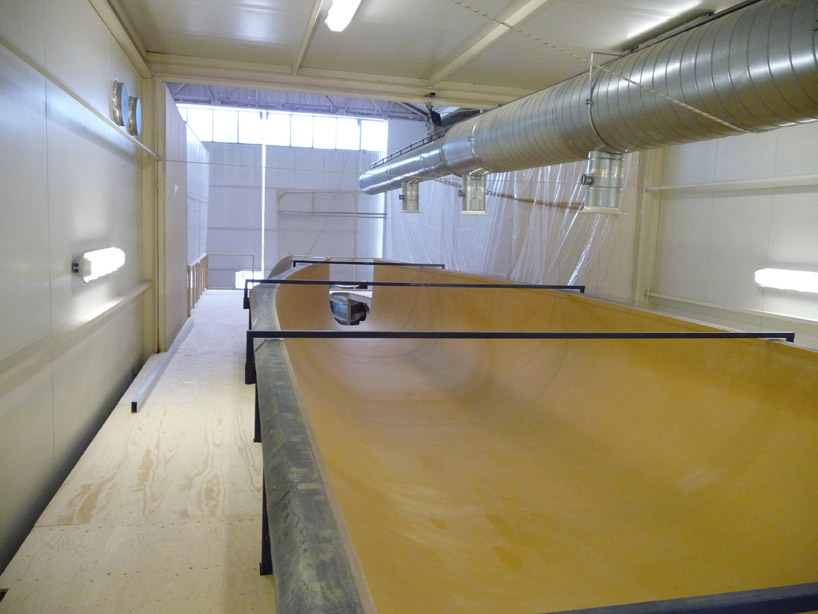 working on the hull image courtesy of AUDI
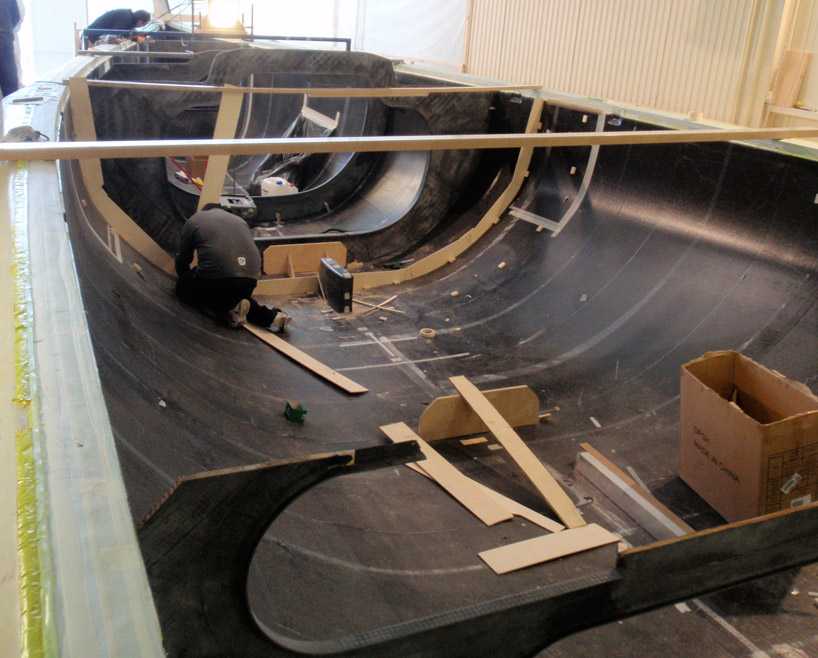 image courtesy of AUDI
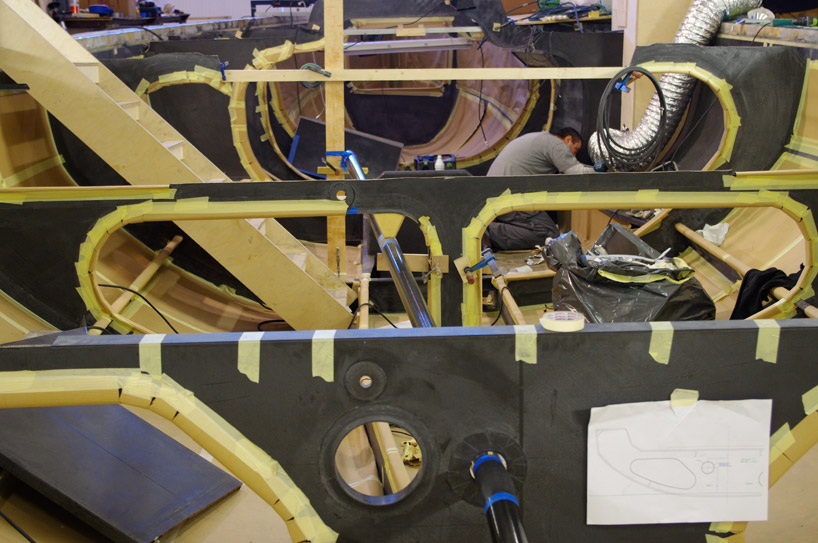 structural components of the hull being installed image courtesy of AUDI
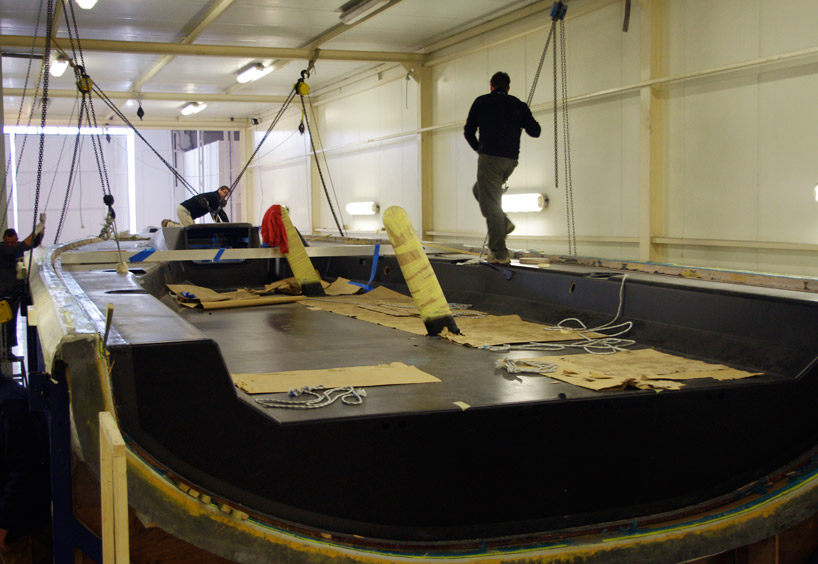 finishing off the carbon fibre deck image courtesy of AUDI
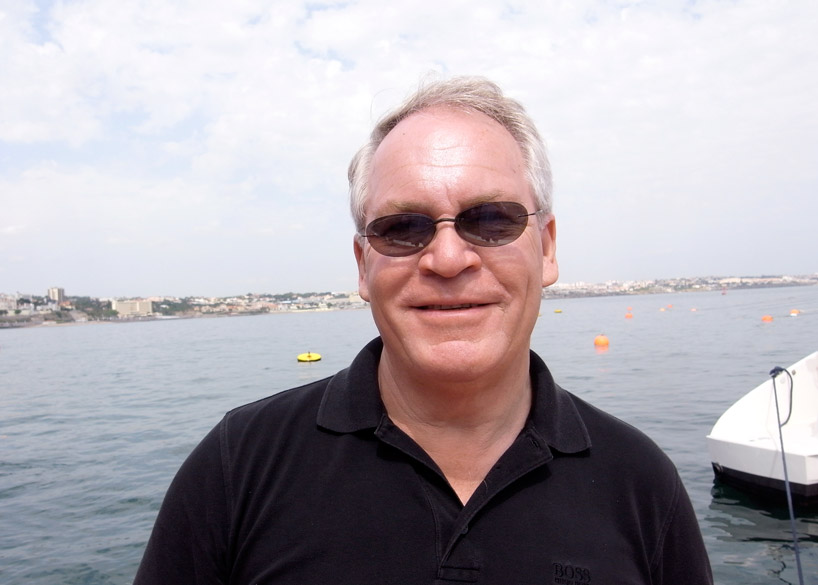 designer rolf vrolijk portrait © designboom
AUDI (140)
 Sep 03, 2025
 Apr 07, 2025
 Nov 08, 2024
 Sep 05, 2023
 Jul 11, 2023
super sport (103)
 Feb 09, 2022
 Jul 28, 2017
 Dec 12, 2016
 Oct 24, 2016
 Aug 17, 2016
yacht design (246)
 Sep 26, 2025
 Sep 17, 2025
 Jul 25, 2025
 Jun 30, 2025
 Feb 22, 2025
 Jan 02, 2026
 Dec 28, 2025
 Dec 17, 2025
 Dec 04, 2025