how the spectacular set design of alejandro g. iñárritu’s digger unveils a wild masterpiece
a story about the most powerful man in the world and the environmental catastrophe he unleashed turns out to be something else entirely, and with every shift the disaster moves a little closer to the audience watching.
[FEATURED]
Spoiler alert! We are about to delve into what Digger spends its first half hour hiding – if you have not seen the film yet, save this piece for afterwards.
A CLOSER LOOK AT THE SCENOGRAPHY in ALEJANDRO G. IÑÁRRITU’S DIGGER
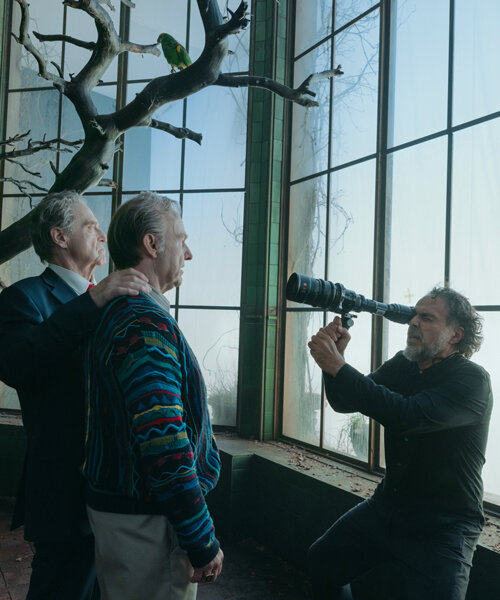
About thirty minutes into Alejandro González Iñárritu’s Digger, a model tree falls over, a section of what had looked like a hillside opens up, and a giant man steps out to pick it up while the rest of the crew floods the frame behind him. The director starts shouting instructions, Tom Cruise drops the Texas accent, and everything you have watched so far turns out to have been a technical rehearsal for the 25th anniversary of a stage play called Fossil Fools.
Cruise has been playing Curtis Markson, an actor cast as the oil baron Digger Rockwell in a play about the massive global environmental and climate catastrophe that Rockwell, the most powerful man in the world, has caused: a Greenland drilling operation that releases an enormous ice shelf toward Europe and drowns the coastlines of the world.

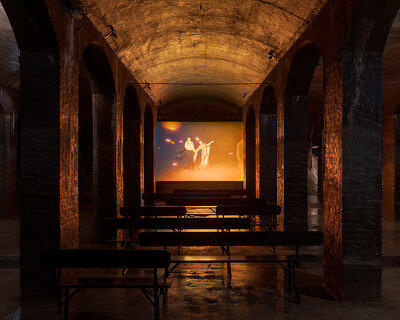
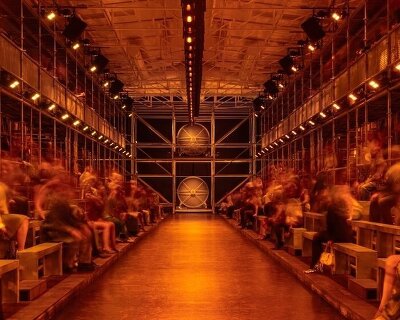
It is a plot twist, and a designer’s one, because it first arrives not in dialogue but as a stage technician walking into the shot to deal with a fallen tree. That is the first of four positions the film puts its audience in, each one first arranged by the scenery rather than announced by a character: a mansion that holds the disaster at a safe distance, a play with an audience sitting in front of it, a play that turns out to be a reconstruction of something real, and finally no distance at all. The sets are not a structural game but a measuring instrument for the distance between spectator and spectacle, and across two hours they shorten that distance to nothing.
SET DESIGN AS A STORYTELLING DEVICE
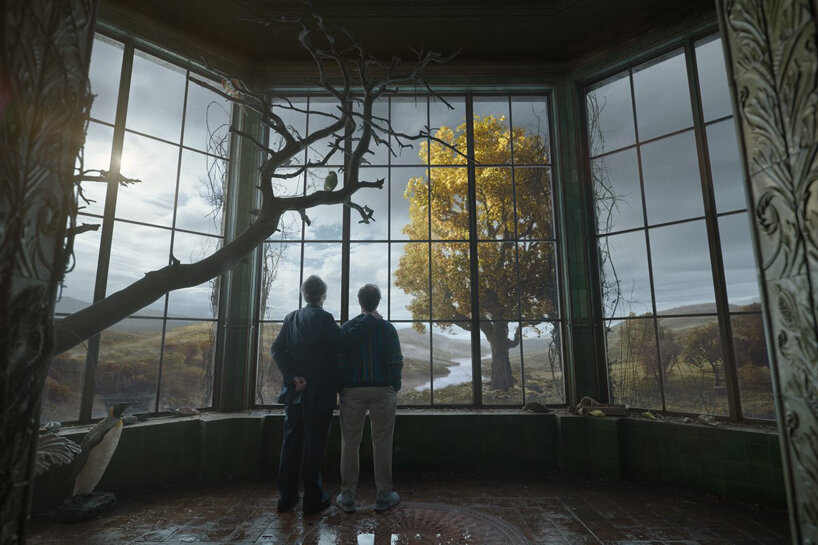
Digger’s world was built by production designers Dennis Gassner and Richard Johnson. Gassner, nominated seven times for the Academy Award for Best Production Design and a winner once, for Bugsy, has a filmography that runs through Barton Fink, Road to Perdition, Blade Runner 2049 and the Craig-era Bond films among many others. The credit that matters most here, though, is The Truman Show, where he built a town that turns out to be a set. The difference in Digger is who is kept in the dark. Truman does not know he is living inside a set while the audience is told in the opening minutes, and Digger reverses that completely, since every actor on screen knows exactly where they are standing and we are the ones who have not yet been told.
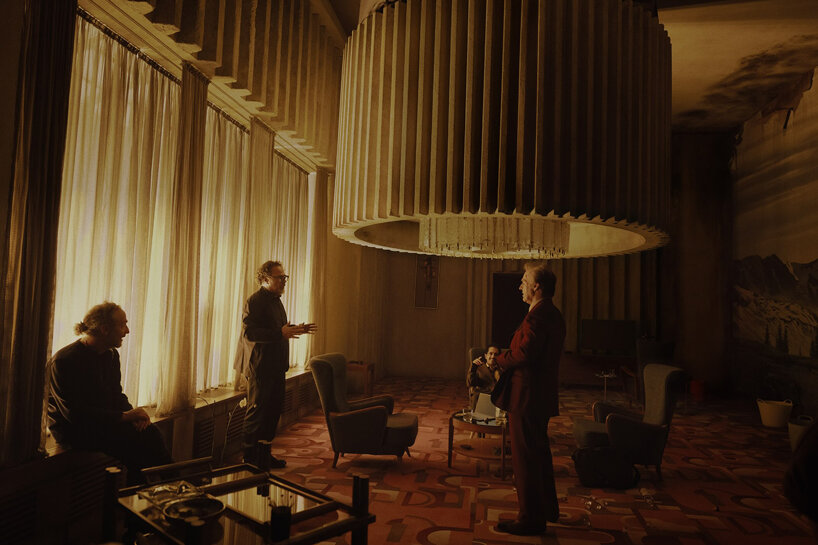
That first world is Digger Rockwell’s lavish mansion, where he wakes beside a bedroom window framing a view that could have been painted by Albert Bierstadt, where taxidermied alligators are pinned to the ceiling, and where full-body mirrors lined with antlers repeat him into infinity. Everything in that house builds the portrait of a monstrous man, and of a monstrousness a long way from your own life. It is the oldest arrangement cinema has: a villain in his lair, a disaster he has caused unfolding somewhere cold, and a fourth wall holding the whole thing at arm’s length. The design here is doing what spectacle has always done, making a catastrophe watchable by placing it somewhere else.
COLOR PALETTE AND PROPS REINFORCE THE NARRATIVE
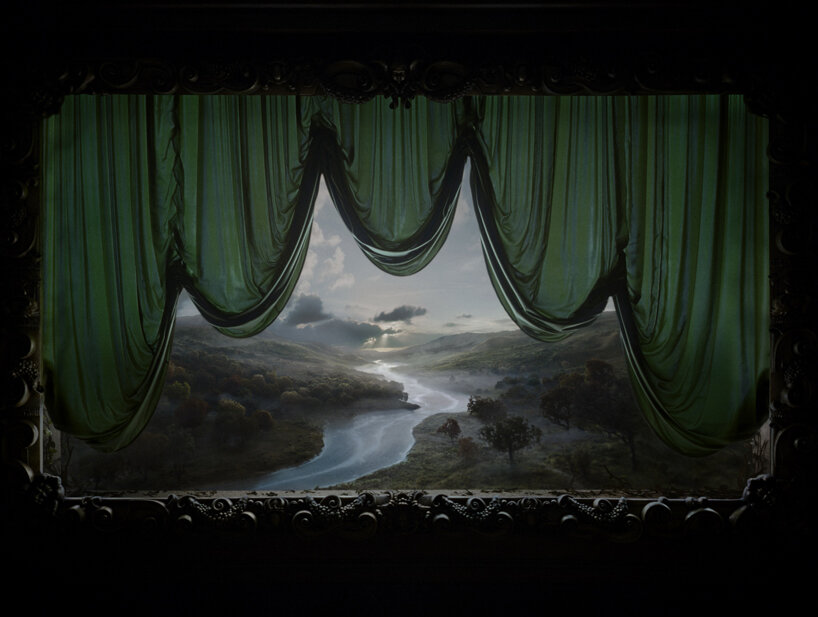
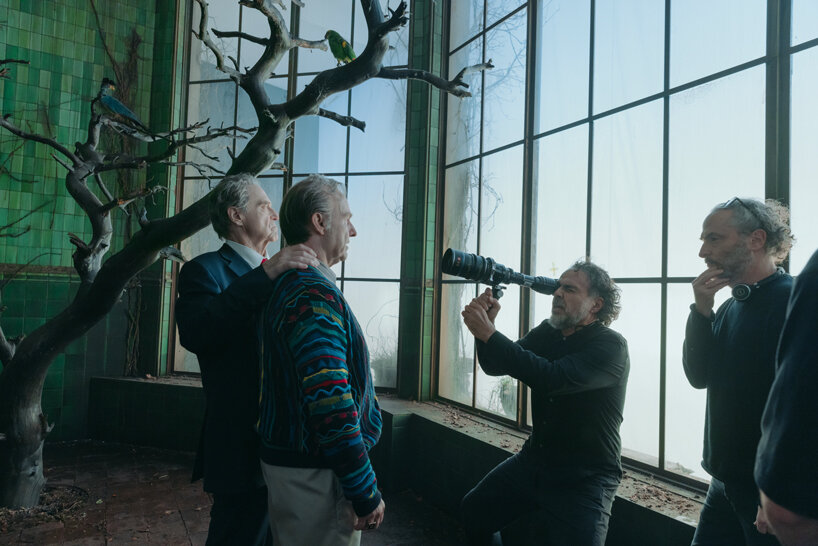
Then the tree falls over, and for a few minutes the film hands you an alibi. Once you know you have been watching a stage production, the artifice of the previous half hour stops being a flaw and becomes a signature. Maggie, Digger’s one-eyed geriatric cat, is a conspicuously obvious animatronic in a film with the money to make a cat look like a cat. Miniatures appear with their seams showing, and clouds and aircraft cross the sky on sticks. None of it was careless, because all of it was intentionally designed.

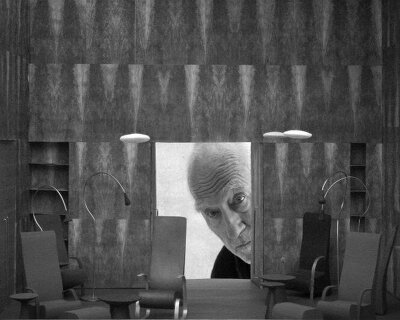
The palette is running the same argument, and, speaking to Dazed, Iñárritu explains where it comes from. He names Vermeer and the Danish painter Vilhelm Hammershøi for color, with Hopper and Rembrandt for contrast. Hammershøi is the one you can clearly see on screen: a career spent on near-empty grey interiors, two or three notes of color permitted and never more, doorways opening onto further doorways. Iñárritu describes that grey as an instrument rather than a mood, saying that as Digger takes over the narrative, the color is vanishing. So the play looks drained and the backstage looks alive, and the contrast is reassuring in a way that is almost physical. Grey is where the fiction lives, color is where reality is, and reality appears to be holding.

A MOVIE PLOT TWIST IN STAGES
The third reveal takes the alibi back. Fossil Fools is not an invention, Digger Rockwell was a real man, the disaster genuinely occurred, and the character bankrolling the production turns out to be his nephew, staging his own family’s catastrophe for a paying audience. Nothing in the design changes here, and yet all of it changes meaning.
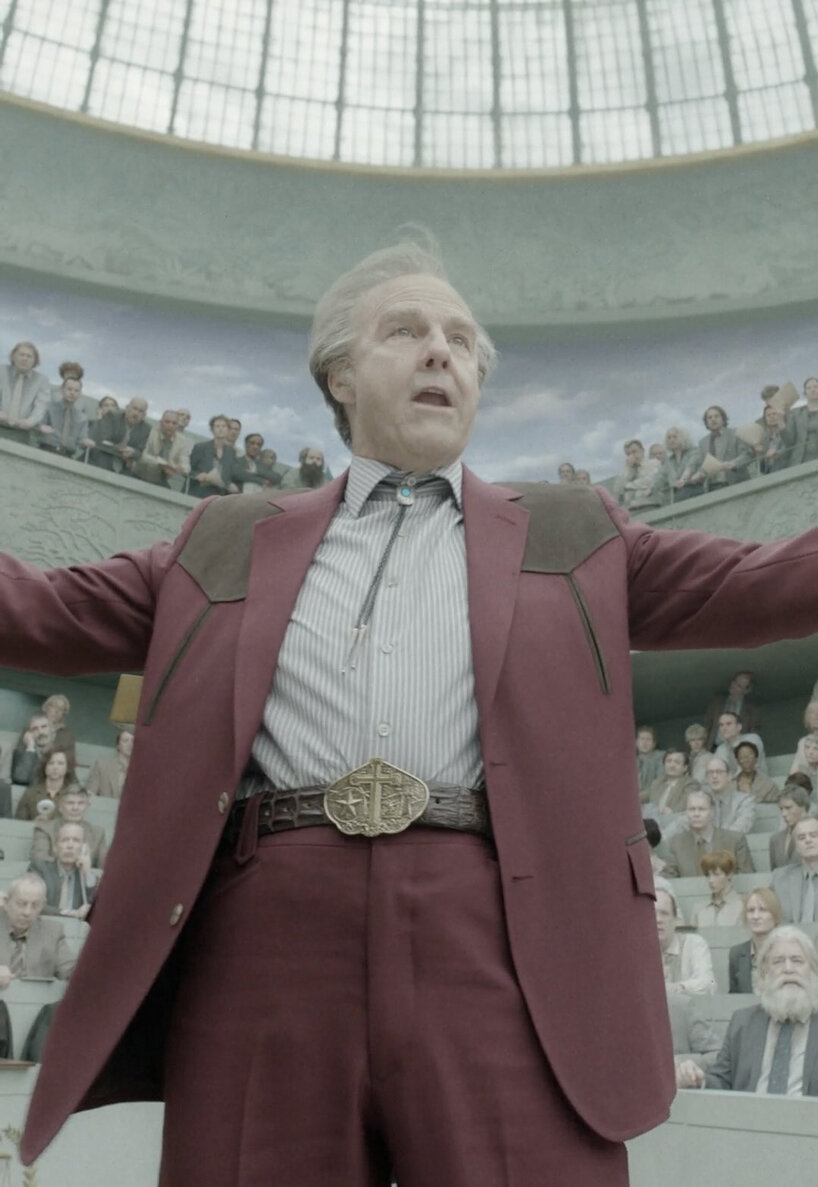
The grey chamber where Digger addresses a tribunal of European politicians, its councillors dressed to match the walls until they nearly disappear against him, stops reading as caricature and starts reading as testimony. The visible seams on the miniatures stop saying this is only a play and start saying this is a reconstruction, the way a museum diorama is openly a model of something that really took place.
This is the part that explains why the film exists at all. Iñárritu spent roughly a decade on it, and during that decade the things he was inventing kept arriving on their own. When the first drafts were written there was no ice shelf detaching and methane was a technical term rather than a headline. In an interview with Letterboxd, he put it plainly: reality was chasing fiction and passing us by.
FICTION AND REALITY COLLAPSE into one
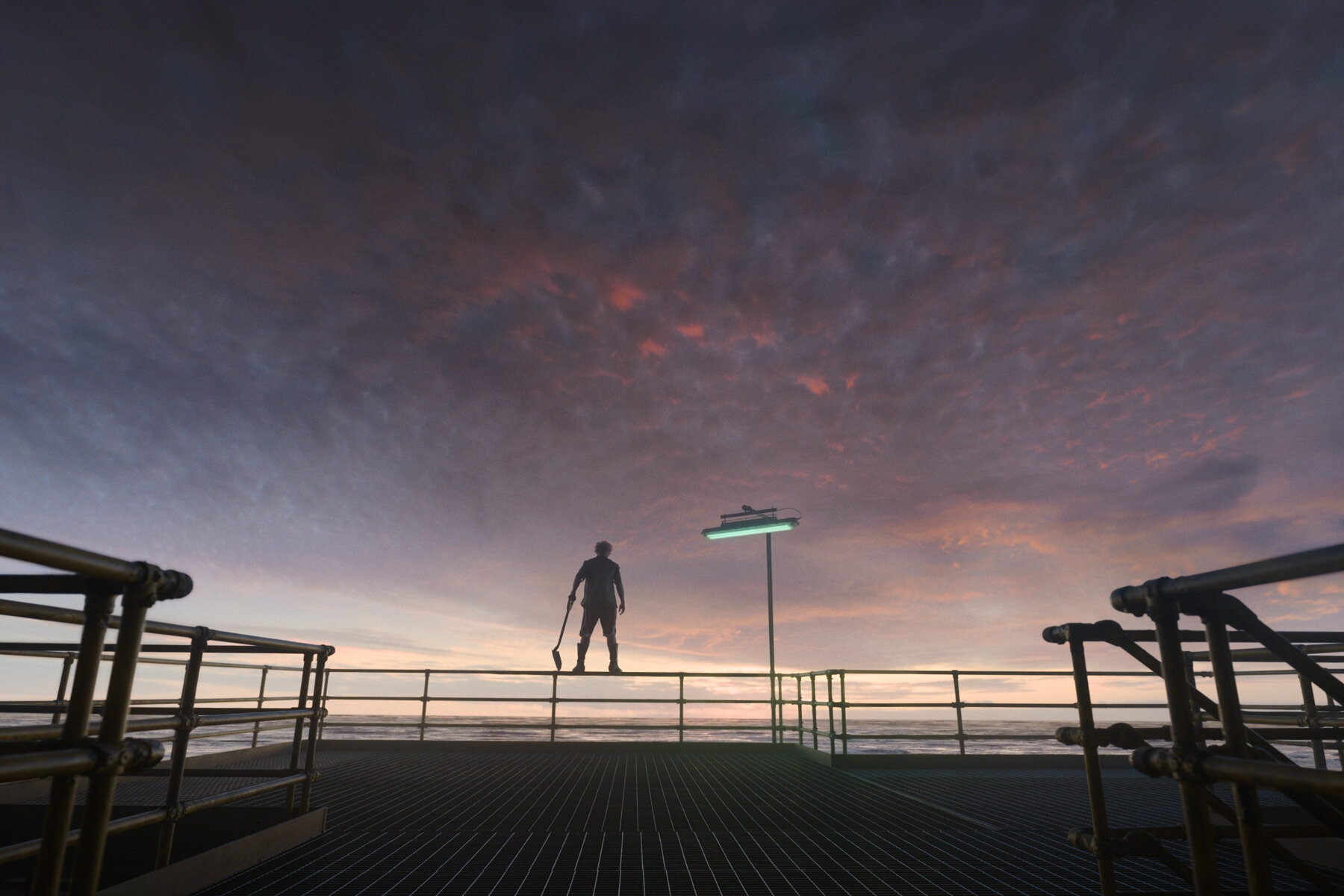
The play ends with Digger diving from his rig to his death, the theater audience inside the film rises to applaud, there is a curtain call, and then an intercom announces Level 4. Every person in that theater reaches for a breathing mask and files out into a flooded, militarized street, past debris and the remains of machines, into the world the play had spent the evening describing, while Melanie’s 1970 song What Have They Done to My Song, Ma plays them out.
The backstage color, it turns out, was never reality, it was a slightly later stage of the same collapse. Then the film ends, and about ninety seconds into the credits the Level 4 announcement sounds again, in the cinema where you are sitting. I heard it, and several people around me got up to leave on exactly that cue.
Stepping outside afterwards into an ordinary sunny afternoon produced an unexpected sense of gratitude,
followed immediately by an understanding of how thin the margin is between that afternoon and the street the audience in the film had just walked out to.
That is the entire film delivered in a single sound cue, and it is why the set designs matter as much as the story. Asked by the New York Times whether the bleakness represented his own outlook, Iñárritu said this is a disaster movie in which the disaster is us, and then added: ‘If we can get together in the same room, in the same reality, and understand where we are in the narrative, I think it’s hopeful.’ Which is precisely what the film’s design has spent two hours arranging. Four sets, four distances, until everybody is in the same room, in the same reality, being asked to understand exactly where they stand in the story.

project info:
name: Digger
director: Alejandro G. Iñárritu
cast: Tom Cruise, Riz Ahmed, John Goodman, Sandra Hüller, Michael Stuhlbarg, Jesse Plemons, Sophie Wilde
screenplay: Alejandro G. Iñárritu, Alexander Dinelaris, Nicolás Giacobone, Sabina Berman
story: Sabina Berman, Alejandro G. Iñárritu and Jez Butterworth
production design: Dennis Gassner and Richard Johnson
costume design: Jacqueline West
director of photography: Emmanuel Lubezki
music: Cosmo Sheldrake
duration: 128 minutes
release: October 2026, Warner Bros. Pictures
This article is part of designboom’s SPECTATOR AND SPECTACLE chapter, asking how wonder gets built, and how it might return some mystery to a world that has measured most of it away. Presented in partnership with SolidNature, the stories in this chapter turn onlookers into participants, alter perception and disrupt the everyday – learn more here!
Each designboom chapter explores one theme in depth through projects, interviews, features and news across architecture, design, art and technology. Discover more chapters here, and get in touch if you’d like to submit a story through our submissions portal or contact form.
shop
your own online design shop — no sales commission collected