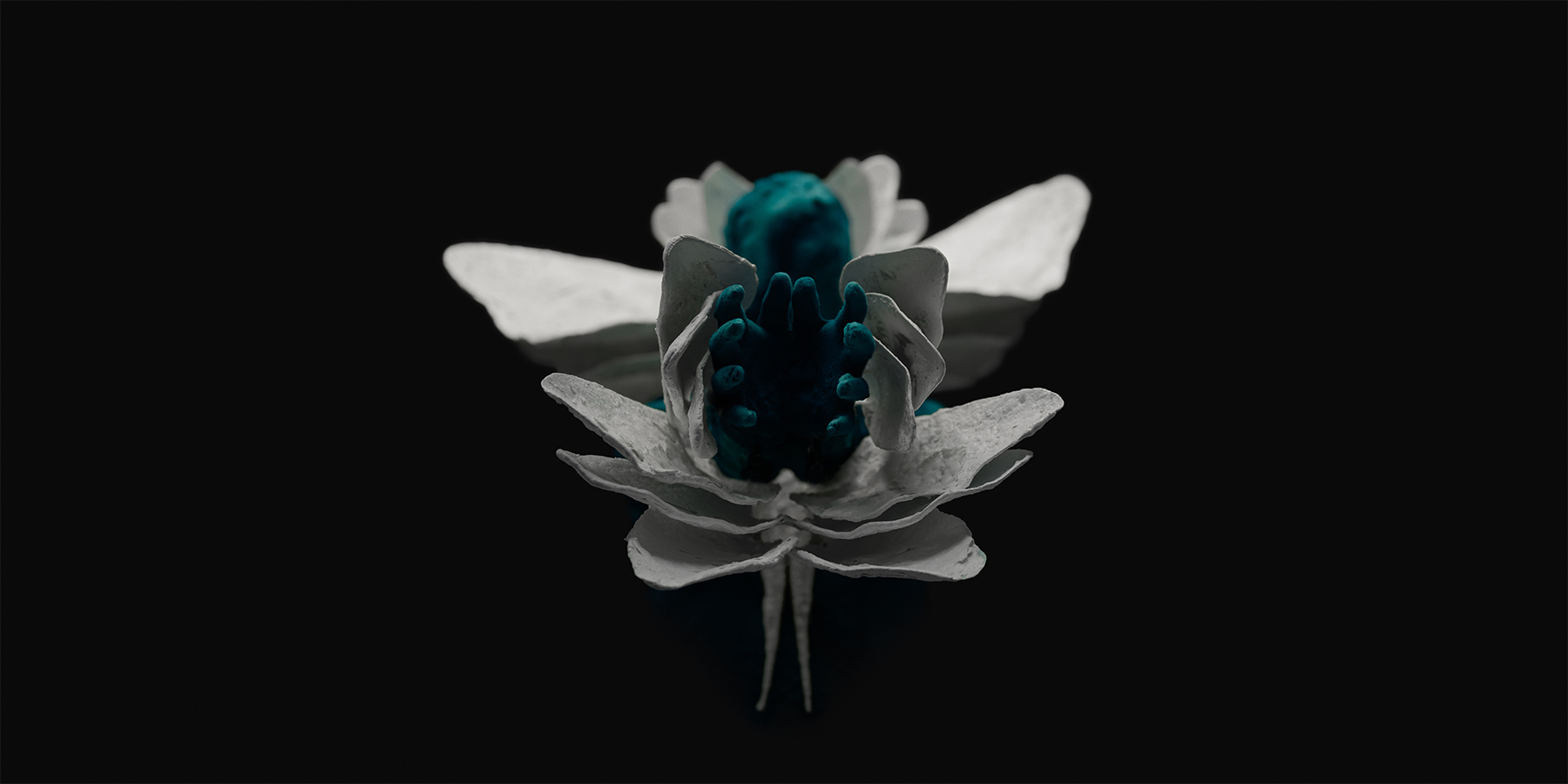
abyssicide: bone sculptures grown from water
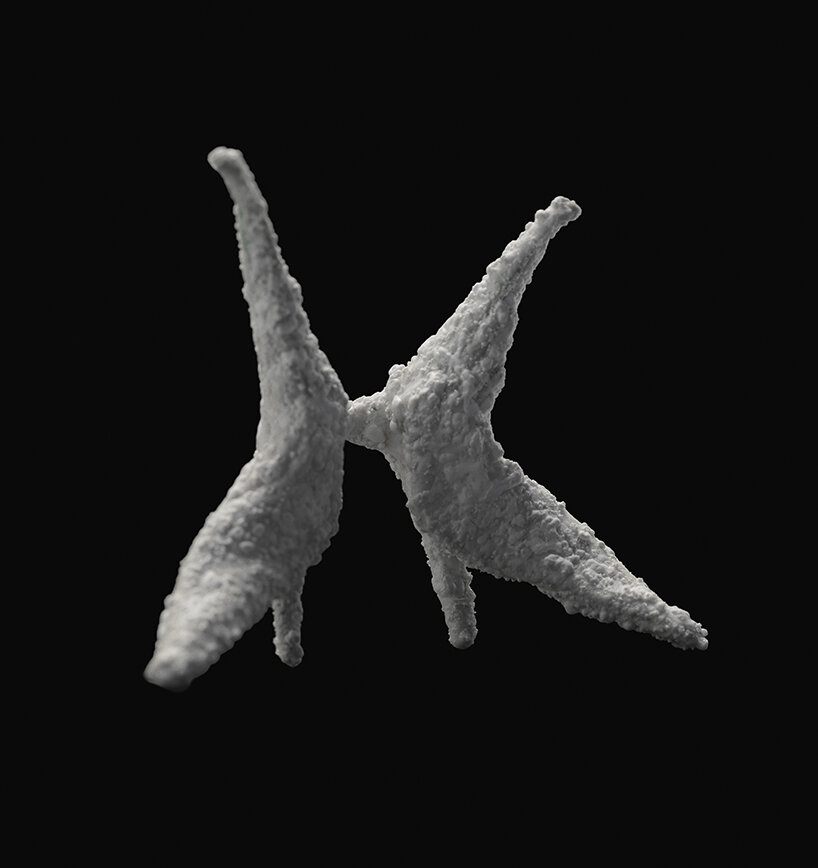
In the throes of a climate crisis, ABYSSICIDE is an installation of body-related bone sculptures grown from water, created through computational design and robotic fabrication. Designed by Sruli Recht and the RMIT Architecture Tectonic Formation Lab for Melbourne Design Week, the three suspended sculpture sets envision a future where the video’s protagonists press the materials into their skin, submerge, and become one with the sea.
As the ocean levels rise, the ‘garments for drowning in’ grow into a coral, layer by layer, up and around the body, employing a biomimetic technique that mimics the process of accretion by which coral forms its skeleton. Seawater then undergoes a metamorphosis from an aqueous phase into solid stone material, forming sculptures suspended in a pose of submission.
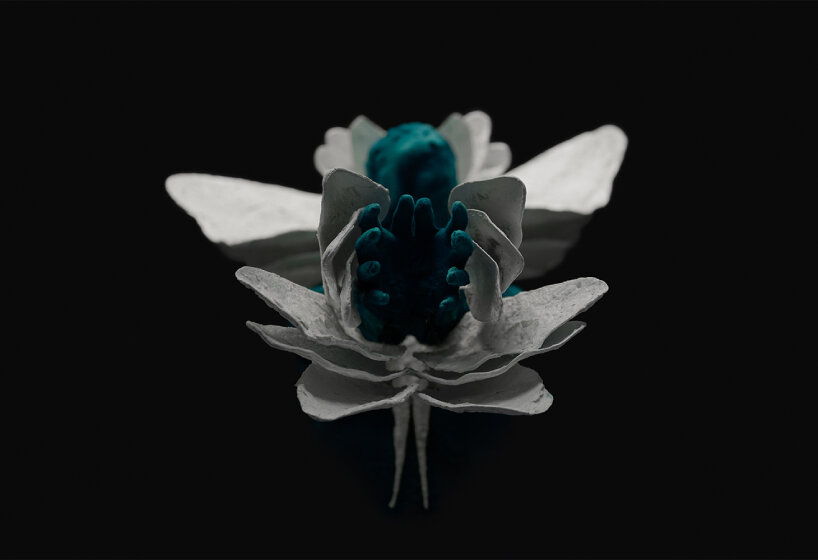
image by Earl Carter
Sruli Recht tackles rising sea levels
ABYSSICIDE discusses time, water, the value of resource, and the acceleration of the commodity lifestyle industry. In the material process, with research led by Mark Edgoose, a singular limestone biomass grows slowly over time, just as an organism, by the manipulation of electrified seawater and negatively charged surfaces. ‘This is Aquamancy, Geo-Punk – hacking geology to grow clothing, to build itself back up, using a completely untapped resource, solidifying the endless ocean minerals, without harm,’ notes designer Sruli Recht. In growing bone-like garments, a coral lattice emerges from the liquid, forming itself while accreting onto the fine conductive structure, presenting spontaneous growth, layer by layer, until a dense matrix forms in the soft algorithmic morphologies, by turning water into wearables.
Counter to the trend of fast fashion, ABYSSICIDE looks at an ultimate slow fashion – based on a geological deep-time — employing a slow-growth resource method developed by Recht. In the ocean, this renewable resource encourages biodiversity, and the project highlights the wider benefits of living in fewer garments for longer. Further, the development processes are manifold, combining ancient and modern techniques, creating a chorus of methods that bring water to life in solid, intricate forms. It begins with VR modelling, parametric coding, robotic incremental sheet forming, nylon 3D prints, augmented reality fabrication, and electroforming for conductive surfacing. These forms are sacrificed to the biomimetic principles of coral growth, submerging forms in electrified seawater to generate limestone masses. Controlled electrolysis in seawater triggers limestone accretion on conductive materials, forming a singular limestone biomass.
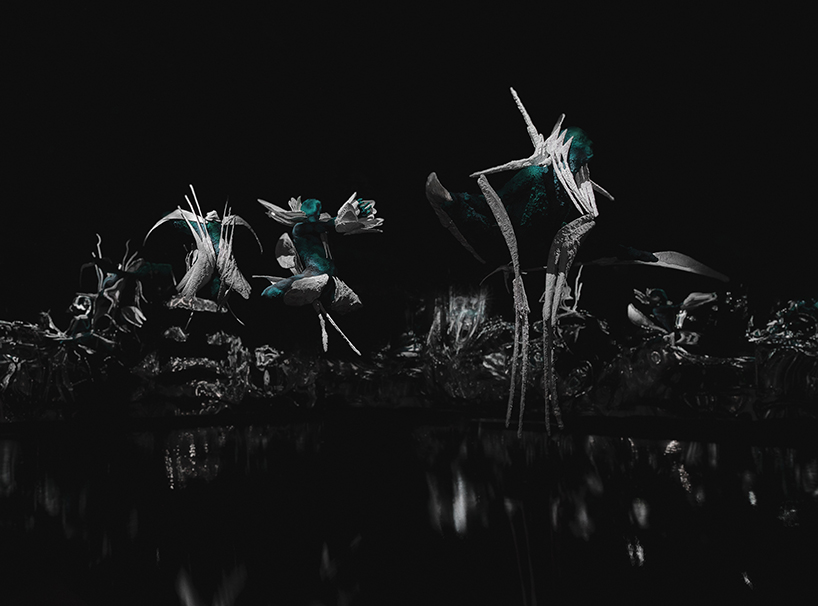
ABYSSICIDE ‘garments for drowning in’ | image by Earl Carter
unveiled at melbourne design week
‘By mimicking the way coral built its skeletal structure, I figured out a way to straight up turn arctic seawater into solid objects,’ says Sruli Recht. ‘It could have been a revolution in architecture, alternative resource manufacture, zero energy materials – I imagine buildings grown right out of the water from knitted recycled wire suspended from solar and tidal charging pontoons in the middle of a silent ocean. But no. I wanted to make fragile, devastatingly thin eggshell knives. And prepare rituals for the tidal rise. We are all so fascinated with death, yet so fearful of dying.’
ABYSSICIDE unfolded for the Melbourne Design Week at Hanover House, showcasing transformative sculptures and ritual objects born from the fusion between ancient techniques and futuristic visions. Imagining a sustainable future, the occasion initiates a dialogue on circularity, sacrifice, and the extended potential of the renewable materials we can harvest.
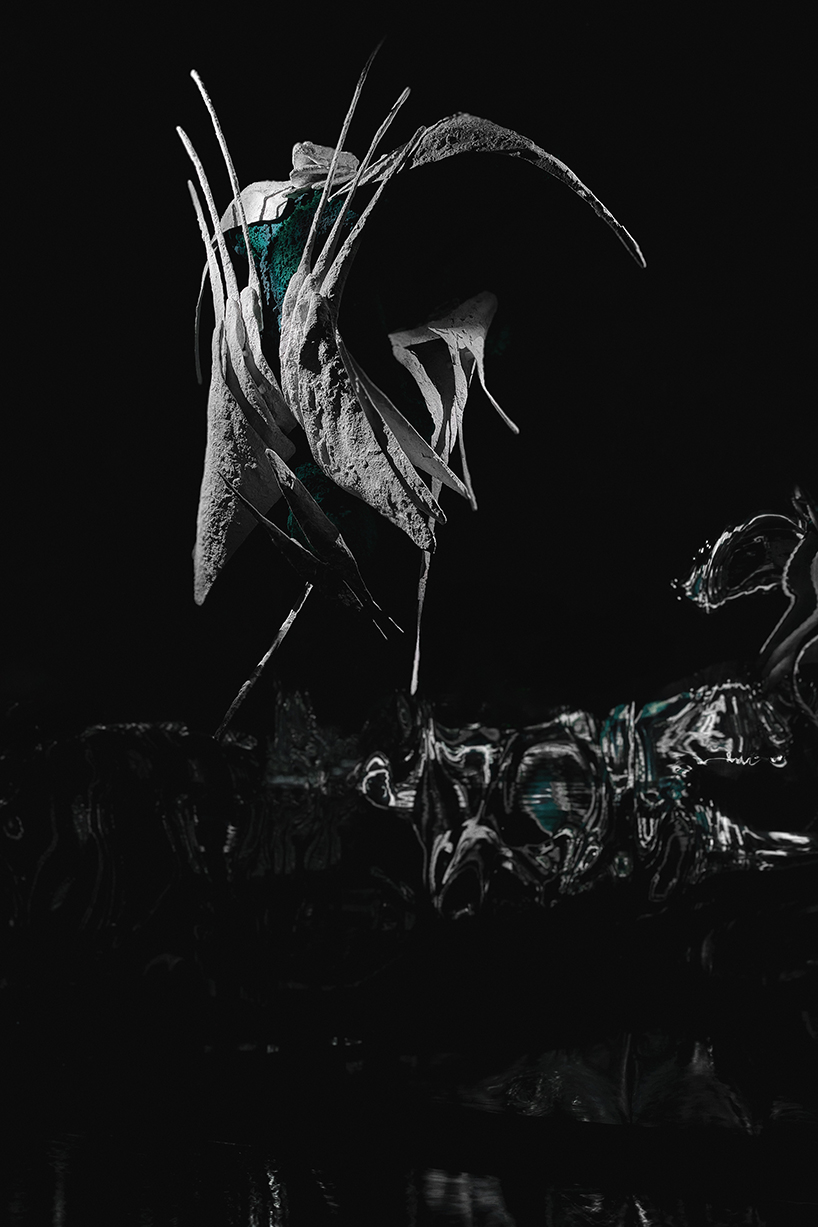
as ocean levels rise, they grow into a coral, layer by layer | image by Earl Carter
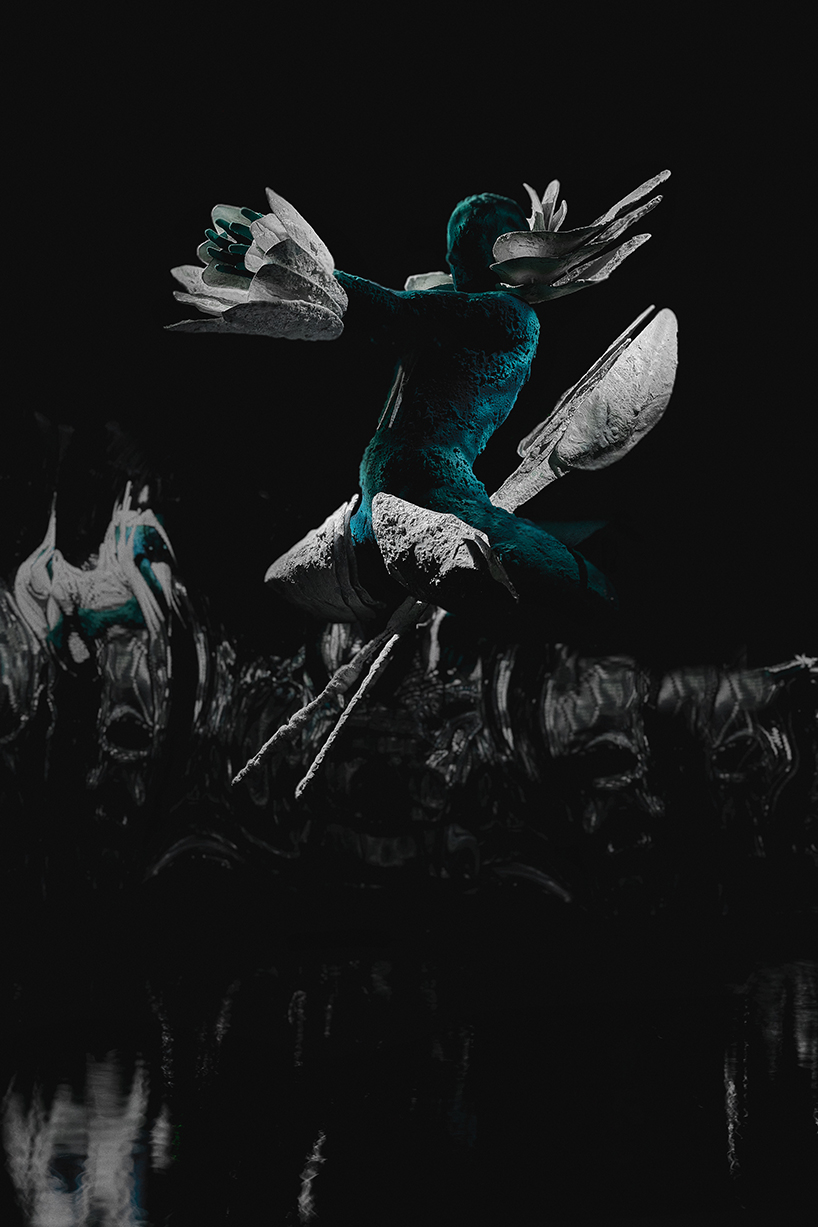
designed by Sruli Recht and the RMIT Architecture Tectonic Formation Lab | image by Earl Carter
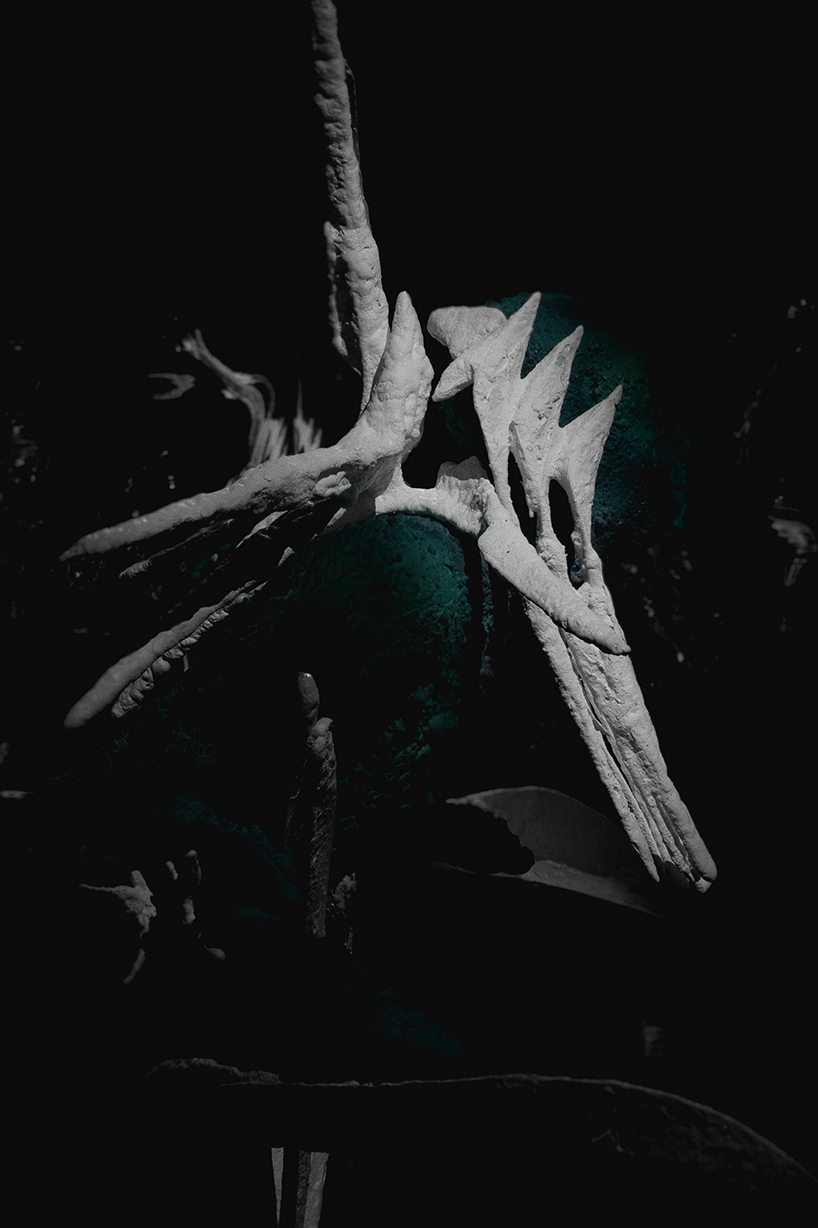
created through computational design and robotic fabrication | image by Earl Carter
surreal suspended sculptures of a generation in the future
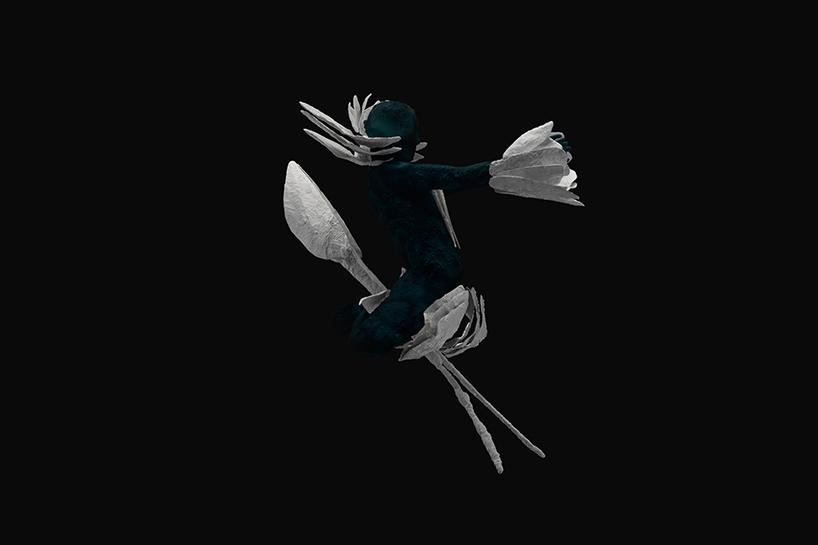
ABYSSICIDE looks at an ultimate slow fashion, based on a geological deep-time | image by Marinó Thorlacius
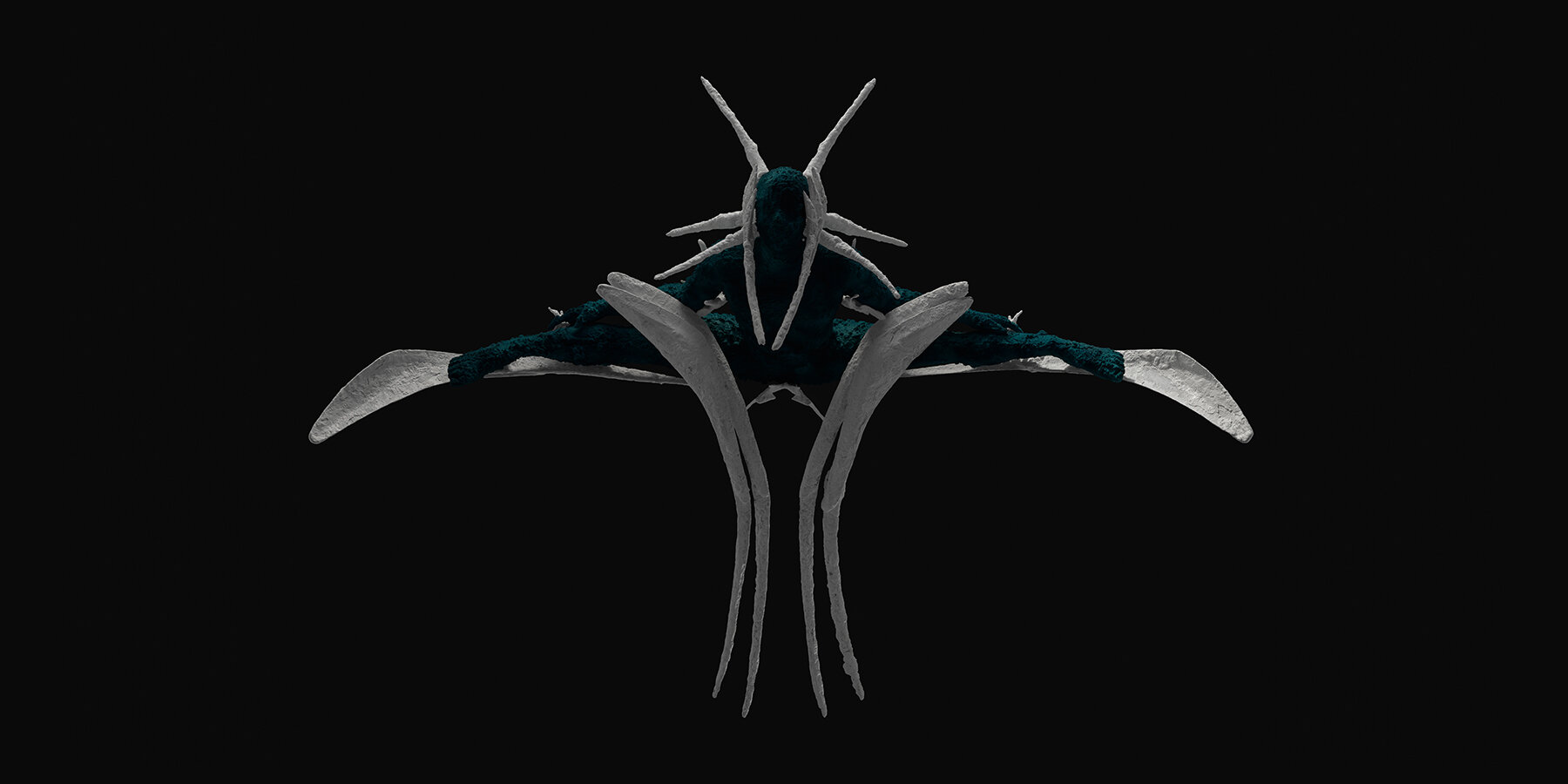
a site-specific installation of body-related bone sculptures grown from water
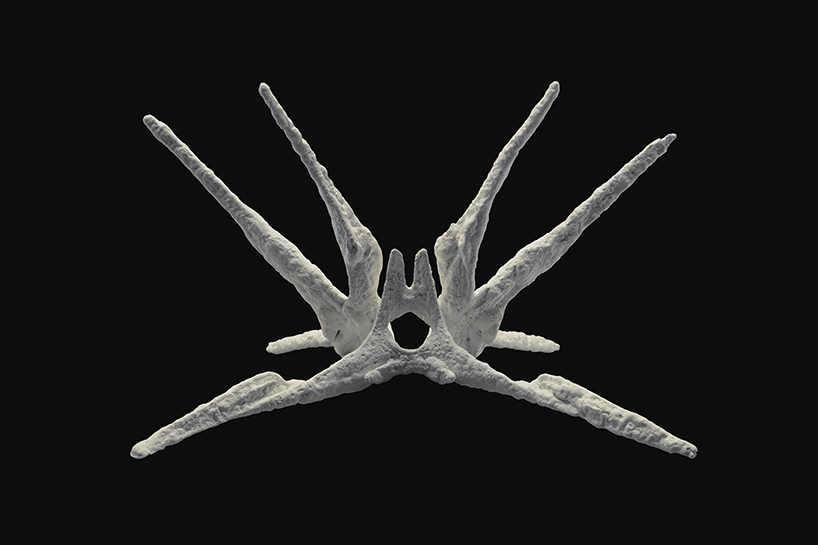
in growing bone-like garments, a coral lattice emerges from the liquid
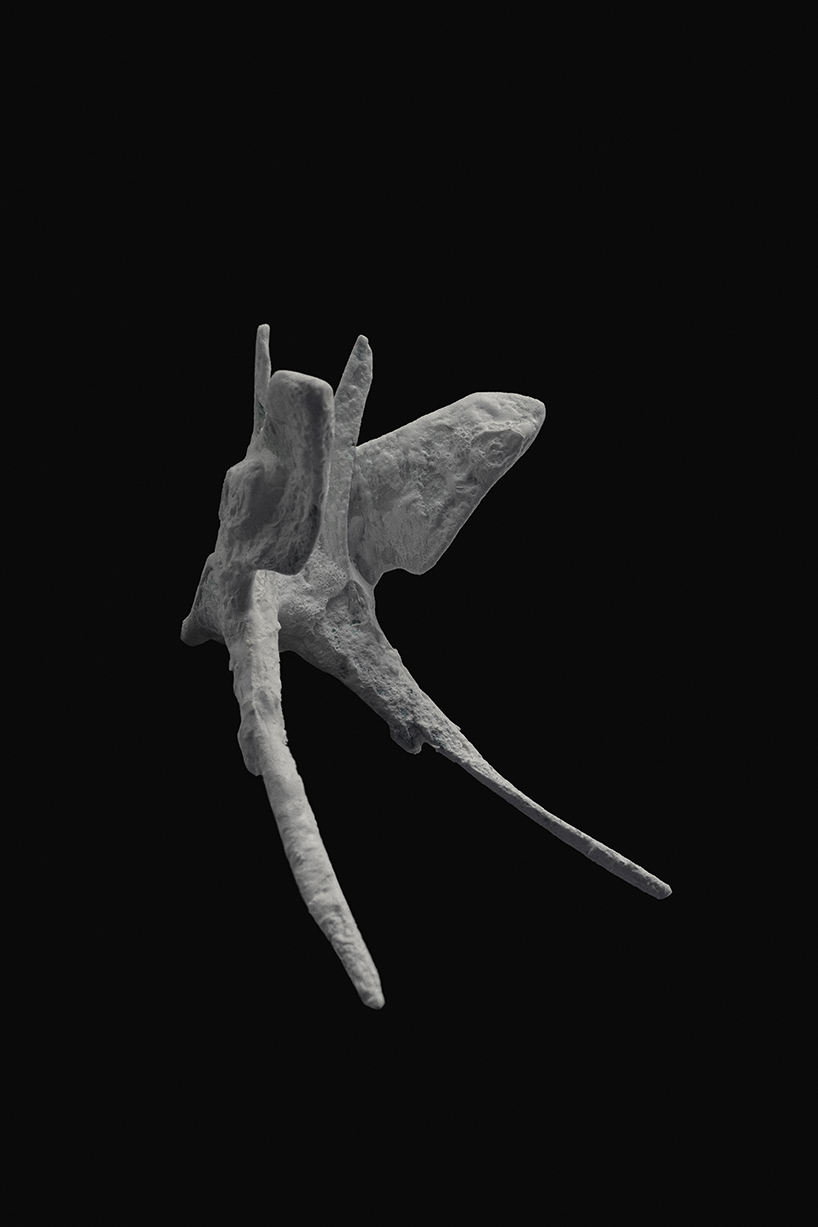
image by Marinó Thorlacius
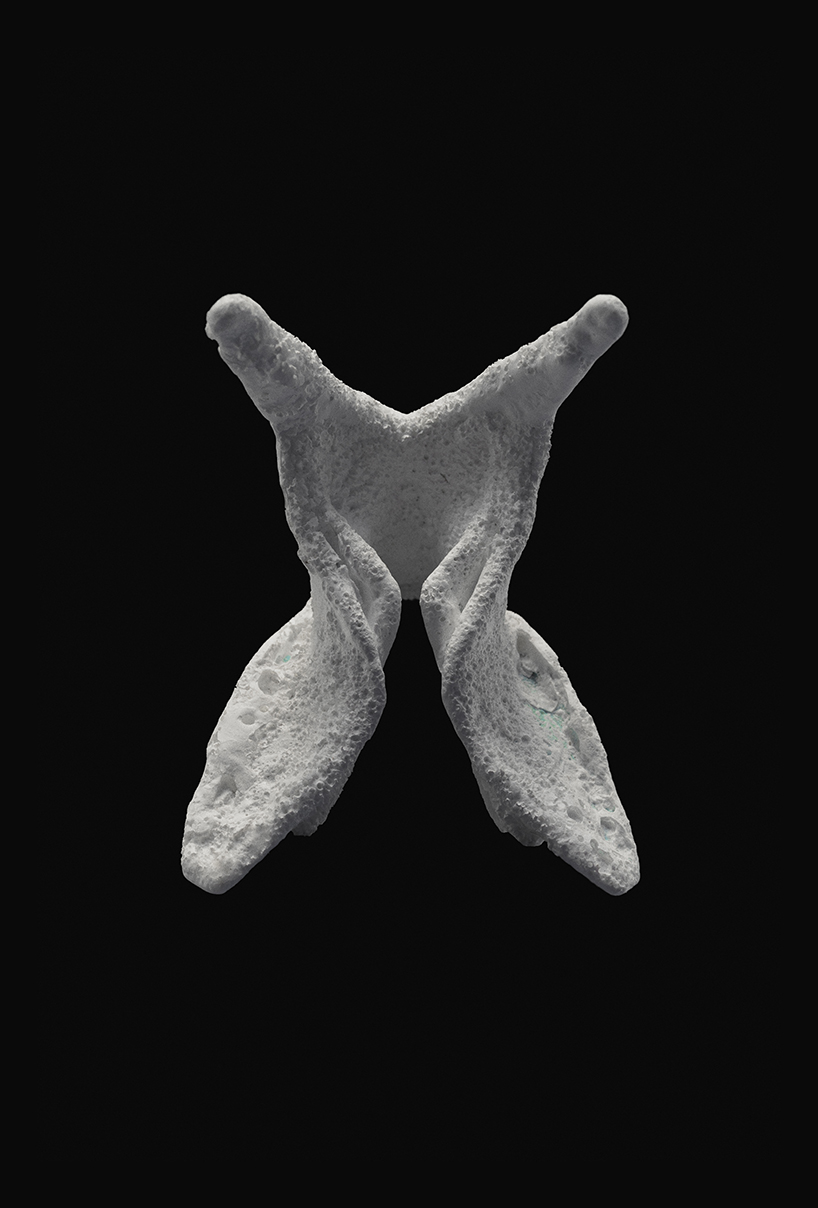
image by Marinó Thorlacius
the protagonists press the materials into their skin, submerge, and become one with the sea.
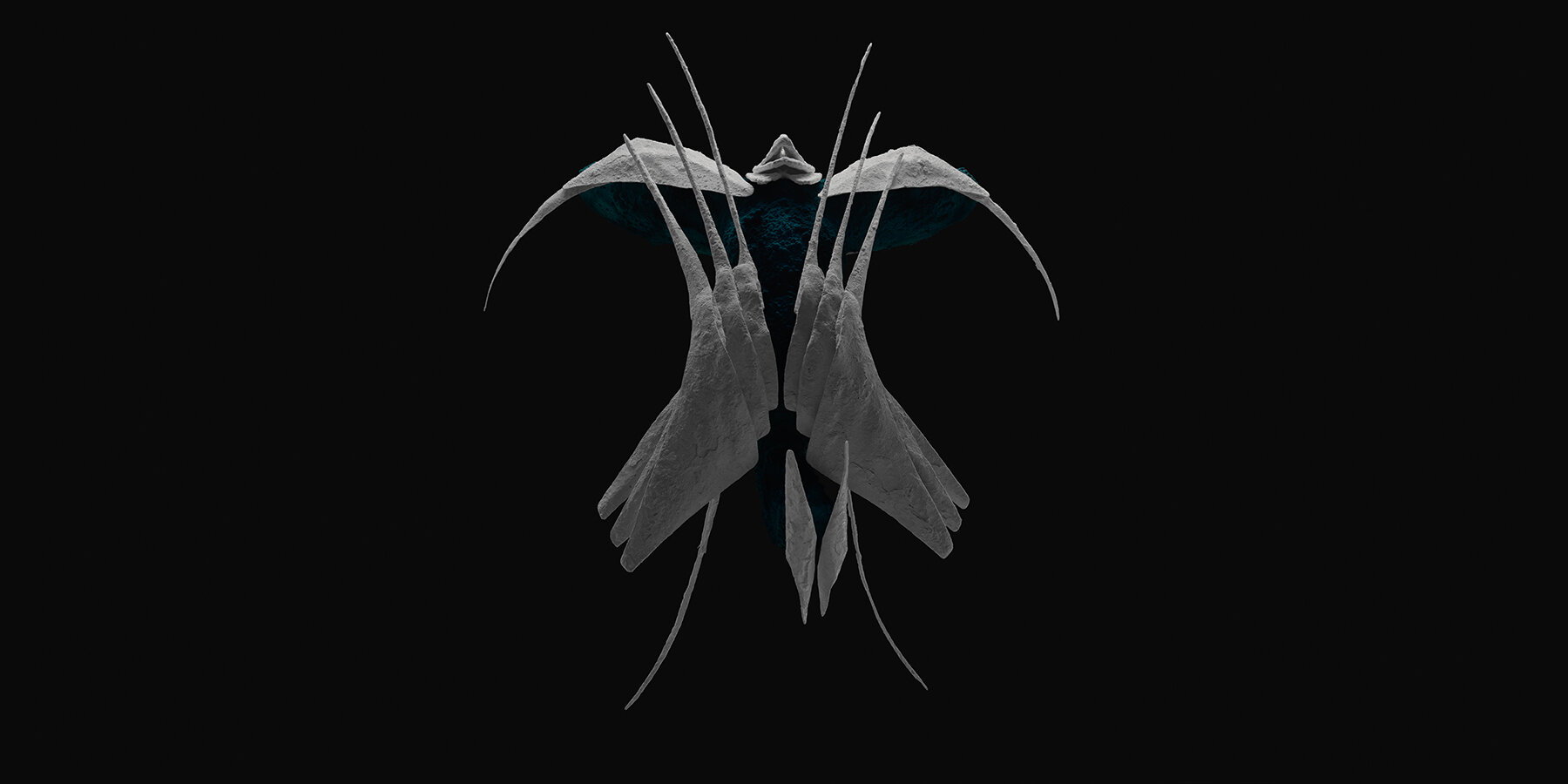
a futuristic installation addressing rising ocean levels
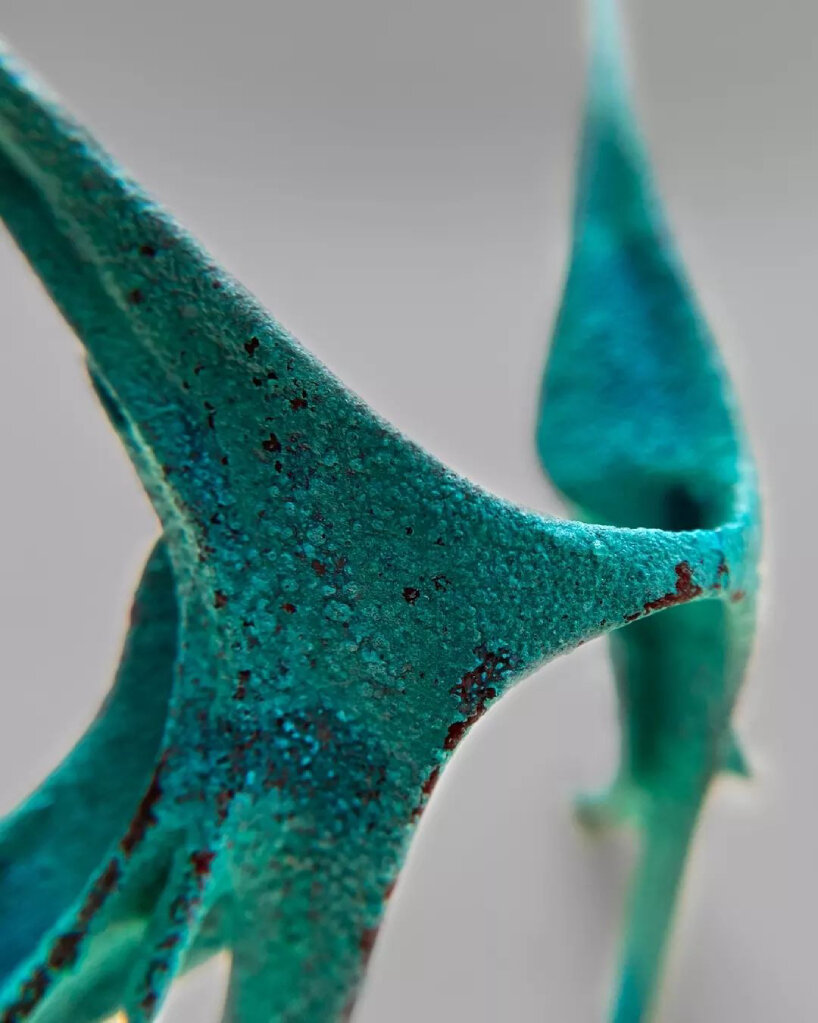
a singular limestone biomass grows slowly over time, just as an organism
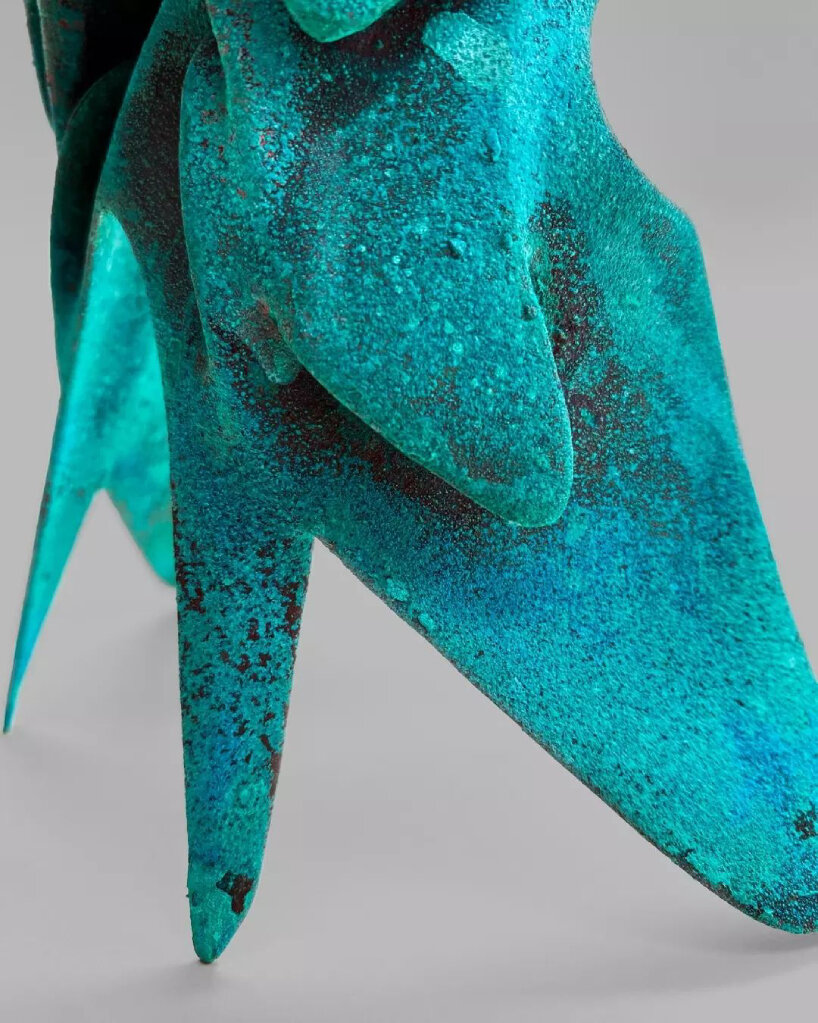
the development processes combines ancient and modern techniques, including VR modelling and nylon 3D prints
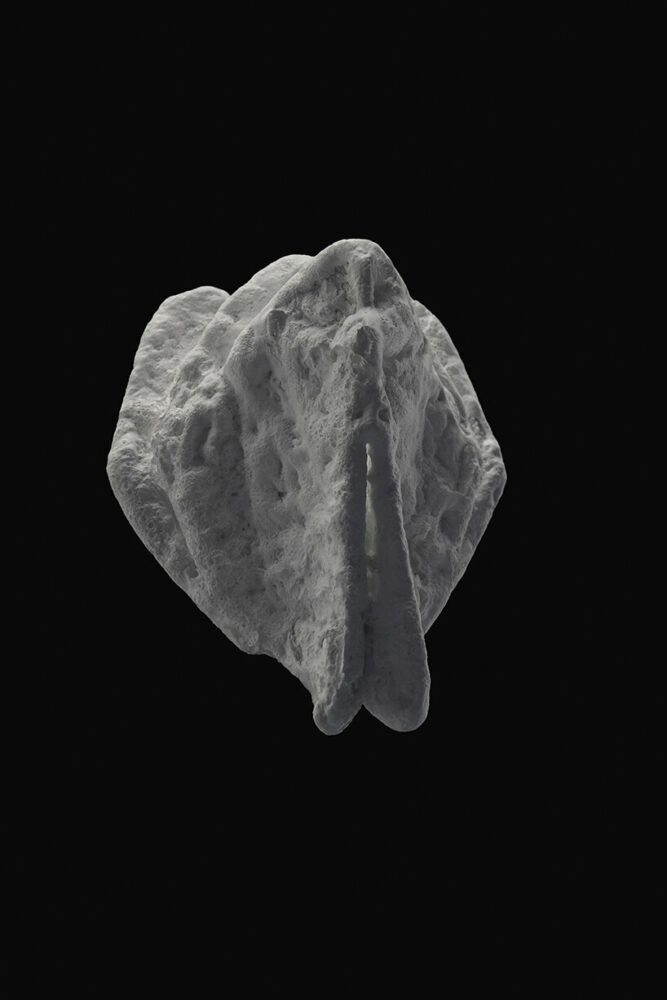
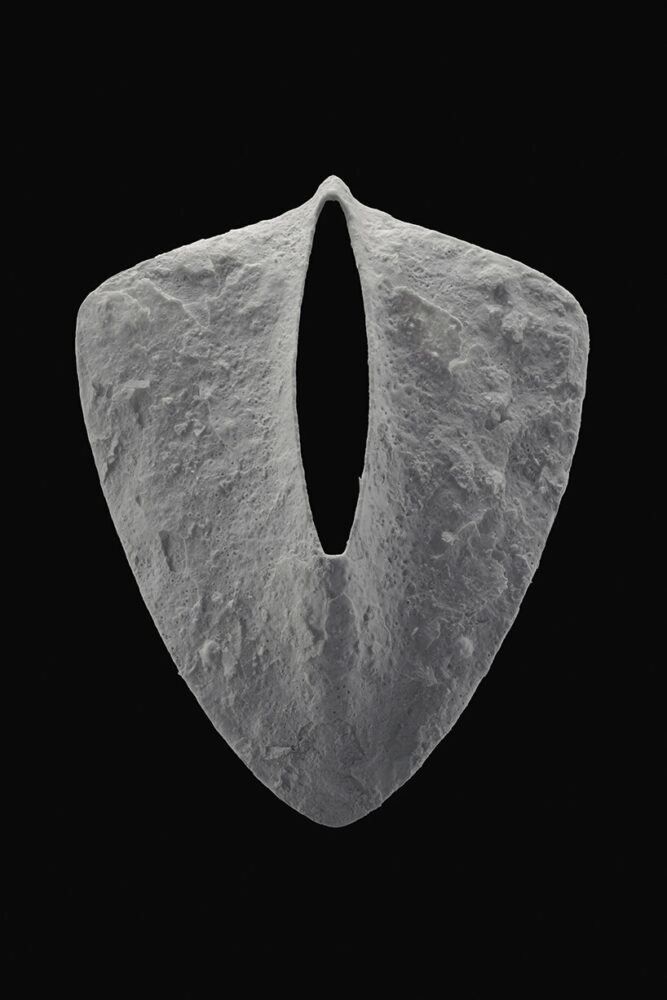
project info:
name: ABYSSICIDE
designer: Sruli Recht (@sruli_recht), RMIT Architecture Tectonic Formation Lab
project team: Roland Snooks, Jackson Bi, Mark Edgoose, Marc Gibson, Hesam Mohamed
development: Raphael Recht, Aljoscha Bolte, Dean Leitch, Rye Leitch, Lexi Manitakis, George Ballingal, Leo Södergren, Julina Bezold, Taj Alexander, Christoph Köhrer, Flavia Bon, Joanna Cramoisan, Martin Hanczyc, Nusi Quero, Jarred Eberhardt
fabrication: Dale Manandic, Nic Bao, Ethan Liu, Corliss Xian, Cynthis Chen, Zeke Zhang, Renling Zhang
installation: Lena Rowe, Eric Chen
workshop: Christopher Ferris, Ron Ellazam, Matty Fuller, Tristan Janle, Harry Zanios
advisors: Dr. Tom Goreau, Liam Young, Paul Bennet, Dennis Pahpitis, Daniel Bense, Dr Gureua, Andri Snær Magnason, Daniel Bailey, Frank Verkade, Sigga Spark
photography and film: Marino Thorlacius | @marinothorlacius
sound: Valgeir Sigurðsson
commissioned by: Melbourne Design Week: Ewan McEoin and Simone LeAmon
supported by: Melbourne Design Week, RMIT University, School of Architecture and Urban Design, School of Art, Enabling Impact Platforms
presented by: Hanover House
designboom has received this project from our DIY submissions feature, where we welcome our readers to submit their own work for publication. see more project submissions from our readers here.
edited by: ravail khan | designboom
3D printing (886)
 Mar 09, 2026
 Mar 08, 2026
 Mar 02, 2026
 Feb 27, 2026
 Feb 17, 2026
materials (198)
 Mar 10, 2026
 Mar 10, 2026
 Mar 09, 2026 Mar 08, 2026
 Mar 06, 2026
sculpture (522)
 Mar 14, 2026
 Mar 13, 2026 Mar 09, 2026
 Mar 07, 2026
sruli recht (9)
 Feb 26, 2020
 Apr 04, 2011
 Mar 18, 2010
 Mar 17, 2010
 Dec 30, 2009
 Mar 10, 2026
 Mar 08, 2026
 Mar 04, 2026
 Feb 24, 2026