taarini anand on creating whimsical menswear inspired by indian art and culture
working with hand knitters across india, the designer creates a colorful collection inspired by the country's rich visual, artistic, and cultural heritage.
prefer designboom on googleIndian miniature paintings and a silk jacket
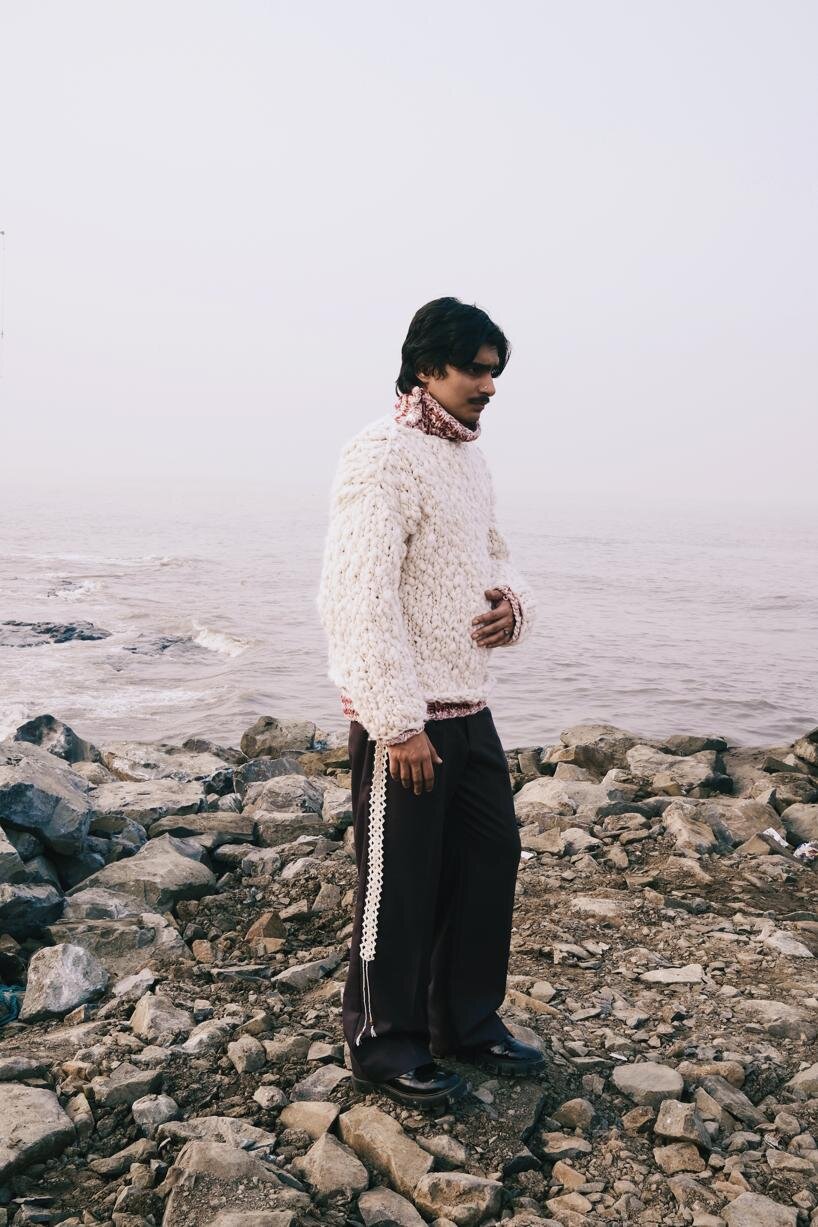
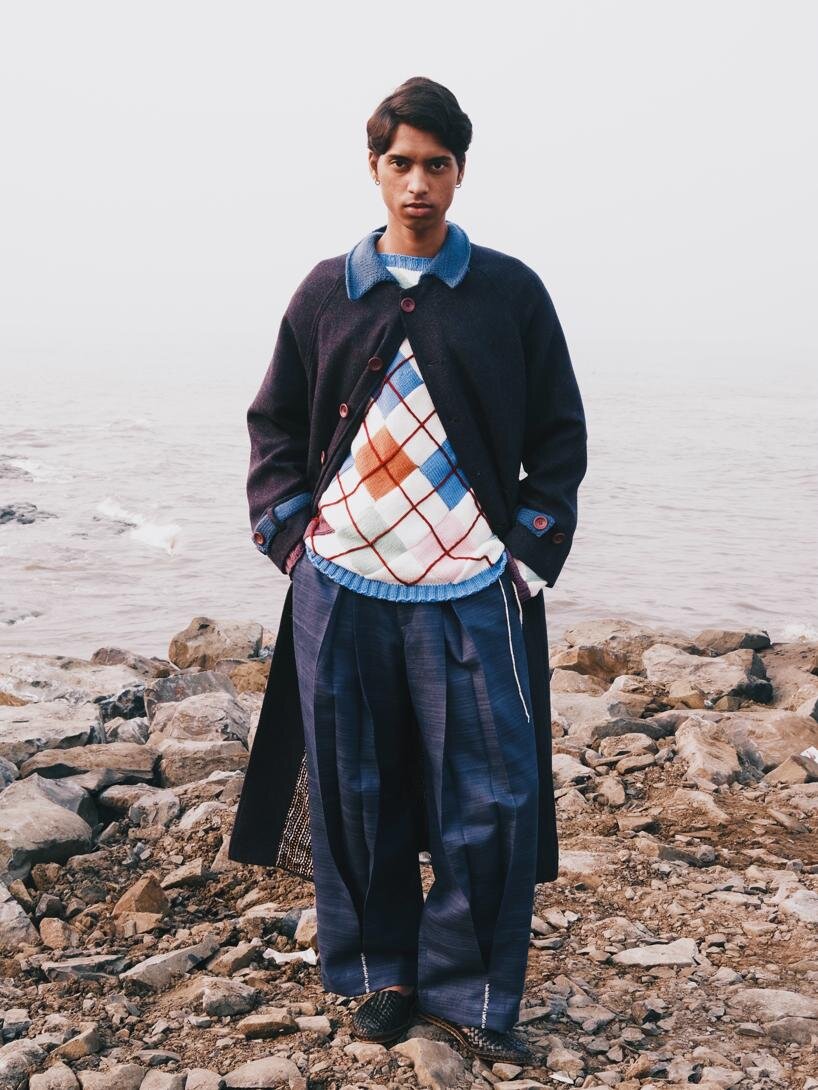
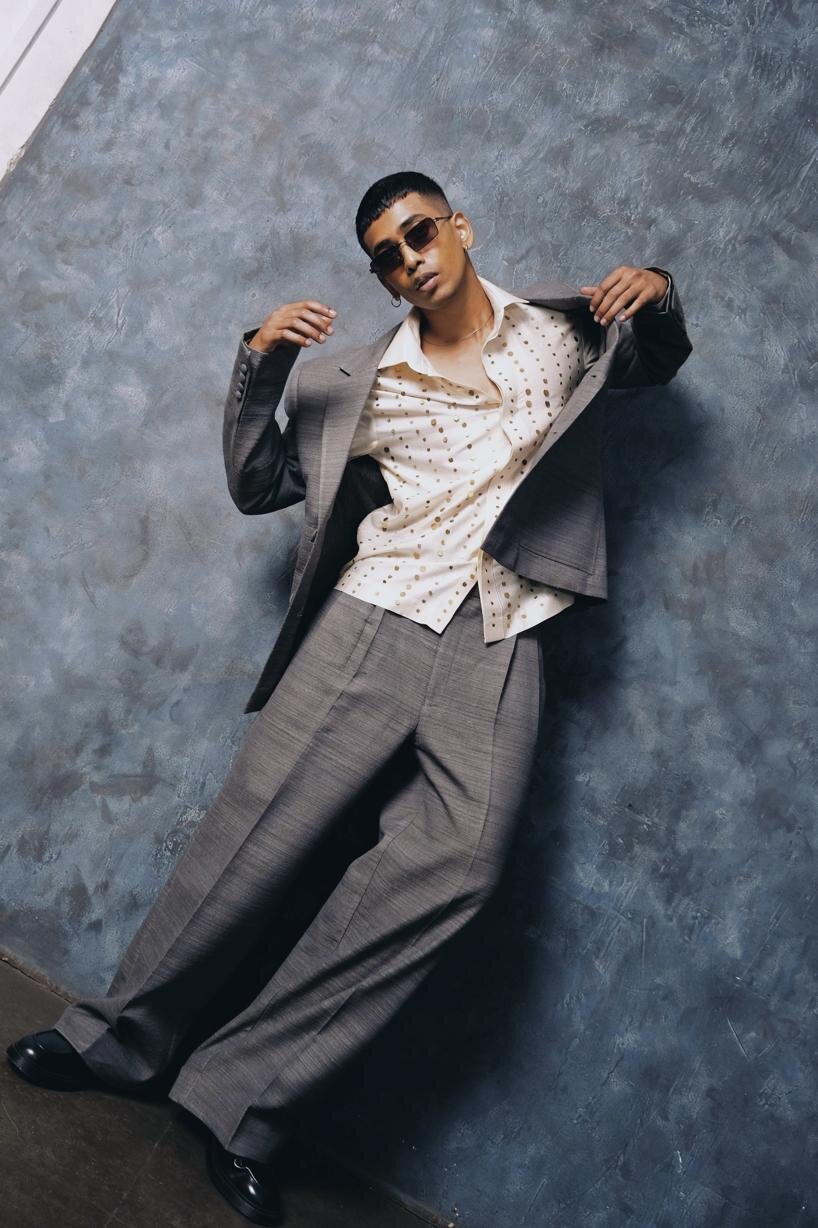
Taarini Anand, the designer behind her eponymous fashion brand, crafts menswear in Mumbai that have all the classic structures of garment line: knitwear, trousers, blazers. Their forms are easily recognizable, but in each piece, there is something the sparkles. After spending her final year of school studying in Milan, the designer returned to her home country, newly inspired by the rich cultural heritage she remembers being surrounded by as a child. What results is collections that are not only made in India, but inseparable from its historic and contemporary visual cultures.
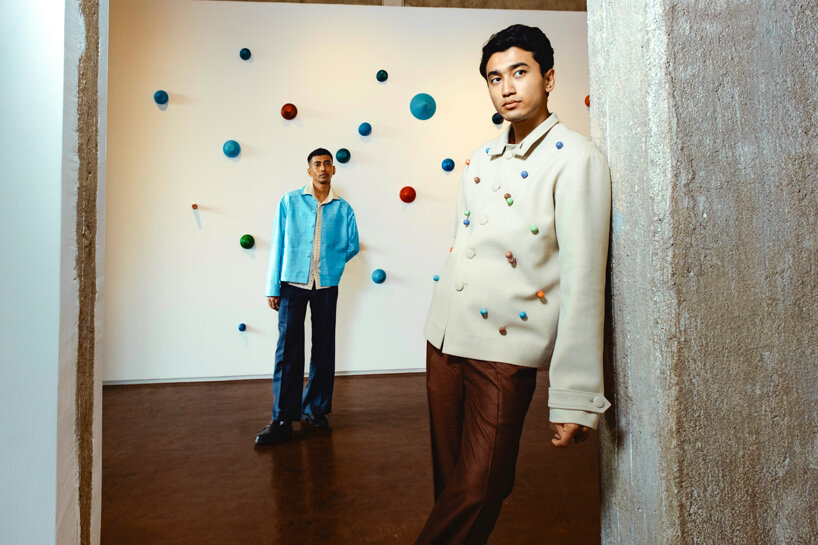
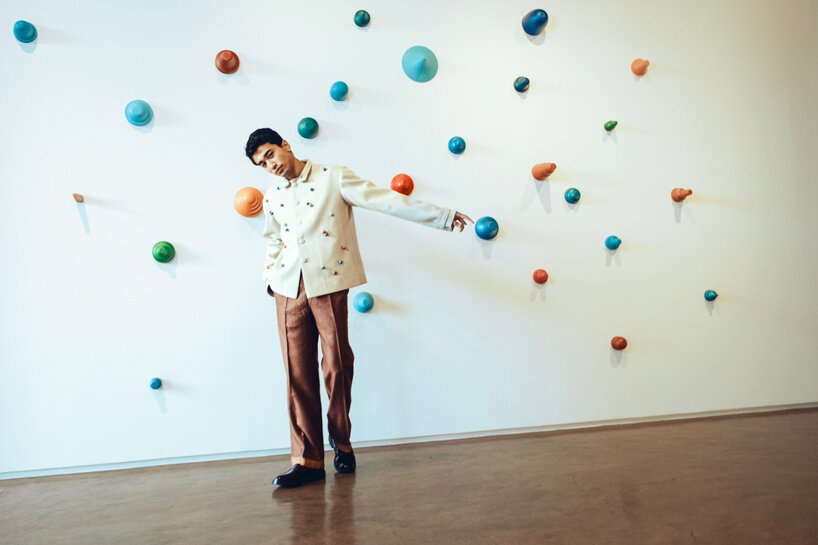
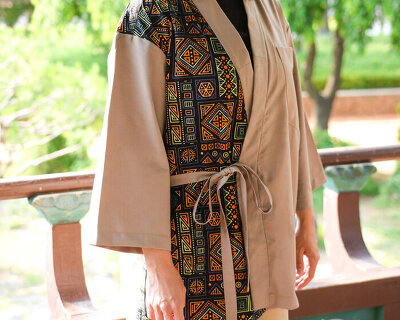
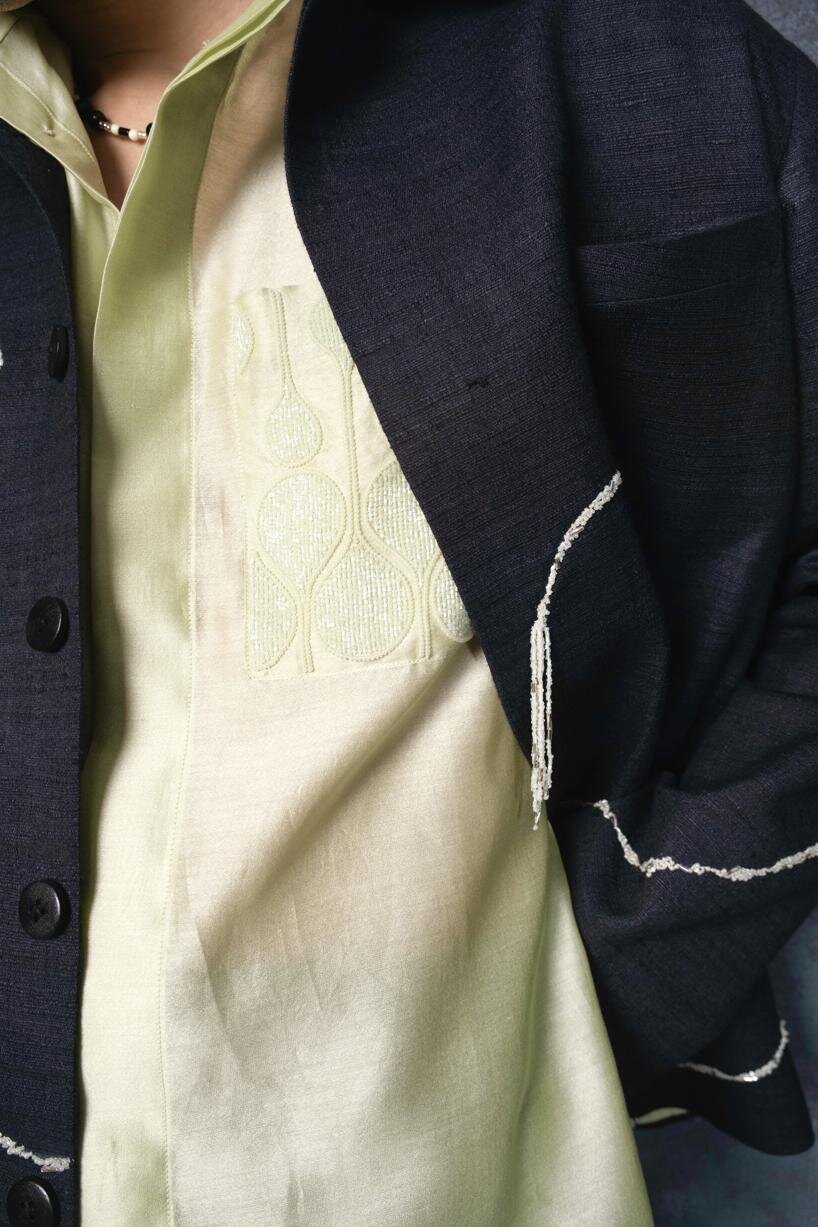
In the silk chocolate Manar jacket, the placket has these subtle arching forms which is inspired by, ‘architectural details seen in 17th-century Indian miniature paintings.’ The suggested pairing for the jacket is a pair of cream-colored trousers made of Handloom khadi denim with a cotton-silk lining, complete with a hand-crotched lace border that also takes inspiration from the same typology of art. In the materials, details, and construction of the garment bits and pieces of her home come to life. In conversation with designboom, Taarini Anand talks the inspirations, process, and craftswomen that make up her work.
in conversation with Taarini Anand
On coming back to Milan in 2022 after a year of study at Istituto Marangoni in Milan, Anand found herself inspired by how art and life were intertwined in the Italian city. She recalled how, as a kid, she wasn’t so taken by museums or art, but coming back to India after this experience, she missed that Italian cultural energy. She adds, ‘but of course India has an extremely rich cultural heritage, so I decided to start exploring Indian arts more intentionally through my work.’

Indian art and culture from the historic to the contemporary
She goes on to talk about the iconic artists from India’s art historical past, like Amrita Sher-Gil (1913-1941) and Raja Ravi Varma (1848-1906), who she notes, ‘revolutionized Indian art in their own ways and respective eras.’ Anand also mentions contemporary artists that inspire her like the paintings of quotidian life by Hemali Vadalia (1984). She raves about Varad Bang’s recent installation, The Weight of Love, inspired by Wong Kar-Wai’s film, In the Mood for Love. As evident in the Manar jacket, her references span painting, poetry, music, and architecture.
Anand’s last collection was inspired by the Ajanta and Ellora caves, UNESCO heritage sites in the state of Maharashtra, about a four-hour drive from Mumbai where the designer practices. ‘It just felt so interesting and captivating to me that we made a whole collection out of it!’ she exclaims. With a wonderment in her eyes, she recalls seeing the caves in real life, explaining how they were built over two thousand years ago without the use of contemporary construction tools. ‘It’s kind of a mystery,’ she muses about the technological capacity they had in that period, ‘they’ve got really intricate carvings and it’s incredible.’

From Grandmother to mother to daughter
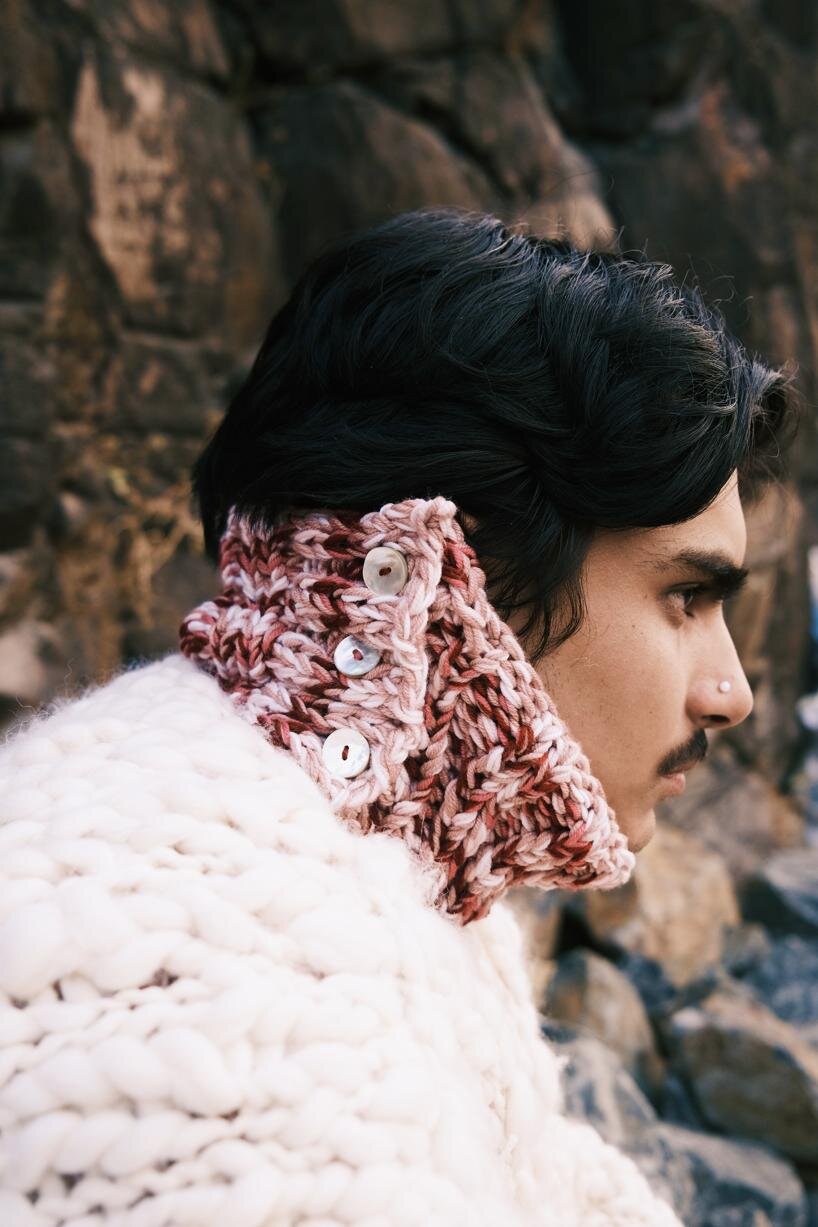
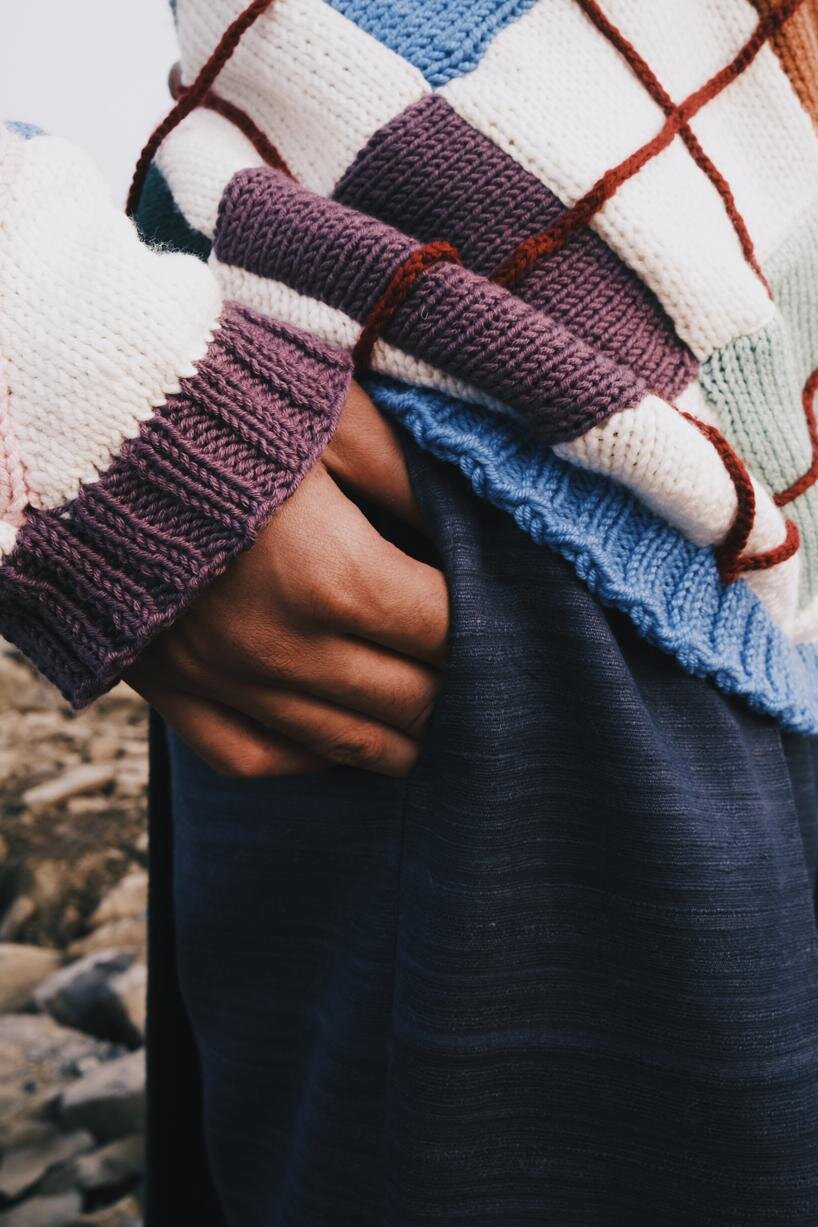
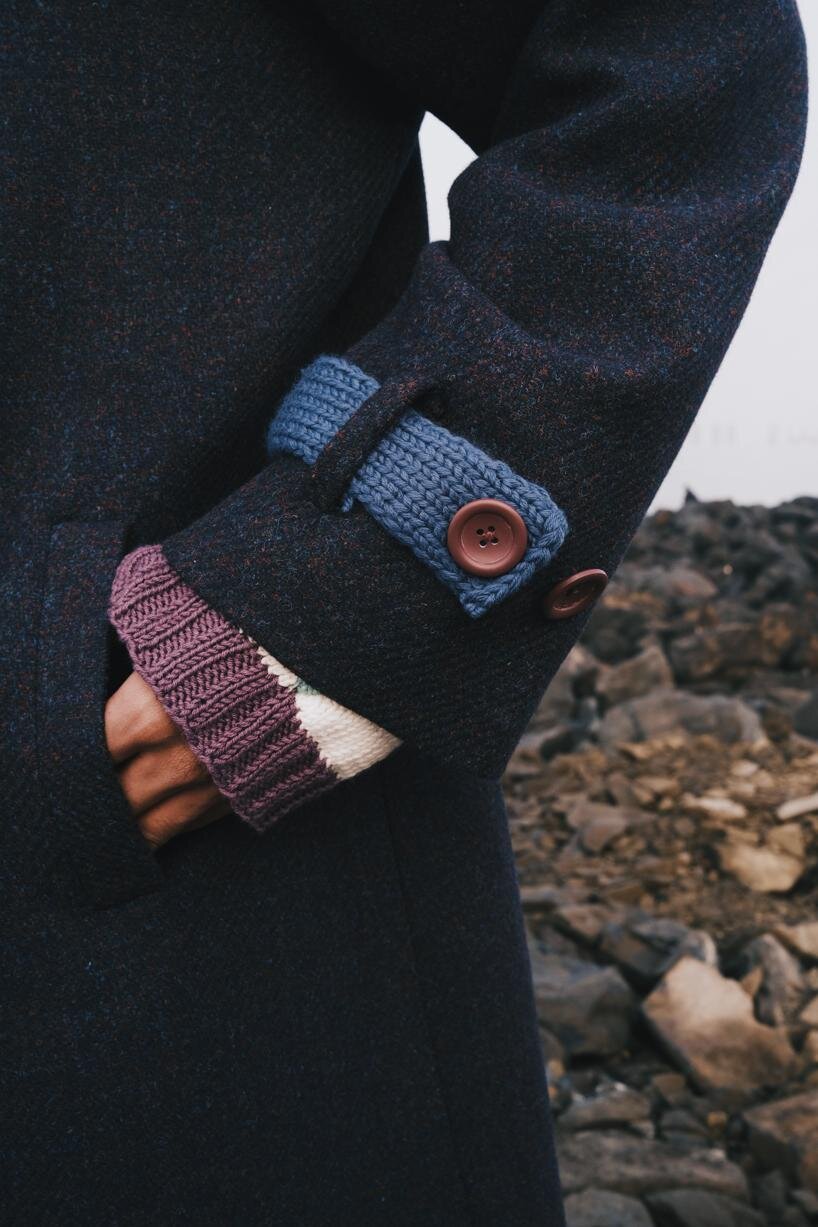
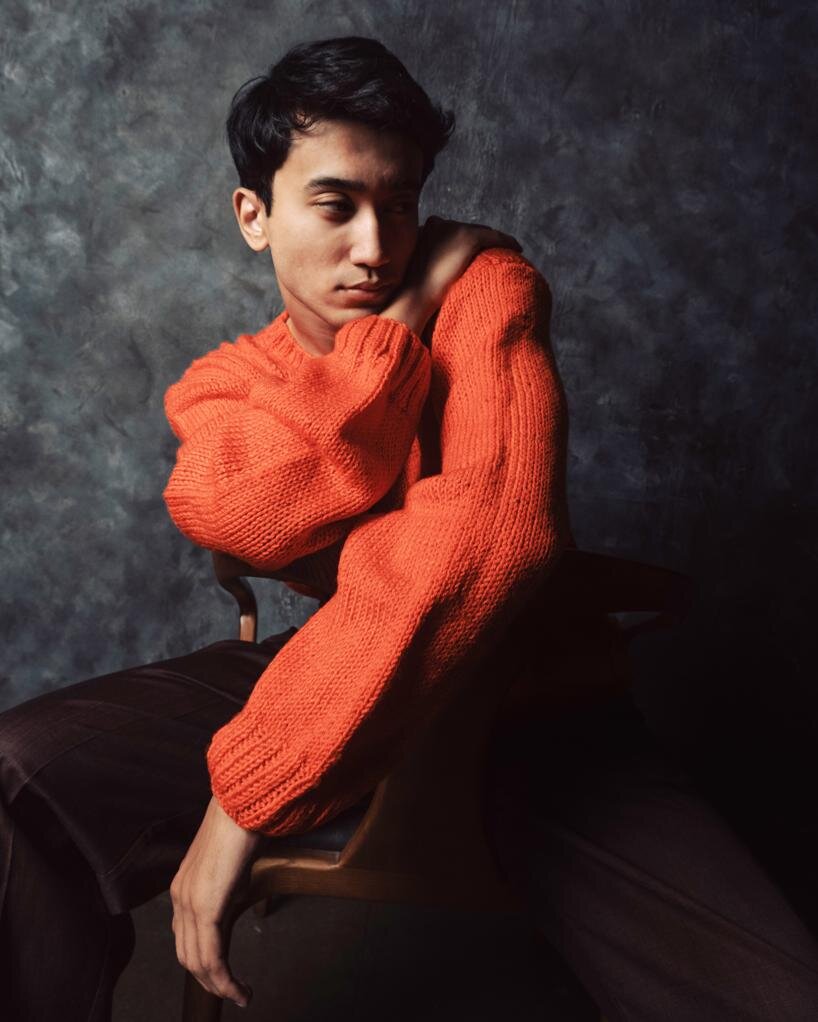
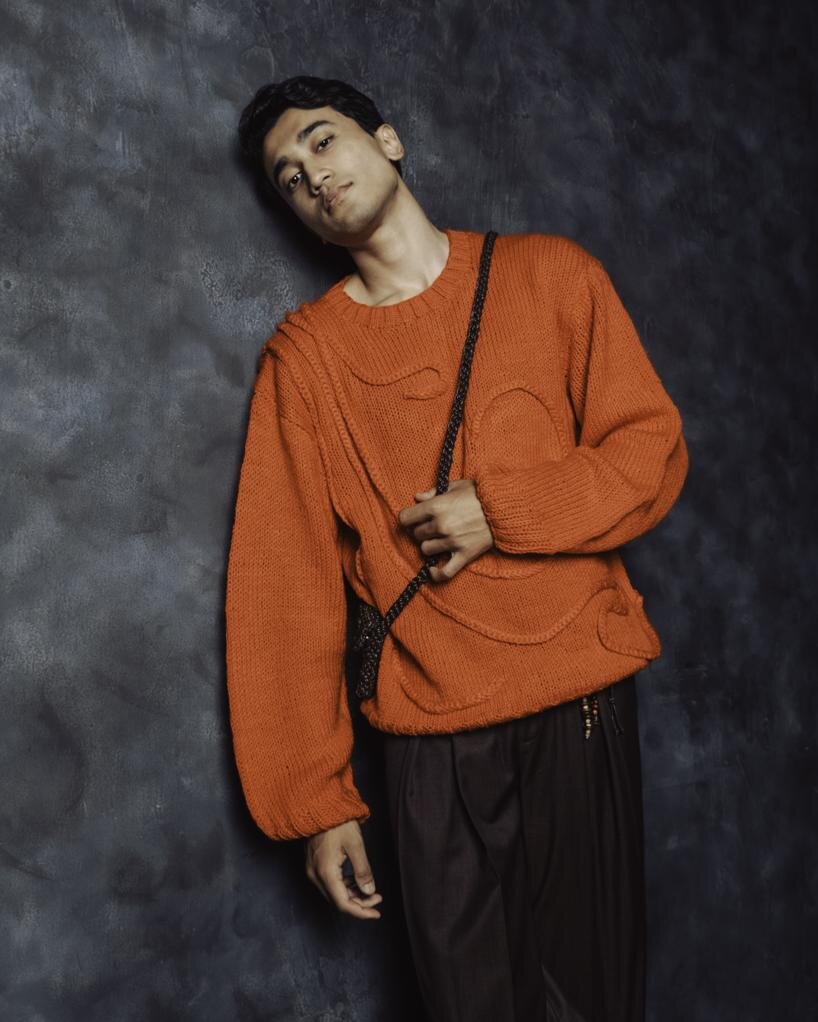
Her process is also deeply rooted in her familial history. Colorful handknitted pieces are the core of the brand, a craft that is practiced by Anand’s mother and grandmother, who play an active role in developing and testing samples for the collection. ‘I work very closely with them and we also try to push the technicalities within hand knitting.’ She goes on to elaborate on complex techniques like jacquard and intarsia, which use various colors and types of yarn to create one pattern, and how they are continuously working together to explore what’s possible with the method.

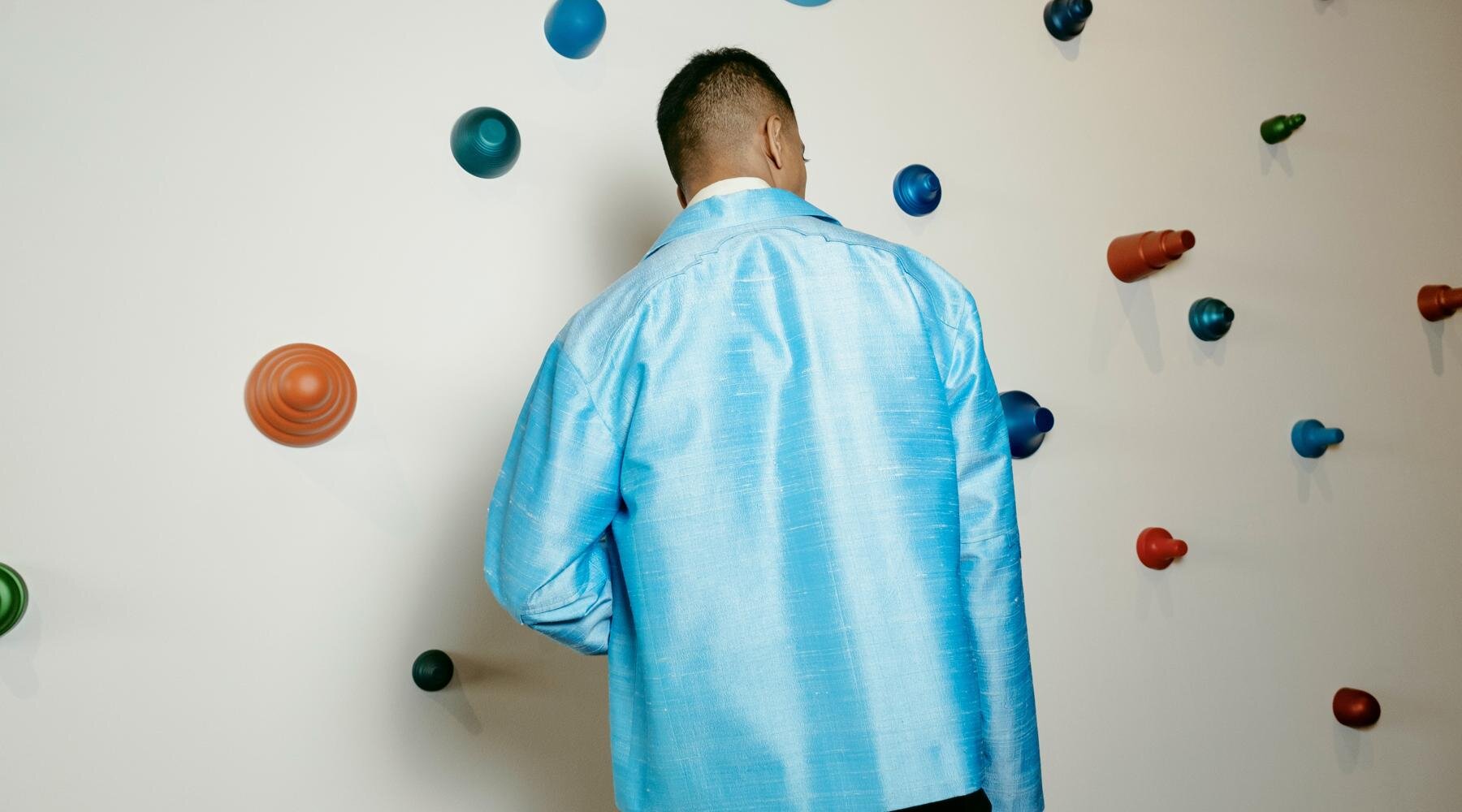
Creating with craft clusters
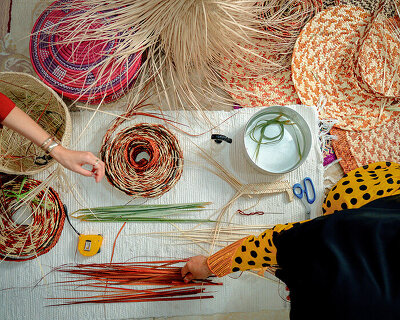
To create these knit pieces, the samples are brought to craft clusters across the country: groups of women outside of major urban centers who posses a deep, technical knowledge of knitting. On this production system, Anand elaborates, ‘in a village you have maybe five, ten women who are knitting. Then a little bit away, there’ll be another tiny village and there’s another five, ten women who are knitting. So there’s usually a bit of a hierarchy. Then there’ll be a master knitter who will call these women to a more central area to give them the work. Then they’ll complete it and send it back.’

Taarini Anand works with groups located in Uttarakhand and Punjab (Northern India) to knit the garments. On the history of this practice, Anand shares that ‘hand knitting is a very functional, homely practice. It was done by mostly women and girls because they live in a cold place and need more layers. Even now, if you go to remote areas within the hills, you will find these ladies hand spinning their yarn with the wool directly from the sheep they herd themselves and spin on their own.’
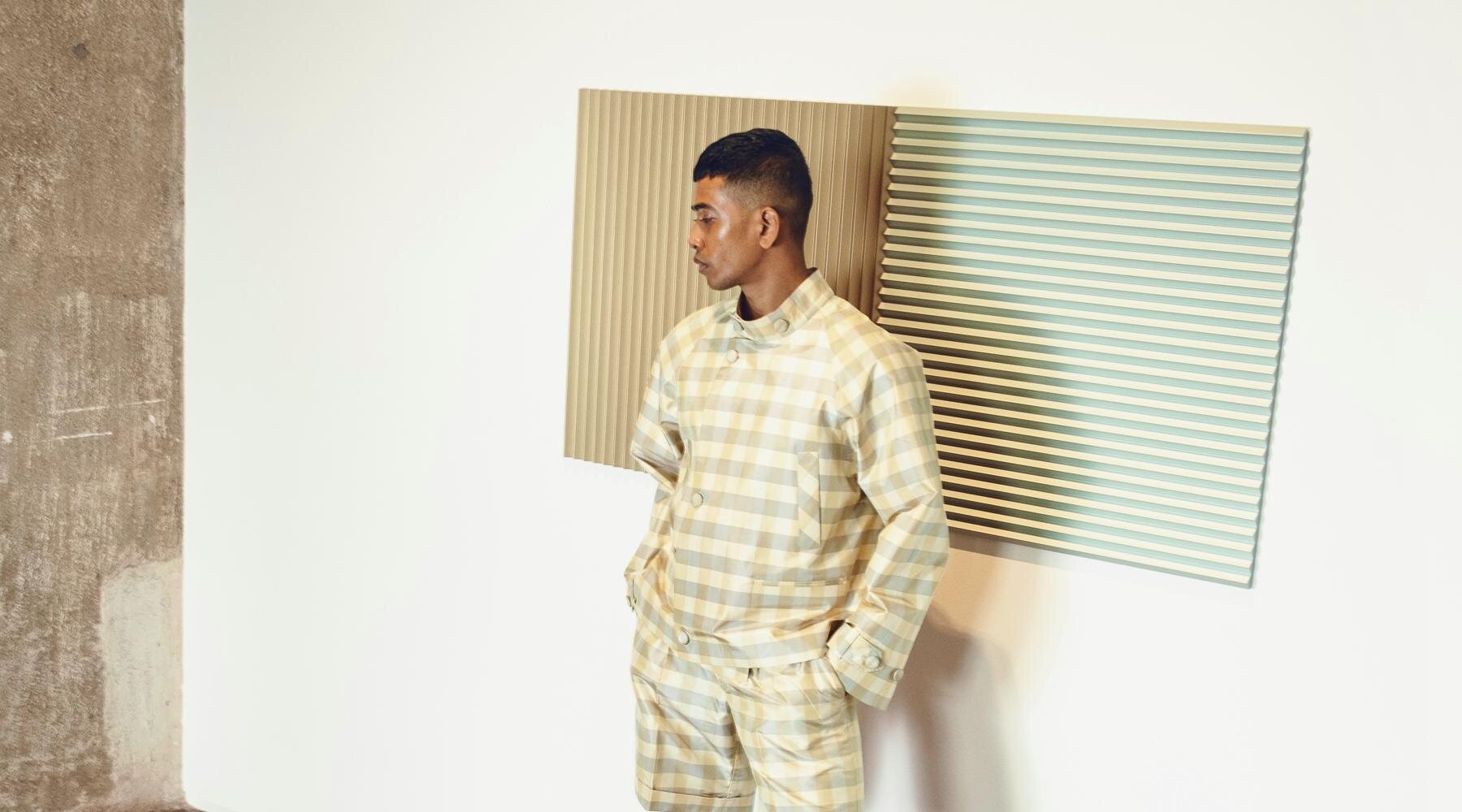
This female-centric practice is near to the designer’s heart, especially given she inherted this craft through the matriarchal side of her family. The way the garment is produced is evident not just in the weaves, but in the way she presents the collection. ‘We had a show earlier this year. For the start of it I had my grandmom knitting on the runway as the models were walking because that’s how it started for me.’ She adds that before the show, she had played the chattering, gossiping, and lively voices of the ladies that come together to produce the garments themselves. ‘It was just very nice to have some aspects of all the people who contribute to the actual piece be present there and at the same time.’


1/9
project info:
designer: Taarini Anand
brand: Taarini Anand
This article is part of designboom’s Crafting the Future chapter, exploring what it means to be a maker in today’s world and the future of craftsmanship. Discover more related stories here.
shop
your own online design shop — no sales commission collected