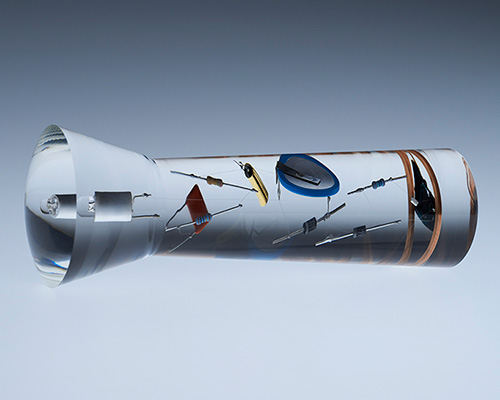
takt project explores notions of material and object in composition
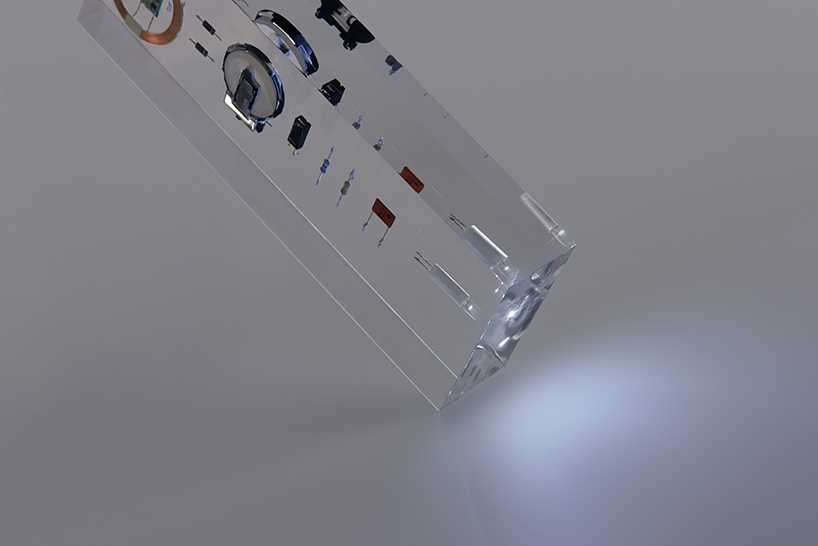
the fully-functioning flashlight uses ultra-fine wire and conductive resin to challenge the framework of what is conventionally considered material.
prefer designboom on google[FEATURED]
japanese studio takt project contemplates the difference between product and material in experimental project, ‘composition‘. just as wood is whittled to make furniture, or clay altered to form utensils, ‘composition’ proves that the same can be done with electrical appliances. electrical components are treated as individual materials, which are held in space by a conductive resin.
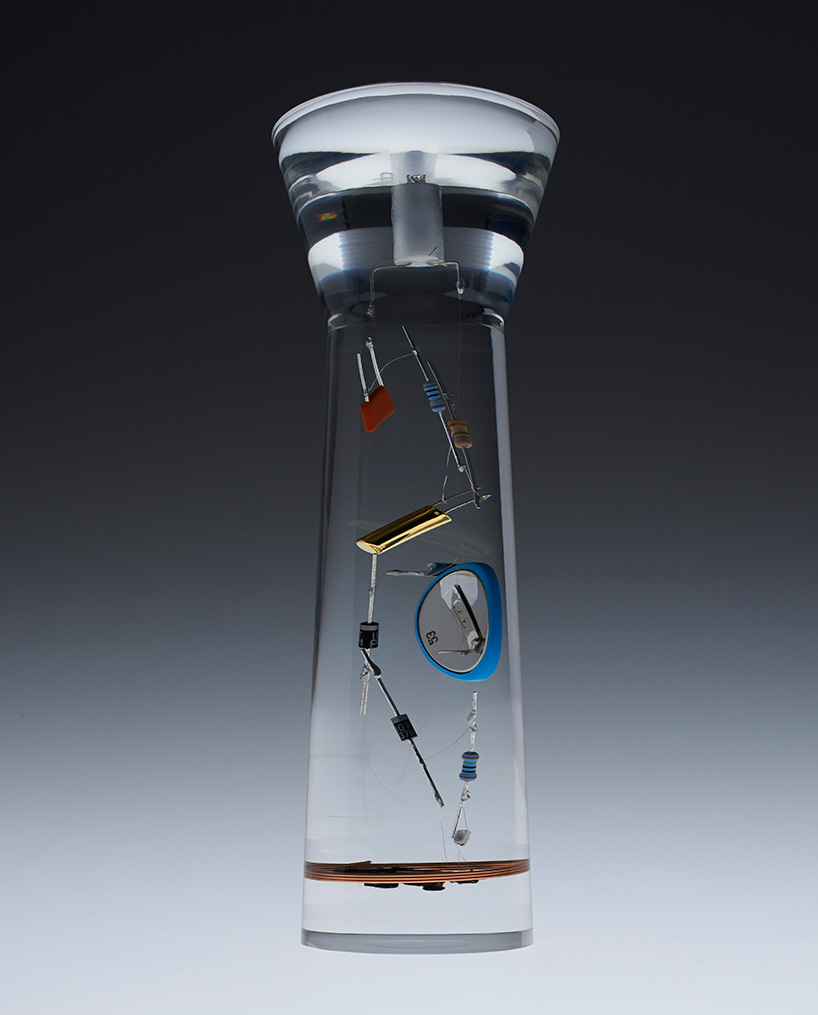
clear acrylic holds parts and allows for its transparent quality
all images by masayuki hayashi
rather than having a decorative exterior that covers internals, ‘composition’s’ interior becomes the object itself. so, at what point does it stop being a material, and start becoming a product? the flashlight is fully functioning, and uses ultra-fine wire without the need for a circuit board. ‘composition’ was presented during tokyo design week 2015 at the experimental creations exhibition at light box studio in aoyama, tokyo, japan.
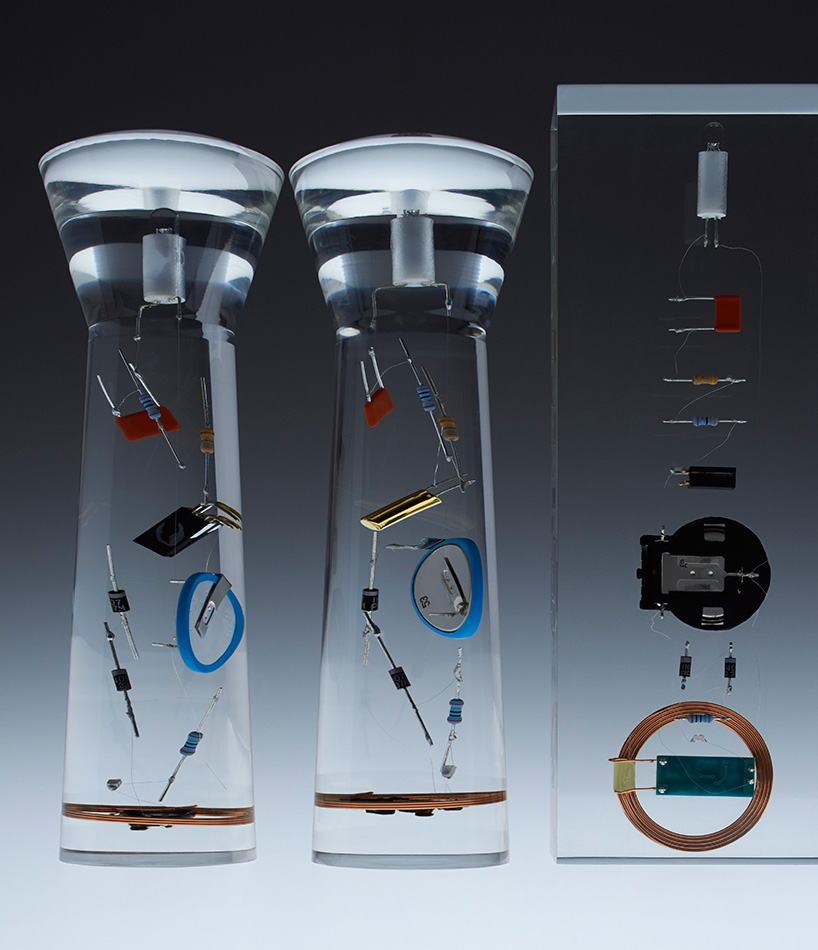
all electrical components are frozen in place
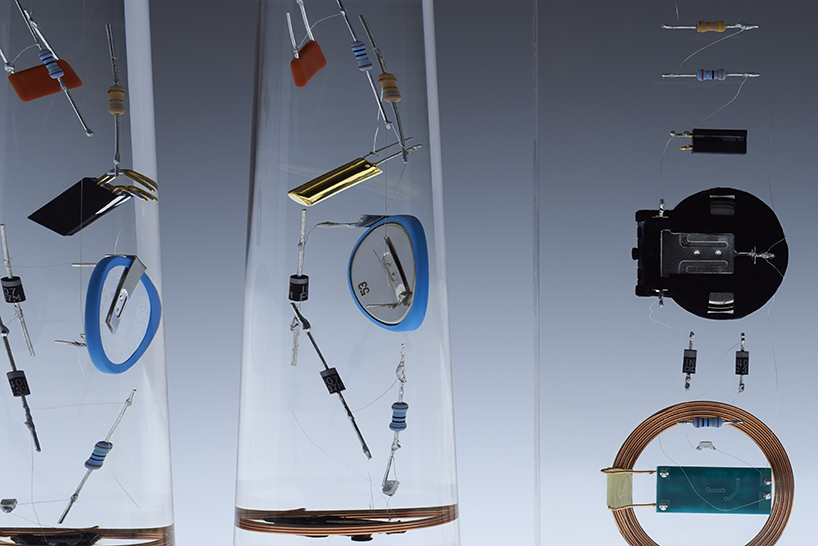
there is no circuit board
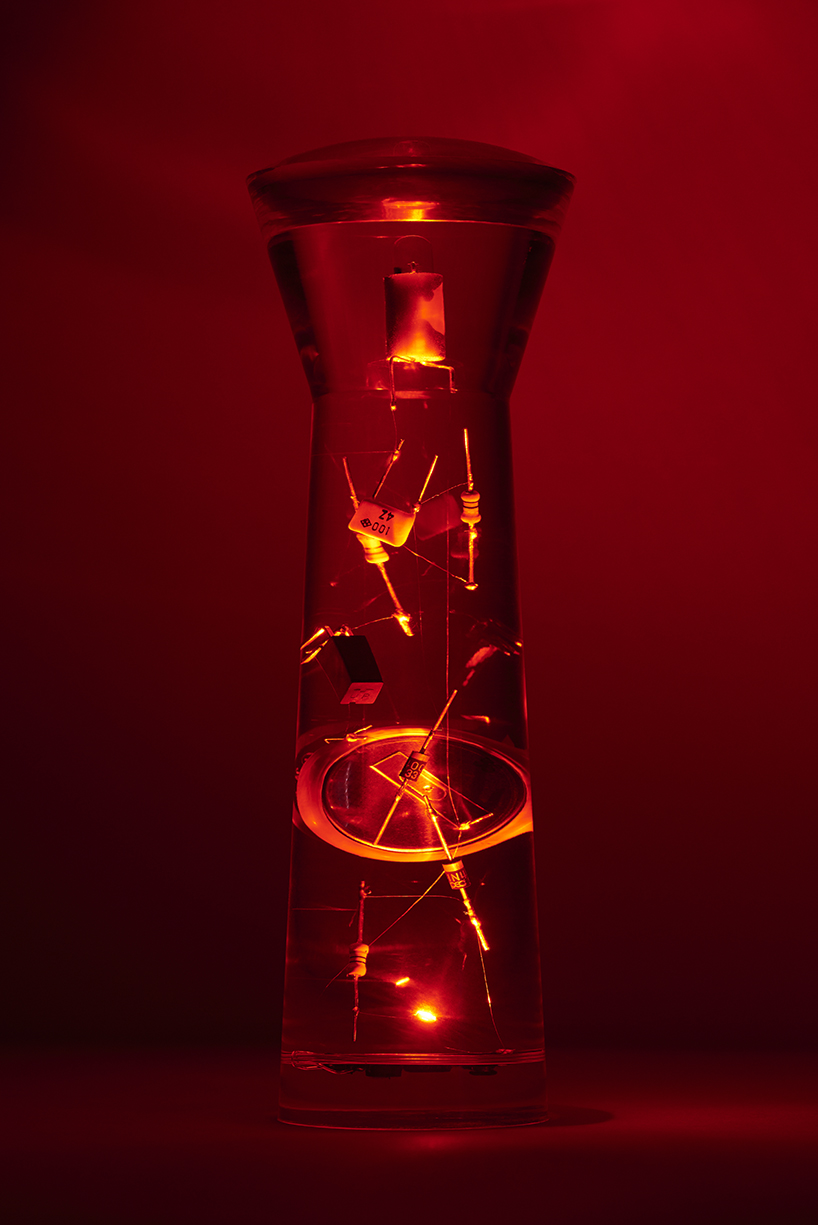
flashlight detail
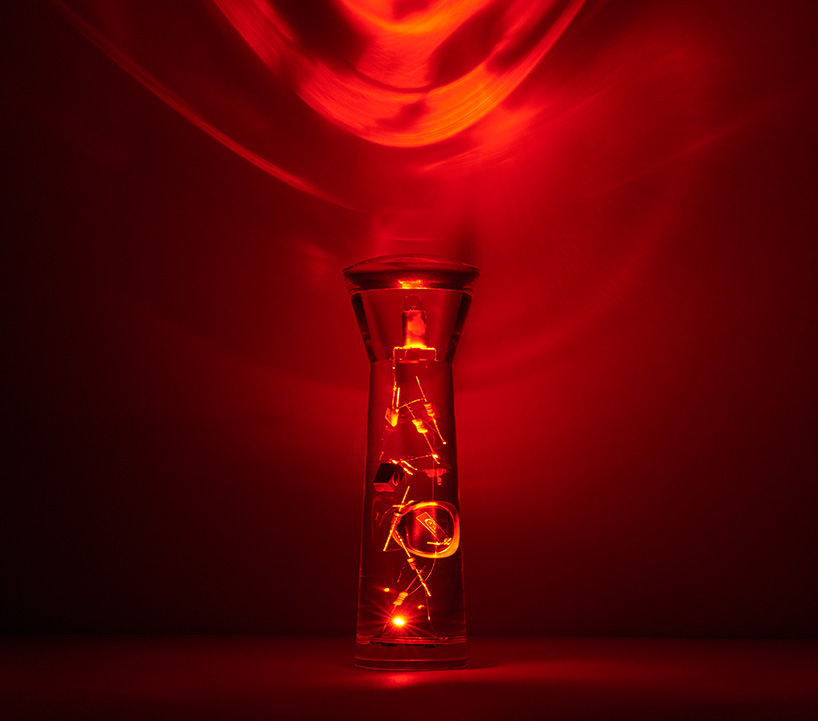
red LED indicates charging
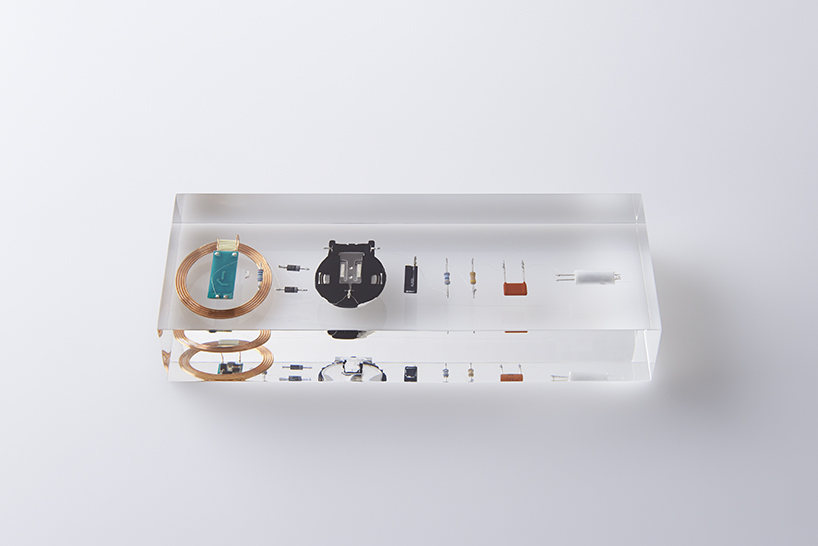
prototype
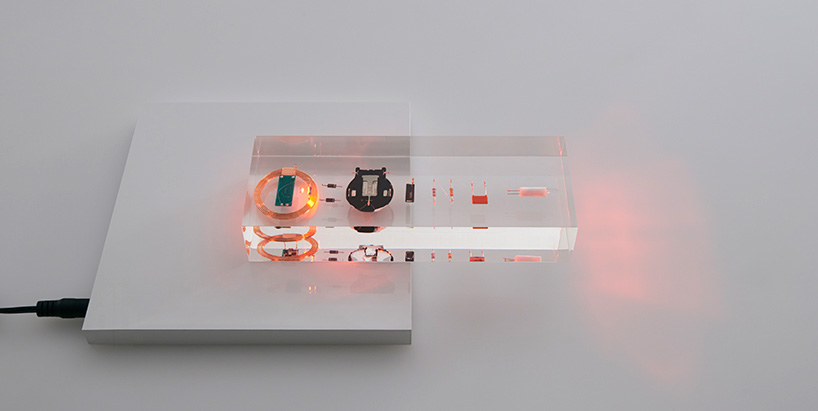
wireless charging station
unit being used
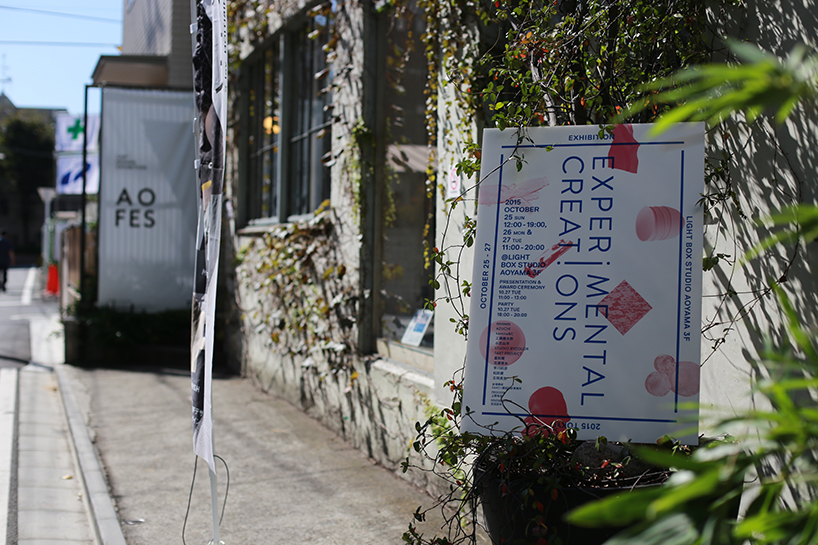
‘experimental creations’ exhibition signage
image courtesy of takt project
project info:
project name: composition
design: takt project
client: self research project
photo: masayuki hayashi (images 1-10)
exhibition info:
name: experimental creations
site: light box studio, aoyama, tokyo, japan
term: 25/10/2015 – 28/10/2015
designboom has received this project from our DIY submissions feature, where we welcome our readers to submit their own work for publication. see more project submissions from our readers here.
shop
your own online design shop — no sales commission collected