takuto ohta turns 200 leftover cedar logs into an evolving furniture system
A dynamic and sensory creative approach utilizing materials destined for disposal through the exhibition process.
prefer designboom on google[FEATURED]
WHAT HAPPENS TO MATERIALS AFTER THE EXHIBITION?
Japanese designer Takuto Ohta explores the afterlife of temporary architecture with log x, a furniture project developed from approximately 200 Yoshino cedar logs originally used for an exhibition. Sourced from Nara Prefecture, the timber had been milled with a kerf — a deliberate slit intended to reduce cracking as the wood dries — and was left without a clear purpose once the installation came down. Ohta acquired the entire batch, irregularities included, and brought it to SKWAT in Kameari, Tokyo, where the material became the basis for a two-month design experiment.
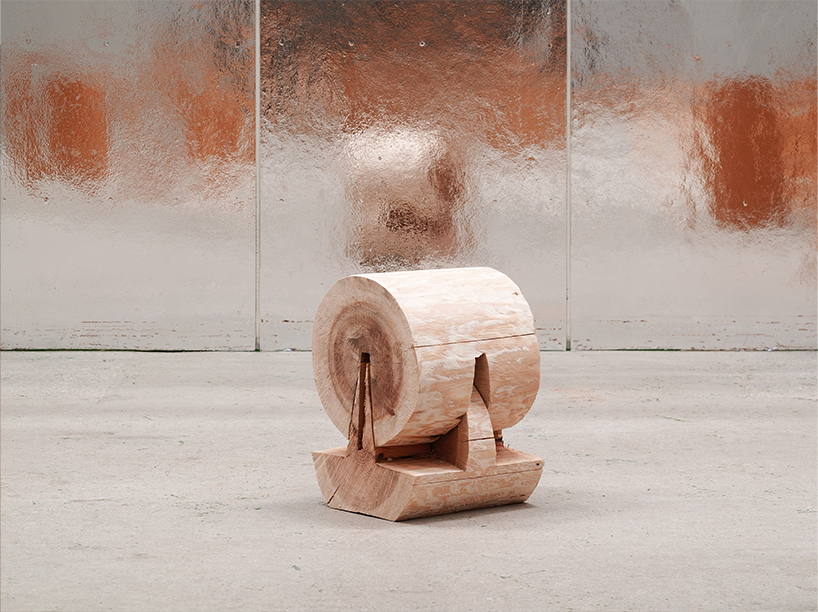
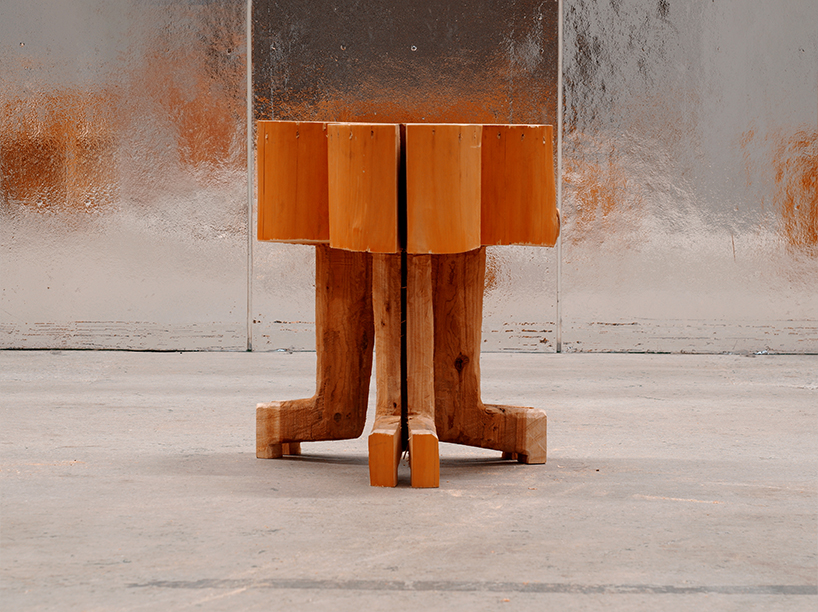
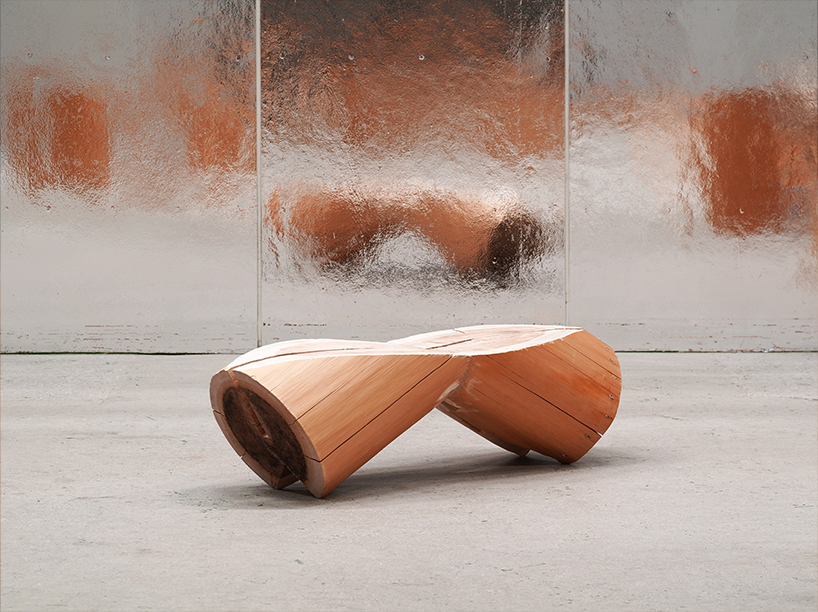
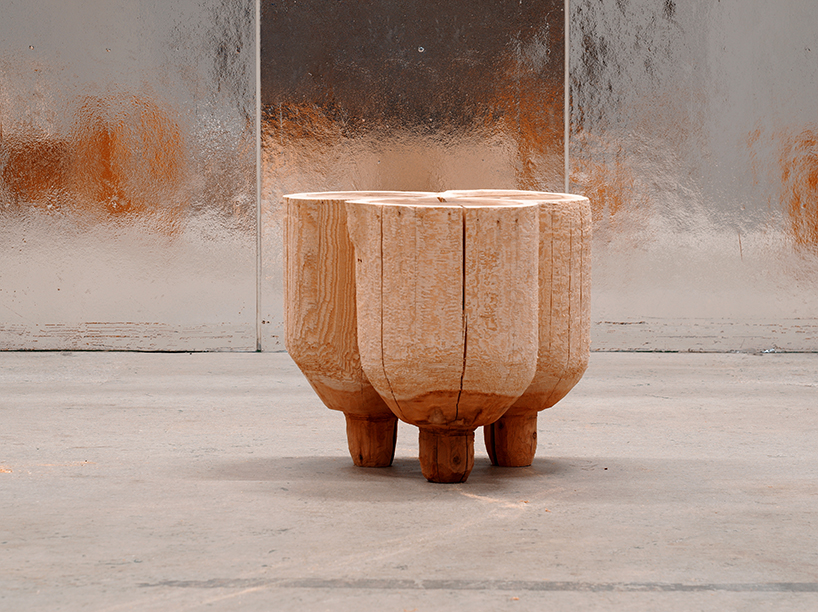
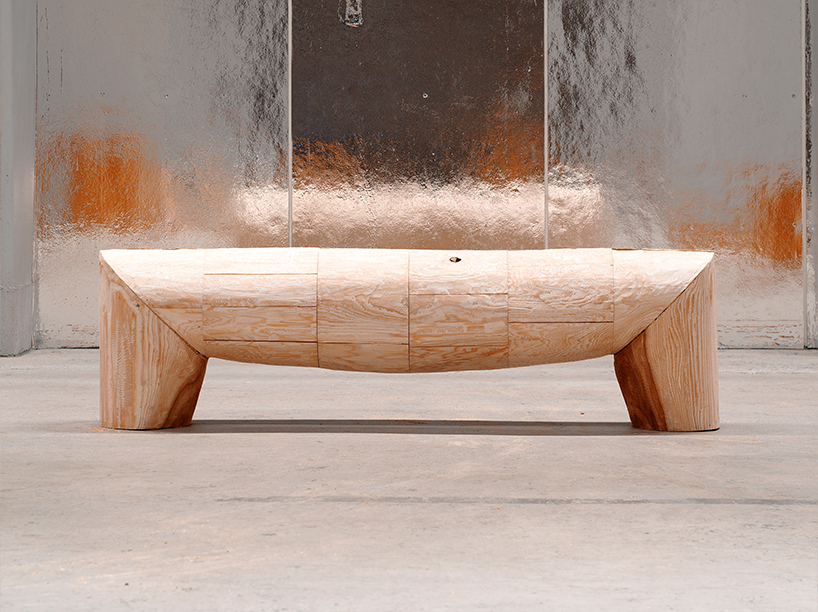
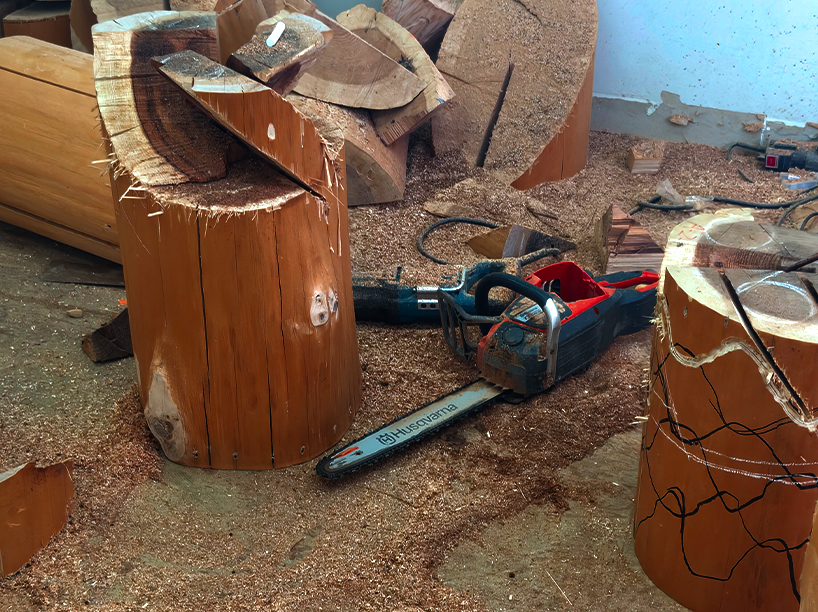
Instead of beginning with a predetermined collection, Ohta worked directly with the available logs, testing cutting, joining and assembly techniques to discover what each piece could become. The process eventually produced around 50 pieces of functional furniture, while the remaining timber continued to participate in the space in a less finished state. Logs arranged at regular intervals beside the adjoining café doubled as seating for visitors and as material waiting to enter the workshop — furniture, stockpile and prototype all at once.
DESIGNING BY CUTTING, TESTING AND REPEATING
The project developed through an intentionally immediate cycle of making. Forms and construction techniques discovered through hands-on experimentation were quickly applied to other logs, allowing the collection to evolve through repetition rather than through a fixed drawing set. The existing dimensions, kerfs and inconsistencies of the cedar became active design parameters, with each new intervention responding to what was already present in the material.
This open-ended method is reflected in the name log x. ‘Log’ refers simultaneously to the timber itself and to the mathematical abbreviation for logarithm, while x acts as a variable for the different forms and construction systems produced during the process. By categorizing these variations, Ohta turns fabrication into something that can be read and compared, making the gradual development of the project visible rather than hiding it behind a polished final collection.
50 OBJECTS FROM AN EXHIBITION’S LEFTOVERS
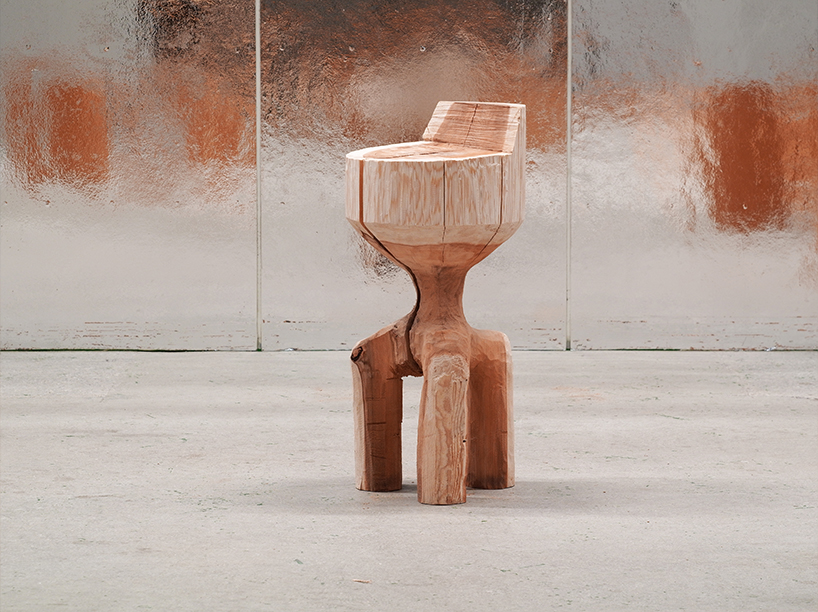
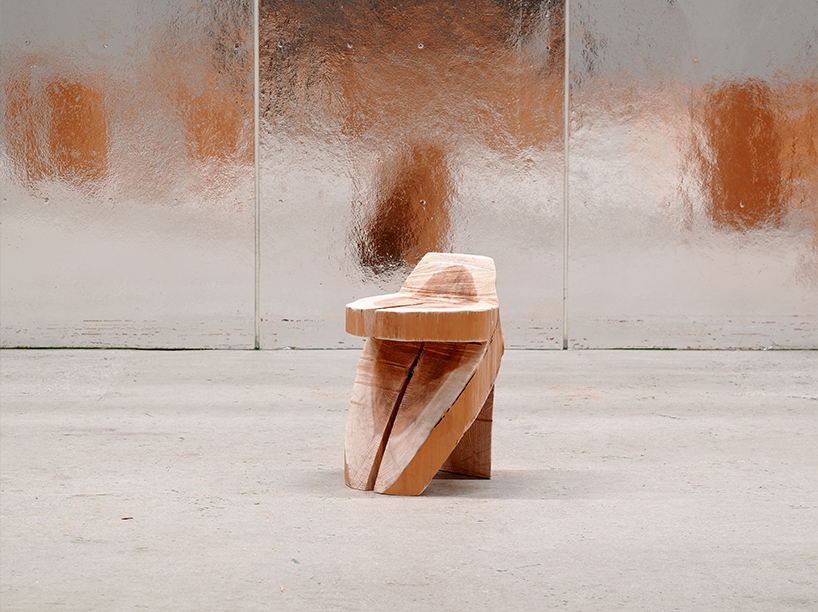
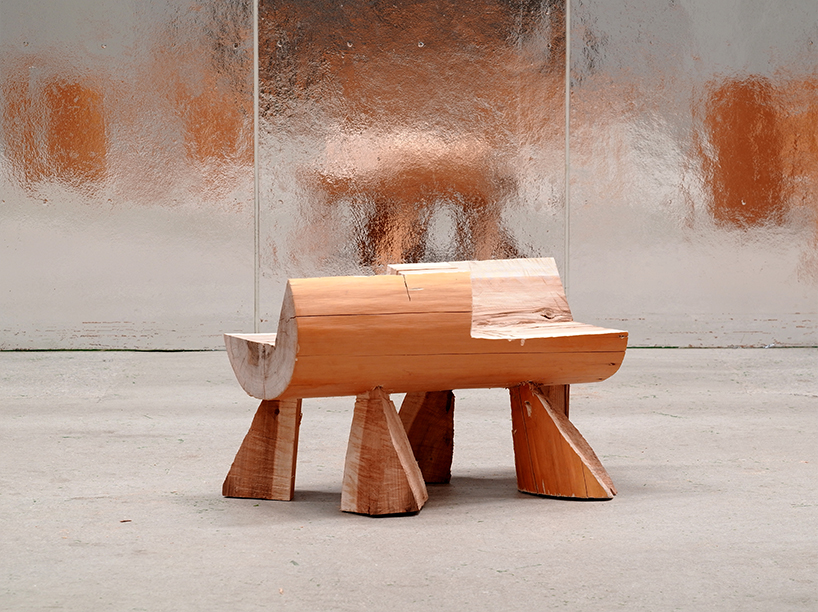
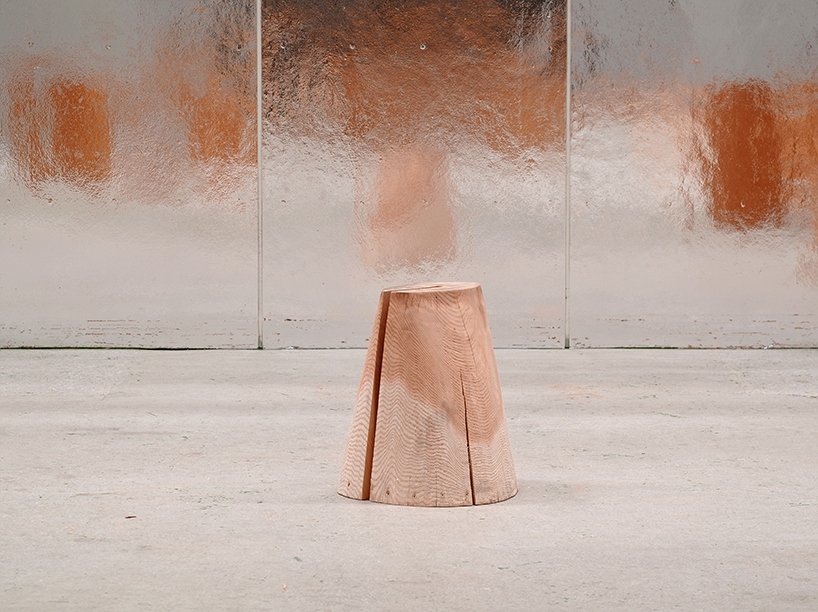
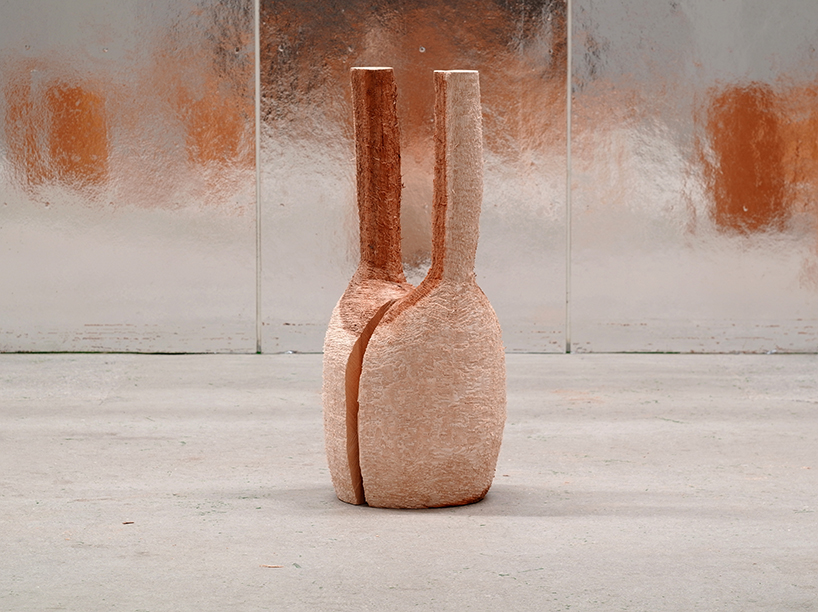
Across the resulting pieces, the logs retain much of their original mass and visual character. Rather than processing the cedar until every element becomes identical, Ohta works with the dimensions and features inherited from their previous use, introducing only the cuts and connections needed to transform them into stools, benches, tables and other functional objects. The project sits within the designer’s broader interest in ‘decomposition’ and ‘production’, examining how objects can be broken down, reorganized and made to enter new relationships.
In this sense, log x is as much about material circulation as it is about furniture. Temporary exhibitions routinely rely on structures designed for exceptionally short lives, yet Ohta treats dismantling as the beginning of another design phase rather than its conclusion. Two hundred redundant logs become a working material library, then seating, then prototypes, and finally a family of objects — a reminder that ‘temporary’ does not necessarily have to mean ‘finished with’.



project info:
name: log x
designer: Takuto Ohta | @ohtatakuto
designboom has received this project from our DIY submissions feature, where we welcome our readers to submit their own work for publication. See more project submissions from our readers here.
shop
your own online design shop — no sales commission collected