design in dialogue: INTERVIEW with tom dixon
on april 1, 2020, new york gallery friedman benda initiated a series of online interviews aimed at connecting individuals across the world with leading voices in the creative field. design in dialogue is a conversational program hosted alternately by curator and historian glenn adamson and designer stephen burks that engages with designers, makers, critics, and curators as they reflect on their careers and creative processes. against the backdrop of COVID-19 and global lockdowns, the conversations are held virtually on zoom for 1 hour for anyone in the world to tune in to, and include a participatory Q&A with the audience in attendance. friedman benda has since presented more than 90 episodes, each offering unparalleled insight into the sensibilities, musings, and memories of today’s creative protagonists. see our recent feature of ebitenyefa baralaye on ‘the encoded nature of faces’ and dorte mandrup on designing ‘irreplaceable places’.
design in dialogue returns with a brand new conversation between glenn adamson and british designer tom dixon. the interview, which also features contributions from guest curator gareth williams, traces dixon‘s early days as an enfant terrible of the british scene, his transition from music to design, the characters and settings of 1980s london, and his leading role in the creative salvage movement. at the beginning of his career, the self-taught designer pioneered a style of improvisatory bricolage, often incorporating industrial castoffs and vintage metal scrap. ‘I do think that the punk movement definitely did liberate a whole generation of people from feeling that they had to a. conform, or b. even be any good in a formal way to produce,’ notes dixon during the conversation. ‘the most important thing became attitude and uniqueness and not a polished outcome. that was pretty unique to london at the time, and definitely the key was unlocked by a series of non-musicians that became the punk bands. in 1976 the sex pistols were number one and they were really making a most appalling noise, so that must have taught us how to behave. I don’t think that I would have understood that if I hadn’t myself been in music before, where it’s pretty normal and had been for a long time for you to learn your own instrument, make up your own tunes, book your own gigs and do your own flyers. pretty much that’s what we did in furniture, we created our own exhibitions, we made it up as we went along and the most important thing was to have a recognizable attitude and manifesto rather than a series of very polished manufacturing or craft skills.’
watch the full video interview at the top of the page, and learn more about tom dixon’s early works, featured in friedman benda’s latest exhibition below.
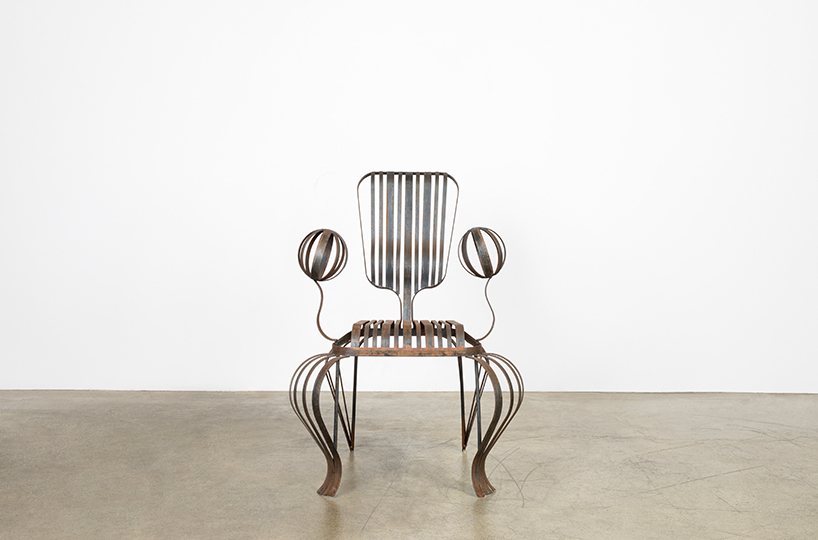
tom dixon, space age chair, 1987-1988, welded steel | courtesy of friedman benda and tom dixon
all photos by daniel kukla unless stated otherwise
‘accidents will happen: creative salvage, 1981-1991’ at
friedman benda
a series of works by tom dixon is currently on view as part of friedman benda‘s eighth annual guest-curated exhibition, ‘accidents will happen: creative salvage, 1981–1991’. on view from january 13 to february 12, 2022, the exhibition is curated by gareth williams, who co-authored ‘cut & shut: the history of creative salvage’ with nick wright. the exhibition, which marks the first international presentation dedicated to creative salvage furniture, showcases key works from an often overlooked but highly influential period of british design that exploded out of 1980s london. early and important pieces from key figures of the period are showcased, including ron arad, mark brazier-jones, tom dixon, andré dubreuil, danny lane, jon mills and deborah thomas.
‘accidents will happen: creative salvage, 1981–1991’ captures a critical moment in the course of recent design history and charts its exciting narrative through a wealth of contemporary archival material. against the backdrop of a country under duress, this group of entrepreneurial and anarchic creatives forged ahead making furniture using the most rudimentary of materials and equipment. salvaged steel rods were rearticulated into rococo-inspired forms, rusting scaffolding clamps and dumbbells became the structural support on chairs, a reclaimed marble façade and parquet flooring bricks were repurposed as tabletops, and chandeliers were formed from broken glass bottles.
as noted in dixon’s quote above, music ran centrally – from playing in bands to holding infamous illegal warehouse party/exhibition hybrids – and liberated their understanding of the design process, leaving a tangible legacy for subsequent studio production.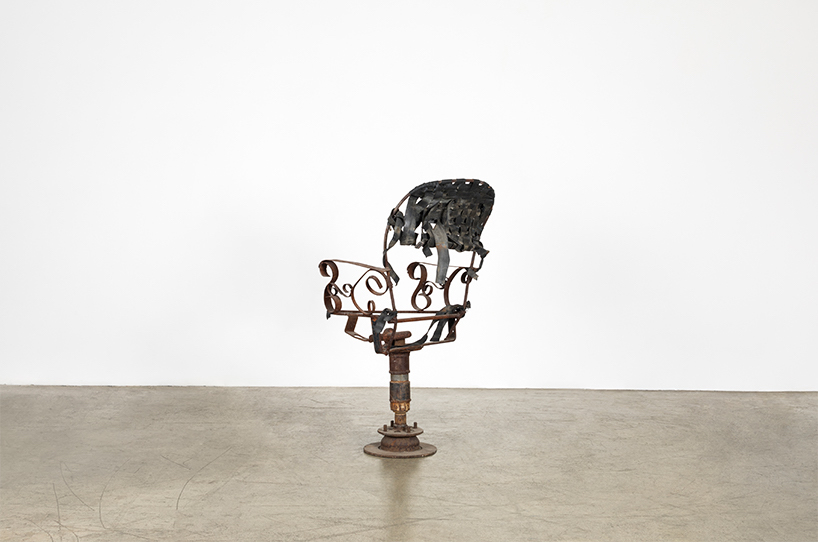
tom dixon, executive chair, 1984, welded steel concrete reinforcement rods and rubber inner tubes
courtesy of friedman benda and tom dixon
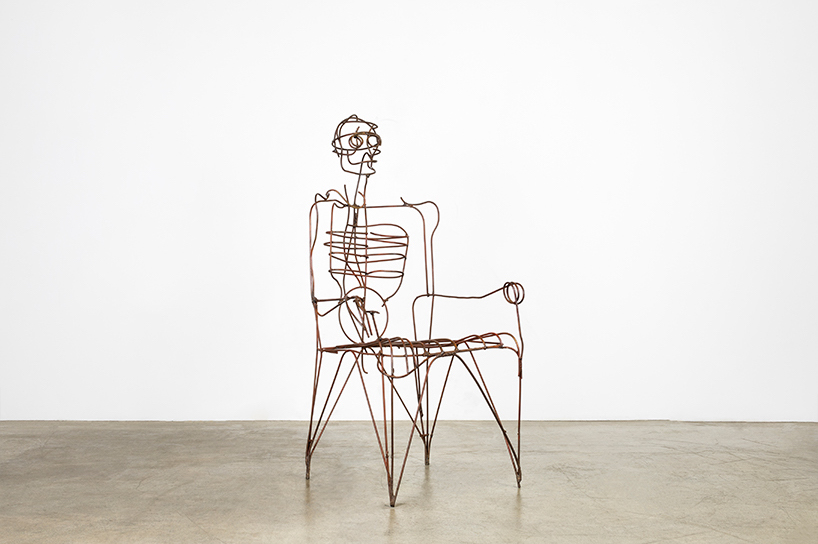
tom dixon, skeleton armchair, 1985, welded steel concrete reinforcement rods | courtesy of friedman benda and tom dixon
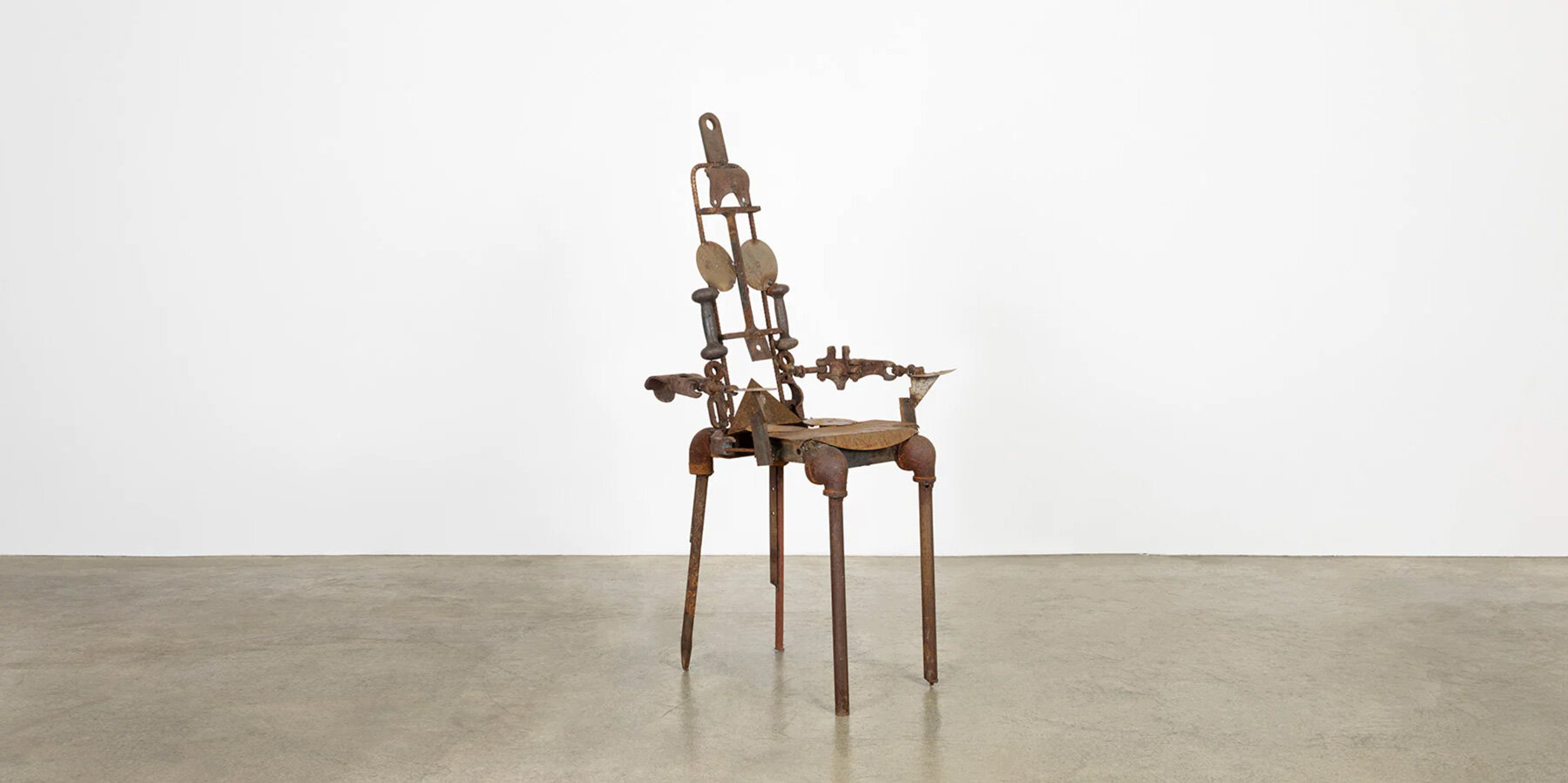
tom dixon, regal chair, c. 1985, welded sheet steel and scrap metal | courtesy of friedman benda and tom dixon
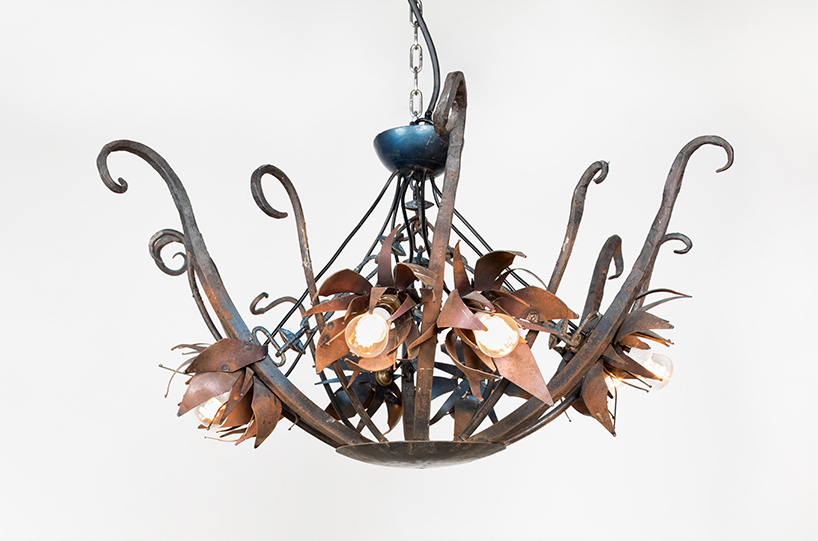
mark brazier-jones, rococo chandelier, c. 1988, welded steel | courtesy of friedman benda and mark brazier-jones
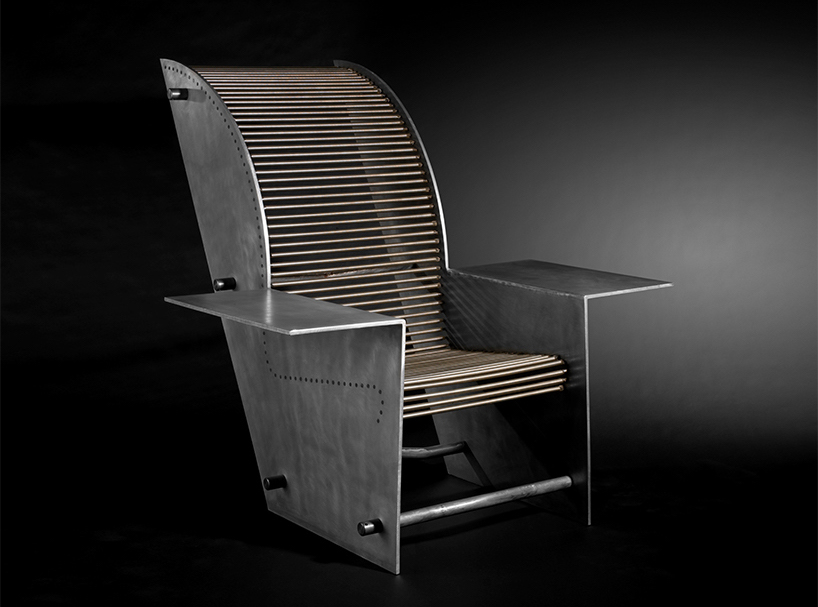
ron arad, horns armchair, 1985, aluminum, steel, pvc covered galvanized springs | courtesy of friedman benda and ron arad
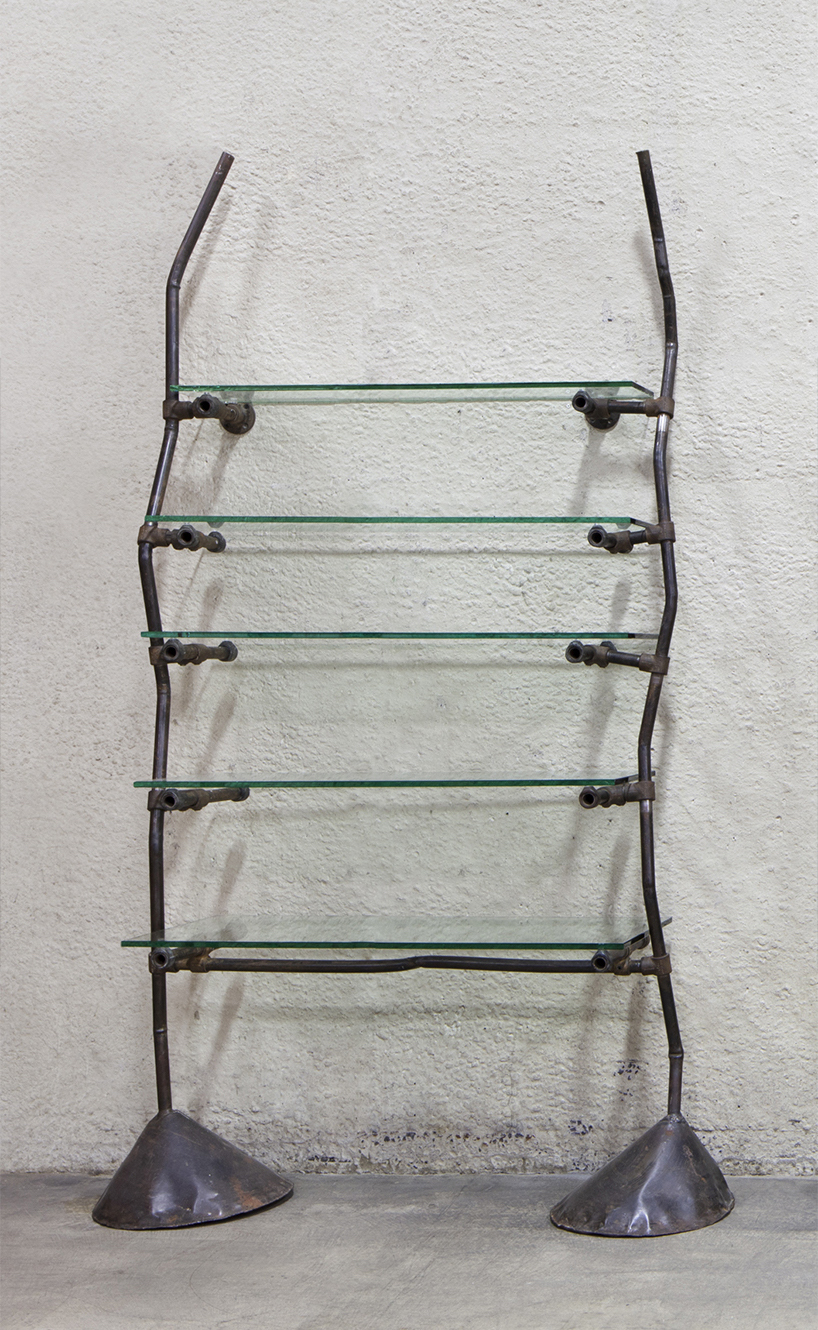
ron arad, bookcase, 1983, patinated steel, cast iron steel, glass | courtesy of friedman benda and ron arad | photo by timothy doyon
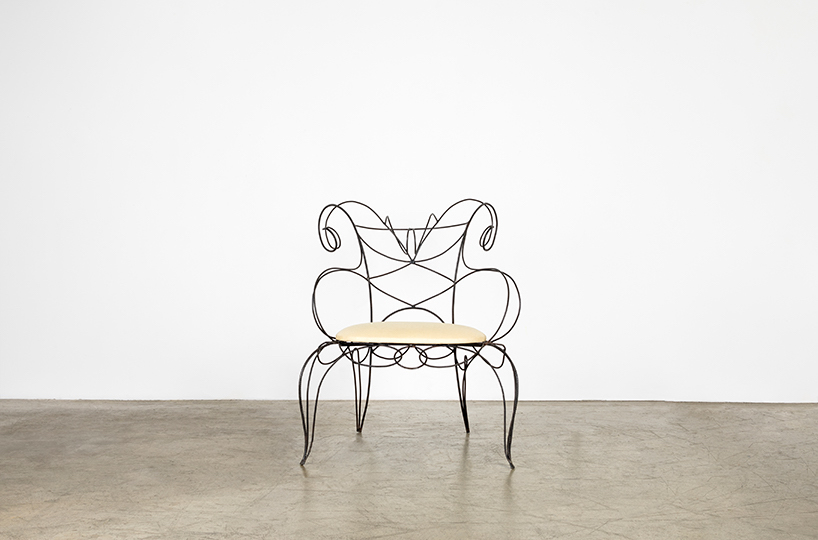
andré dubreuil, early ram chair, 1986, welded steel concrete reinforcement rods | courtesy of friedman benda and andré dubreuil
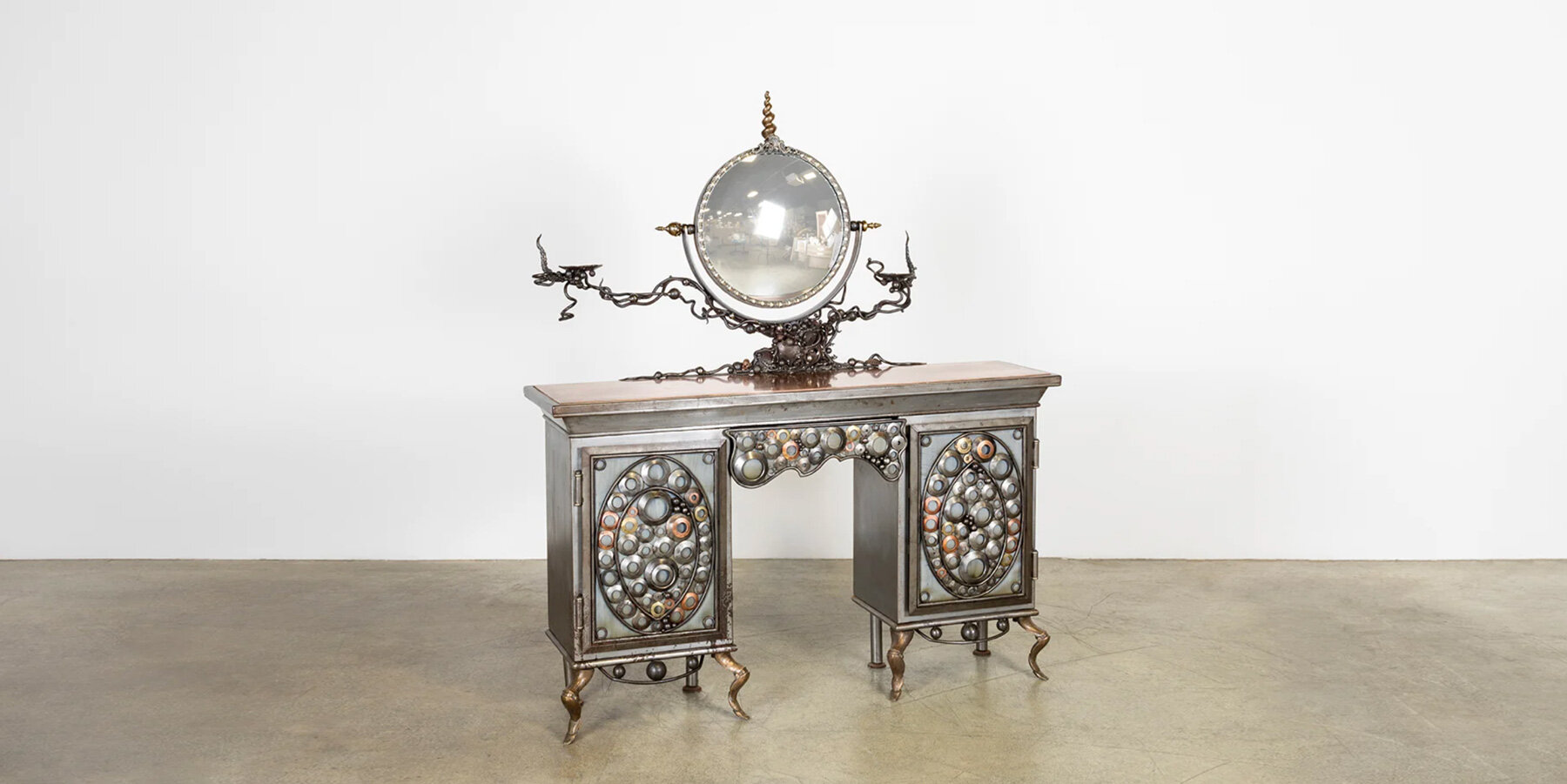
mark brazier-jones, dressing table, 1988, steel, copper, bronze and glass | courtesy of friedman benda and mark brazier-jones
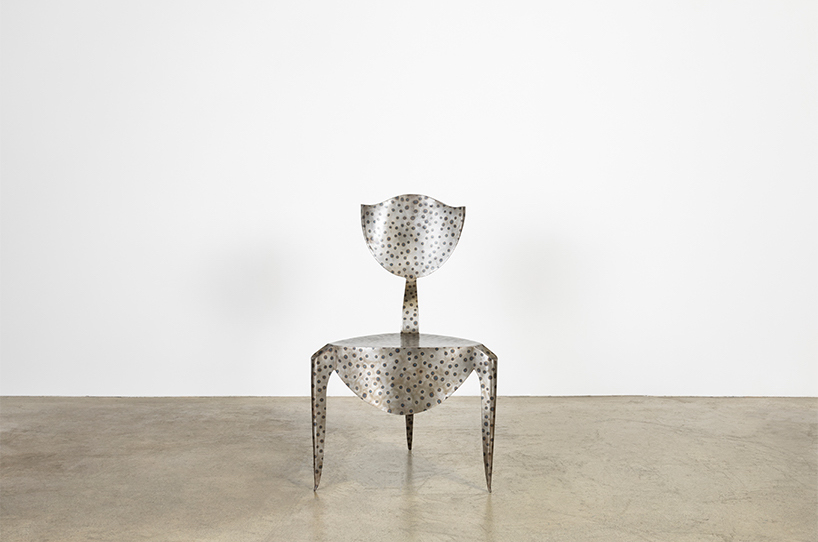
andré dubreuil, paris chair, c. 1988, waxed and welded sheet steel with acetylene torch burns | courtesy of friedman benda and andré dubreuil
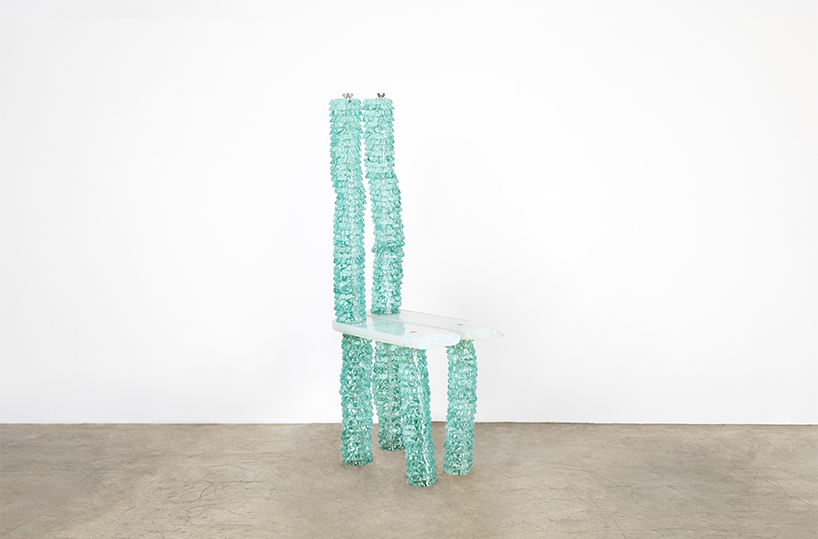
danny lane, solomon chair, 1988, stacked hammer chipped polished glass, opaque glass and steel rods | courtesy of friedman benda and danny lane
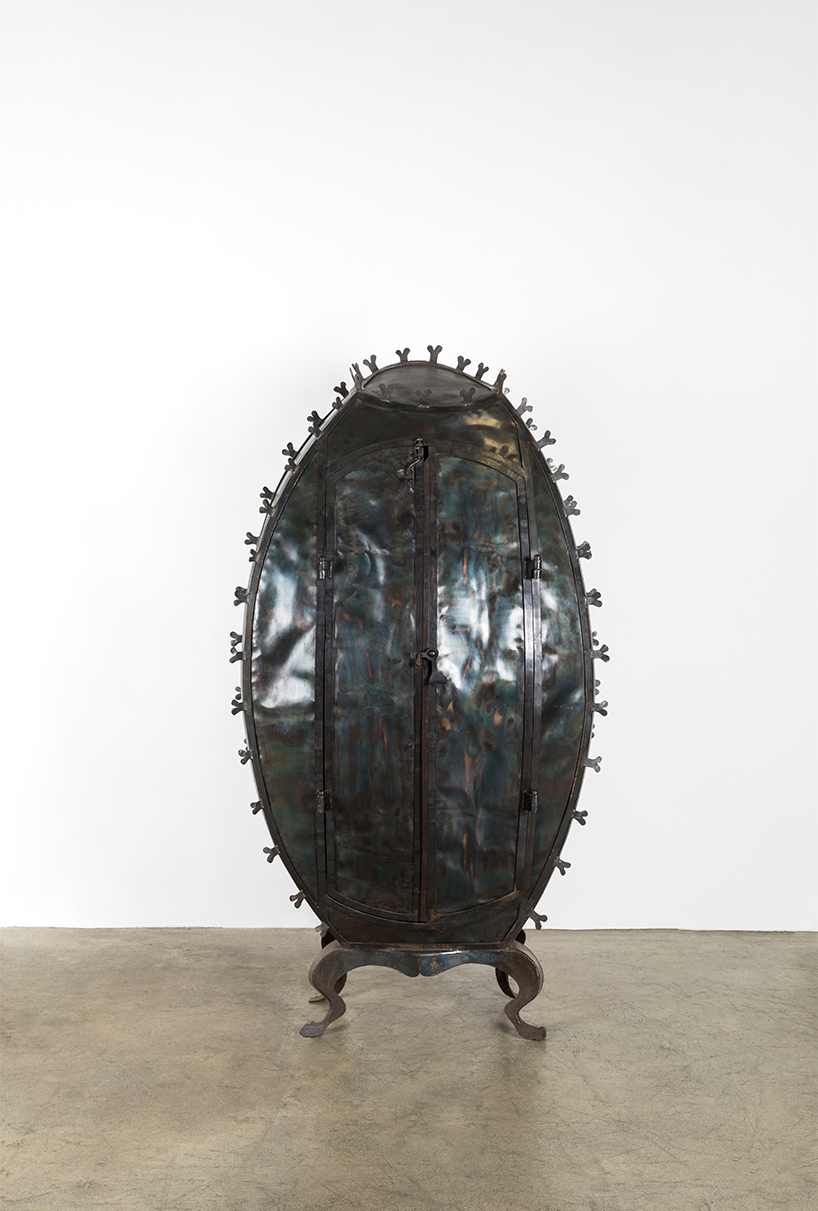
jon mills, dog bollock wardrobe, 1988, oil and acrylic on graphite on linen | courtesy of friedman benda and jon mills
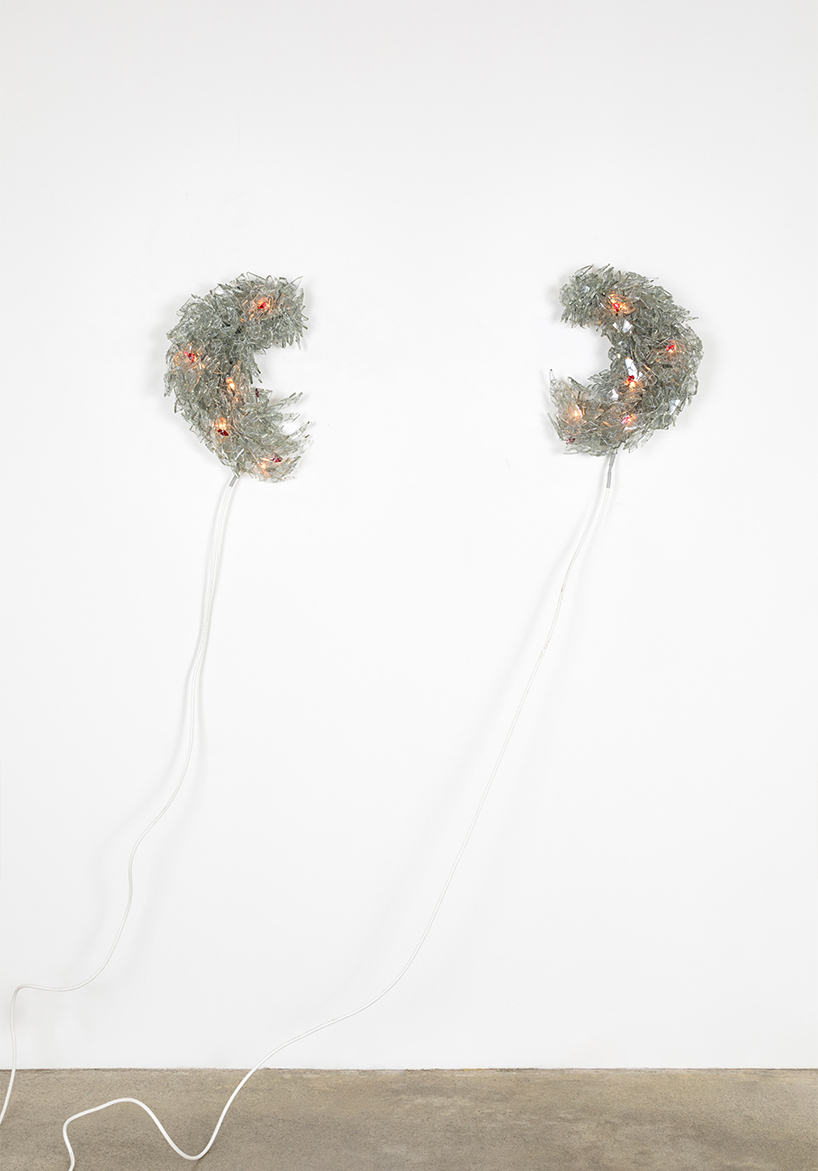
deborah thomas, pair of forest breeze wall lights, c. 1991, clear and red glass shards suspended on wire. courtesy of friedman benda and deborah thomas
project info:
exhibition name: accidents will happen: creative salvage, 1981-1991
exhibiting designers: ron arad, mark brazier-jones, tom dixon, andré dubreuil, danny lane, jon mills, deborah thomas
gallery: friedman benda
duration: january 13, 2022 – february 12, 2022
location: friedman benda, new york, NY
design in dialogue is a series of online interviews presented by new york-based gallery friedman benda that highlights leading voices from the field — designers, makers, critics, and curators — as they discuss their work and ideas. hosted alternately by curator and historian glenn adamson and designer stephen burks, the conversations are held on zoom for 1 hour and include a participatory Q&A.
watch the full video interview with tom dixon at the top of the page and stay tuned as designboom continues to share design in dialogue features. see all past episodes — and RSVP for upcoming ones — here.
design in dialogue (32)
 Jul 27, 2022
 Jun 14, 2022
 Mar 24, 2022
 Mar 01, 2022
 Dec 01, 2021
friedman benda (72)
 Feb 04, 2026
 Nov 14, 2025
 Sep 11, 2025
 Jun 11, 2025
 Apr 04, 2025
tom dixon (55)
 Dec 29, 2024
 Dec 08, 2024
 Apr 30, 2023
 Apr 07, 2023
 Dec 03, 2020
 Feb 18, 2026
 Jan 28, 2026
 Jan 02, 2026
 Dec 28, 2025