Guest Feature by Markus Hieke | Architonic
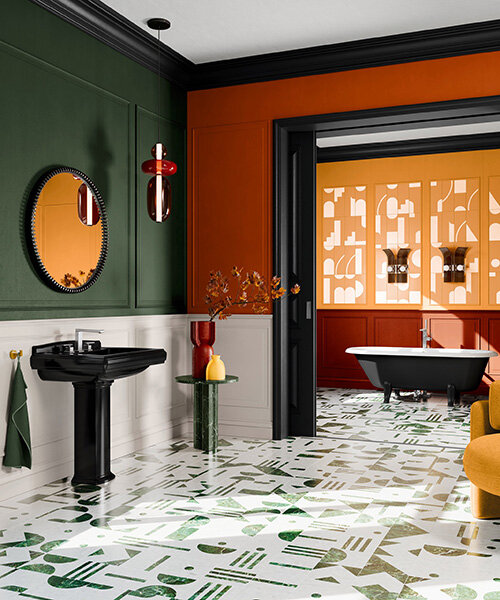
villeroy & boch celebrates 275th anniversary with antao by kaschkasch
the special new comprehensive bathroom collection is the culmination of 275 years of know-how from villeroy & boch.
prefer designboom on google[FEATURED]
An inventive spirit, friendship and even a love story lie behind the enduring success of the Villeroy & Boch brand…
What if François Boch – a frustrated French cannonball foundryman who left it behind to instead found a pottery workshop with his sons in Audin-le-Tiche, France – had never existed? What might the modern bathroom look like today?
We can’t answer that, of course, but we do know that Boch’s decision in 1748 certainly laid one of the foundation stones for it – even if they started out only making simple clay pots and jugs. The business quickly flourished and history took its course. This was also due to the fact that, with the help of some new formulas, the company succeeded in producing lighter earthenware and more elaborate shapes that were more affordable than expensive porcelain.
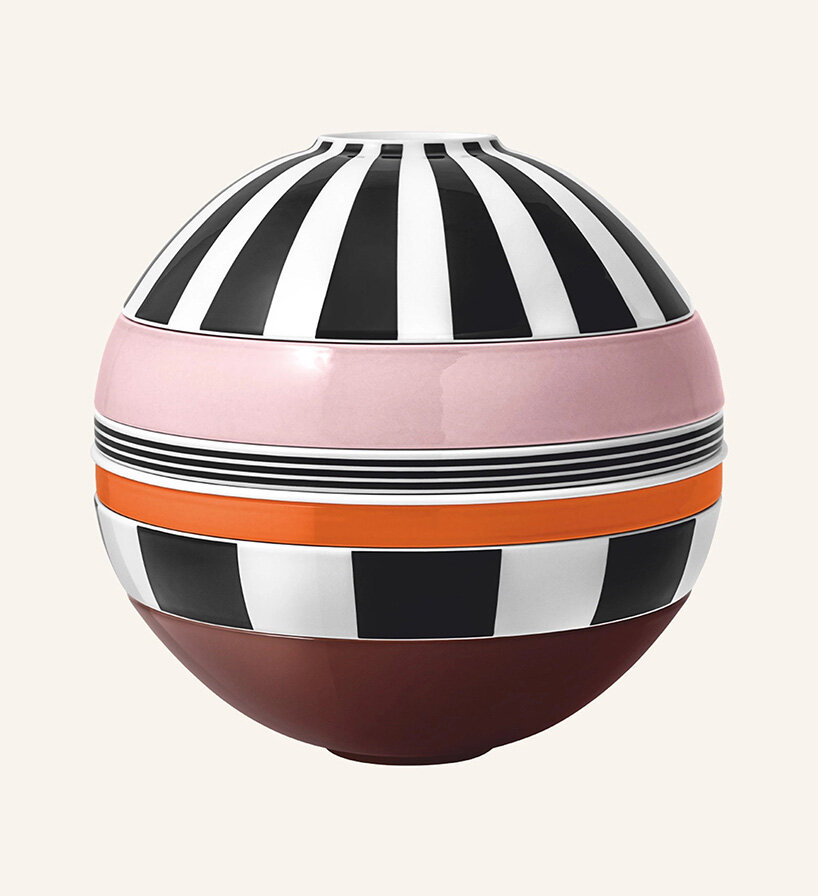
After Boch died, his sons began early industrial series production in Septfontaines, Luxembourg. This is where the famous Brindille dinnerware was created in 1770, designed by Pierre-Joseph Boch and which can still be found today in the classic Vieux Luxembourg collection – now made of porcelain.
Boch becomes Villeroy & Boch
The range of products as well as output expanded in 1809, when the third-generation Jean-François von Boch, a physicist and chemist, converted an old abbey in Mettlach in Saarland – today’s company headquarters – into a modern factory. This expansion came not without the pressure of competition, however.
In order to be able to stand up to the domination of British industry, von Boch joined forces with the merchant and tableware manufacturer Nicolas Villeroy in 1836. From then onwards, the future was all about Villeroy & Boch, built on a close friendship, a strong business relationship and later even love – with the marriage of their children Octavie Villeroy and Eugen von Boch.
It was the latter who finally set the company on the path to tile production. The Mettlach tile was born and conquered the floors and walls of the world from the end of the 19th century – in bathrooms and hospitals as well as in castles, theatres and churches, from Northern and Eastern Europe via Turkey and Egypt to North and South America.
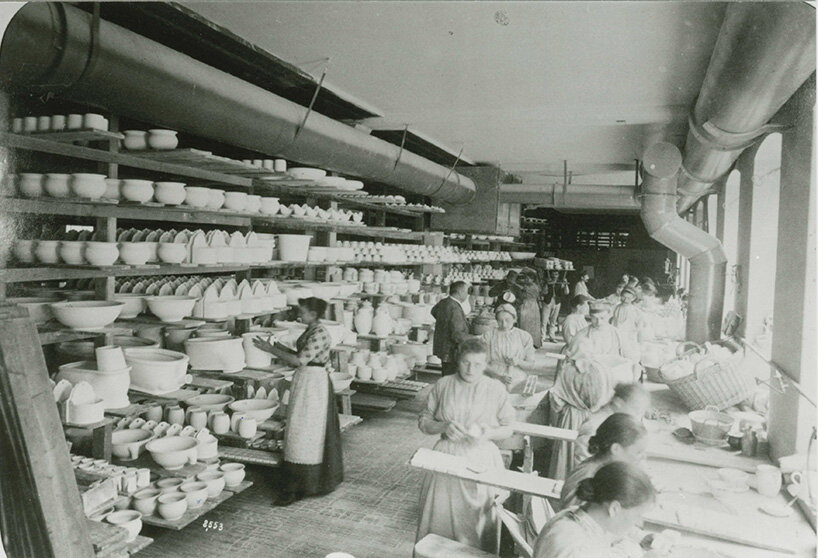
At the same time, the focus also shifted to sanitary ceramics, bathtubs and toilets, and from 1899 onwards, Villeroy & Boch continued with the production of washing utensils, which had been established since the end of the 18th century. Parallel to this, the company also continued to expand in the field of tableware into the 20th century.
Style-defining and pioneering
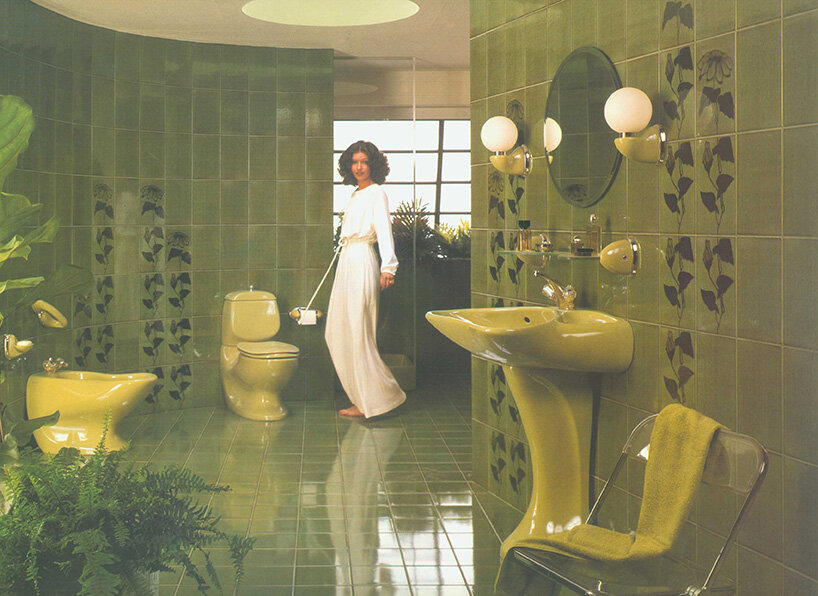
It was not until 1975, however, that Villeroy & Boch really became a pioneer for the modern bathroom, when a collaboration with designer Luigi Colani revolutionized the concept of it as a functional space. From now on, the bathroom, according to the premise, would be an organically shaped and colorful place of well-being and self-development. The principle of homeliness in the bathroom would have been hardly even conceivable without Colani. He has collaborated with numerous designers, including Sebastian Conran, Christian Haas and Gesa Hansen, on designs that have been accompanied by technological innovations and material developments, and allow ever more minimalist and filigree forms.
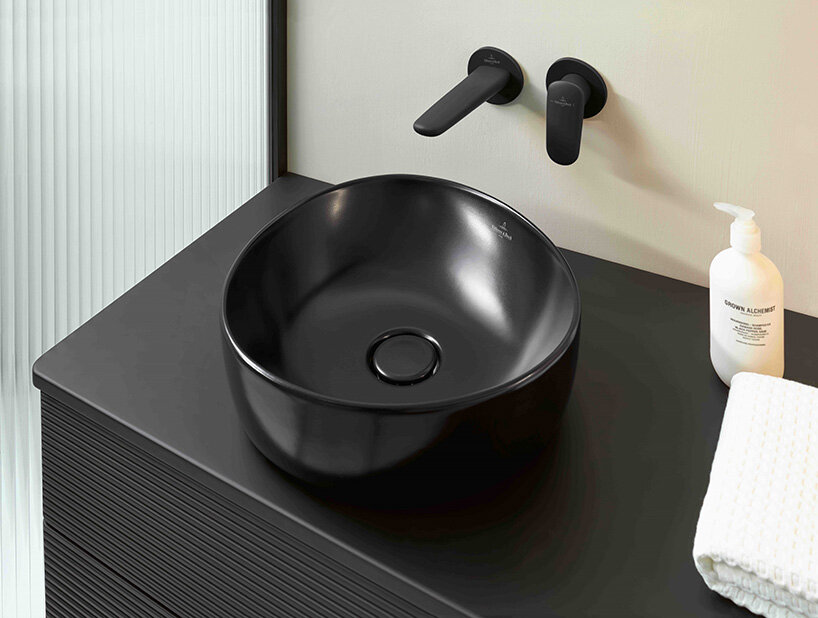
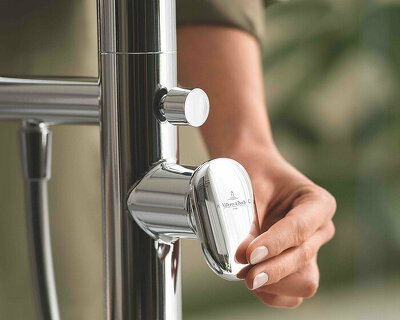
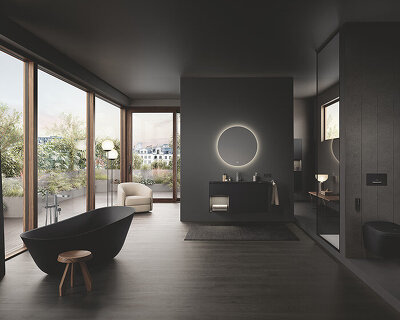
So in this, the anniversary year of 2023, Villeroy & Boch can rightly be proud of a special new comprehensive bathroom collection, the culmination of 275 years of know-how: Antao by the Cologne duo of kaschkasch. Inspired by nature, it is the embodiment of restorative power.
It seems then that François Boch did the right thing all those years ago, getting out of the cannonball business.
shop
your own online design shop — no sales commission collected