‘we are all marine animals, we just forgot’: photographer enzo barracco at the ocean&climate village
from UNESCO IOC and prada's SEA BEYOND initiative, the science exhibition brings together ocean photography, interactive displays, and climate education for the next generation.
prefer designboom on google[FEATURED]
SEa beyond, unesco ioc, and the Ocean&Climate Village in Cagliari
In October, the Luna Rossa base in Cagliari, Italy, becomes the site of the latest edition of the Ocean&Climate Village, a traveling exhibition on the impacts of climate change on our oceans. Amid the fast-cruising boats and futuristic training centers of the Prada Group’s sailing syndicate, which looks out onto the vast blue seas of Cagliari, young kids from the city get hands-on with coral structures, learn how fish breathe underwater, and gaze at pictures of the Galápagos. Supported by the Prada Group as part of the SEA BEYOND project and developed by UNESCO’s Intergovernmental Oceanographic Commission (IOC), the dynamic exhibition, designed by Formafantasma, promotes knowledge as a way to combat climate change.
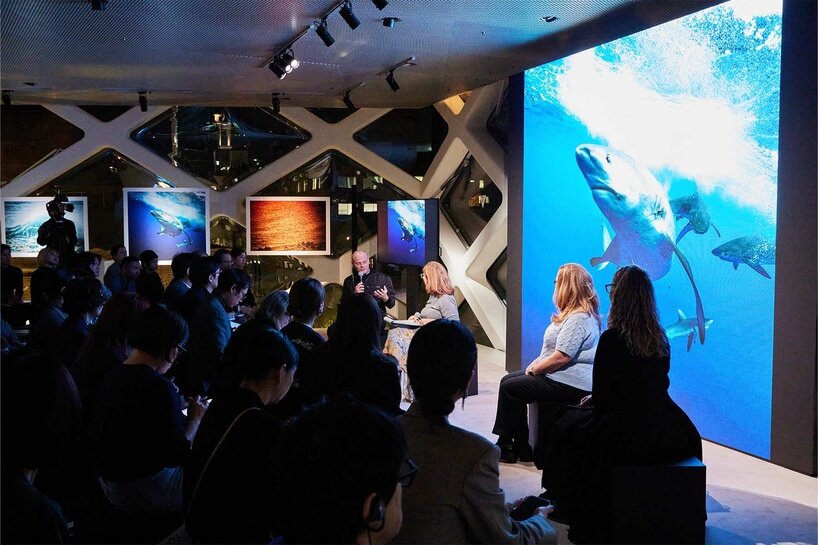
Emmy-nominated photographer—and a noted SEA BEYONDer (the name given to ambassadors of the project)—Enzo Barracco, in conversation with designboom, speaks about the photographic project he contributed to the Ocean&Climate Village, his experience photographing the Arctic Circle, and his hopes for our climate future.
An exhibition at the Luna Rossa base
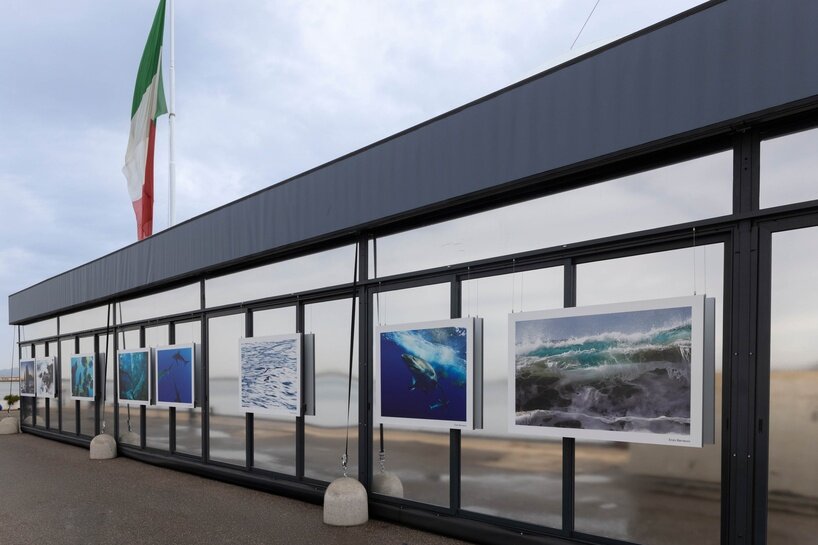
In Cagliari, right where the city meets the water, a building with a bright red stripe and the words ‘LUNA ROSSA’ leads visitors to the complex. Inside, after passing huge, tented structures that house the sailing team’s equipment, a mirrored exhibition space comes into view. This is the Ocean&Climate Village, reflecting the harbor bordering Cagliari. Here, photographs of ocean waves, sea creatures, and sunsets speak in dialogue with the expansive sea just steps away. Barracco—whose previous books include The Blue on Fire: Hawai‘I and The Noise of Ice | Antarctica—created the outdoor exhibition with images he captured in the Galápagos and Hawaii.
Barracco begins by touching on one of his defining projects, The Noise of Ice | Antarctica. After learning about Sir Ernest Shackleton’s expeditions to Antarctica in the early 20th century, he embarked on his own journey to capture its vast and distinctive landscape. ‘I used to say “nothing can surprise me anymore” because [the Antarctic] was such a majestic and powerful place. But nature always has the capacity to surprise you if you pay attention and understand the timing of nature with respect.’
Developing the exhibition alongside Prada and SEA BEYOND
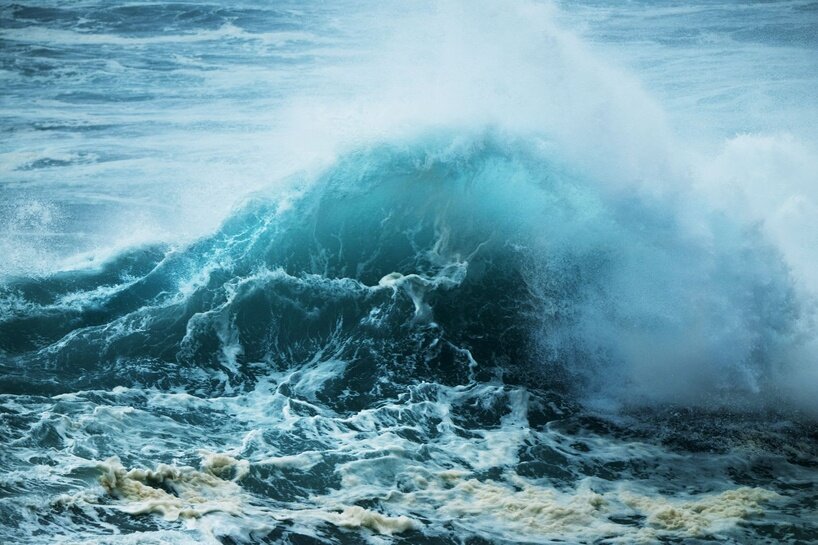
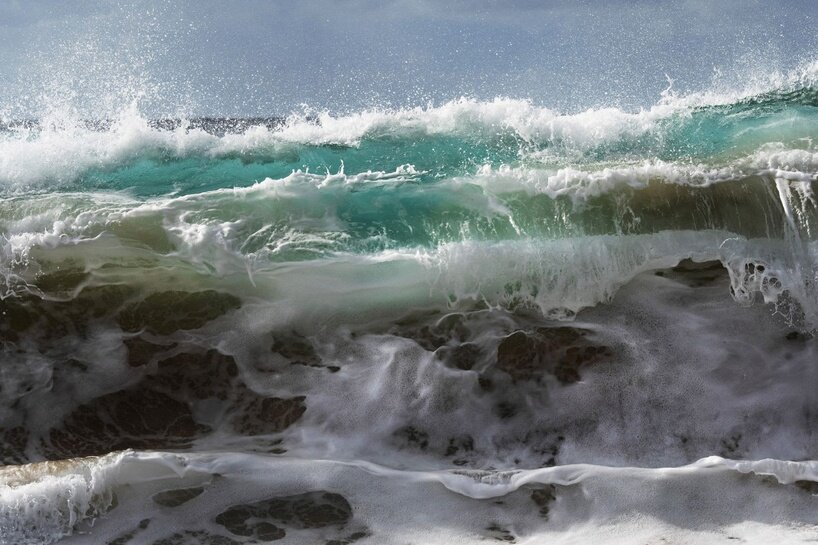
Over the course of a year, Barracco made multiple trips to Hawaii to capture its oceans throughout the four seasons. ‘If I go in the summer, I see just one thing,’ he says of the project’s duration. ‘I wanted to be very honest and to show a good representation of winter, summer, and all the seasons with its different animals.’ He goes on to talk about freediving in the colder months and the forces of the ocean during that period: ‘The power of a wave is unstoppable. It looks beautiful and very fluid but actually, when you have impact with it, it’s surprisingly solid.’
How to photograph among the sharks
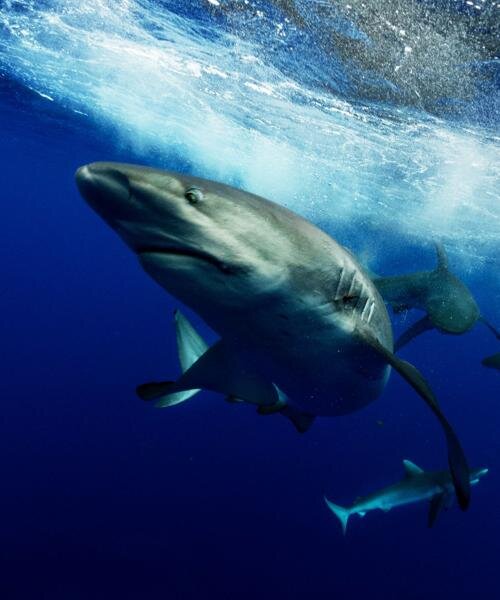
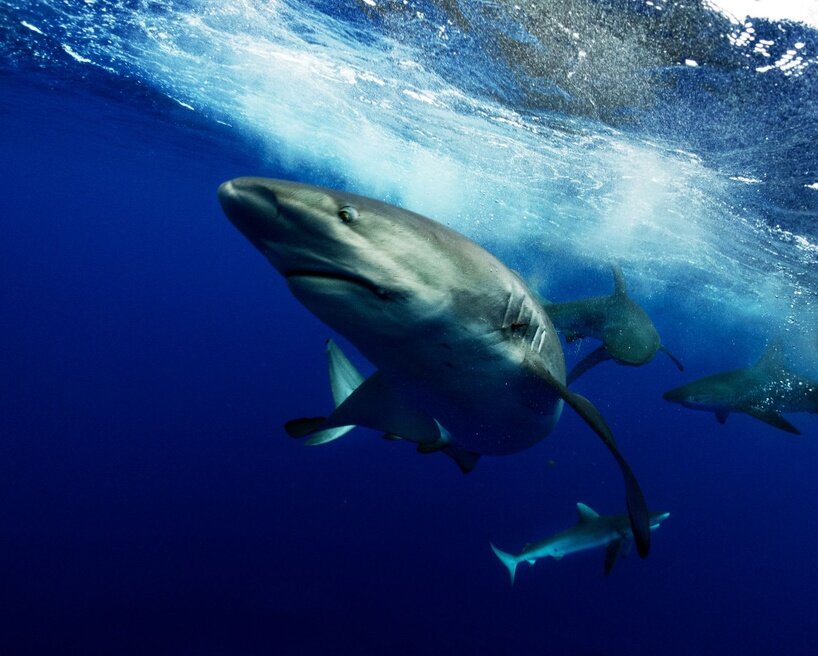
Many of Barracco’s images are underwater or at least partially submerged. As both an experienced freediver and a commercial photographer, he marries these two approaches to create this series. ‘You don’t prepare anything,’ he says of capturing the world below the water. ‘You work in symbiosis with nature and you need to understand what nature allows you to take a photo of. Things are unpredictable… everything happening is much bigger than you.’ On the technical side, he mentions that he’s ‘not a big fan of bringing a lot of equipment because it changes the approach. You need to be very light, very agile, and very practical.’
In the Pacific Ocean, Barracco trades models for sharks and other sea creatures. Reflecting on photographing wildlife, he points out that the Arctic polar bear is very much a predator, but ‘the shark is a misunderstood creature. It’s so refined incredible, beautiful. This animal is in the ocean for millions and millions of years so we are truly their guests true. We are guests of the ocean.’ Getting up close and personal to photograph them, Barracco comments, ‘I approach diving with the shark by asking for permission first.’ He says he proceeds with taking the image only once the sharks ‘allowed [him] to be there’.
Although the numbers behind climate change—rising temperatures, sea levels, and carbon content—are undeniable, they still require effective communication. ‘I always say you don’t need the translation for photography,’ says Barracco on the impact he hopes his work will have. ‘I hope my work can surprise, bring curiosity, and get us to fall in love again with the ocean. We are all marine animals we just forgot!’
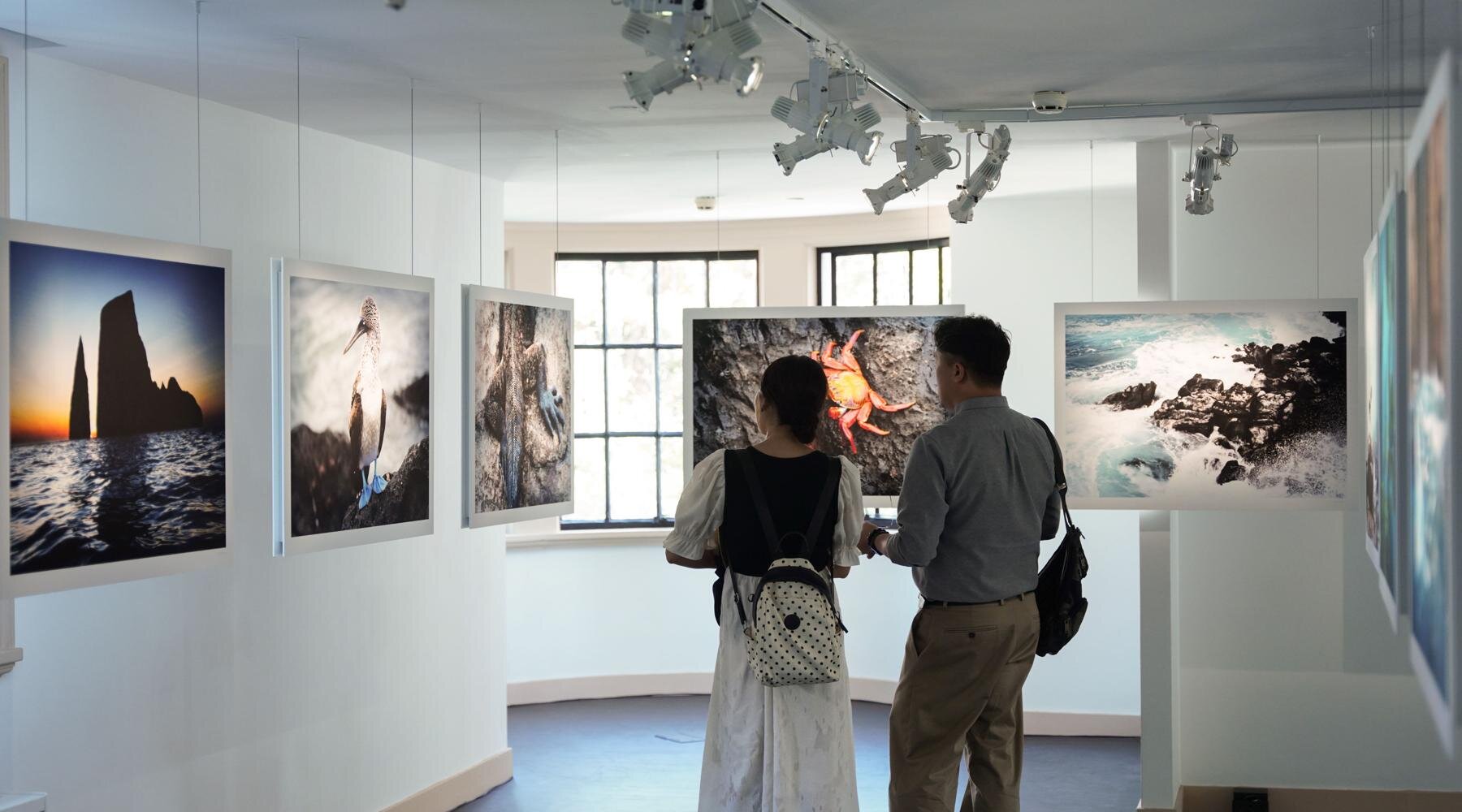
Inside and around the Ocean&Climate Village
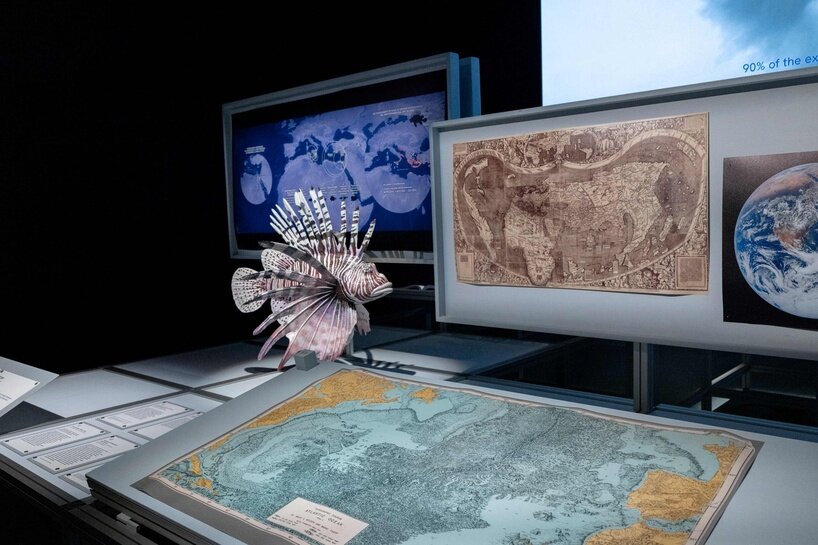
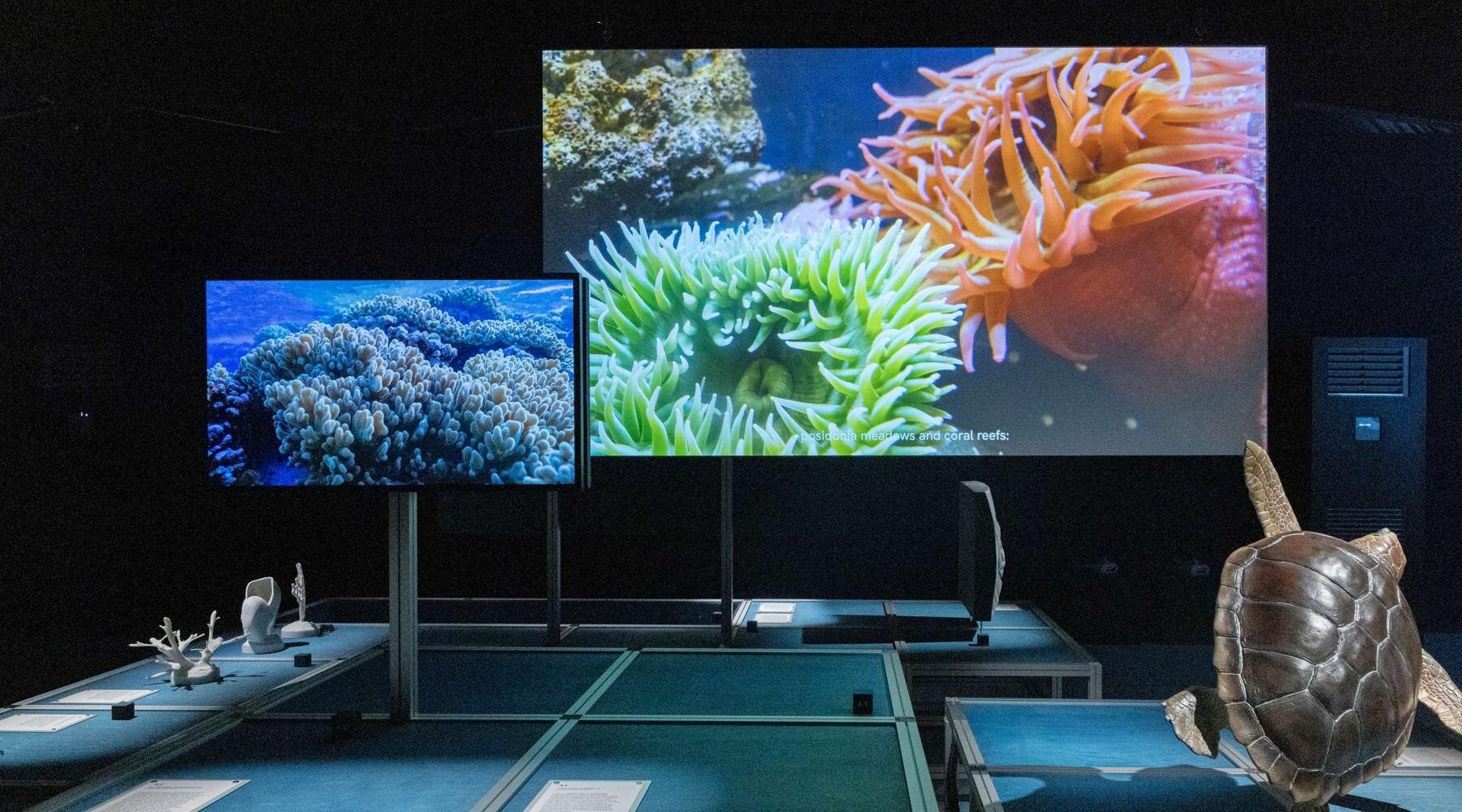
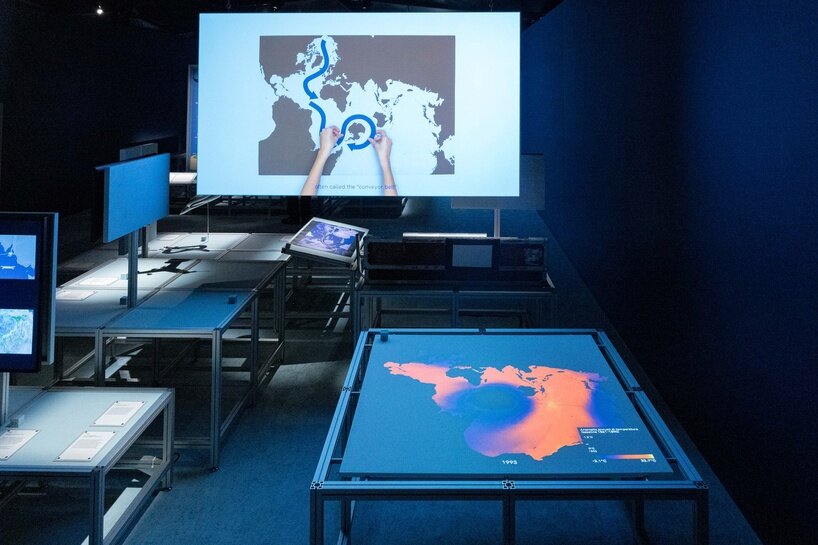
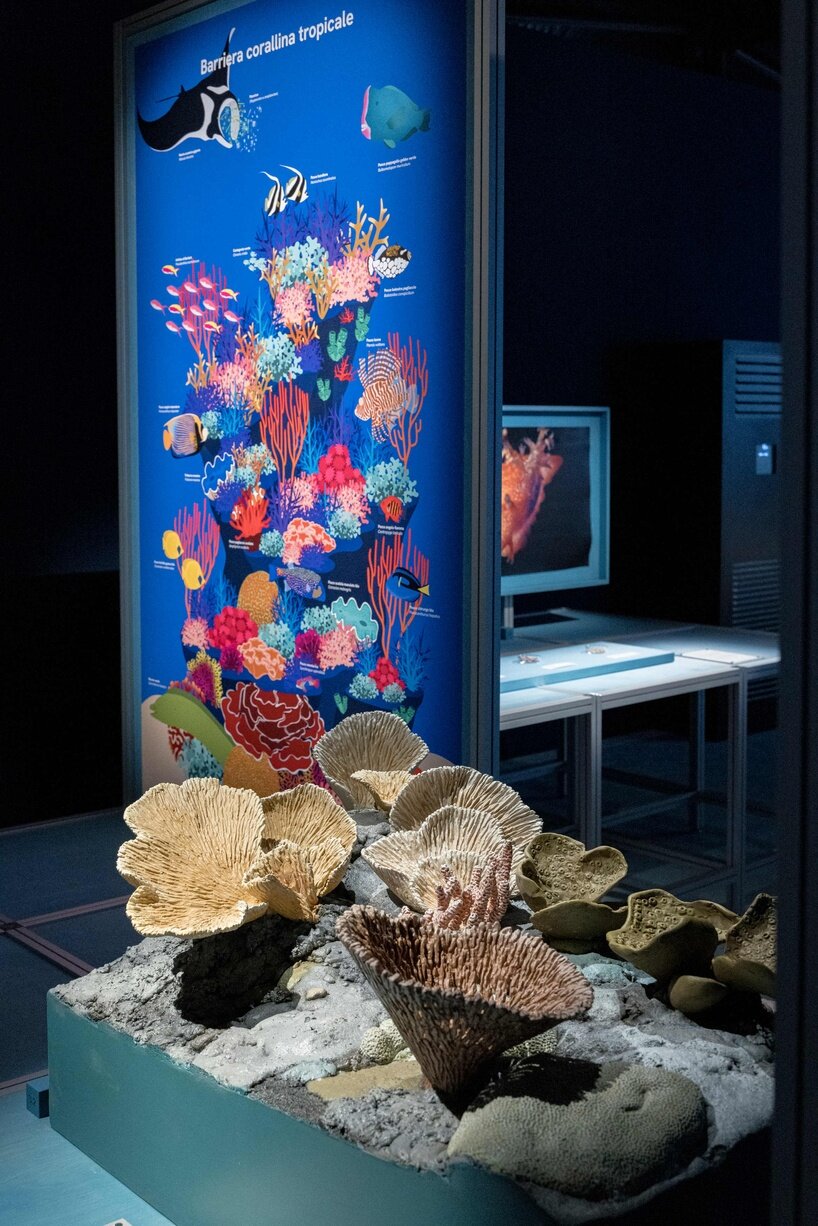
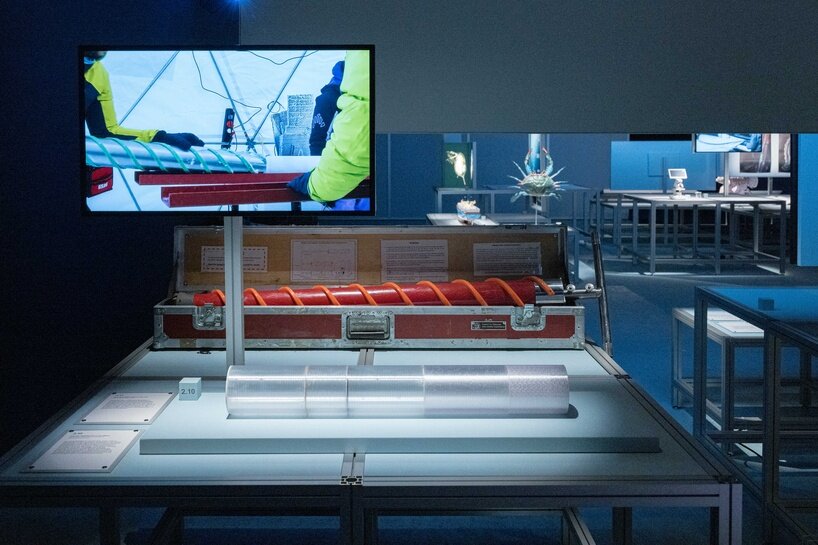
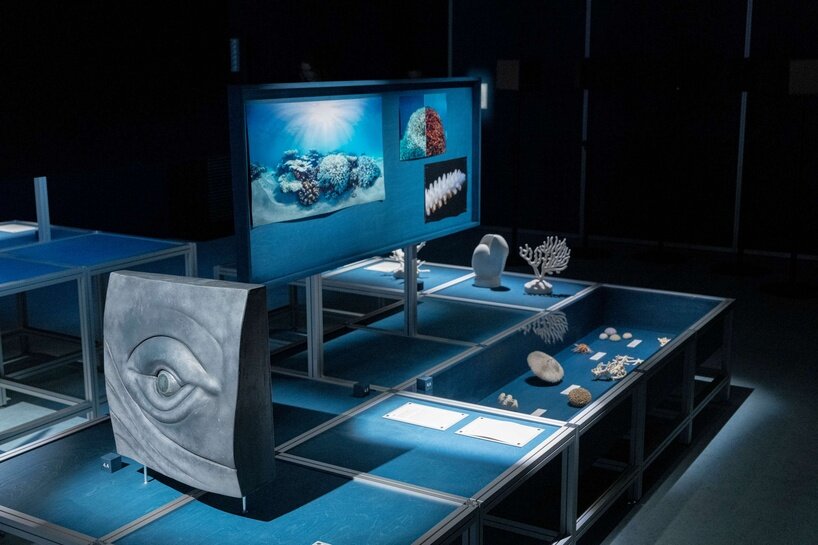
Beyond the walls displaying Barracco’s photographs, a winding, educational exhibition designed by Formafantasma takes communication about the science and effects of climate change a step further. It uses a modular system of models, short videos, diagrams, and text to make visible the often-invisible forces that shape and affect ocean environments.
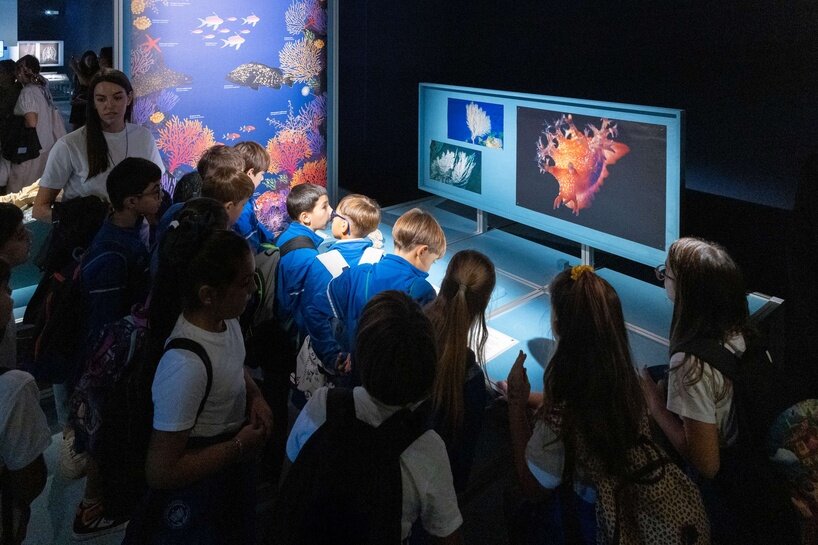
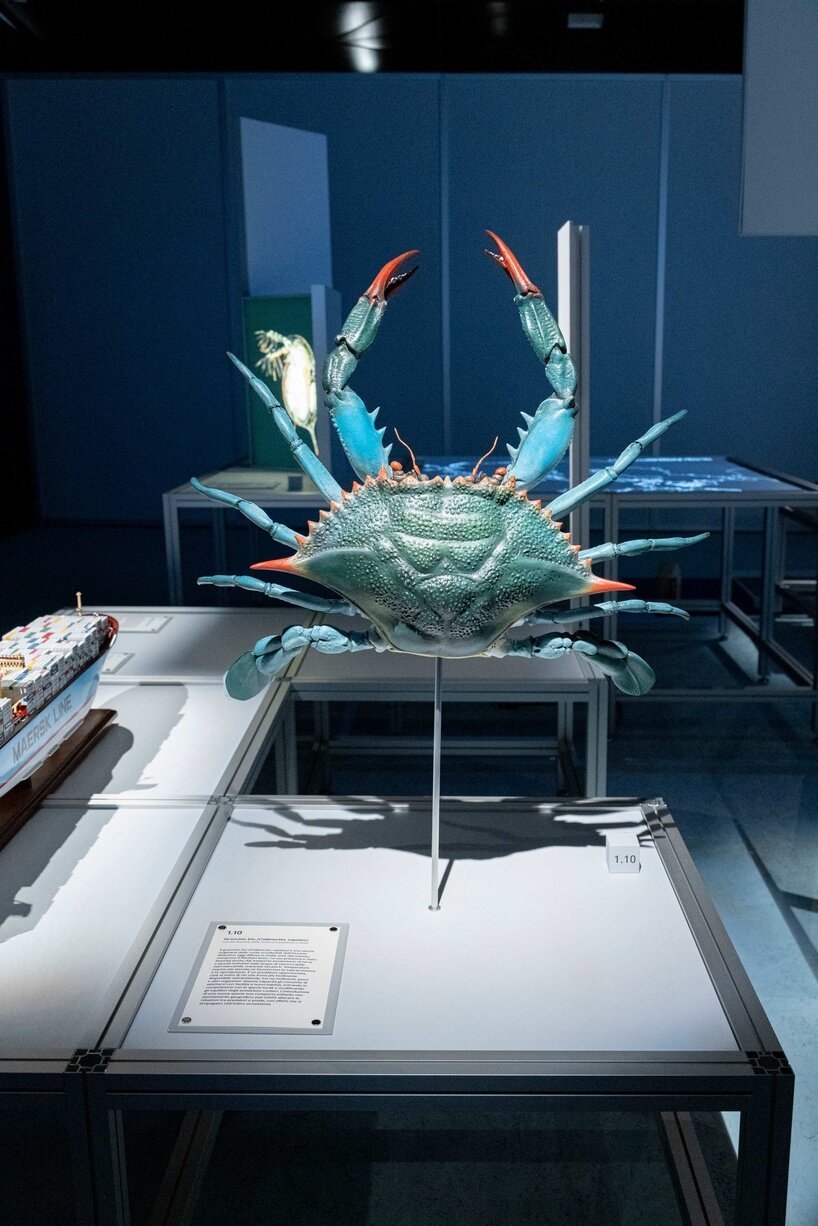
Upon entering the space, visitors immediately notice the variety of scales among the exhibition platforms. While some elements, such as screens, sit higher up, lower levels place exhibition models at eye level for younger kids. School groups visiting the Ocean&Climate Village are given a variety of ways to learn: there are VR goggles, dynamic videos, and tactile sculptures of crabs and coral. By breaking down these concepts into concrete visuals, Formafantasma leverages design as a means of visualizing difficult concepts such as energy exchange, currents, and the effects of carbon dioxide (CO₂) emissions.
By translating complex scientific processes into tangible, visual experiences, Formafantasma makes the effects of climate change easier to understand for younger audiences. Together with Barracco’s photographs, the exhibition offers two complementary ways of communicating the importance of the ocean: one through scientific knowledge, the other through an emotional connection to the natural world. Both suggest that understanding our relationship with the ocean is a first step toward protecting it.
project info:
name: Ocean&Climate Village
dates: October 9–15, 2026
location: Luna Rossa base, Cagliari, Italy
supported by: Prada Group as part of the SEA BEYOND project
developed by: UNESCO’s Intergovernmental Oceanographic Commission (IOC)
featured photography: Enzo Barracco
exhibition design: Formafantasma | @formafantasma
[post human utopia blurb]
shop
your own online design shop — no sales commission collected