what we learned: posthuman utopias
from buildings shaped by bacteria to gardens designed for bees, we explored what happens when we stop treating nature as a resource and begin recognizing other forms of life as collaborators.
prefer designboom on google[FEATURED]
WHAT HAPPENS WHEN HUMANS ARE NO LONGER THE MEASURE OF ALL?
When Sofia Lekka Angelopoulou introduced POSTHUMAN UTOPIAS, she asked us to reconsider one of design’s most fundamental assumptions: that the world is something humans build, organize, and control for their own benefit. In her opening editorial, The Planet Is in the Room: Mutualism by Design, she imagined architecture conceived from the perspective of animals, landscapes shaped around the needs of insects, and infrastructures that recognize nature as something more than their surroundings. Over the weeks that followed, we encountered artists, architects, designers, and researchers challenging the boundaries between human invention and biological intelligence. Their work revealed that designing with the planet requires more than adopting sustainable materials or reducing environmental impact. It demands a different understanding of who, and what, gets to participate in shaping our world.
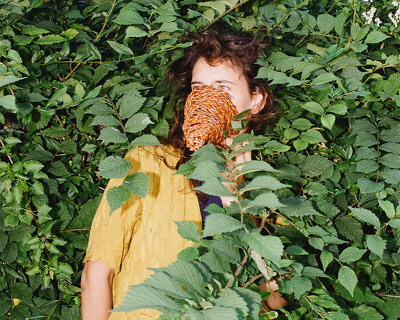
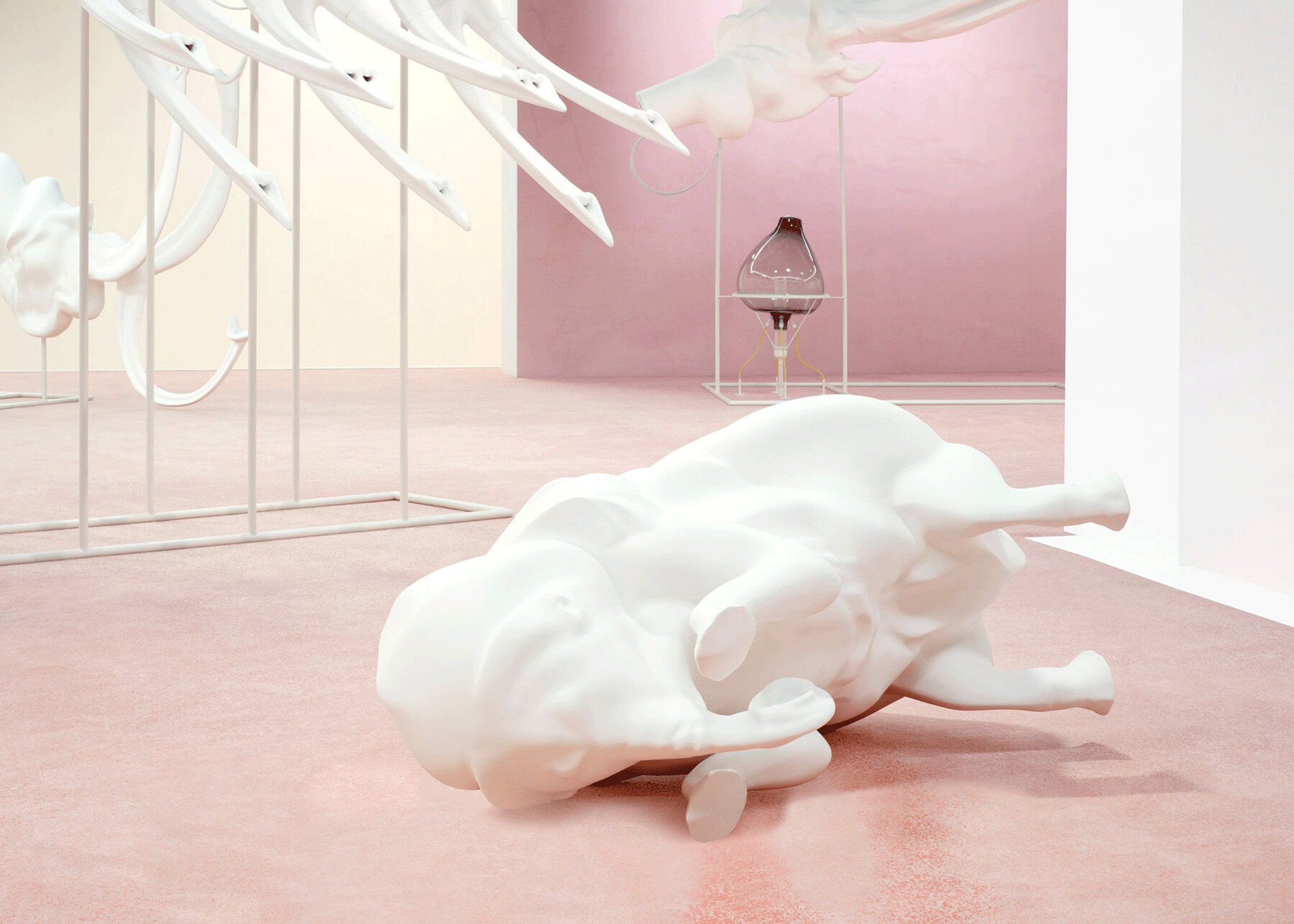
That shift in perspective emerged through a series of reflections on our place within the natural world. In her guest essay on ecological wisdom and biomimicry, Atmos cofounder Willow Defebaugh questioned the separation between humanity and nature, suggesting that the intelligence of living systems can offer lessons for the way we design and inhabit our surroundings. Meanwhile, Marguerite Humeau approached the question through speculative art, ancient rituals, and the possibility that other species might develop their own forms of spirituality and collective knowledge. Both perspectives challenged the assumption that human experience provides the only meaningful way to understand life. Perhaps the first lesson of the chapter was that a posthuman future begins not with a new invention, but with a willingness to recognize the worlds already unfolding beyond our perception.
THE CITY IS NO LONGER AN EXCLUSIVELY HUMAN PROJECT
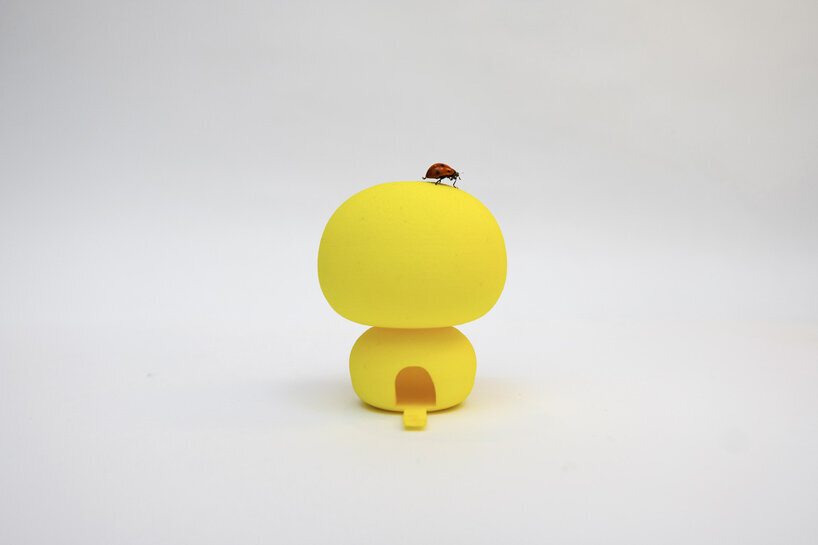
Architecture has historically defined itself through the needs of its human occupants, often treating other organisms as obstacles to be managed or excluded. Throughout the chapter, we encountered proposals for reversing that logic. In his eight principles for welcoming non-human life back into cities, architect Angelo Renna argued for urban environments that accommodate plants, insects, birds, and wildlife as part of a shared habitat. Rather than imagining cities as finished products imposed upon nature, he proposed understanding them as places of continuous evolution between species. A similar approach informed Aditya Mandlik’s guest essay, in which water, worms, and bees became active participants in architectural processes. His experiments demonstrated how moisture, decomposition, and ecological relationships can shape environments that remain open to transformation.
Sometimes, changing the intended audience of a design is enough to reconsider its entire purpose. Artist Alexandra Daisy Ginsberg’s Pollinator Pathmaker offered one of the chapter’s clearest examples. Using an algorithm to generate gardens optimized for pollinating insects rather than human aesthetic preferences, the project transformed planting into an exercise in ecological empathy. What appears to us as a colorful landscape has been organized around the needs of creatures that perceive and navigate it differently. The work raises a deceptively simple question: what would our cities look like if the success of a design were measured not only by how comfortably humans inhabit it, but by how many other forms of life it allows to flourish?
CO-AUTHORSHIP MEANS GIVING UP CONTROL
Across the chapter, the idea of collaboration extended beyond designing environments for other species. It also involved allowing them to participate in the creative process itself. In our exploration of bird nests made from anti-bird spikes and 3D-printed scaffolds, we discovered how birds transform human-made objects into structures with purposes entirely different from those originally intended. Metal spikes installed to prevent nesting become materials for nests, while experimental architectural frameworks invite birds to complete structures through their own building behavior. These examples suggest a form of design in which humans may establish the initial conditions, but no longer control every stage or outcome. The finished object becomes the result of an exchange between species, rather than the expression of a single author’s intentions.
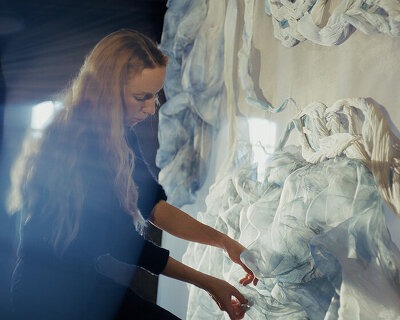
That understanding of shared authorship also appeared in our conversation with Canadian artist Ava Roth, whose collaborations with honeybees transform broken ceramics, textiles, and other objects through the construction of natural honeycombs. Roth prepares the materials and compositions, but the bees determine how their structures develop. The resulting works cannot be produced through human craftsmanship alone, nor can they be entirely anticipated. What makes these collaborations significant is not simply the unusual combination of species involved, but the redistribution of creative agency they propose. Rather than using living organisms as instruments to execute a predetermined vision, the artist accepts their behavior, rhythms, and limitations as essential parts of the work. Creativity becomes something negotiated, rather than imposed.
MATERIALS ARE NOT ALWAYS PASSIVE
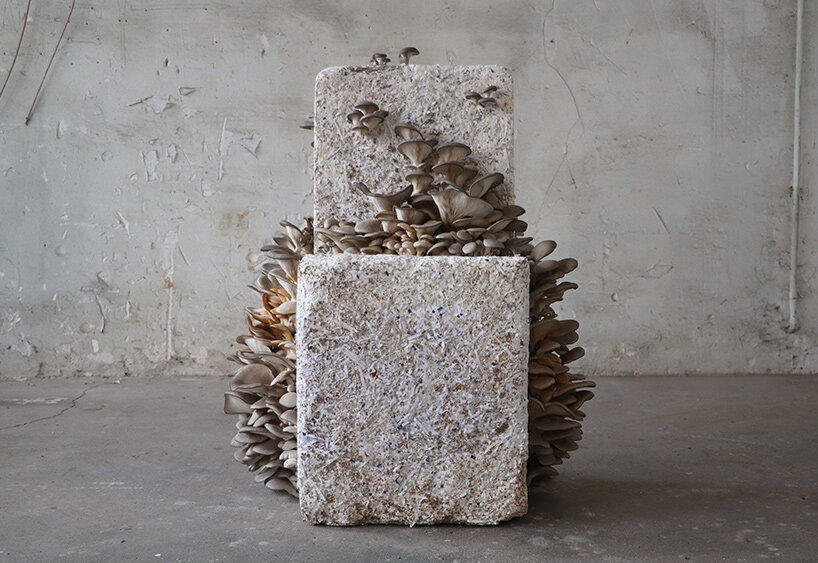
The relationship between living organisms and human design became particularly tangible when we examined the materials from which objects and buildings might be made. Paris-based studio Aléa Work explored how furniture can be grown and transformed through fungi, allowing biological processes to influence the appearance and development of objects. Instead of treating materials as substances to be shaped into predetermined forms, the studio works with their capacity to grow, change, and decay. At ETH Zurich, researcher Karen Antorveza Paez took this principle into architectural fabrication, using bacteria to bind sand into solid building elements. Combining microbial activity with robotic manufacturing, the experiments demonstrate how microorganisms can become active participants in construction. In both cases, making becomes a process of cultivating conditions rather than simply assembling components.
Yet working with biological materials also raises questions about responsibility. Through her towering kelp sculptures, Julia Lohmann encouraged us to consider the marine ecosystems behind the materials increasingly celebrated as sustainable alternatives. Her work asks whether replacing conventional resources is enough if the living environments from which new materials emerge remain undervalued. Meanwhile, Neri Oxman’s material ecology brought together biology, computation, and fabrication to imagine structures that could grow and transform through natural processes. Taken together, these projects suggested that the future of materials may be defined less by the search for another substance to exploit than by our ability to understand and respect the systems that produce it. Buildings might eventually become less like permanent monuments and more like participants in cycles of growth, adaptation, and return.
NOT EVERY POSTHUMAN FUTURE IS A UTOPIA
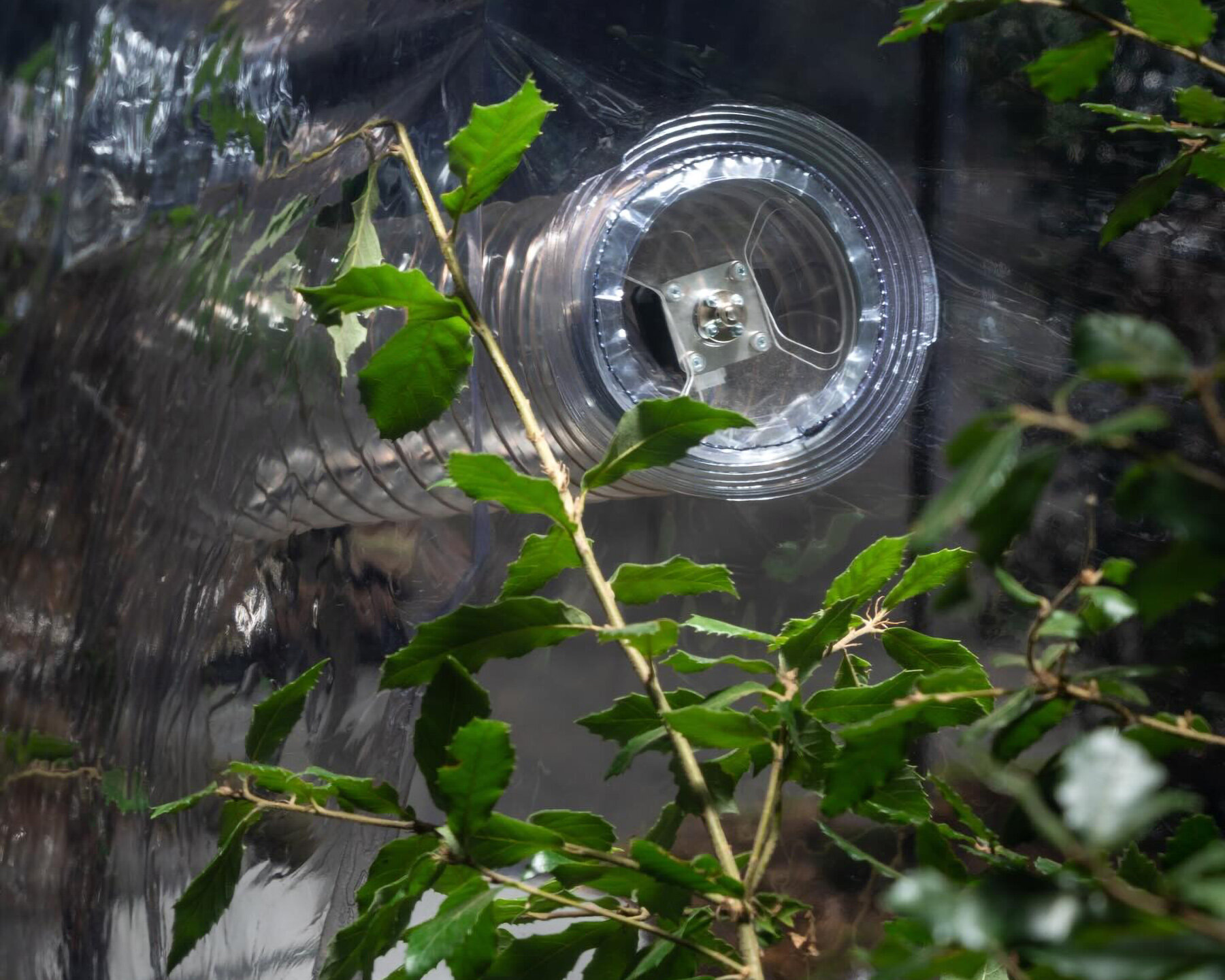
For all the possibilities explored throughout the chapter, some of its most powerful works reminded us of the consequences of failing to reconsider our relationship with the planet. Danish artist Rune Bosse’s living trees placed on artificial life support presented an unsettling vision of ecological collapse, in which organisms that normally sustain themselves through natural processes become dependent on technological intervention. Equipped with artificial lighting and mechanical systems, the trees suggest a future where technology is no longer simply transforming nature, but struggling to compensate for the conditions required for its survival. Their presence complicates the optimism that frequently accompanies conversations about innovation. Not every technological solution represents progress, and not every intervention can restore what has already been lost.
Perhaps this is where the many perspectives gathered throughout POSTHUMAN UTOPIAS ultimately converge. From gardens designed for pollinators to buildings formed through bacteria, from artists working with bees to designers learning from the intelligence of living systems, the chapter repeatedly challenged the idea of humans as independent creators standing outside the natural world. What emerged was not a singular vision of the future, but a different understanding of our place within it. Designing with nature means accepting uncertainty, acknowledging forms of intelligence beyond our own, and recognizing that the environments we create are already shared with countless other lives. The challenge is not simply to make architecture, technology, and design more sustainable, but to reconsider the relationships they establish. Perhaps a posthuman utopia is not a world without humans, but one in which we finally understand that we were never its only inhabitants.
This article is part of designboom’s POSTHUMAN UTOPIAS chapter, exploring what happens when humans are no longer the measure of all things. These stories rethink our relationship with the planet through interspecies architecture, living materials, regenerative landscapes and emerging technologies – learn more here! The chapter is presented in partnership with INDX|GLOBAL – a global cultural platform placing Indian architecture, design, and creative intelligence in conversation with the world.
Each designboom editorial series explores one theme in depth through projects, interviews, features and news across architecture, design, art and technology. Discover more chapters here, and get in touch if you’d like to submit a story through our submissions portal or contact form.
shop
your own online design shop — no sales commission collected