world design capital taipei brings new crafts to design days dubai 2015
in celebration of the taipei's emerging creative influence, taiwan designers' web curates 'new crafts - taiwan contemporary craft transformation' in the united arab emirates for design days dubai 2015.
prefer designboom on google[FEATURED]
world design capital taipei brings new crafts to design days dubai 2015
all images courtesy of taiwan designers’ web unless otherwise noted
taipei has been appointed as world design capital 2016, only the fifth to receive the honor to date. taiwanese design culture has been developing over the last 40 years, with artisans from all over the world drawn to the country for its mastery of traditional craftsmanship — such as in bamboo and wood weaving — and its incorporation with contemporary materials and manufacturing processes.
in celebration of the city’s emerging creative influence, taiwan designers’ web — a taiwanese creative studio focusing on promoting the country’s design environment and connecting the world with local creatives — curates ‘new crafts – taiwan contemporary craft transformation’ in the united arab emirates for design days dubai 2015. taipei will showcase a selection of works by taiwanese designers, presenting updated looks on traditional craft that embody the creative energy of the city.
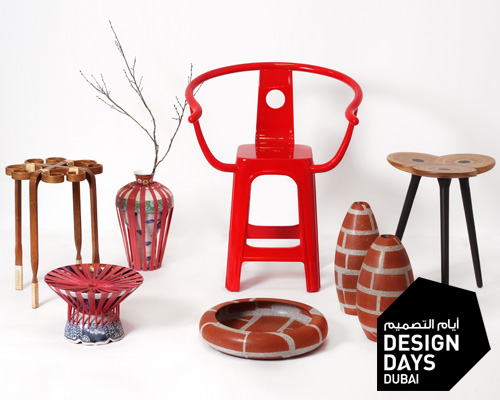
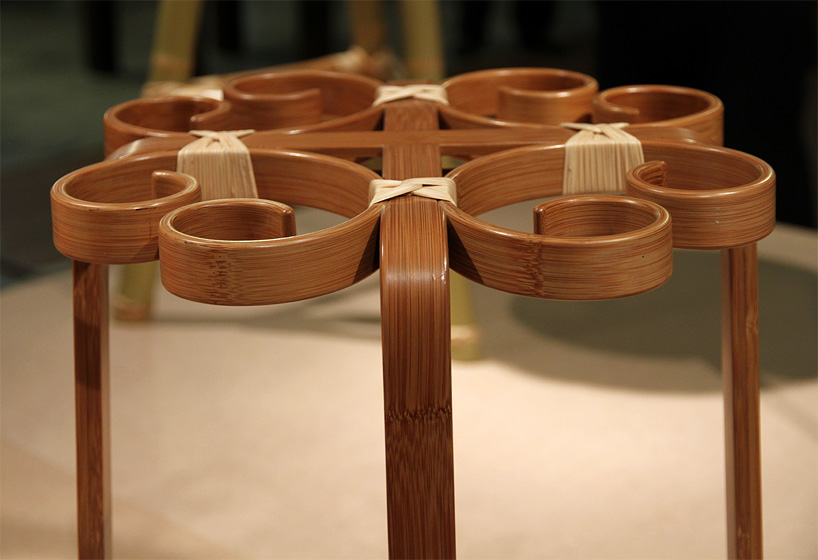
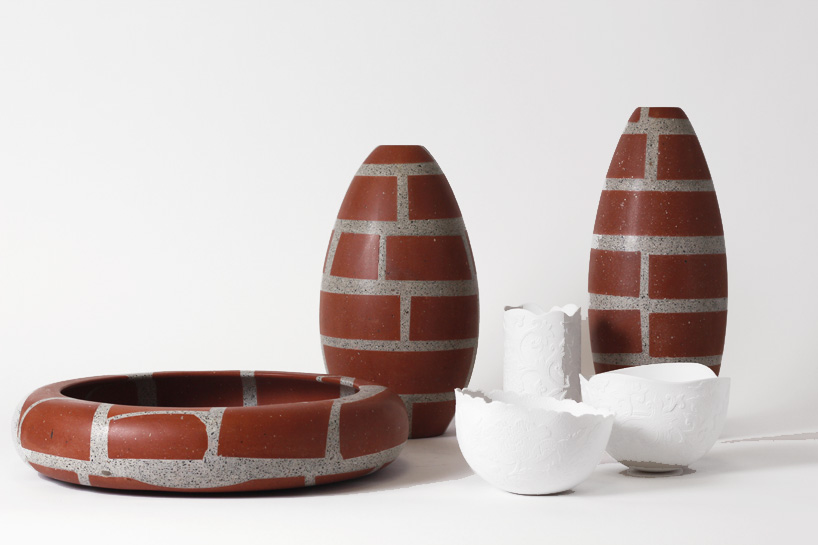
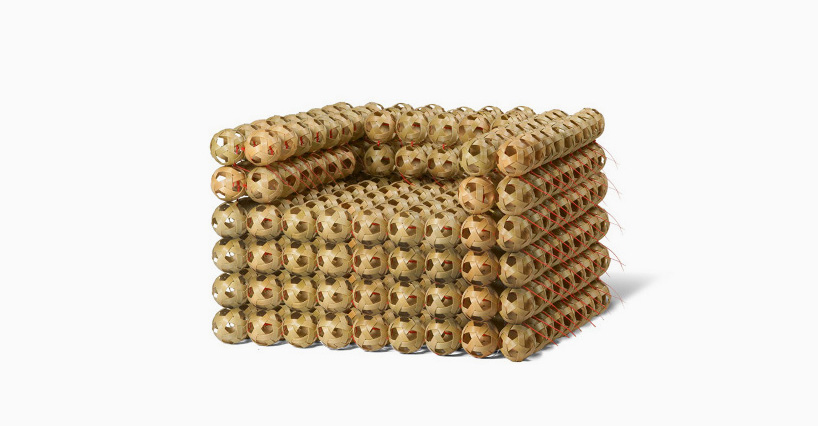
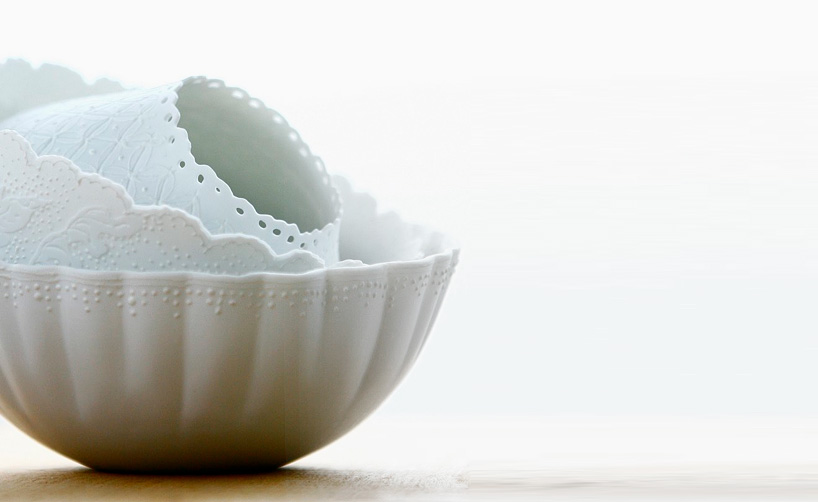
the exhibition presents works such as ‘bubble chair‘ by kevin yu-jui chou, who used the technique of bamboo weaving to create a sustainable, contemporary sofa and his ‘bambool‘, which exhibits the material treatment and manufacturing process on a single bamboo tube; ‘brick plan‘ from designer rock wang, a project which redefines the possibilities of brick, a common and symbolic material in taiwanese culture; the ‘plastic classic‘ by pili wu, a hybrid of a ubiquitous stool that populates asian street food stalls and a ming dyanasty chair; ‘lace bowls embroidery‘ designed by gina hsu, made from eggshell porcelain, a technique that dates back to the chinese song dynasty; the ‘50/50 bamboo + bamboo‘ object by designer sally lin is created using butterfly pattern weaving and a 90° twist technique, which enhances the flexibility of the material.
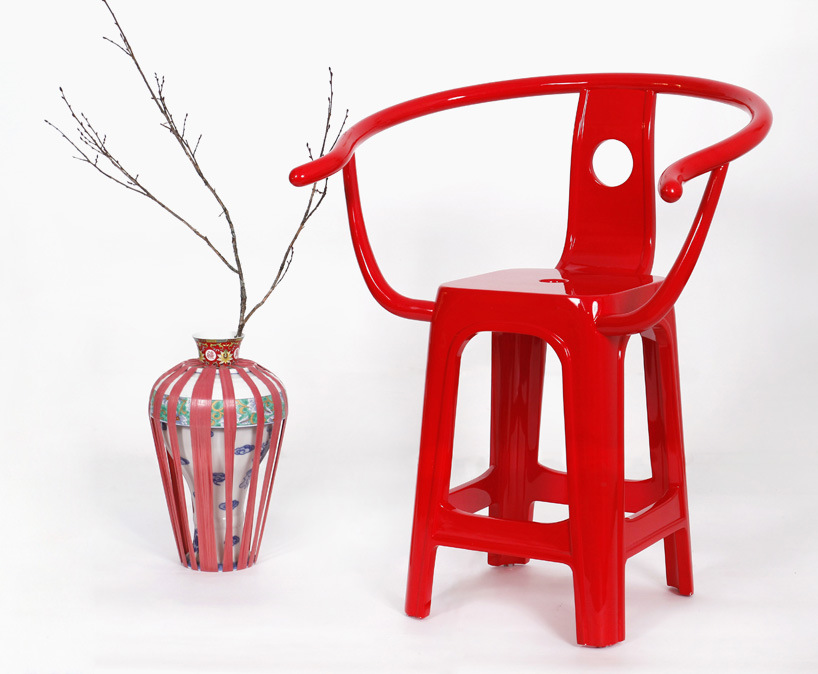
designer pili wu’s ‘folk;tie’ collection and ‘plastic classic’ chair
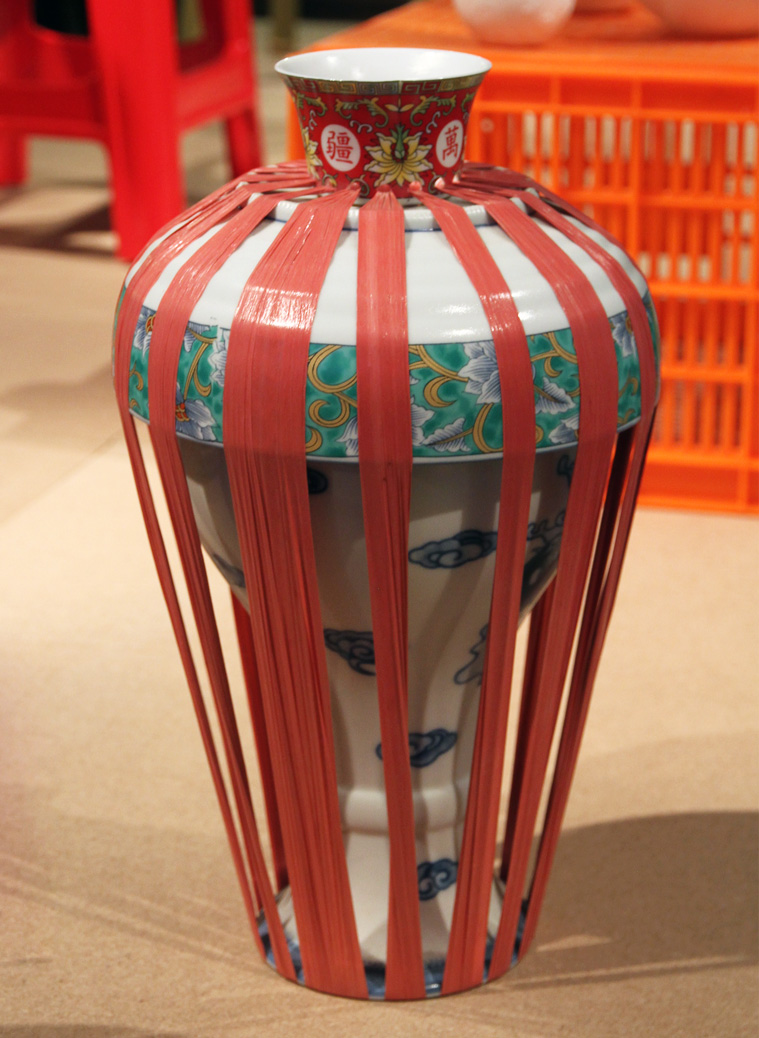
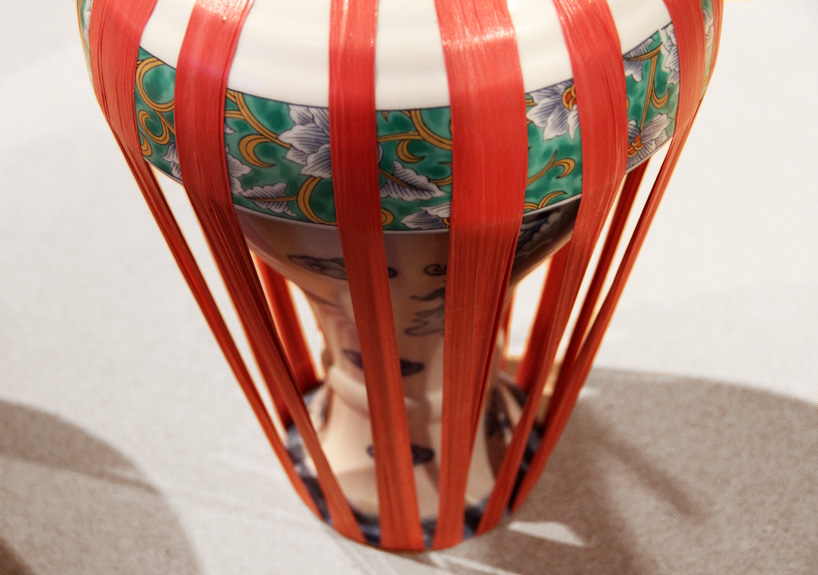
for the ‘folk;tie’ collection, designer pili wu uses a utilitarian and ubiquitous material characteristic of taiwanese culture and craftsmanship: red plastic strings. these standard low-cost industrial products have been used for decades, whether for street vendors or in stores, and represents the process of taiwan’s economical development, as well as taiwanese people’s attitude and spirits. although they have been commonly used to quickly fastening object together — such as handmade china, vases and dishes — the technique has been lost due to the rapid effects of industrialization and mass production.
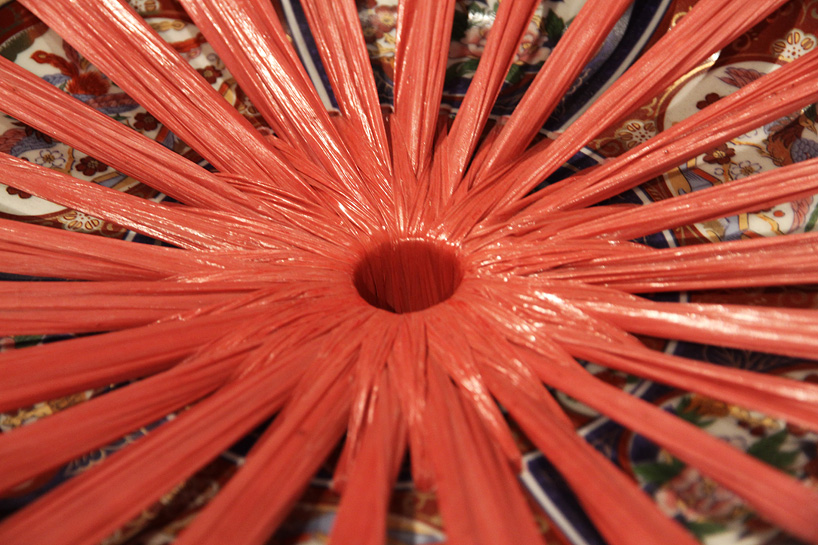
for ‘folk,tie’ these plastic strings are tightly wrapped around objects and then placed in an oven at 200°C, forming the outline of china vase. the traditional patterns of taiwanese ceramics are then revealed through the string’s gaps.
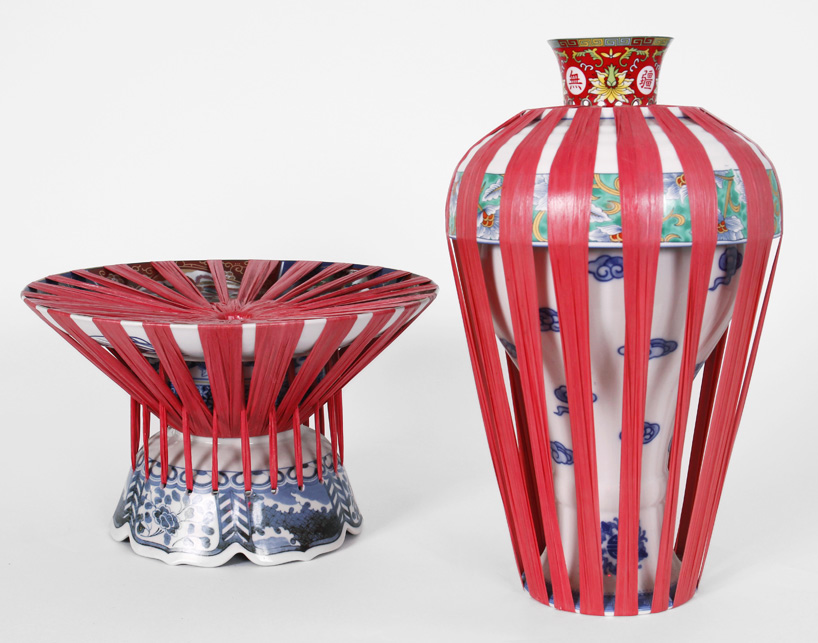
pili wu uses a utilitarian material characteristic of taiwanese culture: red plastic strings
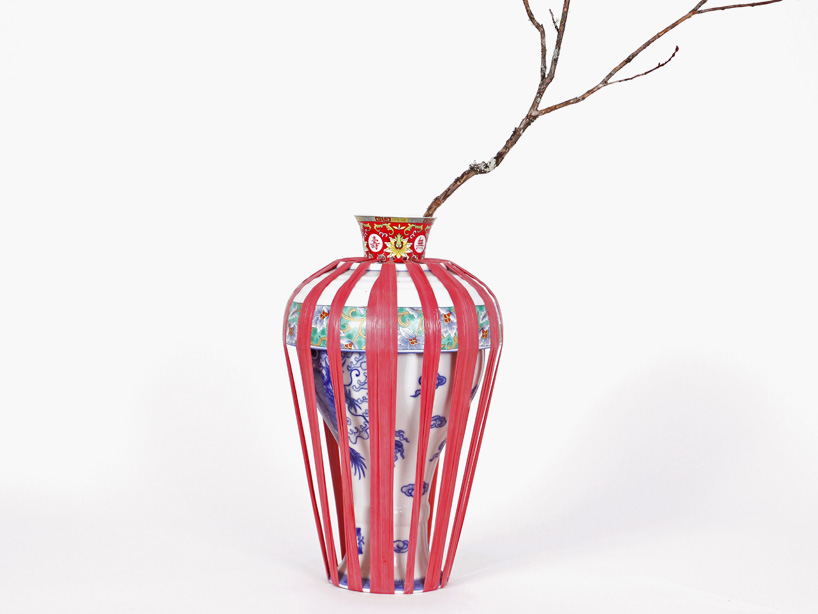
plastic strings are tightly wrapped around objects and then placed in an oven at 200°C
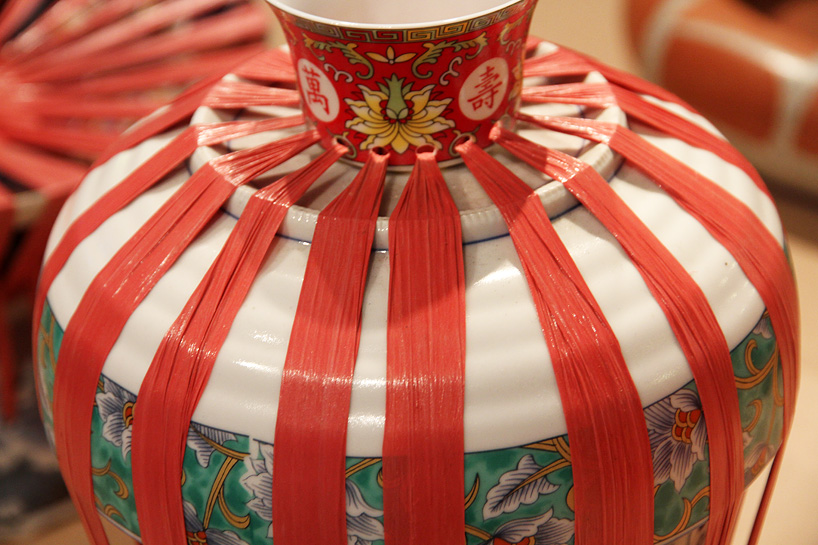
the traditional patterns of taiwanese ceramics are revealed through the string’s gaps
image © designboom
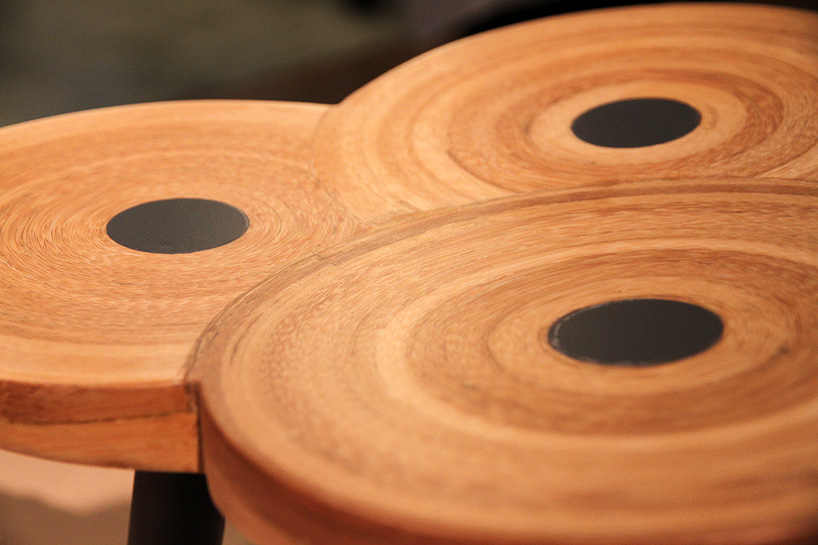
for the ‘concentric stool’ by designer camo lin of drii design studio, ecological materials were used to developed a laminated, concentric bamboo technology. the combination of circular patterns with the union of textures on the stool’s surface gives the object the appearance of a japanese rock garden landscape. the stool not only builds upon and reveals new characteristics of bamboo as a material, but also revisits the traditional laminated bamboo blocks through applied technologies. in turn ‘concentric stool’ becomes highly stylized and easily mass produced iteration of bamboo craft design products.
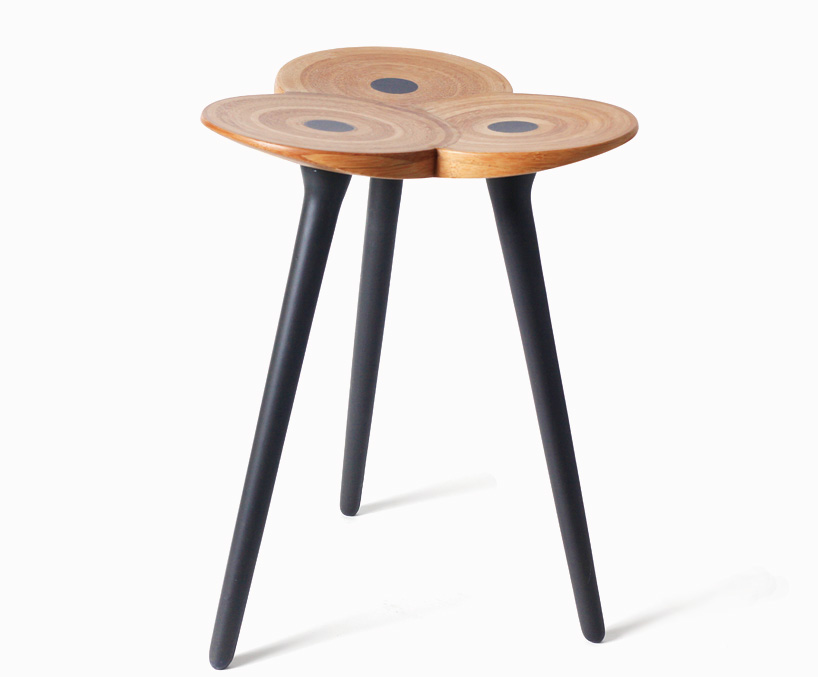
the ‘concentric stool’ by designer camo lin
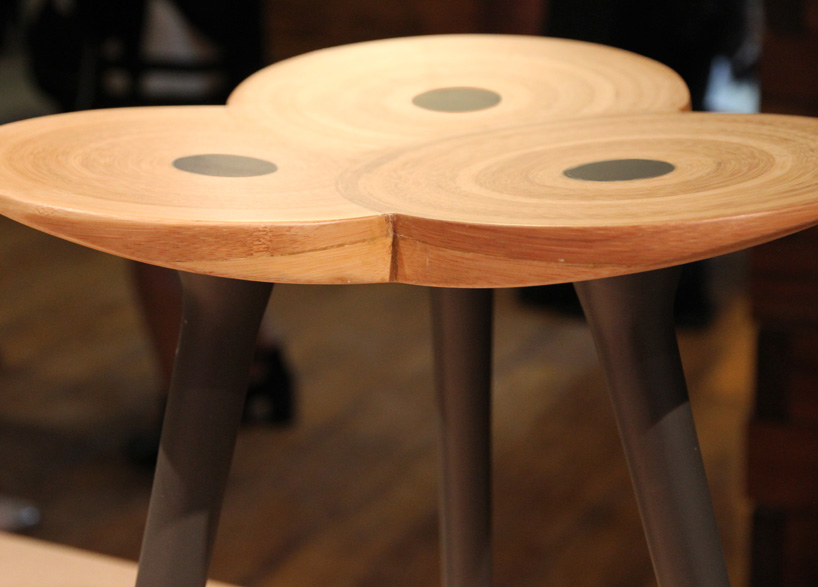
the stool revisits the traditional laminated bamboo blocks through applied technologies
image © designboom
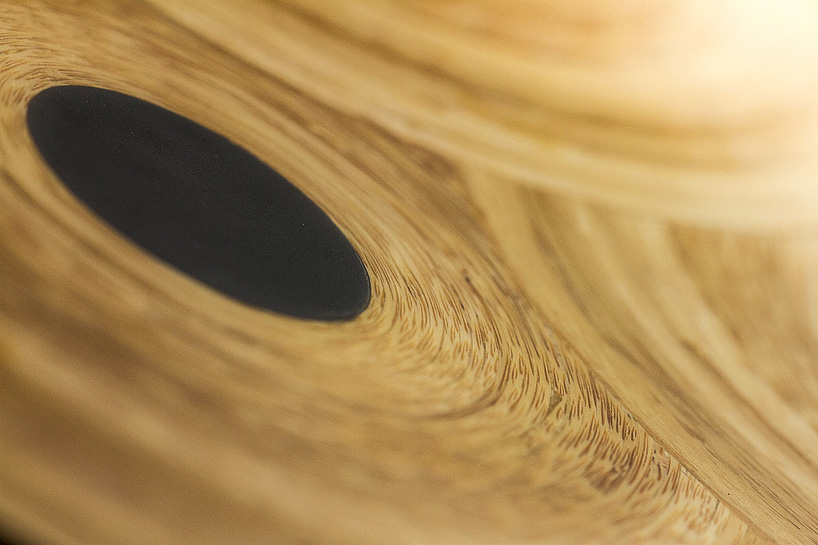
a detail of the ‘concentric stool’ reveals the intricate textures on its surface
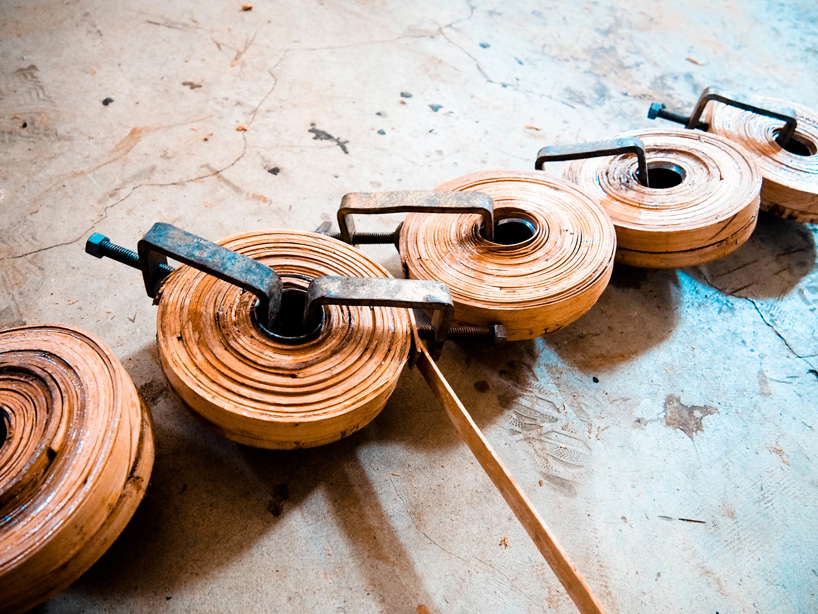
a process photo of the laminated concentric bamboo technology
the ‘dragon scale binding’ book by designer jun-liang chen is made using a rare and ancient form of binding. the textured surface of the pages resembles the skin of the auspicious dragon, which gives the style its name. in the chinese culture, the binding of books is not simply a functional matter of stapling the pages together — rather, it is considered an art form, named zhuang zheng. like traditional scrolls, the books wrap into an elegant, cylindrical form when rolled and tied with a string.
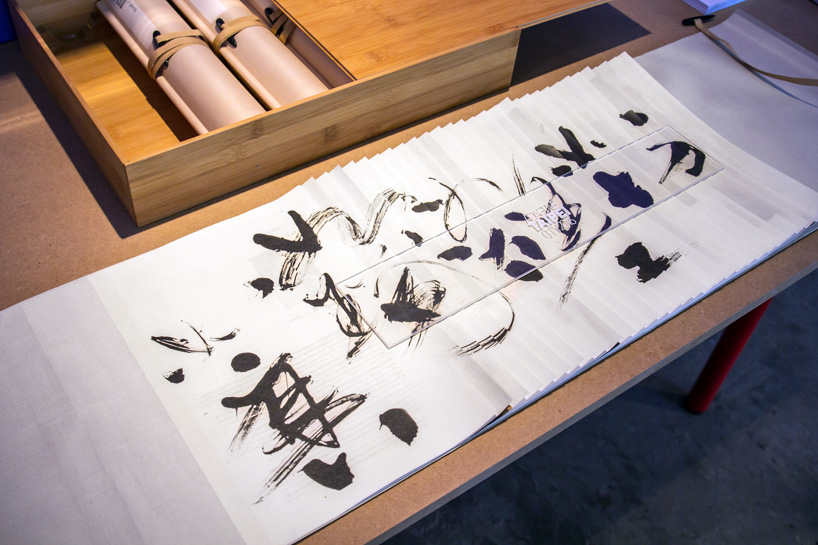
the ‘dragon scale binding’ book by designer jun-liang chen
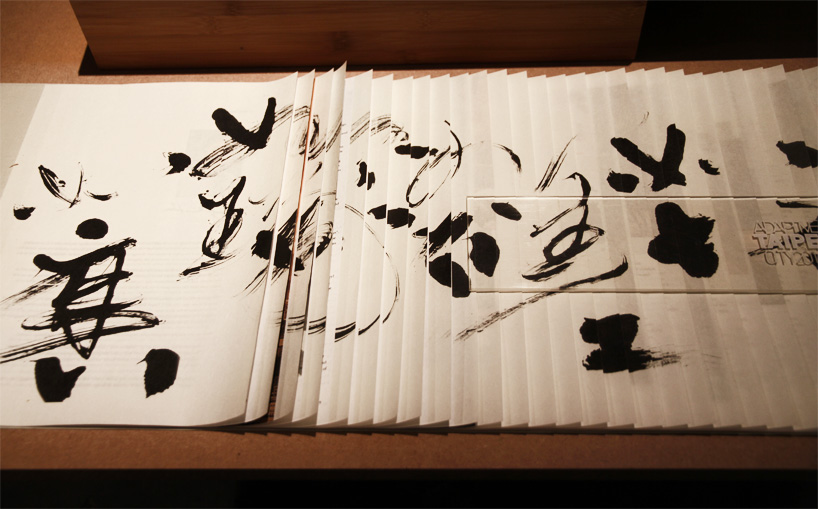
the rare and ancient form of binding references the scales of a dragon, giving it its namesake
image © designboom
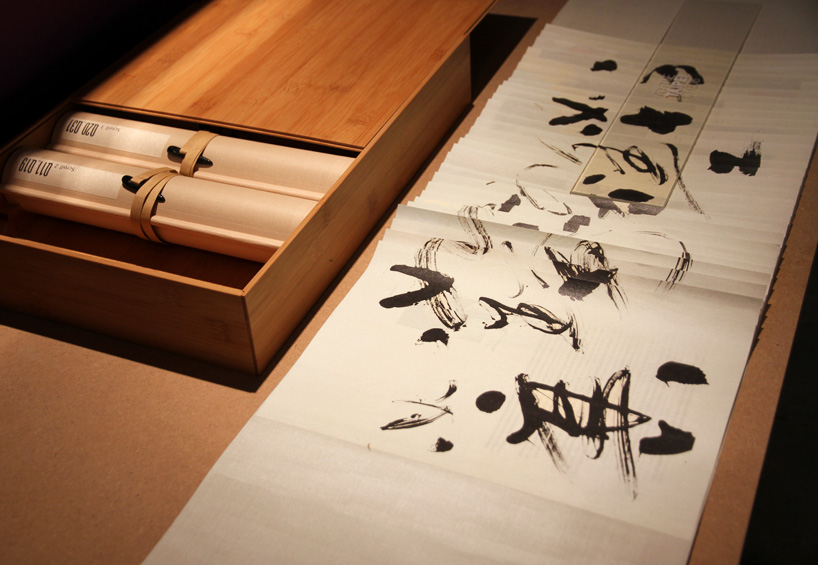
when rolled, the book turns into an elegant scroll
image © designboom
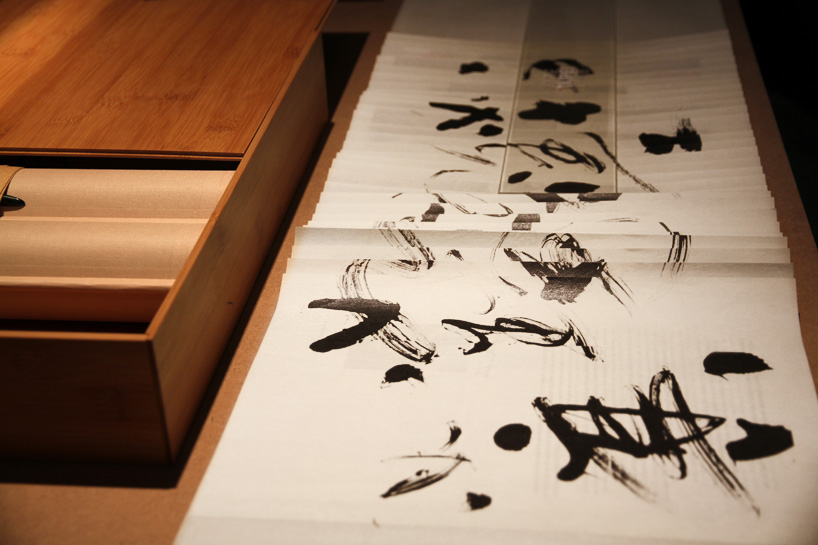
layer upon layer of page spreads out across the table
image © designboom
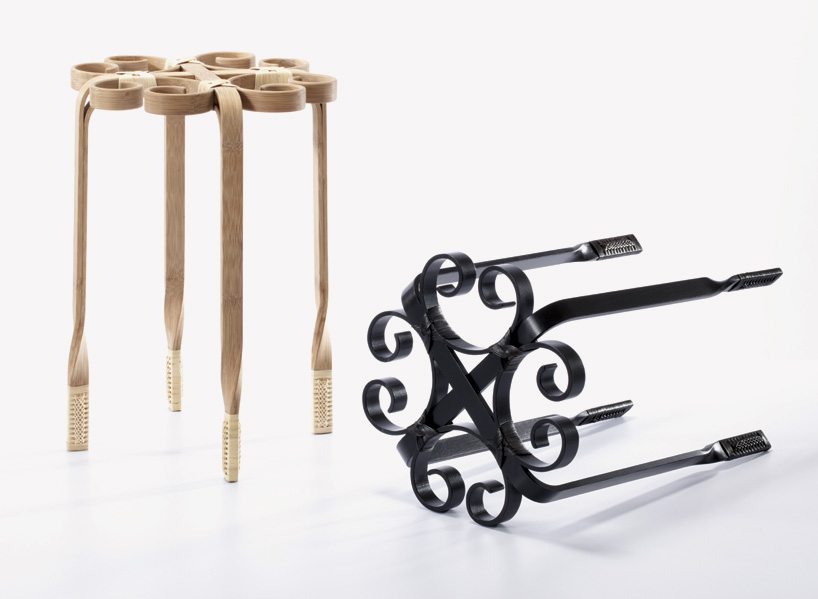
the ’50/50 bamboo + bamboo’ object by designer sally lin
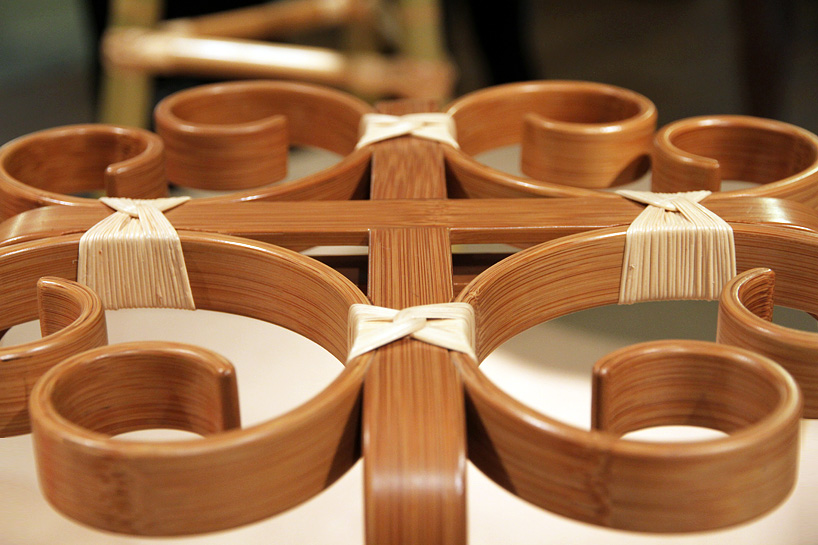
a detail of the spiraling bamboo design
image © designboom
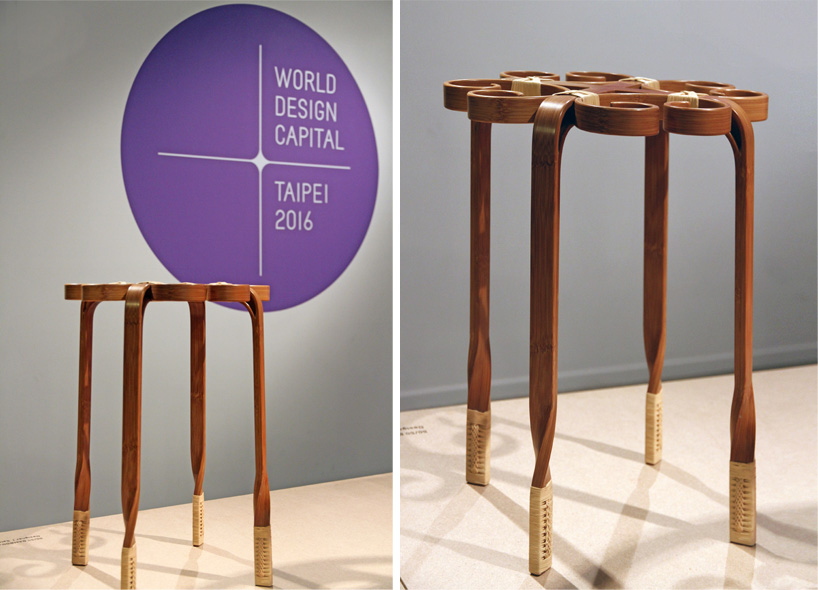
a butterfly pattern weaving and a 90° twist technique forms the design of the object
images © designboom
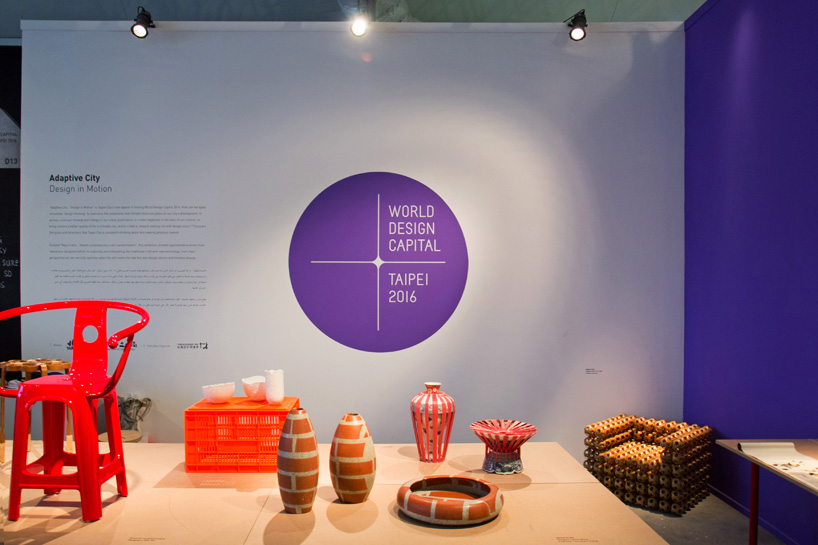
the exhibition at design days dubai 2015
1/8
shop
your own online design shop — no sales commission collected