voxel harvest project creates innovative orthotic care devices through metamaterial programming
this new process will transform critical fields, from biometrics to sports medicine, prosthetics, and bio-devices, and ultimately healthcare delivery and human performance.
prefer designboom on google[FEATURED]
singapore-based team combines data sets to develop ‘voxel harvest’ project, 3D prints for medical use and wearables. this new process will transform critical fields, from biometrics to sports medicine, prosthetics, and bio-devices, and ultimately healthcare delivery and human performance.
a voxel is a basic unit for 3D printing multiple materials. similar to how pixels are organized on digital display screens, voxels can be placed in different patterns to control how a 3D printed object will behave. this level of control, alongside powerful data sets and innovative technology systems, has the potential to change the landscape of 3D printing. combining voxel level print details with the sharing of anatomical data sets in a collaborative way affords new opportunities for collaboration between design and medicine within the field of orthotic care. this is the premise laid forth by voxel harvest, a design and manufacturing research venture emerging from the singapore university of technology and design started by professor sayjel vijay patel and architect nathan kiatkulpiboone.
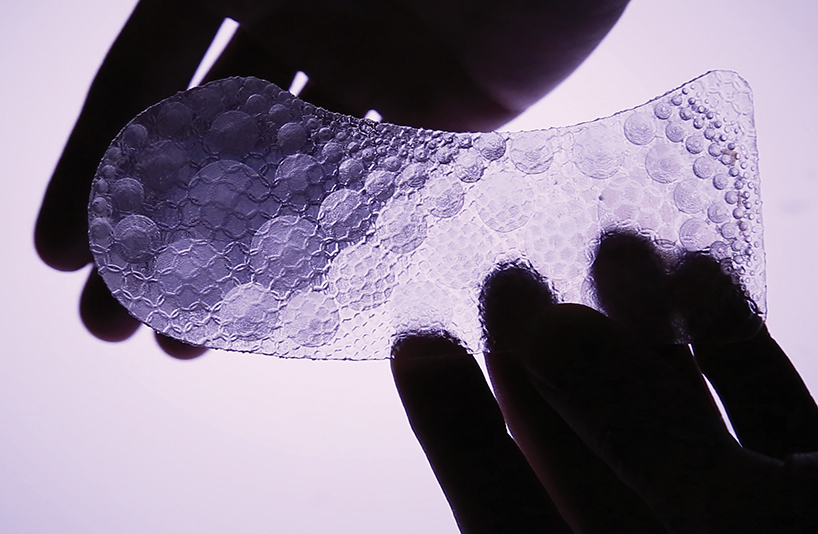
detail of embedded microstructure programmed to accommodate pressure points
voxel harvest introduces a new prototyping platform to support multi-disciplinary data-sharing and design collaboration with the SUTD digital manufacturing and design center. using authored and automated image data-sets, this system allows teams to create custom orthotic devices with high-resolution textures and microstructures, opening up a whole new world of orthotic care possibilities specific to patient needs. voxel harvest’s metamaterial programming capabilities open the door for new and unique bio-medical and wearable design.
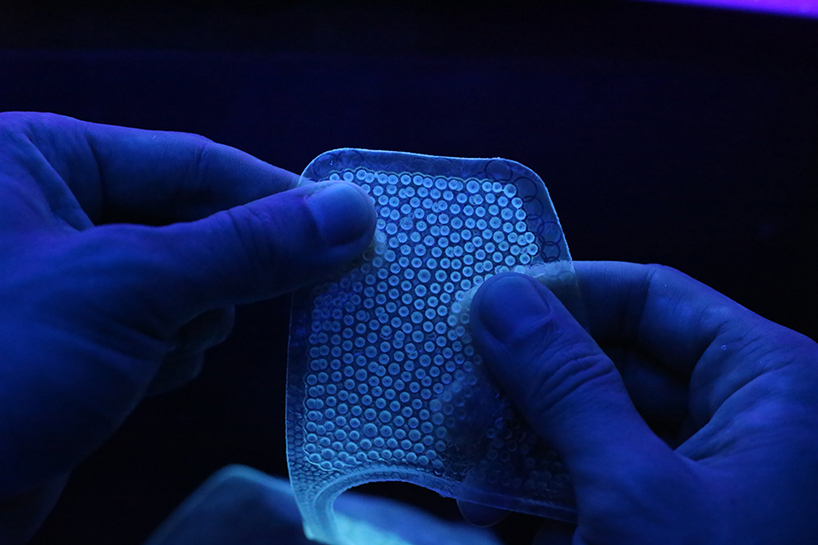
adhesive texture applied over the microstructure
by programming voxel data sets, a user can add microscopic features that help control pressure and temperature. as a proof of concept, voxel harvest was used to design a custom orthotic device to treat a foot injury using compression and temperature control. with textured structures to act as a second skin, microstructures to control elasticity and durability and fluidics to modulate temperature and material expansion, this new technology could enhance patient treatment plans by tailoring multifunctional products to their specific needs.

expanded fluidic bladder wrap
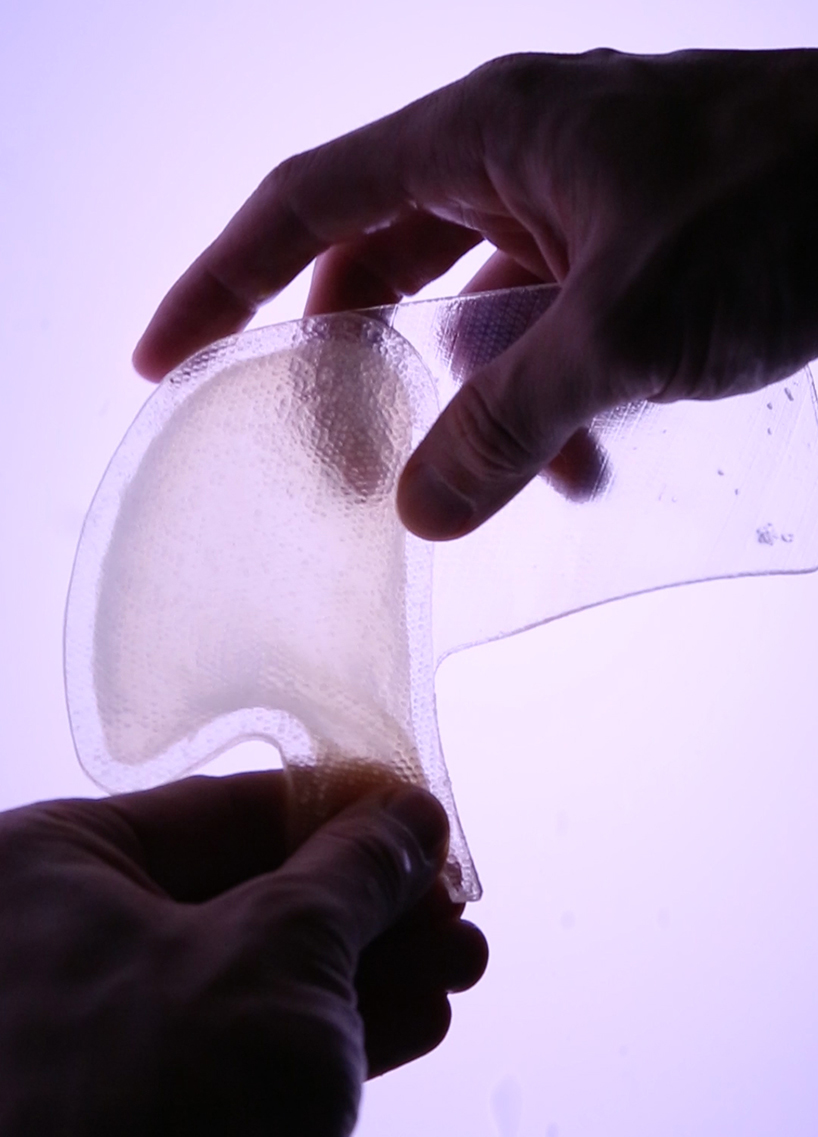
bladder prototype with moisture wicking texture applied
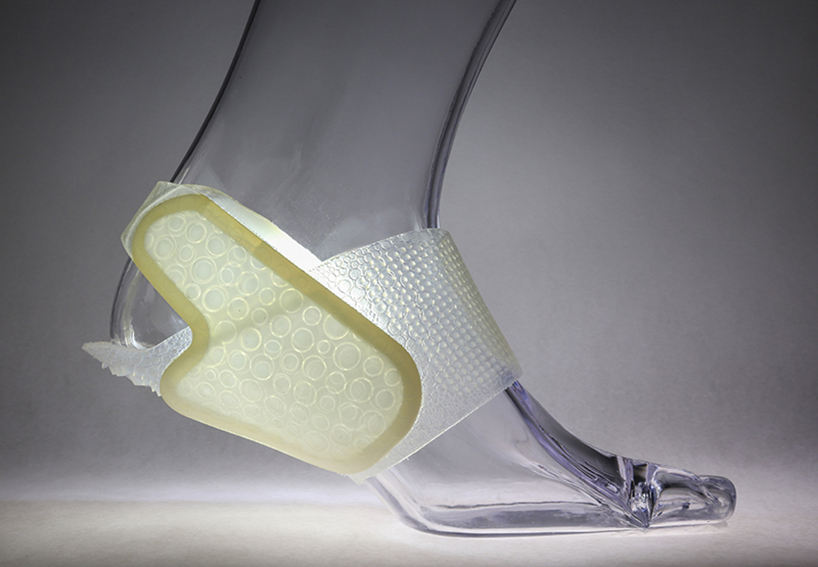
fluidic orthotic to treat accessory navicular injuries
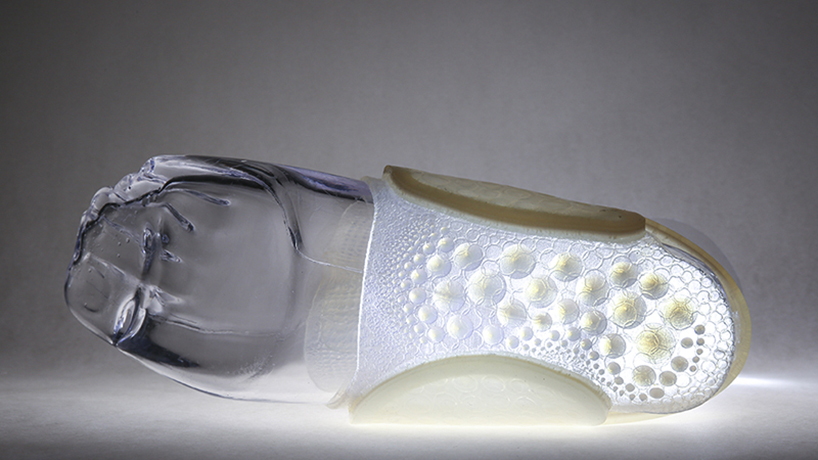
orthotic device with dual bladders to control the temperature
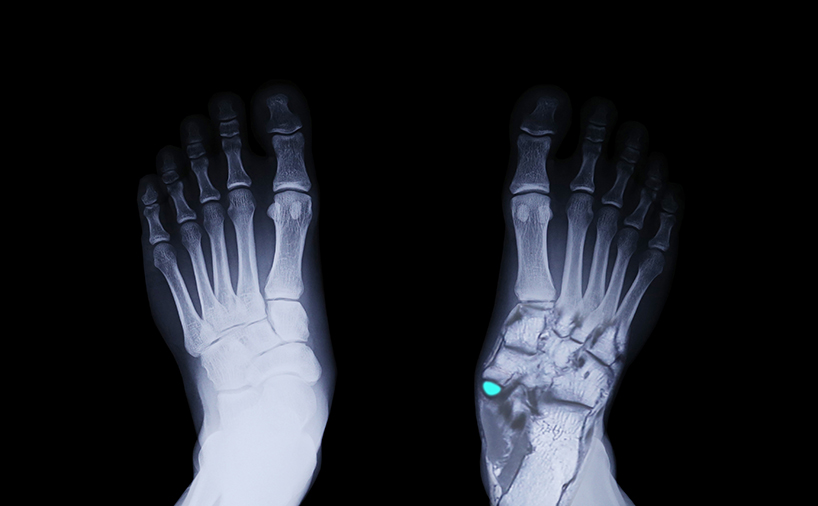
accessory navicular bone injury
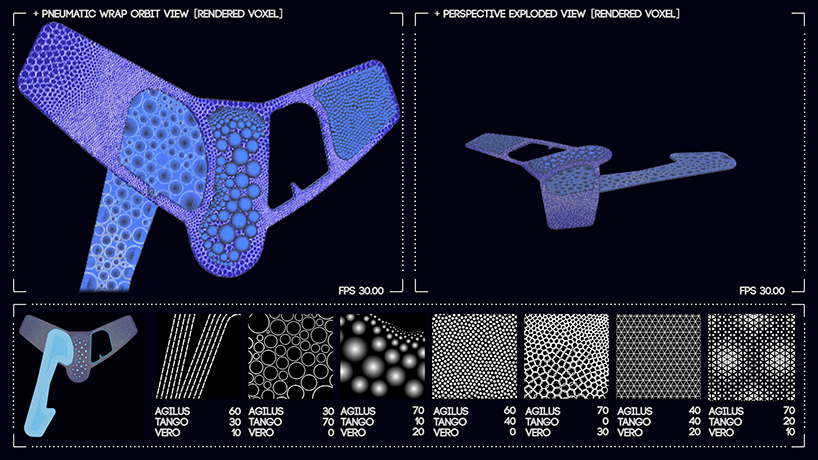
mock-up of software interface
original text by carrie wyman of stratasys
designboom has received this project from our ‘DIY submissions‘ feature, where we welcome our readers to submit their own work for publication. see more project submissions from our readers here.
shop
your own online design shop — no sales commission collected