3D printed standalone alarm clock lets you smash a giant arcade button to wake up
endothermal systems’ first product combines programmable alarms, mechanical controls, removable electronics, and local audio in an open-ended alternative to the smartphone alarm.
prefer designboom on google[FEATURED]
cinderclock treats the alarm clock as a standalone computer
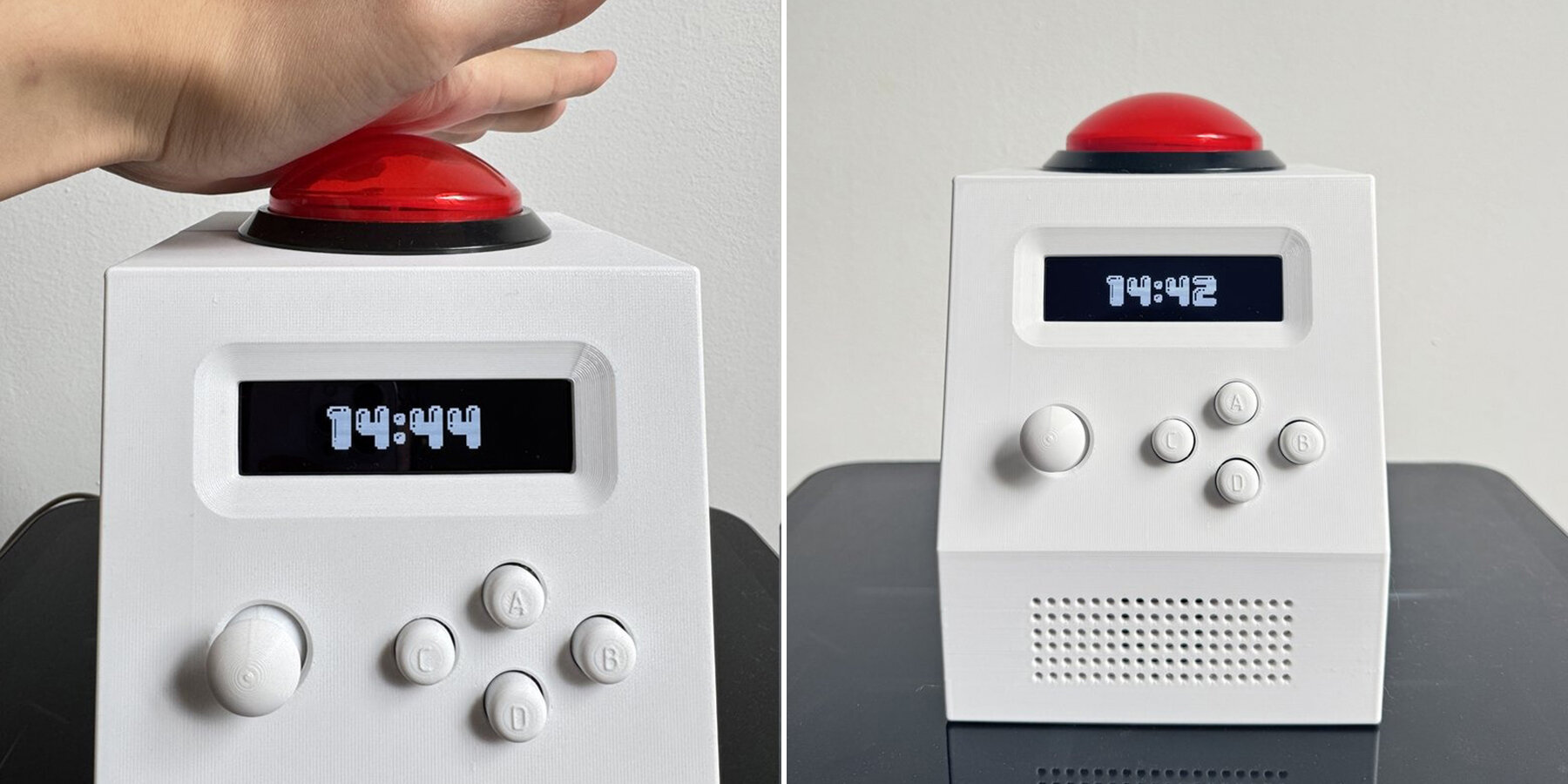
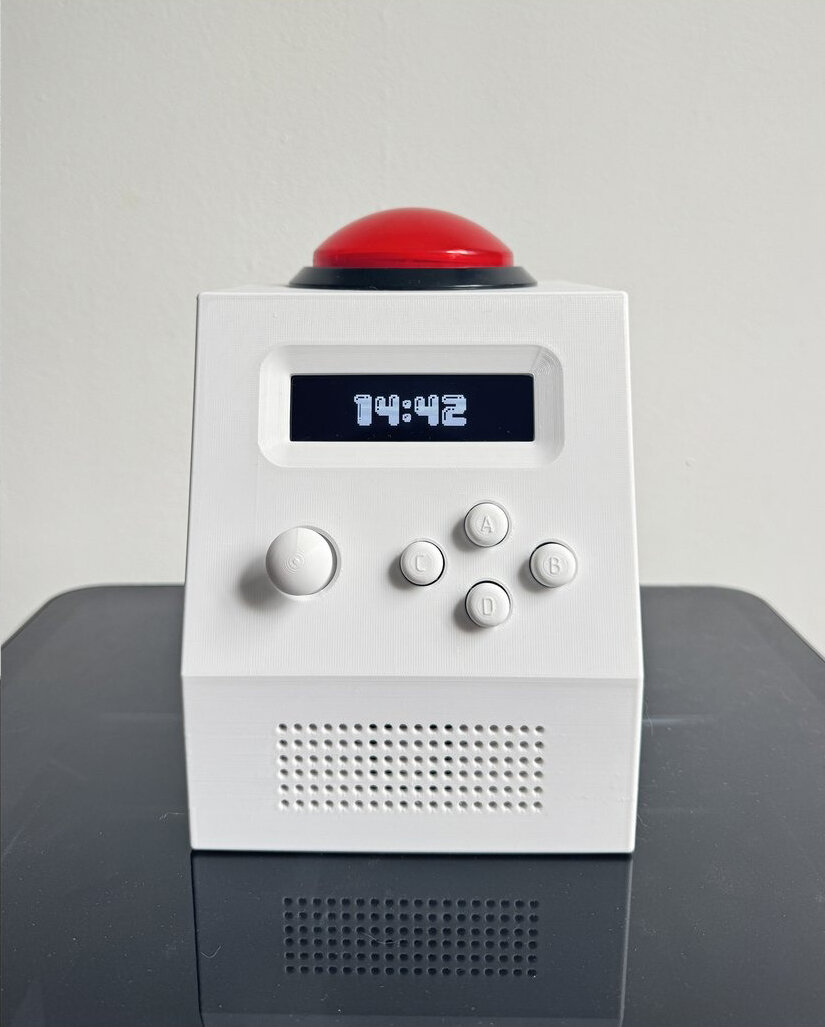
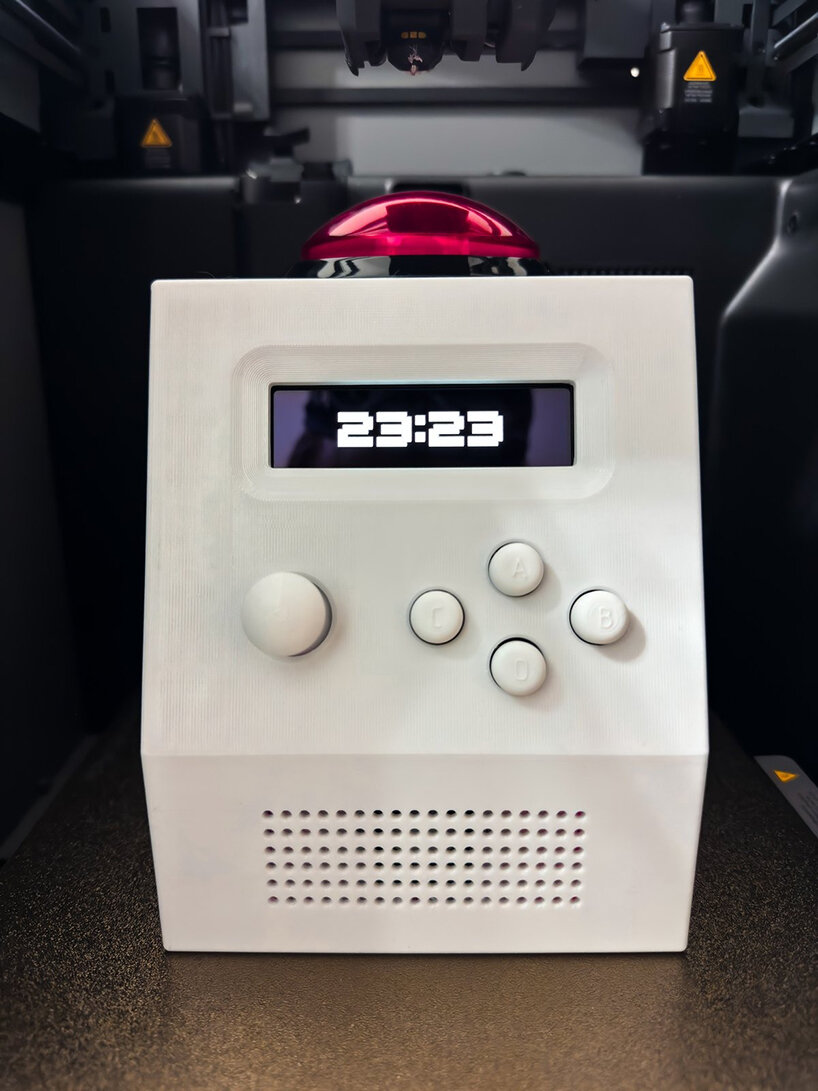
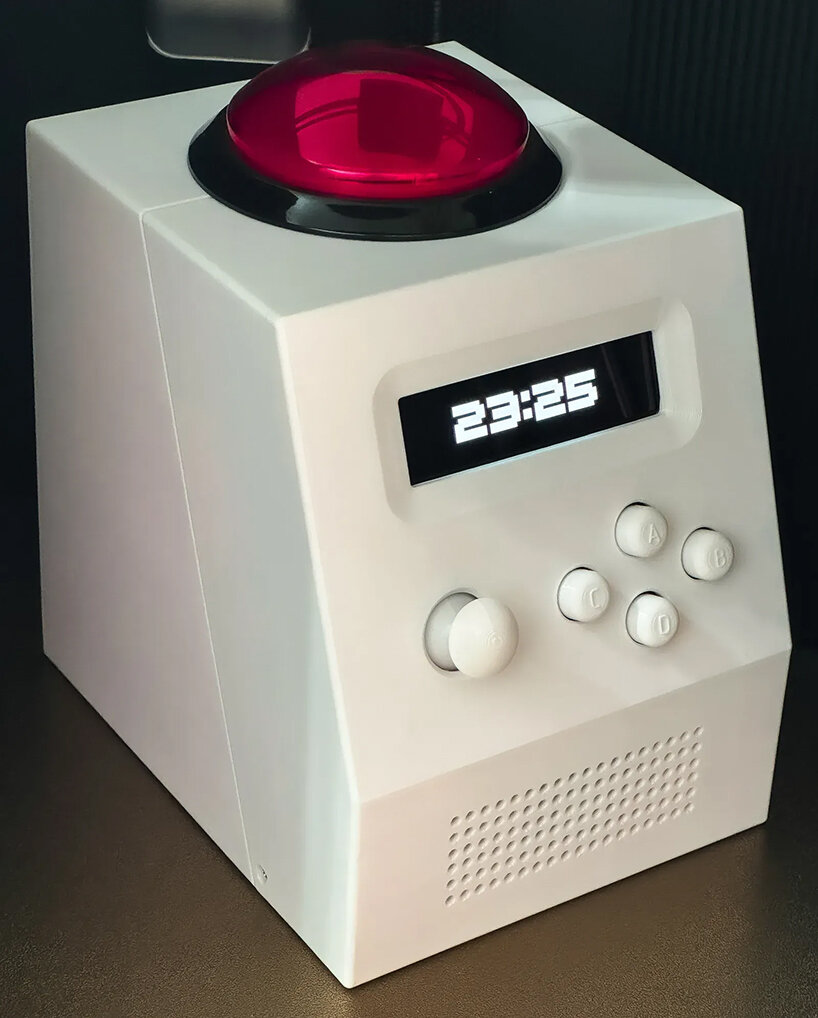
Endothermal Systems’ CinderClock is a 3D printed standalone desktop alarm clock designed to keep the phone away from sleep and morning routines. Measuring 140 × 160 × 170 mm, the device combines a 3.12-inch monochrome OLED display with a joystick, tactile buttons, a 100 mm arcade button, removable battery cells, local audio storage, and environmental sensors, and performs without connecting to an app or subscription service.
The project grew from the designers’ frustration with using smartphones as alarm clocks. Their response is to reconsider what an alarm clock needs to be. The team established three principles at the outset: the device should be standalone, its interface should be mechanical, and its significant components should be modular and replaceable.
CinderClock uses an ESP32-S3 processor and a DS3231 real-time clock, while a removable microSD card stores WAV alarm sounds. A BME280 sensor adds temperature, humidity, and pressure readings, and a light sensor adjusts the screen brightness to the surrounding room. The electronics are mounted as modules on a through-hole main board, with expansion headers exposing the device’s buses for future modifications.
programmable alarms without a phone
The main point of difference of the clock is its alarm system, which supports schedules based on specific weekdays, intervals, on/off duty cycles, sunrise, and sunset. A weekly cycle can express patterns such as weekdays or every other Tuesday, while a daily cycle can create schedules such as every three days or two days on followed by two days off. Sunrise and sunset times are calculated locally from coordinates entered by the user, so these functions do not require an internet connection.
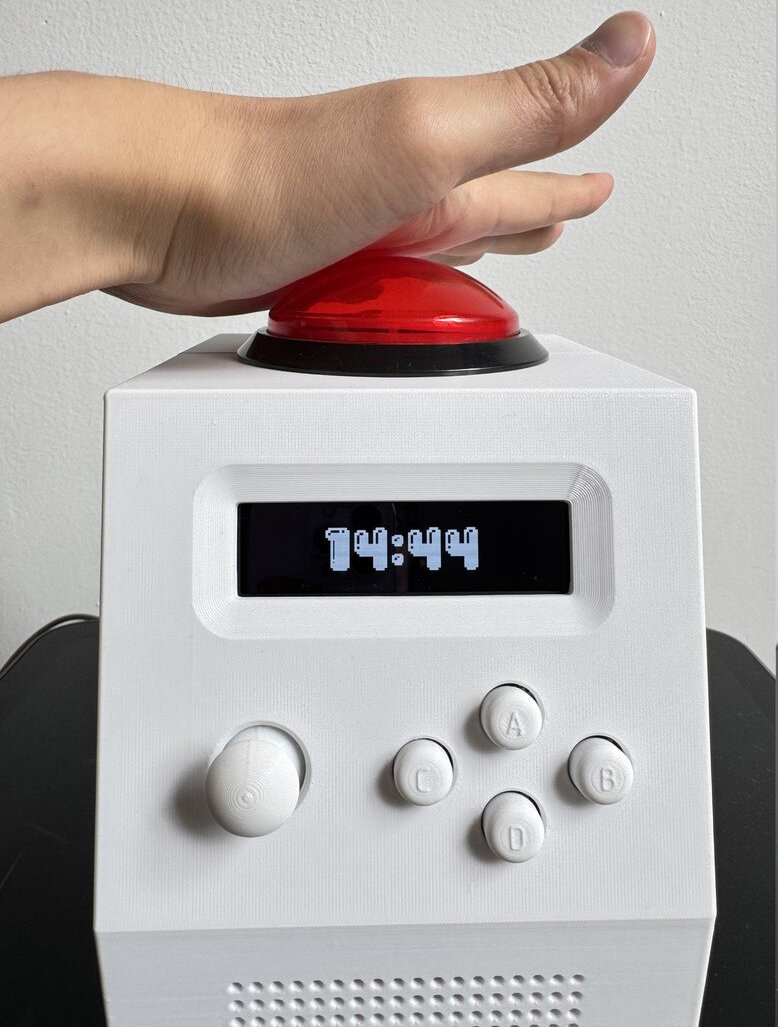
CinderClock’s interface is designed to make these rules understandable. Alarm lists translate settings into plain language, while each alarm editor shows a calculated next-ring time. A calendar can then display scheduled alarms across a month, giving users another way to check whether a recurrence behaves as intended. The joystick handles navigation and changing values, four buttons provide action, back, confirm, and menu functions, and the large arcade button duplicates the action control. Its size is intentional: dismissing an alarm should not require finding a small button or looking closely at a screen.
Snoozing can work differently. Depending on the selected mode, users may need to press a button multiple times or complete a randomly generated sequence of joystick movements. Endothermal Systems‘ idea is to make snoozing a conscious action rather than something performed automatically while half asleep.
a small computer rather than a connected appliance
Beyond alarms, CinderClock includes timers, a stopwatch, Pomodoro sessions, ambient sound and animation modes, an hourly chime, and eight simple games. Audio files remain on the removable card, while the clock can temporarily create its own WiFi hotspot for transferring sounds or installing firmware. The WiFi connection is deliberately limited. It is switched off at startup and activated manually by the user. Firmware can also be installed from a file through the local portal, without an account or external server. The device can connect to home WiFi for an optional update process, but it does not check for updates automatically.
One of the more unusual aspects of CinderClock is how openly Endothermal Systems documents its development. The design study records not only successful decisions but also the problems encountered during prototyping.
Audio, for example, went through several approaches before the team settled on direct WAV playback through a dedicated FreeRTOS task. An initial software buffer actually made audio stutter worse, while a larger DMA allocation later caused memory fragmentation. The eventual solution was to simplify the system and rely more heavily on hardware already providing sufficient buffering. The first single-piece 3D printed shell took 26 hours to produce and proved unusable. The designers subsequently split the enclosure into two parts along the same 70-degree plane that defines the viewing angle. The halves connect with a sliding dovetail, making the case easier to print and iterate.
This willingness to document failure is significant because the project presents repairability as more than a marketing claim. The designers describe the reasoning behind component choices, expose the board architecture, and plan to publish the PCB files, enclosure models, and bill of materials alongside the firmware and documentation.
project info:
name: CinderClock
designer: Endothermal Systems | @endothermal.systems

shop
your own online design shop — no sales commission collected