
14kg electric motorbike disassembles for flights and rebuilds on arrival
ivan miranda transforms power-tool batteries and lawn mower tires into a portable motorbike.
A COMPACT VEHICLE BUILT ALMOST ENTIRELY THROUGH 3D PRINTING
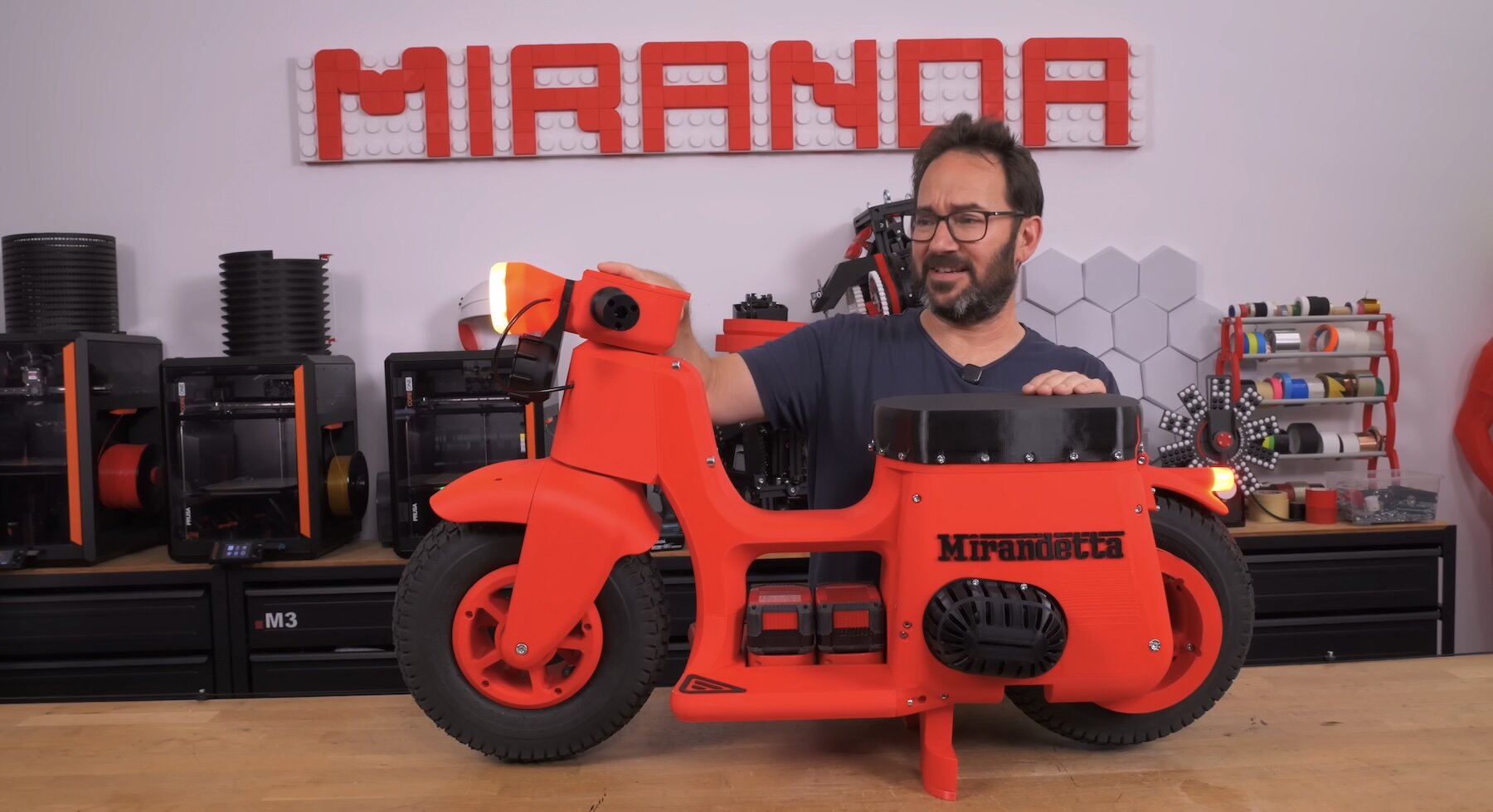
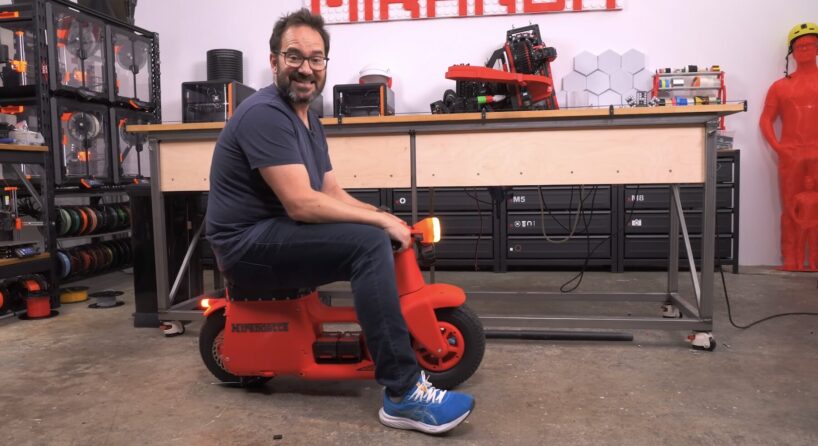
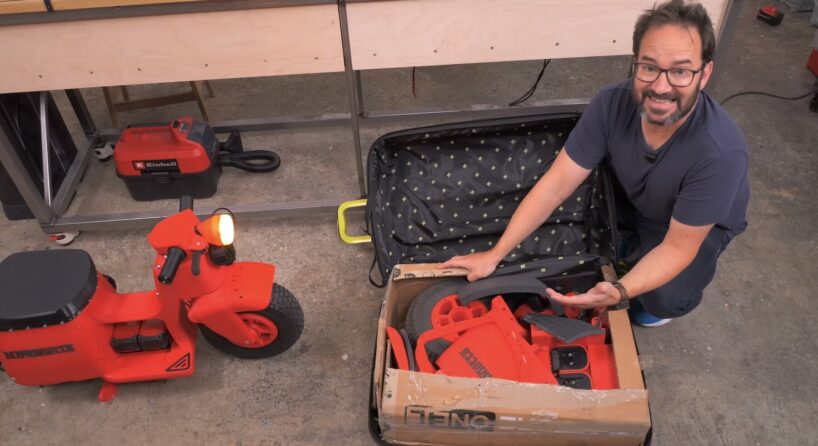
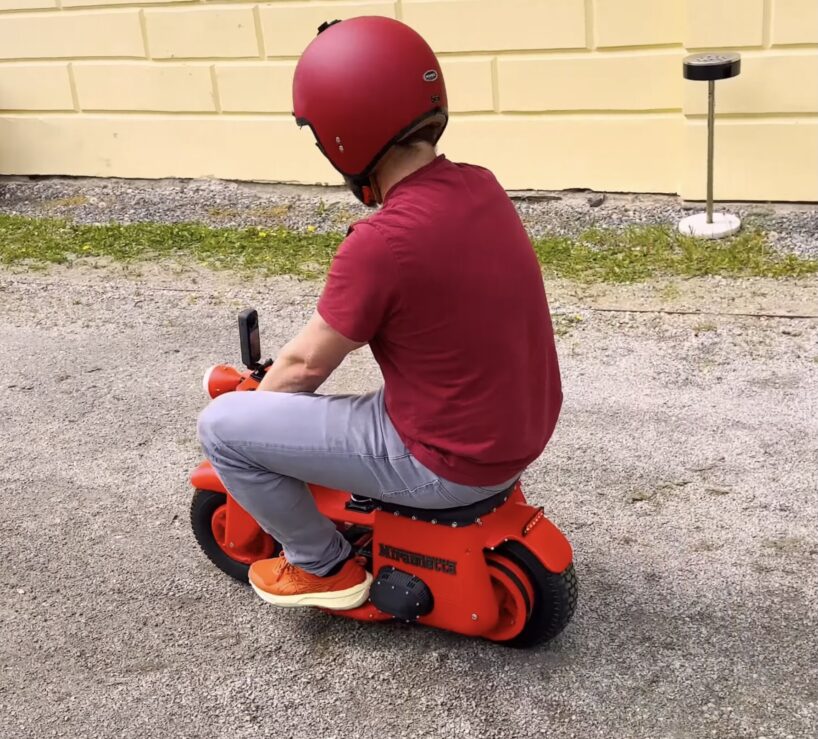
Creator Ivan Miranda has developed a compact electric motorbike made largely from 3D-printed components and designed to be dismantled for transport. Rather than treating additive manufacturing as a tool for producing isolated accessories or prototypes, the project explores whether an entire rideable vehicle can be fabricated, packed into ordinary luggage, and reconstructed at its destination.
The scooter breaks down into separate panels, brackets, wheels, and mechanical elements that fit inside a suitcase. Miranda tested the concept by flying with the disassembled vehicle to Maker Faire Prague, where he rebuilt it on site and entered it into a competition for projects small enough to travel as luggage. Without its batteries, the finished motorbike weighs just over 14 kilograms.

REPURPOSED TIRES AND TOOL BATTERIES POWER THE RIDE
To create the wheels, designer Ivan Miranda adapted lawn mower tires, narrowing the 3D-printed rims so the inflated rubber develops a more rounded profile suitable for turning. The adjustment prevents the tire walls from expanding too far outward, allowing components originally intended for garden equipment to behave more like conventional motorbike tires.
Two 36-volt power-tool batteries supply energy to a belt-driven hub motor, while a converter lowers the voltage for the lights and horn. An Arduino interprets the throttle input from a modified potentiometer placed inside the right handlebar. Although most of the vehicle is printed, Miranda machined the front fork shaft from aluminum to withstand the concentrated loads generated by the rider and the road.

PRINTED MECHANISMS INTEGRATE STORAGE, BRAKING AND SUPPORT
The scooter’s kickstand uses a bi-stable mechanism that locks firmly into either an open or closed position. Its flexible 3D-printed seat is mounted on a hinge, revealing a small storage compartment underneath. A modified bicycle disc brake completes the setup, combining an enlarged central opening, a printed axle, and a caliper capable of adjusting its position during use.
Following the first prototype, Miranda continued replacing metal parts with printed alternatives and reducing the amount of specialist hardware required for assembly. Updated digital files, a bill of materials, and construction guidance are now available through his website, accompanied by warnings that the motorbike remains an experimental hobby project rather than a certified road vehicle.

project info:
name: 3D printed motorbike
designer: Ivan Miranda | @adnarimnavi
shop
your own online design shop — no sales commission collected