fabrizio giugiaro looks to the wedge cars of the 1970s for his copper-bodied supercar
beneath its gleaming copper skin, the one-off supercar revisits the experimental automotive geometry of the 1970s.
prefer designboom on google[FEATURED]
fabrizio giugiaro introduces his copper-bodied peralta D
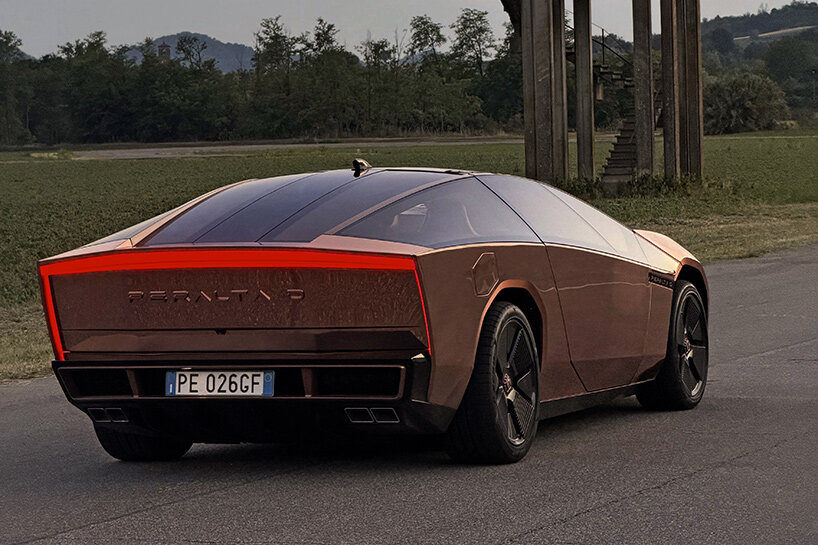
Italian automotive designer Fabrizio Giugiaro and his studio GFG Style unveil the Peralta D, a one-off supercar with bodywork made entirely from hand-hammered copper. Presented at the Pastejé Automotive Invitational in Mexico in October 2026, the Maserati-based grand tourer revisits the angular automotive design language that the designer’s father, Giorgetto Giugiaro, helped establish in the 1960s and 1970s.
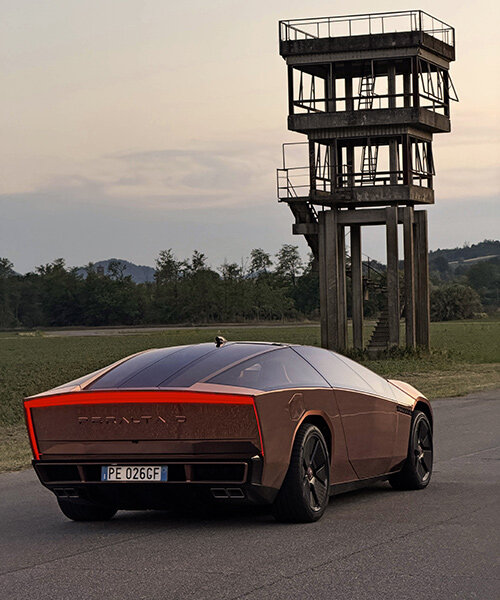
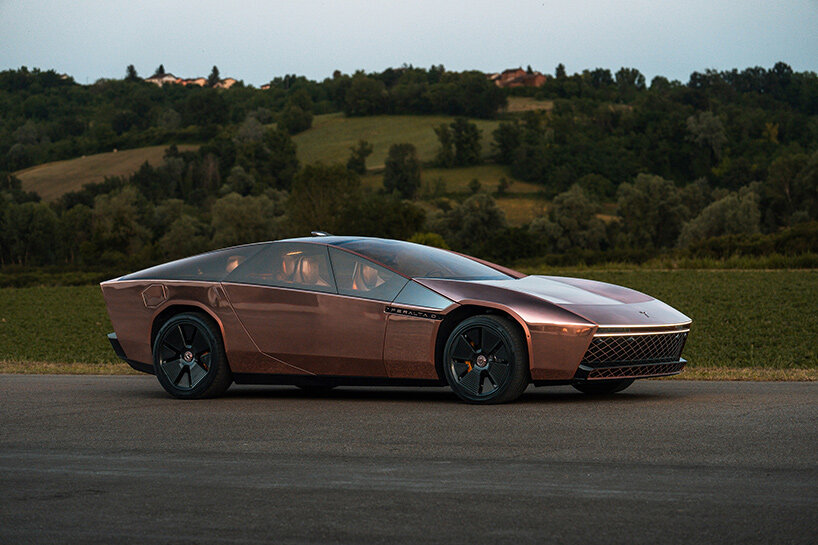
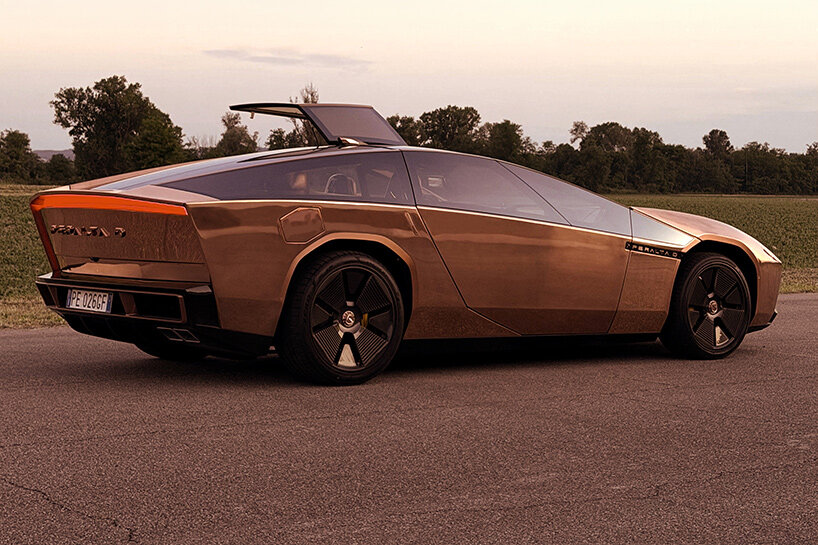
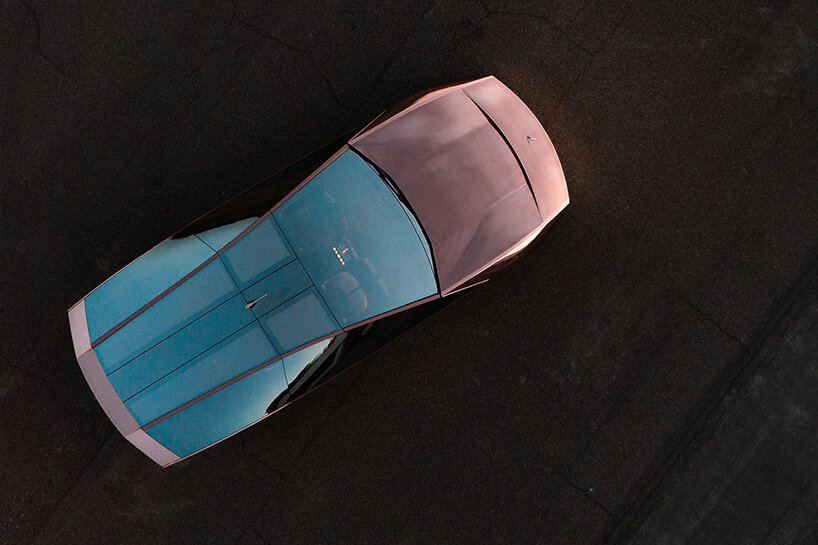
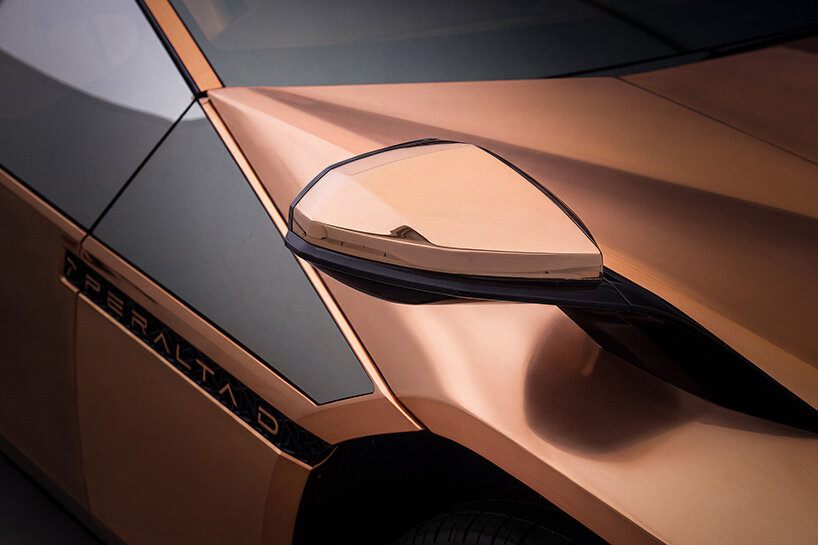
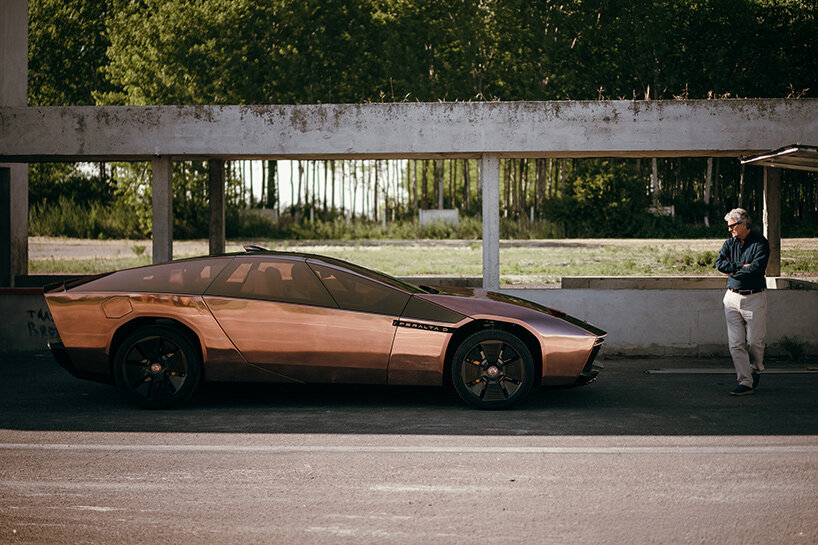
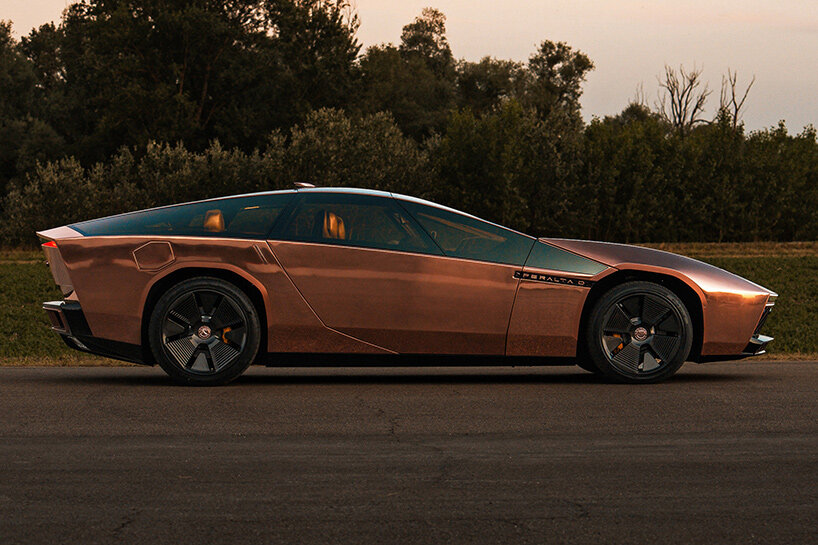
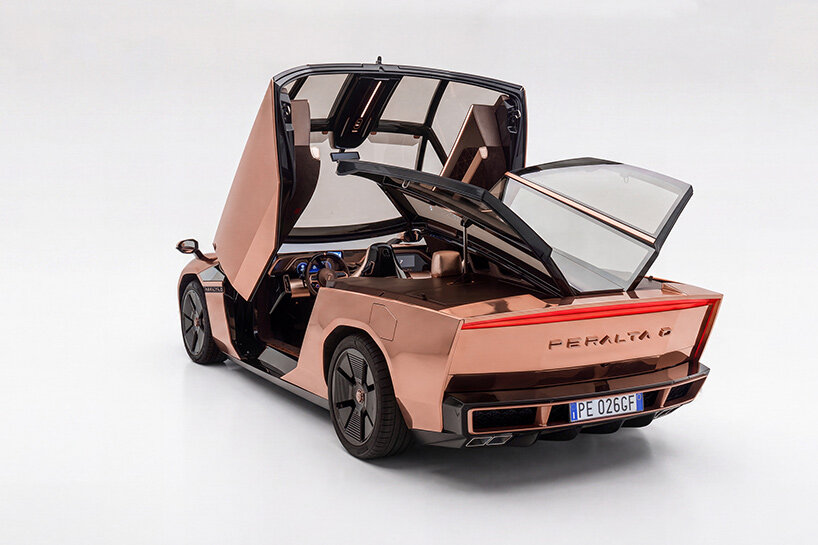
The car has the appearance of a solid piece of polished metal, even across its expansive windshield and roof. A specially treated mirrored glass canopy takes on the reddish tones of the copper below, and the distinction between the two materials nearly disappears when the car is viewed in profile.
The project follows GFG Style’s 2025 Peralta S, a sports car sculpted from mirror-polished aluminum and inspired by Giorgetto Giugiaro’s 1971 Maserati Boomerang. Both vehicles were commissioned by Mexican collector Carlos Peralta. While the earlier model was dedicated to his sons, the latest takes its name from his daughters, with the letter D also referring to donne, the Italian word for women.
GFG style shapes the bodywork by hand
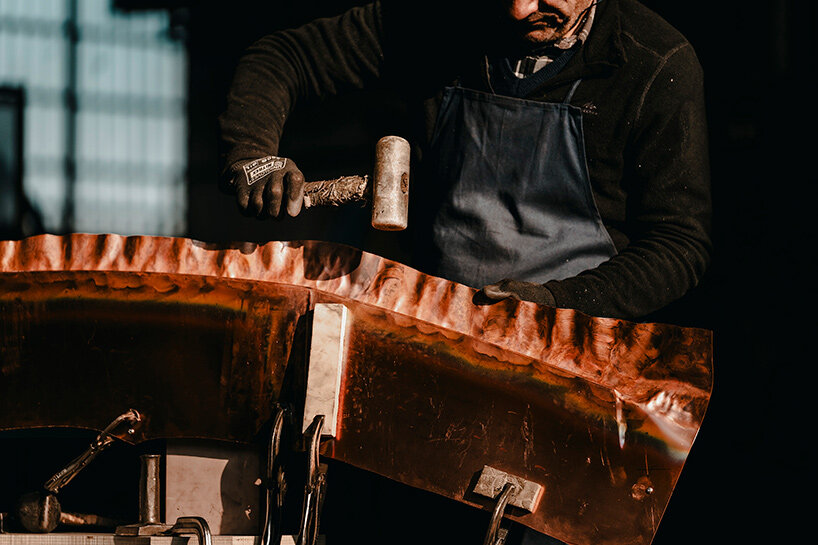
The warm color of the Peralta D comes directly from the metal itself. The design team at GFG Style works sheets of copper by hand to achieve the broad, uninterrupted surfaces of the body, whose low nose and sharply defined edges recall the wedge-shaped concept cars of half a century ago.
Beneath the copper skin, a carbon fiber structure supports the bodywork, while an aluminum chassis and mechanical components draw from the Maserati GranTurismo. The dark, geometric wheels reference designs from the 1970s and sit almost entirely within the contours of the body.
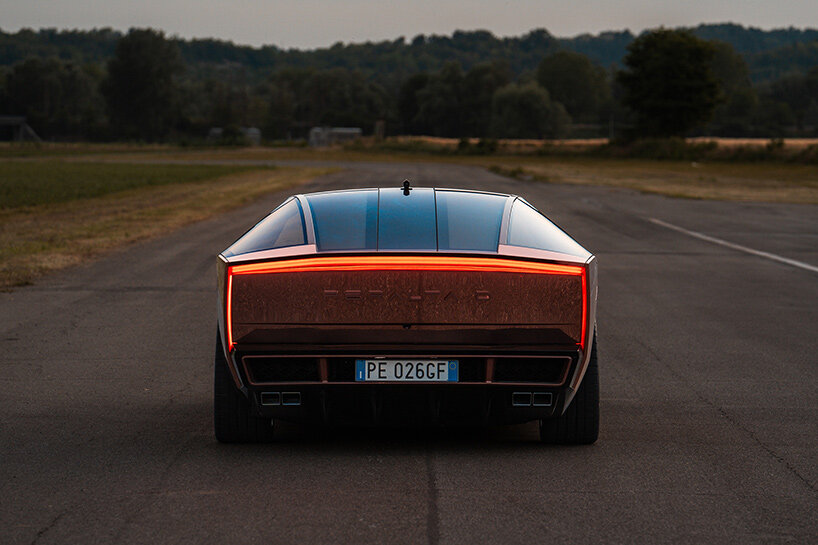
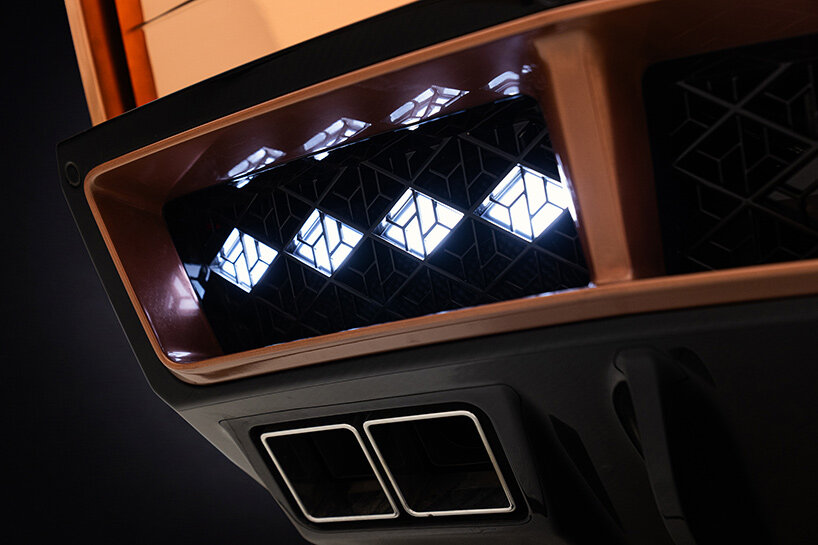
Much of the functional hardware disappears into the exterior. Narrow blades of light extend across the nose and tail, while diamond-patterned aluminum grilles conceal additional lighting elements within their geometry. Even the carbon fiber aerodynamic components are tucked into the body.
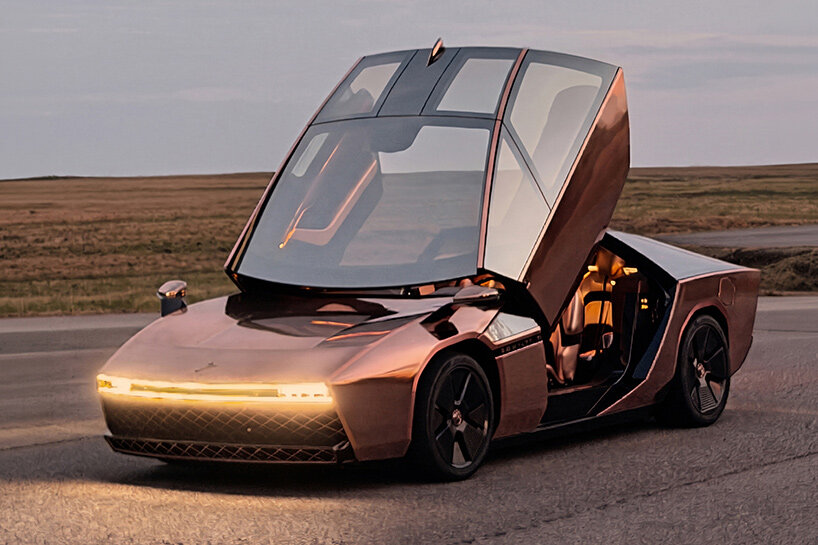
a moving glass canopy replaces conventional car doors
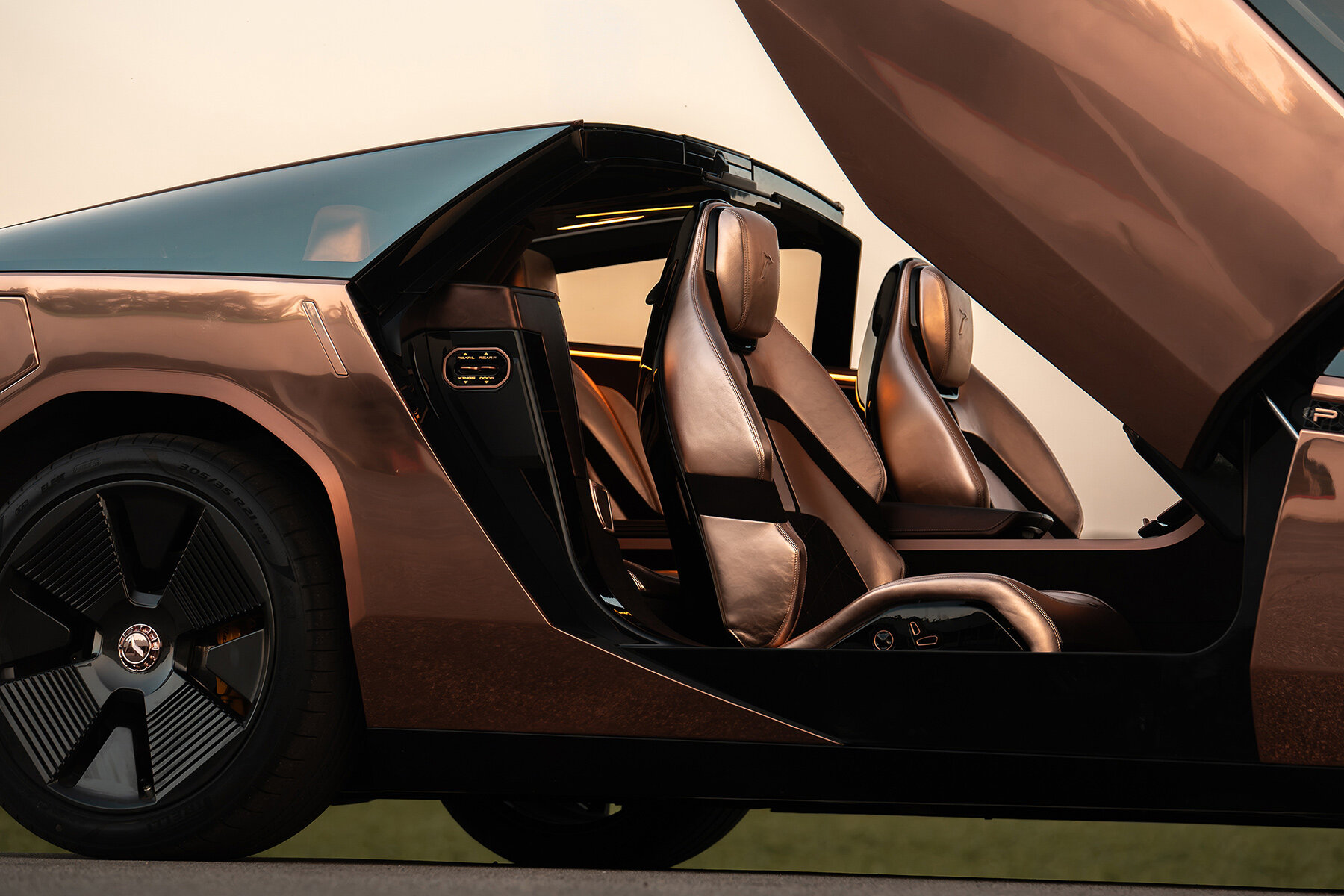
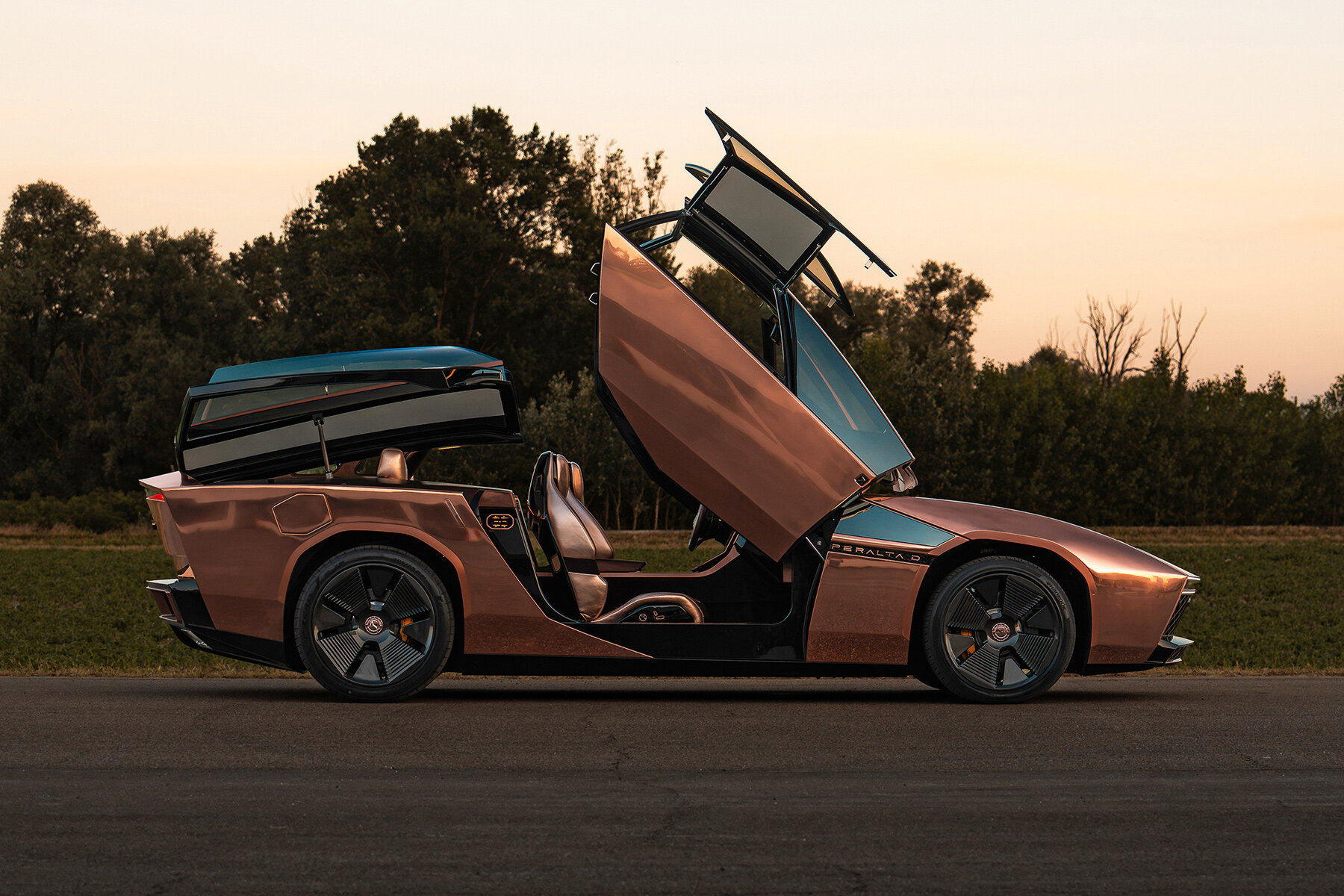
Perhaps the most unusual aspect of the Peralta D becomes apparent when its occupants step inside. In place of conventional car doors, designer Fabrizio Giugiaro develops a system in which the entire canopy lifts upward and forward in one motion. Smaller gullwing sections can open independently along either side.
Access to the second row of seats introduces another moving element to the architecture of the car. Two additional panels rise from the rear bodywork in a configuration that recalls the split engine cover of the 1967 De Tomaso Mangusta, designed by Giorgetto Giugiaro. Here, Fabrizio adapts his father’s idea to accommodate passengers.
With all of these elements raised, the seemingly solid copper volume opens up into a series of thin metallic planes. It is a particularly expressive evolution of the moving dome that distinguished the Peralta S, this time adapted to the proportions and practical demands of a four-seat grand tourer.
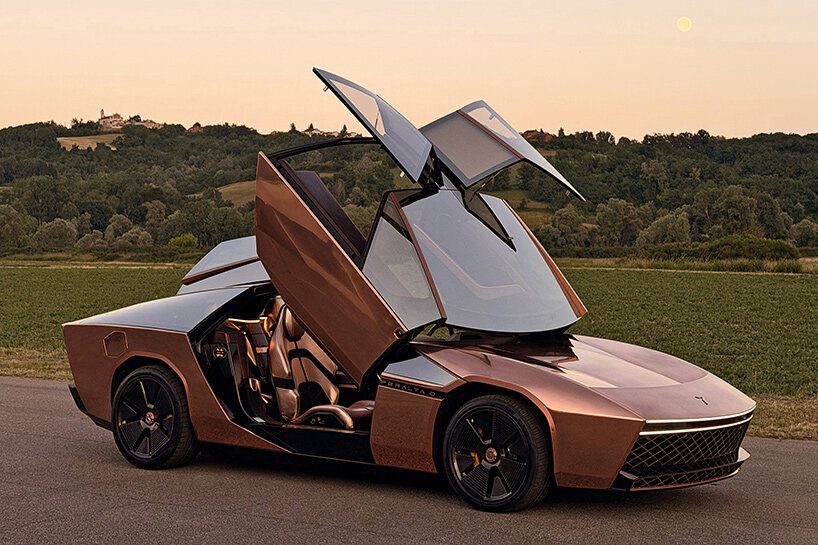
copper extends into the interior of the supercar
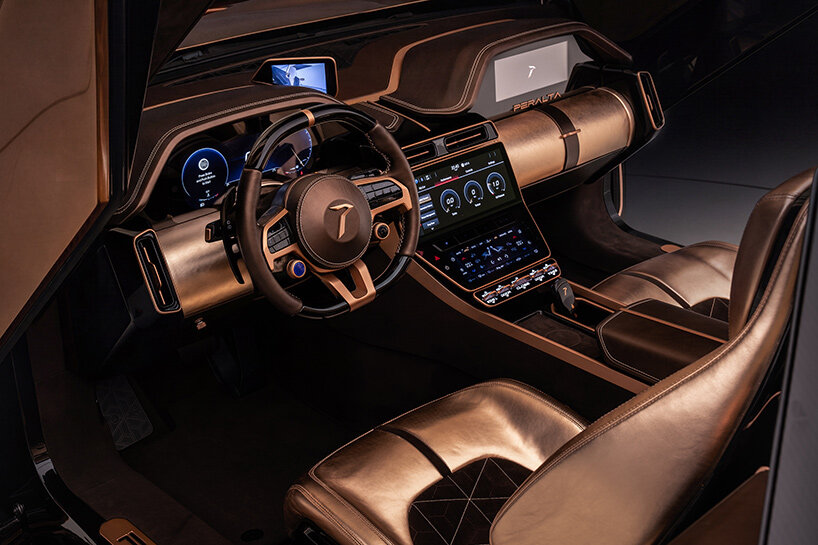
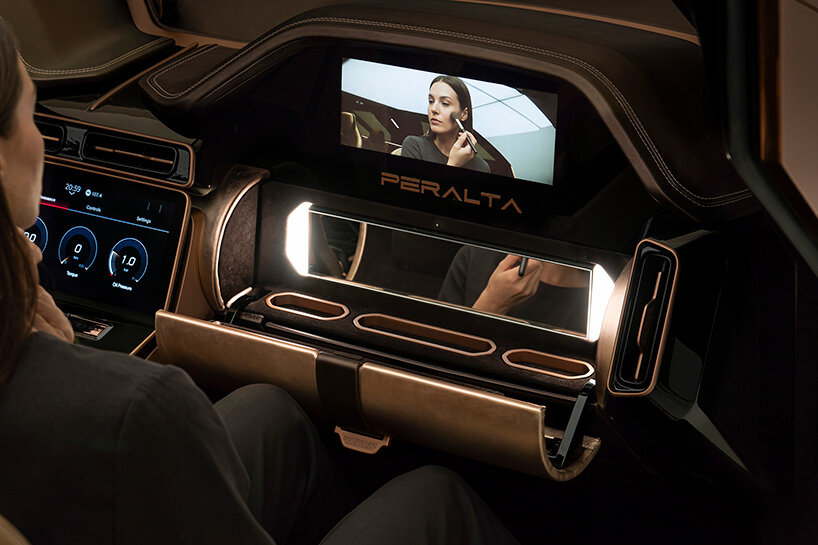
Inside the Peralta D, the reddish metallic finish continues across the leather upholstery, with genuine copper thread sewn into the seams. Dark, perforated Alcantara interrupts the otherwise continuous material palette.
The dashboard is organized symmetrically around the center console. Opposite the driver’s instrument display, a second screen sits above a concealed vanity compartment with an illuminated mirror. Between the rear seats, a retractable refrigerator houses a champagne bottle alongside four copper drinking glasses.
More than fifty years after Giorgetto Giugiaro experimented with the geometric possibilities of the automobile through his Maserati Boomerang, the Peralta D explores that same design language through the malleability of a different metal. Its futuristic appearance owes much to the work of traditional metalworkers and the painstaking process of shaping each surface by hand.
1/10
project info:
name: Peralta D
designer: Fabrizio Giugiaro
design studio: GFG Style
client: Carlos Peralta
debut date: October 24th, 2026
photography: © GFG Style
shop
your own online design shop — no sales commission collected