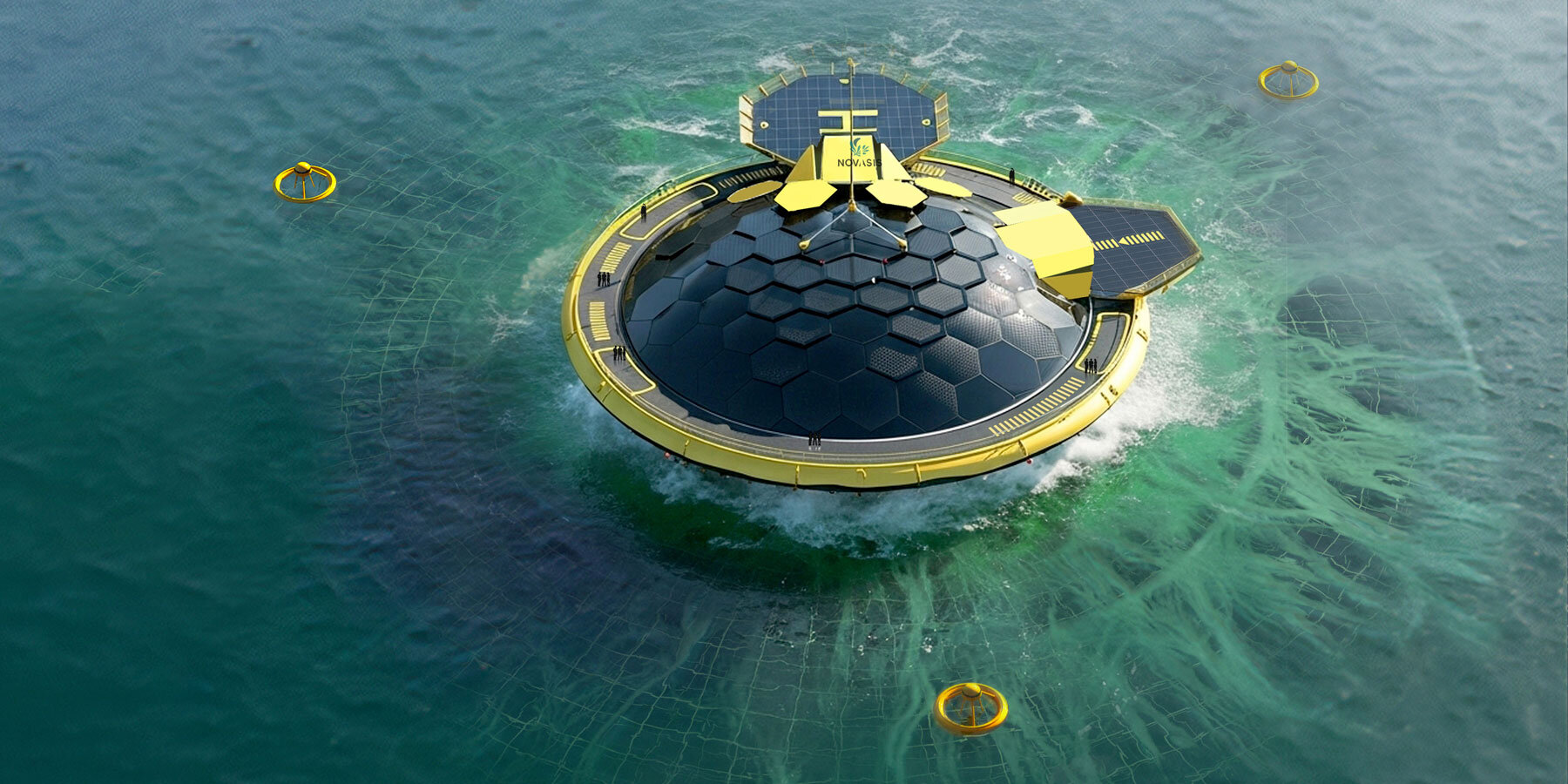
Mohsen Laei’s Vision for Regenerative Marine Architecture
Designer Mohsen Laei introduces a scalable, fully sustainable floating platform that combines large-scale algae cultivation with renewable energy, freshwater production, and marine ecosystem restoration. This project proposes the design and construction of a multifunctional structure that serves as an innovative model for marine architecture. By integrating renewable energy production, marine ecosystem protection, and algae cultivation, the structure addresses global challenges such as climate change, resource scarcity, and marine degradation. Initially functioning as an algae farm, it is designed to scale into interconnected floating communities for habitation, research, and recreation. The project employs advanced technologies, recyclable materials, and closed-loop systems to create a self-sufficient ecosystem that fosters harmonious human-ocean coexistence. Mohsen Laei’s design was a Grand Prix Nominee in the 15th Architectural and Innovation Competition 2025 by the Jacques Rougerie Foundation.
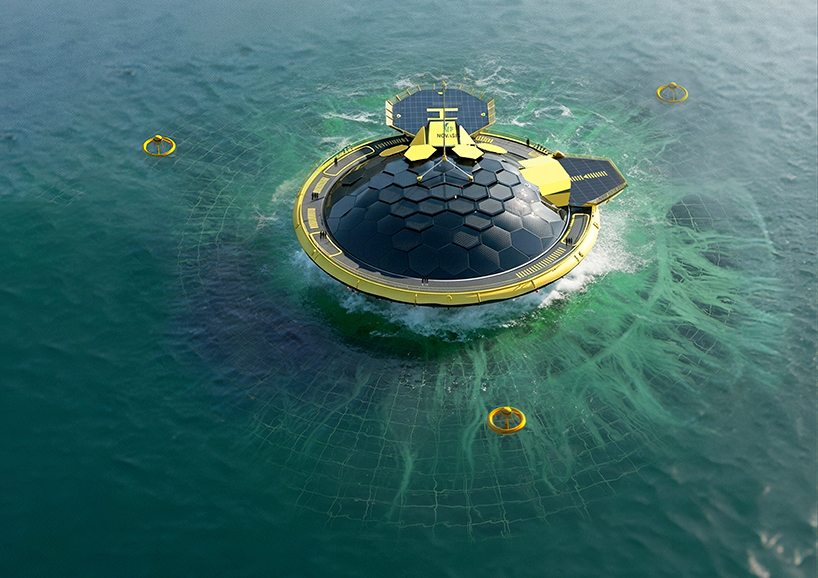
all images courtesy of Mohsen Laei
Algae Production, Renewable Energy, and Ocean Regeneration
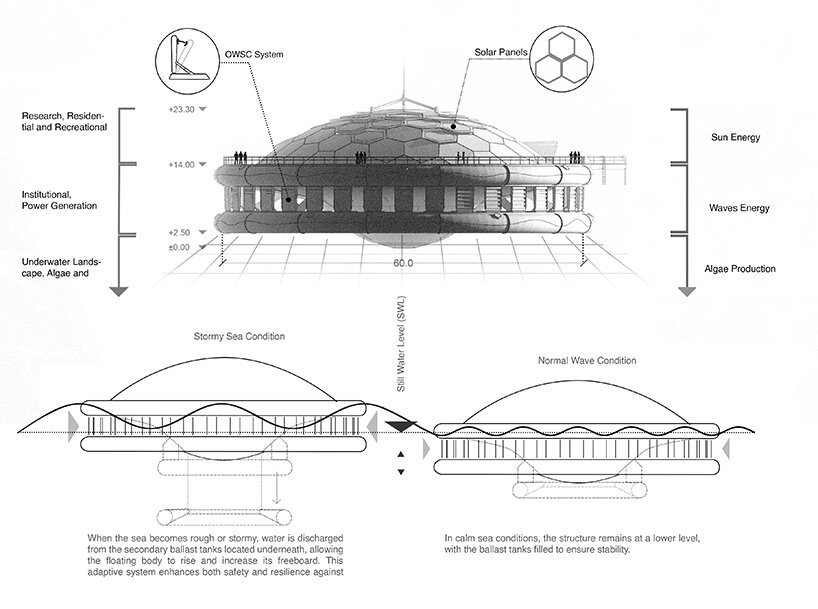
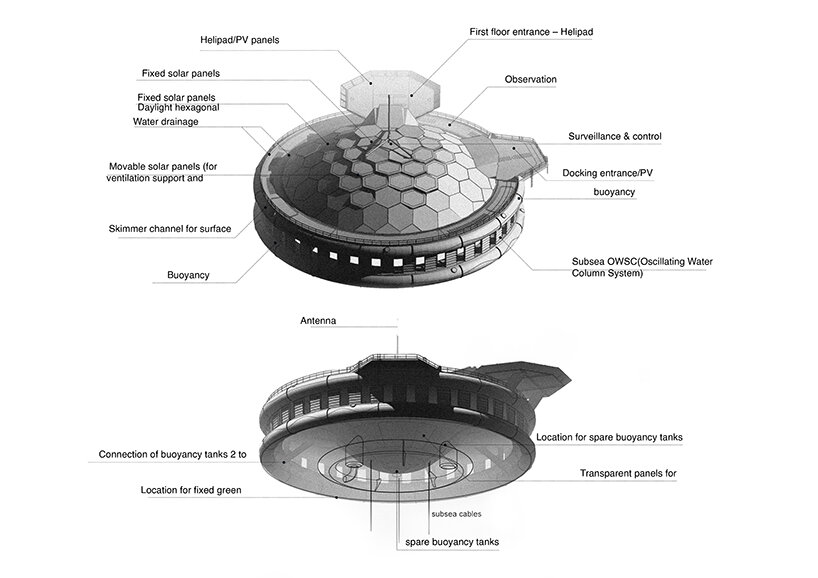
Floating and submerged cultivation nets made from recycled PET (rPET) form the core of the project, supporting the growth of both macro- and microalgae. These algae systems absorb carbon dioxide, release oxygen, and help reduce ocean acidification while functioning as artificial reefs that enhance marine biodiversity. Harvested biomass is converted into biofuels, nutraceuticals, pharmaceuticals, and biodegradable bioplastics, creating a profitable circular economy. The platform, conceived by designer Mohsen Laei, is designed to operate as a self-sufficient system for energy, water, and waste management. Renewable power is generated through a combination of oscillating wave surge converters equipped with lightweight rPET flaps and rooftop solar panels, allowing the structure to run entirely on renewable energy. Freshwater is supplied through rainwater harvesting and desalination systems powered by solar and wave energy. Organic waste is treated through anaerobic digestion, producing biogas for energy use and nutrient-rich water that supports further algae growth, while automated systems collect marine debris for recycling.
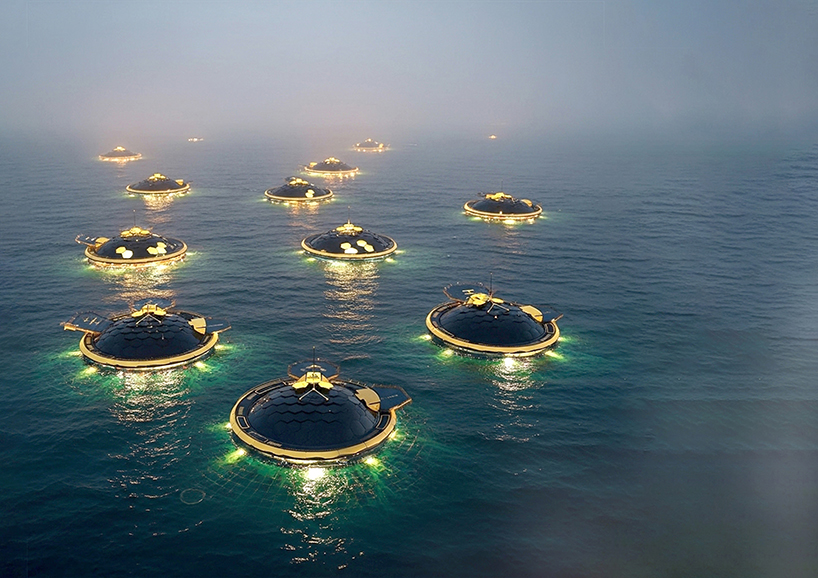
a floating platform reimagines marine architecture through sustainability, innovation, and ocean regeneration
From one platform to a system of floating Ocean Communities
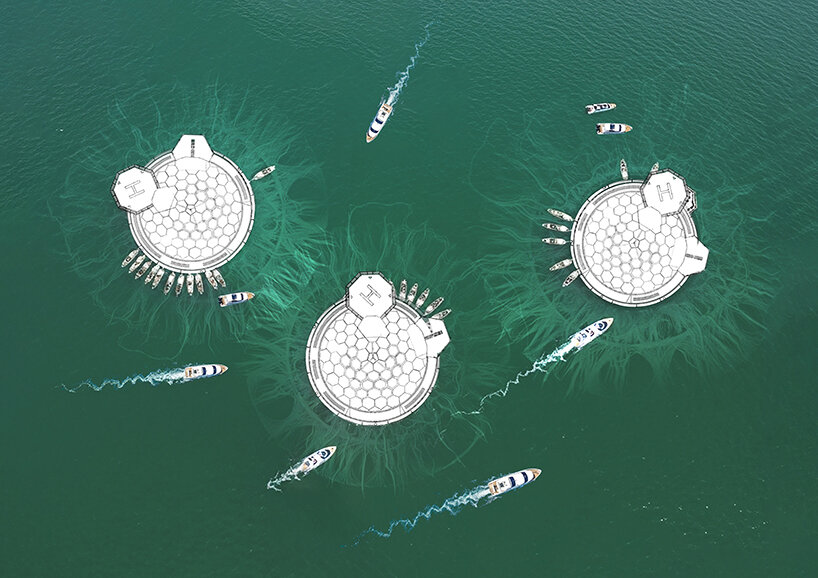
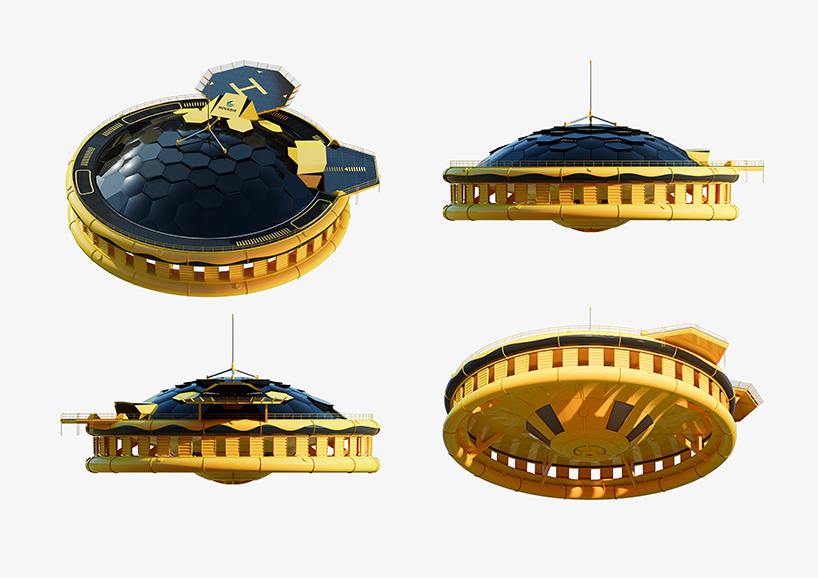
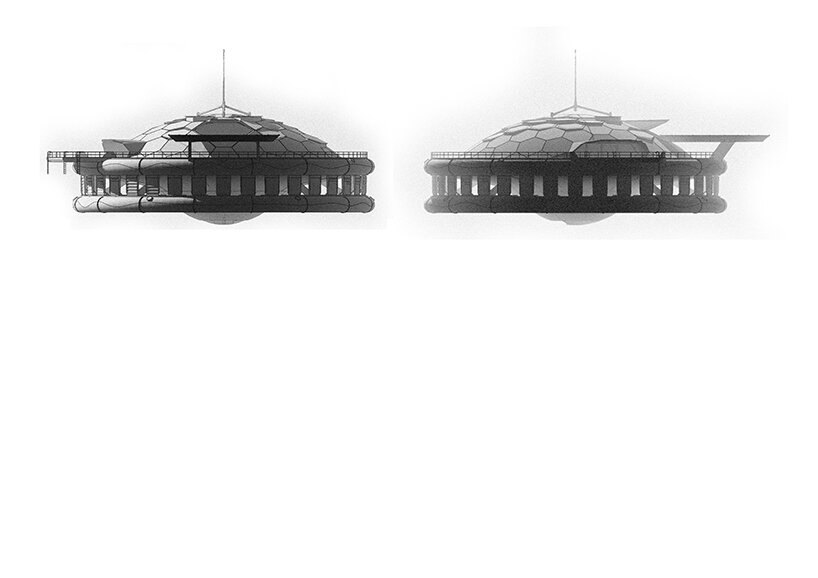
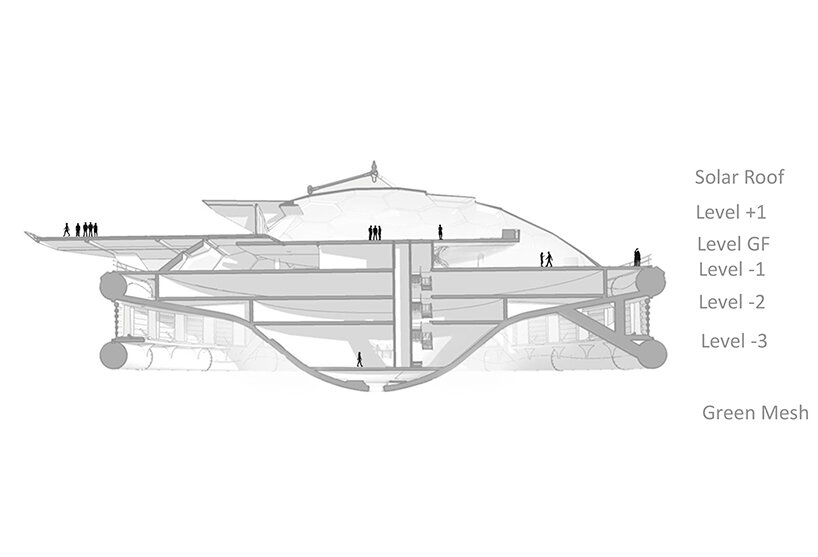
The project takes the form of a modular, low-profile floating structure built from corrosion-resistant stainless steel and aluminum frames wrapped in a translucent, thermoformed rPET skin. Its organic geometry draws from coral formations and wave patterns. An adaptive ballast system responds to changing sea conditions, raising the platform during storms and lowering it in calmer weather to improve stability and efficiency. A wide perimeter walkway and a central dome organize circulation, while individual modules can be connected to create larger floating networks.
Beyond production and infrastructure, the platform accommodates research laboratories, an environmental museum, educational workshops, and a visitor center focused on marine conservation, renewable energy, and algae biotechnology. In the long term, the proposal envisions expansion from a single algae farm into interconnected floating communities capable of providing food, energy, employment, and potentially housing, while contributing to ocean regeneration. Designed to be modular, recyclable, energy-independent, and revenue-generating, the system presents a model for climate-positive development in coastal and open-ocean contexts.
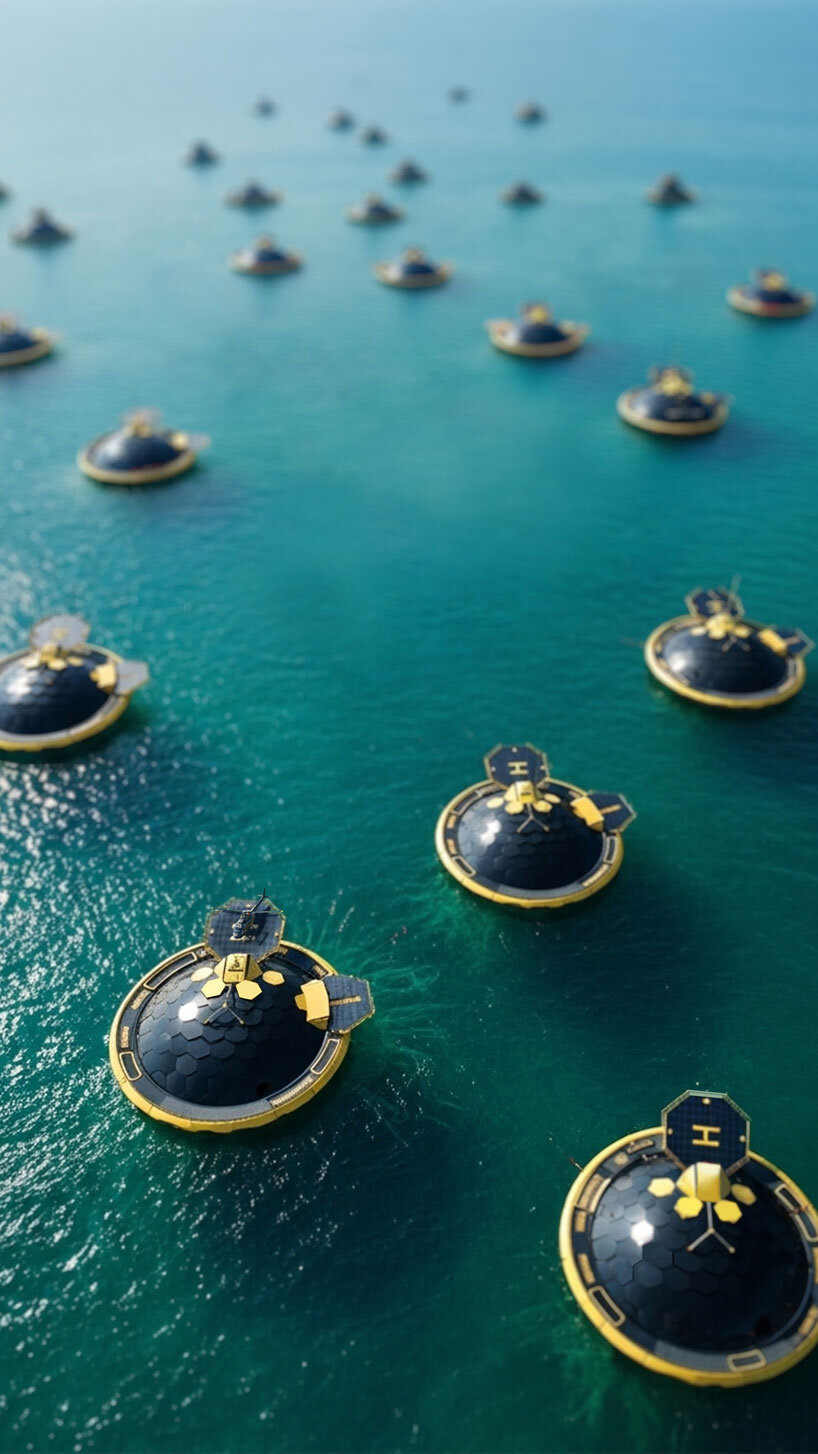
the project integrates algae cultivation with renewable energy and freshwater production
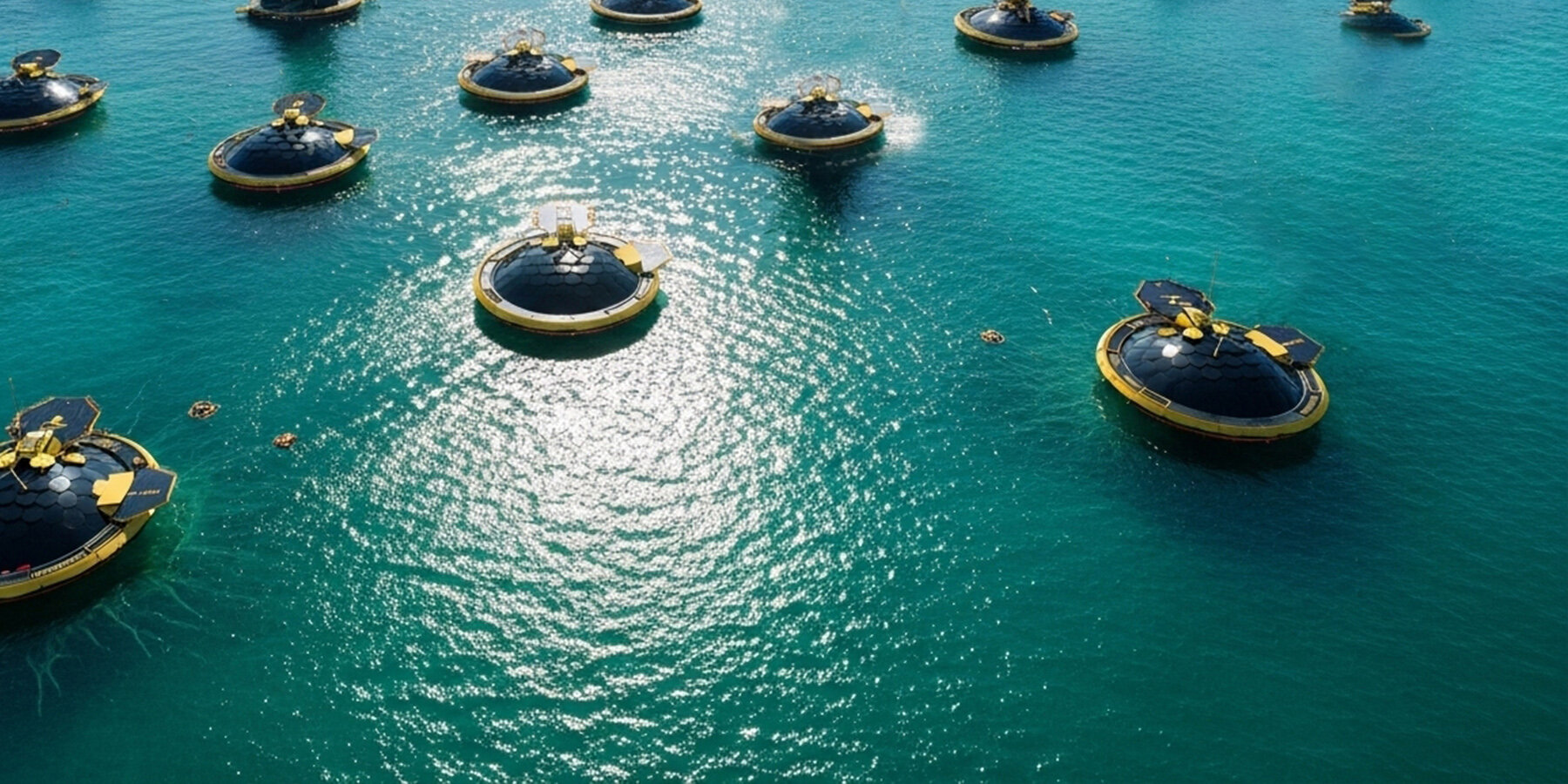
the floating structure functions as a self-sufficient ecosystem addressing climate change and resource scarcity
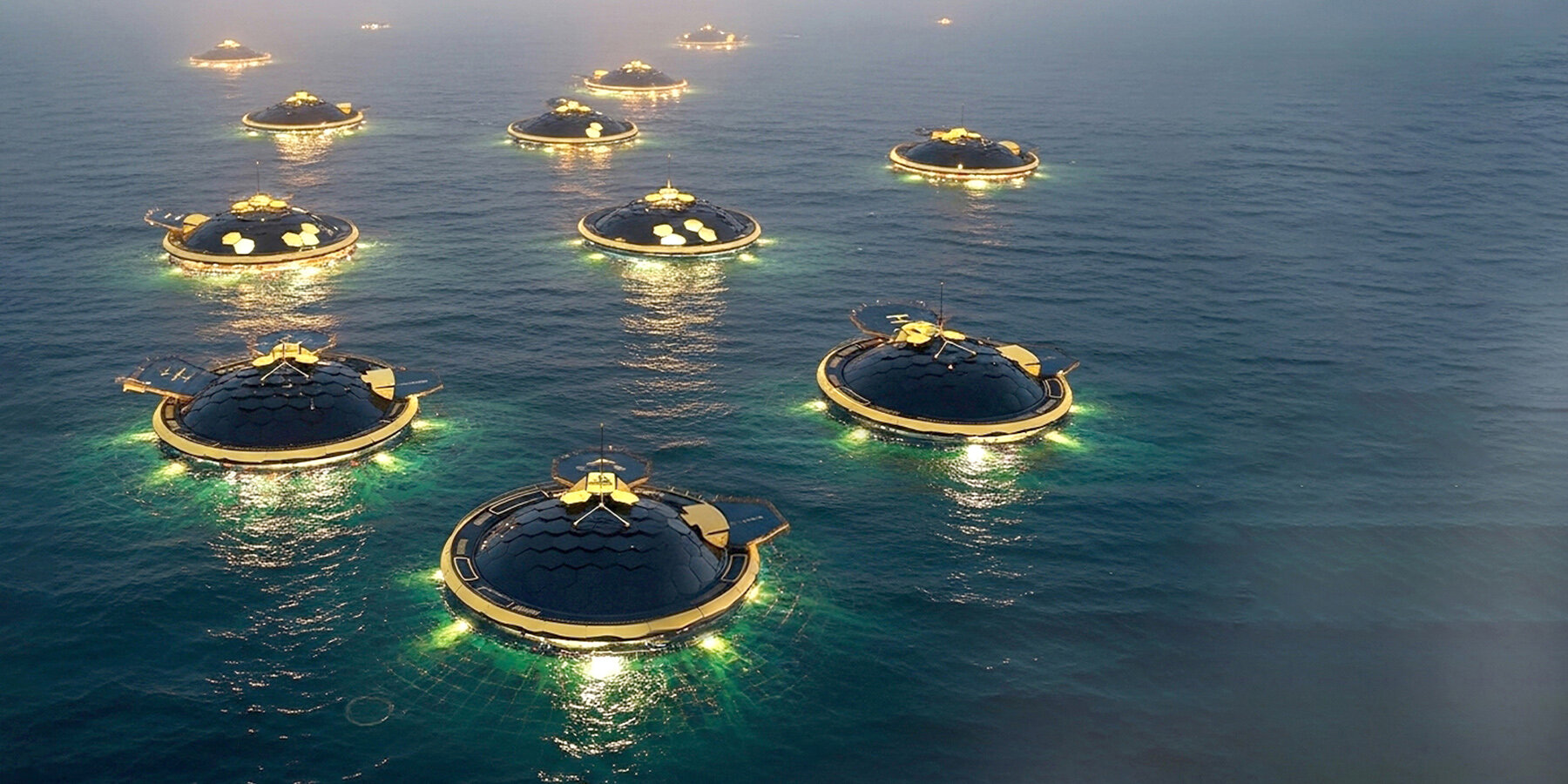
designed for research, recreation, and habitation, the system supports human-ocean coexistence
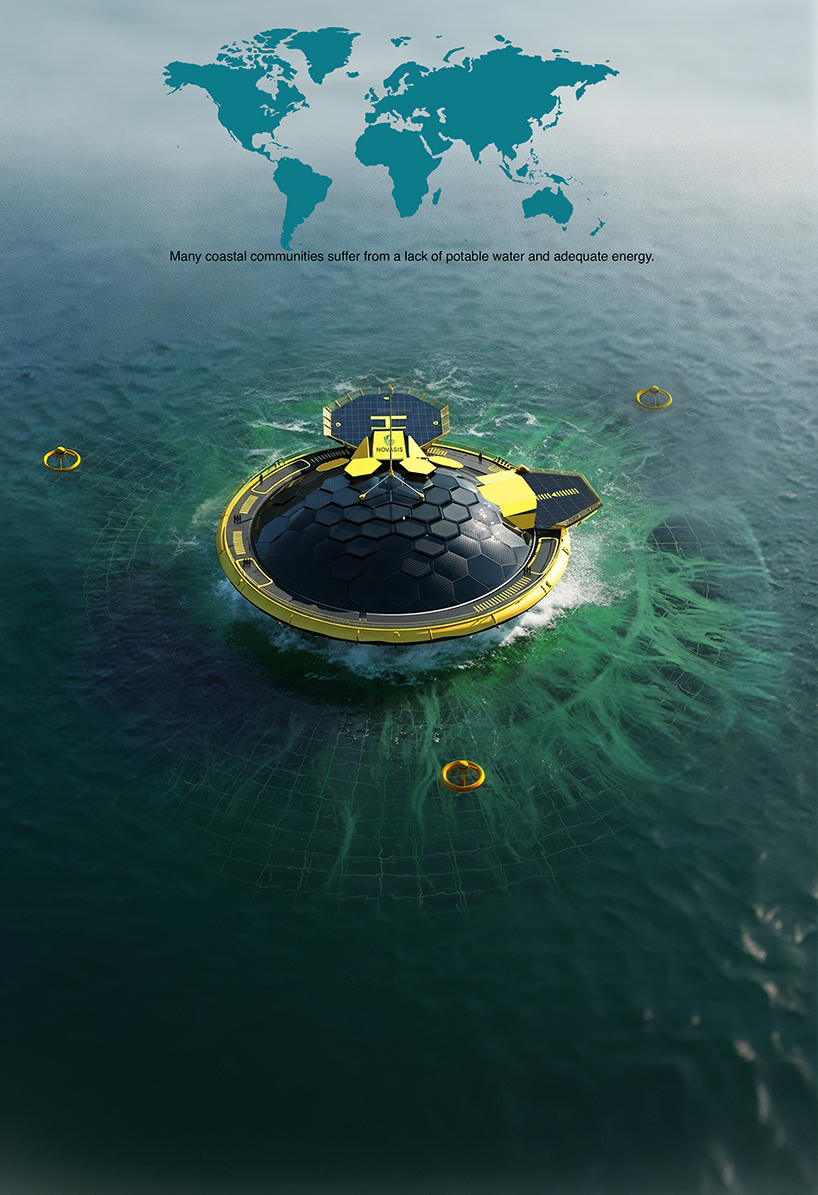
freshwater is produced through rainwater harvesting and solar- and wave-powered desalination
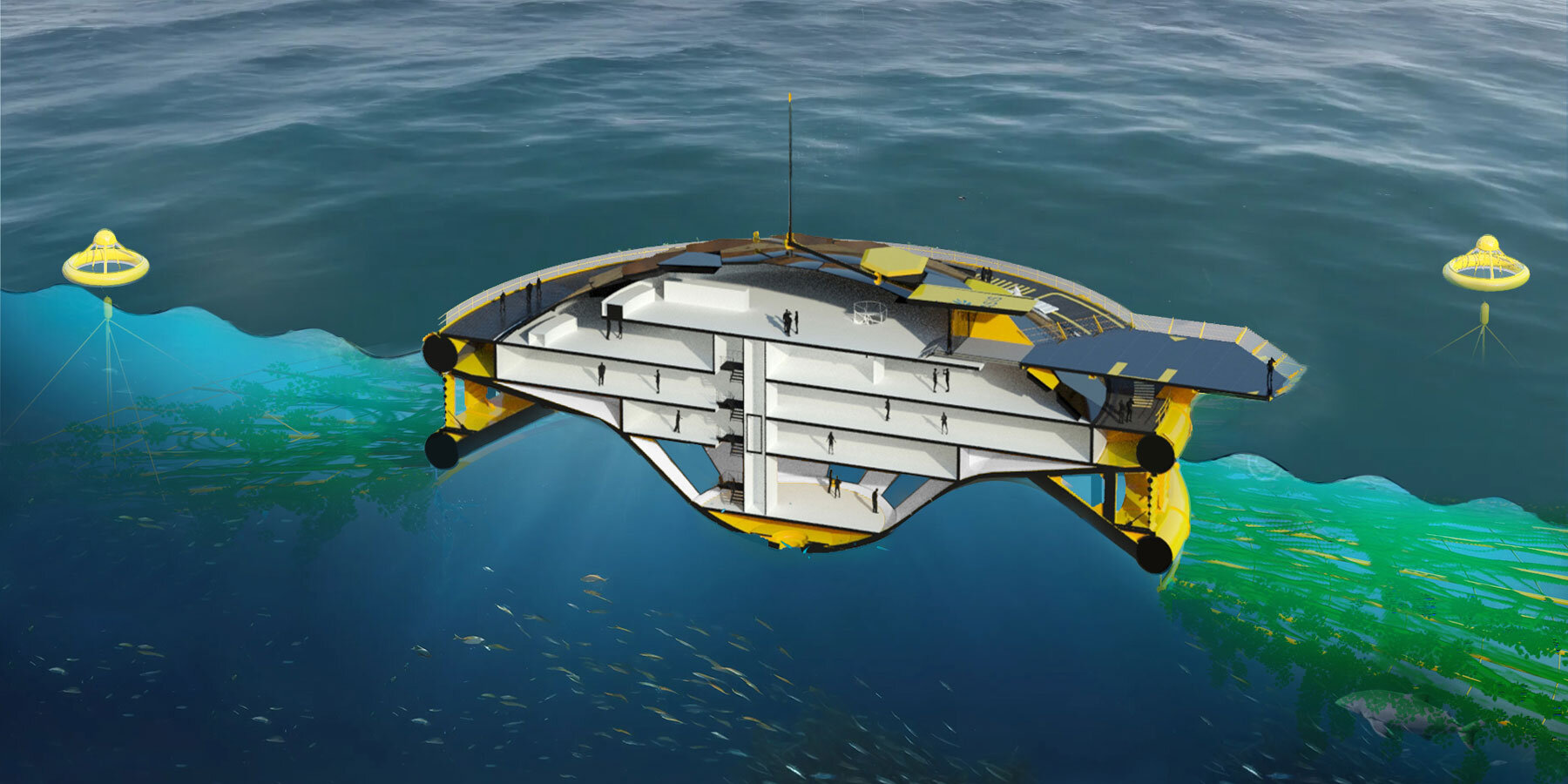
a central dome and perimeter walkway organize circulation across the floating structure
project info:
name: NOVASIS
designer: Mohsen Laei | @mohsenlaei
designboom has received this project from our DIY submissions feature, where we welcome our readers to submit their own work for publication. see more project submissions from our readers here.
edited by: christina vergopoulou | designboom
algae (40)
 Feb 05, 2026
 Aug 13, 2025
 Jun 20, 2025
 May 29, 2025
 Dec 18, 2024
climate change (196)
 Jan 25, 2026
 Jan 16, 2026
 Jan 12, 2026
 Dec 31, 2025
 Nov 19, 2025
floating architecture (209)
 Jan 20, 2026
 Dec 06, 2025
 Nov 17, 2025
 Sep 03, 2025
 Aug 26, 2025
underwater architecture (22)
 Dec 01, 2025
 Aug 26, 2025
 Dec 06, 2024
 Nov 29, 2023
 Feb 14, 2026
 Jan 11, 2026
 Dec 08, 2025
 Dec 06, 2025