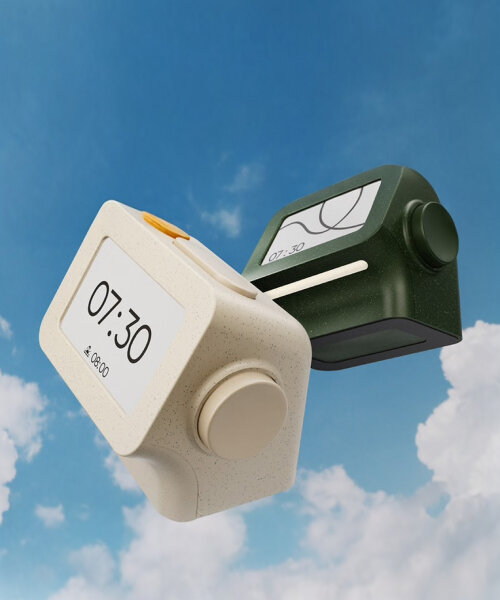
habity bedside clock uses e-paper display to reduce users’ screentime and blue light exposure
a compact gadget, it operates without a Wi-Fi connection, mobile apps, or subscription services, and users control all functions directly through the clock interface.
prefer designboom on google[FEATURED]
E-paper display for compact habity bedside clock
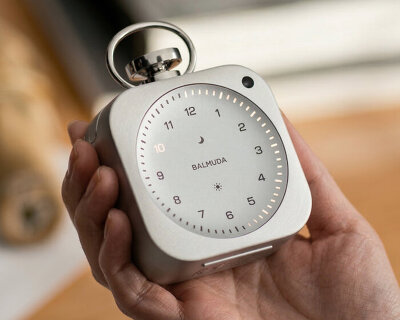
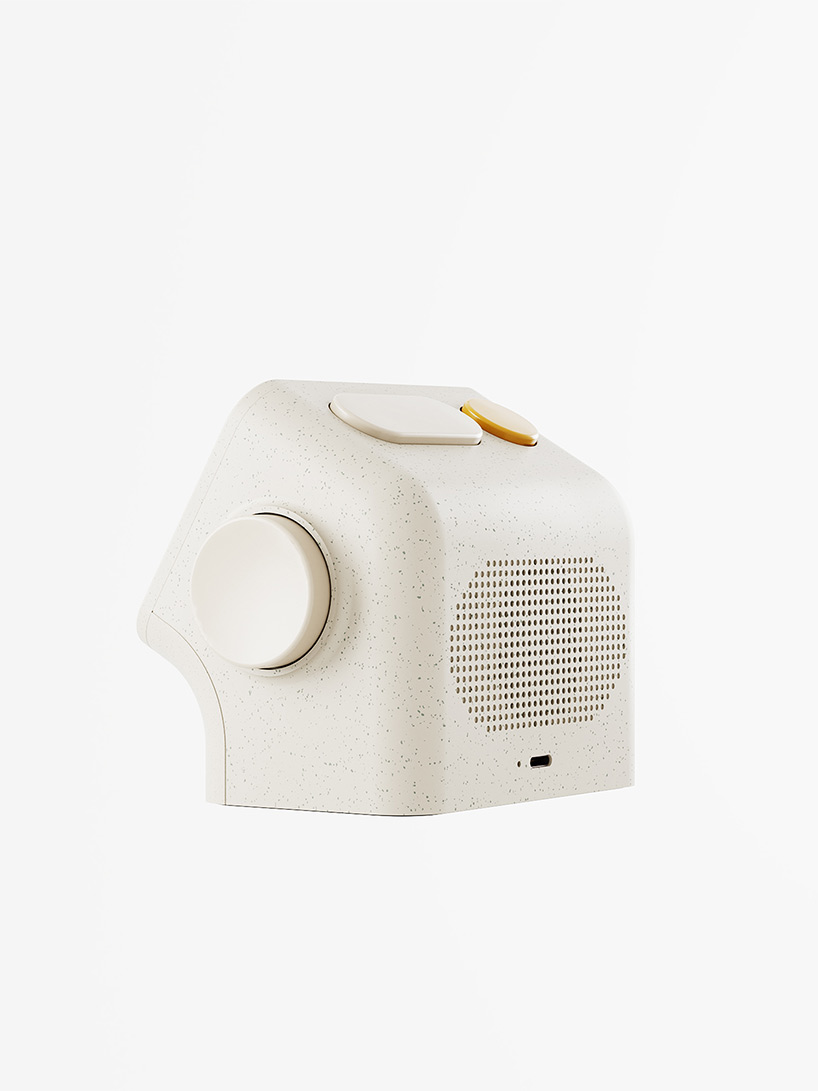
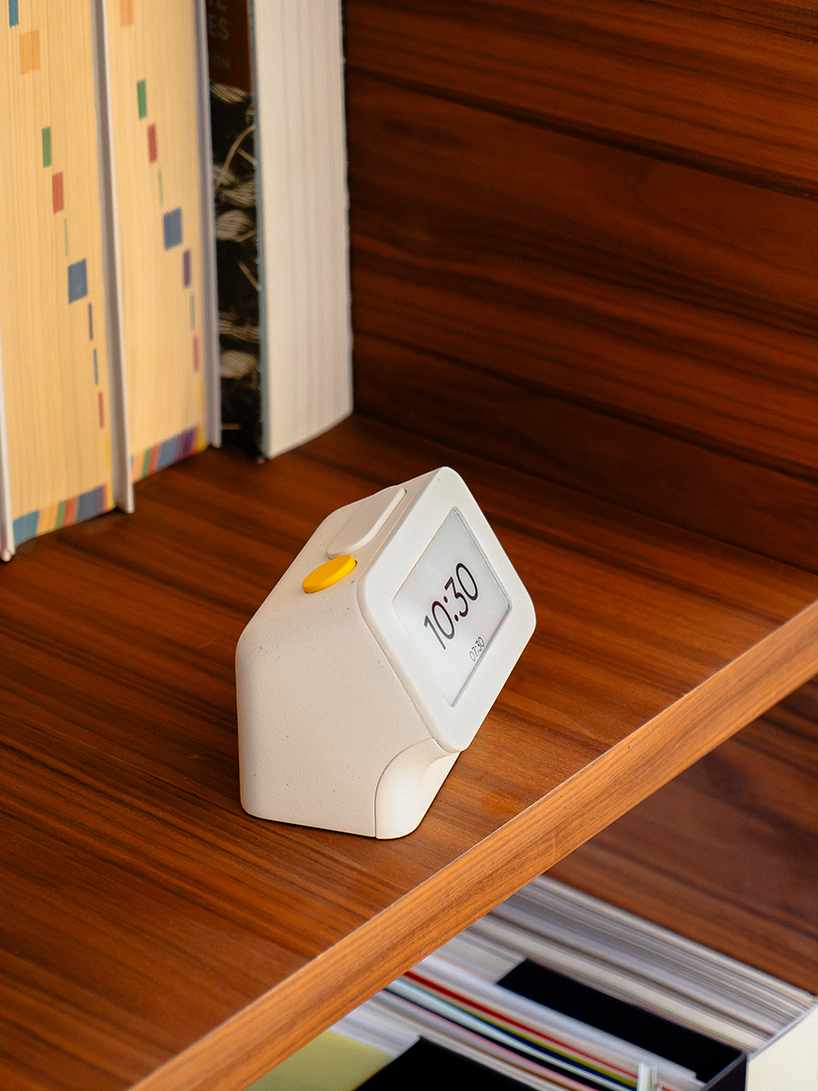
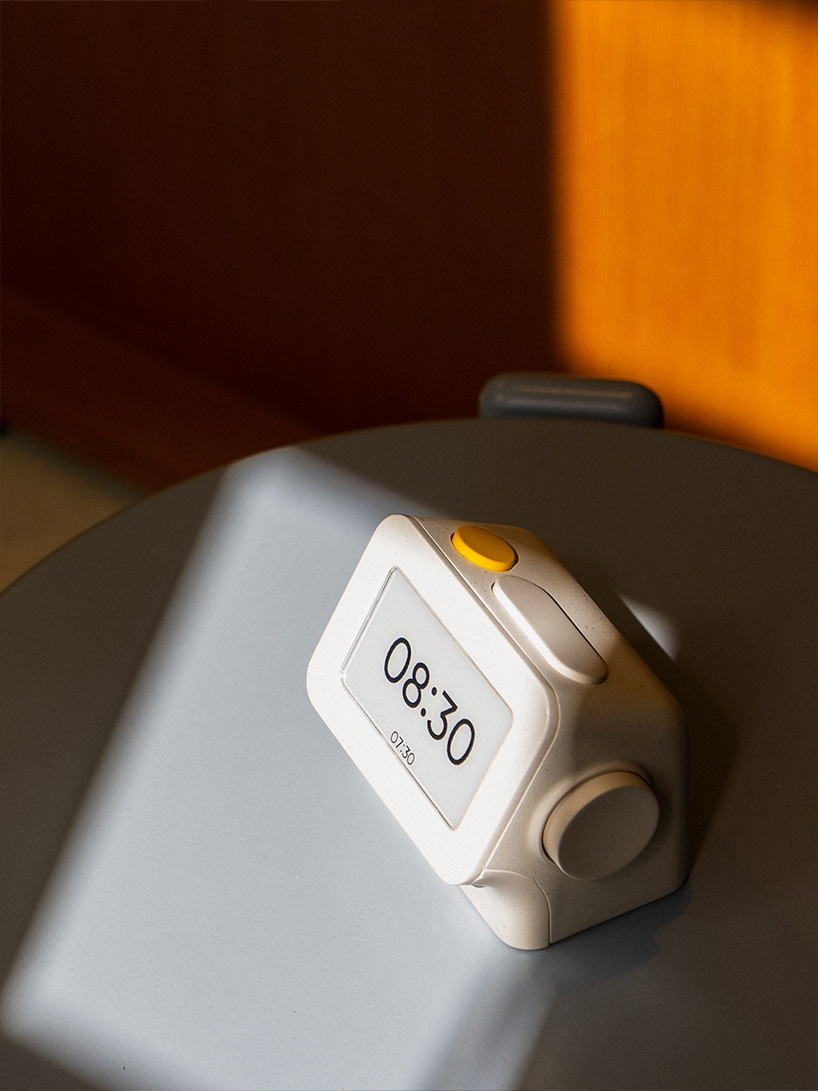
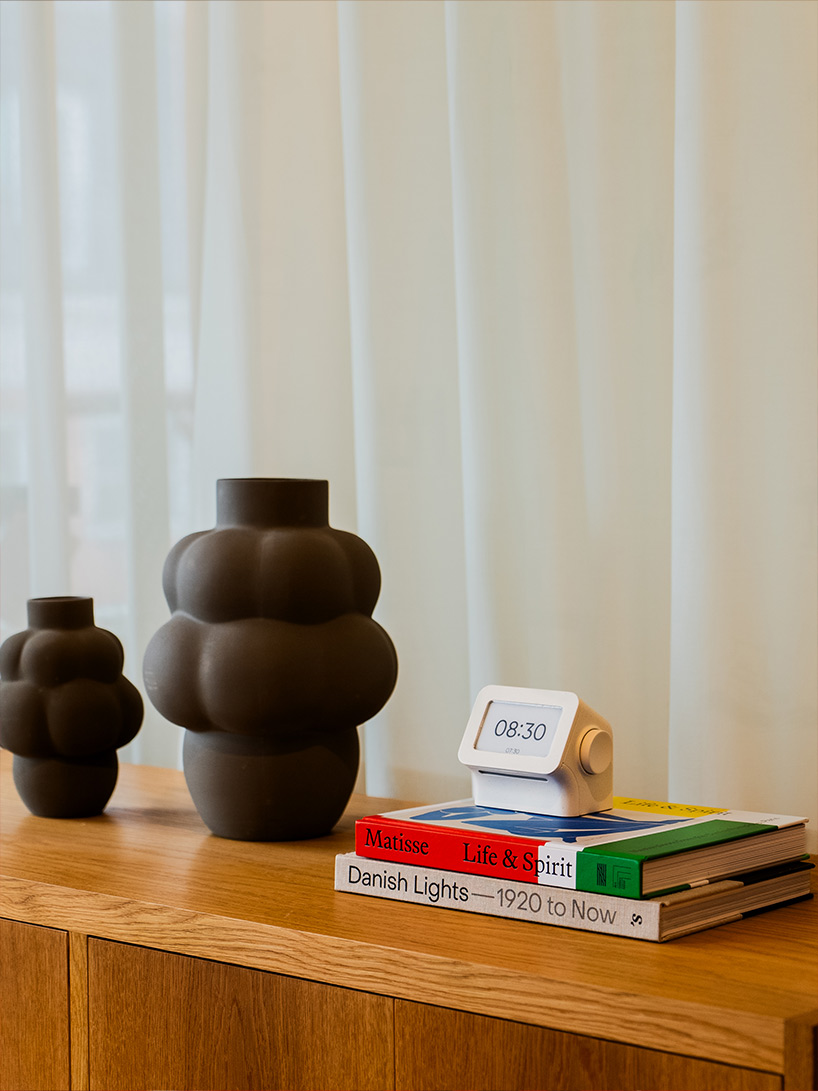
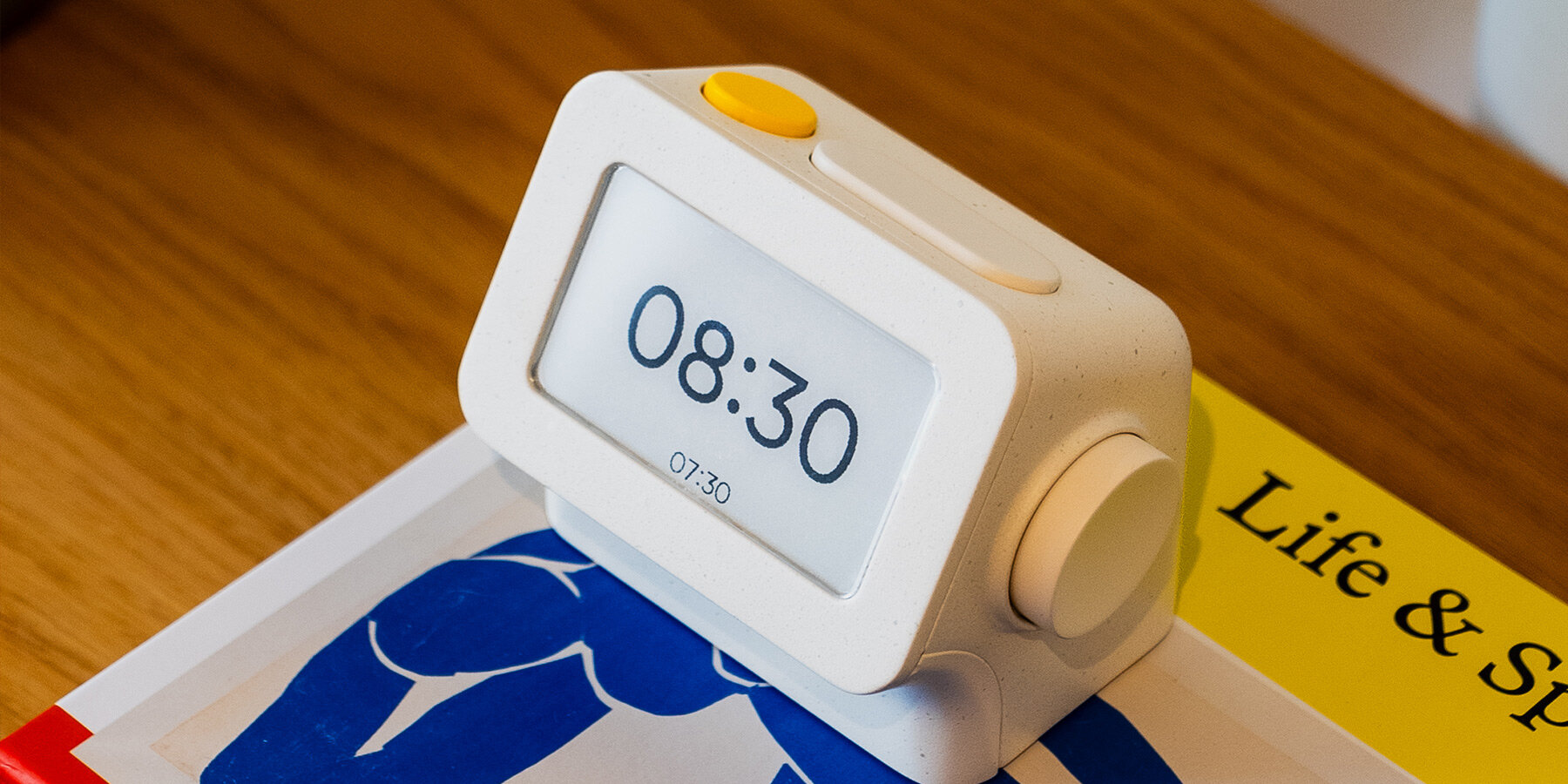
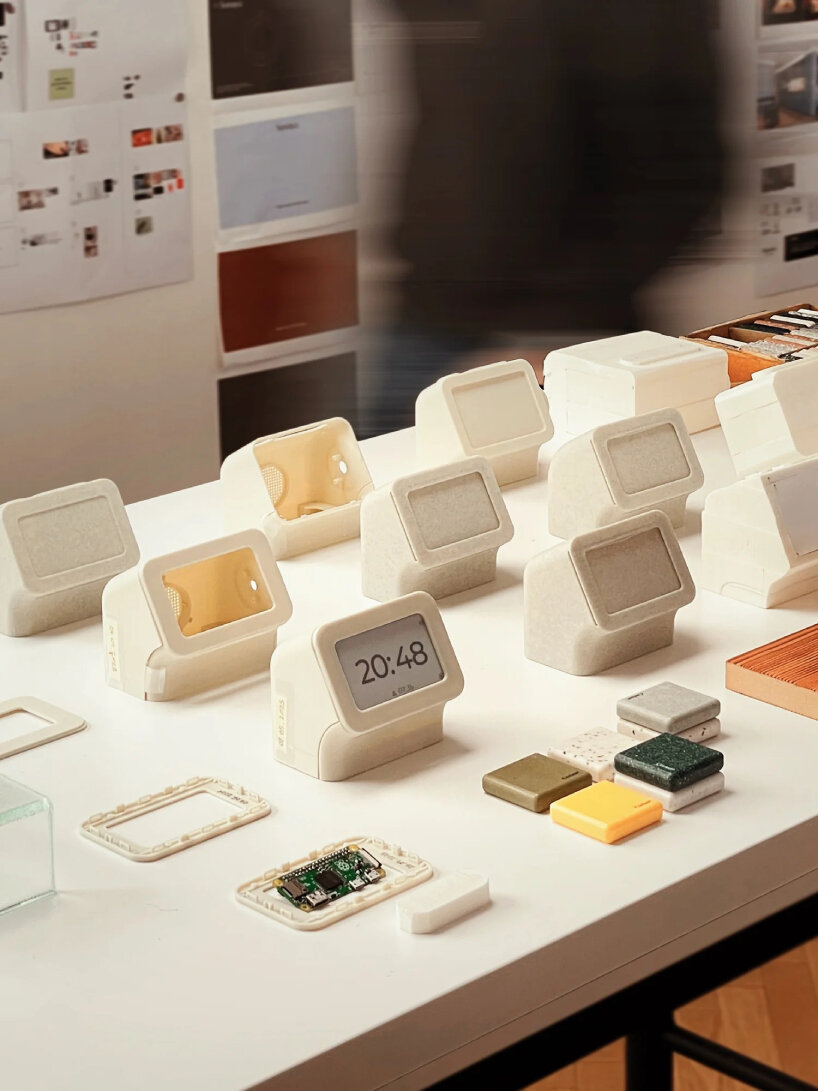
Habity Bedside Clock switches to an e-paper display to reduce users’ screentime and their exposure to the devices’ blue light filter. A compact gadget, it operates without a Wi-Fi connection or mobile apps, and users control all functions directly through the clock interface. The clock contains multiple wake-up tone options that gradually increase in volume. Sleep sound functions play throughout night hours to support rest periods, and there’s even a wind-down experience that activates before bedtime to signal offline time.
The device uses e-paper display technology that produces zero blue light emission, so this technology maintains visibility while avoiding blue light that disrupts circadian rhythms. It also consumes power only when changing information on screen. The display shows time, alarm settings, and function status, letting users read information in low-light conditions without additional illumination that can hurt their eyes. The e-paper screen of the Habity Bedside Clock remains visible during day and night hours and regardless of the lighting conditions.
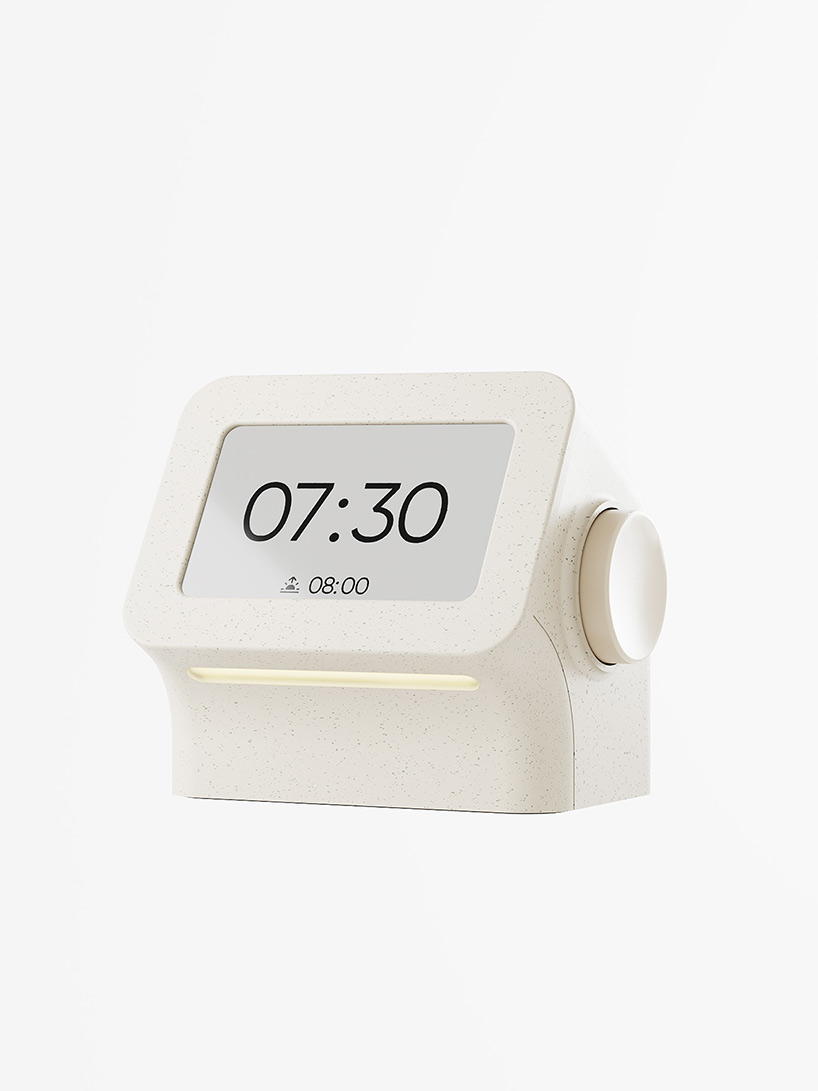
Blue-light-filter-free Clock that doubles as nightlight
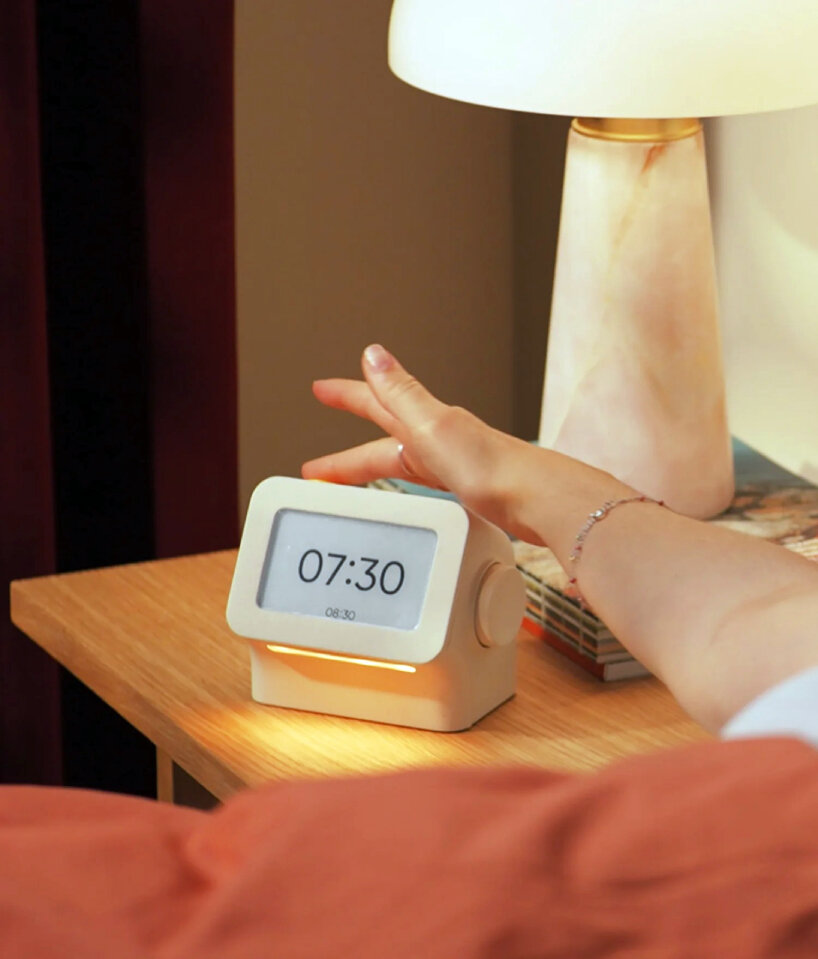
The time teller connects to existing smart home lighting systems in bedrooms, so it can synchronize with smart bulbs and lighting fixtures through wireless protocols. Users can even program a gradual light increase before alarm activation. The Habity Bedside Clock with e-paper display also comes with a sunrise simulation function, which allows the lights to fade from zero brightness to full illumination over a programmed time period. This is a feature tailored for limited natural light, such as the one experienced in winter seasons.
The gradual lighting change occurs before the alarm rings. The clock also doubles as a nightlight so users waking up at night can still faintly see their surroundings. They can activate the light manually or program automatic activation, and the nightlight uses a warm color temperature that reduces impact on sleep patterns. Brightness levels adjust through controls, with the light turning off automatically after preset time periods. The device is powered by USB-C, and it also has a built-in backup battery that can last between 12 and 24 hours. At the present time, the campaign is set to launch in September 2025; during then, the design team is expected to announce the delivery date.



1/3
project info:
name: Habity Bedside Clock | @habity.design
team: Peter Arvad and Jesper Westendahl
designboom has received this project from our DIY submissions feature, where we welcome our readers to submit their own work for publication. see more project submissions from our readers here.
shop
your own online design shop — no sales commission collected