
meet iPhone duo: apple’s first foldable smartphone
the 'duo', apple’s first foldable iphone, pairs two screens with a 100-part hinge, opening into a 7.6-inch workspace.
prefer designboom on google[FEATURED]
APPLE PUTS TWO SCREENS INTO ONE FOLDING BODY
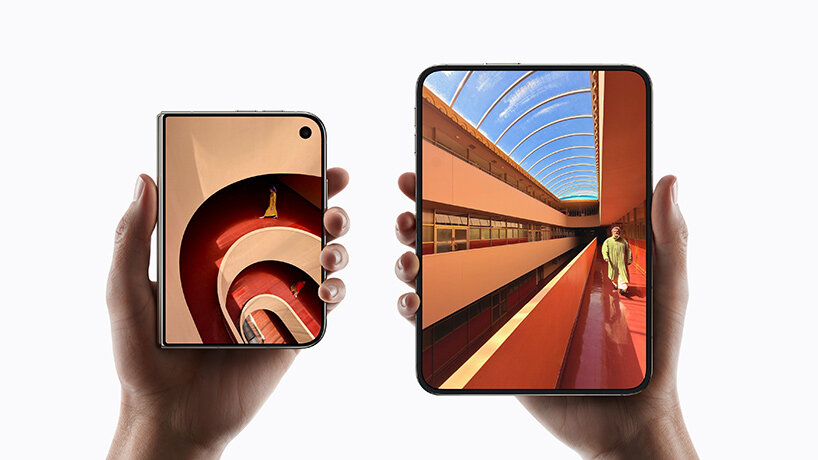
Apple’s first foldable iPhone starts with a familiar idea: a phone that still works like an iPhone when it is closed. The difference arrives when the device opens. iPhone Duo pairs a 5.4-inch outer screen with a 7.6-inch inner display, turning something pocket-size into a much larger surface for reading, watching video, drawing, or keeping two apps open side by side. Both screens use the same proportions, so whatever is on screen carries across without the abrupt resizing that can make folding devices feel like two separate products.
The inner display gets some of the most interesting design attention. Apple has given it a nano-textured surface that cuts glare and softens the visual presence of the center crease, while the FaceTime camera disappears beneath the screen when it is idle. Apple Pencil support is coming later in the year, which pushes the larger display closer to sketchbook territory without turning the smartphone into a tiny tablet.
Apple introduces iPhone Duo as its first foldable iPhone
AN IPHONE WITH A HINGE
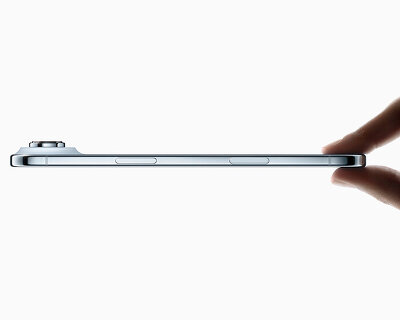
A foldable smartphone lives or dies by the feeling of opening it, and Apple has spent a surprising amount of the iPhone Duo’s hardware story on that movement. The titanium hinge uses more than 100 components, with a 3D-printed cover and internal reinforcement running through the frame. Beneath the folding screen, layers of glass and polymer are bonded so they can slide slightly past one another as the device bends, a movement Apple compares to pages shifting inside a book.
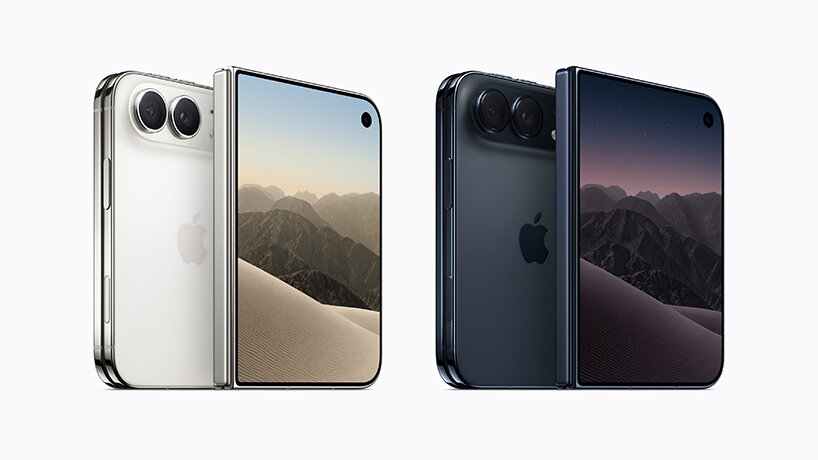
That engineering stays mostly invisible, which is probably the point. What the user sees is a thin polished object in star white or night sky, with the two halves closing into a conventional-looking phone. Touch ID sits in the side button, keeping authentication accessible in either position. The outer screen remains useful enough that opening the device can feel like a choice instead of a requirement.
THE CAMERA FINDS A REASON FOR THE SECOND SCREEN
The folding body becomes more playful around the camera. Turn the phone toward someone and the outer display can become a live preview, letting the subject see the frame while another person shoots with the rear camera. It also means selfies can use the higher-resolution rear cameras. A feature called Smart Take watches for the moment people are posing and can capture the image automatically. Kid Cue runs Peanuts animations on the outer screen to get children looking toward the lens.
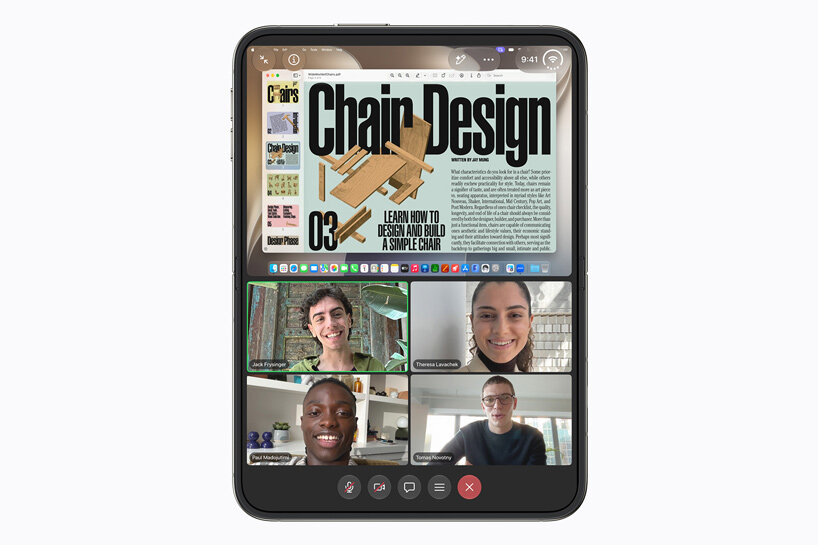
The phone can also prop itself up for video calls or longer recordings without an extra stand. During FaceTime, people beside the caller can appear on the outer display, creating a second view across the folded body. These are small ideas, but they make the hinge feel useful beyond the basic trick of making a larger screen fit inside a pocket.
IOS 27 STARTS TREATING THE PHONE LIKE A SMALL WORKSPACE
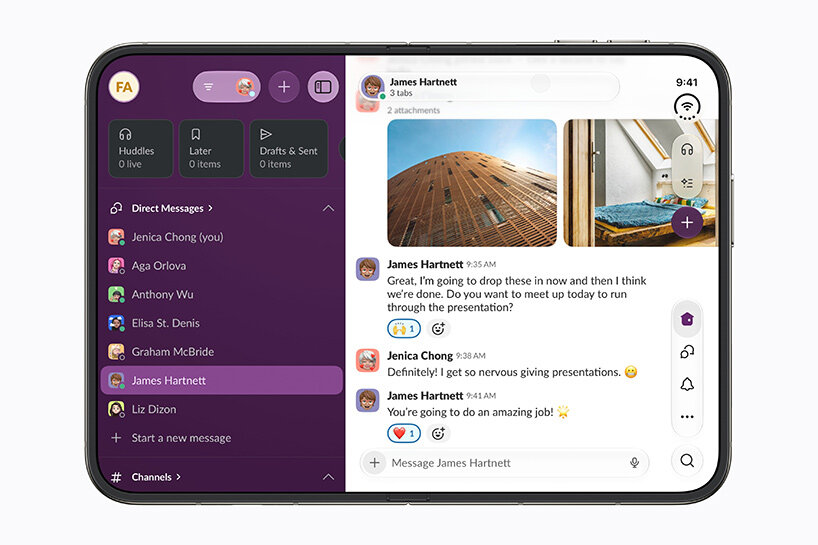
The larger screen changes the software too. In iOS 27, the open phone can show two Home Screen pages at once and place apps side by side in Split View. App pairings can be saved for later. Apple has also shifted familiar interface elements toward the sides of the display to free up vertical space, while the system reacts as the device closes or rotates and shifts between screens as needed.
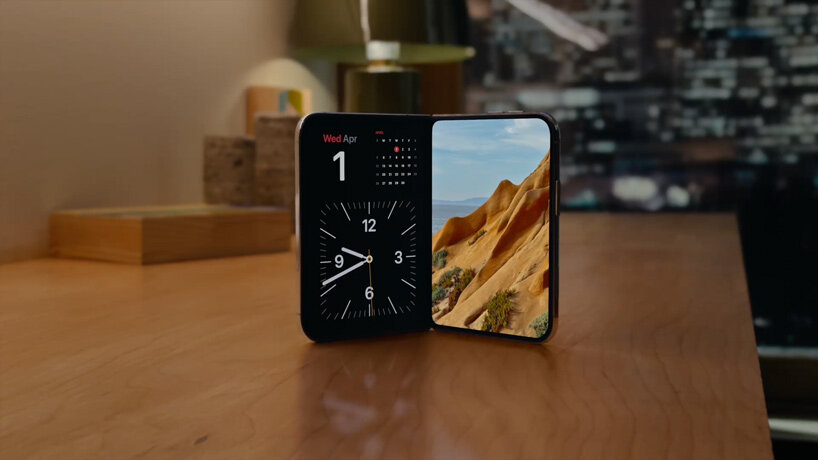
Set the iPhone Duo on a table and StandBy can run on either display even while the phone is off the charger, turning the device into a clock or photo frame with widgets alongside. It is one of the simpler additions, and one of the easiest to imagine becoming part of how the object sits around the house. iPhone Duo starts at $1,999, with pre-orders opening October 16th and availability beginning October 23rd, 2026.
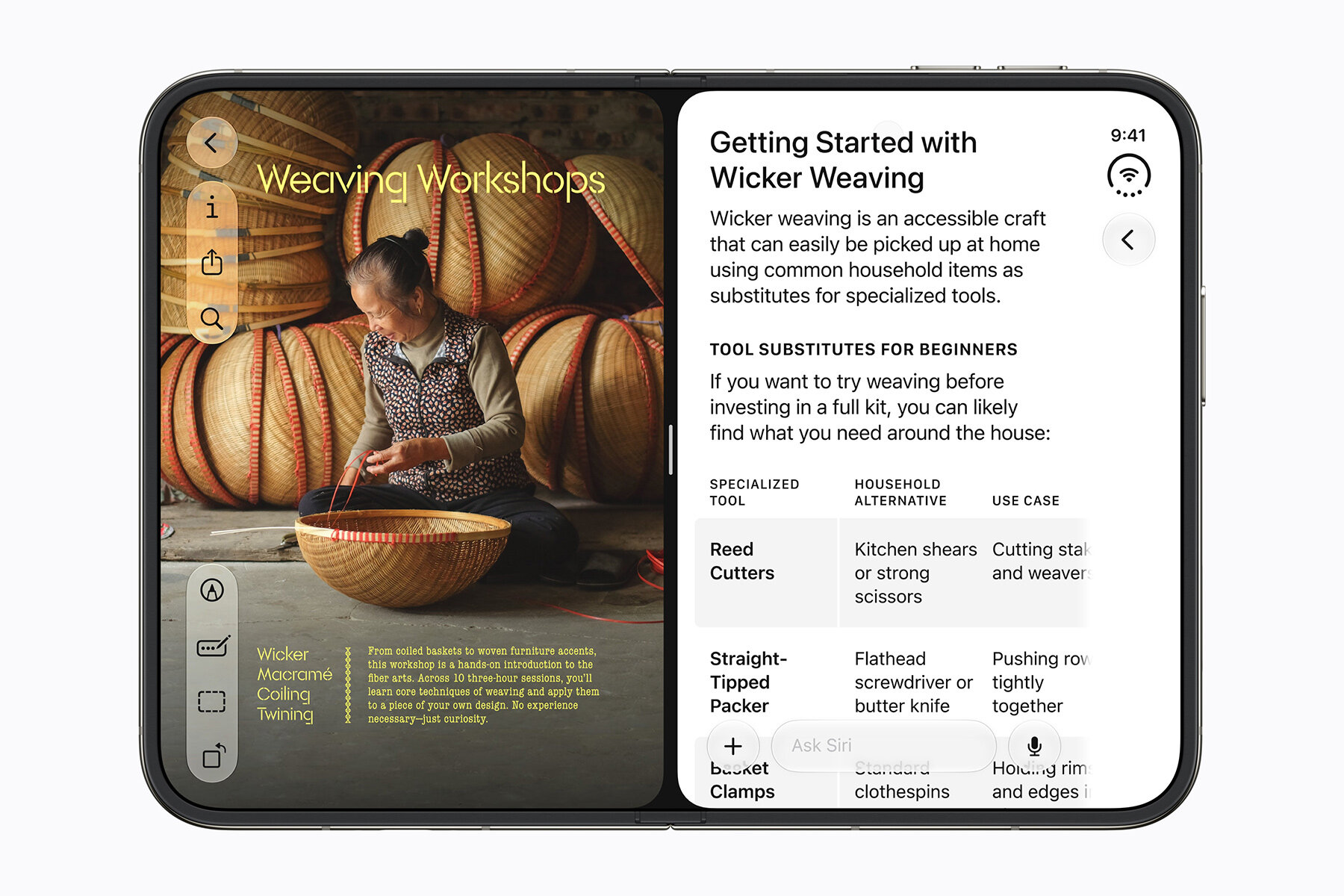
opened, iPhone Duo reveals a 7.6-inch inner display with a nano-textured finish
the inner screen uses a matte surface designed to reduce glare and soften the center crease

shop
your own online design shop — no sales commission collected