
lassie robot dog pairs quadrupedal mobility with a soft removable knitted suit
lassie is designed to accompany walking, running, travel, and everyday routines.
prefer designboom on googlea robot dog designed around movement and social interaction
Lassie is a Next-Physical Companion developed around the ways dogs encourage people to spend time outdoors and stay active. The project examines how living alongside a robotic companion could influence everyday routines, social interactions, and movement. Combining quadrupedal mobility with a customizable physical system, Lassie is designed to accompany users across different environments and activities.
The project began with an observation of the role dogs play in shaping daily behavior. A survey of more than 50 dog owners identified recurring experiences that extended beyond physical activity, including initiating conversations with strangers, remaining active for longer periods, and taking unfamiliar routes by following their dogs. These observations resonated with the existing concept known as the ‘Lassie Effect,’ which describes how living with a dog can encourage healthier and more active habits. This concept inspired both the project’s name and its exploration of companionship through robotics.
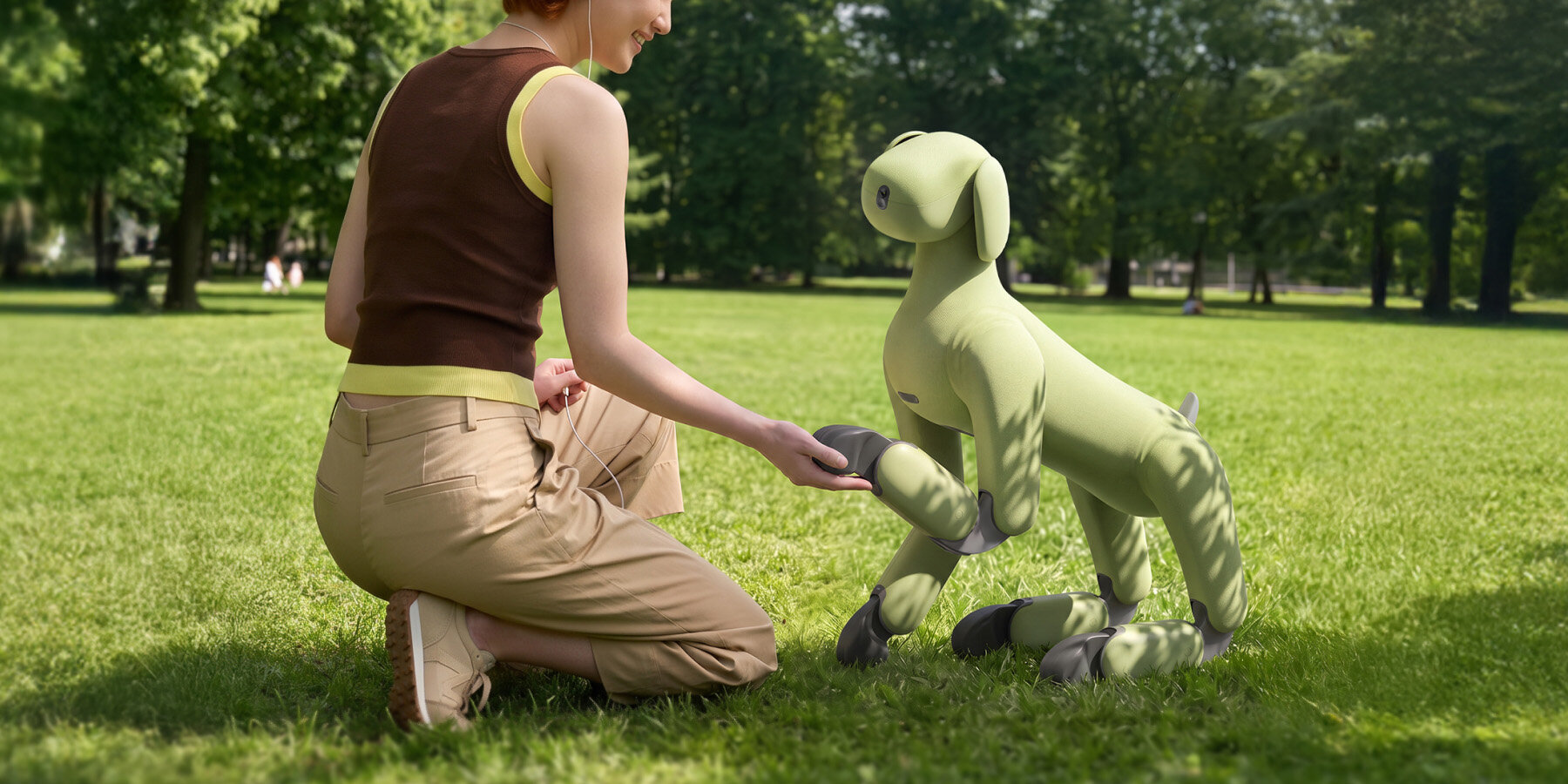
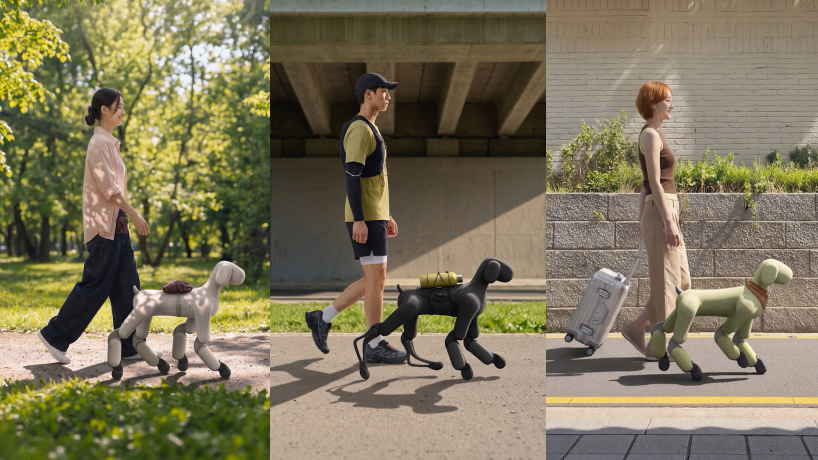
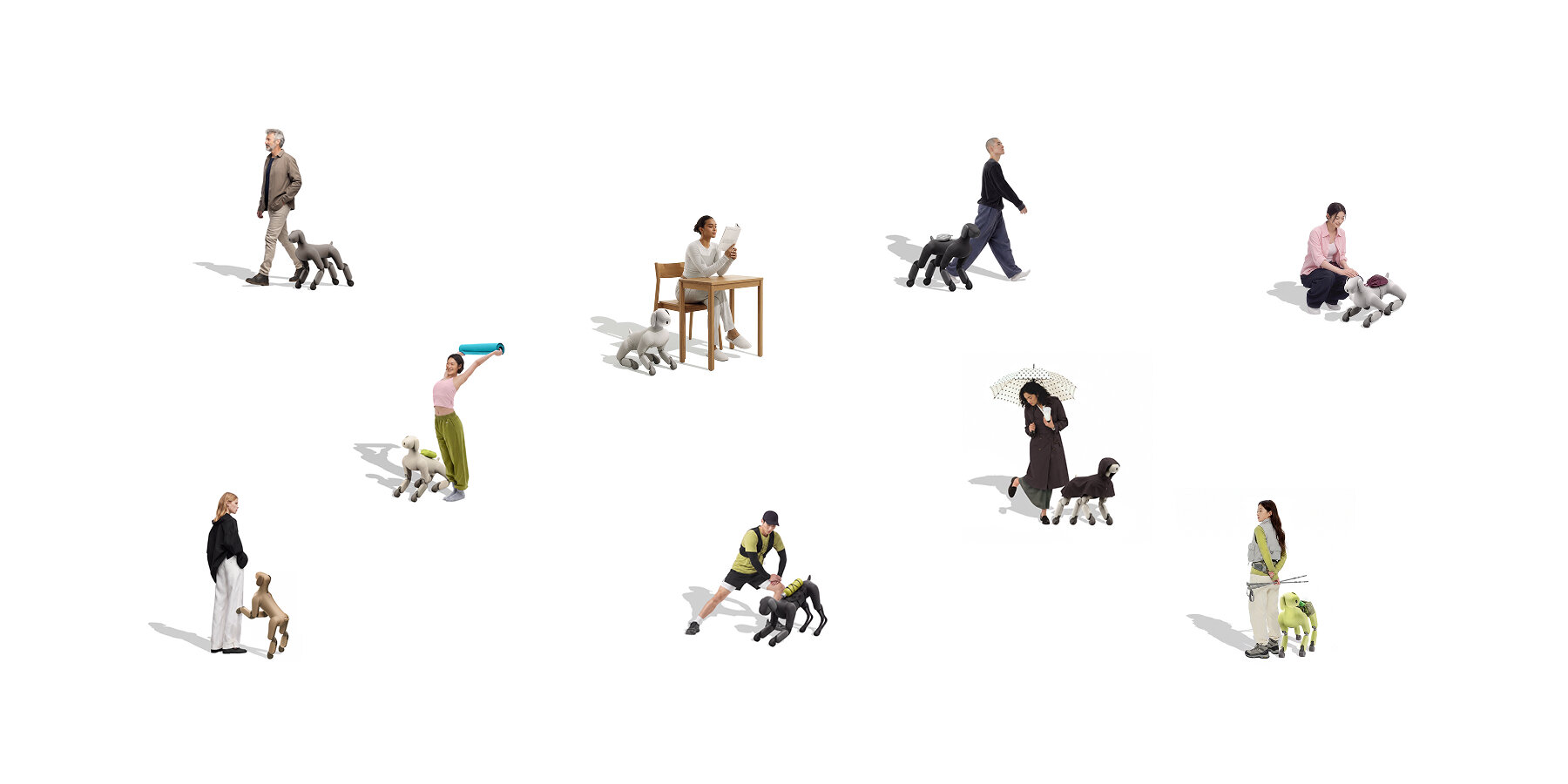
Designed as a Next-Physical Companion, Lassie combines the mobility of a quadrupedal robot with characteristics associated with companion animals. It is designed to move alongside users across indoor and outdoor environments, accompanying activities such as walking, running, and travel. Through these shared movements, the system is intended to support social interaction, regular activity, and discovery of places aligned with the user’s interests.
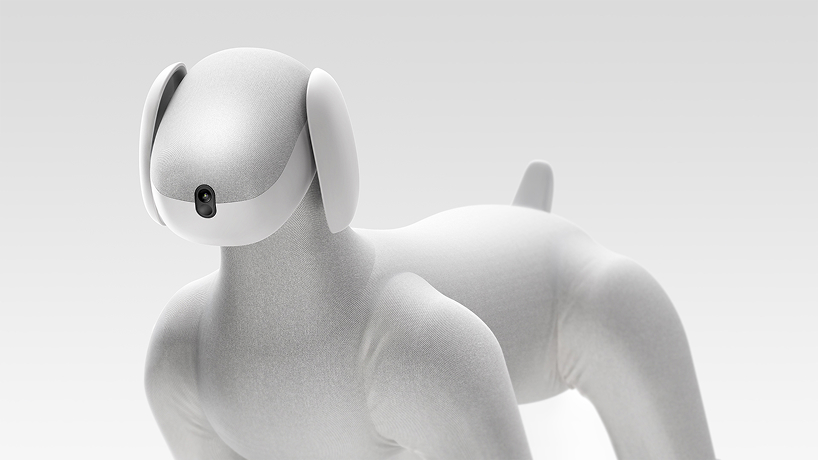
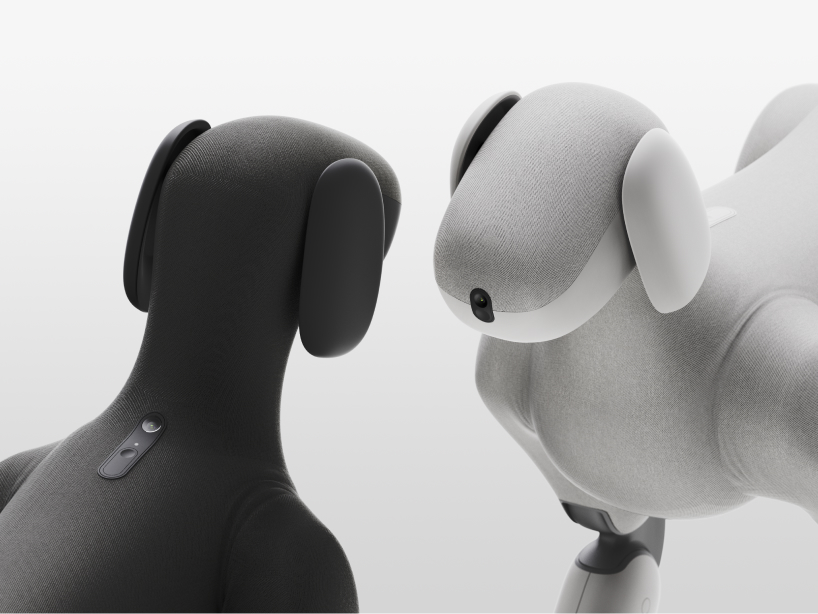
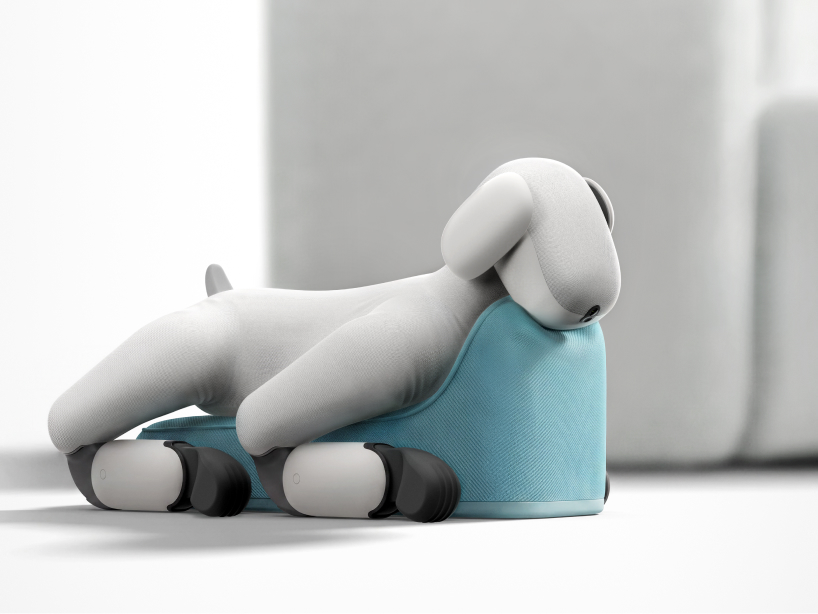
a knitted textile suit softens Lassie’s mechanical structure
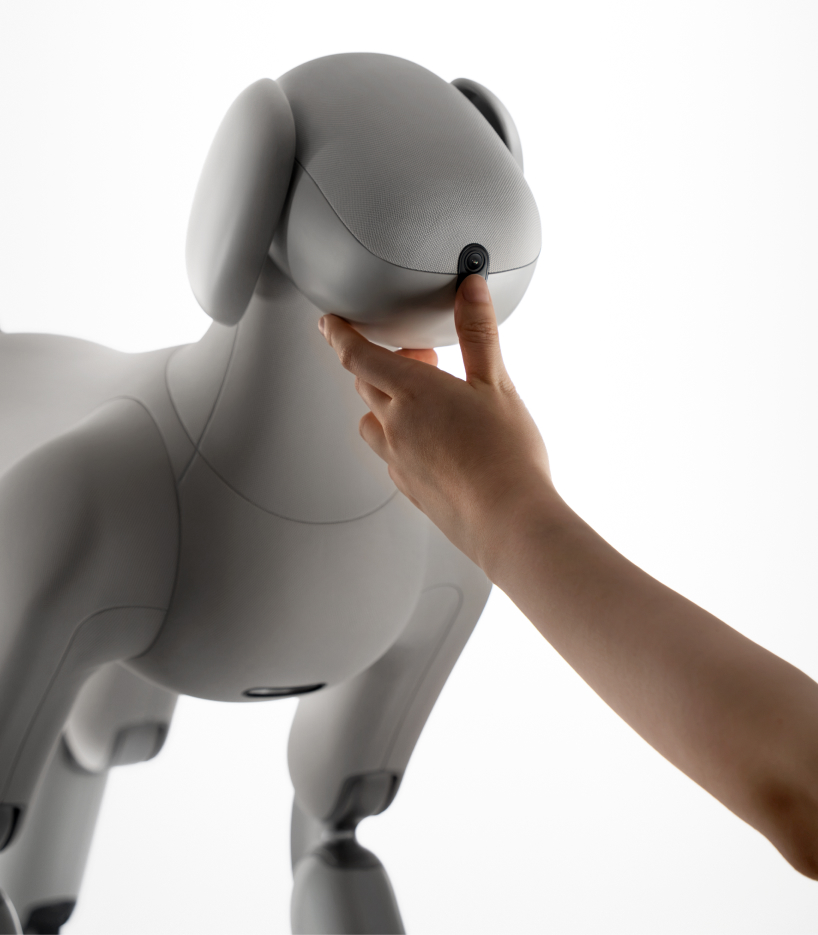
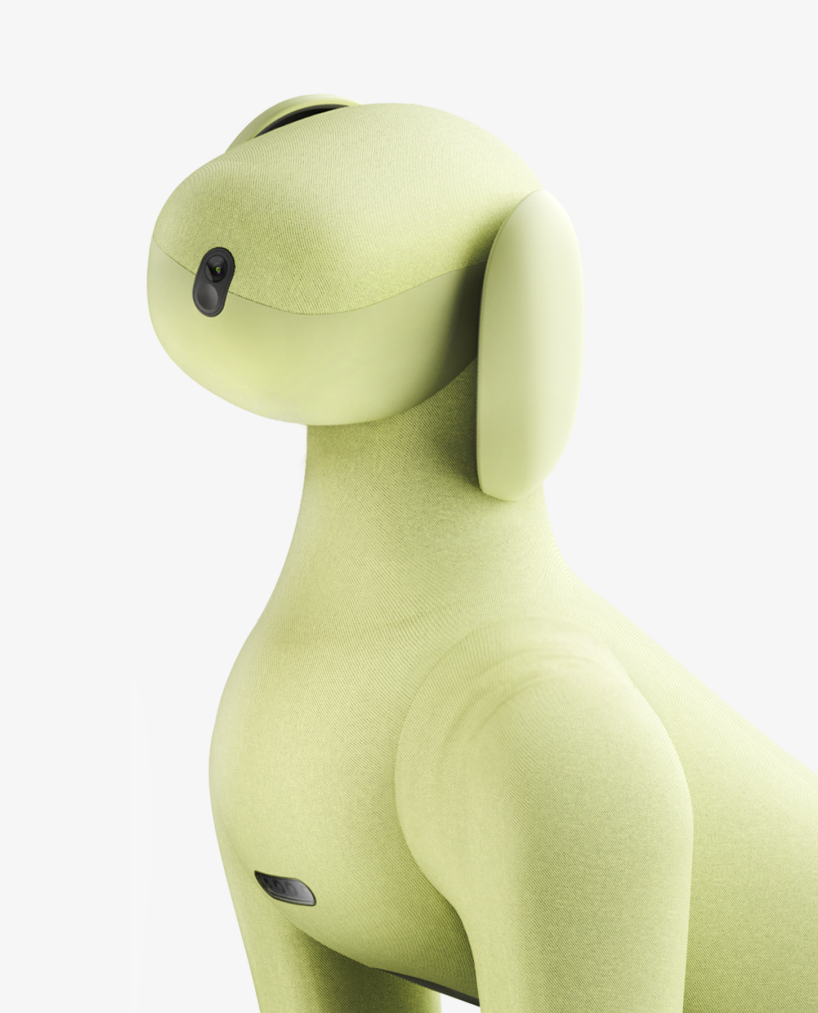
Communication is primarily based on non-verbal interaction. Gestures, gaze, movement, and subtle head lighting communicate Lassie’s intentions and states without relying continuously on voice commands or screen-based interfaces. When additional information is required, these physical interactions connect to a mobile service. Over time, shared activities and experiences are recorded, enabling Lassie to learn patterns in the user’s preferences and daily routines and use them to suggest activities.
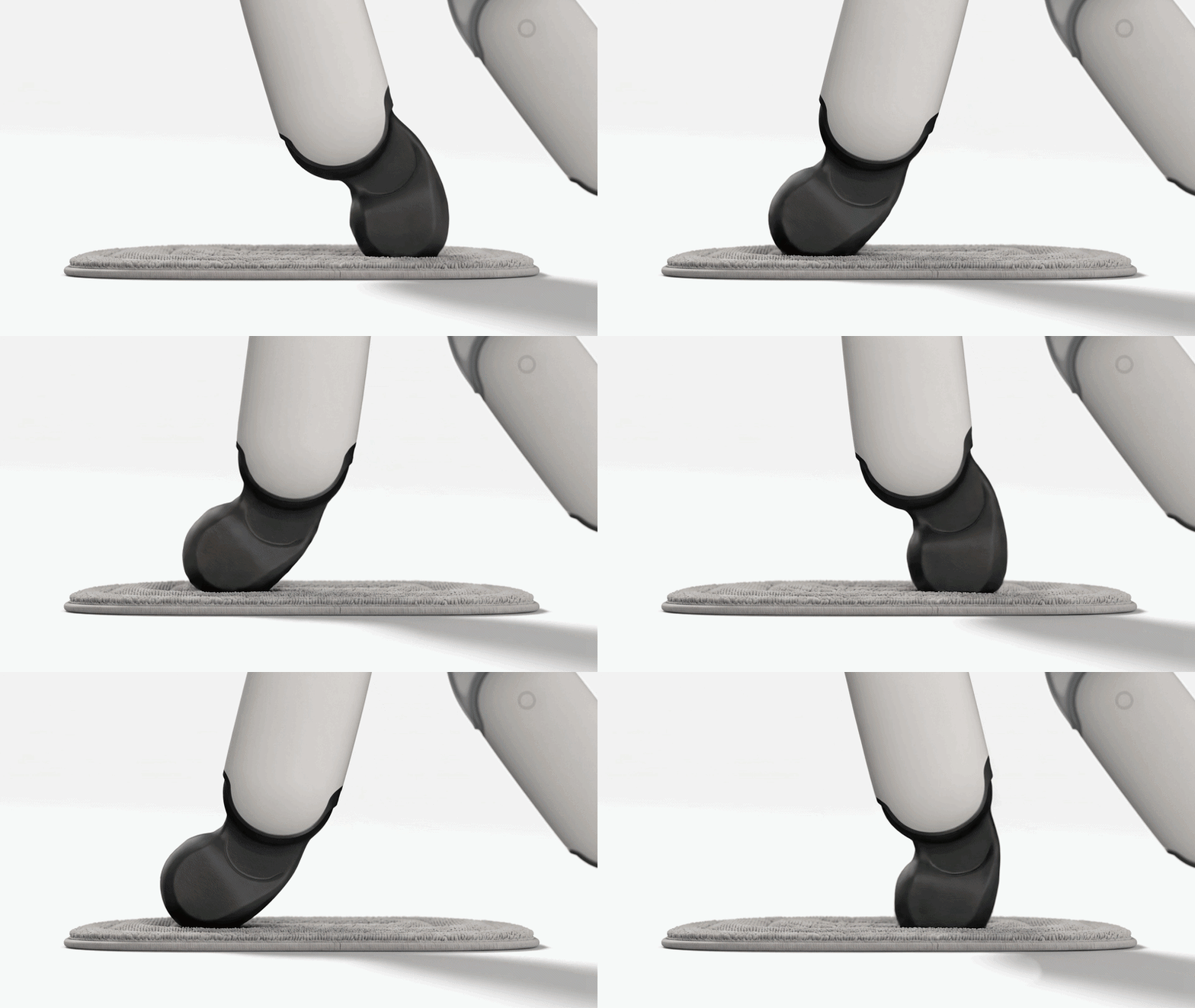
The physical design is developed for use across domestic and outdoor settings. A quadrupedal mechanism provides mobility across different surfaces, while the mechanical structure is partially enclosed by a removable knitted fabric suit made with water- and stain-resistant CORDURA® yarn. More exposed areas retain hard components to address impact and contamination, creating a combination of protective surfaces and softer textile elements.
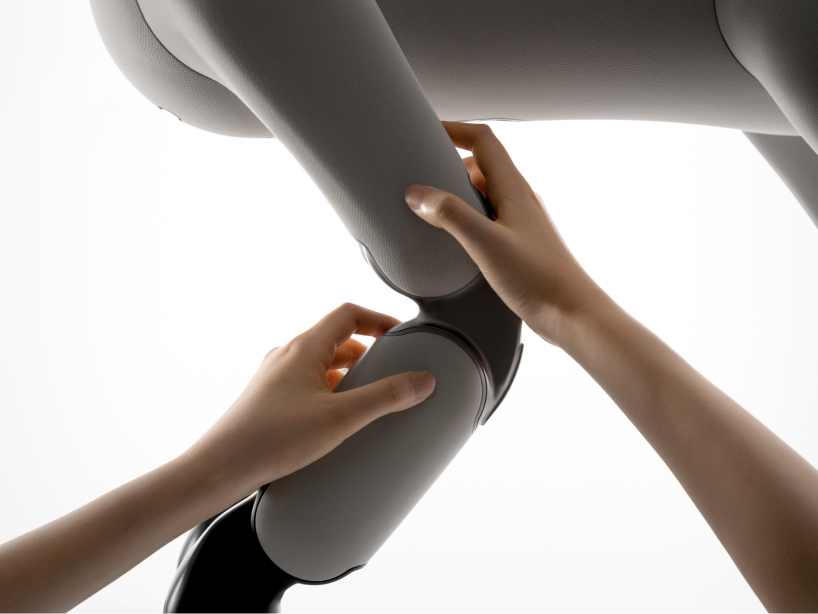
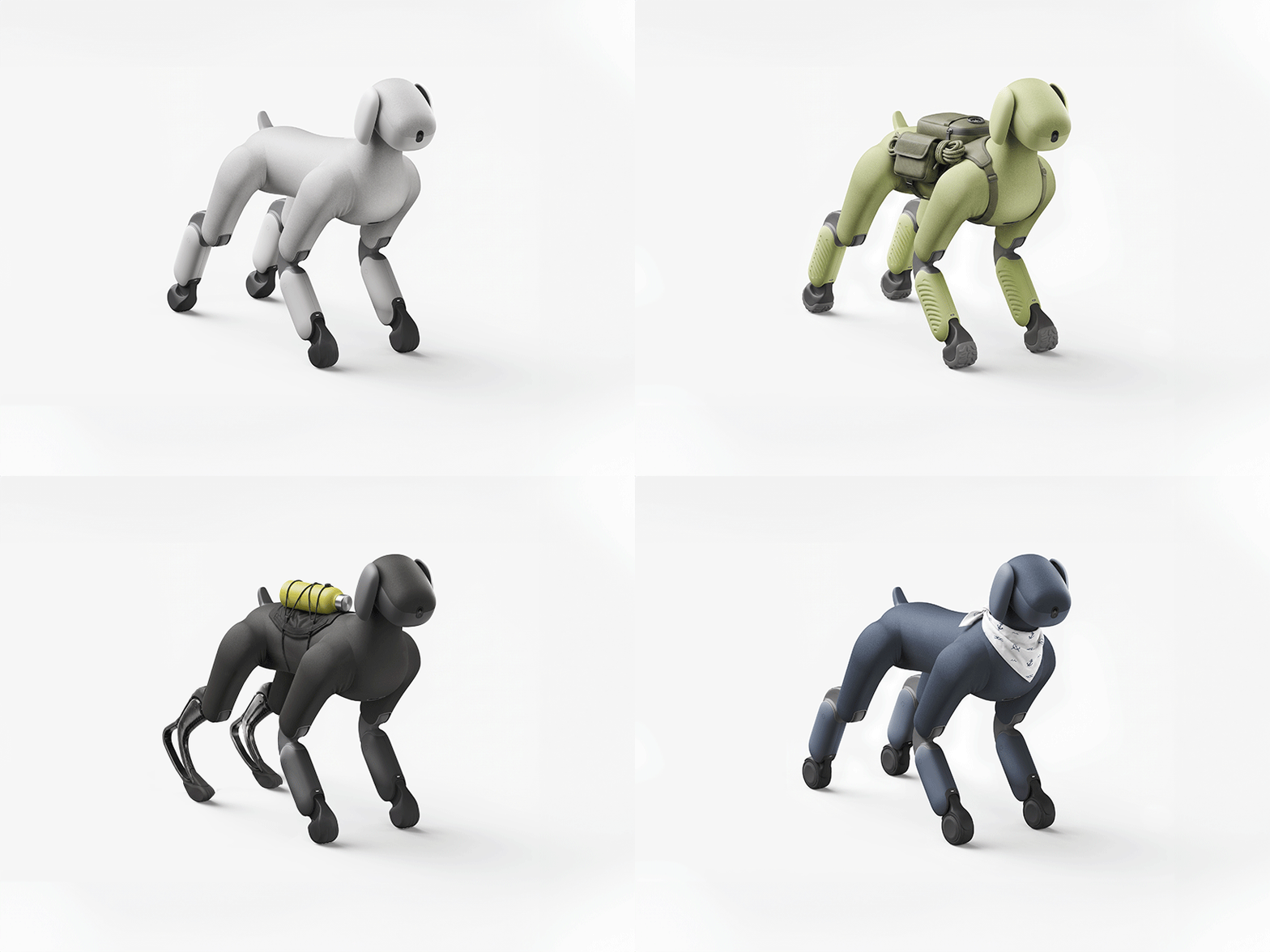
Lassie, developed by designers Jungmin Park, Hyeonji Yang, Junghyun Kim, and Byeol Jang from Samsung Design Membership, can also be configured for different forms of movement through interchangeable leg modules. Basic legs are intended for everyday walking, while Explore, Running, and Wheel modules extend the system to trails, running, and quieter indoor movement. Replaceable fabric suits and accessories provide additional customization, allowing the appearance of each unit to correspond to different users and activities. Lassie examines the role a companion robot could play in everyday life beyond task-based functionality. Its combination of physical mobility, non-verbal communication, modular components, and adaptive services positions the robot as a system designed to participate in routines, movement, social interaction, and exploration.
project info:
name: Lassie
affiliation: Samsung Design Membership
design team: Jungmin Park, Hyeonji Yang, Junghyun Kim, Byeol Jang
designboom has received this project from our DIY submissions feature, where we welcome our readers to submit their own work for publication. See more project submissions from our readers here.