melo-D foldable AI guitar turns humming into playable music, rethinking guided learning
the instrument uses illuminated frets to guide players in real time in a rhythm-game-inspired interface.
[FEATURED]
Melo-D AI guitar rethinks Music learning through AI guidance
Melo-D is a compact AI-powered instrument that combines generative music tools, guided learning systems, and a foldable guitar-like form factor into a single device. Developed by TemPolor, the project rethinks how users interact with musical instruments by replacing conventional music training methods with visual prompts, AI-assisted composition, and simplified chord systems.
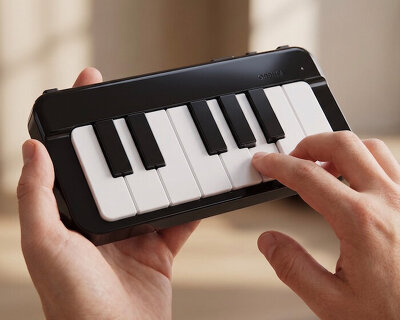
At first glance, Melo-D resembles a hybrid between a travel guitar, a gaming controller, and a touchscreen device. The instrument folds down to backpack size through a hinged body system, allowing it to collapse into a compact portable format without disassembly. Integrated directly into the body is a 2.4-inch LCD touchscreen that functions as the primary interface for navigation, chord guidance, rhythm prompts, lyrics, and AI-generated content. The system is designed to operate independently without requiring a connected smartphone during use.

Melo-D AI guitar turns hummed melodies into playable tabs
The project conceived by designers at TemPolor focuses heavily on reducing the technical barriers associated with learning guitar. Instead of relying on traditional notation or fret memorization, Melo-D uses illuminated guidance systems embedded into the neck to indicate finger placement in real time. Color-coded ‘Rainbow Strings’ and illuminated fret markers guide users through songs note by note, while the display provides rhythmic timing cues. The setup recalls rhythm-game interfaces, positioning performance as a visual and tactile interaction.
Melo-D also integrates a series of AI-driven music generation tools that shift the instrument from a playback device into a lightweight composition platform. Through AI Jam mode, users can generate playable backing tracks by selecting combinations of tones, genres, and stylistic ‘vibes.’ Categories range from acoustic and electric guitar presets to lo-fi textures and digitally processed tones, paired with genres including rock, hip-hop, jazz, pop, and R&B. Additional modifiers such as vintage, modern, chill, or progressive alter the generated output before users begin playing along.
The instrument’s ‘Hum-to-Solo’ feature extends this generative approach. Users can hum a melody directly into the system, which then converts the recording into a synchronized guitar arrangement mapped onto the illuminated fretboard. Similarly, uploaded songs can be analyzed and transformed into simplified tablature or chord arrangements through the platform’s AI Tab system, allowing users to follow visual prompts instead of reading sheet music.

blending portable hardware, AI tools, and visual interaction
Physically, Melo-D avoids the appearance of a traditional guitar in favor of a flatter and more graphic industrial design language. Rounded edges, illuminated interfaces, and simplified controls position the device somewhere between consumer electronics and musical hardware. While the instrument supports familiar actions such as strumming and chord transitions, its interface prioritizes accessibility and guided interaction over technical precision.
The hardware includes built-in speakers, headphone support, USB-C recording capability, and expandable sound libraries with multiple instrument voices beyond guitar, including piano, guzheng, percussion, and digital synth textures. A default seven-chord layout can be expanded into a twenty-one-chord configuration for more advanced arrangements, while software updates continuously introduce additional rhythm patterns and tonal presets.
Rather than replicating the experience of traditional guitar playing, Melo-D reframes the instrument as an adaptive music interface shaped by AI assistance, portability, and visual interaction. Positioned between instrument, educational tool, and generative music device, the project reflects a broader shift toward hybrid creative technologies, proposing an alternative relationship between users and music-making.


Melo-D converts uploaded songs or humming into playable tabs within minutes
project info:
name: Melo-D
designer: TemPolor | @tempolorguitar.official
founder: Jason Jia
AI lead: Blank Gong
hardware lead: Li Tian
shop
your own online design shop — no sales commission collected