NASA launches inflatable heat shield that protects spacecraft from crash landing
with NASA’s LOFTID, the inflatable heat shield becomes the brake pedal of the spacecraft as it journeys into space and, for example, mars.
prefer designboom on google[FEATURED]
Testing the inflatable heat shield from NASA
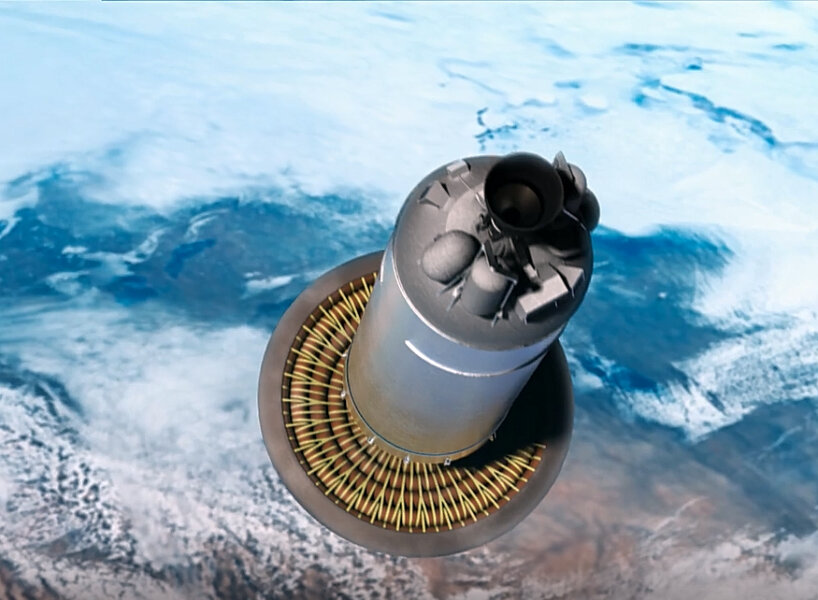
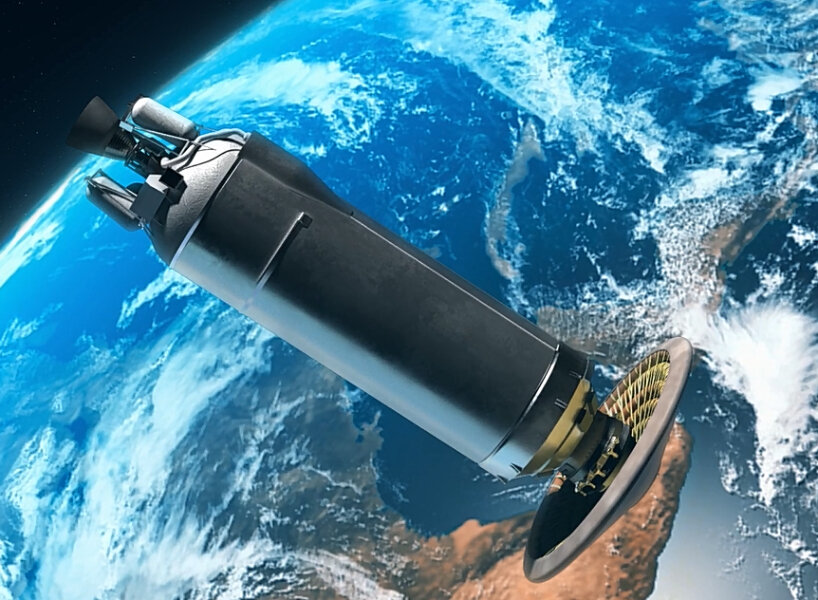
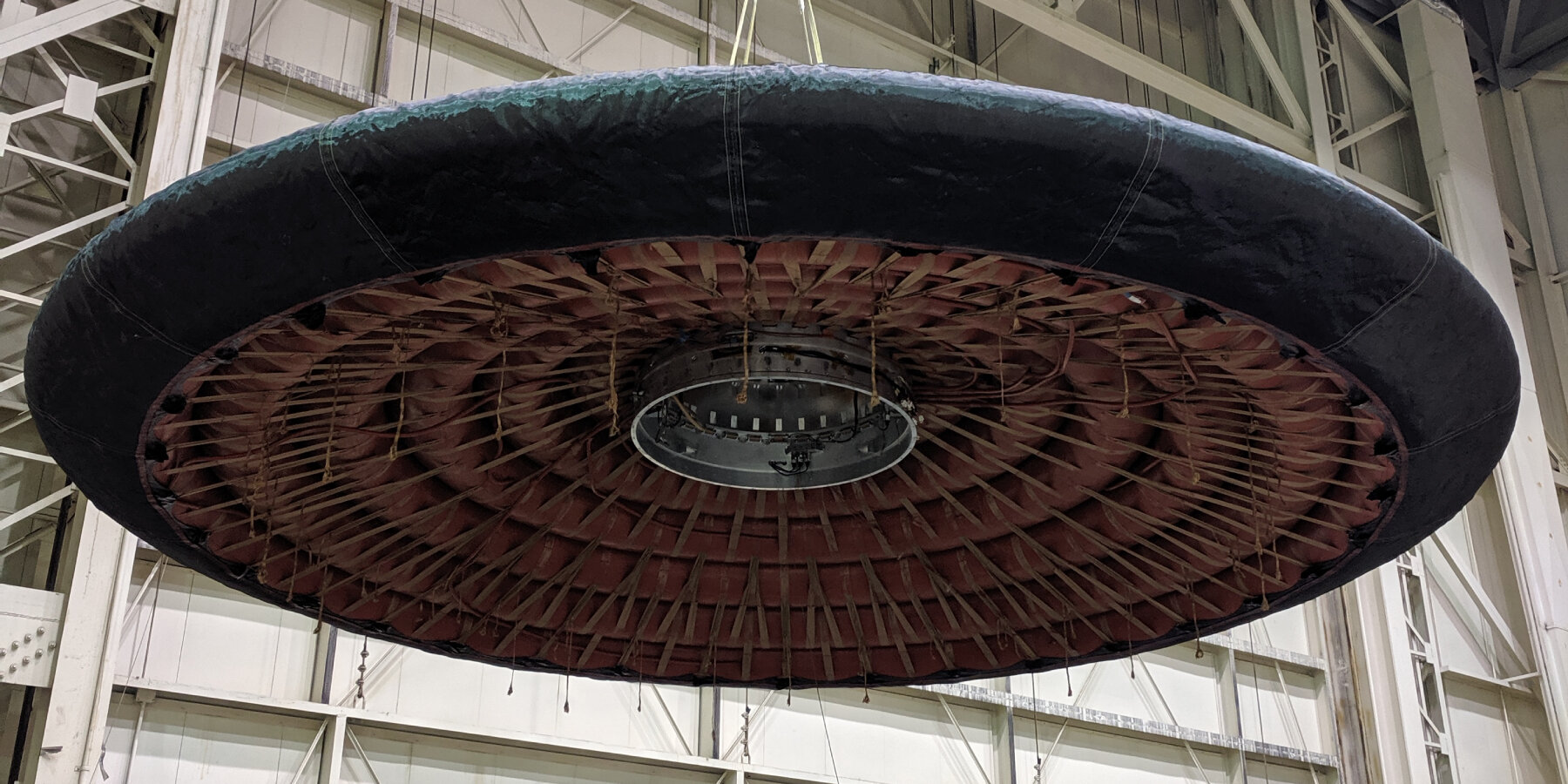
NASA is set to launch Low-Earth Orbit Flight Test of an Inflatable Decelerator (LOFTID), an air-filled heat shield attached to a spacecraft to help the air vehicle land safely in the atmosphere. If successful, the parachute heat shield can support landing crews and large robotic missions on Mars and even return heavier payloads back to Earth from outer space.
It is a challenge for NASA to deliver heavy payloads such as experiments, equipment, and people to destinations with an atmosphere since the aeroshells – a type of rigid shell that prevents heat – are constrained by a rocket’s shroud size. With the entrance of LOFTID, it not only prevents the experiments and equipment from being damaged, but also makes sure that the people on the missions are safe, secure, and can make it back to Earth. designboom will update the article as soon as the results from the launch are out.
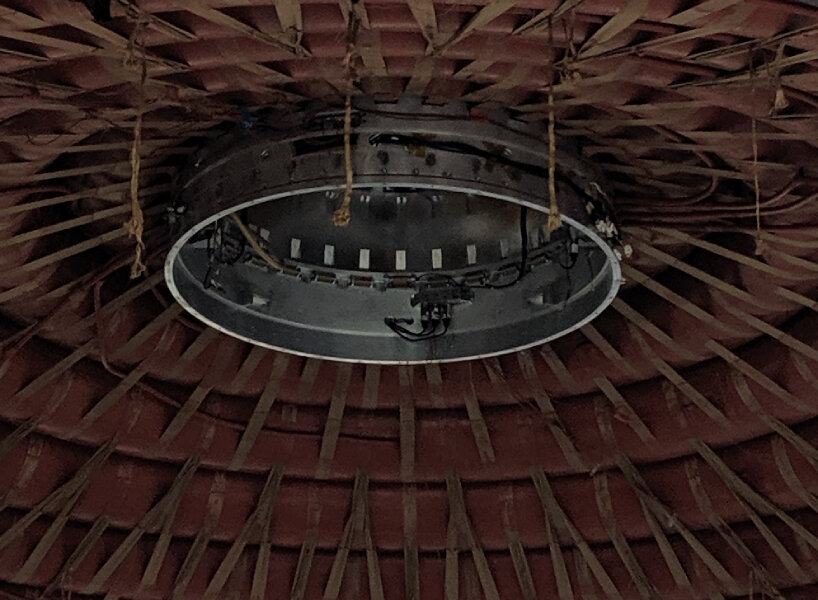
The space agency finds its answer through an inflatable aeroshell that can be deployed to a larger scale than the shroud. This means the technology can navigate through NASA missions with ease such as Mars, Venus, Titan as well as return to Earth.
The test launch of LOFTID by NASA is scheduled to launch tomorrow – November 1st, 2022 – aboard a space rocket called United Launch Alliance Atlas V and with a weather satellite. designboom will update the story as soon as the test results have been revealed.
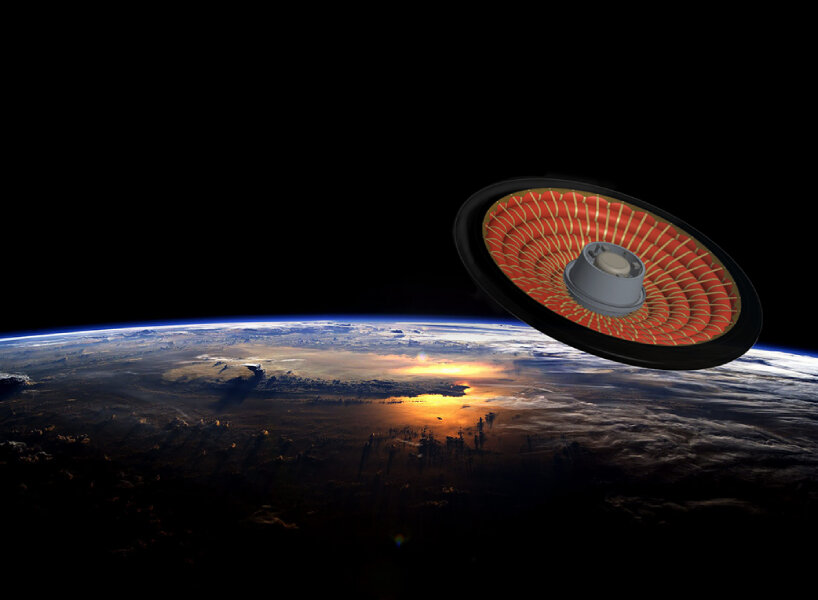
Inflatable aeroshell acts as the brakes
NASA writes that when a spacecraft enters an atmosphere, aerodynamic forces act upon it. ‘Specifically, aerodynamic drag helps to slow it down, converting its kinetic energy into heat. Utilizing atmospheric drag is the most mass-efficient method to slow down a spacecraft,’ the space agency writes in a post on NASA.
With LOFTID, the inflatable heat shield becomes the brake pedal of spacecrafts as they journey into space and, for example, Mars. ‘The large aeroshell creates more drag than a traditional, smaller rigid aeroshell. It begins slowing down in the upper reaches of the atmosphere, allowing the spacecraft to decelerate sooner, at higher altitude, while experiencing less intense heating,’ NASA continues in its post.
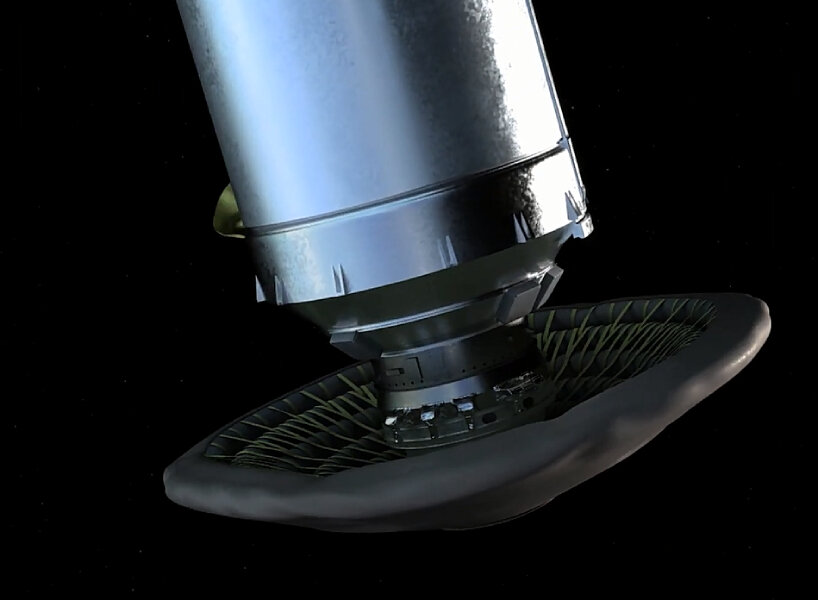
Successful test could lower cost of space travel
NASA is looking at a 6 meters diameter or about 20 feet size of LOFTID, and reinstates that the benefits of the inflatable parachute design can provide easy orbit return and lower cost of access to space through launch vehicle asset recovery. The inflatable decelerator technology is also scalable to both crewed and large-robotic missions to Mars.
The LOFTID project is a part of the Technology Demonstration Missions program within NASA’s Space Technology Mission Directorate and is managed by NASA’s Langley Research Center in Hampton, Virginia, with contributions from Ames, Marshall, and Armstrong. Real-time updates can be found on NASA’s website here.