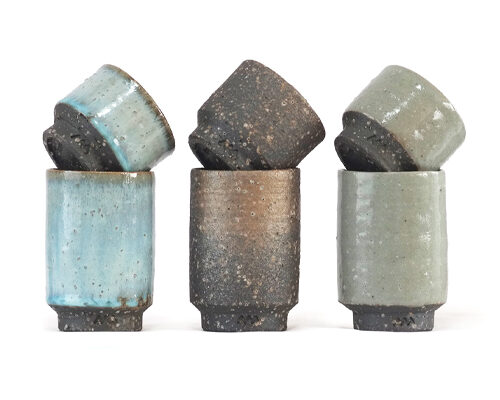

OXMAN explores growing color through bacterial pigmentation instead of synthetic dyes
from bacterial pigments to biodegradable footwear, the studio’s latest work extends a two-decade investigation into manufacturing with living systems.
[FEATURED]
oxman grows color through bacterial pigmentation
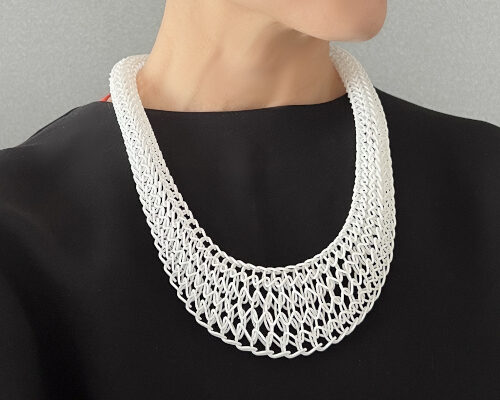
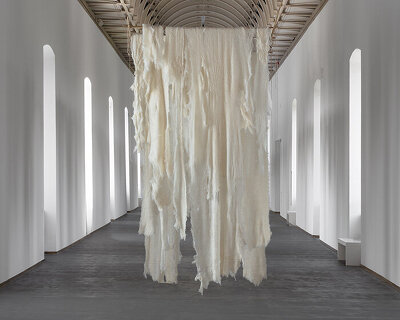
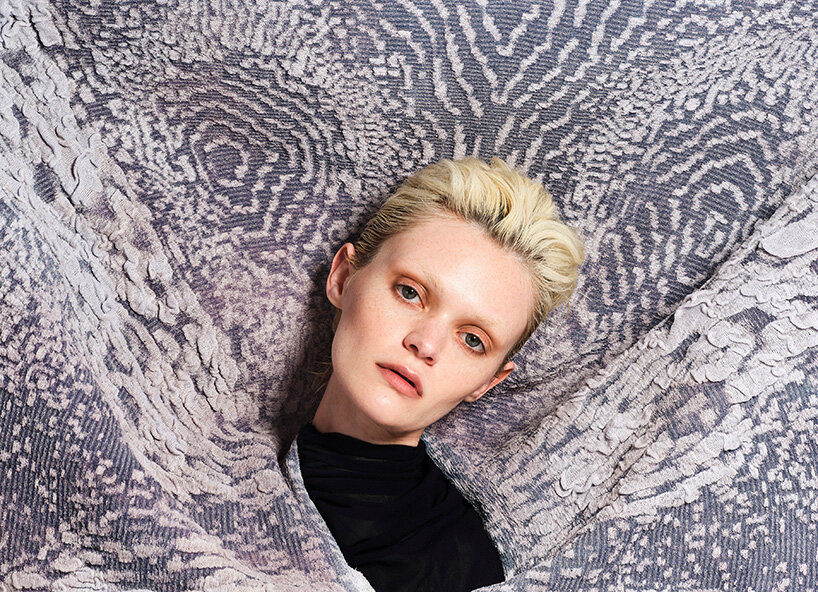
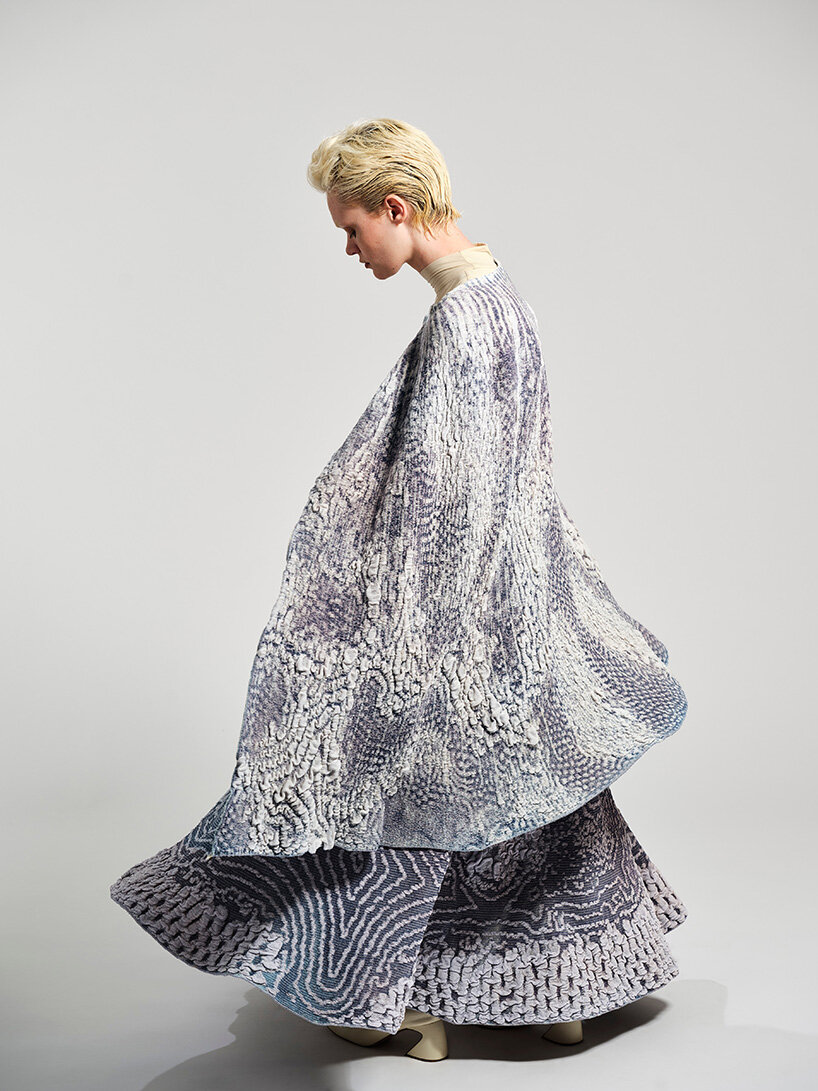
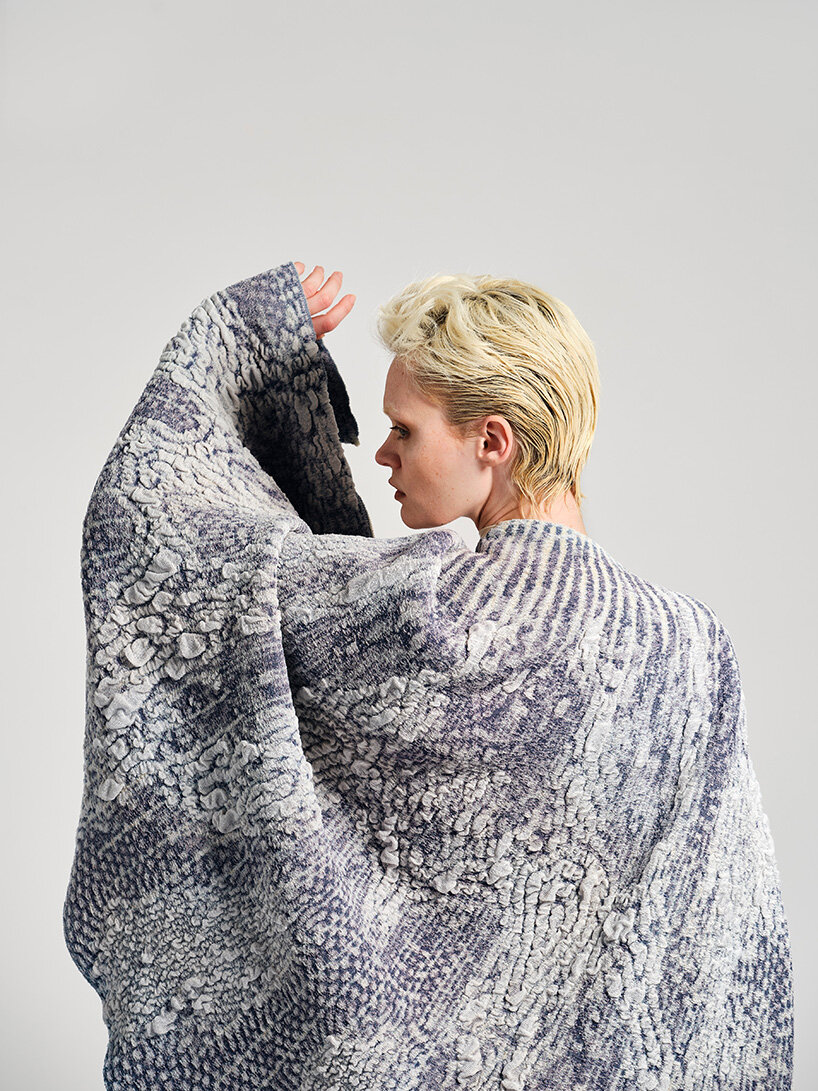
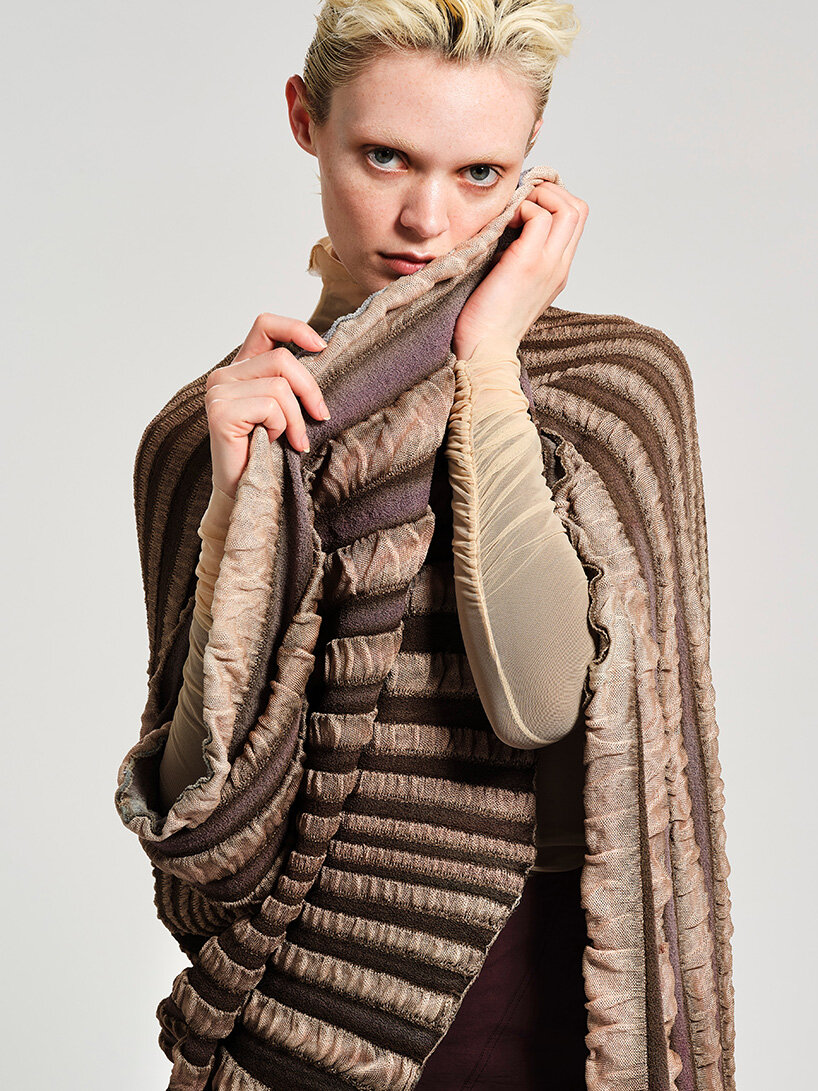
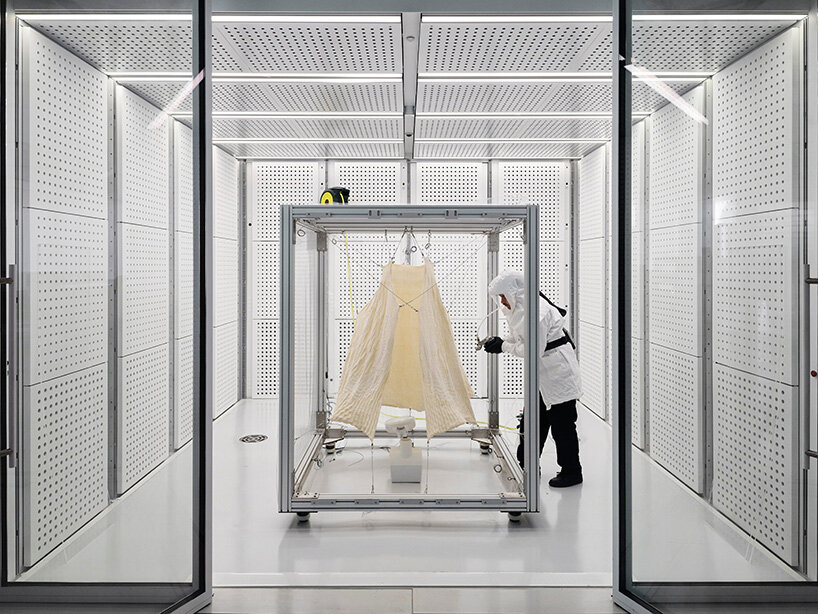
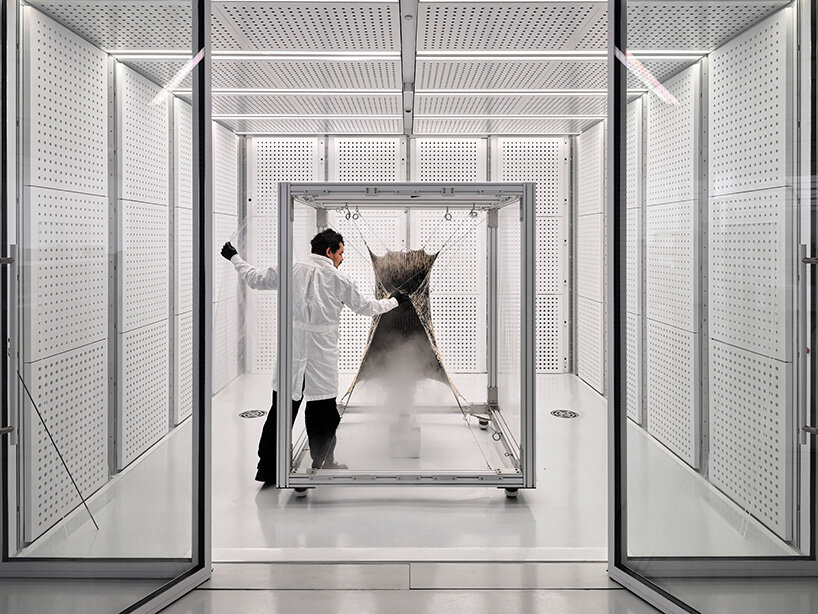
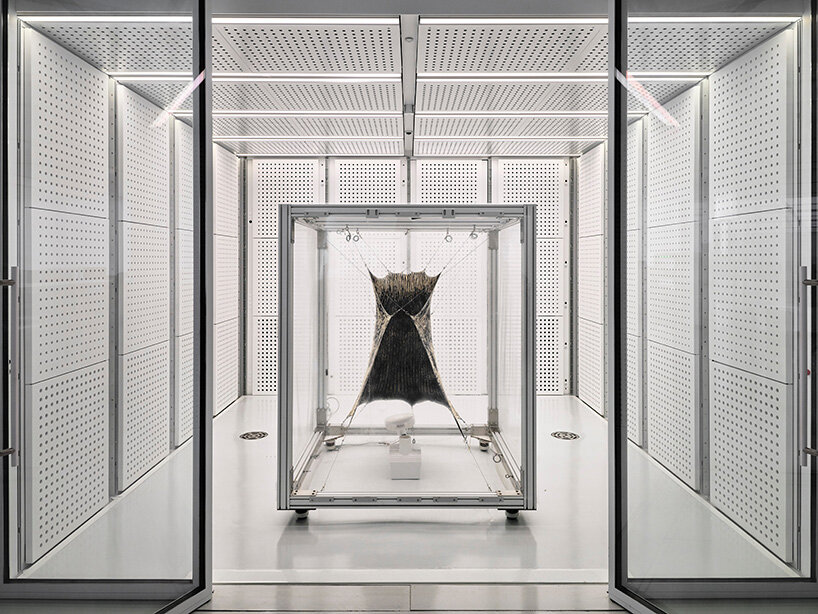
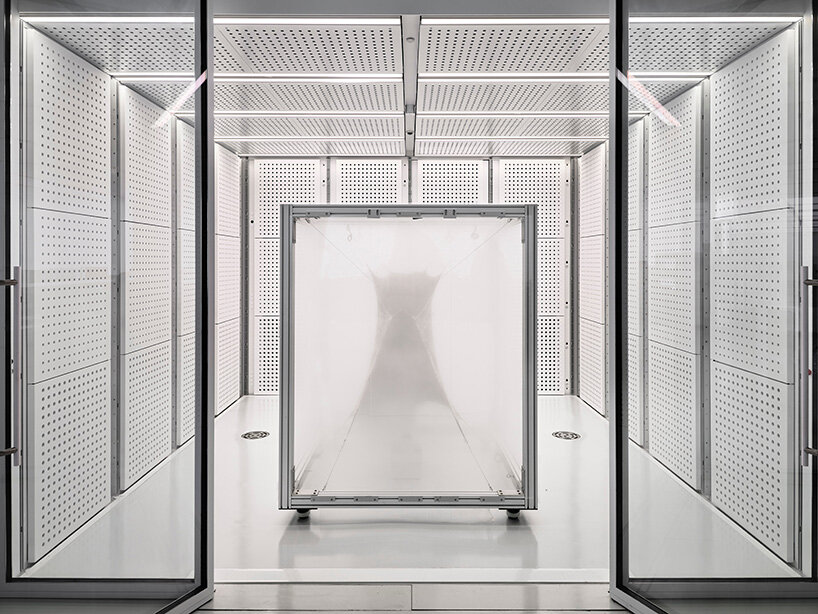
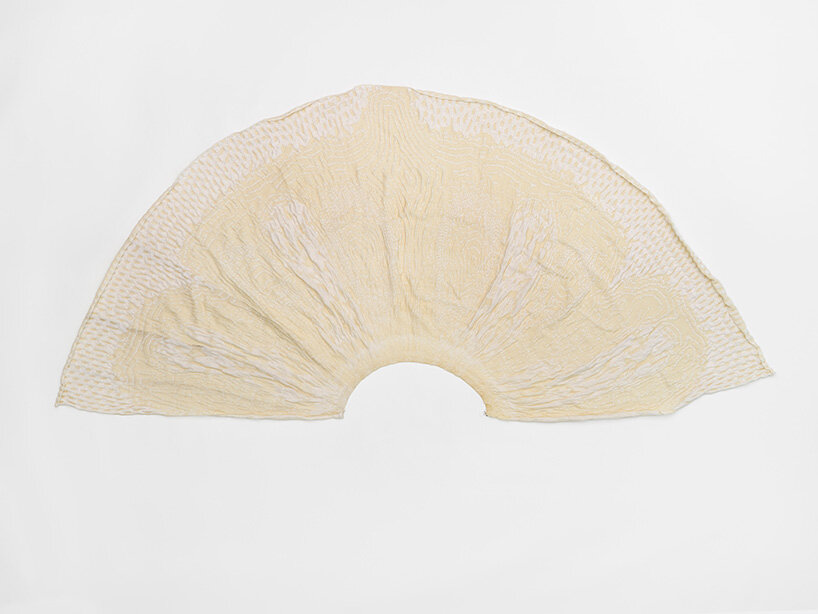
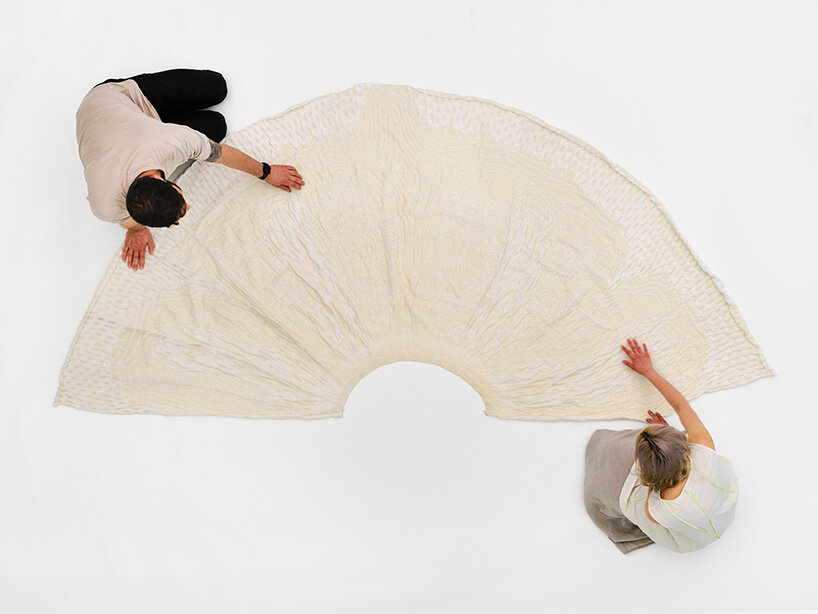
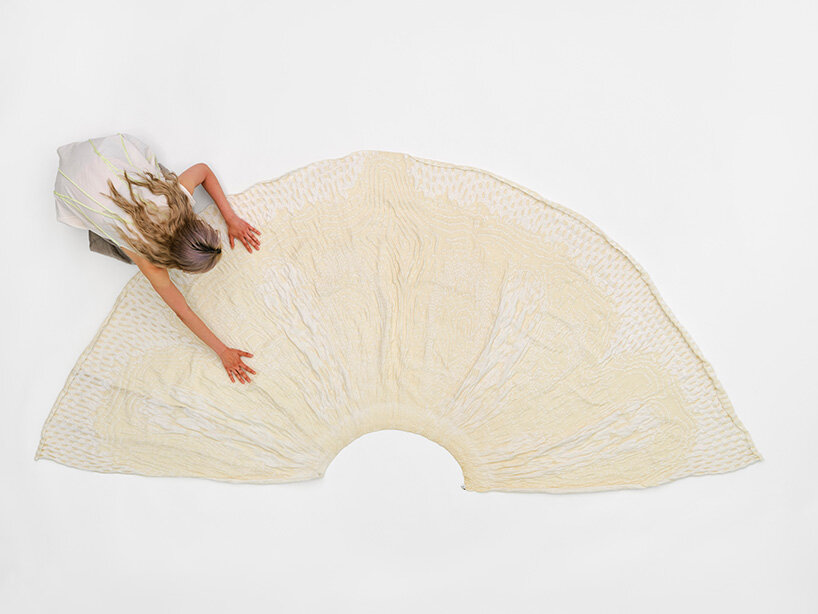
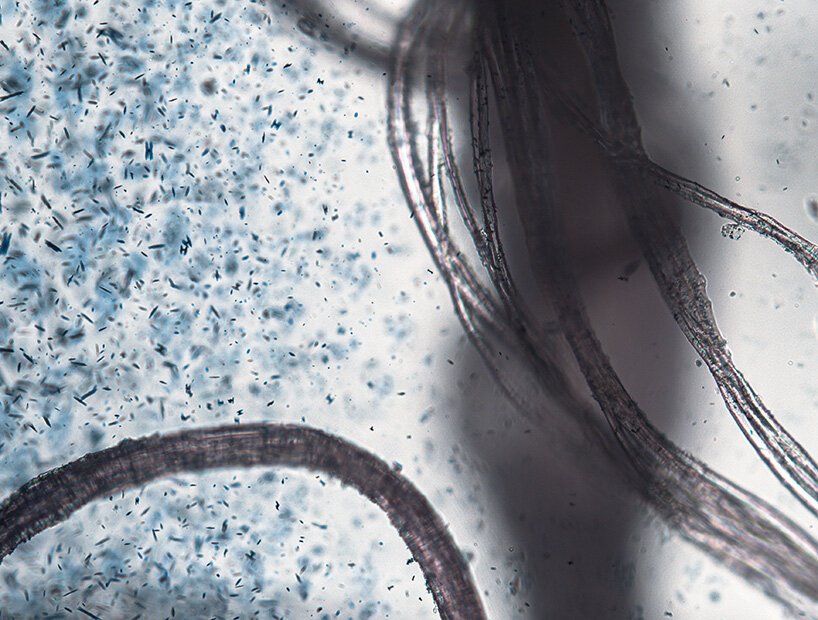
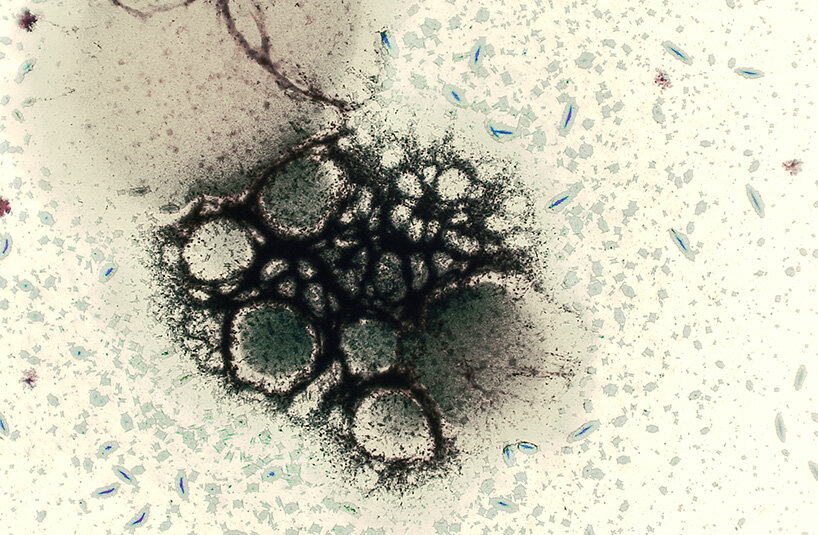
As the textile industry faces increasing scrutiny over the environmental costs of dyeing and finishing, OXMAN explores whether color can be cultivated rather than applied. The latest textile research of the studio, Vigils, investigates a process in which pigmented bacteria grow directly on textile surfaces, allowing color to emerge through biological activity. The project imagines color not as a finish added at the end of production, but as something that lives and grows within the material from the start.
The idea draws inspiration from natural systems. From flower petals and butterfly wings to berry skins and tiger stripes, color in nature emerges through biological processes. OXMAN’s experiment asks what might happen if textiles followed a similar logic in a series of fabrics colored through bacterial pigmentation.
from material ecology to nature-centric design
While Vigils focuses on color, the project represents a much larger trajectory within the work of founder Neri Oxman. For more than two decades, Oxman has explored alternatives to conventional manufacturing, looking to the way natural systems grow, adapt, and form over time.
This idea first emerged through Oxman’s concept of Material Ecology, developed during her time at the MIT Media Lab. Material Ecology proposed that buildings, products, and systems should be designed more like living organisms than machines. Oxman explored structures whose characteristics could vary continuously across a surface, mimicking the gradients found in bone, bark, skin, or shells.
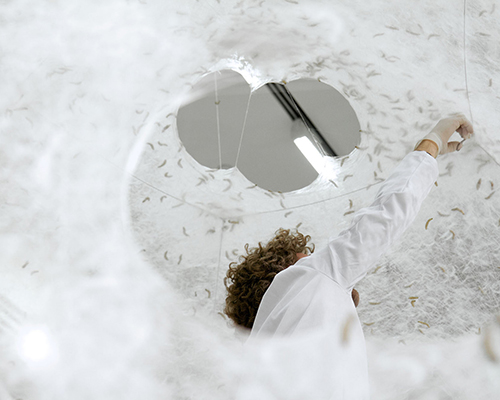
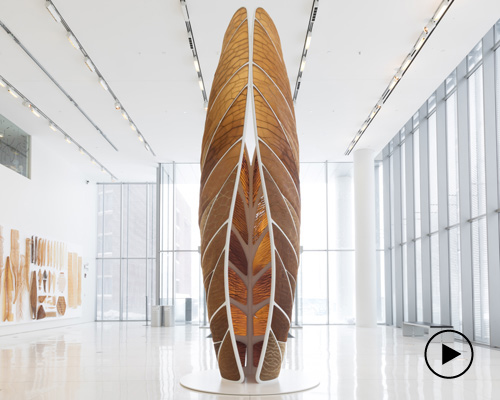
Projects such as Silk Pavilion, co-fabricated by robotic systems and 6,500 silkworms, and Aguahoja, a series of biodegradable structures made from cellulose, pectin, and chitosan, investigated how biological processes might become active participants in fabrication, seeking to integrate biological intelligence directly into the production process.
That approach has evolved into what OXMAN now describes as Nature-Centric Design, a shift that signals a move beyond biomimicry toward a framework in which design actively incorporates living systems and biology is something designers collaborate with.

biology as a manufacturing partner
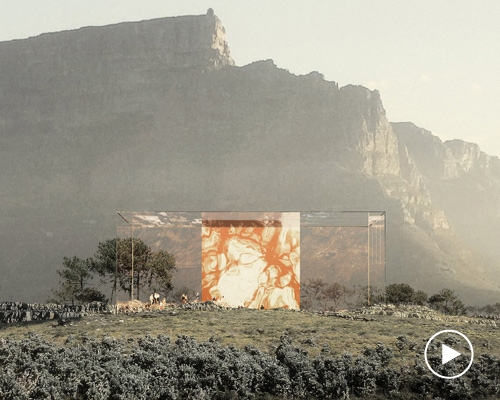
The concept becomes particularly visible in projects involving microbial coloration and biofabrication. Earlier experiments such as Vespers III, used genetically engineered bacteria to generate pigments within complex 3D printed structures in which pigmentation emerged through biological activity guided by computational design.
Vigils extends this line of research into textiles, investigating whether living organisms can produce color directly on fabric surfaces. While still experimental, the work addresses one of the most environmentally intensive stages of garment production.
The textile industry consumes an estimated 93 billion cubic meters of water annually and is responsible for roughly 20 percent of global industrial wastewater. Synthetic dyes, many of which are derived from petrochemicals, contribute significantly to this environmental burden. By exploring bacterial pigmentation, OXMAN joins a growing field of designers, researchers, and biotechnology companies attempting to rethink how color enters the supply chain. The studio increasingly frames color, material production, fabrication, and eventual decomposition as interconnected parts of a single ecological system.
designing for growth rather than assembly
This philosophy is perhaps most clearly expressed through O°, OXMAN’s experimental platform for footwear and textiles. The project combines robotic fabrication, computational design, microbial pigmentation, and biologically produced polymers to create products designed to biodegrade at the end of their life cycle.
The platform centers on polyhydroxyalkanoates (PHAs), biodegradable polymers naturally produced by bacteria and it seeks to create mono-material products that can be knitted, printed, colored, and ultimately decomposed within a unified biological framework.
The project reveals a recurring pattern across Oxman’s career. Whether working with silkworms, bees, bacteria, melanin, or biodegradable polymers, the objective is to replace industrial processes based on extraction and assembly with systems based on growth, adaptation, and regeneration.
between speculation and implementation
As OXMAN expands from academic research into commercial development, projects such as Vigils reflect a growing effort to translate experimental ideas into new manufacturing models. The studio’s recent work builds on decades of research into computational design, biological fabrication, and material systems, bringing these investigations closer to everyday products and industrial processes.
OXMAN explores how living organisms can actively participate in the creation of materials, across projects involving silkworms, microbial pigments, biodegradable polymers, and biofabrication, asking what manufacturing might look like if it followed the principles of growth found in nature.
Vigils, its latest project, forms part of a broader body of work that reconsiders how materials are made, how products are produced, and how design might operate in closer dialogue with living systems.






project info:
name: Vigils
designer: OXMAN | @oxmanofficial
founder: Neri Oxman
This article is part of designboom’s Crafting the Future chapter, exploring what it means to be a maker in today’s world and the future of craftsmanship. Discover more related stories here.
shop
your own online design shop — no sales commission collected