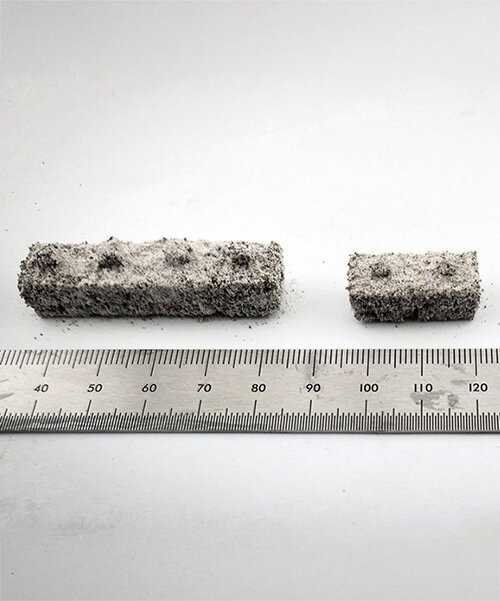
researchers turn simulated moon dust into 3D-printed bricks for future lunar homes
a 3D printing method fuses simulated moon dust into bricks without adhesives, opening possibilities for construction with lunar materials.
prefer designboom on google[FEATURED]
building on the moon with materials already there
Researchers at the University of Arkansas have developed a way to 3D print interlocking building blocks from simulated moon dust, using heat to fuse the material together without glue or cement. Led by mechanical engineering professor Wan Shou and researcher Cole McCallum, the experiment explores how future lunar settlements could be built using materials gathered directly from the Moon’s surface.
The idea could reduce the amount of construction material that needs to make the journey from Earth. Instead of transporting cement and other building supplies into space, astronauts could eventually manufacture structural components using the mineral powder already covering the lunar landscape.
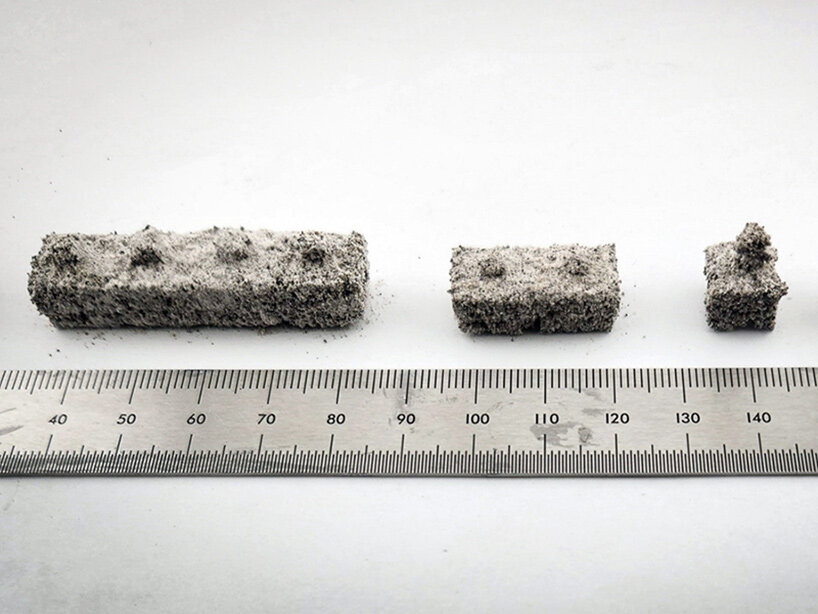
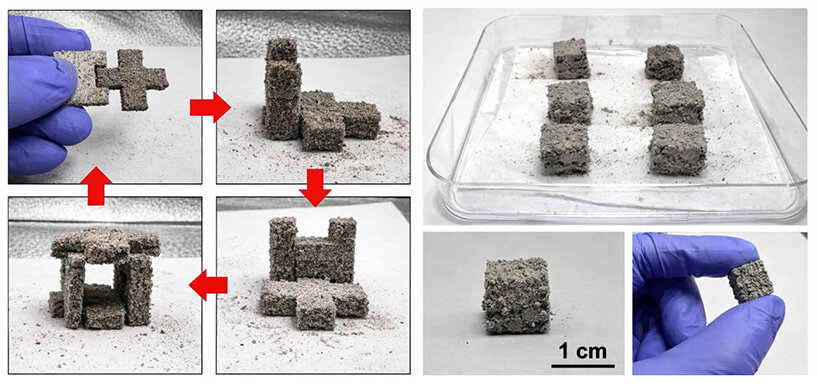
The team has produced a series of small, LEGO-like modules that can be assembled into larger structures and rearranged as needed. Each block is made entirely from a material that mimics lunar regolith, the loose layer of crushed rock and mineral dust covering the Moon.
lunar dust is sharper than the dust we know on earth
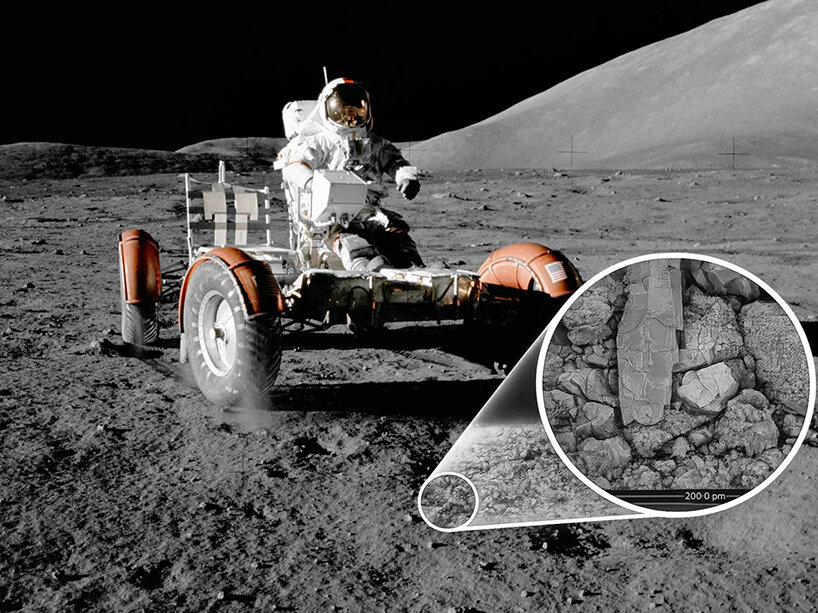
Lunar regolith might resemble ordinary sand or soil, but its physical properties are quite different. Over billions of years, meteorites and other space debris have struck the Moon’s surface, breaking down rock into increasingly fine particles. Without wind or flowing water to gradually wear away their edges, these fragments remain sharp and angular, with an abrasive texture that NASA has compared to tiny pieces of glass.
The dust also behaves differently under lunar conditions. Its particles can become electrically charged and cling to nearby surfaces, making them particularly troublesome for astronauts and sensitive equipment.
During the Apollo missions, lunar dust damaged spacesuit materials and clogged mechanical components. Engineers planning future missions are still working out how to keep the powder from entering machinery, where its jagged edges can wear down moving parts.
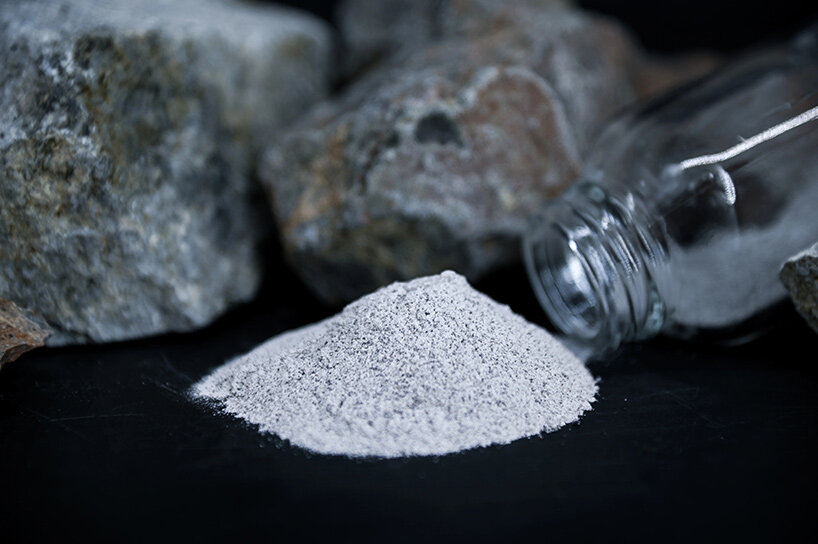
researchers recreate lunar regolith in laboratories on earth
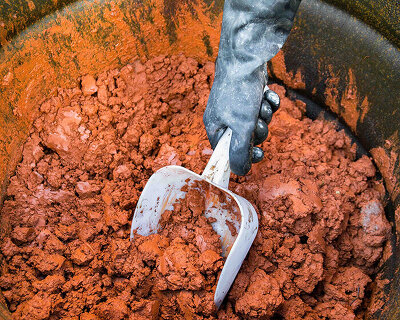
For their experiments, the Arkansas researchers used Lunar Highlands Regolith Simulant, known as LHS-1, a specialized powder developed by the University of Central Florida’s Exolith Lab and supplied by Space Resource Technologies.
The material is made from terrestrial minerals selected to reproduce the composition and granular texture of lunar highland soil, drawing on samples collected during the Apollo missions.
Creating convincing artificial moon dust has become a field of research in its own right. Specialized laboratories and companies manufacture different regolith simulants to help engineers test lunar excavation systems and study the effects of abrasive particles on spacecraft hardware. These mixtures reproduce selected properties of lunar soil, although the real material has characteristics that remain difficult to replicate on Earth.
a laser fuses the powder together, layer by layer
To manufacture the blocks, the team turned to a 3D printing method called laser powder bed fusion. A thin layer of simulated regolith is spread across a platform, where a focused laser traces the intended shape and heats the mineral particles until they fuse together.
The platform then lowers, another layer of powder is added, and the process repeats until a solid component takes shape. The approach allows the researchers to work with the regolith alone, avoiding the polymer binders or cement mixtures used in some earlier experiments with lunar construction materials.
Instead, thermal energy bonds the grains directly to one another through a process known as sintering. ‘There’s nothing else it’s binding to. The regolith powder is binding to itself,‘ explains McCallum, who was an undergraduate at the university when he began the research. For future construction on the Moon, this could eliminate the need to transport large quantities of adhesives from Earth.
LEGO-like bricks take on cross-shaped and H-shaped forms
The researchers also considered how individual printed components might come together to form larger structures. Drawing on the principles of traditional mortise-and-tenon joinery, they developed two complementary brick geometries: one shaped like a cross and the other resembling the letter H.
The cross-shaped piece acts as a projecting connector, fitting into the recessed profile of the H-shaped module. Together, the pieces can interlock without additional fastening materials. While the researchers describe the system as LEGO-like, the comparison refers to its modular assembly instead of the familiar rectangular bricks with circular studs.
The team has demonstrated small wall configurations and shielding units assembled from its cross-shaped and H-shaped pieces. Printing individual components could also offer more flexibility than manufacturing an entire enclosure with a large-scale 3D printer. Blocks could be produced in batches and replaced individually, allowing structures to be rearranged as the needs of a lunar settlement change.
could sunlight replace the laser?
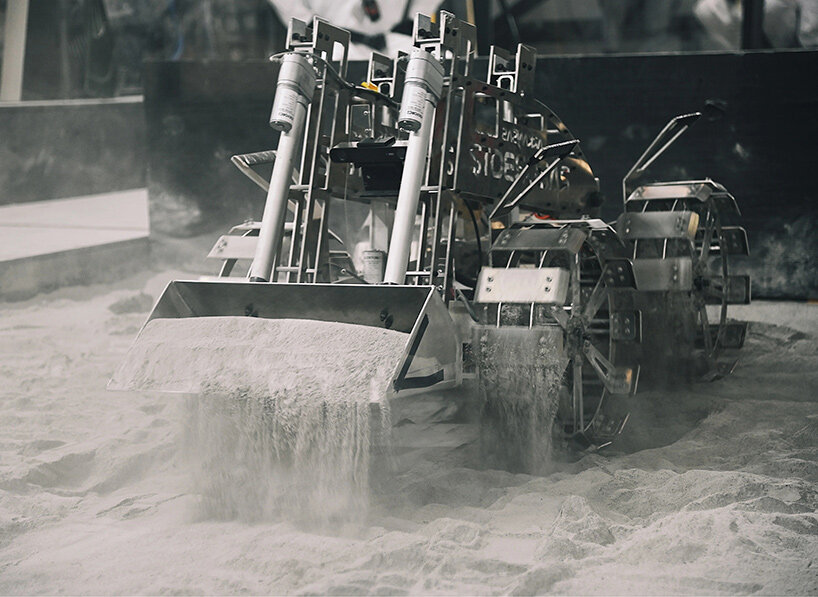
The researchers are also investigating the possibility of using concentrated sunlight to harden lunar regolith. In their published study, they consider how optical devices such as Fresnel lenses or parabolic mirrors could focus solar radiation onto the powder, producing temperatures high enough to fuse the mineral particles together.
Earlier solar-sintering experiments have already demonstrated the potential of concentrated light to harden simulated lunar soil, although the Arkansas team’s own prototypes were manufactured using a laser. The idea could eventually allow construction equipment to draw on two resources already present on the Moon: regolith and sunlight.
The current bricks remain experimental, with porous surfaces and connections that require further refinement. Their strength also needs improvement before they can support substantial structural loads. ‘These structures we’re making can be self-supported,’ says McCallum, while acknowledging that the technique still needs development for load-bearing construction.
ESA experiments with laser-melted lunar roads
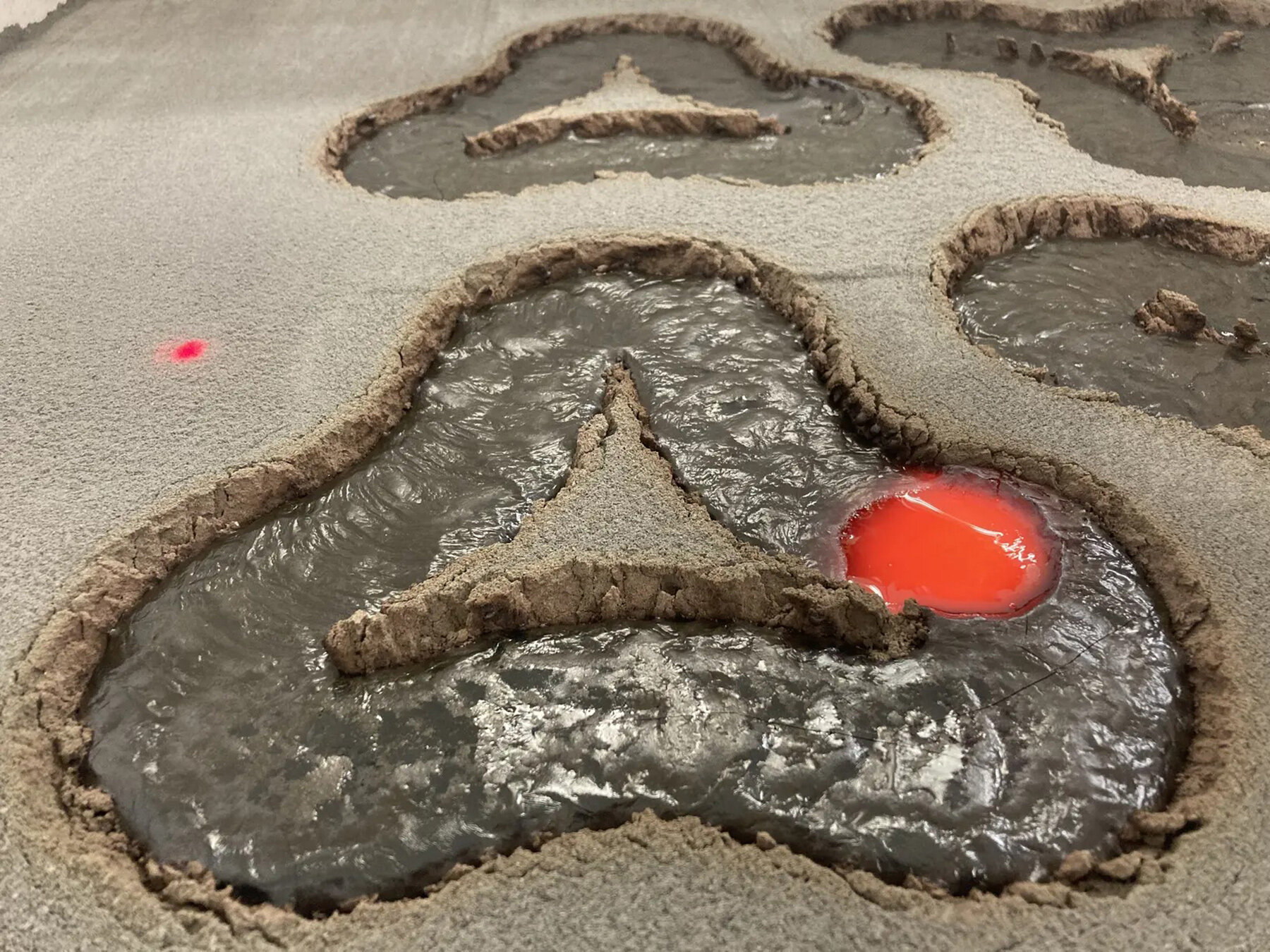
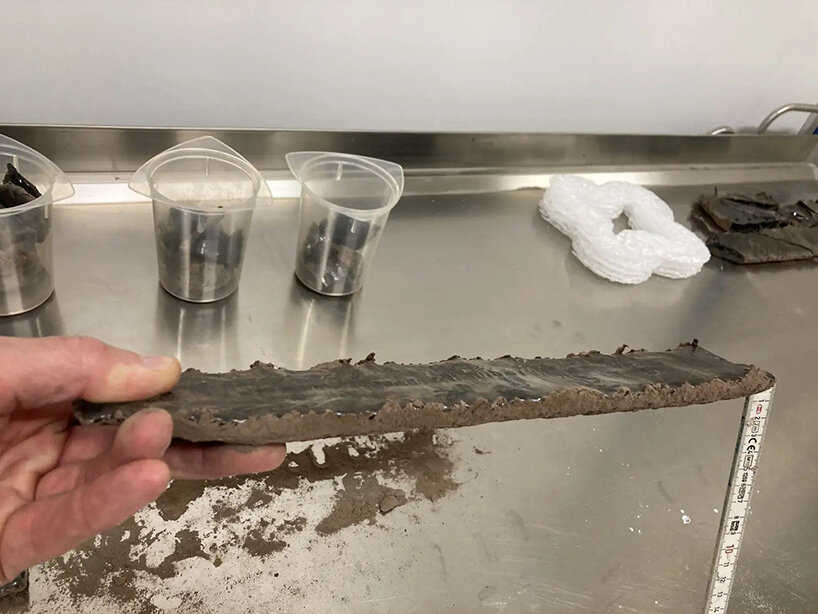
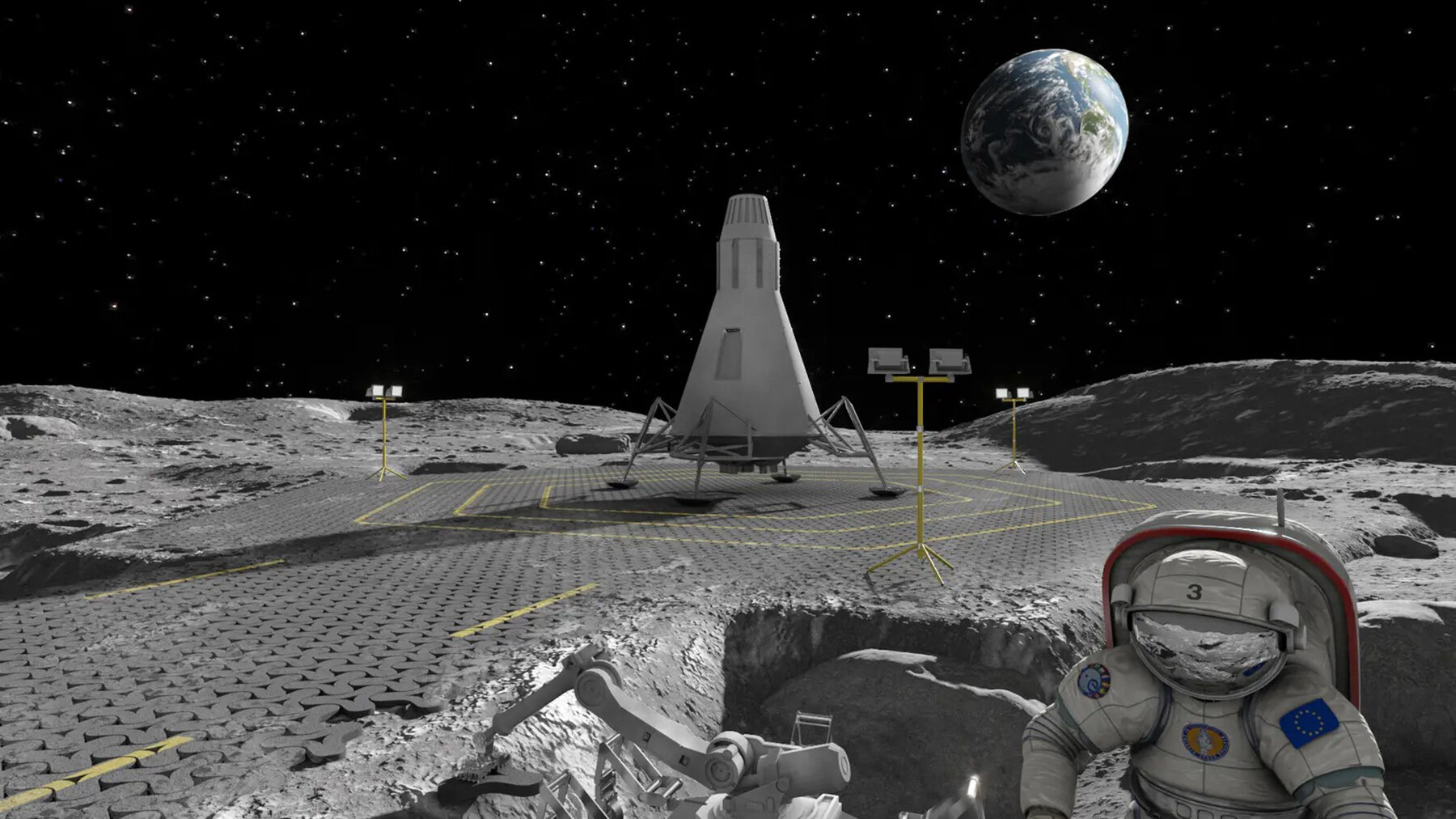
The idea has already been explored in another lunar construction experiment. In 2023, the European Space Agency (ESA) tested a method for creating roads and landing pads from simulated moon dust, using a powerful laser to melt the powder into a solid, glasslike surface.
The project, called PAVER, aimed to prevent passing rovers and landing spacecraft from kicking up abrasive lunar dust that could clog machinery and damage equipment. Researchers even produced interlocking, triangular paving elements, and proposed using sunlight concentrated through a large Fresnel lens to replace the laser on the Moon.
toward a future of locally built lunar settlements
Further experiments under lunar vacuum and gravity conditions will be essential before the team can begin translating its laboratory experiments into a practical construction system. For now, the printed blocks are only a few centimeters across, and the researchers are continuing to investigate how their mechanical properties can be improved.
Still, the research offers an early glimpse of how future lunar settlements might manufacture their own building materials. With mineral powder gathered from the surrounding landscape and heat supplied by lasers or potentially sunlight, the basic components of a building could eventually be produced directly on the Moon, one layer of regolith at a time.
project info:
project: Additive Manufacturing of Lunar Regolith for Reconfigurable Building Blocks toward Lunar Habitation
research institution: University of Arkansas
researchers: Cole McCallum, Youwen Liang, Nahid Tushar, Ben Xu, Bo Zhao, Hao Zeng, Wan Shou
collaborating institutions: University of Houston; Tampere University
material: LHS-1 (Lunar Highlands Regolith Simulant)
simulant developer: University of Central Florida, Exolith Lab
shop
your own online design shop — no sales commission collected